
The Soviet Submarine with a Double-Barreled Bow: Why the USSR Built One of the Strangest Research Subs Ever Made

The Soviet Navy built no shortage of unusual submarines during the Cold War. Some were designed to achieve record-breaking speeds, others to carry enormous cruise missiles, while a few were intended as platforms for nuclear torpedoes. Yet among them was one submarine that was never meant to patrol the oceans or hunt enemy fleets. Its sole mission was to help engineers design the submarines of the future.
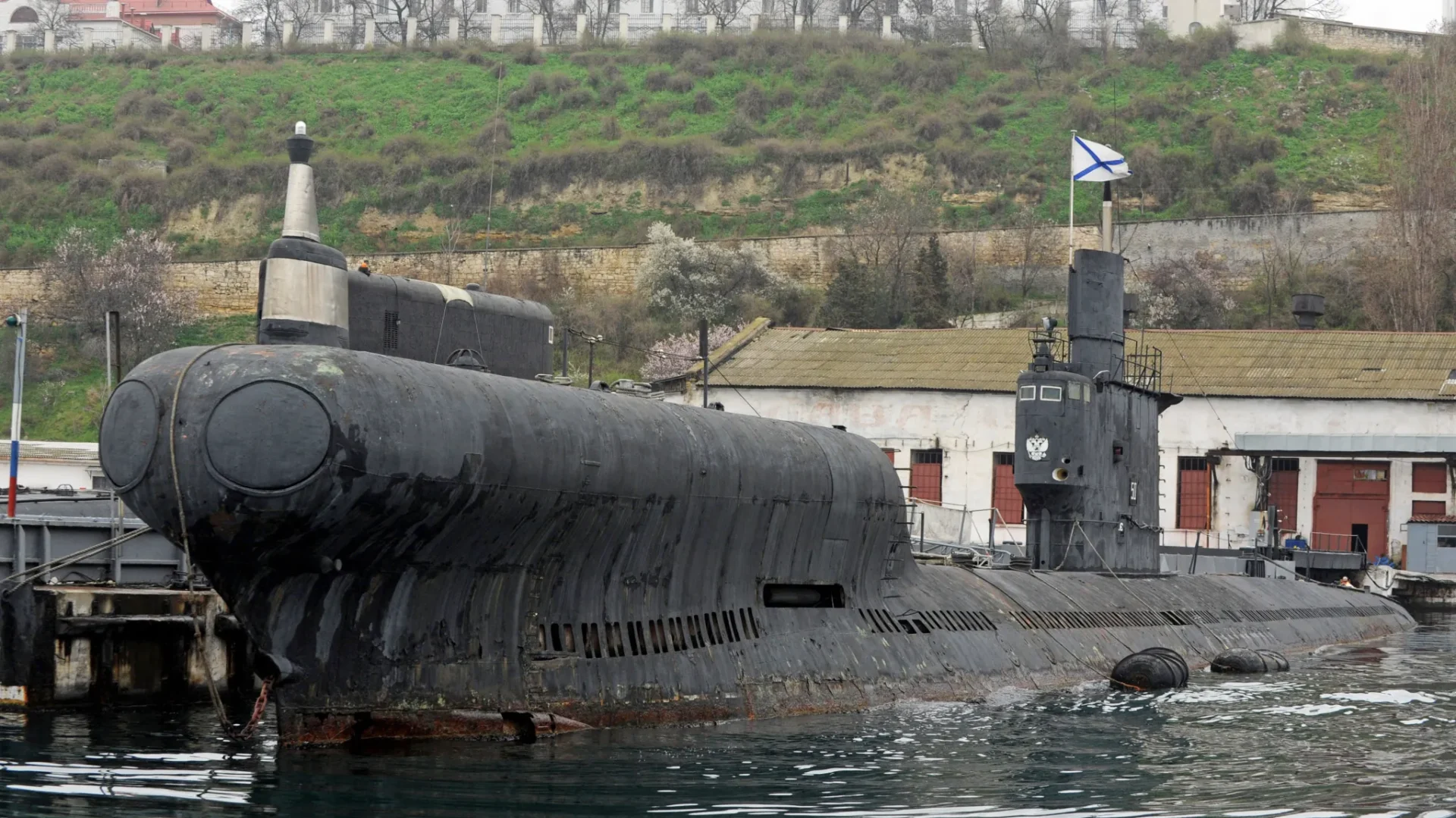
That vessel was Project 1710 Mackerel (NATO reporting name: Beluga), an experimental diesel-electric submarine unlike anything else in the Soviet fleet. At first glance, it resembled a scaled-down nuclear attack submarine. A closer look at its bow, however, revealed something completely unexpected. Instead of the smooth, streamlined nose found on conventional submarines, it featured two large cylindrical openings that gave the impression of a giant double-barreled shotgun.
Over the years, these unusual structures fueled countless rumors. Some believed they were experimental torpedo tubes, while others suggested they were designed to test secret underwater weapons. In reality, they served an entirely different—and arguably far more interesting—purpose.
A Laboratory Beneath the Sea
By the late 1970s, Soviet naval engineers faced a growing challenge. Each new generation of nuclear submarines became faster, larger, and quieter, but every additional knot of speed required significantly more engine power.
Instead of simply building larger reactors, designers began asking a different question. Aircraft had become dramatically faster through advances in aerodynamics. Could submarines achieve similar improvements through better hydrodynamics?
That question ultimately led to Project 1710.
Rather than constructing another combat submarine, Soviet engineers decided to build a dedicated research platform capable of testing entirely new hull forms, advanced propellers, sonar arrangements, control surfaces, and even highly unconventional methods of reducing drag underwater.
In many respects, Project 1710 became the Soviet equivalent of the famous American research submarine USS Albacore, whose experiments transformed modern submarine design throughout the Western world.
Why the Bow Looked Like a Giant Shotgun
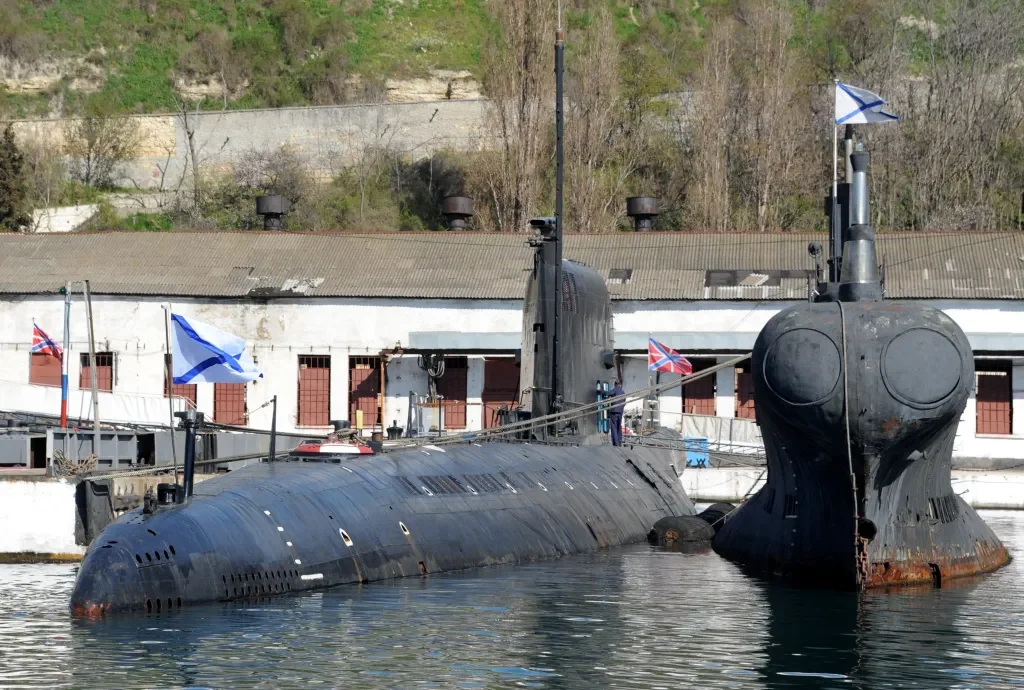
The most distinctive feature of Project 1710 was its bow.
On either side of the forward hull sat two massive cylindrical ducts. To anyone unfamiliar with the project, they looked remarkably like oversized gun barrels or enormous torpedo launchers.
That appearance gave birth to numerous myths. Some suggested the submarine tested supercavitating torpedoes. Others claimed it was used for experimental underwater missiles or classified naval weapons.
The truth was considerably more scientific.
Project 1710 was built to study one of the most important—but least visible—phenomena in naval engineering: the boundary layer.
This extremely thin layer of water clings directly to the submarine’s hull. A significant portion of hydrodynamic drag is generated within this layer, meaning that even small changes in its behavior can have measurable effects on underwater performance.
Soviet researchers experimented with injecting specially formulated polymer solutions into the boundary layer. Under certain conditions, these additives could reduce turbulence, decrease drag, and potentially allow submarines to travel faster without requiring additional engine power.
Those unusual openings in the bow formed part of this experimental system.
Rather than launching weapons, they helped researchers study how fluids interacted with the submarine’s hull under different operating conditions.
How the Submarine Was Built
Although Project 1710 served as an experimental platform, it was still a fully operational submarine.
It measured approximately 62 meters in length with a beam of around 6.3 meters. Submerged displacement exceeded 1,900 tonnes. Like most Soviet submarines of its era, it employed a double-hull design consisting of a strong inner pressure hull surrounded by a lighter outer hull containing ballast tanks and experimental equipment.
Propulsion relied on a conventional diesel-electric powerplant rather than nuclear propulsion. Despite its research role, the submarine could reportedly reach underwater speeds of approximately 24–25 knots, an impressive figure for a diesel-electric vessel of its size.
Engineers also devoted considerable attention to acoustic performance. The submarine incorporated a specially designed seven-bladed propeller, refined hull contours, and numerous experimental noise-reduction measures intended to improve underwater stealth.
Its crew was noticeably smaller than that of combat submarines of similar dimensions, since much of the available internal volume was occupied by scientific instruments, measuring systems, recording equipment, and experimental hardware.
Testing Tomorrow’s Technologies
Throughout its service life, Project 1710 functioned as a floating laboratory.
Researchers tested multiple rudder arrangements, alternative hull shapes, different propeller designs, and various methods of reducing underwater noise. They carefully measured pressure distribution across the hull, investigated how changes in hydrodynamic design affected stability, and evaluated entirely new concepts for underwater propulsion.
Among the most intriguing experiments were the polymer-injection trials.
The technology demonstrated genuine potential. Under certain operating conditions, the injected polymer solution reduced hydrodynamic resistance and improved overall efficiency.
However, transforming the concept into an operational technology proved much more difficult.
The system required large quantities of specialized chemicals, while the practical performance gains did not always justify the additional complexity, storage requirements, and maintenance burden.
Project 1710 also served as a valuable platform for sonar development. Even minor changes to hull geometry can significantly affect how sound waves propagate around a submarine, making the vessel an ideal tool for evaluating future sonar configurations.
Did It Test Secret Weapons?
This remains one of the most common questions raised whenever photographs of the submarine appear.
Despite decades of speculation, there is no reliable evidence that Project 1710 served primarily as a weapons test platform.
Its principal purpose was hydrodynamic research and the evaluation of technologies that could later be incorporated into future generations of Soviet submarines.
That does not mean weapon-related experiments were impossible.
As a research vessel, the submarine could accommodate specialized instrumentation used to study underwater flow around torpedoes or examine how new hull configurations affected future weapon systems.
Nevertheless, the submarine’s true mission was scientific rather than tactical.
Ironically, its unusual appearance proved far more mysterious than the actual work taking place inside.
Why Only One Was Built
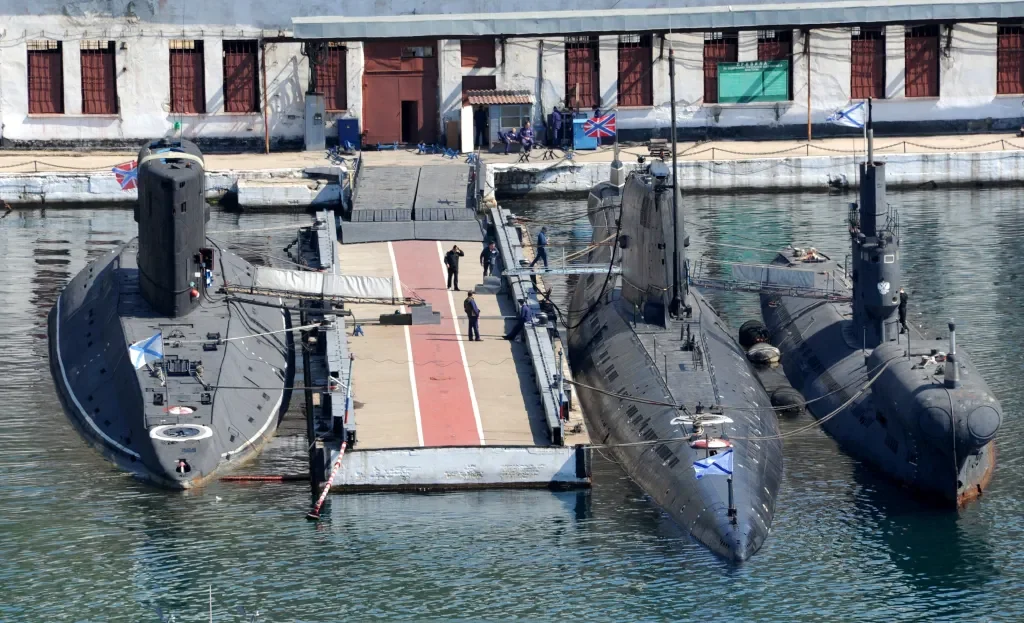
Only a single Project 1710 submarine was ever completed.
Following the collapse of the Soviet Union, funding for many large-scale naval research programs disappeared almost overnight. Experimental platforms became difficult to justify, and numerous scientific projects were either cancelled or abandoned.
Yet Project 1710 had already fulfilled its purpose.
Data gathered during its test program contributed to improvements in Soviet and later Russian submarine hydrodynamics, acoustic performance, and propeller design. Many concepts validated aboard this relatively small experimental submarine influenced later generations of underwater warships.
Like NASA’s X-planes or America’s USS Albacore, Project 1710 demonstrated that research vehicles often leave a far greater technological legacy than many frontline combat platforms.
The Underwater Equivalent of a Wind Tunnel
Today, Project 1710 is rarely mentioned outside specialist naval history circles.
Overshadowed by massive ballistic missile submarines, deep-diving research vessels, and advanced nuclear attack submarines, this modest diesel-electric boat is easily forgotten.
Yet ships like Project 1710 often play the most important role in technological progress.
Combat submarines are built to fight.
Experimental submarines are built to answer questions.
Project 1710 served as an underwater equivalent of a wind tunnel—a purpose-built research platform where Soviet engineers explored ideas that would eventually make future submarines faster, quieter, and more efficient.
Its strange double-barreled bow was never intended to fire revolutionary weapons.
Instead, it symbolized something far more valuable: the willingness to build an entire submarine simply to understand the science of moving more efficiently beneath the sea.






