Even the Lawn Couldn’t Take It. How America’s New Presidential Helicopters Forced the White House to Be Rebuilt

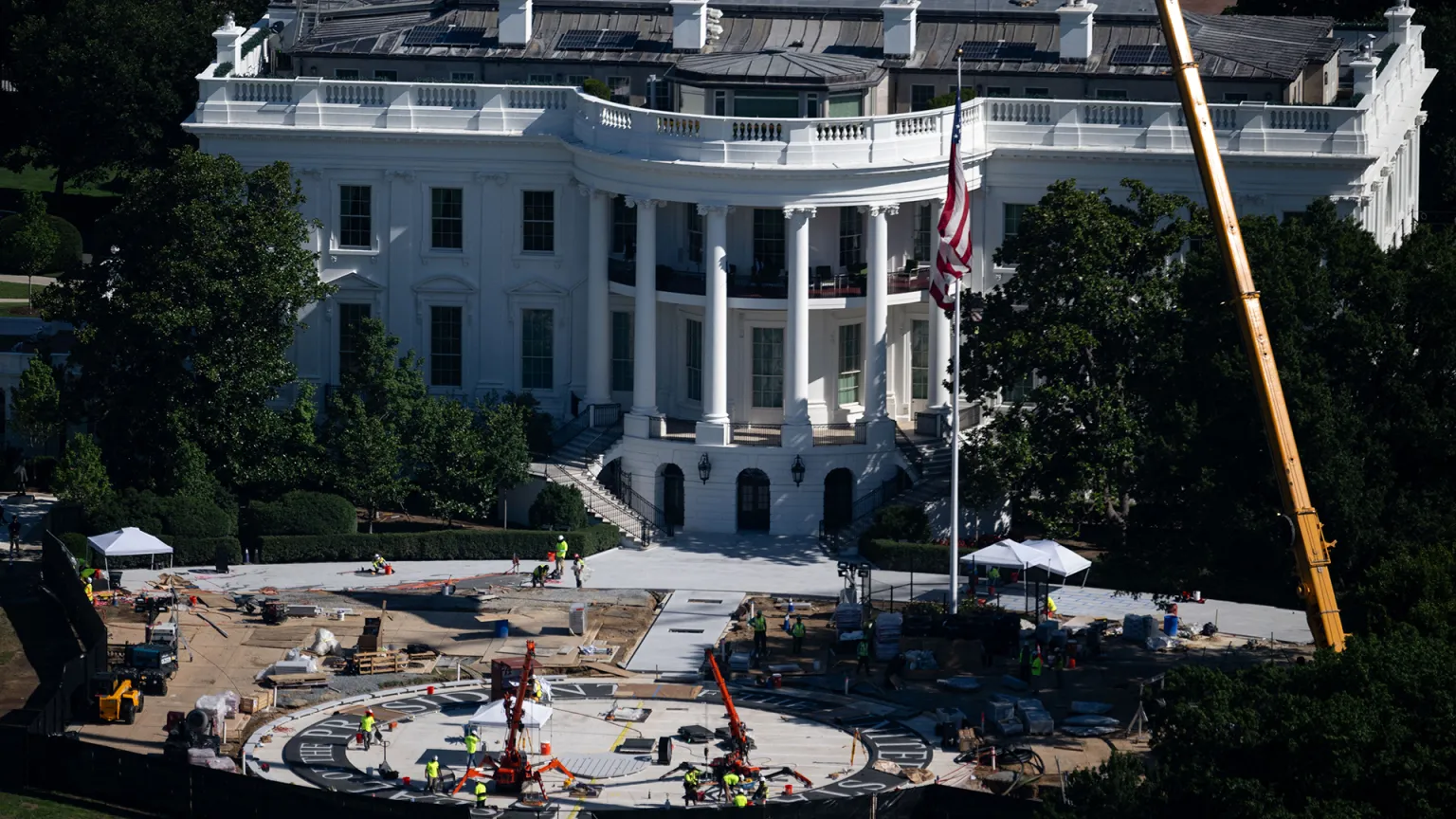
When reports emerged that President Donald Trump had ordered the newly constructed White House helipad to be rebuilt, many assumed it was just another political story. In reality, the reason was far more interesting. The new VH-92A Patriot presidential helicopter proved so powerful that the historic South Lawn of the White House began to suffer visible damage after repeated landings.
As a result, the administration abandoned temporary repairs and moved forward with the construction of a permanent granite helipad—the first major helicopter infrastructure upgrade at the presidential residence in its history.
More Than Half a Century Without Major Changes
For decades, U.S. presidents relied on the legendary VH-3D Sea King and VH-60N White Hawk helicopters. These aircraft served as Marine One from the late 1970s onward.
Landings traditionally took place directly on the South Lawn. There was no dedicated concrete landing pad; helicopters simply touched down on the grass, which was carefully restored by White House groundskeepers after each visit.
This system worked remarkably well for decades.
Then the new presidential helicopter arrived.
VH-92A Patriot — The Most Advanced Marine One Ever Built
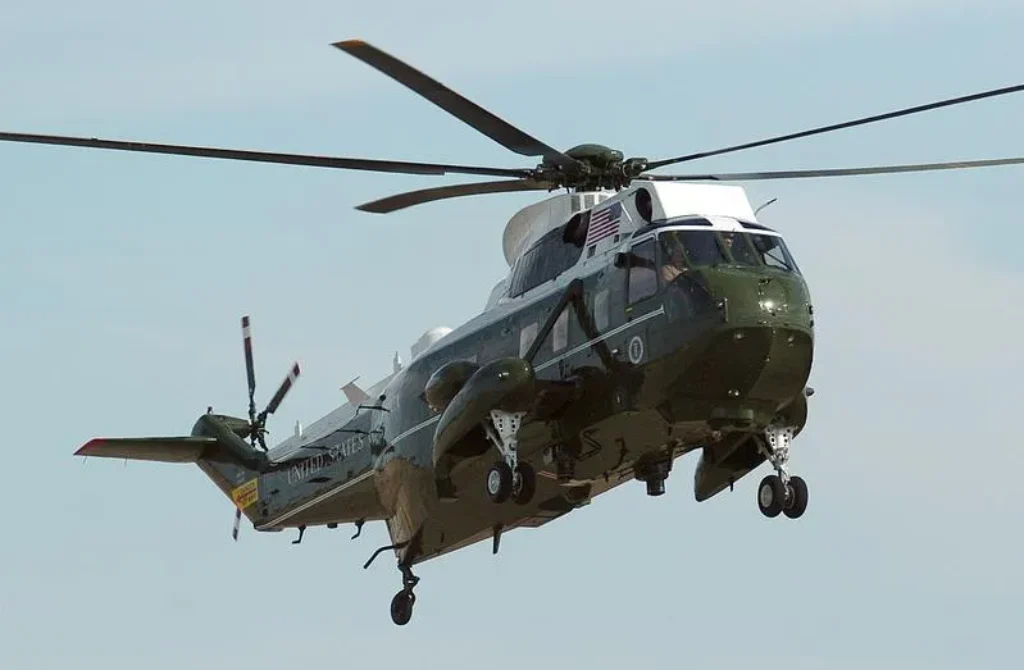
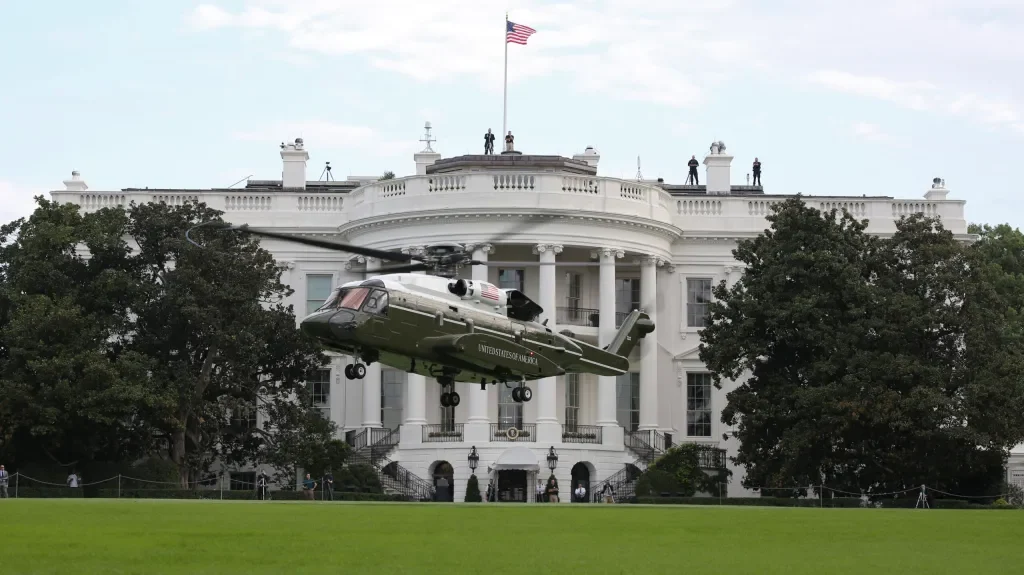
After nearly two decades of development, the U.S. Marine Corps finally introduced the VH-92A Patriot, developed by Sikorsky and based on the commercial S-92 helicopter.
Although it resembles its predecessor externally, the VH-92A is an entirely new aircraft.
It features a fully digital cockpit, encrypted communications, advanced electronic warfare systems, missile warning sensors, infrared countermeasures, enhanced crew protection, and significantly more powerful engines.
Ironically, those engines became the source of an unexpected problem.
Technical Specifications of the VH-92A Patriot
| Manufacturer | Sikorsky (Lockheed Martin) |
| Base Aircraft | Sikorsky S-92A |
| Crew | 4 |
| Passenger Capacity | Up to 19 |
| Length | 20.9 m (68.5 ft) |
| Main Rotor Diameter | 17.2 m (56.4 ft) |
| Height | 5.4 m (17.7 ft) |
| Maximum Takeoff Weight | Approximately 12,000 kg (26,500 lb) |
| Engines | 2 × General Electric CT7-8A turboshafts |
| Engine Power | Approximately 2,520 shp each |
| Maximum Speed | Around 306 km/h (190 mph) |
| Cruise Speed | Around 280 km/h (174 mph) |
| Maximum Range | Up to 1,000 km (620 miles) |
| Service Ceiling | Approximately 4,500 m (14,800 ft) |
| Primary Mission | Transport of the President of the United States |
| Special Features | Secure communications, electronic warfare suite, missile warning system, infrared countermeasures, enhanced survivability |
Why the Helicopter Started Destroying the White House Lawn
The main issue wasn’t the helicopter’s weight.
It was the enormous amount of downwash generated by its powerful main rotor.
The VH-92A produces significantly stronger rotor wash than the older Marine One helicopters.
During landing, the airflow lifts dust, gravel, loose soil, and even tears grass out by its roots. After only a relatively short period of regular operations, it became clear that the South Lawn simply could not withstand repeated landings.
The powerful airflow also scattered decorative mulch, damaged landscaping, and complicated preparations for official ceremonies.
In an unexpected twist, the White House found itself facing a problem few had anticipated: the helicopter had become too advanced for infrastructure that had remained largely unchanged for decades.
Replacing Grass With Granite
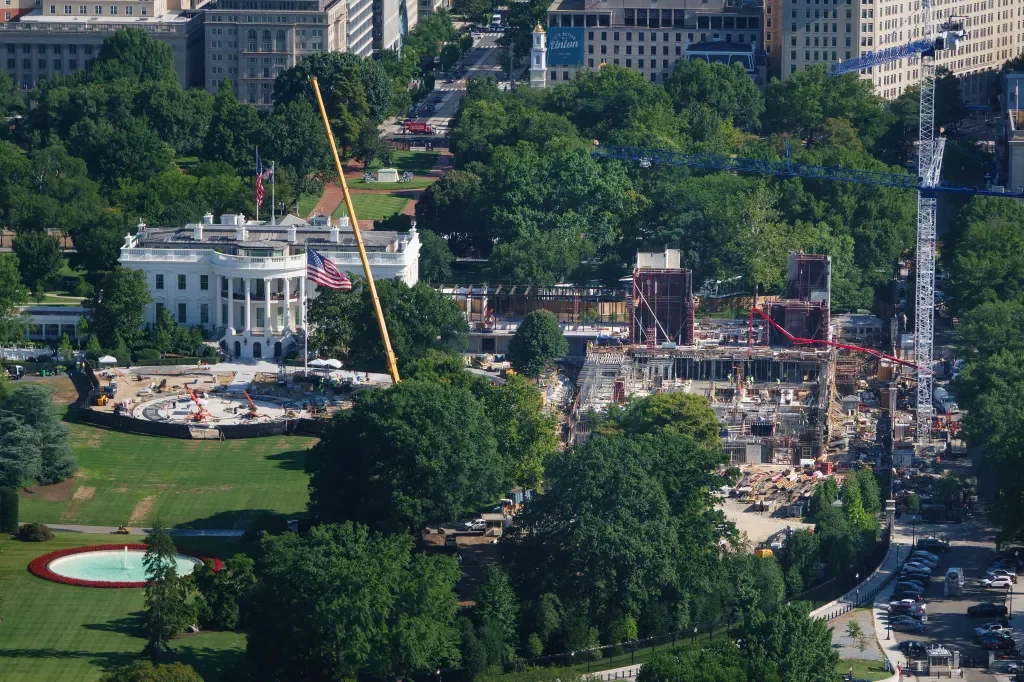
The solution was surprisingly straightforward.
Instead of constantly repairing the damaged lawn, officials decided to build a permanent landing pad.
Unlike most military helipads, which use standard reinforced concrete, the White House selected granite paving designed to complement the historic appearance of the presidential residence while withstanding years of heavy helicopter operations.
The project also includes the installation of the Presidential Seal at the center of the landing area, creating a new permanent home for Marine One.
Then Another Problem Appeared
One might think the issue had finally been solved.
However, according to U.S. media reports, President Donald Trump personally inspected the nearly completed helipad and was dissatisfied with the quality of the work.
His primary concern reportedly involved the slope of the landing surface. Believing it failed to meet the required standards, he ordered the newly completed construction to be demolished and rebuilt almost from scratch.
While construction revisions are not unusual on major engineering projects, such an order is exceptionally rare at the White House, where virtually every modification undergoes multiple levels of planning and approval.
Marine One for a New Era
The story of the new White House helipad illustrates just how dramatically presidential aviation has evolved over the past several decades.
Today’s Marine One is far more than a transport helicopter. With its sophisticated communications, defensive systems, and electronic warfare capabilities, it functions as an airborne command post capable of supporting presidential operations even during major military or national security crises.
Those capabilities, however, come at a price.
More powerful engines, greater weight, and vastly increased rotor performance have forced engineers to modernize one of the world’s most recognizable government residences.
The irony is difficult to ignore.
The first thing that failed to keep pace with America’s newest presidential helicopter was not the aircraft itself—but the iconic White House lawn that had welcomed Marine One for generations.
source https://www.twz.com/air/trump-orders-white-house-helipad-construction-redo-report