Northrop Lost the U.S. Air Force Competition — And Built an Unmanned Fighter Anyway

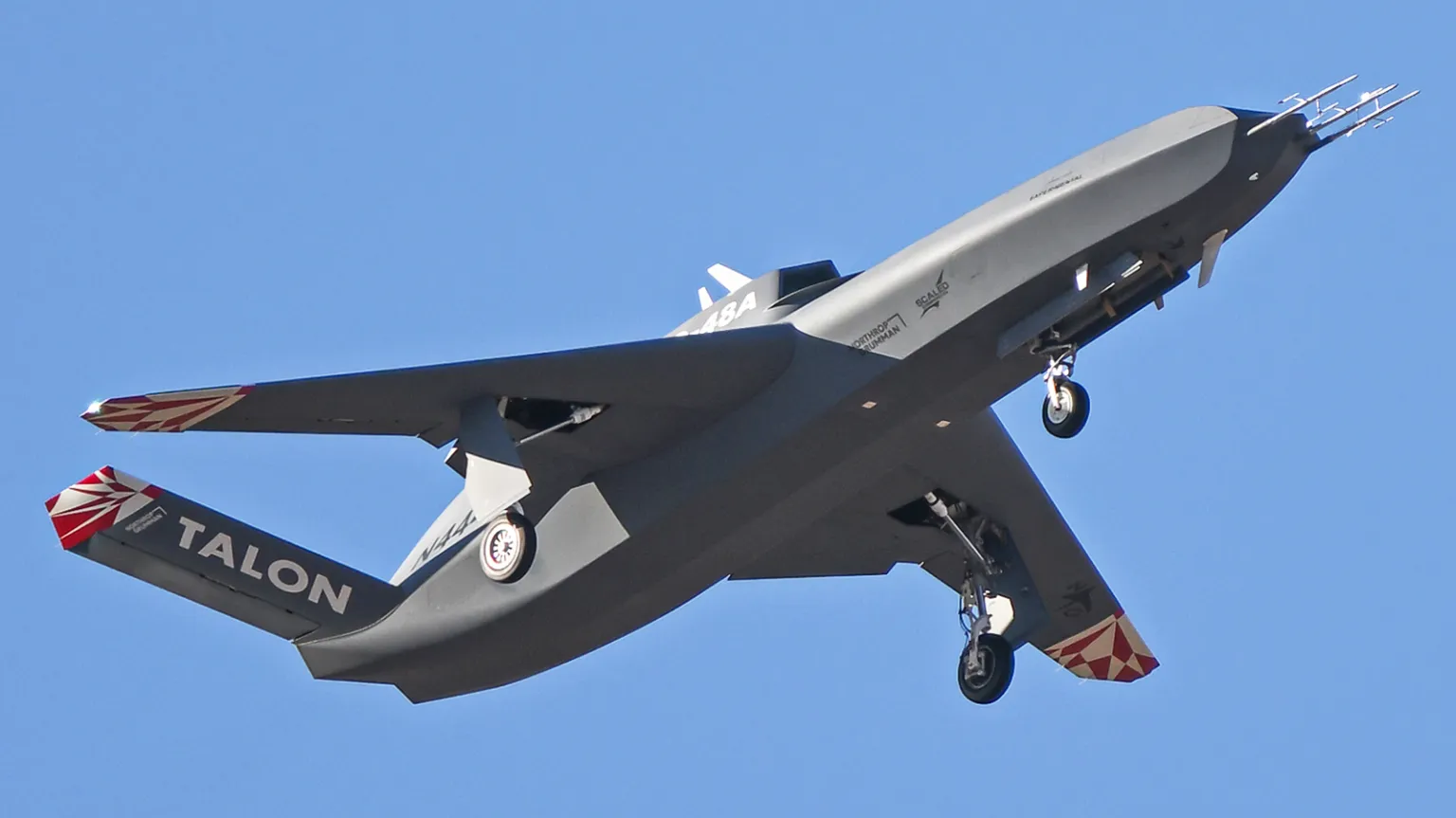
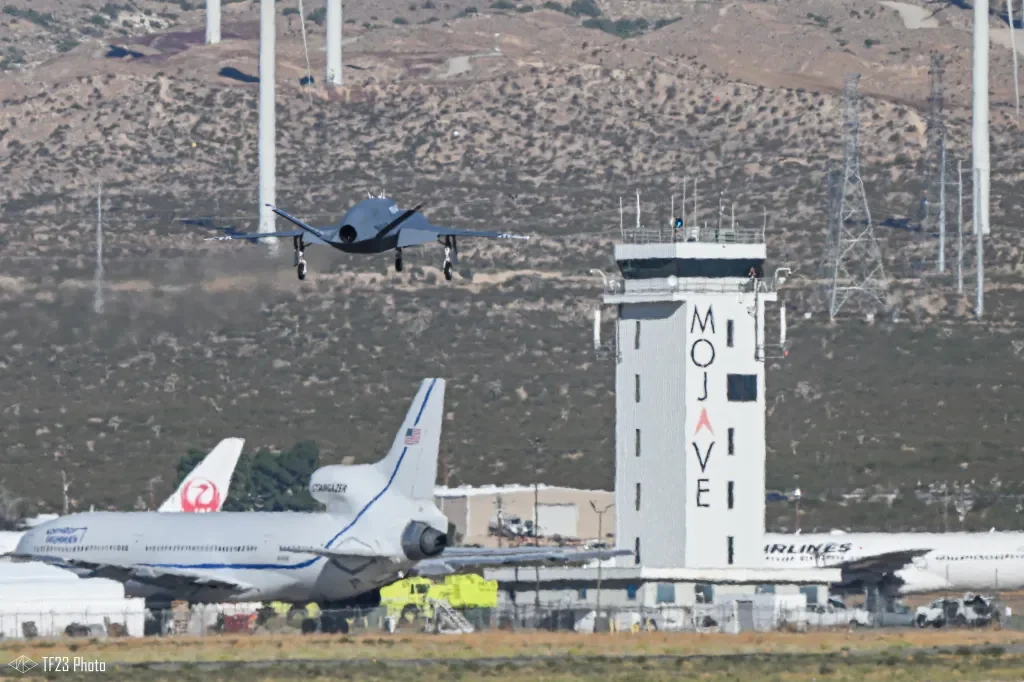
On October 3, 2026, something happened at Mojave Air and Space Port in California that, by the standards of the modern aerospace industry, might have looked almost routine. A small jet aircraft taxied onto the runway on its own, accelerated, took off, performed a series of maneuvers, returned to the airfield, and landed. There was no human in the cockpit — in fact, there was no cockpit at all. Northrop Grumman described the entire flight, including taxiing, takeoff, and landing, as fully autonomous.
This was the first flight of the YFQ-48A Talon Blue.
But the most interesting part of the story had happened long before the aircraft ever left the ground. The U.S. Air Force had not ordered this aircraft. Northrop Grumman had not even made it into the final pair selected for the first increment of the Collaborative Combat Aircraft program — a new generation of unmanned combat aircraft intended to operate alongside crewed fighters. The first round went to General Atomics and Anduril. Northrop could have waited for the next competition, proposed another design, or simply concentrated on other programs.
Instead, one of the world’s largest combat-aircraft manufacturers decided to spend its own money, build a real aircraft, and present the Air Force with a rather interesting fact:
You didn’t select us — but our unmanned fighter is already flying.
That is why Talon Blue is much more interesting than just another experimental drone. It offers a glimpse into what the American CCA program is gradually becoming — and why the competition for the future unmanned combat aircraft may look very different from a traditional fighter competition.
Why Does a Fighter Need Another Fighter Without a Pilot?
The Collaborative Combat Aircraft concept grew out of some uncomfortable arithmetic surrounding modern air warfare.
Combat aircraft are becoming increasingly capable — and increasingly expensive. F-35s, F-22s, and future crewed systems can carry extremely sophisticated sensors and weapons, but the number of such aircraft will always be limited. More importantly, losing an aircraft worth tens of millions of dollars together with its pilot is an extremely serious event.
At the same time, the growing range of modern missiles, increasingly capable electronic warfare systems, and more sophisticated air defenses are forcing combat aviation to operate across greater distances and distribute functions among a larger number of platforms.
This is where the CCA concept comes in.
Instead of trying to place every necessary capability aboard one extremely expensive crewed fighter, several much cheaper unmanned aircraft can operate alongside it. One can carry additional missiles. Another can serve as a forward sensor. A third can perform electronic warfare missions. A fourth can be sent into areas considered too dangerous for a crewed aircraft.
The U.S. Air Force officially describes CCAs as affordable semi-autonomous aircraft designed to complement its crewed fighter fleet. More importantly, the program was deliberately structured around continuing competition: the first generation is expected to be followed by additional increments, giving new manufacturers opportunities to enter the program later.
That would eventually become extremely important for Northrop Grumman.
The result is a different model of combat aviation. The strength of a fighter formation is no longer determined solely by the number of expensive crewed aircraft. Each of them could potentially be accompanied by several additional weapons and sensor platforms.
But that creates another problem.
If the unmanned aircraft becomes too sophisticated, it becomes expensive again.
And if that happens, what was the point of removing the pilot?
Northrop Lost the First Competition
For the first increment of the CCA program, the U.S. Air Force selected designs from two very different companies: General Atomics and Anduril. Their aircraft received the designations YFQ-42A and YFQ-44A, and the program subsequently continued moving toward the deployment of its first production capabilities.
Northrop Grumman was not among them.
For a company of its scale, that was particularly notable. Northrop created the B-2 and B-21, possesses enormous experience with stealthy unmanned aircraft, and has worked on autonomous aviation systems for decades. But in the first CCA round, reputation alone was not enough.
The structure of the CCA program, however, is fundamentally different from a conventional fighter competition, where losing can effectively remove a manufacturer from a market segment for a decade or more. The Air Force deliberately left the program open to future entrants. In an official statement in December 2025, the service explicitly described a model of continuous competition, allowing industry to enter again during later increments.
Northrop decided to take that idea literally.
It would not wait for the requirements of the next major competition.
It would not limit itself to computer models.
It would build an aircraft.
Project Talon was the result.
An Aircraft the Air Force Has Not Paid For
The YFQ-48A differs from many conventional experimental military aircraft in one fundamental respect: Northrop Grumman is financing its development itself.
The Air Force officially designated the aircraft YFQ-48A in December 2025 and described it as a strong contender in the evolving CCA ecosystem, but that did not mean it had been selected for production. Northrop has repeatedly emphasized that Talon Blue remains a company-funded initiative.
That changes the traditional logic of military procurement.
The company is effectively assuming part of the development risk. Instead of asking the government to fund several years of development before a prototype emerges, Northrop is trying to demonstrate a functioning aircraft first and compete for future contracts afterward.
And Talon Blue has moved quickly.
The aircraft was publicly revealed in December 2025. By spring 2026, it had been observed conducting taxi tests. On October 3, it completed its first flight.
The aircraft itself was built by Scaled Composites, the Northrop Grumman-owned company in Mojave famous for rapidly developing unconventional experimental aircraft.
But development speed alone does not explain Talon Blue.
The more interesting question is how Northrop is trying to make it affordable.
A Business-Jet Engine for an Unmanned Fighter
The YFQ-48A’s powerplant is almost provocatively pragmatic.
Rather than develop an entirely new military engine, Northrop and Pratt & Whitney selected a member of the PW500 family.
The PW500 family was originally developed primarily for light and midsize business jets. Depending on the variant, PW500 engines produce roughly 2,900 to 4,500 pounds of thrust and are widely used in civil business aviation. By the time the engine was adapted for Talon Blue, the family had accumulated more than 24.5 million flight hours.
Of course, the engine could not simply be removed from a business jet and installed in a combat drone. Pratt & Whitney conducted a dedicated test program, expanding the PW500’s operating envelope and simulating the specific conditions expected in CCA operations.
But the fundamental advantage remained: the starting point was an existing production engine backed by an enormous amount of operational experience.
And that illustrates the philosophy behind the entire program remarkably well.
For a conventional fighter, the engine is one of the aircraft’s defining characteristics. Maximum thrust, afterburning capability, supersonic performance, and thrust-to-weight ratio can shape the entire aircraft around them.
A CCA does not necessarily need to compete with an F-22.
It needs enough speed.
Enough range.
Enough maneuverability.
At the same time, its engine needs to be affordable, reliable, and suitable for production in quantities potentially much larger than a few dozen experimental aircraft.
Pratt & Whitney itself explained that using PW500 technology could accelerate development while balancing cost against the required performance.
That is almost the opposite of the traditional fighter philosophy.
There, engineers try to extract the maximum.
Here, the challenge is determining where enough becomes enough.
Fewer Parts, Less Weight, Faster Production
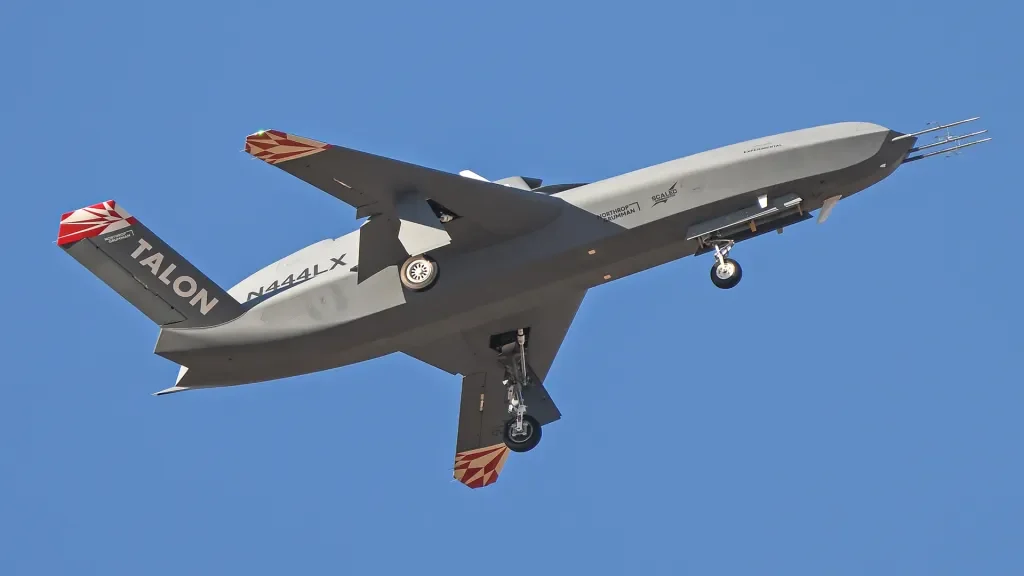
Northrop has applied the same logic to the airframe.
The company describes a modular architecture and new manufacturing techniques intended to reduce both part count and structural weight. Once again, the objective is remarkably straightforward: reduce cost and accelerate production.
And this brings us to one of the most important questions surrounding the entire CCA program.
For decades, the U.S. Air Force has received increasingly sophisticated aircraft in relatively limited numbers. Only 21 B-2s were built. Fewer than two hundred production F-22s were completed. Even the enormous F-35 program depends on an extraordinarily complex international production network.
CCA is supposed to move in the opposite direction.
If several unmanned platforms are genuinely expected to accompany individual crewed aircraft, a large number of them will be required. They will also have to be produced much faster than traditional combat aircraft.
In that environment, reducing the number of components may ultimately matter almost as much as radar signature or maximum speed.
Talon Blue is therefore not merely an aircraft.
It is also an experiment in how an aircraft should be manufactured.
Affordable Does Not Mean Disposable
This is where one common misunderstanding about CCA becomes important.
Such aircraft are often described as “loyal wingmen” or even as something close to expendable drones. But Talon Blue is not simply a large cruise missile.
Published images reveal a relatively sophisticated aerodynamic configuration with V-shaped tail surfaces, a dorsal air intake, and an internal weapons bay. Northrop has also highlighted the aircraft’s wide-track landing gear and modular construction.
The internal weapons bay is particularly revealing.
If the only objective were to create the cheapest possible carrier for several missiles, external pylons would be simpler. Internal carriage is more complicated, but it can reduce both aerodynamic drag and radar signature.
In other words, a CCA is supposed to be cheaper than a crewed fighter while still possessing serious combat capabilities.
That is where the hardest engineering problem begins.
Make the aircraft too cheap, and it may become ineffective in a sophisticated air-combat environment.
Make it too capable, and it becomes expensive enough that commanders will once again be reluctant to risk it.
Finding the point between those two extremes may prove much harder than simply building an unmanned aircraft.
But Where Is the Pilot?
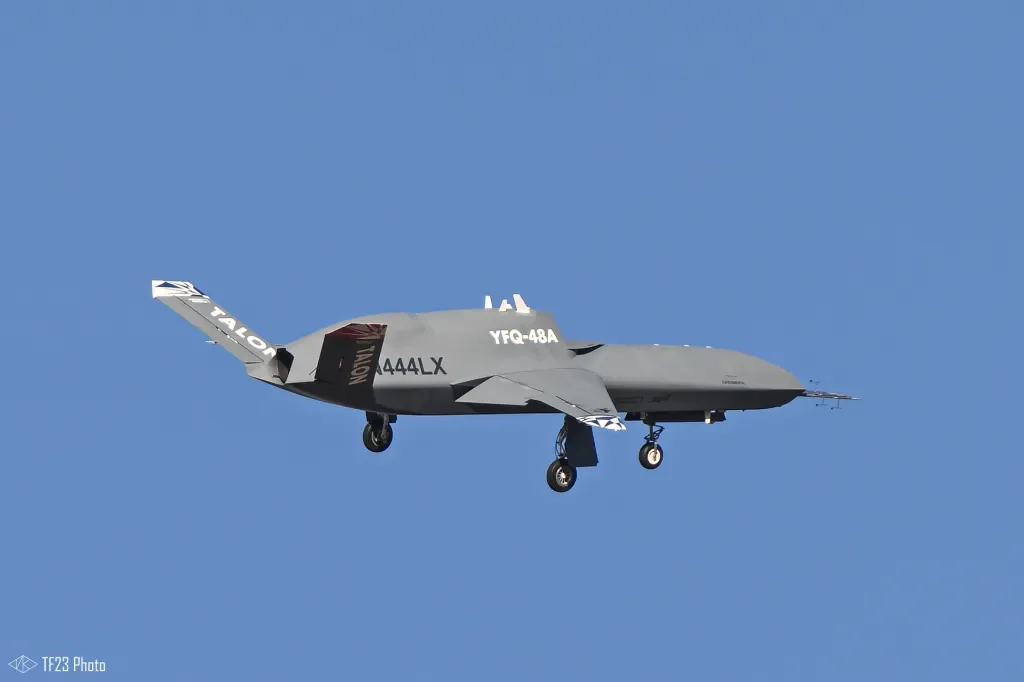
There is another detail about Talon Blue’s first flight that is easily lost behind photographs of the new aircraft.
Northrop says that the entire flight was autonomous.
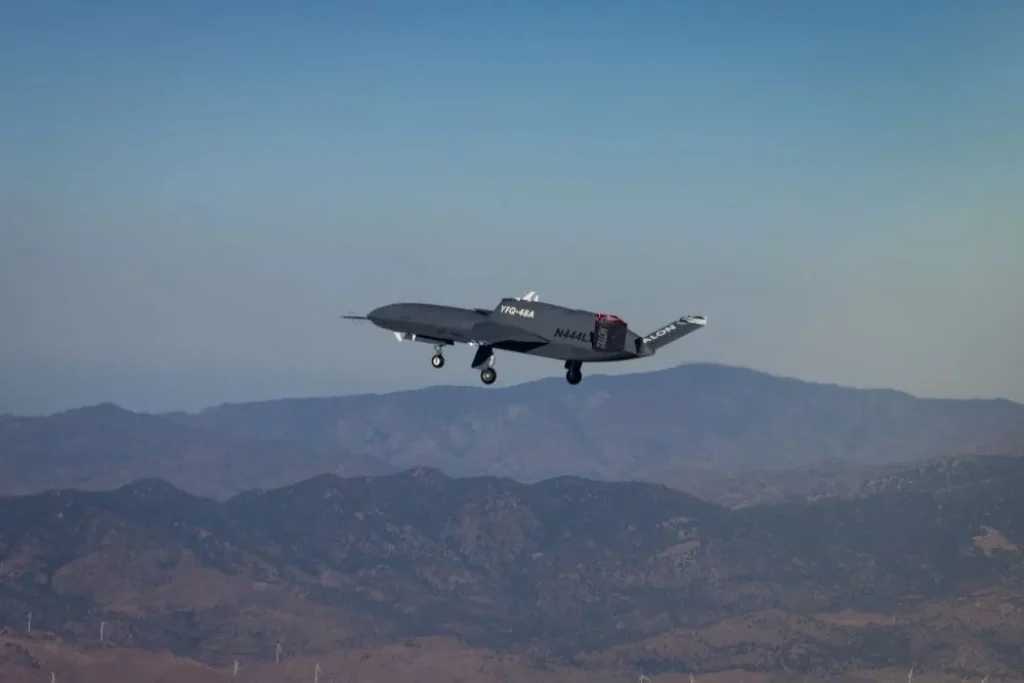
The aircraft taxied, took off, maneuvered, and landed without a pilot aboard. Flight-tracking data reported by Aviation Week indicated that the aircraft spent much of the flight following an elongated route over the Mojave area, reportedly reaching around 233 knots and slightly more than 10,000 feet.
That is obviously not a demonstration of autonomous air combat.
But it is a real-world demonstration of basic autonomous control over an actual jet aircraft.
The distinction is important.
Taking off and landing autonomously is one problem.
Conducting air combat autonomously is something entirely different.
The first flight does not demonstrate that Talon Blue can independently select targets, make decisions about weapons employment, or develop complex combat tactics without human involvement. Northrop has not claimed that it can.
But the company is already building the software foundation for more sophisticated autonomous operations.
Project Talon includes another aircraft called Talon IQ, previously known as Beacon. It is based on the experimental Scaled Composites Model 437 Vanguard and serves as a flying laboratory for testing autonomous systems. Northrop has linked it to its Prism Mission Autonomy software.
This creates an interesting division of labor.
Talon Blue can rapidly test the future combat platform.
Talon IQ can test the software and autonomy behind it.
Potentially, the algorithms can then continue improving without requiring a completely new aircraft every time.
Why Does the U.S. Air Force Need Several Different CCAs?
At first glance, the situation seems strange. If the YFQ-42A and YFQ-44A already exist, why would a third aircraft be necessary?
But that is precisely the point of the Air Force’s emerging strategy.
CCA is not intended to become a competition in which one winner produces the same design for the next thirty years. In December 2025, the Air Force specifically emphasized continuous competition and the possibility of new companies entering during later increments.
That approach helps avoid a problem familiar from traditional aircraft programs: once a single winner is selected, competing engineering teams disappear and the customer can become effectively tied to one supplier for decades.
For autonomous aviation, that could be especially important.
Electronics and software develop much faster than the airframe of a conventional fighter. A platform optimized for 2026 may no longer be the best solution by the mid-2030s.
Instead of searching for one “perfect unmanned fighter,” the Air Force appears to be trying to create an ecosystem of continuously competing platforms and software.
That is why Northrop’s defeat in the first increment did not settle the matter.
Northrop Is Trying to Enter Through Another Door
The YFQ-48A designation granted in December 2025 was an important signal. The Air Force had not ordered the aircraft, but it formally recognized it as part of the broader CCA ecosystem and publicly welcomed Northrop’s continued investment in semi-autonomous technology and affordable manufacturing.
Now the company has a considerably stronger argument.
The aircraft exists.
It taxis.
It takes off.
It flies.
It lands.
The next stage will be much harder. Northrop must demonstrate not simply that it can build a flying unmanned aircraft, but that the design can satisfy whatever requirements the Air Force establishes for future CCA increments. Those requirements may differ significantly from Increment 1.
That makes private funding both an advantage and a risk.
Northrop gained the freedom to move quickly without waiting for a government development contract.
At the same time, it is building an aircraft without any guarantee that future Air Force requirements will perfectly match the architecture it has chosen.
It is essentially a bet.
The company is spending its own money on an assumption about what kind of aircraft the Pentagon will want several years from now.
Perhaps the Most Important Thing About Talon Blue Is Not the Aircraft
It is easy to frame the YFQ-48A’s first flight as the beginning of a competition among three unmanned fighters: FQ-42 versus FQ-44 versus Talon Blue.
But that interpretation simplifies what is happening.
The real experiment is much broader.
The American aerospace industry is trying to determine whether the traditional combat-aircraft development cycle can be broken.
Not fifteen years from the first requirements to an operational squadron.
Not an extremely expensive bespoke engine.
Not an aircraft optimized exclusively for maximum performance.
Not one competition winner dominating the next three decades.
Instead: an existing commercial engine, a rapidly developed airframe, autonomous software, modularity, continuous competition, and the ability to replace one platform with another relatively quickly.
In that sense, Talon Blue is almost the perfect experiment.
Northrop lost the first competition — but the program did not end.
The company funded another aircraft itself.
It publicly revealed the machine in December 2025.
In April 2026, Pratt & Whitney disclosed the adaptation of the production PW500 engine.
And on October 3, the aircraft autonomously took off, flew, and returned to the airfield.
For a traditional combat-aircraft program, that sequence looks remarkably fast.
And perhaps that speed matters more than Talon Blue’s maximum speed.
Because CCA is not simply about giving a crewed fighter an unmanned wingman. The U.S. Air Force is simultaneously experimenting with an entirely different model for developing combat aviation — one in which aircraft can be created faster, produced in larger numbers, replaced by new generations more frequently, and upgraded primarily through software.
Whether the YFQ-48A itself will ever enter production remains unknown. An official designation does not guarantee a contract, and a successful first flight certainly does not guarantee victory in a future competition.
But Northrop Grumman has already accomplished one important thing.
After losing the first round, the company did not return to the Air Force with another presentation showing what its future unmanned fighter might someday become.
It came back with an aircraft that already flies.