Sweden Spent 40 Years Building Small Warships — Now It Is Buying Four Large Frigates: Why the Baltic Suddenly Needs a “Patriot at Sea”

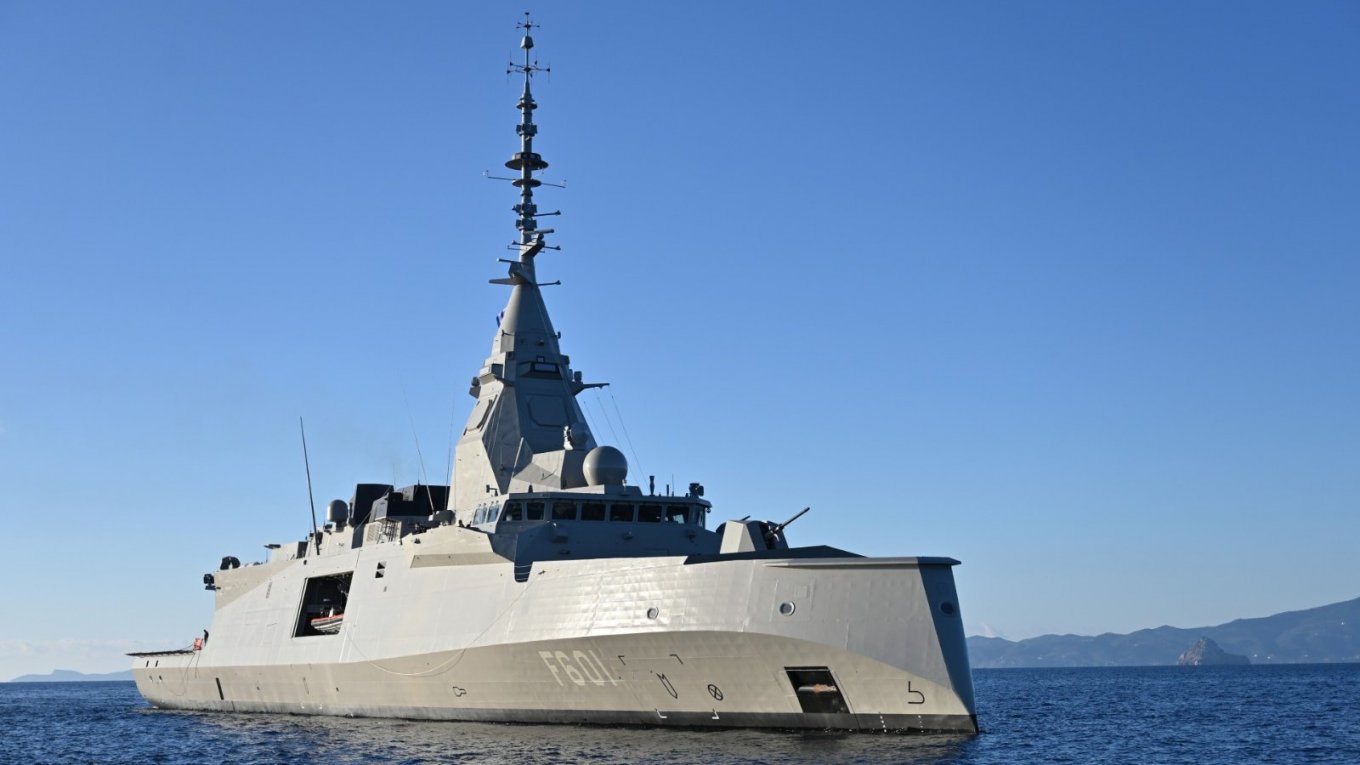
It took Sweden just three months to turn the selection of its next major warship into one of Europe’s largest naval procurement programs. Stockholm has signed a contract worth roughly €4.23 billion for four French FDI frigates. The first ship is scheduled for delivery in 2030, followed by the remaining vessels in 2032, 2033, and 2034. In Swedish service, they will form the new Luleå class and will be named HMS Luleå, HMS Norrköping, HMS Trelleborg, and HMS Halmstad. The package includes not only the ships themselves, but also training, spare parts, and other necessary equipment.
At first glance, this looks like another major European naval procurement program. Sweden needs new surface combatants, the French offered a modern design already entering production, and Stockholm bought it. But there is something strange about this decision. For decades, Sweden built a navy almost specifically tailored to the Baltic Sea: compact ships, low signatures, high speed, operations among islands and skerries, and heavy reliance on shore-based aviation and anti-ship missiles. The Visby-class corvette, displacing well under 1,000 tons, became perhaps the purest expression of that philosophy. And now the same country is ordering 4,500-ton ocean-going frigates, 122 meters long, equipped with powerful radars, long-range surface-to-air missiles, anti-submarine systems, and potentially even long-range land-attack cruise missiles.
Sweden did not select the FDI because the French ship was the smallest or simplest option. One of the central attractions was a capability that the Swedish Navy has historically lacked: long-range area air defense and an emerging ballistic missile defense capability. The future Luleå-class configuration is expected to use the Aster 30 family, including the improved B1NT variant intended to provide enhanced capability against ballistic threats.
That is why the story of Sweden’s four FDI frigates is considerably more interesting than another warship purchase.
Sweden is not simply replacing the Visby. It is building a navy for an entirely different role.
For Decades, the Swedish Navy Prepared to Fight a Very Different War
To understand the scale of the change, it is enough to look at the Visby class. Sweden’s stealth corvette became one of the most unusual warships of its generation: a composite hull, radically reduced radar signature, compact dimensions, high speed, and serious anti-ship capability for a vessel of its size. It was designed for an environment in which a large ocean-going warship could sometimes be more of a liability than an advantage.
The Baltic was ideally suited to this philosophy. Distances are relatively short, the coastline is broken by enormous numbers of islands and skerries, shore infrastructure is extensive, and naval forces can operate closely with land-based aircraft and coastal systems. A Swedish warship did not need to escort a carrier strike group across the Atlantic for months. Its job was to hide, move quickly into position, detect the enemy, launch an attack, and exploit the complicated coastal geography again.
This fleet was a natural continuation of Sweden’s Cold War defense model. The country was preparing primarily to defend its own territory and coastline. Everything from ship size to endurance reflected that strategic assumption.
But Stockholm now needs something different.
And the clearest evidence is not even the size of the FDI.
It is the weapon Sweden intends to put aboard it.
The New Frigate’s Most Important Weapon Is Not an Anti-Ship Missile
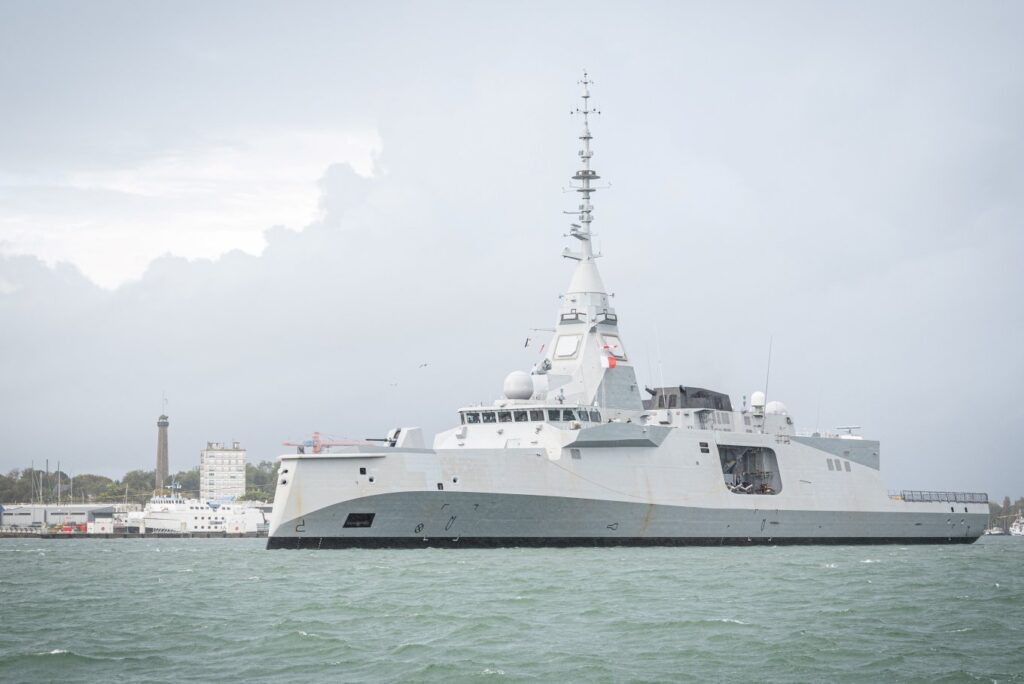
For the traditional Swedish Navy, it would have been perfectly logical to make anti-ship warfare the defining mission of a new surface combatant. The Luleå class will certainly retain that capability. But the primary missions identified for the new frigates are air defense and anti-submarine warfare.
That is a fundamental change.
Despite its relatively modest displacement of around 4,460 tons, the FDI was designed as a full-spectrum surface combatant for high-intensity warfare. Its 122-meter hull combines a sophisticated sensor suite, vertical launch cells from the Sylver family, anti-ship and anti-submarine weapons, aviation facilities, and an advanced digital combat system. Depending on configuration, the design can accommodate 16 to 32 vertical-launch cells for Aster-family surface-to-air missiles, together with eight anti-ship missiles.
For Sweden, however, the most interesting element is air defense.
Until now, the Swedish Navy has effectively lacked a true long-range shipborne area-air-defense capability.
A corvette can primarily protect itself and the immediate space around it.
A frigate armed with Aster 30 begins protecting something much larger.
It can defend an area.
And that turns the ship into a fundamentally different military instrument.
An Air-Defense Battery Can Now Move Around the Baltic
This is where the comparison with a “Patriot at sea” becomes useful. Technically, of course, Aster and Patriot are different systems with different radars, interceptors, architectures, and engagement concepts. Functionally, however, the analogy explains the transformation remarkably well.
A powerful land-based air-defense battery protects a particular area and moves along roads.
A shipborne air-defense system gives that defended zone its own propulsion system and the ability to move hundreds of kilometers in a single day.
Today, the frigate could contribute to the defense of the Gotland area.
Tomorrow, it could protect maritime communications.
The following day, it could operate with allied ships around the Danish Straits.
And after that, it could move into the North Sea or even the North Atlantic.
That is why the FDI should not be viewed through the familiar question: “Why does Sweden need such a large ship in the small Baltic Sea?”
The Baltic’s compact geography may actually make the concept particularly useful.
A mobile long-range air-defense system can rapidly reposition its defensive footprint between critical areas of the theater.
But Sweden is apparently going even further.
Aster 30 B1NT Pushes the Frigate Toward Missile Defense
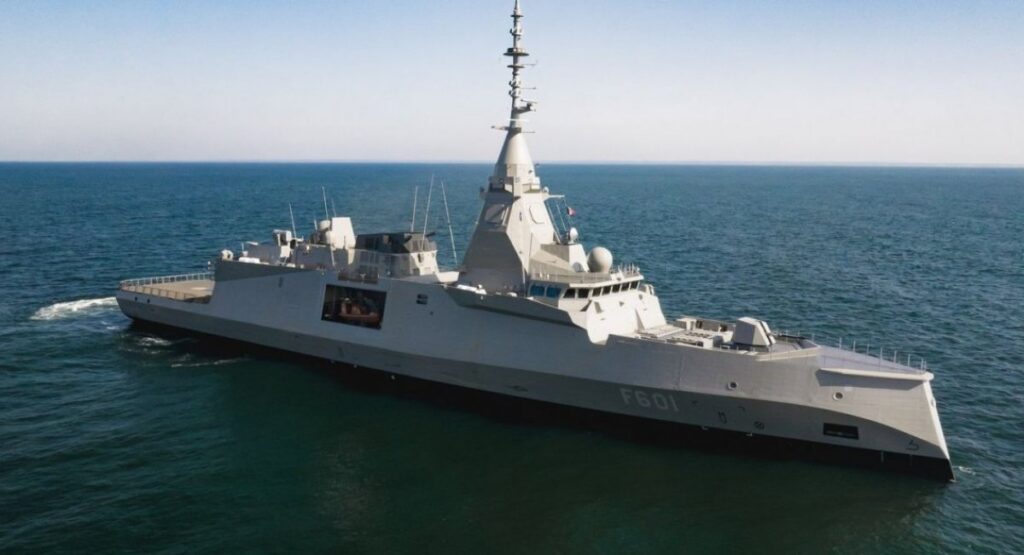
According to information published about the Swedish configuration, the ships are expected to receive the improved Aster 30 B1NT interceptor. Defense Express specifically identifies the B1NT as part of the planned configuration and emphasizes its enhanced capability against ballistic targets.
This goes significantly beyond conventional naval air defense.
The Aster 30 family has long been evolving beyond the mission of shooting down aircraft and cruise missiles. The B1NT generation is intended to improve performance against ballistic threats through upgraded electronics and seeker technology.
For Sweden, this means the frigate begins to look like a mobile component of a much larger integrated air and missile defense network.
And suddenly, four frigates look rather different.
They are not simply four ships.
They are potentially four relocatable air- and missile-defense nodes carrying their own sensors, communications systems, and dozens of interceptors.
But There Is an Uncomfortable Problem: You Never Have Enough Missiles
The FDI is an impressively powerful ship for its size, but physics still applies. A hull displacing around 4,500 tons inevitably places limits on magazine capacity.
Depending on configuration, the FDI family provides 16 to 32 Sylver vertical-launch cells for Aster missiles, alongside eight anti-ship missile launchers.
And this is where one of the central problems with the entire concept appears.
Thirty-two interceptors sounds impressive.
Until the ship faces a large-scale attack.
A modern strike package could combine aircraft, anti-ship cruise missiles, drones, decoys, and ballistic weapons. More than one interceptor may also be fired against the most dangerous targets to increase the probability of a kill.
The magazine can therefore empty remarkably quickly.
And if the frigate really is going to function as a naval equivalent of a Patriot battery, it inherits one of the same fundamental problems as land-based air defense: the cost and quantity of interceptors can become just as important as the performance of the radar.
The real combat power of the Luleå class will therefore not be determined solely by how far its sensors can see or how sophisticated a target the Aster 30 B1NT can engage.
It will also depend on how many missiles Sweden actually buys — and how quickly those missiles can be replenished.
Sweden Does Not Need the Frigate Only to Defend Sweden
And here we reach perhaps the most important explanation for the entire procurement program.
Sweden joined NATO in March 2024.
After that, the geography of Swedish defense changed even though the country itself obviously remained in exactly the same place.
Previously, the Swedish Navy primarily had to answer one question:
How do we defend the Swedish coastline?
Now there is another:
What can Sweden contribute to NATO’s wider naval system?
And here the compact Visby becomes far less versatile than a full-sized frigate.
A small stealth corvette can be extremely dangerous close to its own coastline. Sending it thousands of kilometers away to escort a major allied naval formation is another matter entirely.
A frigate is built precisely for missions like these.
It can protect a convoy.
Hunt submarines.
Defend other ships against aircraft and missiles.
Operate alongside larger allied formations.
Escort amphibious or transport ships.
Remain at sea for weeks.
Defense Express lists endurance for the FDI at up to 45 days, illustrating just how far the concept has moved from the highly localized coastal combatant.
So the FDI’s 4,500 tons are not merely an increase in the size of Sweden’s warships.
They represent an increase in Sweden’s military and political reach.
Sweden is now part of an alliance whose naval interests potentially stretch from the Baltic to the North Atlantic and beyond. Its surface fleet can no longer be designed exclusively around Swedish coastal waters.
And that makes the French choice easier to understand.
Sweden Is Effectively Buying Its Way Into NATO’s Larger Naval War
That sounds dramatic, but functionally this is exactly what is happening.
A small corvette can be extraordinarily dangerous around its home coastline. But integrating such a ship into sustained multinational operations thousands of kilometers away is much more difficult.
A frigate exists for exactly that kind of work.
It can escort convoys, hunt submarines, protect high-value ships against air attack, operate with major naval task groups, and remain deployed far from its home ports.
This means that moving from Visby to Luleå is about much more than displacement.
It is the purchase of strategic reach.
Sweden is becoming part of a military system that potentially needs to control maritime space from the Baltic to the North Atlantic. Its navy therefore cannot remain purely Baltic-focused.
And this also helps explain why Stockholm selected the French design.
France Did Not Sell Sweden the Most Swedish Ship — It Sold Sweden Time
The FDI competed against other European proposals, but the French design possessed one enormous advantage.
The ship already exists.
France’s FDI program is already in production, while Greece has also become an operator of the family. Sweden is therefore not funding the creation of an entirely new frigate from scratch. It is joining an existing production ecosystem and adapting a mature design to Swedish requirements.
That matters enormously.
The first Swedish ship is planned for delivery in 2030, followed by the others in 2032, 2033, and 2034.
In other words, Sweden is not buying specifications alone.
It is buying time.
And in modern European defense procurement, a functioning production line has become a strategic capability in its own right.
The French Frigate Will Still Become Partly Swedish
Selecting the FDI does not mean abandoning Sweden’s domestic defense industry. The Luleå-class configuration is expected to incorporate Swedish systems, which is also one reason why directly comparing its price with other FDI contracts can be misleading.
The total contract is worth around €4.23 billion, which produces a simple arithmetic figure of roughly €1.06 billion per ship. But that does not mean each bare frigate costs €1.06 billion. The package includes training, spare parts, other necessary equipment, Swedish-specific systems, and associated services.
This distinction matters because buying four warships is relatively straightforward.
Keeping them operational for the next 30 years is harder.
The real cost of a frigate is determined by the ecosystem surrounding it: maintenance, missiles, spare parts, crew training, software upgrades, infrastructure, and the industrial capacity required to support the ship long after the original procurement contract has been completed.
But the Luleå class could eventually receive another capability that would transform its role yet again.
What Happens if Sweden Gives Its Shield a Very Long Sword?
Reports surrounding the program have also raised the possibility that Sweden could acquire the French MdCN — Missile de Croisière Naval — cruise missile. An important distinction is necessary here: MdCN should not yet be treated as a confirmed part of the Swedish FDI configuration. Defense Express describes its use as a possibility rather than a finalized element of the contract.
But the fact that the possibility is being discussed is revealing in itself.
Because MdCN would turn an air-defense frigate into a platform for long-range land attack.
The French missile was designed to strike targets deep inland from surface ships and submarines. If Sweden eventually chooses to acquire such a capability, the Luleå class would not merely protect naval formations against aircraft and missiles. It could also attack targets hundreds of kilometers away.
For the Swedish Navy, that would represent another historical leap.
The Visby was designed primarily to make an enemy afraid to approach Sweden’s coastline.
A Luleå equipped with long-range cruise missiles would potentially force an opponent to think about what lies hundreds of kilometers beyond that coastline.
That shows just how far the new concept has moved from the old one.
Something Strange Has Happened: The Small Baltic Suddenly Needs Large Warships
At first glance, logic would suggest the opposite.
The smaller the sea, the smaller the ship should be.
For decades, Sweden largely followed that logic.
Modern warfare is gradually turning it upside down.
A large hull is not necessarily required because the ship must cross an ocean.
It is needed to carry a powerful radar.
Dozens of surface-to-air missiles.
Anti-submarine equipment.
A helicopter.
Fuel and supplies.
Computing systems.
Electrical-generation capacity.
A crew capable of remaining operational far from home.
And, perhaps most importantly, enough physical and electrical growth margin to accept new systems over the next 30 years.
That is why the roughly 4,500-ton FDI looks enormous next to a Visby but remains a relatively compact frigate by international standards. The French have managed to pack into a comparatively small hull capabilities that once would have required a significantly larger warship.
And the Baltic does not become too small for it.
Quite the opposite.
In a compact sea, a mobile long-range air-defense battery can reposition particularly quickly relative to the assets it is supposed to protect.
Perhaps Sweden Is Not Really Buying Four Frigates at All
If the €4.23 billion contract is viewed solely as a replacement for aging corvettes, it looks enormous.
But the four Luleå-class ships give Sweden several capabilities that its surface fleet has previously possessed only in limited form or not at all.
Mobile area air defense.
A potential contribution to ballistic missile defense.
Full ocean-going endurance.
A much stronger anti-submarine platform.
The ability to escort major NATO formations.
And potentially, in the future, long-range land-attack weapons.
That is why comparing the new ships directly with the Visby class misses the point. They were designed for different navies.
Visby was close to the ideal warship for a Sweden preparing primarily to defend its own coastline and fight inside the Baltic Sea.
Luleå is being built for a Sweden that is now part of a much larger military system.
That is why the most important symbol of this transformation is not even the size of the ship.
It is the Aster 30 missile.
For decades, the Swedish Navy was built around a relatively simple strategic idea:
Do not allow the enemy to operate freely near Sweden.
Its new mission is broader:
Create a protected maritime zone wherever Sweden and its allies need one.
The four French frigates therefore represent more than the biggest transformation of Sweden’s surface fleet in decades. They mark the end of an entire era in Swedish naval thinking.
Sweden has not abandoned the Baltic.
It has simply decided, for the first time in a very long time, that its navy should not end there.