Japan Wanted Two Missile Defense Bases and Got Two Missile Cruisers Instead: Why ASEV Needs 12,000 Tons and 128 Missiles

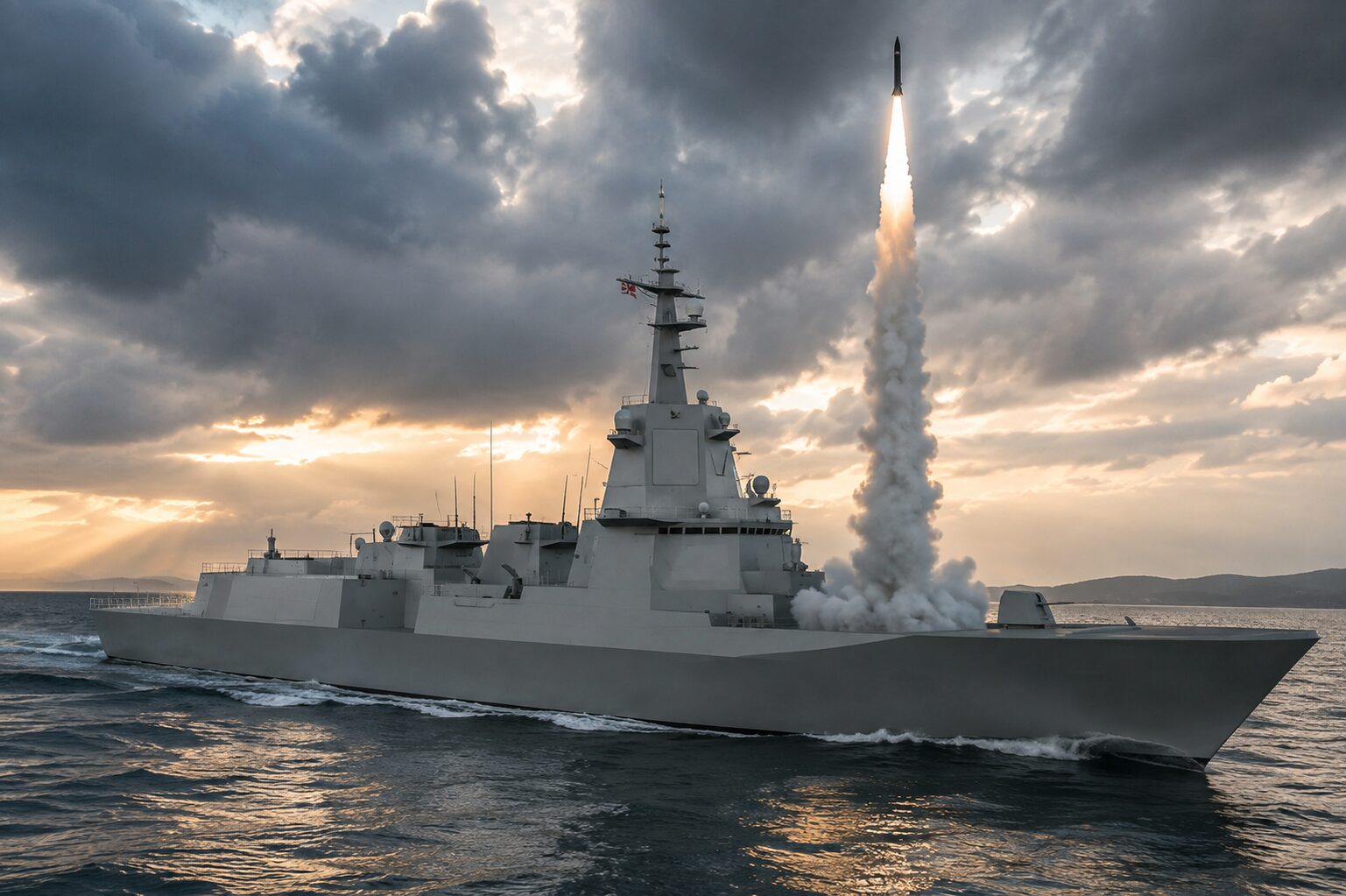
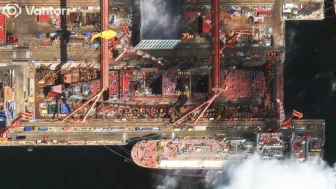
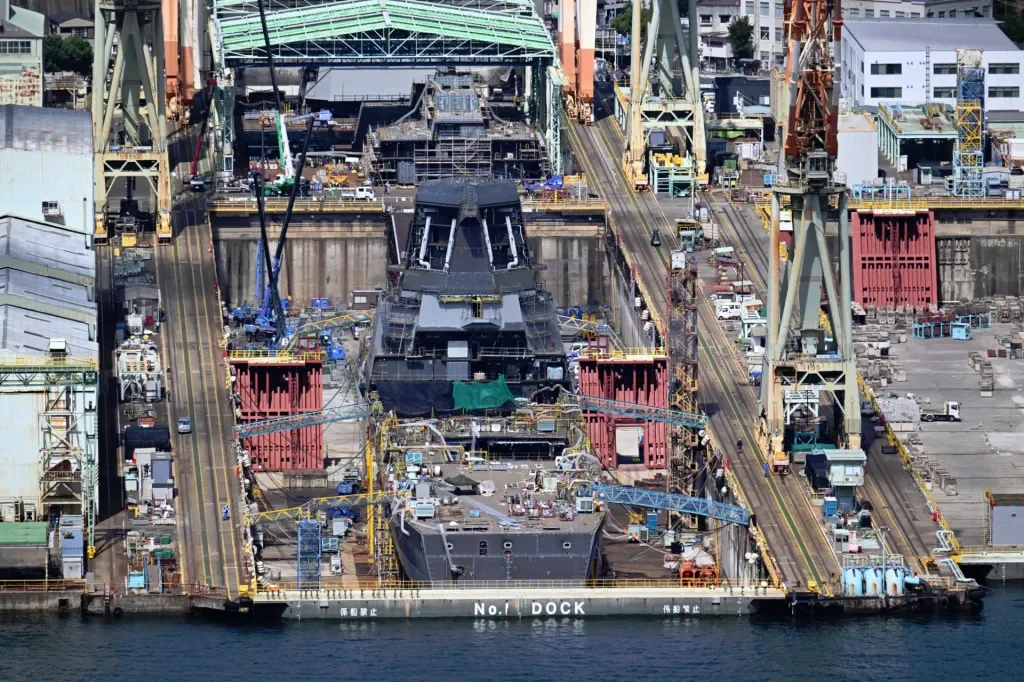
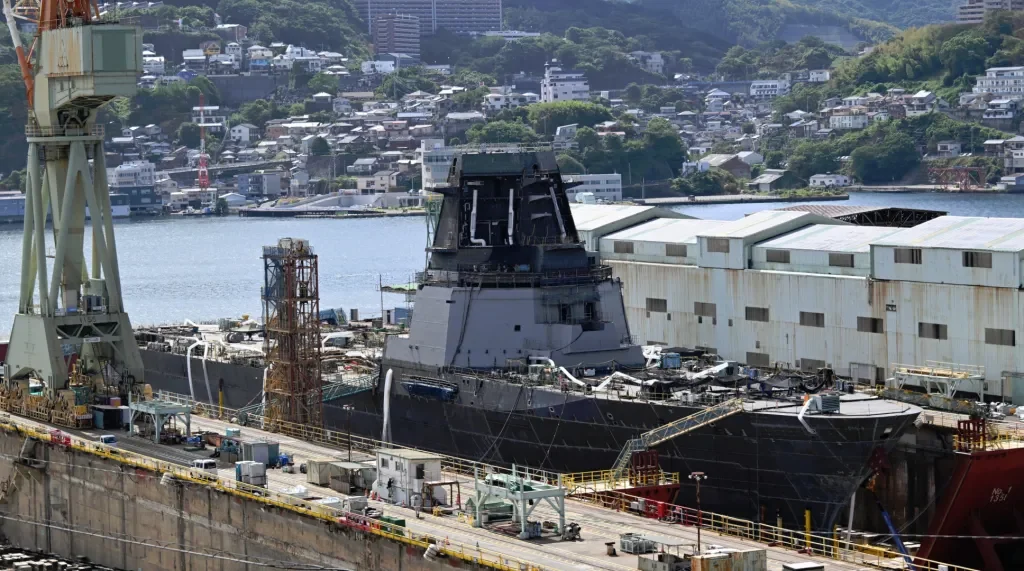
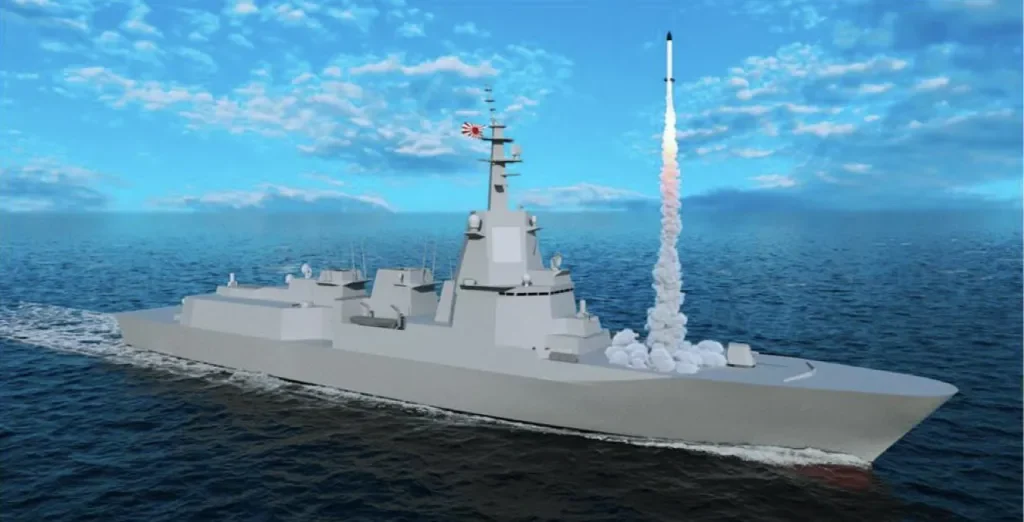
At Mitsubishi Heavy Industries’ shipyard in Nagasaki, one of the most unusual warships of the modern era is gradually taking shape. Japan’s first Aegis System Equipped Vessel, or ASEV, recently received its enormous integrated mast, finally revealing just how large the ship really is. It will measure approximately 190 meters in length and 25 meters in beam, with a standard displacement of 12,000 tons and 128 Mk 41 vertical launch cells. For comparison, Japan’s newest Maya-class destroyers are around 170 meters long, displace 8,200 tons standard, and carry 96 VLS cells. Even the U.S. Navy’s Arleigh Burke Flight III has 96 Mk 41 cells, while the retiring Ticonderoga-class cruisers had 122.
Officially, Japan is building a specialized ballistic missile defense ship. In terms of size and missile capacity, however, what it is actually getting looks much more like a modern guided-missile cruiser.
Yet the most interesting thing about the ASEV is not its size. Japan was never supposed to build these ships at all. The original plan called for two land-based Aegis Ashore installations in Akita and Yamaguchi prefectures. The program was canceled in 2020, leaving Tokyo with an unusual problem: Japan still needed the missile-defense capability, considerable work had already been completed, and the extremely powerful AN/SPY-7 radars selected for the system suddenly had nowhere to go. The solution was to move the concept to sea. Instead of two fixed installations, Japan decided to build two dedicated ships.
This is where an ordinary story about another new destroyer turns into something much more interesting. Putting a land-based missile-defense system aboard a ship turned out to be very different from simply taking another Maya-class hull and fitting it with a new radar. Operating at sea required power generation, cooling, seaworthiness, endurance, crew accommodations, defensive weapons, and the ability to protect the platform itself. As all of these requirements accumulated, the ship grew to a size rarely seen among Japan’s conventional surface combatants since World War II.
The result is a remarkable paradox: Japan wanted to replace two land-based missile-defense sites with two ships. But the better those ships were adapted to life at sea, the less they resembled floating versions of Aegis Ashore.
It All Started With a Radar That Needed a Ship of Its Own
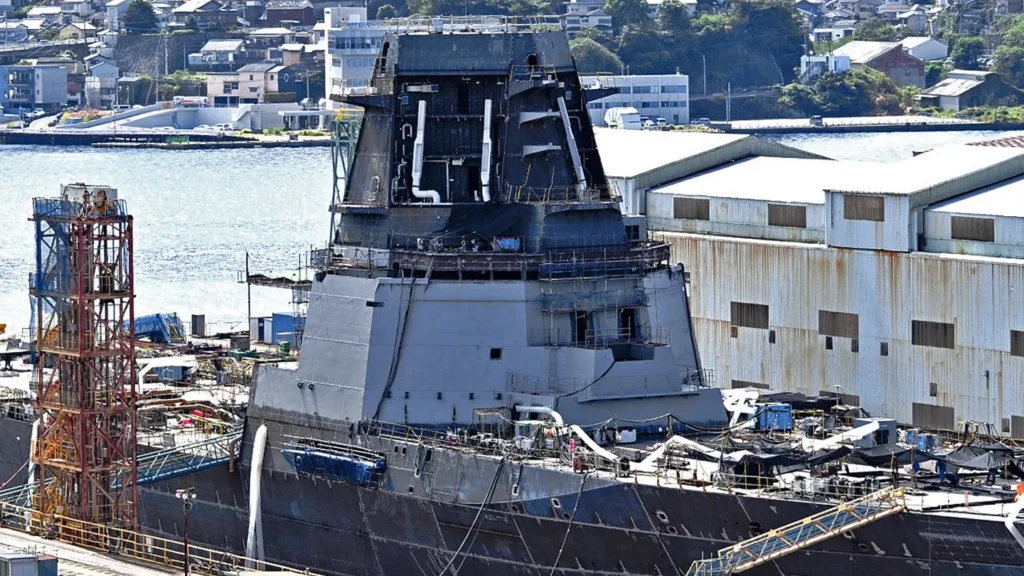
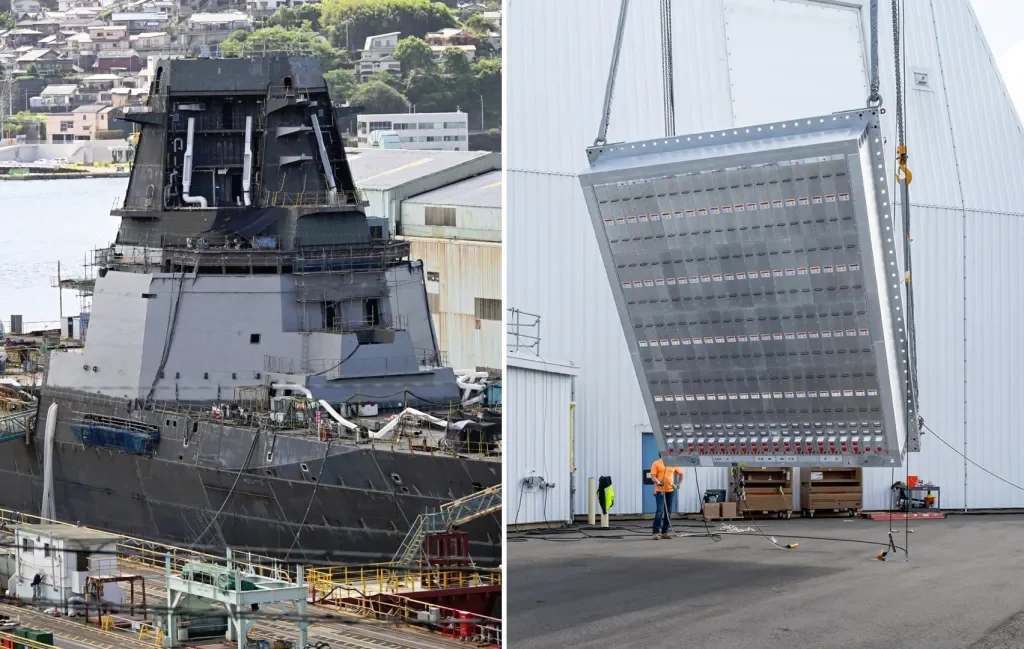
At the heart of the ASEV is Lockheed Martin’s AN/SPY-7(V)1. It is a solid-state active electronically scanned array radar using gallium nitride technology and is derived from the technology behind the U.S. Long Range Discrimination Radar in Alaska. LRDR was developed primarily to detect, track, and discriminate ballistic targets at very long ranges. The naval SPY-7 is smaller than its land-based relative, but it remains an exceptionally large system. Each ASEV will carry four fixed antenna arrays approximately 4.3 meters high, providing 360-degree coverage. Japanese figures credit SPY-7 with roughly five times the target-tracking capability of the SPY-1 used aboard Japan’s current Aegis destroyers.
This is already far more than a paper system. The shipboard version of SPY-7 has been tested in conjunction with the Aegis combat system, demonstrating its ability to detect, identify, track, and discriminate real targets. A special Japanese Aegis configuration is being developed for ASEV, integrating the new radar with the ship’s weapons-control architecture.
But a radar of this class requires much more than empty space on a superstructure. It needs electrical power, powerful cooling systems, substantial computing capacity, weight margins, and a sufficiently rigid structure to support its huge arrays. At the same time, those arrays should be positioned as high above the sea as practical. For ballistic targets, antenna height is not the main consideration, but ASEV will have to detect far more than ballistic missiles. The higher the radar sits, the farther its radar horizon extends against low-flying aircraft, cruise missiles, and drones.
This explains the ASEV’s enormous and distinctive superstructure. In a very real sense, the new ship is being built around its sensor. A traditional battleship was designed around heavy guns, and an aircraft carrier around its air wing and flight deck. The dimensions of this Japanese ship are being shaped to a significant degree by the requirement to keep an extremely powerful radar and computing system continuously at sea.
But once you have built a 190-meter hull for a radar, another question inevitably appears.
Why restrict such a ship to ballistic missile defense?
128 Launch Cells Quickly Turn a Radar Ship Into a Missile Arsenal
The ASEV’s original mission is straightforward: defend Japan against ballistic missiles. One of its primary weapons will be the SM-3 Block IIA, developed jointly by the United States and Japan for exo-atmospheric interception of ballistic targets. Its job is to destroy a warhead before it enters the dense layers of the atmosphere during the final phase of its trajectory.
But SM-3 alone cannot solve every problem. This is where the SM-6 becomes important. It can engage aerodynamic targets and provide another layer of defense against ballistic missiles during their terminal phase. SM-6 also has an anti-surface capability and is among the existing weapons that can contribute to defense against certain high-speed and hypersonic threats.
And this is where the 128 universal Mk 41 cells begin to change the meaning of the entire ship. A vertical launch system does not care whether the ASEV is officially described as a missile-defense ship or a multirole destroyer. Its role depends on what missiles are loaded into those cells.
SM-3 turns the ship into an element of strategic ballistic missile defense.
SM-6 makes it a formidable air-defense platform.
And then completely different weapons begin to appear.
Japan plans to equip the ASEV with extended-range versions of its own Type 12 missile, giving the ship the ability to strike surface and land targets at long distances. Plans also include the use of American Tomahawks. Separately, Japan and the United States are jointly developing the Glide Phase Interceptor, a future weapon intended to defeat hypersonic glide vehicles. In the longer term, ASEV is also expected to receive a high-power laser, primarily for counter-drone missions.
The evolution is striking.
First, the ship needs SM-3.
Then it requires SM-6 for self-defense and an additional layer of missile defense.
Next come anti-ship and land-attack missiles.
Then a future hypersonic interceptor.
And the ship’s enormous electrical capacity opens the door to directed-energy weapons.
The result is that a specialized ballistic missile defense vessel gradually turns into a universal missile arsenal equipped with one of the most powerful naval radars in the world.
And 128 Missiles Is More Than It Sounds
The number of launch cells alone does not determine a ship’s combat power. SM-3, SM-6, and Tomahawk perform entirely different missions, and the exact VLS loadout will always depend on the mission. But 128 Mk 41 cells give the commander something extremely valuable for what began as a specialized ship: the ability to avoid locking the vessel into a single role at the design stage.
For comparison, the Maya class has 96 cells. The American Arleigh Burke has 90 or 96 depending on the variant. The Ticonderoga class carried 122. China’s Type 055 has 112 universal vertical launch cells. With 128 Mk 41 cells, the Japanese ASEV will sit near the top of the modern surface-combatant hierarchy in terms of missile capacity.
Yet there is an important difference between ASEV and Type 055. The Chinese ship was designed from the beginning as a large multirole surface combatant capable of providing fleet air defense, conducting strikes, attacking surface ships, and participating in anti-submarine warfare. ASEV reached a comparable size by an entirely different route.
It grew out of a single specialized mission.
That is why its story illustrates so well how profoundly modern naval warfare has changed. Once a ship already has an extremely powerful radar, a modern Aegis combat system, enormous electrical reserves, and 128 universal launch cells, artificially restricting it to a single mission becomes increasingly irrational.
The specialized ship gradually begins to consume its own specialization.
But Why Does Japan Need a Dedicated Missile Defense Ship When It Already Has Eight Aegis Destroyers?
At first glance, this seems like the strongest argument against ASEV. The Japan Maritime Self-Defense Force already operates eight Aegis destroyers: four Kongō-class ships, two Atago-class ships, and two newer Maya-class destroyers. All can contribute to ballistic missile defense, a capability Japan has developed together with the United States for decades.
The problem is that a ship cannot be in two places at once.
When a multirole Aegis destroyer is assigned to prolonged ballistic missile defense patrols, it becomes unavailable for many other fleet missions. The ship still requires maintenance, its crew still needs rest, and the vessel may be needed to escort naval formations or conduct air-defense and anti-submarine operations.
This is precisely why Aegis Ashore was so attractive in the first place. A fixed installation does not become fatigued, does not enter a shipyard after a deployment, and does not remove a destroyer from the fleet. It remains in one place and performs the same mission around the clock.
After abandoning Aegis Ashore, Japan had to recreate some of that persistence at sea.
This provides another explanation for the ASEV’s size. The ship must not simply be capable of intercepting ballistic missiles. It needs to remain on station for long periods, provide acceptable living conditions for its crew, and free existing Aegis destroyers for conventional fleet missions.
Seen from this perspective, 12,000 tons begins to look less like gigantomania.
The Huge Hull Is Not Just for the Missiles
The Japanese fleet faces another problem that cannot be solved by adding more missiles: personnel are becoming harder to recruit. ASEV is therefore expected to operate with a crew of roughly 240, compared with around 300 aboard the significantly smaller Maya class. For a ship of this size, that is a striking level of automation.
The large hull also provides better habitability, allows equipment to be installed less densely, offers greater power-generation margins, and leaves room for future modernization. This is especially important for a ship expected to serve for decades. Nobody today knows exactly how much electricity a next-generation radar will require, what cooling capacity future computing systems will demand, or how powerful a future naval laser might become.
On a small hull, upgrades quickly collide with physical limits.
On a 12,000-ton ASEV, engineers have room to work.
Its huge size can therefore be understood not simply as a disadvantage, but as a deliberate investment in capabilities that may not even exist yet.
The ship is not being built only for the weapons of 2027.
It needs to accommodate the weapons of 2040.
And This Is Where ASEV Starts Looking Very Much Like a Cruiser
Since World War II, Japan has been extremely cautious about naval terminology for obvious historical and political reasons. Large surface combatants have traditionally been classified as destroyers, while even the Izumo — a vessel with a full-length flight deck now being modified to operate F-35Bs — was officially described for years as a helicopter destroyer.
ASEV currently hides behind the technical designation Aegis System Equipped Vessel.
Terminology, however, does not change physics.
190 meters.
12,000 tons standard displacement.
128 VLS cells.
Long-range air defense.
Strategic ballistic missile defense.
Anti-ship weapons.
Tomahawk.
Future hypersonic missile defense.
An extremely powerful multifunction radar.
A future laser weapon.
Taken together, those capabilities place the ASEV much closer to what historically would have been called a guided-missile cruiser than to a conventional destroyer. Some external estimates suggest that its full-load displacement could approach roughly 16,000 tons, although Japan has not officially published a full-load figure, so that number should be treated as an estimate rather than a confirmed specification.
And yet Japan did not set out to build a cruiser.
The cruiser emerged almost by itself.
That Is Why ASEV Is More Interesting Than China’s Type 055
At first glance, comparison with China’s Type 055 is unavoidable. Both are enormous Asian surface combatants equipped with powerful radars and more than a hundred vertical launch cells. Both significantly exceed the dimensions of conventional modern destroyers and effectively occupy a separate weight class.
But their origins are almost opposite.
China wanted a large universal blue-water combatant from the beginning.
Japan wanted two land-based missile-defense installations.
That difference is what makes ASEV particularly interesting.
Type 055 demonstrates how large a destroyer can become when it is designed from the outset to perform many missions.
ASEV demonstrates how large a single mission can become when a navy tries to perform it as seriously as possible.
Ballistic missile defense required SPY-7.
SPY-7 required an enormous superstructure, electrical power, and cooling.
Long-duration patrols required a large, seaworthy hull.
That hull allowed 128 VLS cells to be installed.
Once there were 128 cells, restricting them to SM-3 made little sense.
SM-6, Type 12, and Tomahawk entered the picture.
The electrical reserve opened the door to laser weapons.
One specialized mission ultimately produced a multirole combat ship.
But the Entire Concept Has One Uncomfortable Problem: There Will Be Only Two of Them
This is where ASEV’s greatest strength simultaneously becomes its weakness. Japan will receive extraordinarily capable ships, but only two of them. The first is being built by Mitsubishi Heavy Industries and the second by Japan Marine United. They are scheduled to enter service in fiscal years 2027 and 2028 respectively.
Two ships do not mean two ships permanently available at sea.
One may be undergoing maintenance. The other may be conducting crew training. Periodic modernization will be unavoidable, especially for a system this complex. Actual ASEV availability will therefore depend heavily on how effectively the Japanese fleet manages its operational and maintenance cycles.
Moreover, in a major conflict, the ships’ extraordinary value would automatically make them priority targets. Losing an ordinary destroyer would be serious. Losing one of only two ships carrying the unique SPY-7 radar and a massive arsenal of interceptors could significantly affect the entire missile-defense architecture.
This creates another ASEV paradox.
Japan is building a huge ship to reduce missile defense’s dependence on its existing destroyers.
But because only two will exist, missile defense itself may become dependent on two exceptionally valuable hulls.
Japan Tried to Put Aegis Ashore at Sea — and the Sea Changed the Entire Concept
This is why reducing the ASEV story to “Japan is building its largest destroyer” misses the point. Size is not the cause here. It is the consequence.
Everything began with the cancellation of two fixed Aegis Ashore sites.
The already selected SPY-7 needed a new platform.
That platform required seaworthiness and endurance.
The powerful radar demanded electricity, cooling, and a large superstructure.
A ship expected to remain at sea for extended periods required its own defenses.
Once Aegis and 128 Mk 41 cells were present, there was no reason to load only SM-3.
SM-6 followed.
Once there was a huge hull, there was room for additional systems.
Once there was substantial electrical reserve, laser weapons became feasible.
And when Japan began developing its own long-range strike weapons and purchasing Tomahawks, it turned out that the new ship could perform missions that had not even existed in its original concept.
The result is an almost perfect engineering metamorphosis.
Japan intended to build two ballistic missile defense bases.
It canceled them.
It decided to put the system aboard ships.
And then discovered that if such a ship was made genuinely capable, the result was not a floating Aegis Ashore installation, but a 12,000-ton missile cruiser with 128 vertical launch cells.
Perhaps that tells us more about the future of surface warfare than anything else. In the past, the size of a warship was determined primarily by armor, guns, and machinery. Today, entirely different factors are beginning to dominate: electrical power, radar arrays, computing capacity, universal launch cells, and growth margins for systems that have not even entered service yet.
ASEV was born from an attempt to solve one problem — intercepting ballistic missiles.
By the time it enters service, it will be able to track targets in space, defend naval formations against aircraft and missiles, participate in ballistic missile defense, conduct long-range strikes, and potentially counter hypersonic weapons and drones.
Japan did not set out to bring the missile cruiser back. It simply began building a ship around such a powerful radar and such a demanding mission that everything else became almost inevitable.