
The End of an Atomic Legend: The U.S. Navy Is Finally Preparing to Dispose of USS Long Beach, the World’s First Nuclear-Powered Cruiser

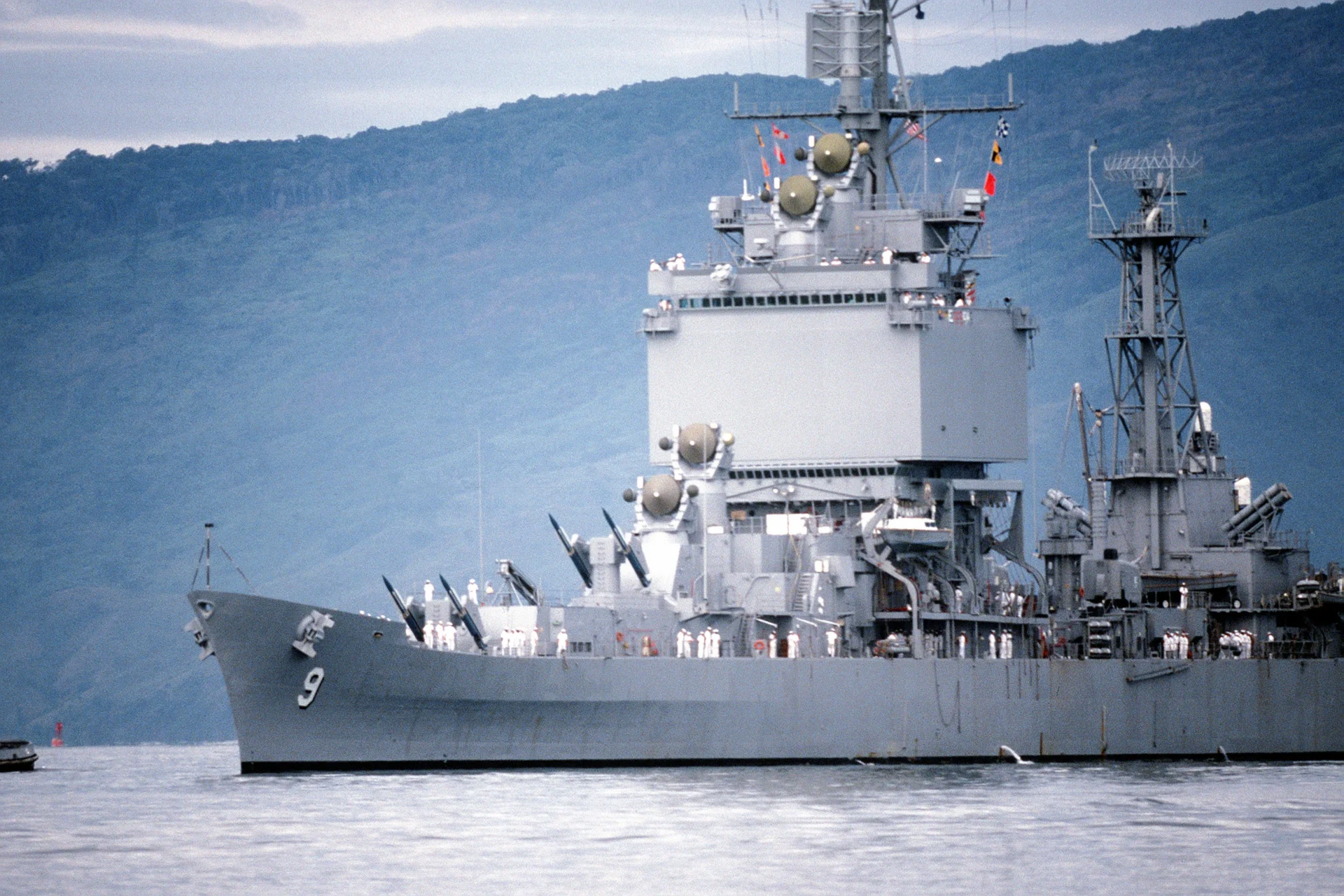
Sometimes a ship becomes more than just another warship. It becomes a symbol of an entire era. That was certainly the case with USS Long Beach (CGN-9), the world’s first nuclear-powered surface combatant.
In June 2026, the U.S. Navy officially began searching for a contractor to carry out the final disposal of the legendary cruiser. More than three decades after being retired from active service, the ship had remained at the Puget Sound Naval Shipyard awaiting a final decision on its fate. Now, the story of Long Beach is finally approaching its conclusion.
Before the cutting torches arrive, however, it is worth remembering that this ship helped redefine what a modern navy could be.
A Ship for the Atomic Age
By the late 1950s, the U.S. Navy was in the midst of a technological revolution.
The success of the nuclear submarine USS Nautilus had demonstrated the immense advantages of nuclear propulsion. A vessel no longer depended on frequent refueling, could remain at sea for months, and could sustain high speeds for extraordinary periods of time.
The logical next step was to bring nuclear power to surface warships.
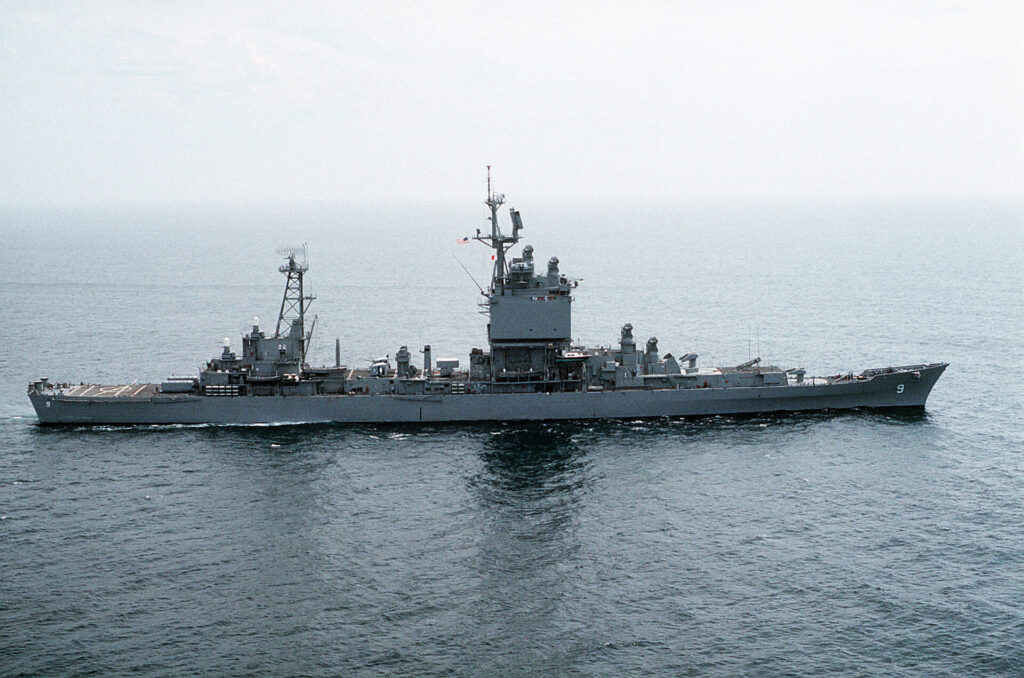
Construction began in 1957 at the Bethlehem Steel Fore River Shipyard in Quincy, Massachusetts. From the outset, the vessel was intended to serve as a missile cruiser capable of escorting the next generation of nuclear-powered aircraft carriers.
When Long Beach was launched on July 14, 1959, it looked so futuristic that many observers compared it to something out of science fiction.
No Smokestacks, Only Radar
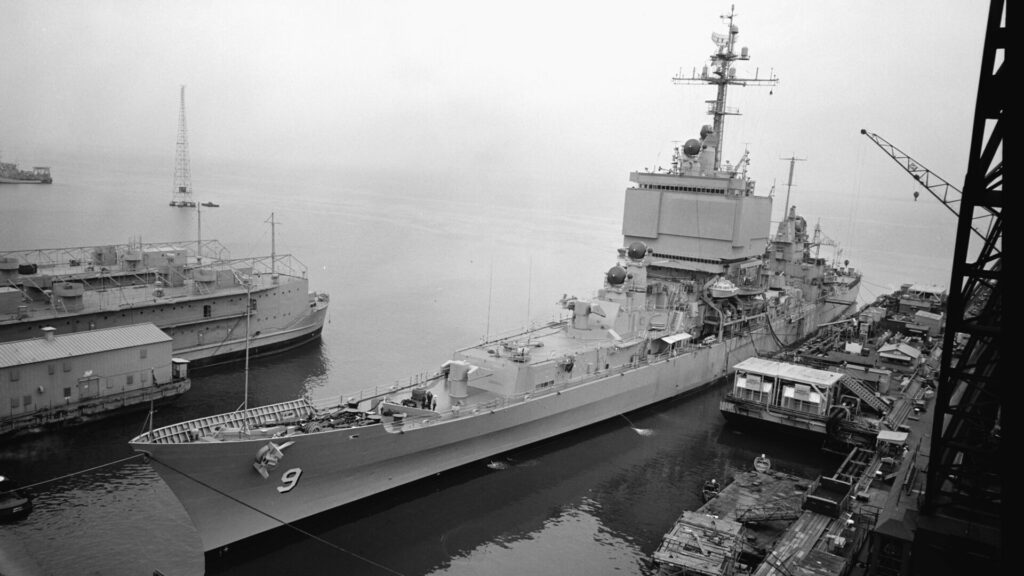
Even visually, Long Beach stood apart from virtually every other warship of its era.
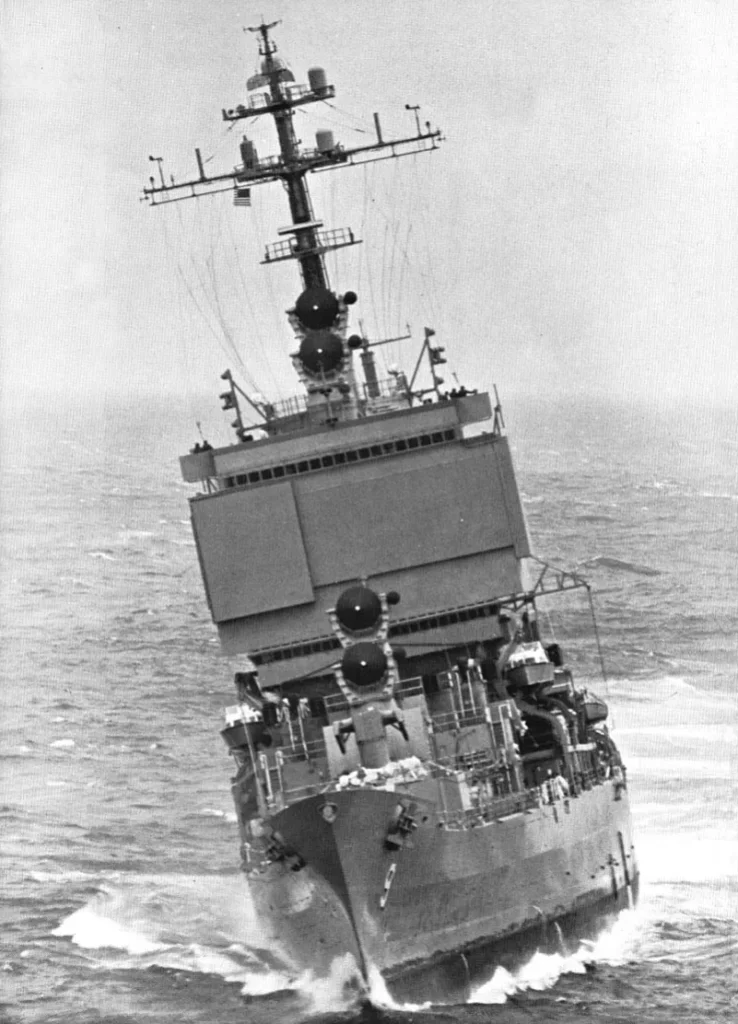
Because its reactors eliminated the need for conventional boilers, the ship did not require large smokestacks. Instead, designers created an enormous box-like superstructure that quickly became the cruiser’s defining feature.
Mounted across this superstructure were some of the most advanced radar systems of the day.
Long Beach became the first major warship designed from the outset around guided missiles and long-range radar systems. Many concepts that are now standard aboard missile cruisers and destroyers were first tested aboard this ship.
In many ways, it was one of the first warships built around electronics and missiles rather than naval artillery.
Nuclear Power Changes the Rules
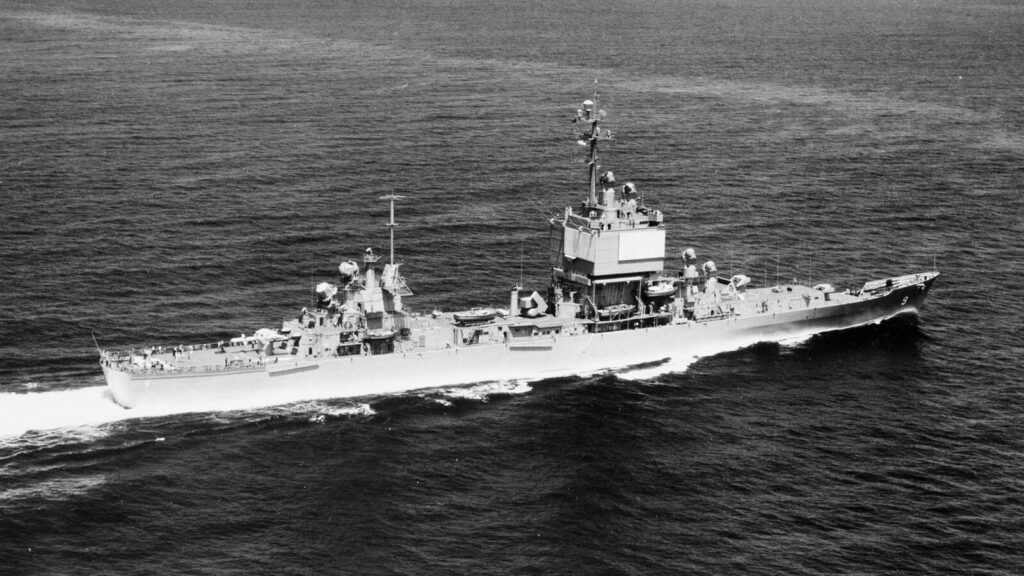
The ship’s greatest innovation was, of course, its propulsion system.
Two nuclear reactors provided virtually unlimited range. While conventional warships required frequent replenishment at sea, Long Beach could continue operating for weeks or even months without concern for fuel supplies.
In the early 1960s, this capability seemed almost unbelievable.
The advantages of nuclear propulsion were demonstrated spectacularly during Operation Sea Orbit in 1964.
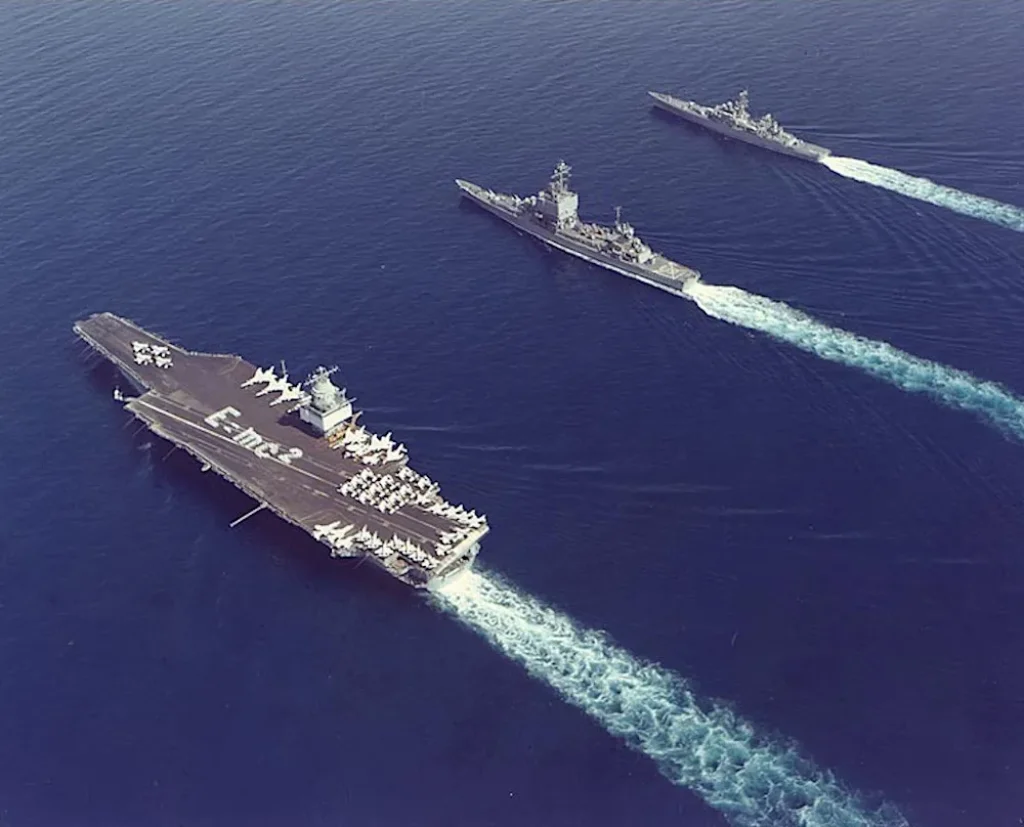
During this mission, Long Beach sailed alongside the nuclear-powered aircraft carrier USS Enterprise (CVN-65) and the nuclear-powered cruiser USS Bainbridge (CGN-25) on a global circumnavigation of more than 30,000 nautical miles without a single refueling stop.
At the height of the Cold War, it was a powerful demonstration of American technological and naval superiority.
Service During the Vietnam War
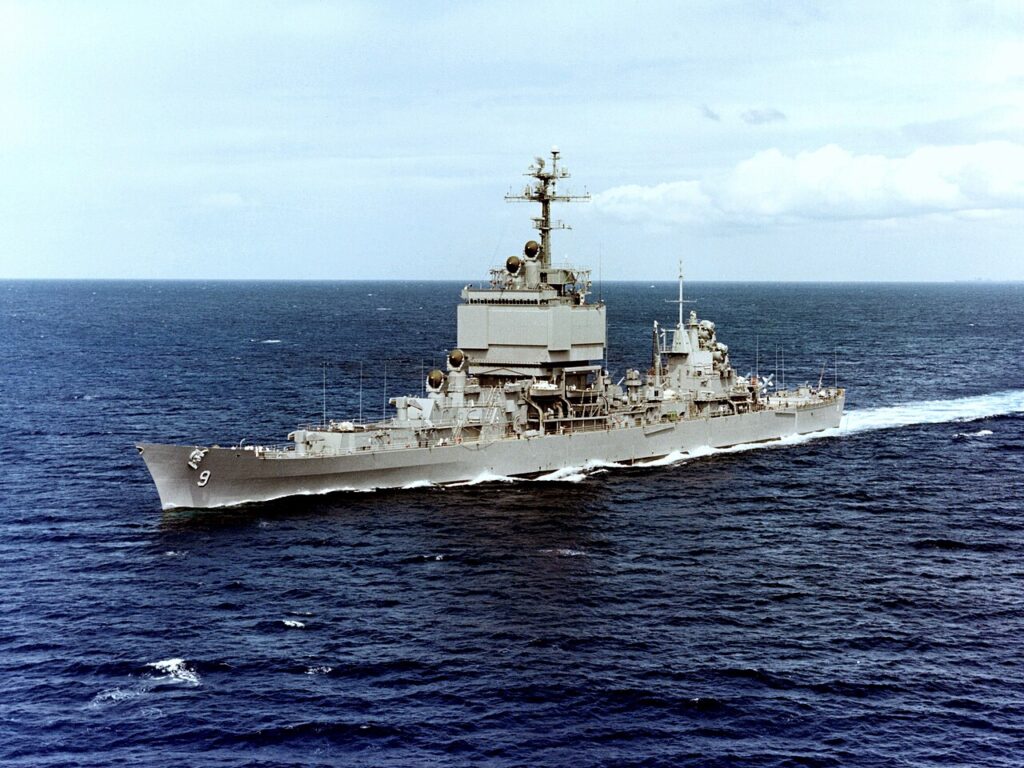
Not long after entering service, Long Beach was sent to the Western Pacific, where the United States was becoming increasingly involved in the Vietnam War.
There, the cruiser assumed one of the most important naval missions of the conflict.
Using its powerful radar systems, Long Beach operated in the PIRAZ (Positive Identification Radar Advisory Zone) in the Gulf of Tonkin. Its operators were often the first to detect North Vietnamese aircraft and relay targeting information to American fighters.
In effect, the ship functioned as a massive floating command-and-control center for the air war over Southeast Asia.
The cruiser also supported search-and-rescue operations and helped protect U.S. carrier task forces operating in the region.
From Iran to Desert Storm
The Vietnam War was far from the end of Long Beach’s career.
Throughout the 1970s and 1980s, the cruiser underwent a series of major upgrades. New missile systems were installed, including Harpoon anti-ship missiles and Tomahawk cruise missiles, allowing the ship to remain combat-capable decades after entering service.
Long Beach participated in Operation Nimble Archer against Iran in 1987, maintained a U.S. naval presence in the Indian Ocean and Persian Gulf, and later joined coalition forces during Operation Desert Storm in 1991.
Few warships can claim a service record that stretches from the early Cold War to the Gulf War while remaining operationally relevant throughout.
Why Nuclear Cruisers Disappeared
At first glance, nuclear-powered surface combatants appeared to be the ideal solution.
Reality proved more complicated.
Building and operating nuclear cruisers was significantly more expensive than maintaining conventional warships. Their reactors required specialized infrastructure, extensive maintenance procedures, and highly trained personnel.
After the Cold War ended, the cost of operating such vessels became increasingly difficult to justify.
As a result, Long Beach was decommissioned in 1995 after more than thirty-three years of service.
The Ship That Changed Naval Warfare
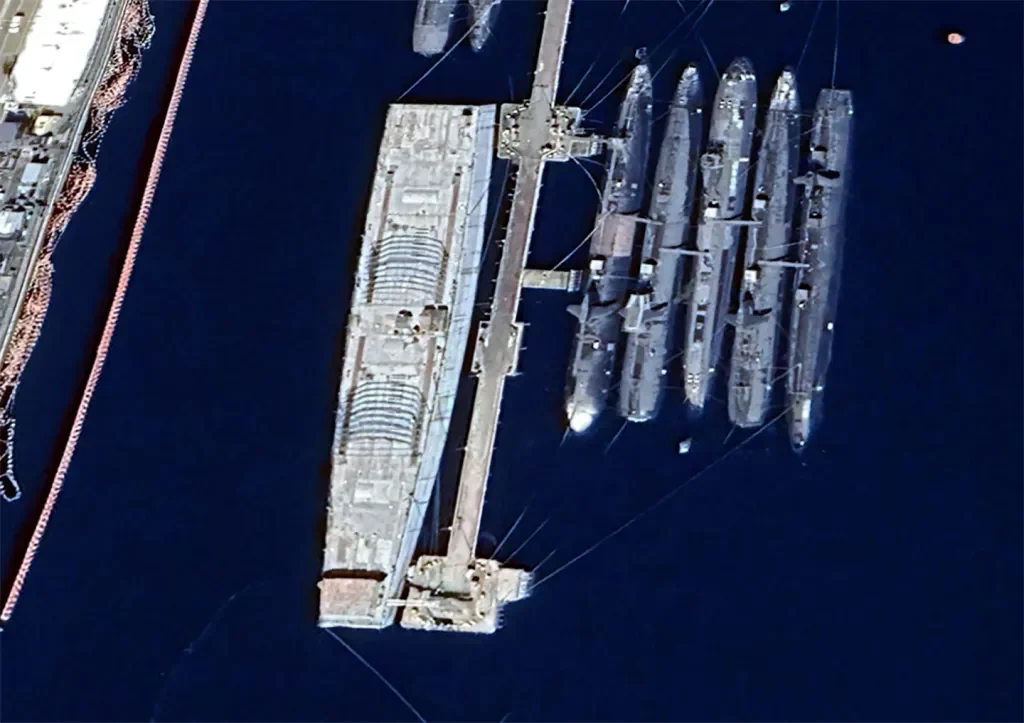
Today, USS Long Beach can never return to service.
Much of the superstructure has already been dismantled, the reactors have long since been removed, and the ship itself is only a shadow of the vessel that once symbolized the future of naval warfare. This reality is precisely why the U.S. Navy has now moved toward its final disposal.
Yet Long Beach’s importance has never depended on what remains of its hull.
It was the world’s first nuclear-powered surface combatant, one of the first true missile cruisers, and a pioneering platform for technologies that later became standard throughout modern navies.
If USS Nautilus proved that nuclear power could transform submarine warfare, USS Long Beach demonstrated what the future of the surface fleet might look like.
For that reason alone, its name will remain permanently etched into naval history long after the last pieces of steel are recycled.
USS Long Beach (CGN-9) Specifications
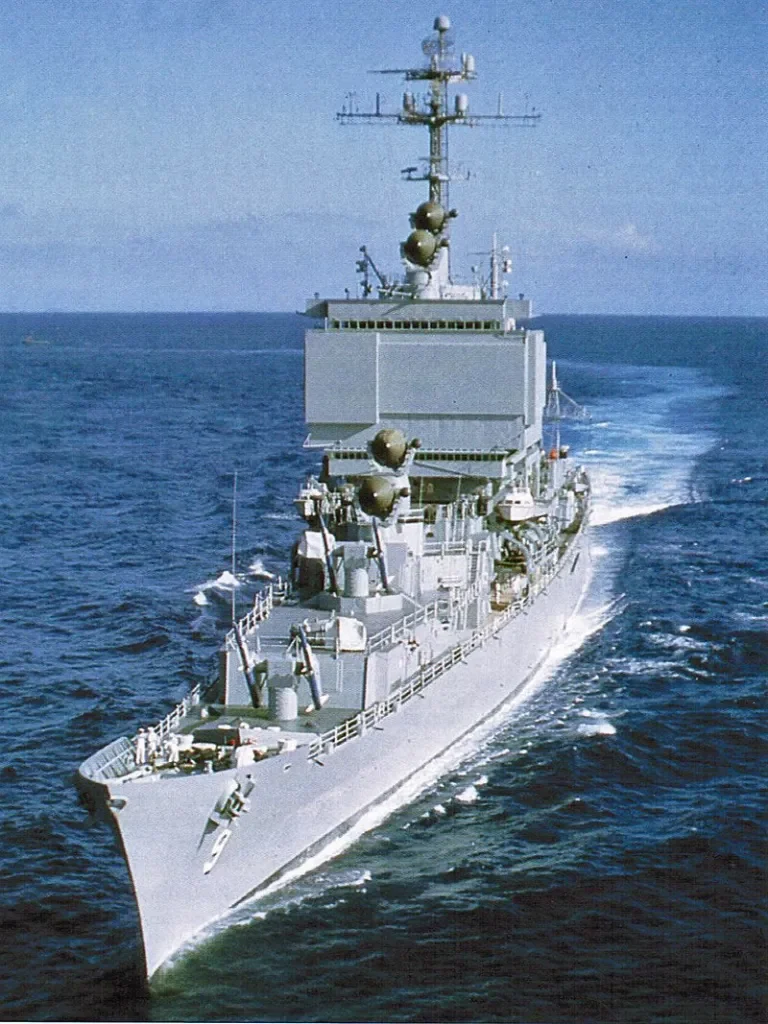
Type: Nuclear-powered guided missile cruiser
Country: United States
Builder: Bethlehem Steel Fore River Shipyard, Quincy, Massachusetts
Laid down: December 2, 1957
Launched: July 14, 1959
Commissioned: September 9, 1961
Decommissioned: May 1, 1995
Full Load Displacement: Approximately 15,500 tons
Length: 219.8 m (721 ft)
Beam: 22.3 m (73 ft)
Draft: 9.8 m (32 ft)
Propulsion: 2 × C1W nuclear reactors
Maximum Speed: Over 30 knots
Crew: Approximately 1,100 personnel
Armament (after modernization):
- Standard surface-to-air missiles
- Tomahawk cruise missiles
- Harpoon anti-ship missiles
- 127 mm naval guns
- Anti-submarine warfare systems
Legacy
USS Long Beach was not merely another cruiser. It was a technological statement—a ship designed to showcase what nuclear propulsion, advanced radar systems, and guided missiles could achieve when combined into a single platform.
More than sixty years after its launch, it remains one of the most important warships ever built and a milestone in the evolution of modern naval power.






