Roshel Senator MRAP: The Canadian Armored Vehicle That Became One of Ukraine’s Most Widely Used Western MRAPs

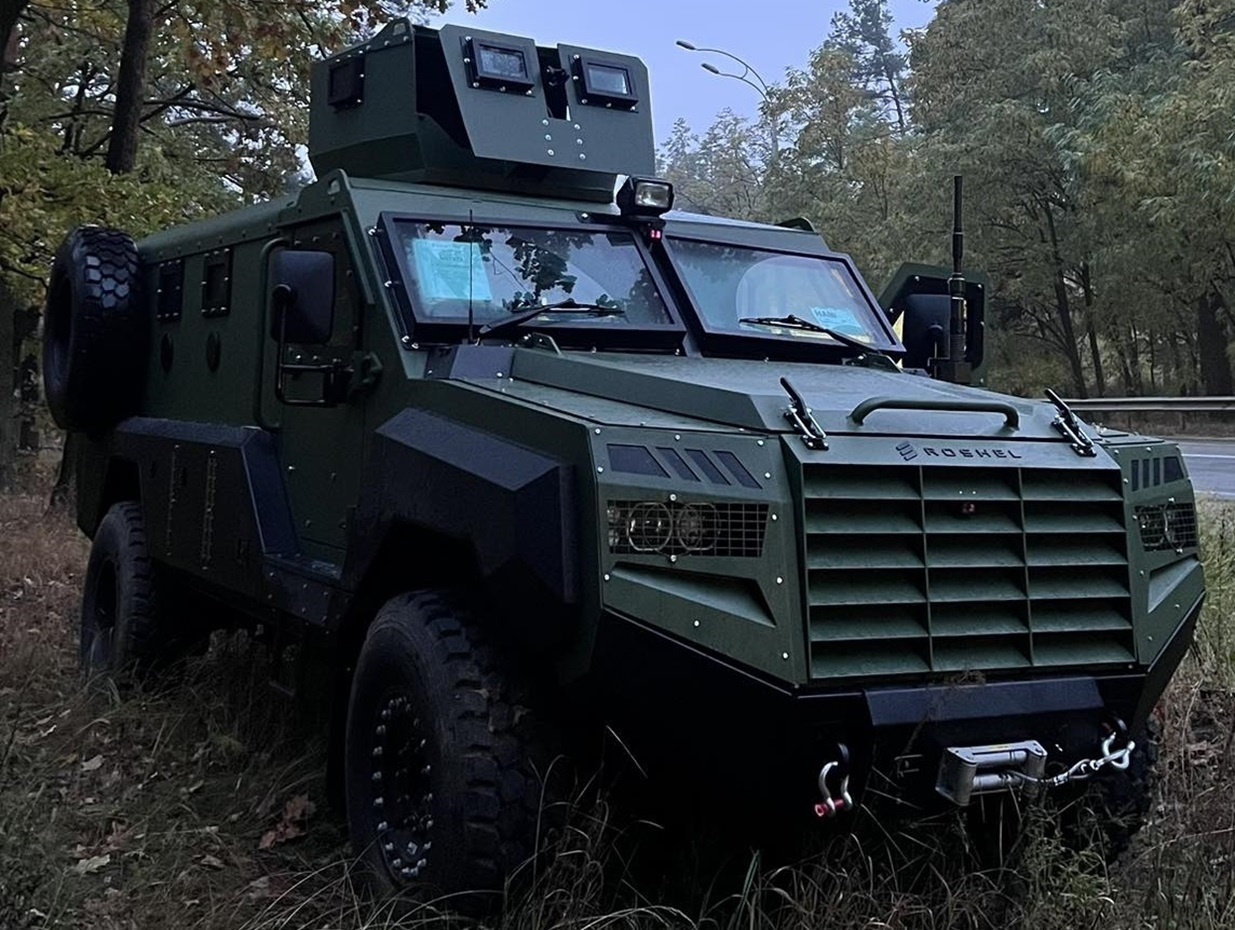
In June 2026, Canadian company Roshel announced that more than 2,500 of its Senator armored vehicles were already operating in Ukraine. At the same time, the company continued localizing component production and expanding cooperation with Ukrainian industry.
For a modern armored vehicle, this is an unusual story. A machine originally developed as a relatively compact armored vehicle for police and security forces became, within just a few years, one of the most widely used Western-origin MRAPs in a real war.
From Police Armored Vehicle to Wartime Workhorse
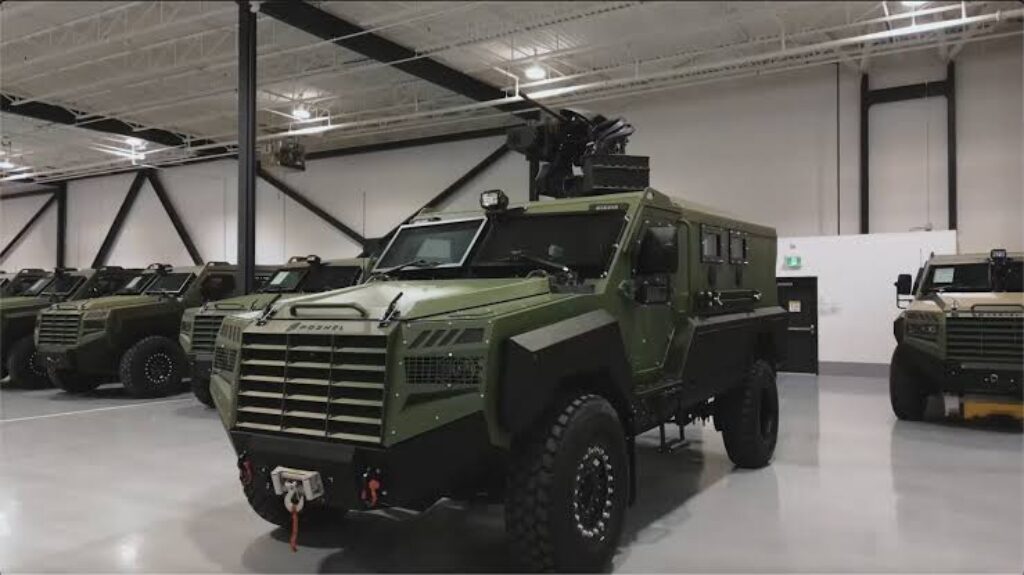
Roshel was founded in Canada in 2016 by entrepreneur Roman Shimonov. The company initially specialized in protected vehicles for police forces, special units, and security organizations.
The first Senator appeared in 2018 as an armored vehicle based on the commercial Ford F-550 chassis. This approach significantly reduced cost compared with purpose-built military armored personnel carriers while retaining reliability through the use of mass-produced automotive components.
At the time, few could have predicted that this vehicle would soon become one of the most numerous Western-made armored vehicles on the battlefield.
Why the Senator Was Needed
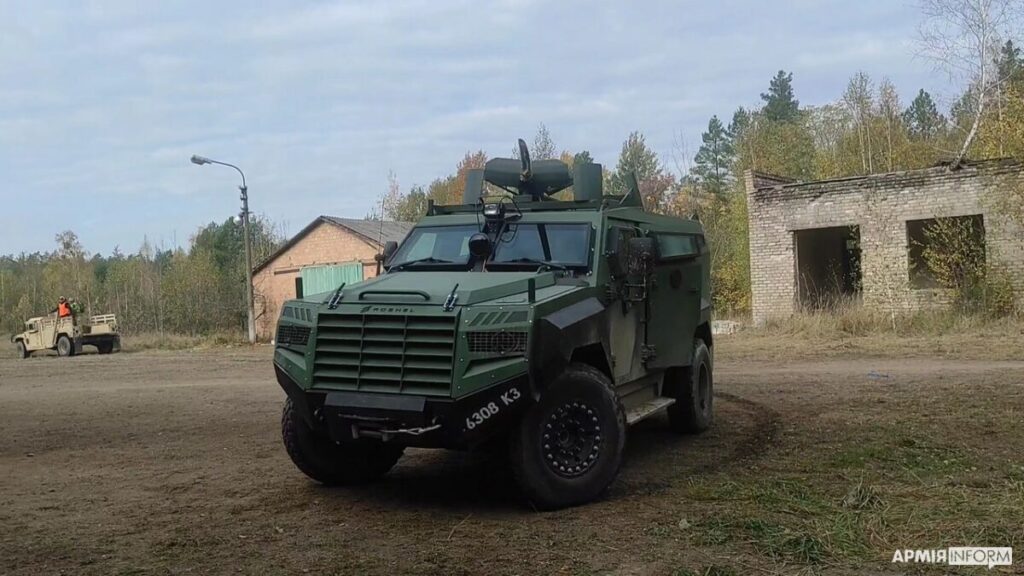
Conflicts of recent decades have shown that not every mission requires a heavy 20–30-ton armored personnel carrier.
Units often need a relatively light vehicle capable of quickly transporting personnel, evacuating wounded soldiers, escorting convoys, or performing patrol duties.
This is exactly the niche where the Senator proved successful.
The commercial chassis simplified maintenance, Ford F-550 spare parts were widely available, and the vehicle was relatively easy to operate even in harsh conditions.
At the same time, the Senator offered protection against small arms fire, fragments, and blasts, making it far more survivable than ordinary military utility vehicles.
The Birth of the MRAP Version
Operational experience soon showed that a standard armored vehicle was no longer enough.
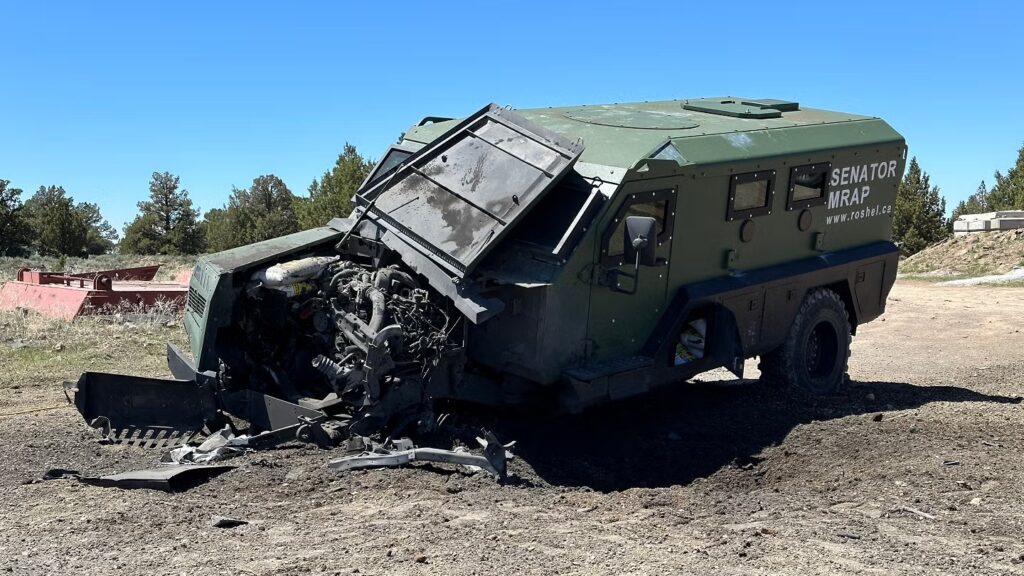
The threat of mines, improvised explosive devices, and artillery fragments required a more protected version.
This led to the creation of the Senator MRAP.
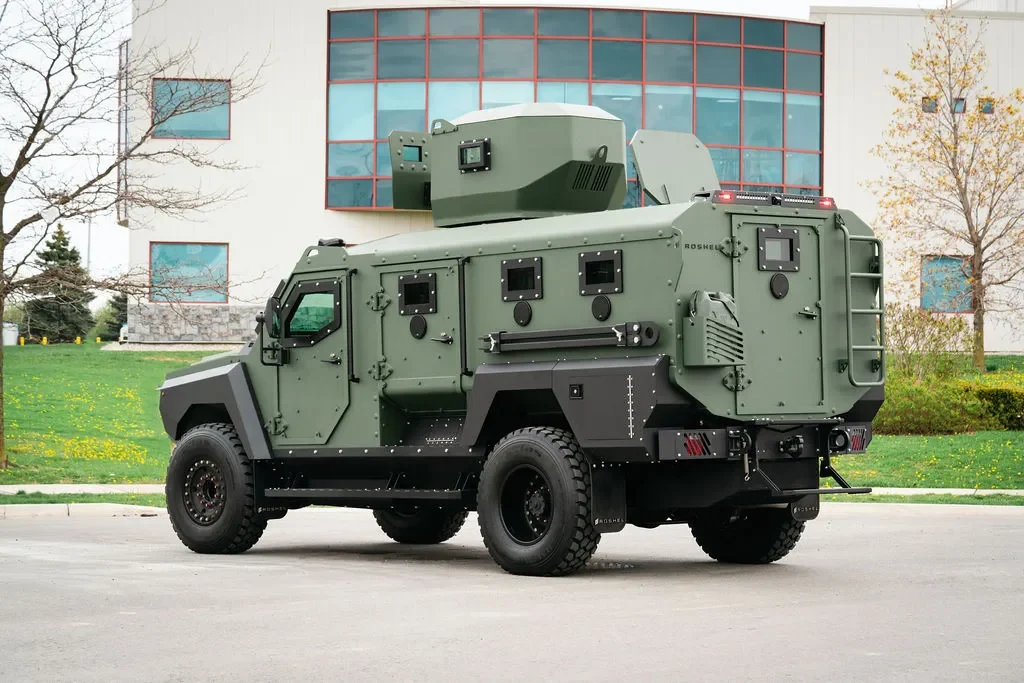
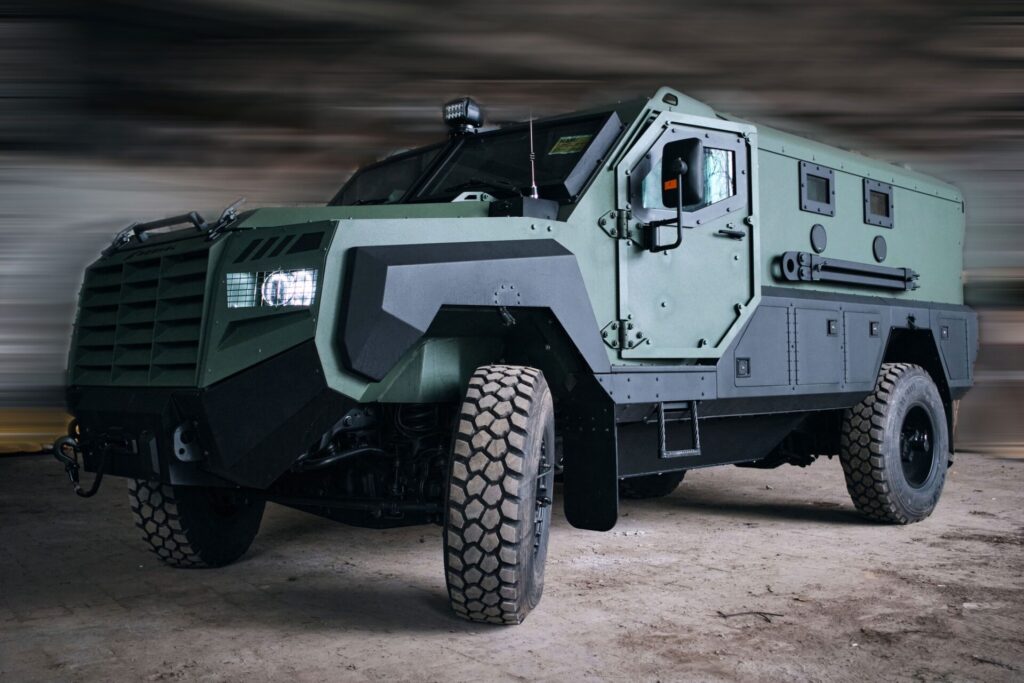
Its main difference was a redesigned hull with a double V-shaped floor intended to deflect blast energy away from the crew and passengers. The vehicle received enhanced mine protection and was certified according to NATO STANAG 4569 standards. According to published data, the Senator MRAP can withstand a blast equivalent to up to 8 kilograms of TNT.
For a vehicle of this class, that is a serious level of protection.
Ukraine as the Main Testing Ground
The Senator became widely known after deliveries to Ukraine began.
The first vehicles arrived in 2022. Deliveries then increased rapidly. By the end of 2023, Roshel had delivered its 1,000th Senator. In 2025, the number exceeded 1,700 vehicles, and by late 2025 more than 2,000 were already operating in Ukraine. In 2026, the number surpassed 2,500.
For comparison, many modern armored vehicles are produced in smaller numbers over their entire service lives.
This scale of use made the Senator a remarkable case. The vehicle is used by a wide range of Ukrainian formations, including the military, police, National Guard, border units, and mine-clearing teams.
A Vehicle That Keeps Evolving
One reason for the Senator’s success is Roshel’s development philosophy.
Instead of producing one unchanged version for decades, the company continuously updates the vehicle based on user feedback.
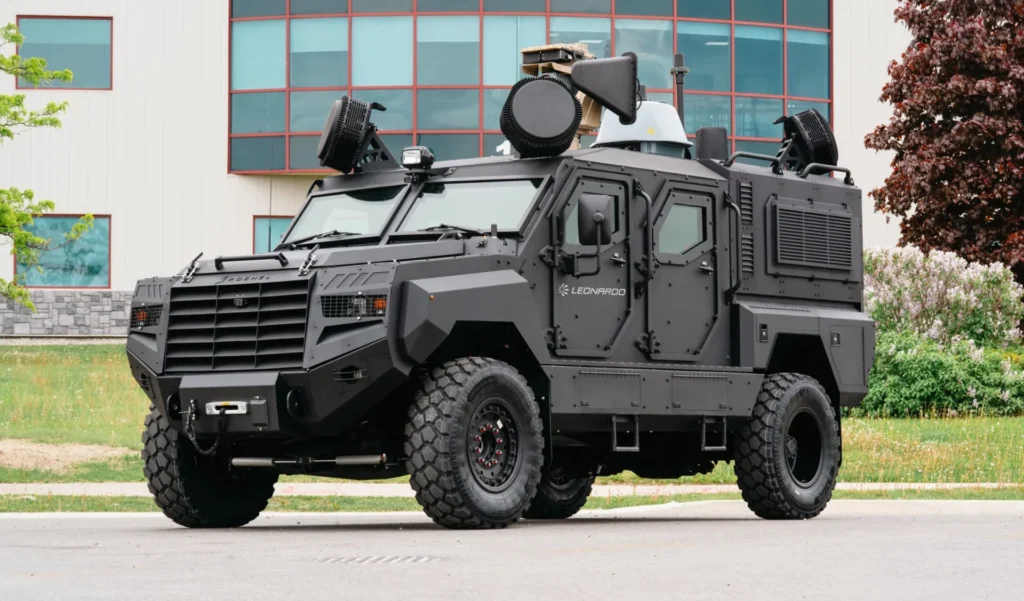
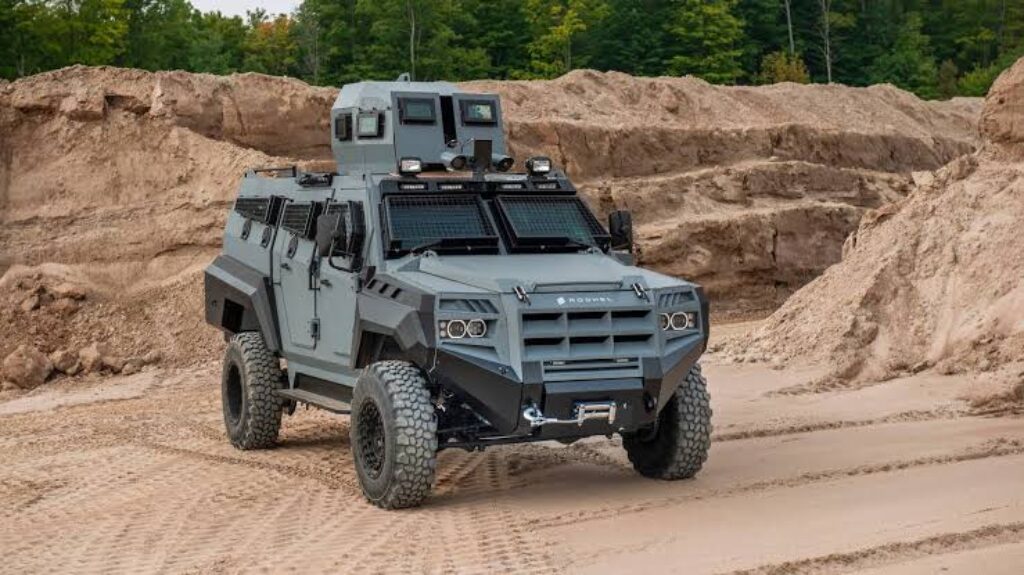
Medical evacuation versions, engineer vehicles, command-and-control variants, cargo versions, and even anti-drone platforms have appeared.
In 2025, Roshel introduced the Senator Counter-UAS, a specialized drone-defense variant developed together with Italy’s Leonardo. It includes radar, electro-optical detection systems, and electronic warfare equipment.
In effect, the Senator is gradually becoming not just a single armored vehicle but an entire family of specialized platforms.
Why Production Is Being Localized
The growing number of vehicles created a practical question: how to maintain thousands of armored vehicles during wartime?
The answer was localization.
In 2025, Roshel and Ukrainian companies agreed to cooperate on armored vehicle production. The company later confirmed the launch of production facilities inside Ukraine. This helps shorten delivery times, accelerate repairs, and reduce dependence on international logistics.
This approach is increasingly becoming normal for modern defense production, especially when large-scale battlefield use is involved.
The Secret of Its Success
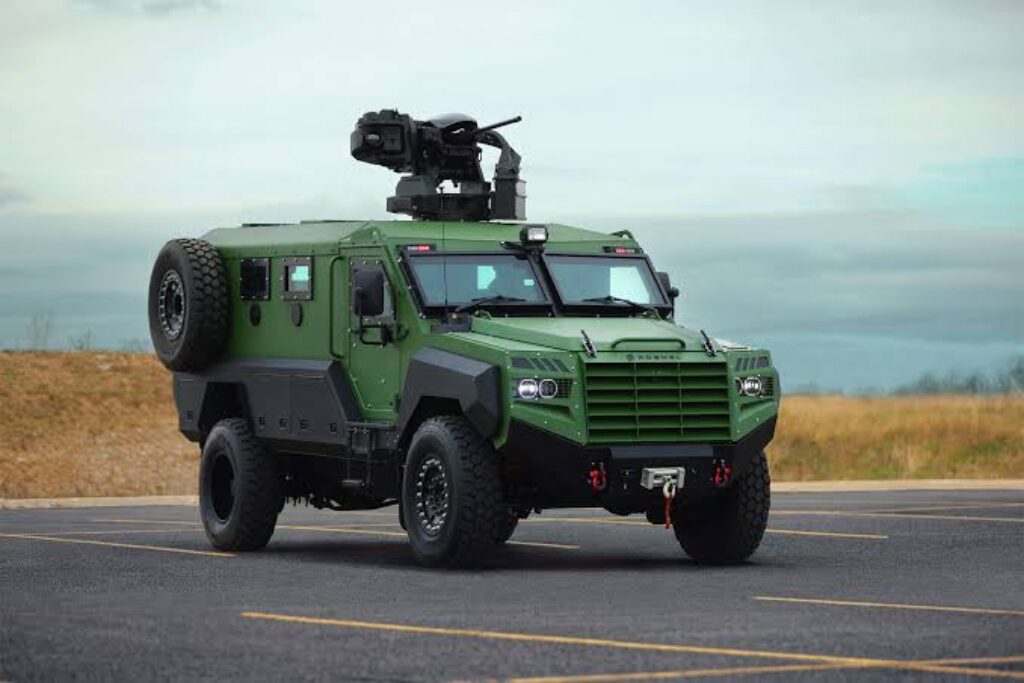
Technically, the Senator is not a revolutionary vehicle.
It does not have the firepower of an infantry fighting vehicle, it lacks heavy armor, and it is not intended to break through fortified defensive lines.
Its strength lies elsewhere.
Good protection, relatively low cost, ease of maintenance, and the ability to scale production quickly made the Senator exactly the kind of armored vehicle that modern war demanded.
That is why this Canadian armored vehicle managed to go from a little-known commercial-security platform to one of the most numerous Western armored vehicles currently operating in combat conditions.
Roshel Senator MRAP Technical Specifications
Country of Origin: Canada
Manufacturer: Roshel
Type: MRAP armored vehicle
Base Chassis: Ford F-550 4×4
Crew: 2
Passenger Capacity: Up to 8
Engine: 6.7-liter Power Stroke V8 turbo diesel
Transmission: 10-speed TorqShift automatic
Drive: 4×4
Ballistic Protection: STANAG 4569 Level 2
Mine Protection: Up to STANAG 4569 Level 3
Blast Protection: Up to 8 kg TNT equivalent
Key Features:
- Double V-shaped hull;
- Armored steel and ballistic glass;
- Central tire inflation system;
- Run-flat tires;
- High ground clearance;
- Numerous specialized variants.
Key Takeaway
The Roshel Senator MRAP is not important because it is the most advanced armored vehicle in the world. It is important because it arrived in large numbers, adapted quickly to battlefield requirements, and proved useful across a wide range of missions.
In modern war, that combination can be more valuable than technical perfection.