

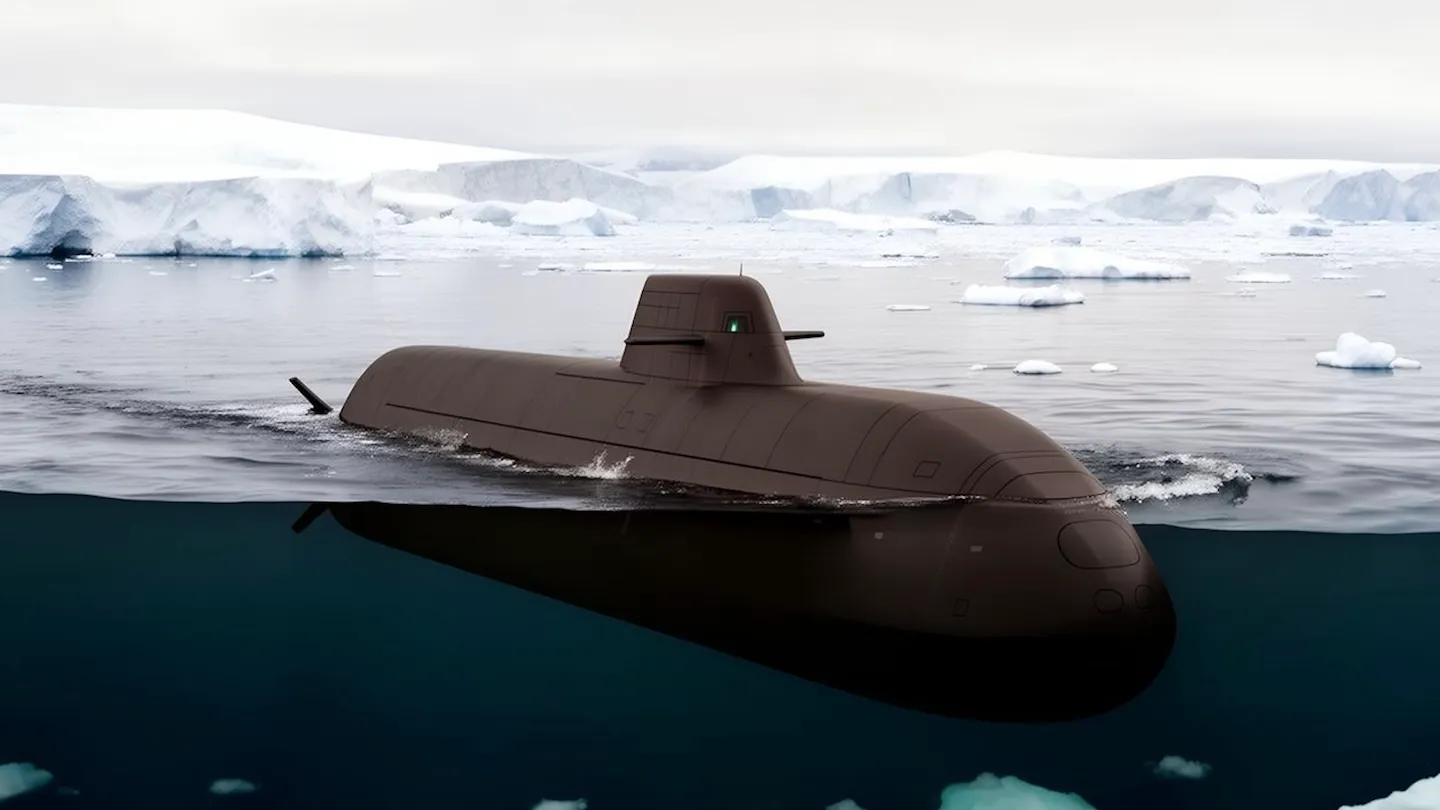
After years of evaluating competing designs, Canada has officially selected Germany’s ThyssenKrupp Marine Systems (TKMS) to build the next generation of its conventional submarine fleet. Ottawa plans to acquire 12 Type 212CD (Common Design) submarines, making it one of the largest naval procurement programs in Canadian history.
The new boats will replace the aging Victoria-class submarines, which have long struggled with maintenance issues, limited availability, and rising operating costs. Beyond the size of the contract, however, the decision highlights a broader trend: modern air-independent propulsion (AIP) submarines continue to play a critical role in naval warfare, particularly in the North Atlantic and Arctic, despite the dominance of nuclear-powered fleets.
Why Canada Needs a New Submarine Fleet
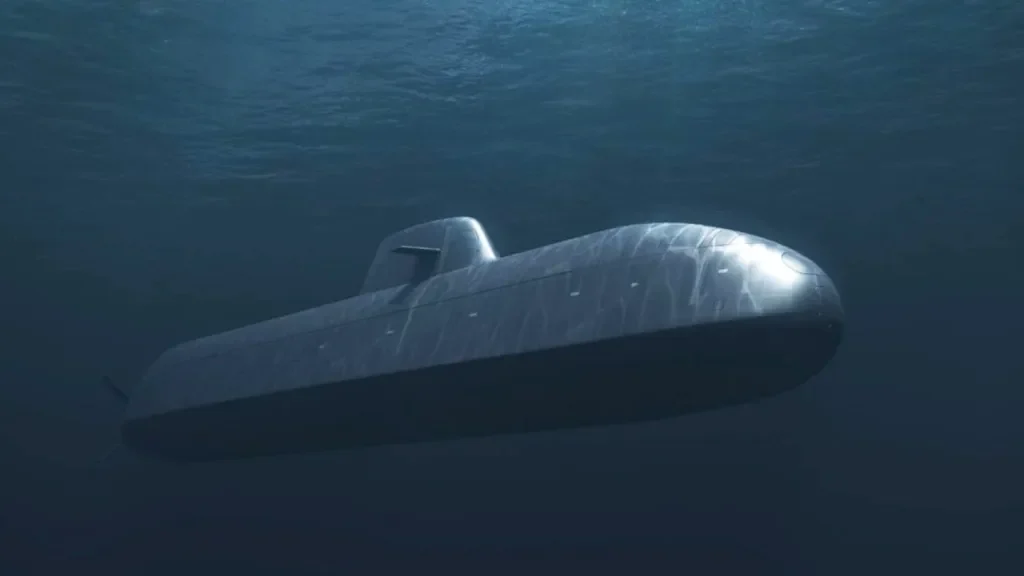
Canada’s submarine force has been one of the weakest elements of the Royal Canadian Navy for years.
The four Victoria-class boats originally entered service with the Royal Navy in the late 1980s as the Upholder-class before being sold to Canada in the early 2000s. Since then, they have faced repeated mechanical problems, lengthy refits, and limited operational availability.
As the fleet continued to age and geopolitical tensions increased in the Arctic, replacing the submarines became increasingly urgent.
During the final stages of the competition, two leading contenders remained: Germany’s Type 212CD and South Korea’s KSS-III Batch II. While the South Korean design offered greater size and heavier armament, Canada ultimately chose the German submarine for its low acoustic signature, proven technology, and integration into an existing NATO program.
What Is the Type 212CD?
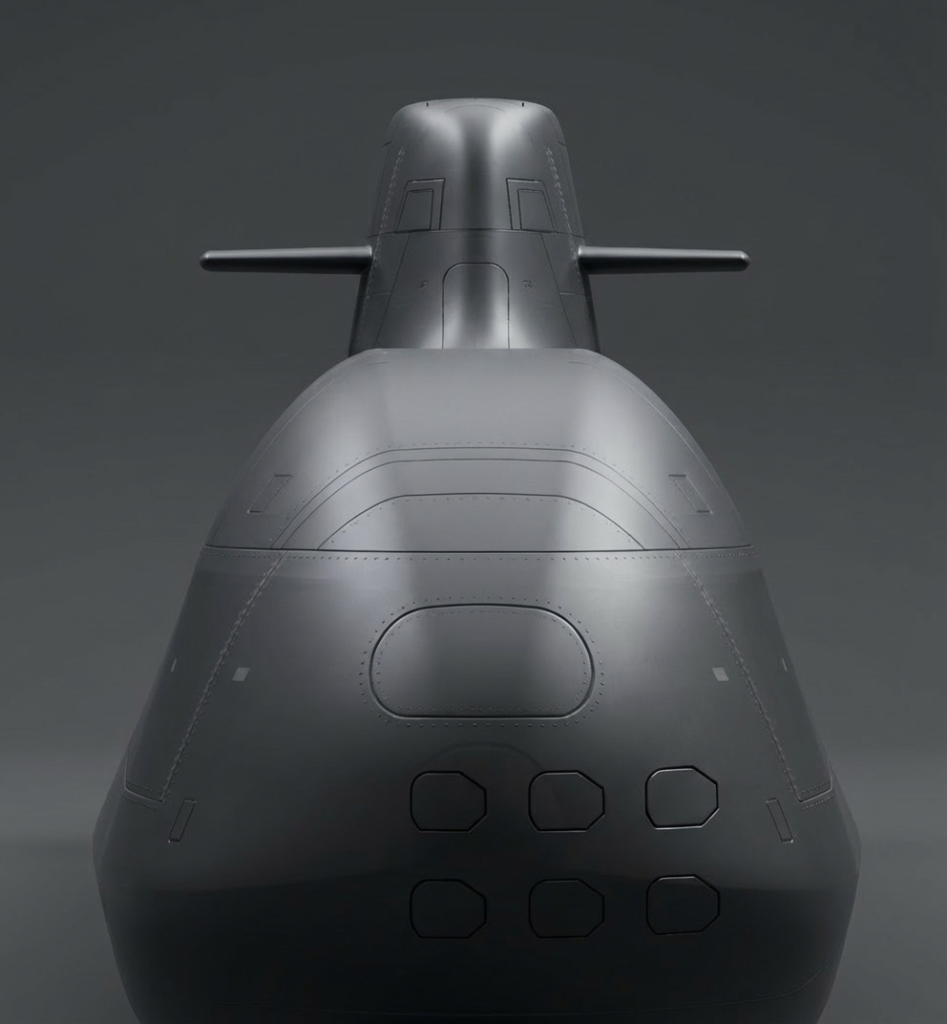
Despite its name, the Type 212CD is far more than an upgraded version of Germany’s Type 212A submarine.
The “CD” stands for Common Design, a joint German-Norwegian program specifically developed for operations in the North Atlantic, Norwegian Sea, and Arctic waters.
Compared with the earlier Type 212A, the new submarine features a larger hull, greater endurance, a redesigned combat system architecture, and significantly improved stealth characteristics.
One of its most distinctive features is its angular outer hull, designed to reduce sonar reflections and improve survivability. Combined with advanced anechoic coatings, quieter machinery, and optimized internal arrangements, the Type 212CD is widely regarded as one of the most advanced conventional submarines currently under development.
Technical Specifications
Although many details remain classified, publicly available information provides a good overview of the submarine’s capabilities.
Class: Type 212CD (Common Design)
Builder: ThyssenKrupp Marine Systems (TKMS)
Operators: Germany, Norway, and future operator Canada
Type: Diesel-electric attack submarine with Air-Independent Propulsion (AIP)
Displacement: Approximately 2,500 tons surfaced and around 2,800–3,000 tons submerged
Length: Approximately 73 meters
Beam: About 10 meters
Crew: Approximately 25–35 personnel
Propulsion: Diesel-electric system with hydrogen fuel-cell Air-Independent Propulsion
Batteries: Next-generation battery technology, widely believed to include lithium-ion cells
Armament: 533 mm heavyweight torpedo tubes
Primary Weapons: DM2A4 SeaHake heavyweight torpedoes or future equivalents
Additional Capabilities: Naval mine deployment, intelligence gathering, and special forces insertion
Key Features: Extremely low acoustic signature, extended underwater endurance, advanced sensor suite, and optimized performance in northern waters
Although larger than previous German submarines, the Type 212CD remains smaller than some competitors such as South Korea’s KSS-III. This reflects a deliberate design philosophy that prioritizes stealth, endurance, and operational efficiency over maximum payload.
Air-Independent Propulsion: The Submarine’s Greatest Advantage
The defining feature of the Type 212 family is its Air-Independent Propulsion (AIP) system based on hydrogen fuel cells.
Conventional diesel-electric submarines must periodically surface or raise a snorkel mast to recharge their batteries using diesel engines. Those moments are often the most dangerous, as the submarine becomes significantly easier to detect.
An AIP system dramatically reduces that vulnerability by allowing the submarine to remain submerged for much longer periods without snorkeling.
While it cannot match the virtually unlimited endurance of a nuclear-powered submarine, an AIP-equipped boat becomes exceptionally difficult to detect during patrols in coastal waters, narrow seas, and Arctic environments where stealth often matters more than speed.
For Canada, this capability is particularly valuable. The country’s submarines are expected to operate in the challenging conditions of the North Atlantic and Arctic rather than warm-water expeditionary theaters.
Why Germany Won
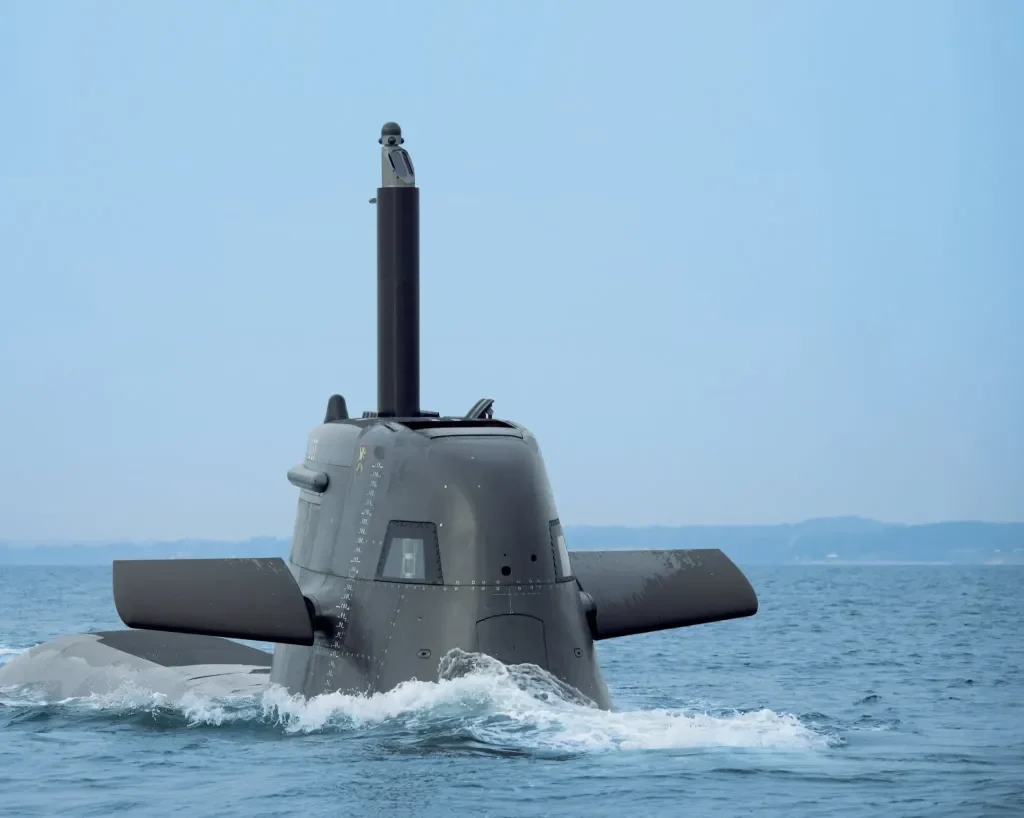
South Korea’s KSS-III Batch II was widely considered a formidable competitor.
It offers a larger platform, high levels of automation, and the potential integration of vertical launch systems.
However, Germany’s proposal presented several significant advantages.
Most importantly, the Type 212CD is already under construction for Germany and Norway, reducing technical risk and allowing Canada to join an established multinational program rather than funding a completely unique design.
The submarine was also specifically developed for northern maritime environments—exactly the operational conditions Canada expects to face.
Finally, commonality with NATO allies simplifies logistics, maintenance, crew training, spare parts procurement, and future joint operations.
Why the Arctic Matters More Than Ever
Canada’s submarine decision reflects the rapidly changing strategic environment in the Arctic.
As polar ice retreats and maritime activity increases, the Arctic is becoming an increasingly important region for global military competition.
Russia continues to maintain the world’s largest Arctic submarine force, the United States is expanding its presence in high northern latitudes, and NATO has significantly increased its attention to the North Atlantic and Arctic sea lanes.
For Canada, protecting its vast northern territory is not simply a military objective but a matter of national sovereignty.
Submarines remain one of the few platforms capable of conducting long-endurance, covert operations across such enormous maritime areas.
Why Conventional Submarines Still Matter
At first glance, it might seem that nuclear-powered submarines have made conventional boats obsolete.
The reality is far more complex.
Nuclear submarines remain unmatched for global deployments, sustained high-speed operations, and virtually unlimited endurance.
However, modern AIP-equipped diesel-electric submarines continue to offer major advantages in coastal waters, confined seas, and Arctic environments.
They are smaller, significantly less expensive to build and operate, and—when properly employed—can be extraordinarily quiet.
These characteristics make them ideal for intelligence collection, anti-submarine warfare, mine-laying operations, maritime denial missions, and the covert deployment of special operations forces.
That is why countries including Germany, Norway, Italy, Japan, South Korea, and Singapore continue investing heavily in advanced conventional submarine technology.
A New Chapter for Canada’s Navy
The acquisition of twelve Type 212CD submarines represents the most ambitious modernization of Canada’s submarine force in modern history.
The program aims to replace the aging Victoria-class, restore operational readiness, strengthen Canada’s Arctic presence, and improve interoperability with NATO allies.
Significant challenges remain, including infrastructure development, crew training, long-term maintenance, and adapting the design to Canadian operational requirements.
Yet Canada’s choice sends a clear strategic message.
Rather than pursuing the largest submarine or the heaviest weapons load, Ottawa has prioritized stealth, endurance, Arctic capability, and alliance interoperability.
In many respects, the Type 212CD could become what the Victoria-class was originally expected to be—a reliable and modern foundation for Canada’s undersea fleet in the decades ahead.






