
The New Marine One Will Finally Retire a Legend: The Story of the VH-3D Sea King Presidential Helicopter

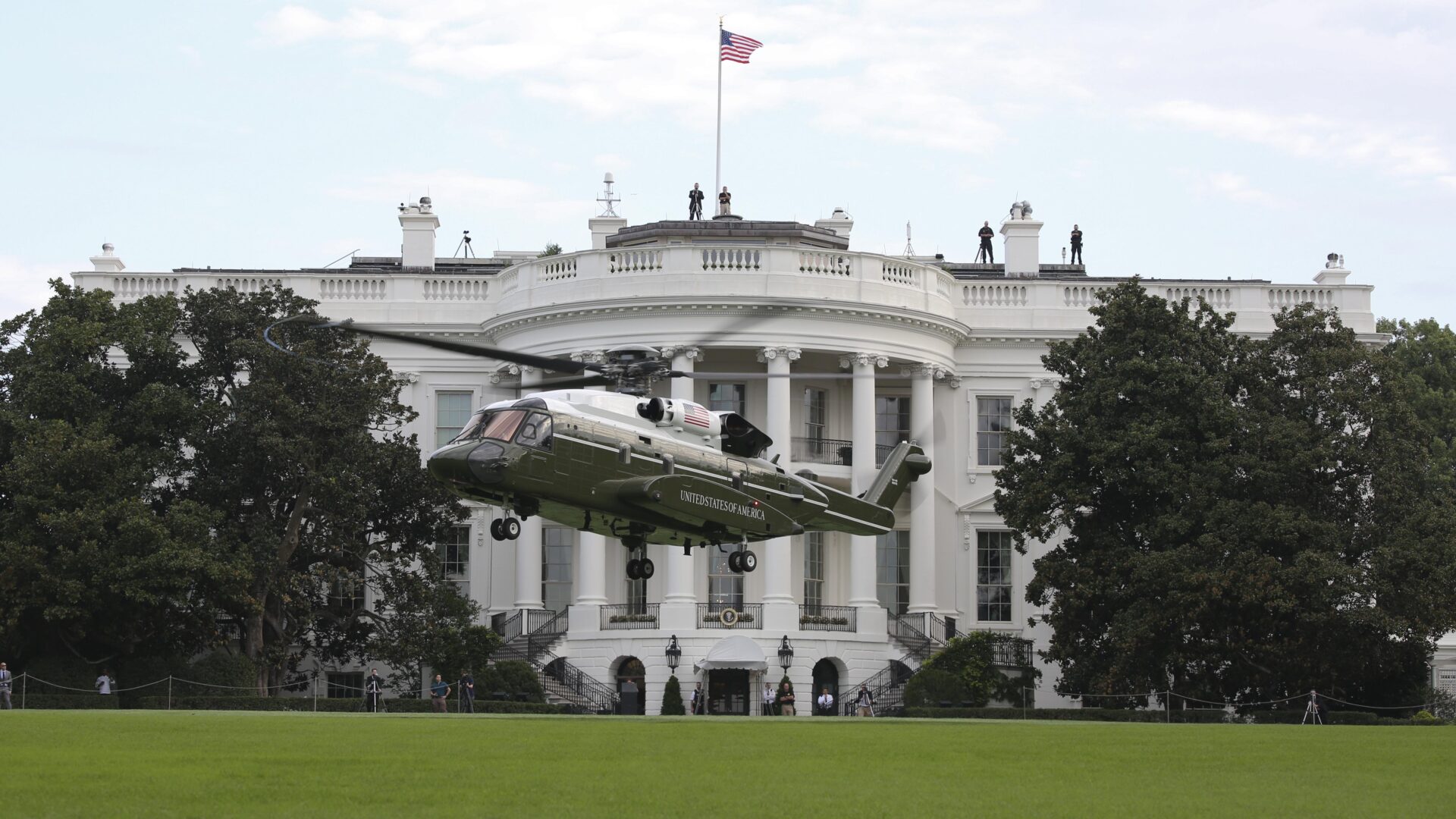
For more than half a century, American presidents have left the White House in much the same way. After crossing the South Lawn, they boarded the iconic green-and-white helicopter known around the world as Marine One.
That era is finally coming to an end.
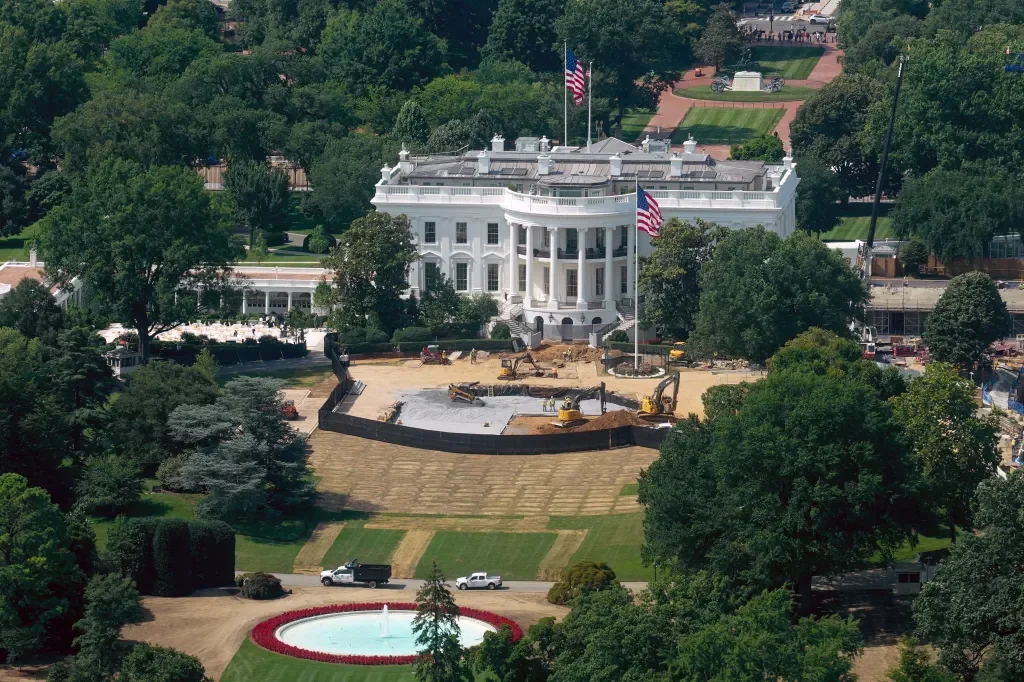
In 2026, construction began on a new granite helicopter landing pad at the White House, specifically designed to accommodate the new VH-92A Patriot presidential helicopter. Its completion will finally allow the legendary VH-3D Sea King fleet to retire after nearly five decades of presidential service. The reason is surprisingly practical: the VH-92A’s significantly more powerful engines and downward-directed exhaust wash have been tearing up the White House lawn during takeoffs and landings.
Yet the arrival of the new helicopter is also an opportunity to remember the aircraft that served as America’s airborne symbol of presidential power for generations.
The Birth of the Presidential Sea King

By the late 1970s, America’s presidential helicopter fleet was beginning to show its age.
The existing Sikorsky VH-3A helicopters no longer fully met growing requirements for safety, range, and onboard communications. As a result, the U.S. Marine Corps ordered an upgraded version of the highly successful Sikorsky SH-3 Sea King anti-submarine helicopter.
The result was the VH-3D.
The first aircraft entered service with Marine Helicopter Squadron One (HMX-1) in 1978 and quickly became the primary helicopter used to transport the President of the United States. For many people around the world, this aircraft became the very image of Marine One.
A Flying White House
Although the VH-3D looked similar to the standard Sea King externally, internally it was an entirely different aircraft.
Virtually the entire cabin was redesigned.
The President received a dedicated workspace equipped with secure communications, allowing direct contact with the Pentagon, the White House, military commanders, and world leaders during flight.
Every critical onboard system featured multiple layers of redundancy.
The helicopter also incorporated electronic countermeasures, missile warning systems, and defensive equipment designed to protect against man-portable air-defense systems (MANPADS).
In effect, the VH-3D became a flying command center.
Why the Sea King Was So Successful
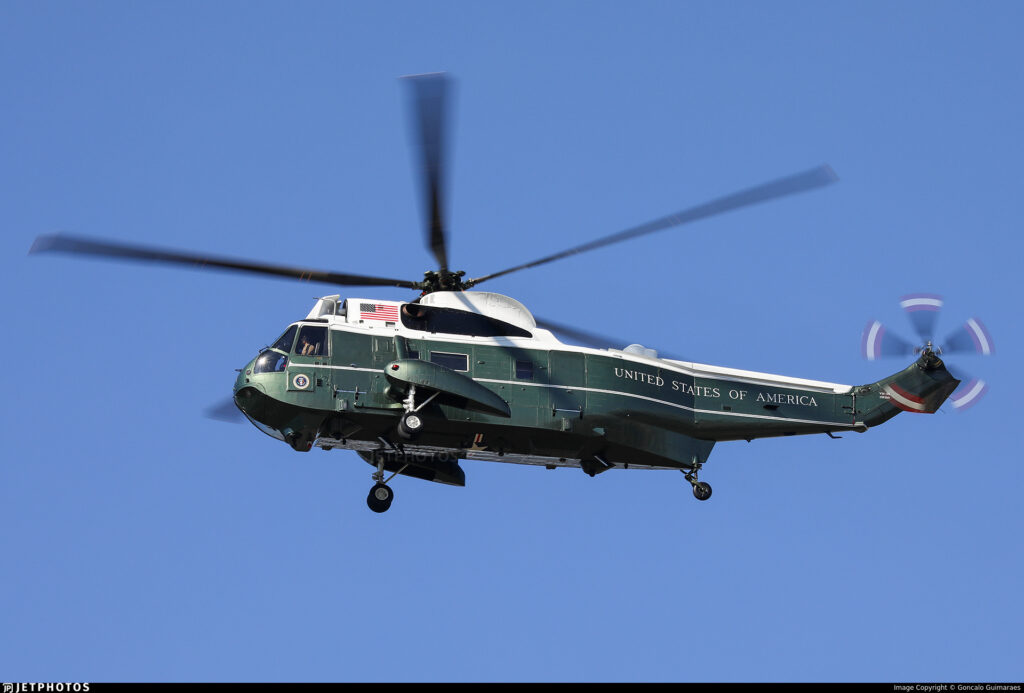
Much of its success originated from the SH-3 Sea King itself.
When introduced in the early 1960s, the Sea King represented a technological breakthrough.
It was among the world’s first production twin-engine amphibious naval helicopters.
Capable of landing on water, offering long range, and demonstrating exceptional reliability, the Sea King quickly entered service with navies around the globe.
The presidential variant inherited these strengths.
When transporting the Commander-in-Chief, reliability has always mattered far more than speed or payload capacity.
That philosophy explains the helicopter’s remarkably long service life.
Serving Generations of Presidents
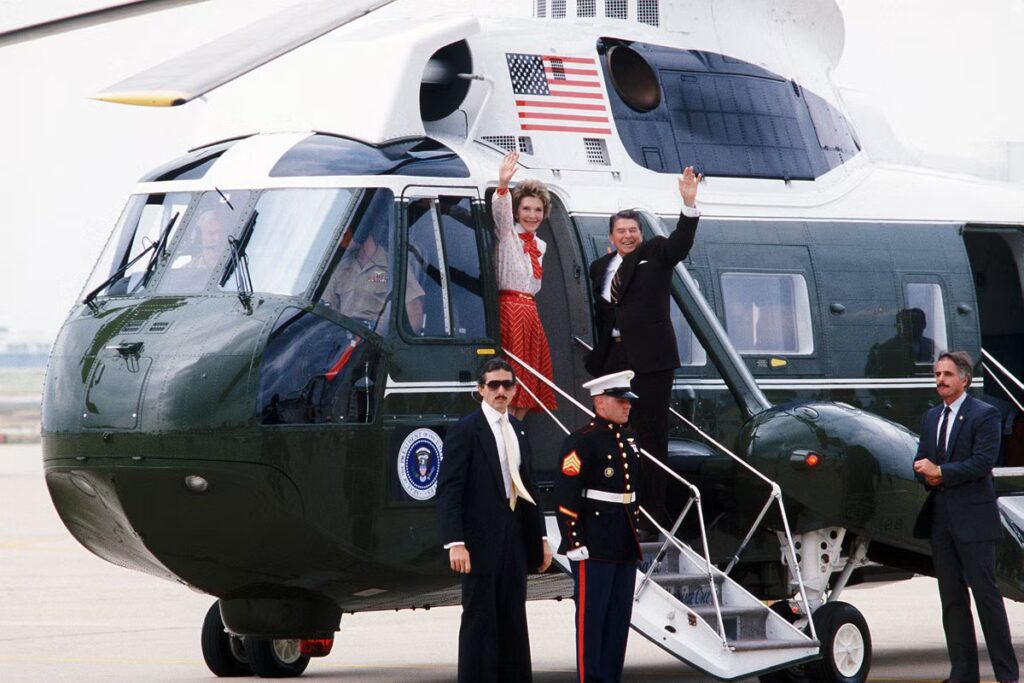
During its career, the VH-3D transported nearly every U.S. president since the late 1970s.
Its passengers included:
- Jimmy Carter
- Ronald Reagan
- George H. W. Bush
- Bill Clinton
- George W. Bush
- Barack Obama
- Donald Trump
- Joe Biden
Every official visit, every trip to Camp David, and thousands of flights between the White House and Joint Base Andrews were carried out aboard this aircraft.
Over time, the VH-3D became far more than transportation—it became one of the defining symbols of the American presidency.
Why a Replacement Became Necessary
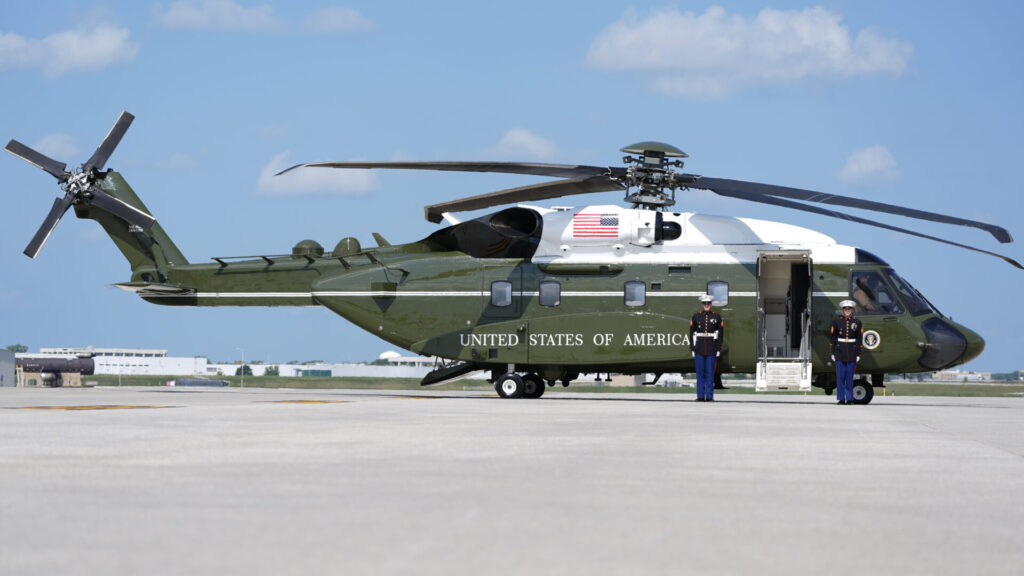
Despite numerous modernization programs, age eventually caught up with the fleet.
By the early twenty-first century, many of the helicopters were approaching forty years of service.
Maintenance costs continued to rise.
At the same time, modern secure communications, digital avionics, and evolving security requirements demanded an entirely new generation of aircraft.
An earlier replacement effort—the VH-71 Kestrel program—collapsed after costs spiraled dramatically out of control.
Only in 2014 did Sikorsky receive the contract to develop a new presidential helicopter based on the S-92 platform.
The result became the VH-92A Patriot, with the first production aircraft delivered to the U.S. Marine Corps in 2024.
An Unexpected Problem
At first glance, the VH-92A appeared ready to seamlessly replace the aging Sea Kings.
However, an unexpected issue soon emerged.
Its engines are considerably more powerful than those of the VH-3D, while the aircraft’s exhaust system directs hot gases downward.
During operations on the White House South Lawn, the rotor wash and exhaust blast literally tore sections of grass and soil from the ground.
As a result, the new helicopters could not fully replace the older Sea Kings for White House operations.
Granite Instead of Grass
The solution turned out to be remarkably straightforward.
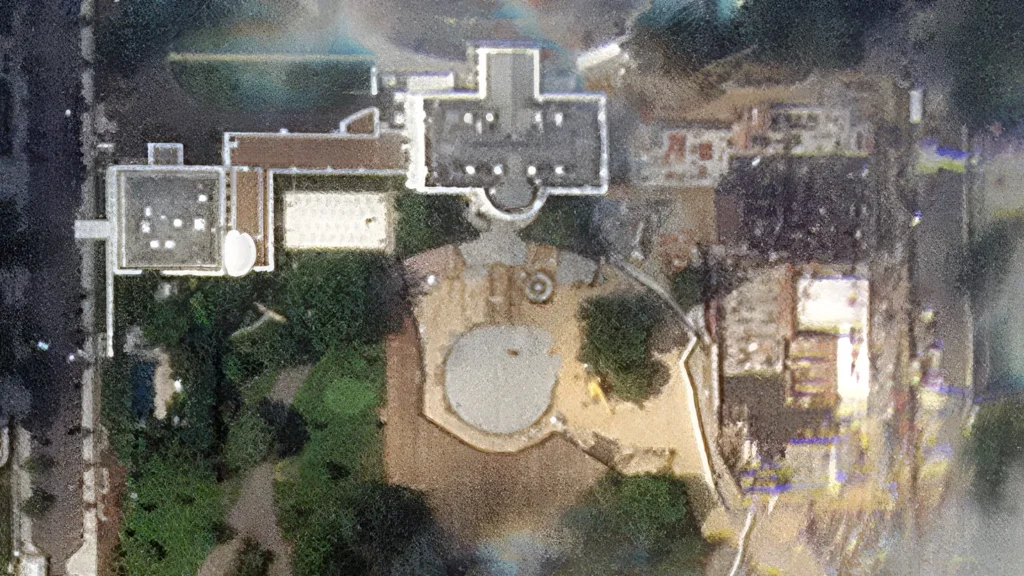
In 2026, the White House announced construction of a permanent granite helicopter landing pad featuring the Presidential Seal.
According to President Donald Trump, Sikorsky—the manufacturer of the VH-92A—is funding the project.
Once completed, the new landing area will finally allow the VH-92A Patriot to perform the full Marine One mission, enabling the retirement of the last VH-3D helicopters after nearly fifty years of service.
The End of an Era
For millions of people, the image of the President walking across the South Lawn toward a waiting VH-3D has become inseparable from the American presidency itself.
During nearly five decades of service, the helicopter witnessed the final years of the Cold War, the collapse of the Soviet Union, conflicts across the Middle East, global crises, and eight presidential administrations.
Very few aircraft in history have remained at the center of world politics for so long.
The VH-92A Patriot now takes over that responsibility.
But it was the VH-3D Sea King that transformed the callsign Marine One into one of the most recognizable names in aviation history.
VH-3D Sea King Technical Specifications
Developer: Sikorsky Aircraft
Country: United States
Role: Presidential transport helicopter
Based On: Sikorsky SH-3 Sea King
Entered Service: 1978
Crew: 4
Passenger Capacity: Up to 14 passengers (significantly fewer in presidential configuration)
Overall Length: 22.15 m
Main Rotor Diameter: 18.9 m
Maximum Takeoff Weight: Approximately 9,700 kg
Powerplant: 2 × General Electric T58-GE-10 turboshaft engines
Maximum Speed: Approximately 267 km/h (166 mph)
Range: Approximately 1,000 km (620 miles)
Special Equipment:
- Secure presidential communications;
- Electronic warfare and defensive countermeasure systems;
- Missile warning system;
- Protected presidential cabin;
- Extensive redundancy for all critical systems.
Legacy
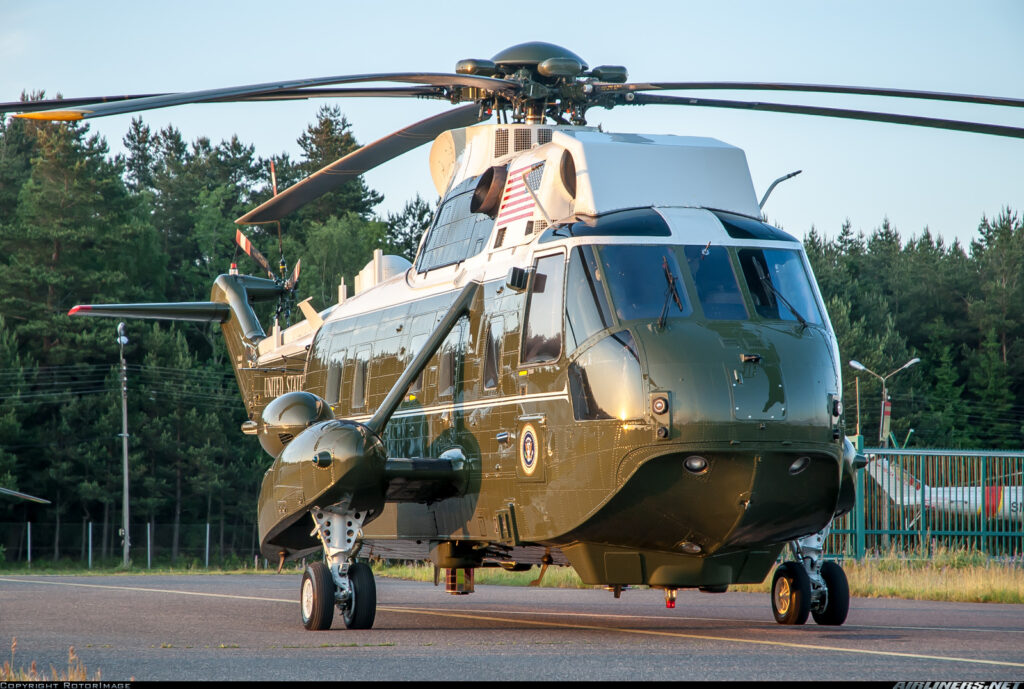
The VH-3D Sea King was never the fastest or the most technologically advanced helicopter of its time.
Its greatest strength was something even more important—exceptional reliability.
For nearly fifty years, it carried out one of the most demanding aviation missions in the world: safely transporting the President of the United States.
Even after retirement, the VH-3D will remain one of the most recognizable helicopters ever built and an enduring symbol of American presidential aviation.






