
Billions Turned Into Scrap Metal: The Most Expensive Engineering Mistakes in Weapons History

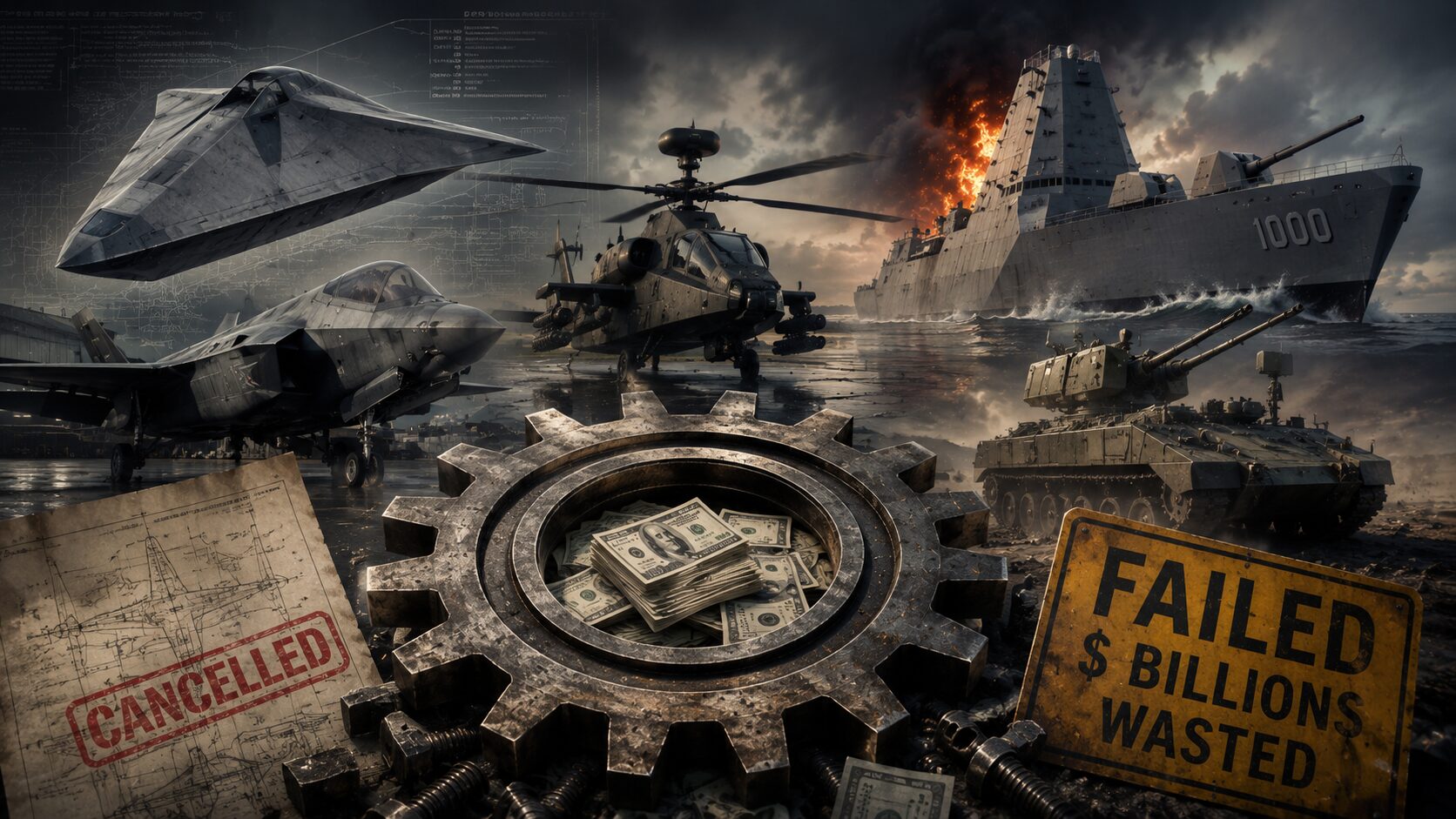
Military technology has always been developed at the edge of what is technologically possible. Modern weapons are expected to do things that no machine could accomplish just a few years earlier: fly faster, see farther, remain invisible to enemy sensors, survive direct hits, and destroy targets before the opponent can even react.
Sometimes these ambitions lead to revolutionary breakthroughs. More often, however, they expose the harsh reality of engineering. Designers attempt to solve too many problems at once, military planners change requirements after development has already begun, and entire weapons programs are built around assumptions about future warfare that become obsolete long before the first prototype is completed.
The result is projects that consume billions of dollars only to end with a handful of prototypes, abandoned factories, or production weapons that suddenly have no practical ammunition or mission.
This is not a strict ranking. Comparing military spending across different decades is difficult, and many Soviet, Chinese, and even Western defense programs remain only partially documented. Nevertheless, these projects illustrate better than any others how engineering mistakes can evolve into strategic and financial disasters.
A-12 Avenger II: The Stealth Aircraft That Never Flew
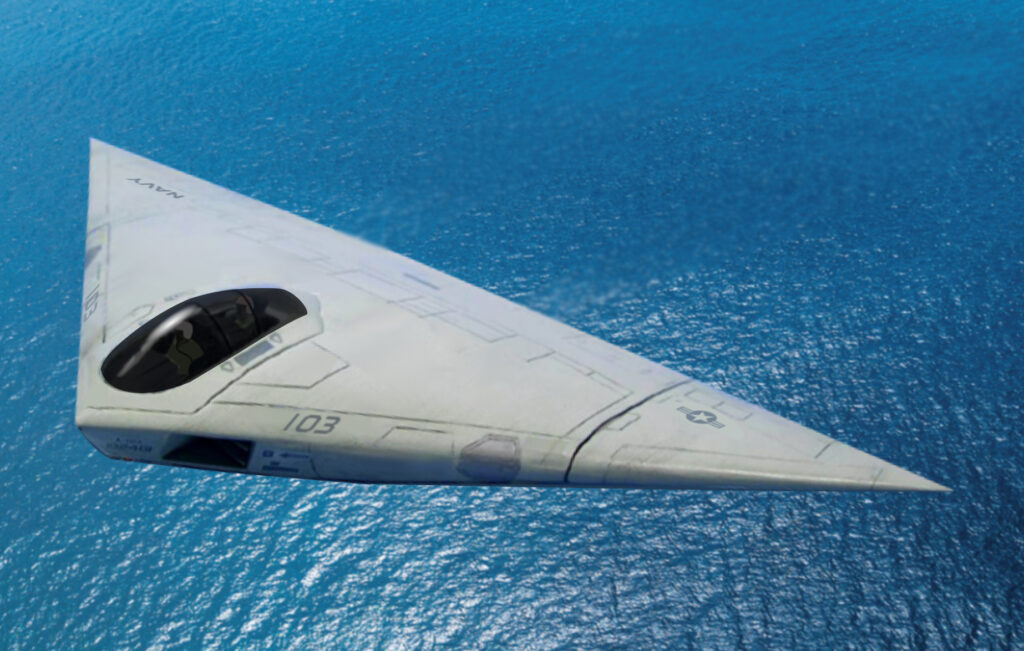
During the 1980s, the U.S. Navy sought a next-generation carrier-based strike aircraft capable of penetrating Soviet air defenses while remaining virtually invisible to radar. It was intended to replace the aging A-6 Intruder and become the naval counterpart to America’s emerging stealth aircraft.
The project became known as the A-12 Avenger II. Its distinctive flying-wing design eventually earned it the unofficial nickname “the flying Dorito.”
On paper, the aircraft seemed revolutionary. It promised stealth characteristics, long range, a substantial payload, and full carrier compatibility. Unfortunately, it was precisely this combination of ambitious requirements that ultimately doomed the program.
Composite structures and radar-absorbing materials proved significantly heavier than expected. As weight increased, performance declined, schedules slipped, and contractors struggled to produce a viable prototype. Many of the technical problems remained hidden even from the Navy itself.
By the early 1990s, costs had spiraled out of control while the first flight was repeatedly delayed. In January 1991, Secretary of Defense Dick Cheney canceled the program after billions of dollars had already been invested.
The greatest lesson of the A-12 was not that stealth carrier aircraft were impossible. Rather, it demonstrated the danger of attempting to leap directly into an extraordinarily complex design before the underlying technologies had reached sufficient maturity.
The cancellation left the U.S. Navy without a true successor to the A-6, forcing strike missions to be absorbed by upgraded F/A-18 variants.
RAH-66 Comanche: A Helicopter Built for a War That Never Came
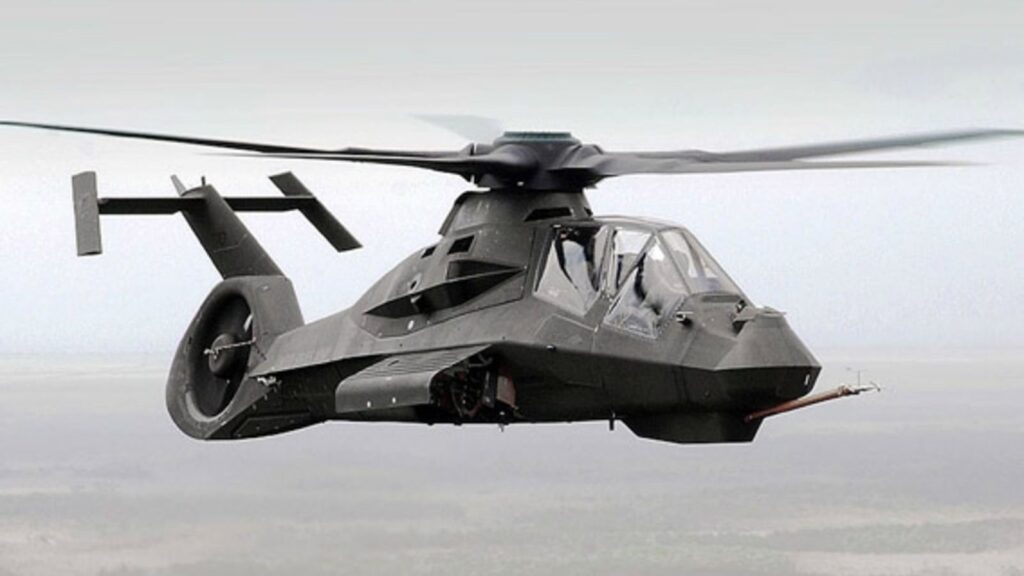
The RAH-66 Comanche originated during the Cold War, when the U.S. Army envisioned a stealth reconnaissance helicopter capable of penetrating behind Soviet lines, locating armored formations, and directing precision strikes.
The aircraft became one of the most technologically ambitious helicopters ever designed. It featured internal weapon bays, reduced radar and infrared signatures, advanced avionics, and cutting-edge reconnaissance systems.
Yet the program gradually became a victim of its own ambitions.
Army requirements evolved constantly. The helicopter was expected to function simultaneously as a reconnaissance platform, light attack helicopter, precision-strike aircraft, and digital battlefield command node. Development stretched across more than two decades while procurement numbers steadily declined.
By 2004, after spending approximately $7–8 billion, the program was canceled with only two flying prototypes completed.
Ironically, many of Comanche’s intended reconnaissance missions were increasingly being performed by much cheaper unmanned aerial vehicles. Operations in Afghanistan and Iraq demonstrated that sophisticated stealth helicopters were not always necessary against lightly defended opponents, while against modern integrated air defenses even a stealth helicopter with a crew remained highly vulnerable.
Many technologies developed for the Comanche later found their way into other Army helicopter programs, but that offered little consolation for a project originally intended to produce thousands of aircraft.
Future Combat Systems: Reinventing an Entire Army at Once
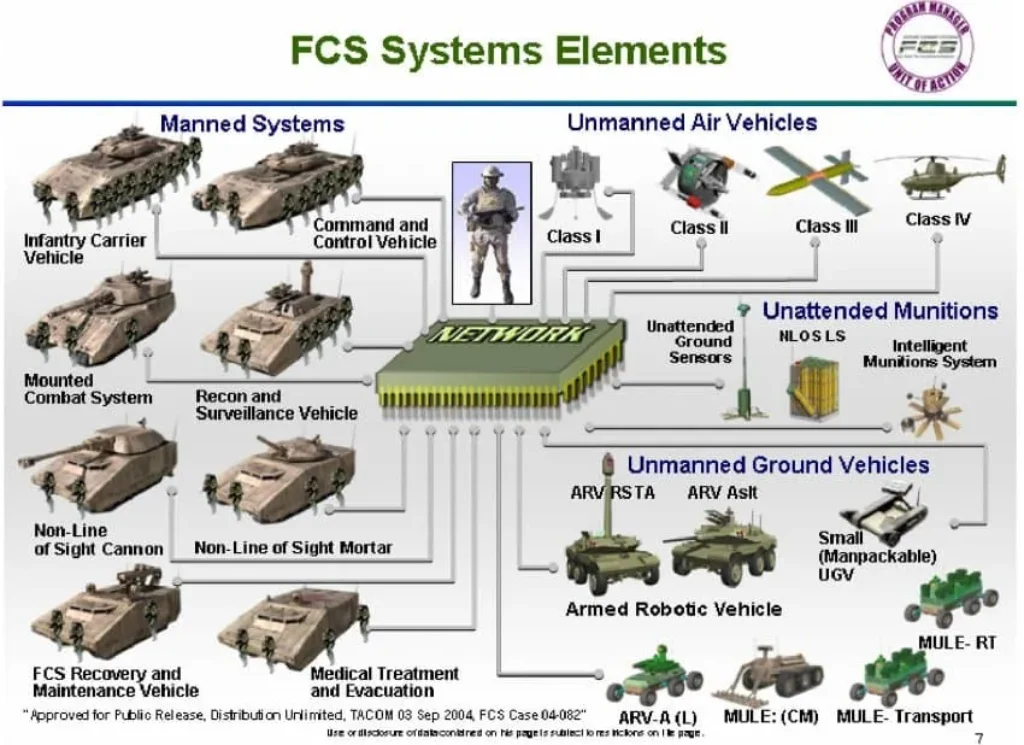
If the Comanche represented an overly ambitious helicopter, Future Combat Systems (FCS) represented something even larger: an attempt to redesign almost the entire U.S. Army in a single program.
FCS envisioned a family of lightweight armored vehicles, unmanned aircraft, ground robots, missiles, sensors, and communication systems—all connected through a digital battlefield network.
Commanders would theoretically possess complete situational awareness. Lightly armored vehicles would compensate for reduced protection through superior information, locating and destroying enemy forces before they could respond.
The problem was obvious in hindsight.
For the concept to work, dozens of revolutionary technologies had to mature simultaneously while seamlessly integrating into one massive system.
As development progressed, vehicle weights increased, software became vastly more complicated, and costs exploded. Meanwhile, real-world combat in Iraq demonstrated that mines, roadside bombs, and ambushes remained just as deadly regardless of how advanced battlefield networking became.
The main FCS program was terminated in 2009 after roughly $21 billion had already been spent.
Although several technologies survived in later Army modernization efforts, the original vision of replacing nearly every major combat system through one enormous technological leap ultimately collapsed.
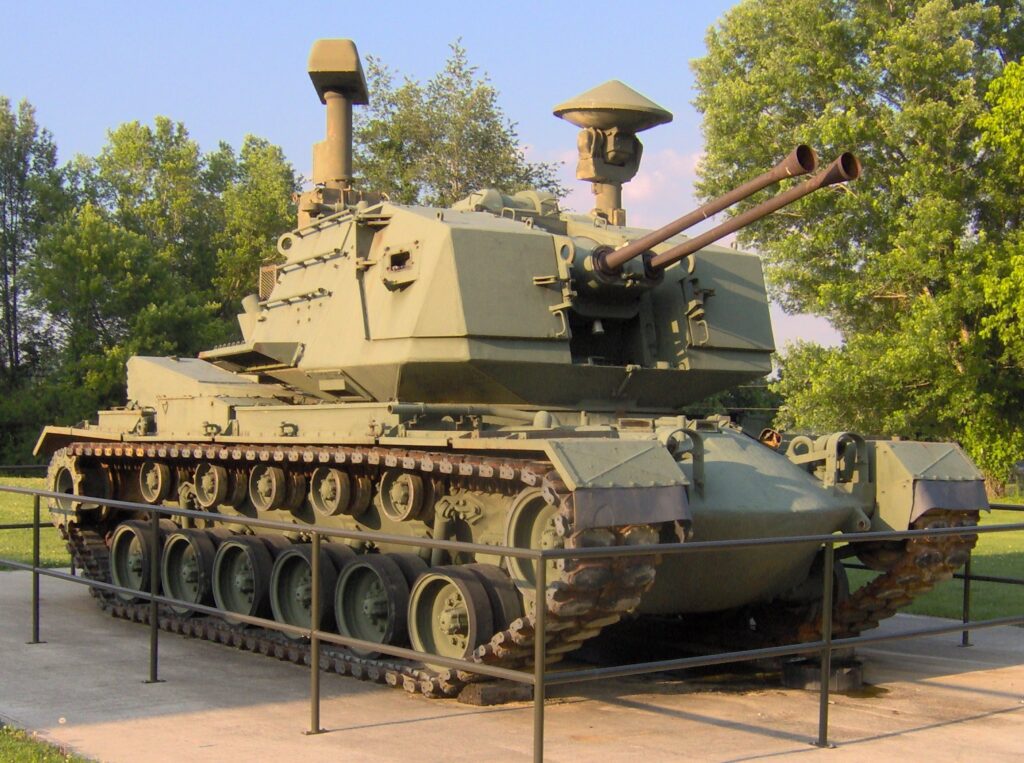
M247 Sergeant York: The Anti-Aircraft Gun That Could Mistake a Fan for a Target
IM000467.JPG
During the late 1970s, the U.S. Army recognized that Soviet attack helicopters armed with long-range anti-tank missiles had outgrown the capabilities of existing self-propelled anti-aircraft systems.
The proposed solution became the M247 Sergeant York, armed with twin 40-mm cannons and radar-guided fire control. To reduce development costs, engineers combined existing components: an M48 tank chassis, aircraft radar technology, and proven artillery systems.
Unfortunately, integrating successful individual components did not automatically create a successful combat vehicle.
The airborne radar struggled to distinguish low-flying helicopters from buildings, terrain, and ground clutter. During one infamous demonstration, the system reportedly locked onto a rotating ventilation fan instead of an aerial target.
Behind the humorous anecdotes lay much deeper engineering problems. Reliability remained far below requirements, and the vehicle repeatedly failed operational testing.
The program was canceled in 1985 after only about fifty vehicles had been produced.
Sergeant York demonstrated a timeless lesson: military equipment must function as an integrated system. Excellent individual components cannot compensate for poor overall engineering.
Zumwalt: Warships Without Ammunition
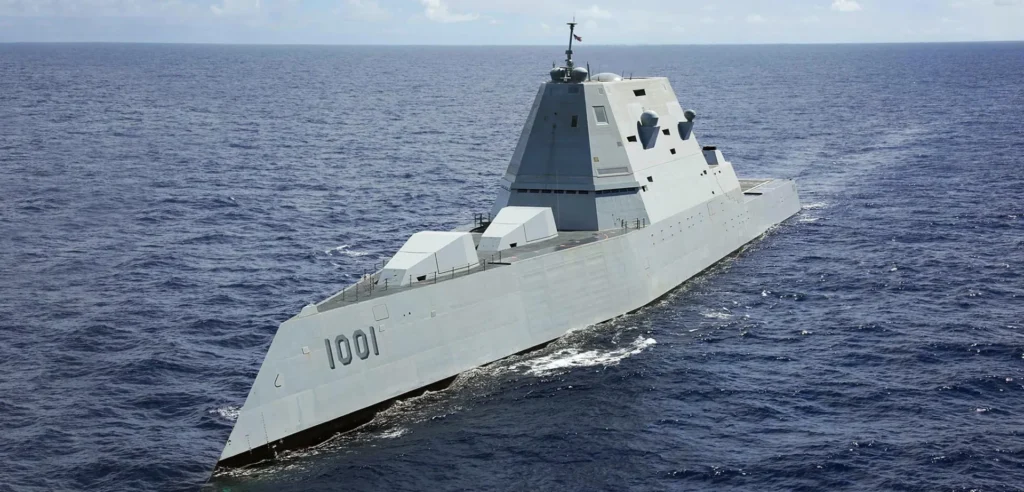
The Zumwalt-class destroyer was envisioned as the centerpiece of America’s 21st-century surface fleet.
These massive stealth destroyers carried two revolutionary 155-mm Advanced Gun Systems designed to support amphibious operations with precision-guided artillery.
Their primary ammunition was the Long Range Land Attack Projectile (LRLAP), capable of striking targets roughly 150 kilometers away with exceptional accuracy.
The concept worked beautifully—provided the Navy built dozens of Zumwalts.
Originally, the fleet planned to acquire more than thirty ships. That number was eventually reduced first to seven and finally to only three.
Development costs for LRLAP therefore had to be divided among an extremely small production run. As a result, each projectile became so expensive that it approached the cost of a cruise missile.
The Navy canceled procurement of the ammunition.
Consequently, three of the world’s most expensive destroyers entered service with their two primary artillery systems effectively lacking operational ammunition.
The engineering itself was not fundamentally flawed. The guns worked, the shells functioned, and the ships performed as designed.
The failure lay in the economic assumptions behind the entire program.
Zumwalt demonstrated that engineering success means little if the supporting industrial and financial model collapses.
Littoral Combat Ship: Modularity That Was Never Truly Modular
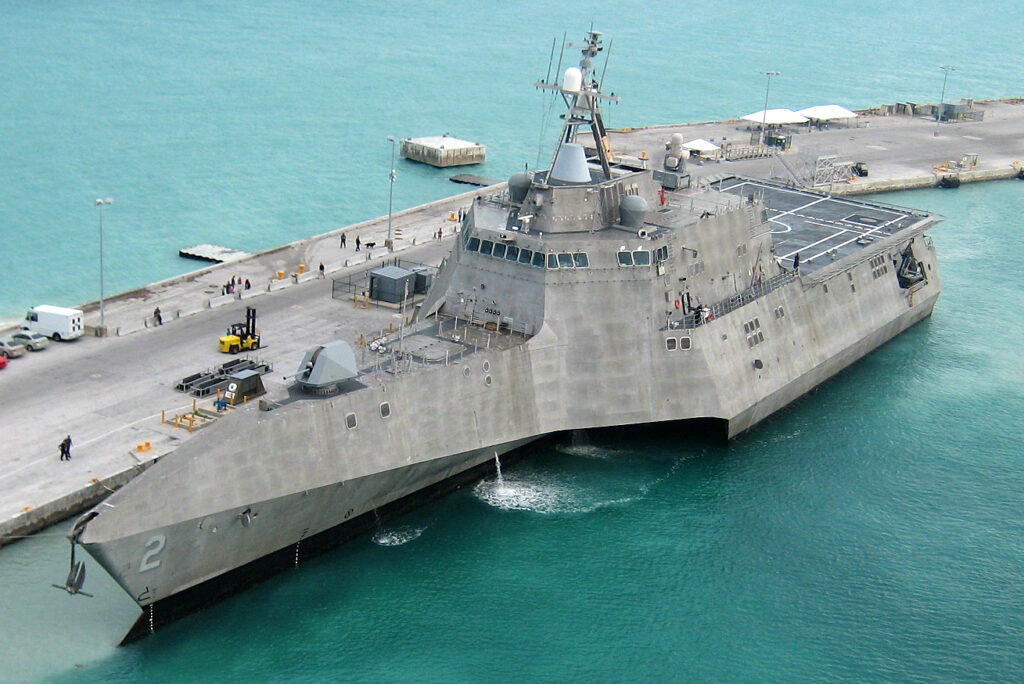
The Littoral Combat Ship (LCS) program aimed to provide the U.S. Navy with a fast, affordable, and highly adaptable warship for operations close to hostile coastlines.
Its defining feature was modularity.
Rather than constructing separate mine warfare, anti-submarine, and surface combat ships, one vessel would simply exchange mission modules depending on operational needs.
Reality proved considerably more complicated.
Changing modules required far more time, logistics, and maintenance than expected. Several mission packages experienced years of delays or failed to achieve required performance. Small crews became overburdened, while dependence on shore-based support increased significantly.
Compounding the problem, the Navy ultimately built two entirely different LCS designs simultaneously, eliminating many of the expected benefits of commonality.
Costs rose steadily while capabilities lagged behind expectations. Several relatively new ships began retiring well before reaching their intended service life.
The LCS never became completely useless. Many vessels continue to perform patrol and security missions.
However, its central promise—that one ship could rapidly transform into multiple specialized platforms—never materialized as originally envisioned.
F-35: Not a Failure, But an Extremely Expensive Warning
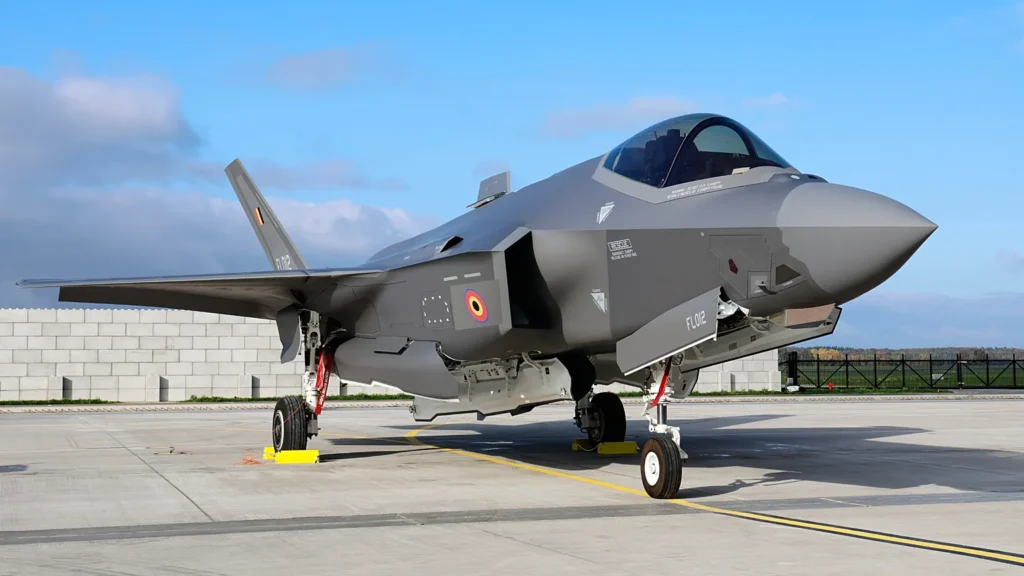
Unlike the previous examples, the F-35 Lightning II cannot reasonably be described as a failed program.
It is in large-scale production, serves with numerous allied nations, and has demonstrated capabilities unavailable to most competing fighters.
Nevertheless, it remains perhaps the clearest example of how engineering and management decisions can dramatically increase costs even within a successful program.
The central concept appeared simple: develop one aircraft family for the Air Force, Navy, and Marine Corps.
In practice, accommodating the demanding short takeoff and vertical landing requirements of the F-35B influenced the design of the entire aircraft family. The three variants gradually diverged while much of the expected cost savings from commonality disappeared.
An equally significant issue was concurrent development.
Production aircraft entered assembly before testing had fully concluded. As engineering problems emerged, already-built aircraft required expensive retrofits and modifications.
The result included software delays, maintenance challenges, logistics problems, spare-part shortages, and life-cycle costs projected to approach $1.7 trillion.
The F-35 ultimately became operational—but only after overcoming engineering and organizational challenges on an unprecedented scale.
Why Military Engineering Keeps Repeating the Same Mistakes
Although these programs involved aircraft, helicopters, armored vehicles, destroyers, and air defense systems, they all reveal remarkably similar patterns.
The first mistake is attempting too many technological revolutions simultaneously. New engines, new materials, new software, new sensors, and entirely new operational concepts all introduce risk. Combined, those risks multiply rather than simply add together.
The second is constantly changing requirements. Every modification affects weight, power generation, cooling, software architecture, and cost.
The third is beginning mass production before testing has been completed. This accelerates delivery but transforms every engineering flaw into an expensive retrofit program.
The fourth is the illusion of universality. One aircraft for three services, one ship for multiple missions, or one family of vehicles to replace an entire army may sound economical, but different missions demand different engineering compromises.
Finally, there is perhaps the most dangerous mistake of all: allowing technological ambition to replace military necessity.
Projects sometimes continue not because they remain the best solution to a real battlefield problem, but because too much money, prestige, and political capital have already been invested.
Conclusion
The most expensive engineering mistakes in military history were rarely caused by incompetent engineers. On the contrary, many of these programs were developed by some of the world’s finest specialists, and numerous technologies pioneered within them later found successful applications elsewhere.
The real disaster began when military planners demanded systems that ignored the practical limits of physics, budgets, schedules, and technological maturity.
The A-12 attempted to become a stealth carrier aircraft with long range and heavy payload all at once.
The Comanche tried to be simultaneously a stealth scout, attack helicopter, and digital command platform.
Future Combat Systems sought to reinvent an entire army in a single technological leap.
LCS attempted to replace multiple classes of warships with one modular design.
Zumwalt depended on an economic production model that disappeared before the ships even entered service.
Each program tried to skip several generations of technological evolution.
That is perhaps the greatest lesson of all.
Military innovation succeeds not through giant leaps into the unknown, but through carefully tested, incremental progress. Requirements must remain stable, technologies must mature before production begins, and elegant concepts must ultimately prove themselves not in presentations, but on the battlefield.
Because in military engineering, the most expensive component is often neither the engine nor the radar.
It is the wrong decision made at the very beginning.






