
Ranger TTL USV: The Drone Boat Launched Directly From a Submarine’s Torpedo Tube

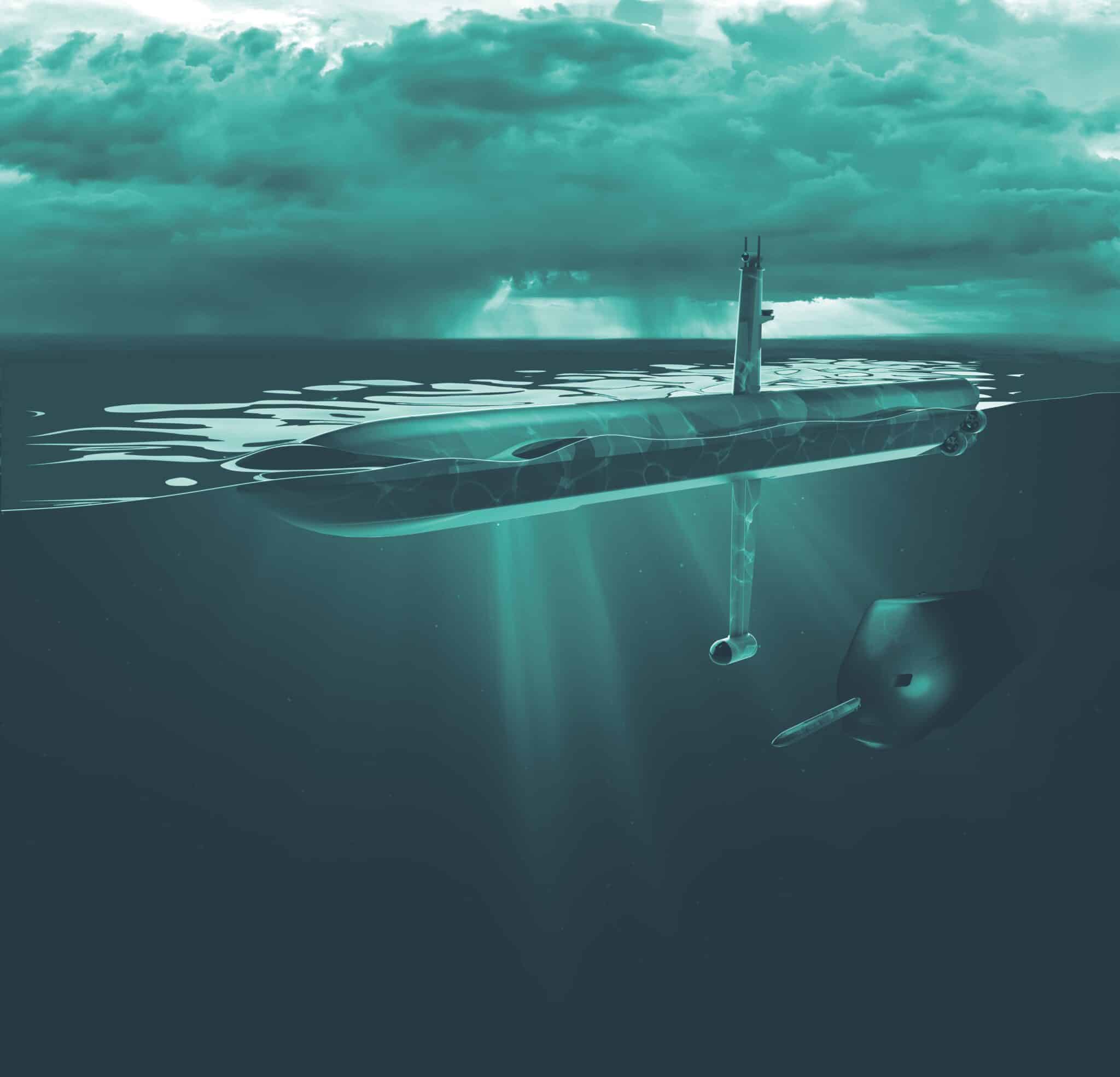
While most navies are still debating how many unmanned systems should be carried on a ship’s deck, German engineers have approached the problem from a different direction. What if the drone did not need a deck at all?
This is the idea behind the Ranger TTL USV — Torpedo Tube-Launched Uncrewed Surface Vessel. It is an unmanned surface craft launched not from a patrol boat or frigate, but from a standard 533 mm submarine torpedo tube.
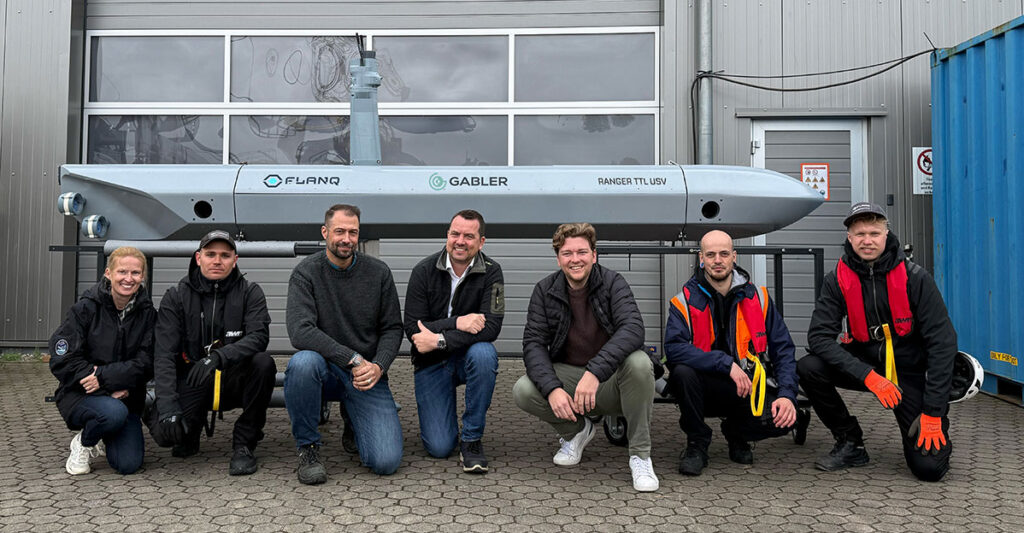
After leaving the tube, the vehicle rises to the surface, deploys its equipment and begins performing its assigned mission. German companies Gabler Naval and FLANQ have recently completed sea acceptance trials of the system, demonstrating that the basic concept is technically viable.
Not a Torpedo, but a Full-Fledged Maritime Scout
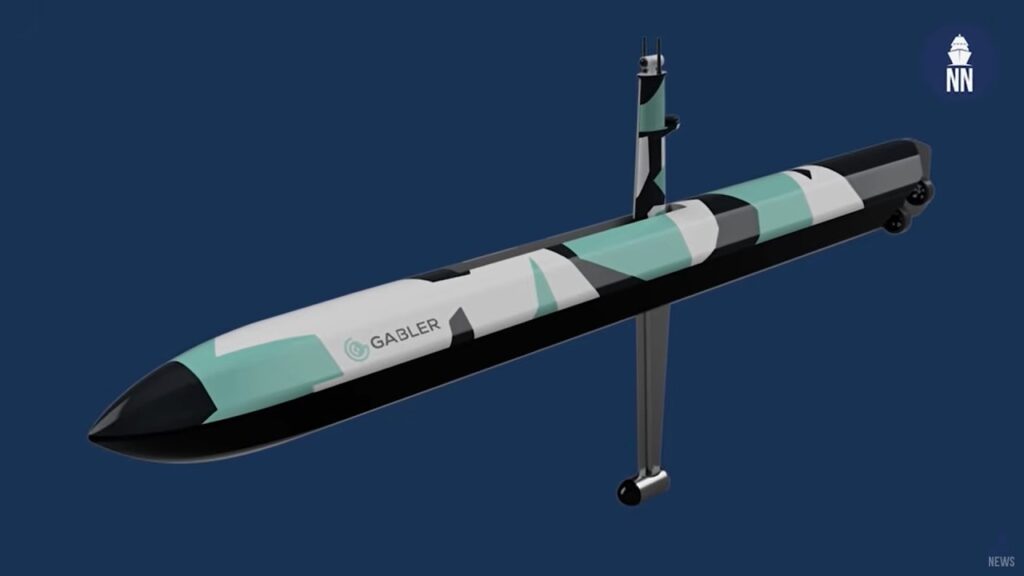
At first glance, the Ranger looks like a small torpedo. This is hardly surprising, since its dimensions are dictated by the diameter of a standard NATO torpedo tube.
Once it reaches the surface, however, the vehicle changes completely.
The drone automatically deploys a folding keel and a sensor mast, transforming from a torpedo-shaped capsule into a fully operational autonomous surface craft.
In practical terms, the Ranger combines features from several different types of naval equipment:
- a torpedo-launched system;
- an unmanned surface vessel;
- an autonomous reconnaissance platform;
- a carrier for interchangeable payloads.
This combination is what makes the project particularly interesting. The Ranger is not simply another small drone boat. It is designed as an extension of the submarine itself.
Why Launching From a Submarine Matters
A submarine’s main advantage is its ability to remain hidden.
However, this advantage becomes less reliable when the boat has to raise a periscope, approach the surface, deploy an antenna or launch another system from an exposed position.
The Ranger offers a different solution.
The submarine can remain submerged while launching the unmanned craft through a conventional torpedo tube. The drone then independently reaches the surface, potentially some distance away from the carrier, and begins its reconnaissance mission.
From the enemy’s perspective, a small unmanned vessel appears on the surface without any obvious launching ship nearby.
This allows the submarine to observe the surface situation without revealing its own position. It also gives the crew access to sensors that can operate above the waterline while the submarine remains at depth.
In effect, the underwater platform receives a remote pair of eyes and ears.
What Is Known About the Ranger
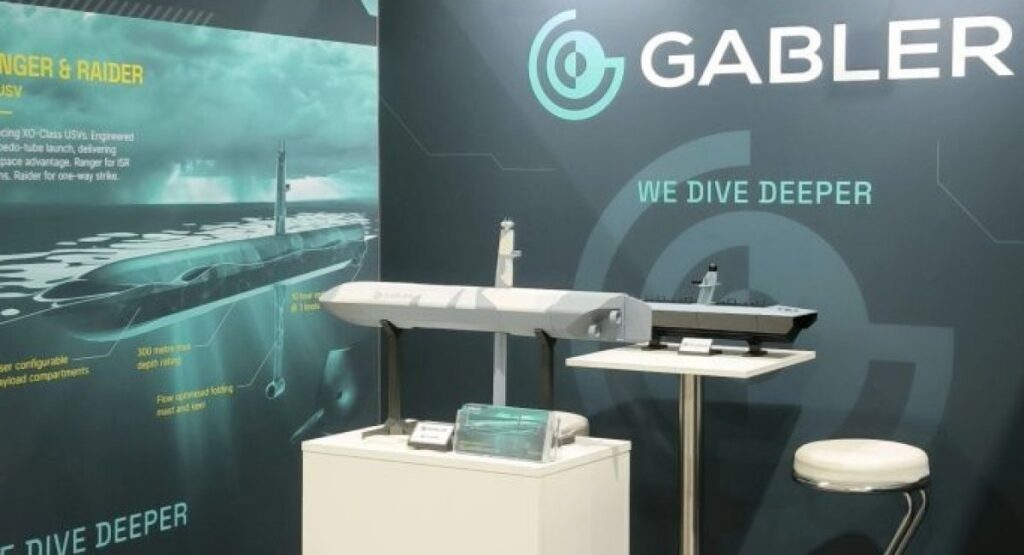
The project is still being developed as a technology demonstrator, and the manufacturers have disclosed only its basic specifications.
Ranger TTL USV Specifications
| Type | Autonomous unmanned surface vessel |
| Length | Approximately 4.5 m |
| Launch system | Standard 533 mm, or 21-inch, torpedo tube |
| Propulsion | Electric |
| Main features | Folding keel and deployable sensor mast |
| Payload | Modular |
| Control system | Autonomous control with AI-assisted functions |
The Ranger uses a fully electric propulsion system. This is a logical choice for a compact reconnaissance platform, since an electric motor is relatively quiet, requires no air intake and produces little thermal signature.
The vehicle also includes a modular payload section. Depending on the mission, it may carry different sensors, communication systems or other specialized equipment.
The available data does not yet reveal the Ranger’s maximum speed, operational range or endurance. These characteristics will likely depend heavily on the selected battery package, payload weight and mission profile.
The Most Important Feature Is Its Architecture
The Ranger’s real value does not lie in its size or appearance.
Its main advantage is its modular architecture.
Many current unmanned surface vessels are built for one specific task. Some are reconnaissance platforms, others serve as electronic warfare systems, and some are designed as one-way attack vehicles.
The Ranger is intended to use the same basic platform for multiple missions.
With different payload modules, the drone could potentially perform:
- maritime reconnaissance;
- covert surveillance;
- patrol missions;
- communications relay;
- electronic intelligence collection;
- deployment of remote sensors;
- support for surface and submarine forces.
This means that a submarine could load several externally similar vehicles configured for completely different tasks.
One Ranger might carry an optical and infrared surveillance system. Another could act as a radio repeater. A third might deploy sensors in a strategically important area.
The torpedo tube would therefore become not only a weapon launcher, but also a universal deployment system for autonomous platforms.
How the Ranger Could Be Used
The Baltic Sea is one of the most obvious potential operating areas for such a system.
It is a relatively confined maritime theatre filled with islands, narrow passages, ports, busy shipping routes and heavily monitored coastal zones. It is also an environment in which submarines may have difficulty gathering surface information without risking detection.
A Ranger-type drone could be used to:
- monitor narrow straits;
- observe naval bases and ports;
- track surface vessels;
- inspect shipping routes;
- relay communications;
- conduct reconnaissance before other forces enter an area;
- deploy passive sensors near important maritime infrastructure.
The submarine could launch the drone at a safe distance and then move away or remain concealed while the unmanned vessel completed its mission.
This would effectively allow a single submarine to maintain a presence both below and above the surface at the same time.
A New Tool for Submarine Reconnaissance
Traditional submarine sensors are extremely capable, but they are primarily optimized for underwater operations.
Sonar can detect ships and submarines, but it does not provide the same information as an electro-optical camera, radar receiver or surface-mounted communications system.
A small unmanned surface craft could fill this gap.
For example, the drone could approach an area of interest with its mast barely visible above the waves. Its cameras and electronic sensors could collect information and transmit it to the submarine or another command platform.
The Ranger could also act as a decoy.
An opponent detecting the unmanned vessel might assume that a submarine is located nearby, even if the actual carrier has already left the area. Several drones could therefore complicate enemy search operations and force anti-submarine units to investigate false contacts.
It Could Also Support Communications
Communication remains one of the most difficult problems for submarines.
Radio signals do not travel effectively through seawater, which means that a submerged submarine usually has limited communication options. Raising an antenna or approaching the surface can increase the risk of detection.
A torpedo-launched surface drone could serve as a remote communications node.
The vehicle could receive data from the submarine through a short-range or underwater communication channel and then retransmit it by satellite or conventional radio. It could also receive information from external forces and pass it back to the submarine.
In this role, the Ranger would function as a disposable or recoverable communications buoy, but with one major advantage: it could move.
Instead of remaining in one fixed position, the drone could relocate, follow a programmed route or deliberately separate itself from the submarine’s actual location.
One Platform, Several Possible Variants
The developers have previously presented more than one concept based on this general idea.
The Ranger is intended primarily as a reconnaissance and surveillance platform.
Another version, known as the Raider, has been associated with offensive missions. A further one-way attack variant has also been mentioned under the name Strike.
The exact relationship between these versions remains unclear. They may represent separate vehicles or different configurations of the same modular platform.
Nevertheless, the direction of development is obvious.
The companies are not working on a single drone, but on an entire family of torpedo-tube-launched unmanned systems.
The reconnaissance version would collect information. A communications variant could serve as a relay. An electronic warfare version might detect or jam enemy signals. An attack model could carry an explosive payload.
All of them could potentially use the same standard submarine launch infrastructure.
Limitations of the Concept
Despite its advantages, the Ranger is not a perfect system.
The first limitation is size. A vehicle designed to fit inside a 533 mm torpedo tube has very little internal volume. Batteries, propulsion equipment, sensors, communications systems and payload must all be packed into an extremely compact hull.
This limits endurance and payload capacity.
The second issue is communication. A drone operating on the surface can transmit radio signals, but those transmissions may reveal its position and allow the enemy to detect or jam it.
The third problem is recovery.
A submarine can easily launch such a vehicle, but recovering it while remaining concealed would be much more difficult. The Ranger may therefore be treated as expendable during many missions, even if it is technically reusable.
There is also the question of torpedo capacity.
Every drone carried aboard a submarine occupies space that could otherwise be used for a torpedo, mine or cruise missile. A commander will therefore have to decide whether the additional reconnaissance capability is worth reducing the conventional weapon load.
Why Navies Are Moving in This Direction
Until recently, a submarine was generally regarded as an independent combat platform equipped with torpedoes, mines and, in some cases, cruise missiles.
This concept is now changing.
Modern navies increasingly view submarines as carriers and command platforms for unmanned systems.
Large autonomous underwater vehicles can scout ahead of the submarine. Small drones can inspect minefields or coastal waters. Unmanned surface craft can provide communications, surveillance and electronic reconnaissance.
The submarine itself becomes the hidden centre of a distributed network.
Instead of approaching every target directly, it can send unmanned systems into dangerous areas while remaining at a safe distance.
The Ranger is part of this wider transformation.
A Small Drone With Large Implications
By itself, the Ranger is not an especially large or powerful vessel.
It is a compact electric drone boat with limited internal space and, most likely, modest range and speed.
However, the concept behind it is far more important than the platform’s dimensions.
For the first time, a conventional submarine torpedo tube can be used to deploy an autonomous surface craft without requiring major modifications to the carrier.
This allows existing submarines to gain new reconnaissance, communications and electronic warfare capabilities.
A submarine equipped with such drones no longer has to rely entirely on its own mast, sonar and onboard antennas. It can send remote sensors to the surface, place them near the target area and continue operating underwater.
In the future, similar vehicles may become as normal a part of a submarine’s loadout as torpedoes and mines are today.
The torpedo tube will remain a weapon launcher, but it may also become a gateway through which submarines release an entire family of autonomous scouts, relays, decoys and strike systems.
That is what makes the Ranger important. It is not merely a drone launched from a submarine. It is a sign of how submarines themselves may fight in the future.






