Its Landing Gear Does Not Even Retract: Why Cessna Built the SkyCourier in the 21st Century

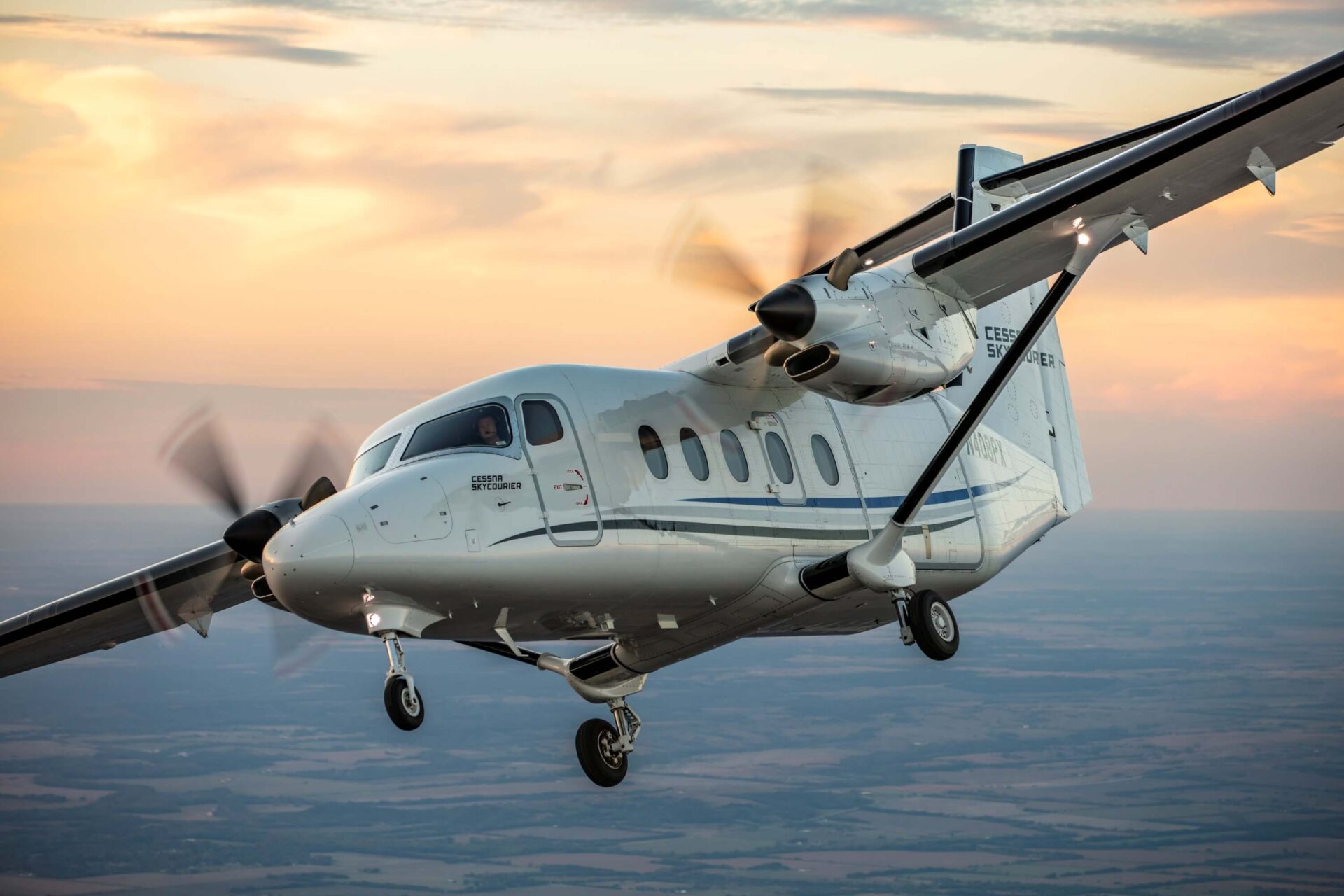
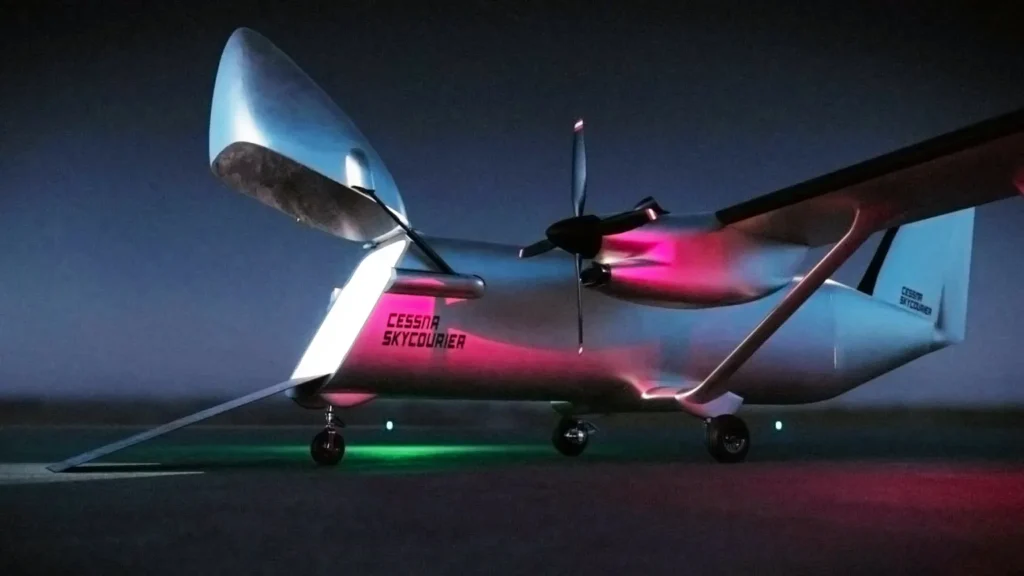
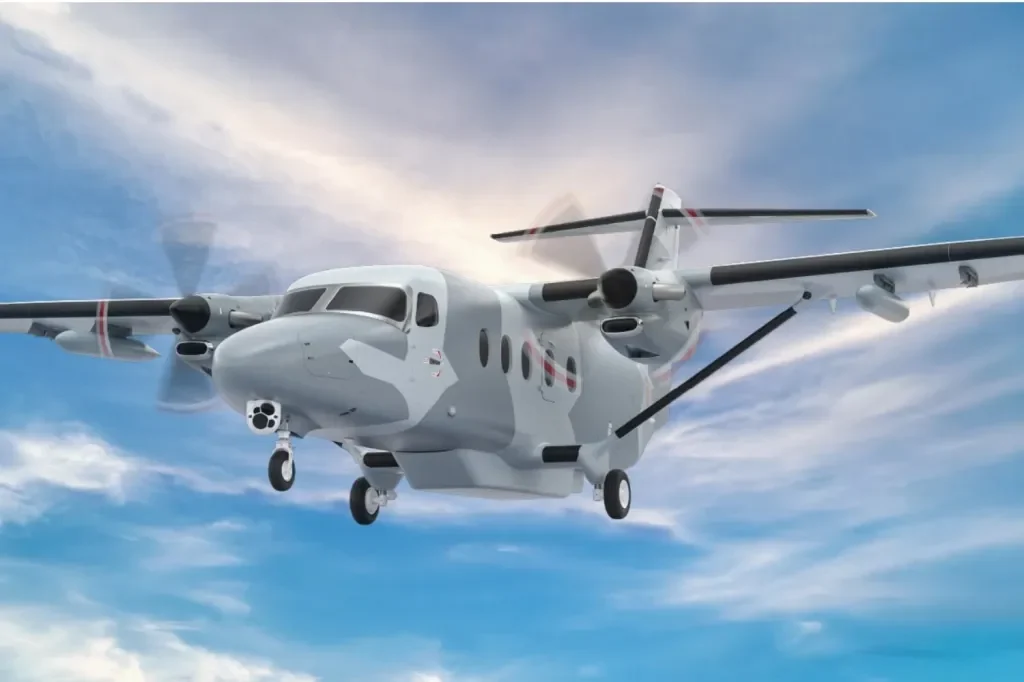
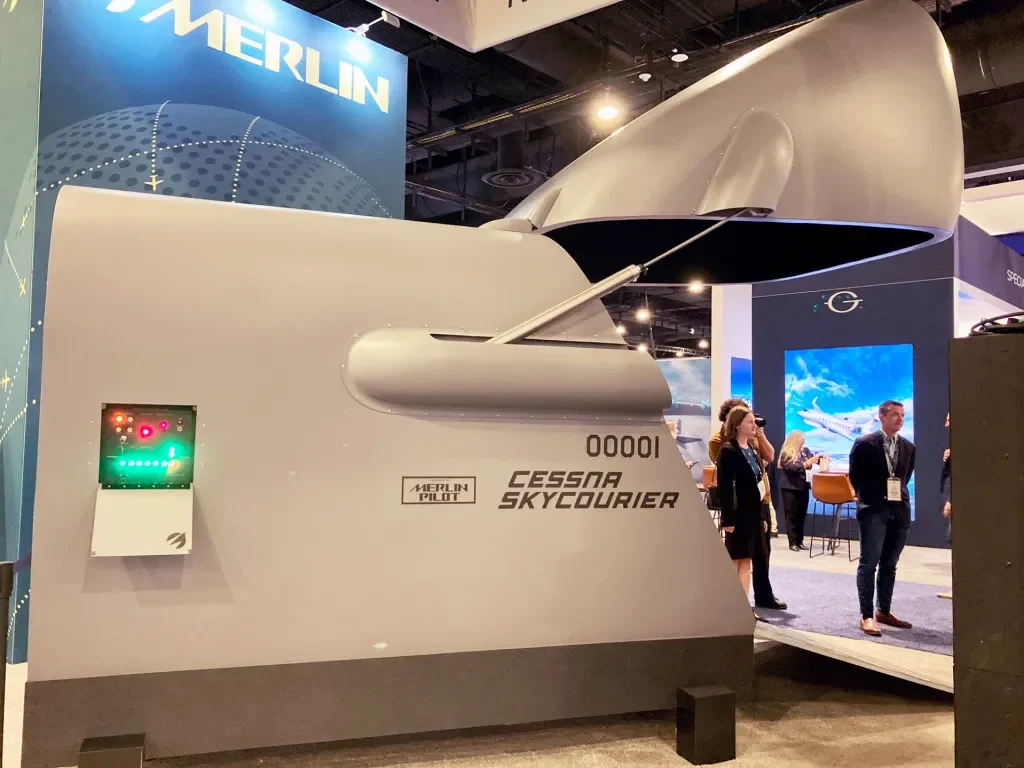
At the Air, Space & Cyber Conference in September 2026, Textron Aviation and Merlin unveiled a rather unusual version of the Cessna 408 SkyCourier. The aircraft no longer has a conventional cockpit. Instead, the space in the nose could be turned into a large cargo opening, the aircraft could be made to “kneel” during loading, and control would be handed over to the autonomous Merlin Pilot system. The resulting SkyCourier UX is intended to carry around 6,000 pounds, or roughly 2.7 metric tons, of cargo, including up to three standard LD3 containers.
For now, it remains a concept. There is no flying cockpit-less SkyCourier yet. But the idea helps explain why Cessna decided several years ago to develop a new twin-engine turboprop transport aircraft that, at first glance, seems deliberately old-fashioned.
The SkyCourier is not fast, does not have exceptional range, and makes little attempt to serve as a technological showcase. It has a straight high-mounted wing, two turboprop engines, a large box-like fuselage and, most unusually for an aircraft of its size, fixed landing gear. Its maximum cruise speed is only 210 knots, or 242 mph (389 km/h). On paper, it sounds like a transport aircraft that might have been designed sixty years ago. Yet the SkyCourier first flew in 2020 and entered service in 2022. Almost every supposedly archaic feature was chosen deliberately.
An Aircraft Designed Around Boxes
The SkyCourier story largely began with FedEx. When Cessna formally announced the program in 2017, the logistics company became the launch customer, placing a firm order for 50 aircraft with options for another 50. What FedEx needed was a regional cargo aircraft — something larger than the single-engine Caravan but smaller and less expensive to operate than a full-size regional freighter.
The aircraft would spend its life flying relatively short sectors, loading and unloading quickly, operating from smaller airports and spending as little time as possible sitting on the ground.
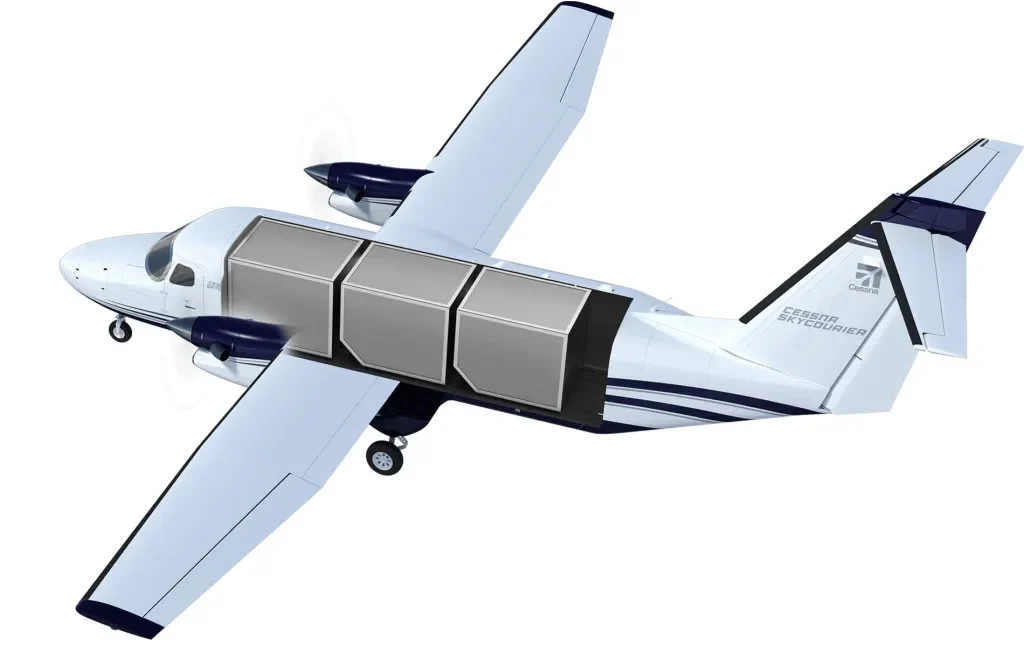
That led to one of the requirements around which the aircraft was effectively designed: the freighter version of the SkyCourier had to accommodate three standard LD3 containers — the familiar rounded air cargo containers commonly seen being loaded into the lower holds of passenger airliners.
For a cargo operator, this can matter more than elegant aerodynamic lines. If freight has already been packed into a standard container, it does not need to be unloaded, repacked for another aircraft and then handled again at the destination. The container arrives at the logistics hub, goes into the aircraft, flies to a regional airport and continues along the distribution chain. The airplane becomes just another link in the conveyor.
This helps explain the SkyCourier’s broad, almost rectangular fuselage. The cargo cabin is approximately 23 feet 4 inches (7.1 m) long and 6 feet 5 inches (1.96 m) wide, with a volume of around 883 cubic feet (25 m³). Maximum payload in the freighter version is 6,700 pounds, or just over three metric tons. A large side cargo door provides access to the hold. Cessna also offers a 19-passenger version and configurations combining passengers and freight.
In a very literal sense, the aircraft was designed around what it was supposed to carry.
Why Cessna Left the Landing Gear Outside
The SkyCourier’s most conspicuous feature is not inside the fuselage at all. Look at the aircraft from the side and the main landing gear legs are simply hanging in the airflow. They do not retract after takeoff.
For a modern aircraft with a maximum takeoff weight of around 19,000 pounds, or 8.6 metric tons, that seems unusual. Fixed landing gear produces permanent aerodynamic drag, increases fuel consumption and limits speed. Cessna’s engineers obviously knew this. They simply decided that other qualities mattered more.
Retractable landing gear requires wheel wells, doors, actuators, hydraulic or electromechanical systems, position sensors and an emergency extension system. All of this adds weight, takes up space and requires maintenance. The wheel wells also have to go somewhere inside the wing or fuselage — exactly where a cargo aircraft would rather devote as much volume as possible to payload.
The SkyCourier’s arrangement is much simpler. Its landing gear is always where it needs to be for landing. There is nothing to retract, extend or hide inside the cargo compartment. The price is lower speed, but for a regional freighter flying a few hundred miles between smaller airports, losing some cruise performance can matter less than reducing maintenance requirements and downtime.
Maximum cruise speed is 210 knots, or 242 mph (389 km/h). Cessna quotes a maximum range for the freighter of 940 nautical miles, approximately 1,740 km, although actual range naturally depends on payload, fuel and operating conditions. Under standard conditions, the manufacturer gives a takeoff distance of around 2,700 feet (823 m) to clear an obstacle.
The result is an aircraft that makes no attempt to be fast. It only needs to be fast compared with a truck.
The Engines Were Not Chosen to Impress Anyone Either
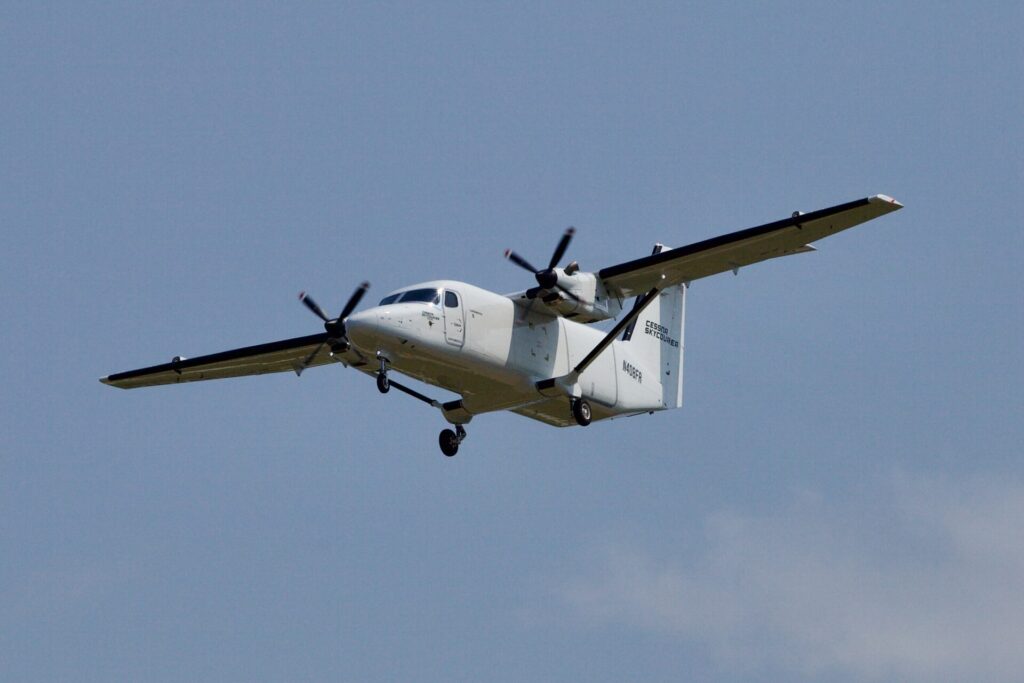
Under the wing are two Pratt & Whitney Canada PT6A-65SC turboprops producing 1,110 shaft horsepower each. The PT6 family is among the most widely used turboprop engine families in aviation, and its selection fits the SkyCourier philosophy perfectly. The objective was not record-breaking performance but a mature powerplant backed by decades of operational experience and a broad maintenance network.
Four-bladed McCauley aluminum propellers are similarly conventional. The high-mounted wing keeps the lower fuselage clear for cargo operations and provides useful clearance between the propellers and the ground. That becomes particularly valuable when the surface beneath the aircraft is gravel or dirt rather than perfectly clean concrete.
Cessna did not try to turn the SkyCourier into a miniature airliner. It is closer to an enlarged version of the philosophy behind the Caravan — another aircraft valued primarily because it can spend years doing the same unglamorous job reliably.
The commercial market has shown that such a niche exists. SkyCouriers are no longer used only by cargo companies. The type has also appeared with operators serving island and regional routes, where the combination of capacity, modest airport requirements and relatively straightforward operation is especially useful. Textron representatives said in 2026 that the aircraft family was already operating in environments ranging from the Arctic to the Amazon and across Pacific island routes.
And this is where the civilian story begins to overlap with military logistics.
The Military Needs Flying Trucks Too
Military airlift is usually associated with large aircraft. The C-130 Hercules can carry tens of thousands of pounds, while the C-17 Globemaster III can move vastly more. But not every military cargo requirement is measured in tens of tons.
A small remote unit may urgently need spare parts, medical supplies, batteries, communications equipment or a few containers of other materiel. Sending a four-engine transport aircraft to deliver two or three tons is certainly possible, but it is expensive and often inefficient.
The problem becomes even more obvious under concepts built around distributed operations. Instead of relying on a handful of large, well-equipped bases, forces may operate from numerous smaller sites. Every one of those locations still needs fuel, spare parts, ammunition, food and technical equipment. A large transport can deliver supplies to a central hub, but something still has to distribute them from there.
Textron is positioning the SkyCourier UX for precisely this last segment of the logistics chain. Its developers place it between small cargo drones and full-size military transports. Retired U.S. Air Force Major General Kyle Kremer of Merlin summarized the problem simply: using aircraft such as the C-130 and C-17 for numerous small shuttle missions is inefficient.
The conventional SkyCourier already has most of the necessary qualities. It can lift several tons, use relatively short runways, operate without the infrastructure of a major airport and is already in serial production. Instead of designing an entirely new unmanned military transport from scratch, Textron and Merlin are exploring what happens when an existing civilian aircraft is adapted to the job.
Why Does an Unmanned Aircraft Need a Cockpit?
This is where the SkyCourier UX becomes particularly interesting.
Many projects that convert crewed aircraft into unmanned platforms leave the original airframe largely unchanged. The pilot disappears and software takes over, but the cockpit, windows, doors and basic layout remain. That makes development and certification easier, but it raises an obvious question: if the aircraft is genuinely intended to operate without pilots, why continue carrying an empty cockpit?
Textron and Merlin decided to explore what happens if it is removed altogether.
In the published SkyCourier UX concept images, the nose section hinges upward, providing direct access to the cargo compartment. Space occupied by the pilots and instrument panel on a conventional aircraft becomes part of the cargo-handling system. The companies are also studying a kneeling landing gear arrangement and integrated cargo-handling equipment, potentially reducing dependence on forklifts and other ground support equipment at austere locations.
It is an interesting continuation of the aircraft’s original design philosophy. The SkyCourier was initially built around three LD3 containers. Removing the crew potentially allows the designers to go one step further and devote even the former cockpit area to cargo operations.
The planned payload of the UX remains around 6,000 pounds, or 2,720 kg, so the unmanned version is not intended to become a heavy transport. It stays in the same niche: a few containers, spare parts, medical supplies and other relatively small loads moving between a major logistics hub and a remote airstrip.
A Computer Instead of Two Pilots
The autonomous component is being developed around Merlin Pilot, a system intended for integration across multiple aircraft types. According to the company, its technology has already accumulated hundreds of autonomous flights on aircraft including the Cessna Caravan and Beechcraft King Air. For the SkyCourier, the ultimate goal is to automate the entire flight cycle, including takeoff and landing.
Removing the crew offers the military more than two additional seats. Transport flights into potentially dangerous areas always expose aircrew to risk. Losing an unmanned aircraft would still be expensive, but it would not involve losing pilots or launching a rescue operation to recover them.
There is also a more mundane consideration: trained military transport pilots are a limited resource. If routine shuttle flights between bases can eventually be handed over to autonomous aircraft, human crews can remain available for missions that actually require a large transport and a full flight crew.
It is important, however, to separate the concept from an operational aircraft. The SkyCourier UX does not yet exist as a production unmanned transport. The aircraft unveiled in September 2026 is a concept. Textron and Merlin are conducting engineering studies, while the nose cargo door, kneeling landing gear and integrated loading system remain proposed features. The eventual price of an unmanned version is also unknown.
So it is far too early to imagine fleets of autonomous SkyCouriers routinely supplying remote military bases. The developers first have to demonstrate that such a system can perform the job safely, reliably and economically.
Why Its “Outdated” Design Suddenly Makes Sense
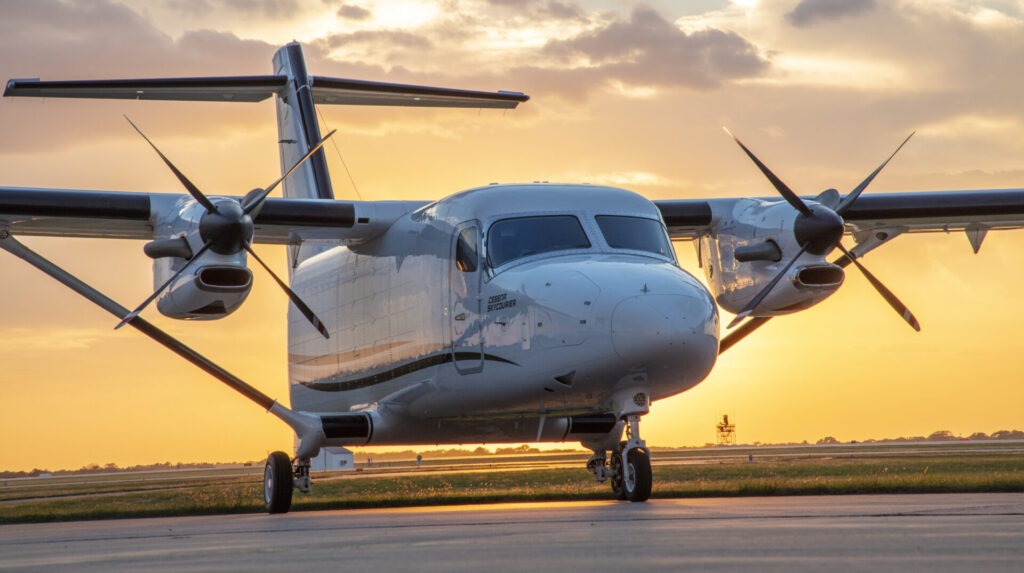
There are plenty of individual features on the SkyCourier that are easy to criticize. Fixed landing gear increases drag. The broad cargo fuselage does nothing for top speed. Turboprops cannot match the cruise performance of jets. The straight high-mounted wing looks thoroughly conventional. Even a maximum cruise speed below 250 mph hardly sounds impressive today.
But a transport aircraft should not be judged by individual specifications. What ultimately matters is how much it costs to move a kilogram of cargo from one useful location to another.
If the destination has a long paved runway and extensive ground infrastructure, a faster and more aerodynamically efficient aircraft may be preferable. If the cargo has to reach a small airfield, be unloaded quickly and the aircraft sent back again, the calculation changes. Speed becomes only one parameter alongside runway requirements, cargo volume, loading time, maintenance costs and aircraft availability.
That is why aircraft of this kind keep appearing. They rarely win beauty contests and almost never set records, but they become useful wherever aviation stops being a showcase of technology and turns into ordinary transportation.
The SkyCourier was designed for exactly that kind of work.
A 21st-Century Aircraft That Does Not Need to Look Like One
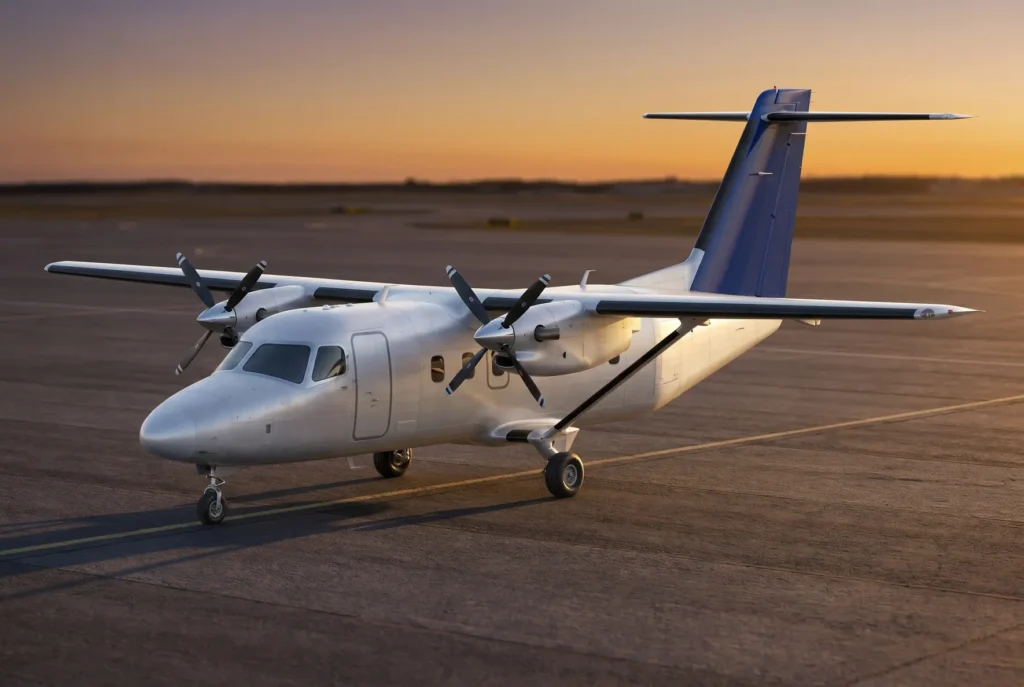
There is an amusing paradox in the Cessna 408 story. When the aircraft was introduced, some of its features really did look like a return to an older school of transport aviation. Cessna did not try to make it as fast, complex or aerodynamically refined as possible. Instead, the company took two well-established turboprop engines, mounted them on a high wing, left the landing gear outside and put a large fuselage underneath that could comfortably swallow standard cargo containers.
A few years later, those same qualities attracted developers working on autonomous military logistics.
The SkyCourier UX may never enter production in its current form. Military requirements may change, the nose-loading system may be redesigned, autonomous technology will require extensive testing, and a potential customer may ultimately choose a different platform. But the experiment already points toward an interesting direction for unmanned aviation.
The future of autonomous cargo aircraft does not necessarily have to look like a futuristic machine without a tail, windows or conventional fuselage. Sometimes it may be enough to take a production aircraft originally built for FedEx, remove what is no longer required and preserve the qualities for which it was designed in the first place.
In the SkyCourier’s case, the designers have even removed the cockpit. Everything else — the fixed landing gear, modest speed, high straight wing and enormous cargo compartment — suddenly looks perfectly suitable for the aviation of the future.