
A New Life for the Arleigh Burke: America’s Iconic Destroyers Are Getting a Radar That Brings Them Closer to the Next Generation

For more than three decades, the Arleigh Burke-class destroyer has been the backbone of the U.S. Navy’s surface fleet. More than 70 ships have entered service, and production continues today. But the emergence of hypersonic missiles, stealth drones, and increasingly sophisticated ballistic threats has made modernization just as important as new ship construction.
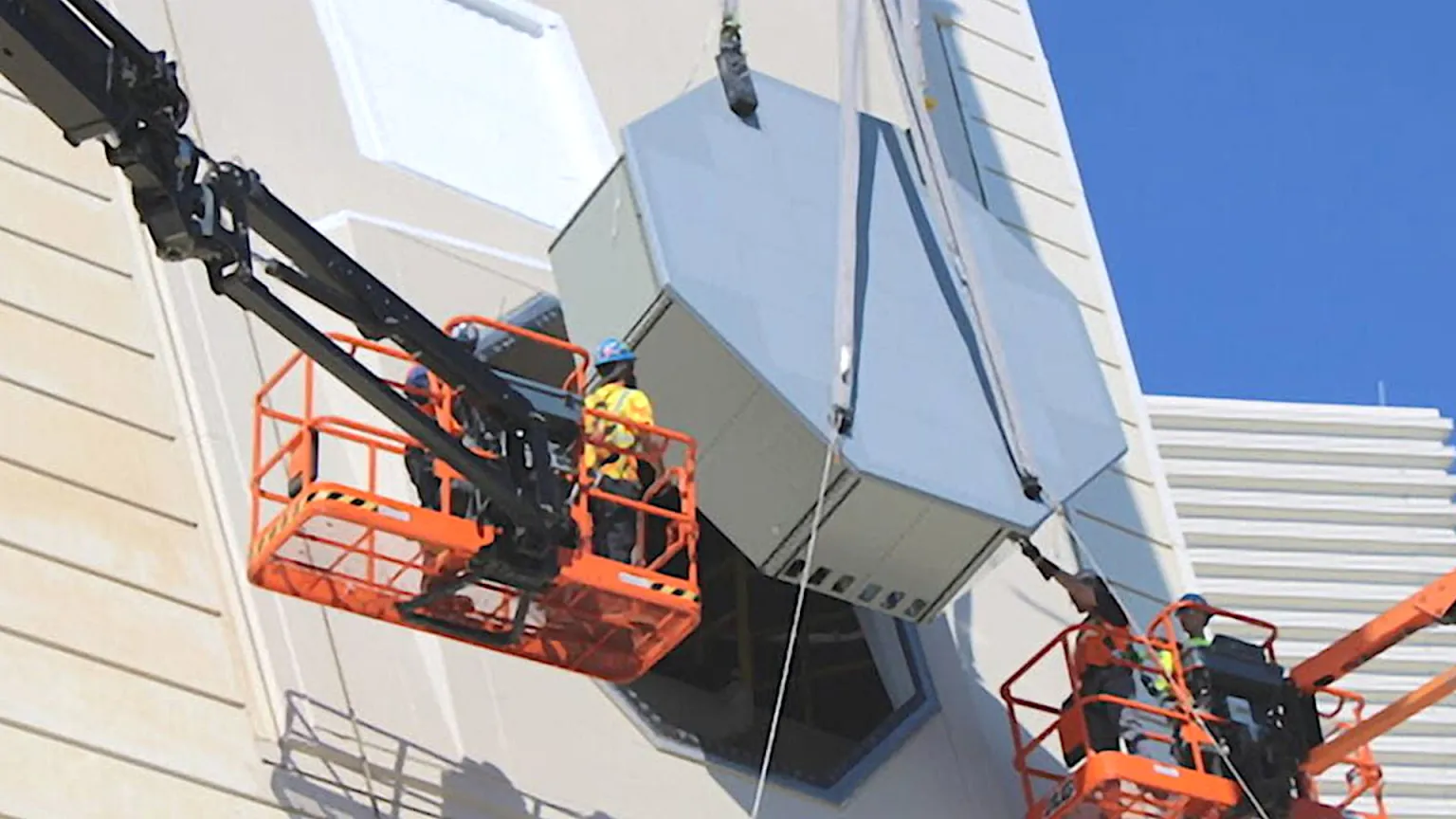
That is why the U.S. Navy has entered the next phase of its destroyer modernization program. The first Flight IIA destroyer to receive the new AN/SPY-6(V)4 radar will be USS Pinckney (DDG-91), marking a major milestone in bringing older ships much closer to the capabilities of the latest Flight III vessels.
Why Older Destroyers Need a New Radar
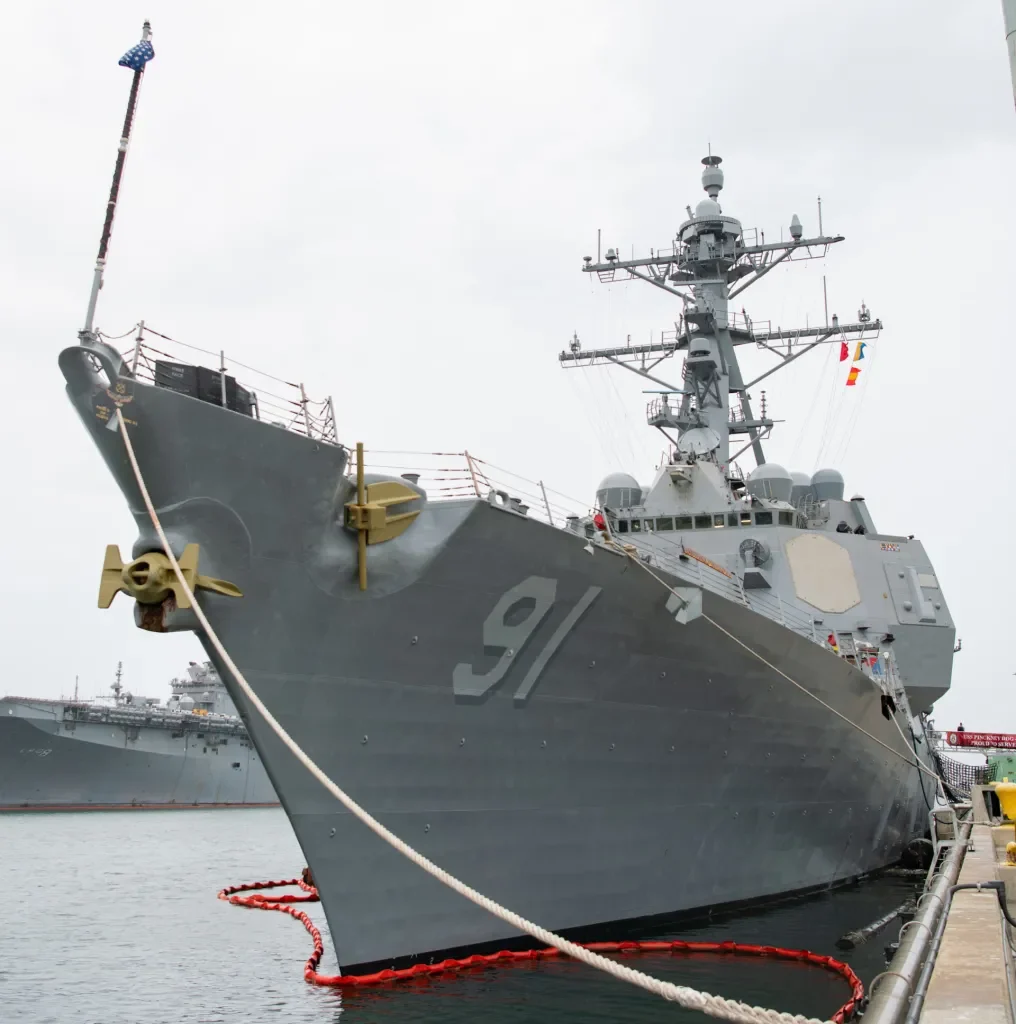
Most operational Arleigh Burke Flight IIA destroyers still rely on the proven but aging AN/SPY-1D radar that forms the core of the Aegis Combat System.
Although the radar has undergone numerous upgrades over the years, modern threats demand far greater performance.
Today’s naval combat environment requires longer detection ranges, higher sensitivity, improved tracking accuracy, and the ability to engage many more simultaneous targets.
To meet these challenges, the U.S. Navy selected the AN/SPY-6(V)4, a compact version of the radar already installed aboard the newest Flight III destroyers.
What Is the AN/SPY-6(V)4?
The AN/SPY-6(V)4 is a four-face Active Electronically Scanned Array (AESA) radar operating in the S-band.
Compared to its predecessor, it offers several major improvements:
- significantly longer detection range;
- enhanced performance against low-observable targets;
- simultaneous tracking of aircraft, surface vessels, ballistic missiles, and cruise missiles;
- improved resistance to electronic warfare;
- greater reliability through a modular architecture.
In practical terms, it provides older destroyers with radar technology approaching the same level found on the Navy’s newest surface combatants.
Modernization Involves Much More Than a Radar
The radar upgrade is only one part of the Navy’s broader DDG MOD 2.0 modernization effort.
The ships will also receive:
- the Aegis Baseline 10 combat system;
- upgraded computing infrastructure;
- enhanced cooling systems;
- the latest AN/SLQ-32(V)7 SEWIP Block III electronic warfare suite.
These upgrades are designed to function as a single integrated system.
The new radar generates vastly larger amounts of data than previous generations, requiring substantially greater computing power. That increase in processing capability also raises power consumption and heat output, making upgraded cooling systems essential.
USS Pinckney Leads the Program
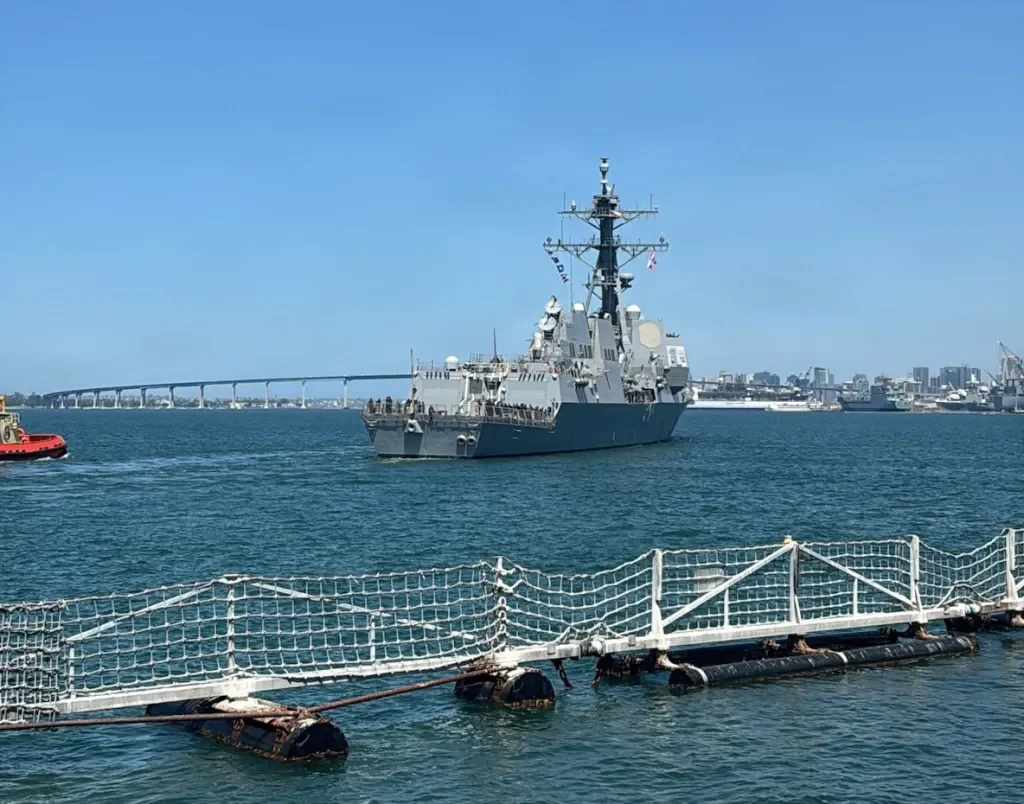
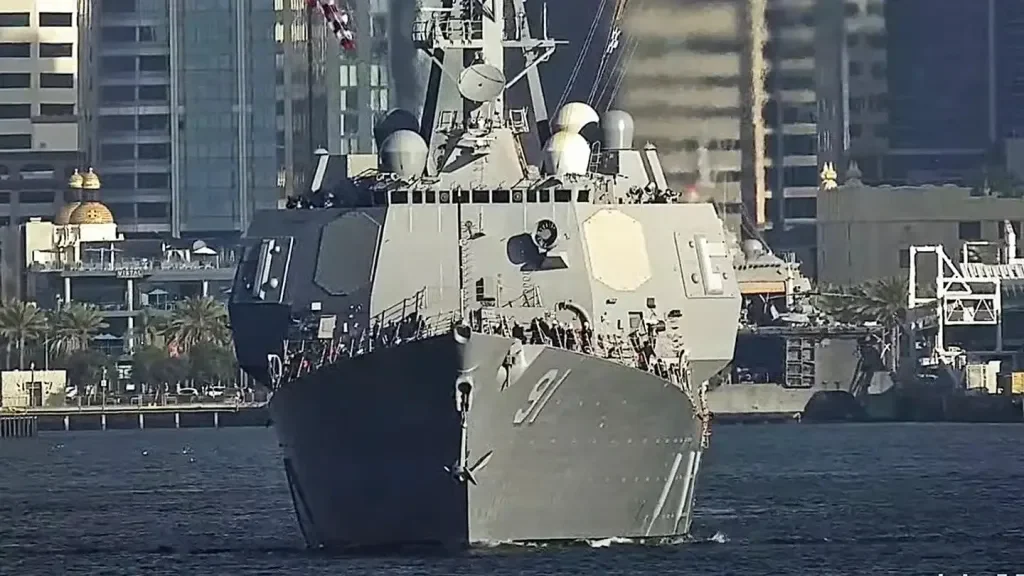
The first destroyer selected for the modernization is USS Pinckney (DDG-91).
The ship will become the initial Flight IIA vessel equipped with the AN/SPY-6(V)4, serving as the lead platform for future upgrades across the class.
If the program proceeds as planned, approximately twenty Flight IIA destroyers are expected to receive similar modernization packages over the coming years.
Why Upgrade Instead of Building New Ships?
At first glance, constructing entirely new destroyers might seem like the simpler solution.
In reality, it is not.
Modern warships have become extraordinarily expensive, while American shipyards are already operating near full capacity, simultaneously building Flight III Arleigh Burke destroyers, Virginia-class nuclear submarines, and Ford-class aircraft carriers.
Upgrading existing ships is therefore significantly faster and more cost-effective than replacing them outright.
Just as importantly, modernization can extend the operational life of these destroyers well into the middle of the century.
The Backbone of the U.S. Surface Fleet
Despite the age of the original design, the Arleigh Burke remains one of the world’s most versatile warships.
Its missions include:
- air defense;
- ballistic missile defense;
- anti-submarine warfare;
- long-range Tomahawk cruise missile strikes;
- carrier strike group escort;
- maritime security operations.
For that reason, preserving and enhancing the combat effectiveness of the class remains one of the U.S. Navy’s highest priorities.
Modernized Arleigh Burke Flight IIA Specifications
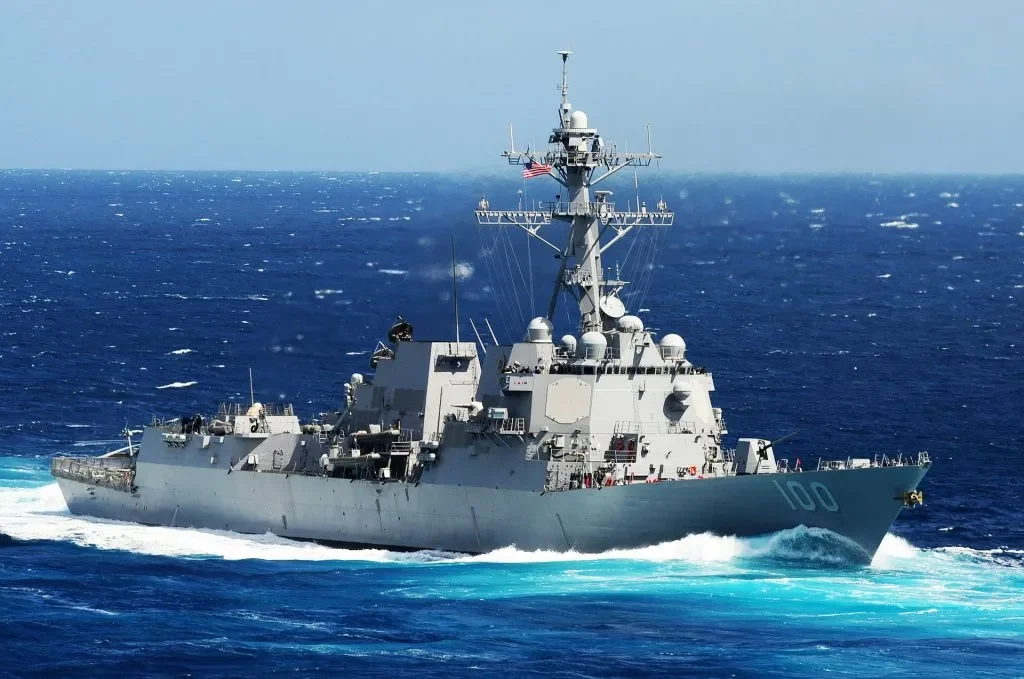
| Class | Arleigh Burke Flight IIA |
| Length | 155.3 m (509 ft) |
| Full displacement | Approximately 9,700 tons |
| Maximum speed | Over 30 knots |
| Crew | Approximately 300 personnel |
| Primary radar | AN/SPY-6(V)4 |
| Combat system | Aegis Baseline 10 |
| Electronic warfare | AN/SLQ-32(V)7 SEWIP Block III |
| Vertical launch cells | 96-cell Mk 41 VLS |
| Primary weapons | SM-2, SM-3, SM-6, ESSM, Tomahawk, ASROC |
An Old Hull With New Capabilities
The DDG MOD 2.0 program reflects the U.S. Navy’s broader approach to fleet modernization.
Rather than retiring older ships in large numbers, the Navy is steadily upgrading them to a capability level approaching that of entirely new vessels.
With the addition of the AN/SPY-6(V)4 radar, Aegis Baseline 10, advanced electronic warfare systems, and modern computing architecture, the Flight IIA destroyers are effectively becoming a new generation of warship without requiring a completely new hull.
As a result, ships whose design dates back to the 1980s are expected to remain among the most capable surface combatants in the world well into the middle of the 21st century.






