
How a Patrol Boat Became a Mini-Frigate: Why the Falaj 3 Could Redefine Small Warships

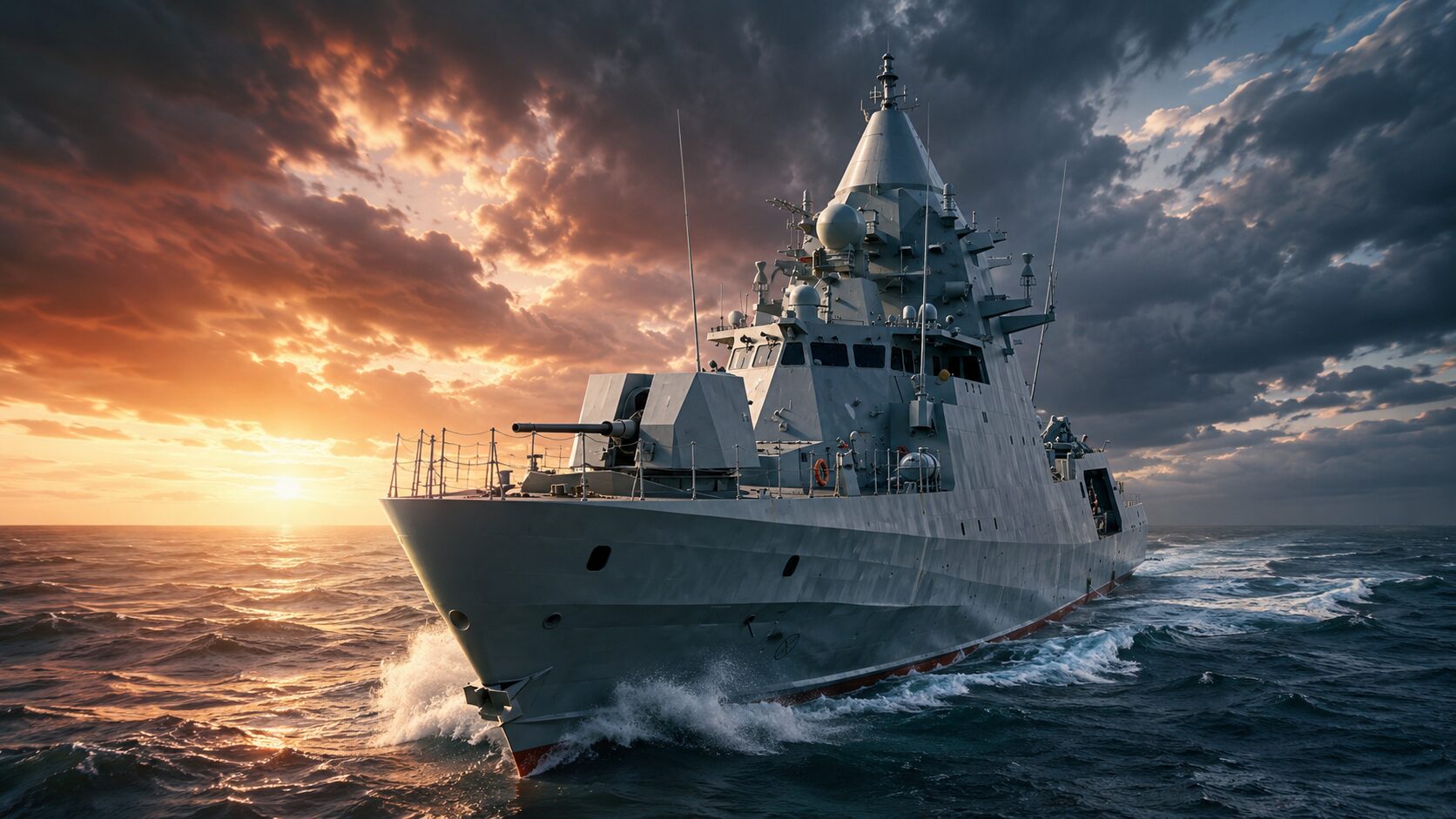
At just 680 tons, the UAE’s new Falaj 3 carries a weapons package that rivals many modern corvettes. The question is obvious: why does a patrol vessel need this much firepower, and are we witnessing the beginning of a new revolution in naval warfare?
Not long ago, offshore patrol vessels (OPVs) were considered the workhorses of the fleet. Their primary missions involved anti-piracy operations, protecting exclusive economic zones, escorting merchant shipping, and patrolling coastal waters. Most carried little more than a medium-caliber naval gun and several machine guns. Anti-ship missiles and layered air-defense systems were generally reserved for corvettes and frigates.
The Falaj 3, built for the United Arab Emirates Navy, completely challenges that traditional concept.
Officially classified as an offshore patrol vessel, it is armed more like a missile corvette—and in some respects even resembles a light frigate. Measuring 62.7 meters in length, displacing approximately 680 tons, and operated by a crew of only 39 sailors, it carries a level of firepower that would have seemed almost impossible for a ship of this size only a decade ago.
Why Navies Are Rethinking Small Warships
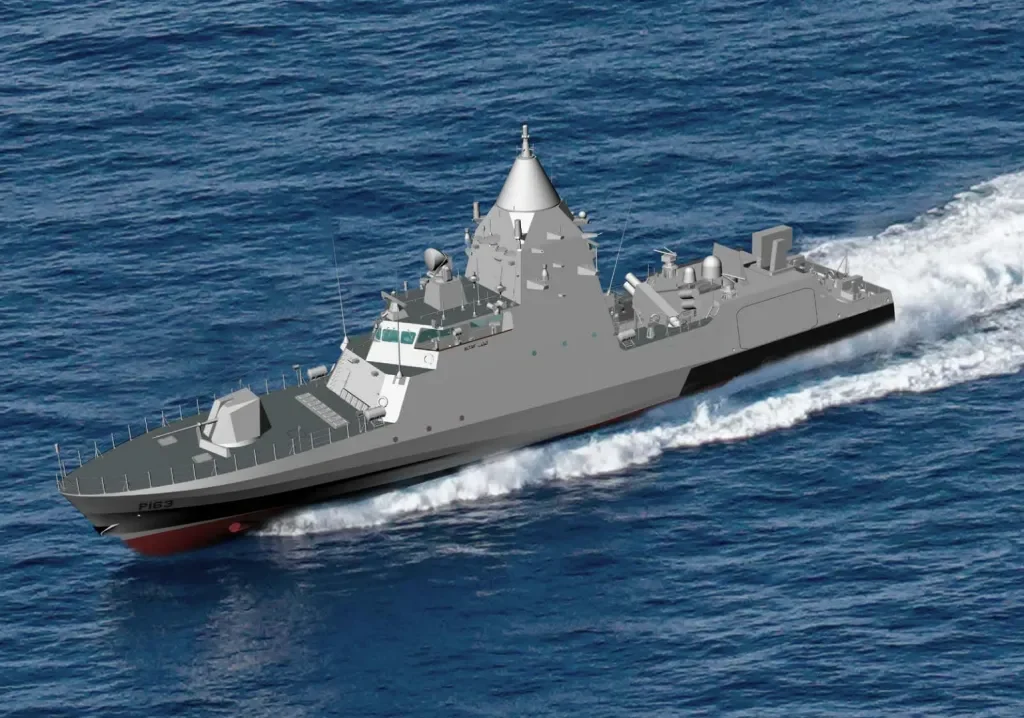
The appearance of the Falaj 3 is not an isolated case. It reflects a much broader transformation in naval warfare.
During the Cold War, small surface combatants were never expected to survive a high-intensity conflict. Their role was coastal patrol and maritime security, while destroyers and frigates handled anti-air warfare, anti-ship combat, and fleet protection.
That assumption has changed dramatically.
Modern precision-guided weapons have become smaller, lighter, and more capable. Today, even a vessel barely 60 meters long can launch missiles capable of striking targets more than 200 kilometers away, while compact radars and digital combat management systems provide capabilities that once required ships several times larger.
At the same time, the cost of major surface combatants has skyrocketed.
A modern destroyer may cost $2–3 billion, while even advanced frigates routinely exceed $800 million to $1 billion. For many countries, heavily armed patrol ships offer a far more affordable way to increase naval combat power.
Why the Falaj 3 Is Different
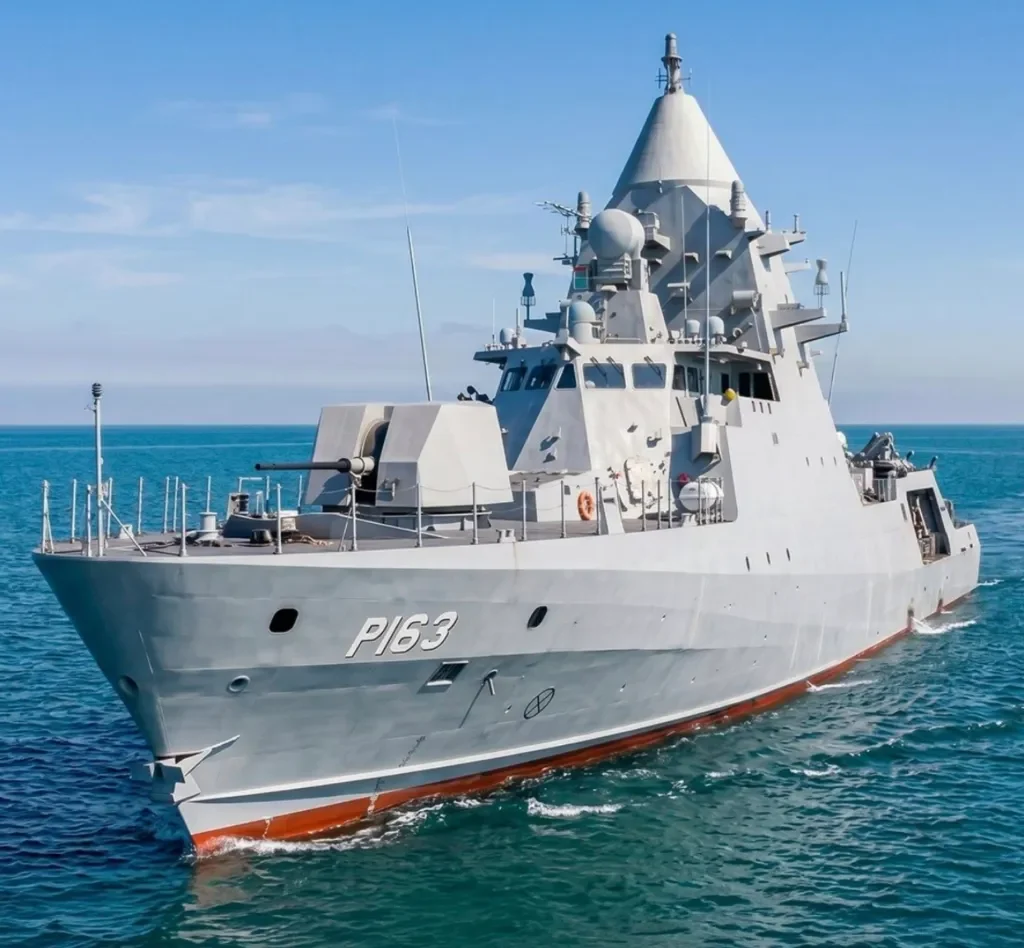
The ship’s most striking feature is its weapons package.
At the bow sits the Leonardo 76 mm OTO Super Rapid naval gun equipped with the STRALES guidance system, allowing it to fire DART guided ammunition against aircraft, anti-ship missiles, and fast attack craft.
Immediately behind it is an eight-cell vertical launch system for MBDA VL MICA surface-to-air missiles, providing air-defense coverage at ranges of approximately 20 kilometers.
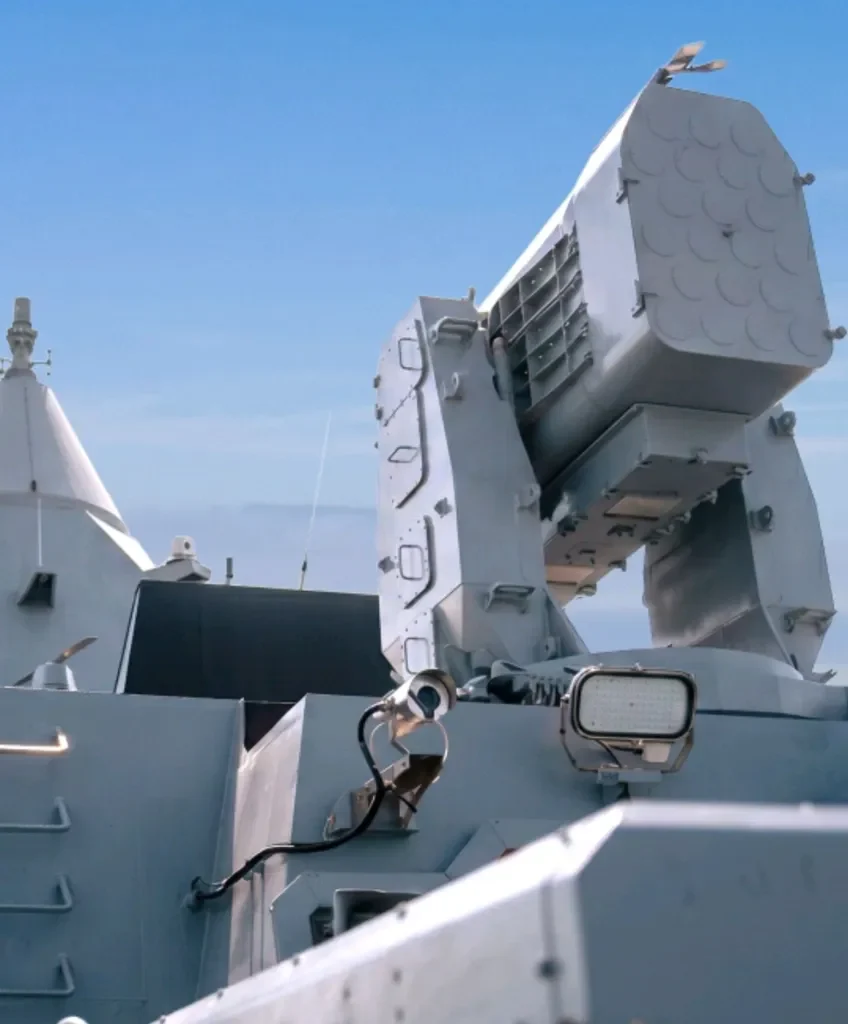
The inner defensive layer is handled by a 21-cell RIM-116 Rolling Airframe Missile (RAM) launcher, designed to intercept incoming anti-ship missiles, drones, helicopters, and other aerial threats at close range.
For offensive operations, the Falaj 3 carries four Exocet MM40 Block 3C anti-ship missiles, capable of engaging targets at roughly 220–240 kilometers.
The ship also introduces something increasingly relevant in modern naval combat: LOGIR guided rockets, intended to destroy drones, unmanned surface vessels, and swarms of small fast boats at a much lower cost than traditional surface-to-air missiles.
That combination reflects one of the defining lessons of recent conflicts: defeating inexpensive threats with equally affordable weapons whenever possible.
How It Compares with Similar Ships
This is where the Falaj 3 becomes particularly interesting.
Consider several comparable vessels:
The Cyclone-class patrol ship of the U.S. Navy, displacing around 330 tons, was armed primarily with a 25 mm gun, machine guns, and light missiles. It lacked a true layered air-defense capability.
Britain’s River Batch 2 patrol vessels displace approximately 2,000 tons yet carry little more than a 30 mm cannon because their mission focuses on maritime security rather than naval combat.
France’s Gowind 2500 is a genuine missile corvette with a broadly comparable missile suite—but it displaces nearly 2,600 tons, almost four times the size of the Falaj 3.
Sweden’s Visby-class corvette, at roughly 640 tons, combines stealth technology with impressive strike capability. However, its air-defense capabilities remain significantly more limited.
In other words, a ship weighing less than 700 tons now carries weapon systems that only recently were associated with vessels several times larger.
Why This Is Now Possible
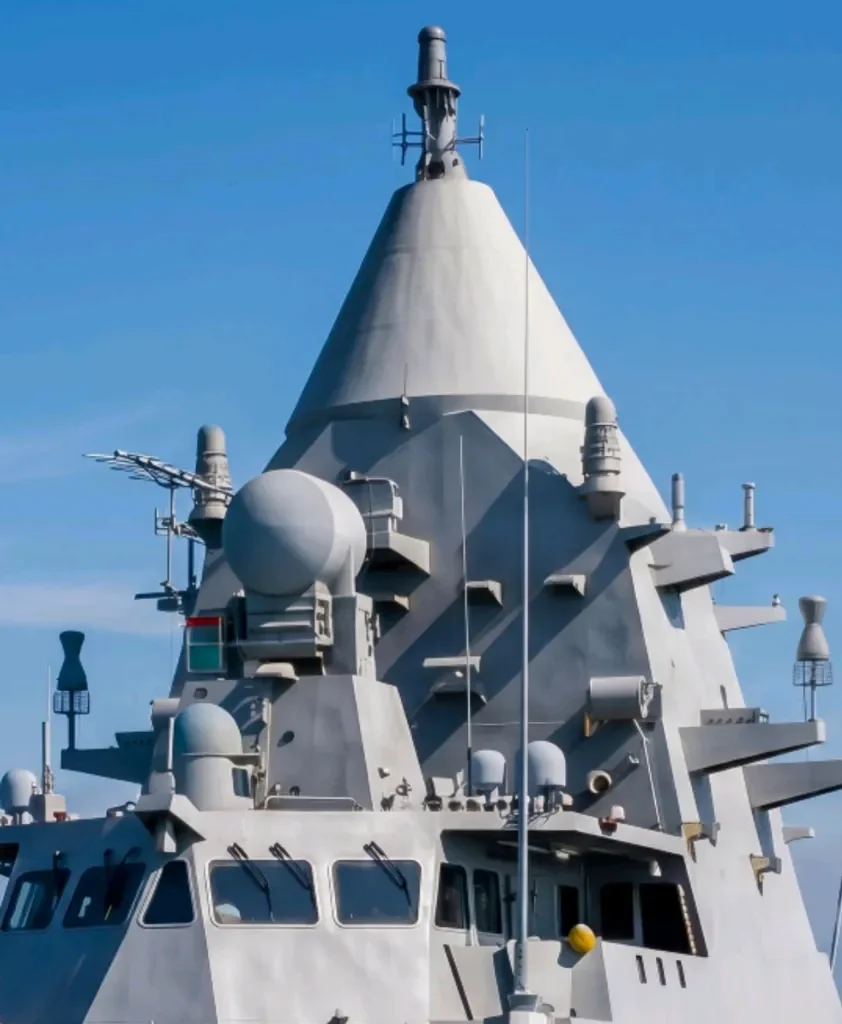
The answer lies in technology.
Modern active electronically scanned array (AESA) radars are dramatically smaller than previous generations.
Vertical launch systems have become more compact.
Combat management systems that once filled entire operations rooms now occupy only a fraction of that space.
Together, these advances allow naval architects to fit multiple defensive layers and long-range strike weapons onto hulls that would once have been considered far too small.
Automation has also transformed warship design.
Despite its sophisticated weapons package, the Falaj 3 requires only 39 crew members, significantly fewer than many larger corvettes. That reduces operating costs while allowing navies to field more combat-ready ships without proportionally increasing personnel.
Is There a Catch?
Of course.
Physics still matters.
A 680-ton vessel cannot carry the fuel, ammunition, or supplies of a frigate.
Its endurance is more limited.
Its growth margin for future modernization is smaller.
And because so much combat capability is concentrated on a relatively compact platform, losing even one ship would represent a much greater operational setback than losing a traditional patrol vessel.
The Falaj 3 therefore does not replace frigates or corvettes.
Instead, it occupies an entirely new category somewhere between them.
Conclusion
The Falaj 3 is remarkable not simply because it may be one of the most heavily armed patrol boats ever built.
Its real significance lies elsewhere.
It demonstrates how the philosophy of naval warfare is changing.
A patrol vessel was once expected to observe, escort, and show the flag.
Today, even relatively small ships are being equipped with weapon systems once reserved for much larger surface combatants.
If this trend continues, the traditional distinction between patrol vessels, missile boats, and light corvettes may largely disappear over the next decade.
The Falaj 3 may well become one of the first representatives of a new generation of compact warships—small enough to be affordable, yet powerful enough to influence the outcome of a naval battle.






