
Virginia Block V Is No Longer Just an Attack Submarine. Why the U.S. Navy Has Reclassified Its Newest Nuclear Boats as Guided Missile Submarines

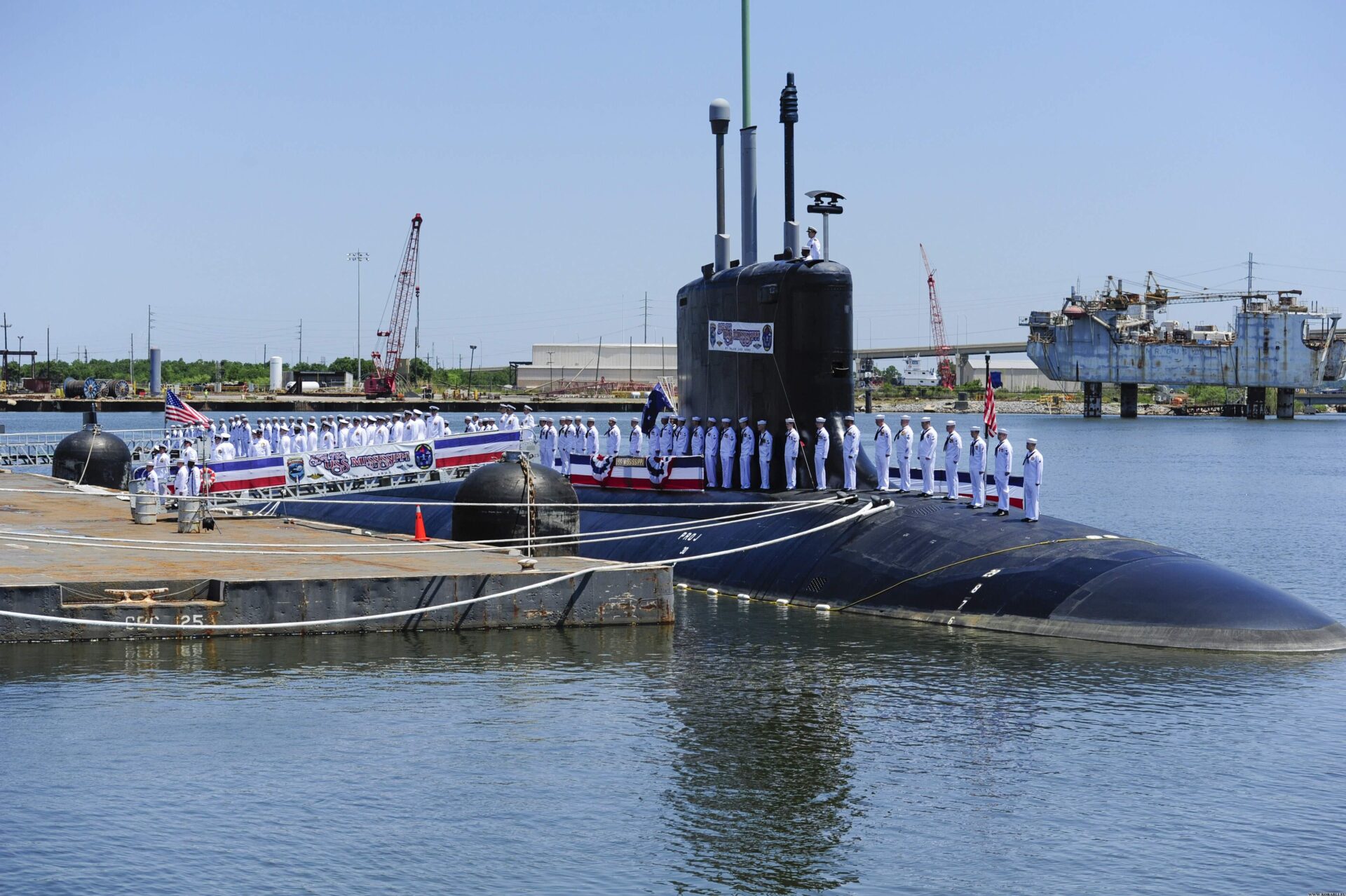
The U.S. Navy is gradually saying goodbye to one of the most remarkable chapters in submarine warfare—the Ohio-class SSGNs. Converted from ballistic missile submarines, these underwater giants could carry up to 154 Tomahawk cruise missiles, making them the most heavily armed conventional strike submarines ever built.
But their service life is coming to an end.
Rather than lose its ability to deliver massive long-range missile strikes, the U.S. Navy has made an unusual decision. The latest Virginia Block V submarines equipped with the Virginia Payload Module (VPM) have now been officially reclassified as SSGNs, even though they were originally introduced as conventional nuclear-powered attack submarines.
The End of the Ohio SSGN Era
The Ohio-class was originally designed to carry Trident submarine-launched ballistic missiles as part of America’s nuclear deterrent.
Following the end of the Cold War, four submarines—USS Ohio, USS Michigan, USS Florida, and USS Georgia—underwent one of the most extensive conversions ever performed on a submarine.
Their ballistic missiles were removed and replaced with vertical launch systems capable of carrying up to 154 Tomahawk land-attack cruise missiles.
These submarines also gained facilities for deploying U.S. Navy SEALs and their specialized underwater delivery vehicles.
For years, they represented the world’s most powerful conventionally armed submarines.
Today, however, these boats are more than four decades old, and the U.S. Navy has begun retiring them.
Why Virginia Became an SSGN
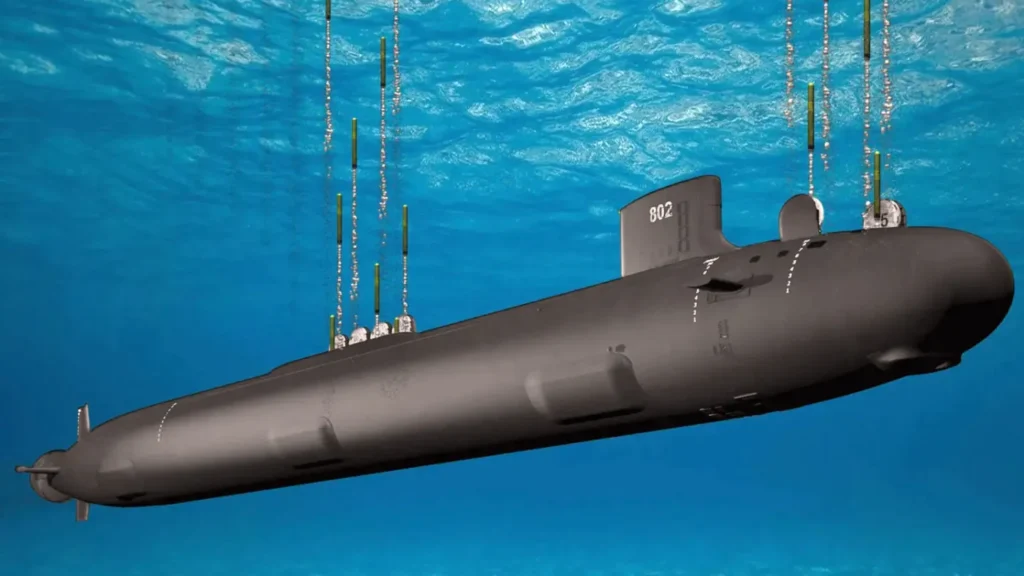
Until recently, every Virginia-class submarine was officially designated as an SSN, or nuclear-powered attack submarine.
Their primary missions included:
- Anti-submarine warfare
- Anti-surface warfare
- Intelligence gathering
- Special operations support
- Limited cruise missile strikes
Everything changed with the arrival of Block V.
Engineers inserted a new 25-meter (84-foot) Virginia Payload Module (VPM) into the submarine’s hull.
The module contains four additional vertical launch tubes, each capable of carrying seven Tomahawk cruise missiles.
Combined with the submarine’s existing launch systems, total missile capacity increases from 12 to 40 Tomahawks.
That dramatic increase in strike capability has led the U.S. Navy to officially classify these submarines as guided missile submarines (SSGNs) rather than simply attack submarines.
Virginia Block V (SSGN) Technical Specifications
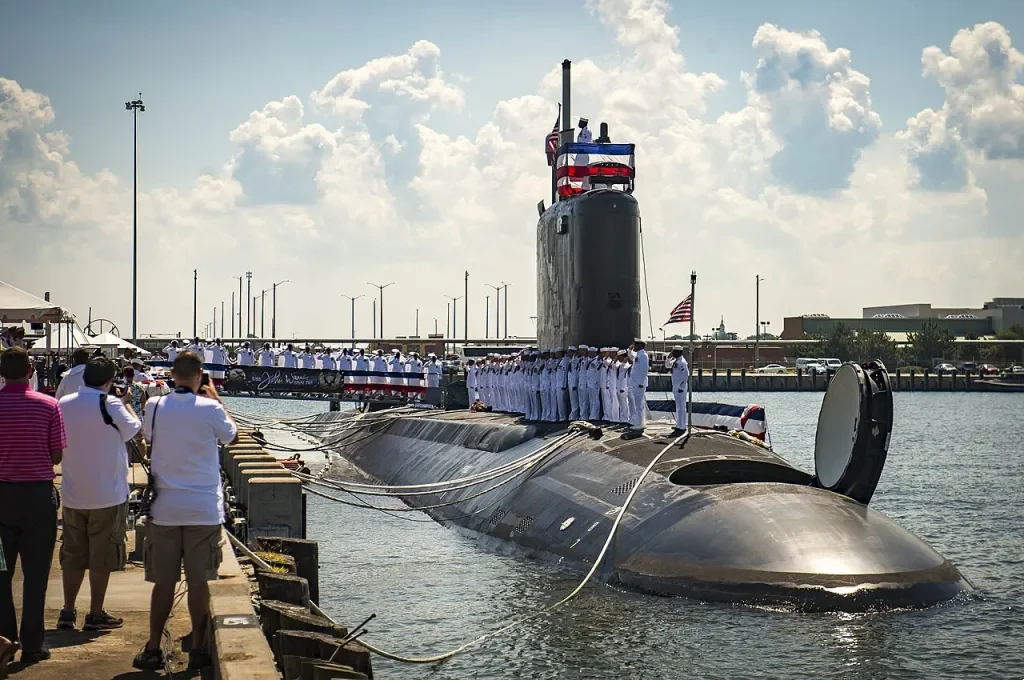
| Type | Nuclear-powered Guided Missile Submarine (SSGN) |
| Class | Virginia Block V |
| Country | United States |
| Length | Approximately 140 m (460 ft) |
| Beam | 10.4 m (34 ft) |
| Submerged Displacement | Approximately 10,200 tons |
| Crew | Around 135 personnel |
| Reactor | S9G Nuclear Reactor |
| Maximum Submerged Speed | Over 25 knots |
| Operating Depth | More than 240 m (classified) |
| Endurance | Limited primarily by food supplies |
| Main Armament | Up to 40 Tomahawk cruise missiles |
| Torpedo Armament | Four 533 mm torpedo tubes firing Mk 48 heavyweight torpedoes |
| Additional Capabilities | Special operations support, unmanned underwater vehicles, intelligence missions |
More Than Just a New Designation
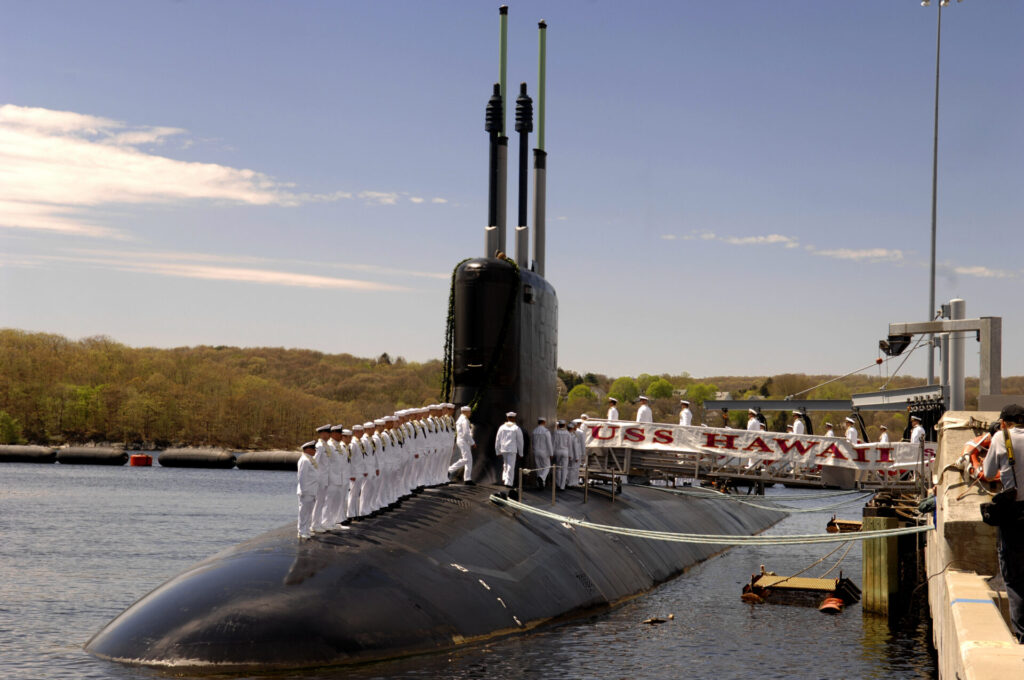
At first glance, changing the submarine’s classification might appear to be little more than administrative paperwork.
In reality, naval designations reflect a vessel’s primary mission.
Earlier Virginia-class submarines were true multi-role platforms, with cruise missile strikes representing only one part of their mission set.
The Block V variant places long-range precision strike capability at the center of its operational role.
That does not mean it has lost any of the traditional strengths of an attack submarine. It still performs anti-submarine warfare, intelligence collection, carrier strike group escort, and torpedo attacks with the same effectiveness.
Instead, the new design successfully combines two different submarine concepts into a single platform.
Still Not Another Ohio
Despite the new classification, the Virginia Block V is not a direct one-for-one replacement for the Ohio SSGN.
The difference in missile capacity remains substantial.
| Submarine | Tomahawk Capacity |
| Ohio SSGN | 154 |
| Virginia Block V | 40 |
It would take roughly four Virginia Block V submarines to match the cruise missile load carried by a single converted Ohio-class boat.
Rather than concentrating enormous firepower aboard a handful of submarines, the Navy has chosen to distribute strike capability across a larger number of highly versatile platforms.
Versatility Instead of Records
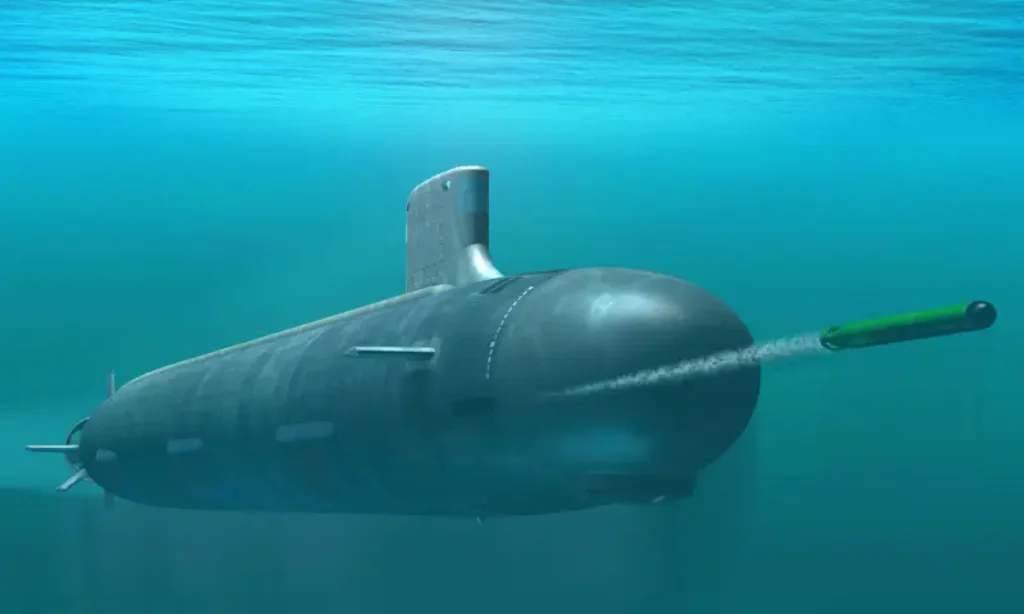
This reflects a broader shift in U.S. naval strategy.
During the Cold War, emphasis was placed on building exceptionally powerful individual platforms.
Today’s Navy values flexibility.
A Virginia Block V submarine can hunt enemy submarines, gather intelligence, deploy special operations forces, operate unmanned underwater vehicles, and launch dozens of long-range cruise missiles—all during the same deployment.
In other words, it is more than simply a replacement for the retiring Ohio SSGNs.
It represents an entirely new generation of submarines that combines the capabilities of a traditional attack submarine with those of a dedicated long-range missile platform.
That is why changing its designation from SSN to SSGN is far more than a bureaucratic adjustment.
It reflects the U.S. Navy’s evolving vision of undersea warfare—one in which versatility increasingly matters more than carrying the largest missile arsenal on a single submarine.






