
The Return of the Supergun: Why the U.S. Army Is Reviving a Giant Cannon for Hypersonic Weapons Testing

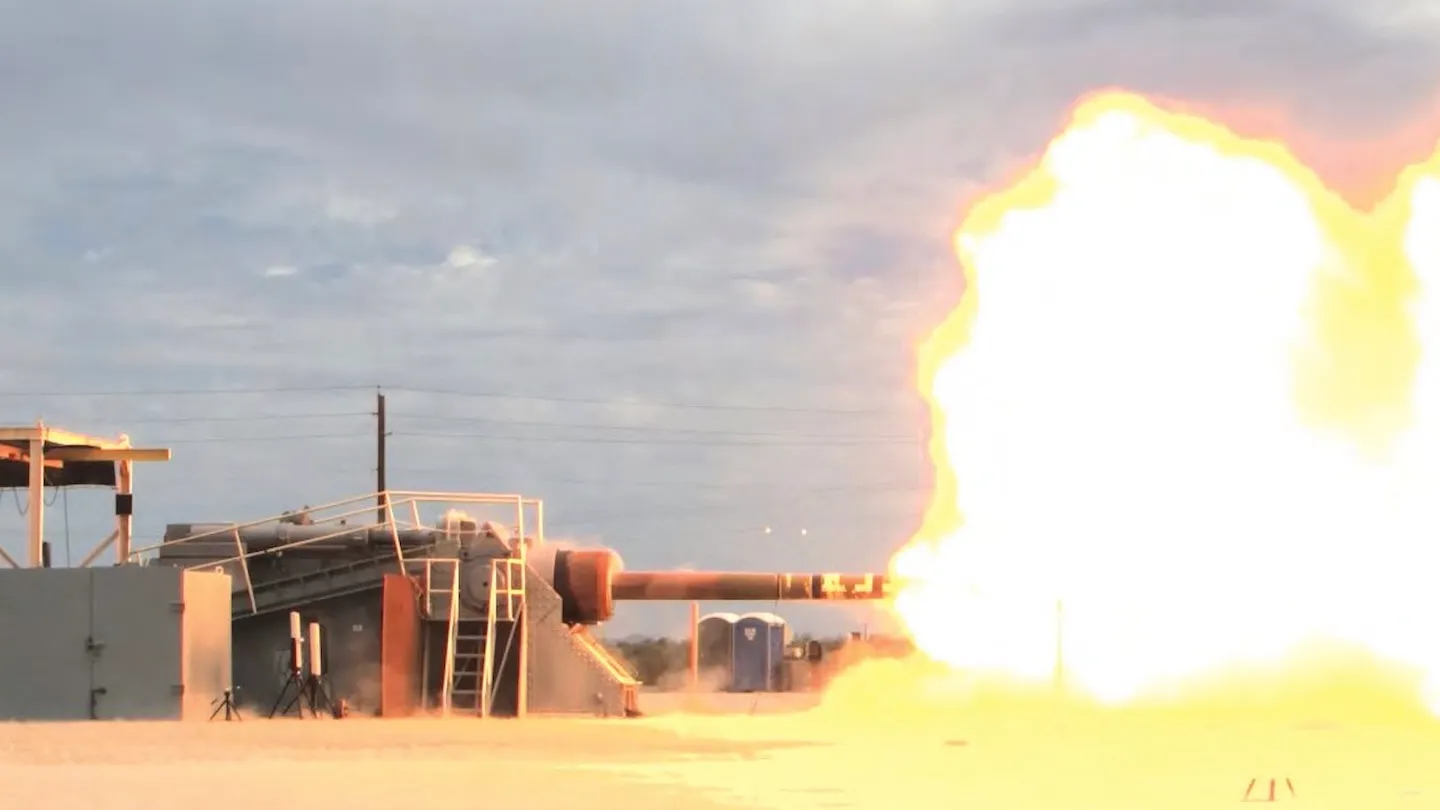
Just a few years ago, the U.S. Army’s Strategic Long Range Cannon (SLRC) program was considered one of the Pentagon’s most ambitious—and controversial—projects. Engineers envisioned a massive artillery system capable of striking targets more than 1,800 kilometers (1,100 miles) away, potentially offering a cheaper alternative to long-range missiles.
The concept, however, quickly ran into reality.
Technical challenges, soaring costs, and doubts about its battlefield value ultimately led to the cancellation of the program before a full-scale operational weapon could be built.
But the cannon itself has found a surprising second life.
Rather than firing shells across continents, the giant gun is now being repurposed as a testing platform for hypersonic warheads, allowing engineers to conduct critical experiments at a fraction of the cost of traditional missile launches.
From Long-Range Artillery to Research Platform
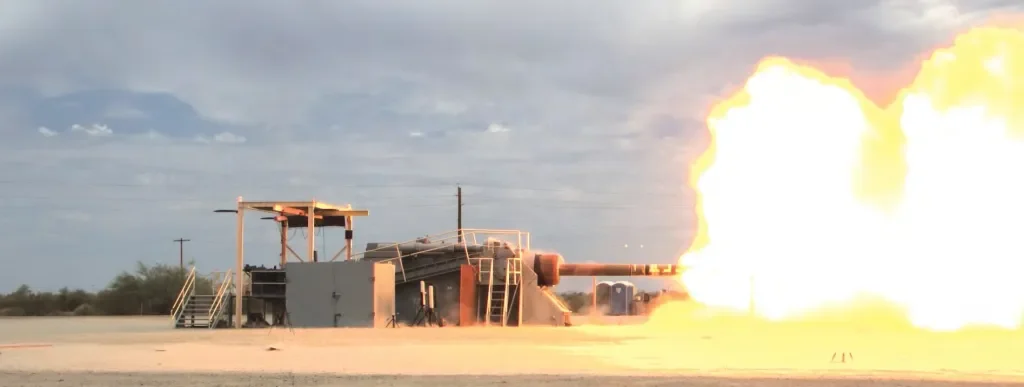
The Strategic Long Range Cannon emerged during the late 2010s as part of the U.S. Army’s effort to dramatically expand the reach of conventional artillery.
The concept envisioned an enormous cannon using specially designed projectiles capable of traveling nearly 2,000 kilometers.
If successful, such a system could have delivered precision strikes over strategic distances while costing significantly less than hypersonic missiles.
As development progressed, however, numerous obstacles became apparent.
Extreme barrel wear, the complexity of designing suitable projectiles, and rapidly increasing development costs raised serious concerns about the program’s practicality.
Eventually, the Army decided to terminate the project before it reached operational status.
Why Bring It Back?
Although the original weapon program was canceled, engineers recognized that the technology behind it still had considerable value.
Testing hypersonic vehicles typically requires launching expensive missiles, each costing millions of dollars.
However, many of the mechanical stresses experienced by a hypersonic warhead can also be recreated by accelerating a test article to extremely high speed using a specially designed artillery system.
That realization transformed the former “supergun” into something entirely different—a high-speed scientific test platform.
Testing at Yuma Proving Ground
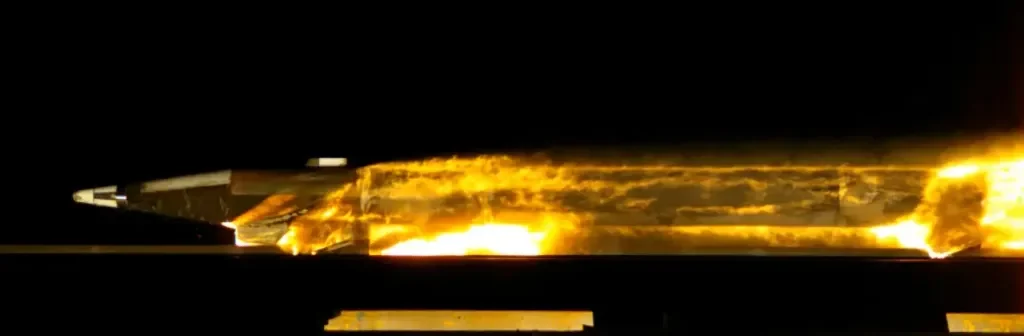
The first experiments using this new concept have already taken place at Yuma Proving Ground in Arizona.
During the tests, engineers launched a full-scale hypersonic test vehicle using the artillery system.
The objective was not to achieve maximum range but to evaluate how the warhead’s structure behaves under extreme acceleration and to study its terminal performance.
The project is being conducted jointly by Lawrence Livermore National Laboratory (LLNL) and the U.S. Army Combat Capabilities Development Command Armaments Center (DEVCOM AC).
Development of the testing system reportedly required roughly two years.
Why It Costs Less
Every full-scale hypersonic missile launch is extraordinarily expensive.
A typical test involves:
- a complete launch vehicle;
- a hypersonic payload;
- launch infrastructure;
- tracking assets;
- telemetry systems;
- extensive range support.
Using an artillery launcher eliminates the need for a costly rocket booster during many developmental tests.
Naturally, such a system cannot completely replace actual missile flights.
It cannot reproduce every phase of hypersonic flight or simulate the complete operational profile.
However, for evaluating structural integrity, materials, aerodynamics, and terminal effects, the cannon provides a much faster and significantly less expensive testing method.
Hypersonic Weapons Remain a Top Priority
The United States is currently pursuing several major hypersonic weapons programs simultaneously.
Among the most prominent are:
- Dark Eagle (Long Range Hypersonic Weapon) for the U.S. Army;
- Conventional Prompt Strike (CPS) for the U.S. Navy;
- Hypersonic Attack Cruise Missile (HACM) for the U.S. Air Force;
- numerous experimental projects led by DARPA and private industry.
All of these programs require frequent—and extremely costly—testing.
Any technology capable of reducing expenses while increasing the number of experiments is therefore strategically valuable.
An Artillery Piece Instead of a Rocket
At first glance, the concept appears almost contradictory.
Hypersonic weapons represent some of the most advanced military technologies ever developed, while artillery dates back centuries.
Yet combining a traditional method of acceleration with modern materials, instrumentation, and data collection creates a remarkably effective research tool.
In this role, the giant cannon is no longer a weapon—it has become a sophisticated scientific instrument.
A Canceled Program Finds New Purpose
The story of the Strategic Long Range Cannon demonstrates that canceled military programs do not necessarily become technological dead ends.
Although the original vision of an ultra-long-range artillery weapon never reached operational service, the engineering work behind the project has found an unexpected and potentially valuable application.
Today, the same concept is helping accelerate hypersonic weapons development by reducing testing costs and allowing experiments to be conducted more frequently.
As the United States continues to compete in the global race for hypersonic technology, innovations that make research faster, cheaper, and more efficient may prove just as important as developing the next generation of missiles themselves.






