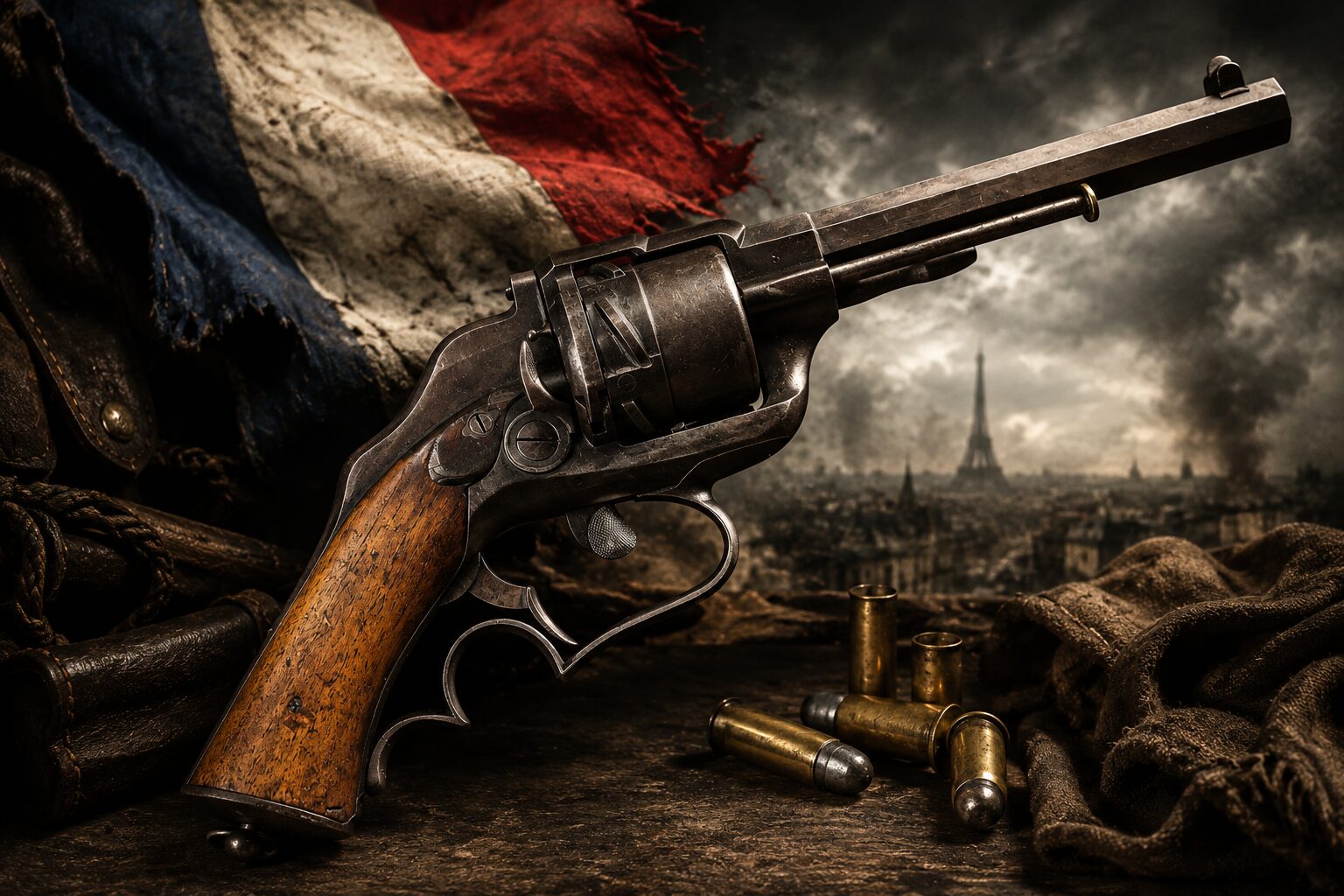
The history of firearms is full of inventors who tried to improve the revolver. Some succeeded and secured their place in history. Others created mechanisms so unusual that, more than a century later, they continue to fascinate—and bewilder—collectors and historians alike.
Among the latter are the revolvers designed by the De Dartein brothers, weapons so eccentric that they can be considered a perfect example of nineteenth-century French engineering. Bold ideas, unconventional technical solutions, a determination to follow their own path, and a near-total disregard for the fact that the rest of the world had already found much simpler answers to the same problems.
The result was a series of revolvers that looked like weapons from the future but ultimately became a dead-end branch in firearms development.
The Captain Who Wanted to Reinvent the Revolver
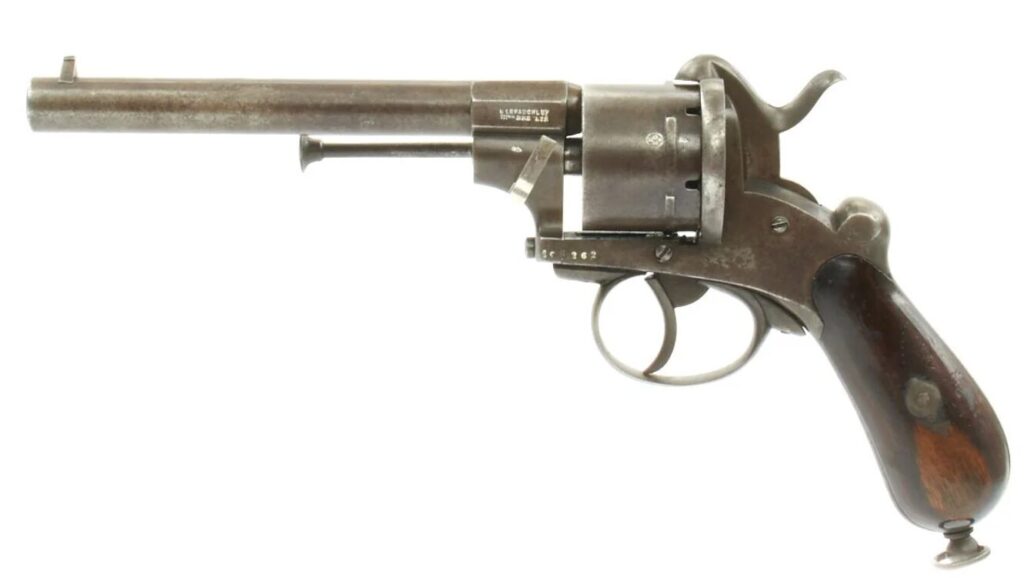
The driving force behind the project was Charles Félix de Dartein, a career officer in the French Army.
He was not an inventor working from the comfort of an office. A graduate of the prestigious Saint-Cyr Military Academy, he fought in the Crimean War, served in Italy, experienced the Franco-Prussian War firsthand, and even spent time as a prisoner following France’s defeat.
Later, De Dartein served in Algeria, contributed regularly to military journals, and participated in efforts to modernize French military uniforms. In 1880, he received the Legion of Honor.
In other words, this was a man who understood weapons through practical experience rather than theory.
It is therefore unsurprising that, in the late 1860s, he began designing a revolver of his own.
His partner in the endeavor was his brother Jules Édouard de Dartein—an engineer, inventor, and agronomist with a far more technical mindset.
Together they formed an unusual but highly creative partnership.
A Revolver Unlike Any Other
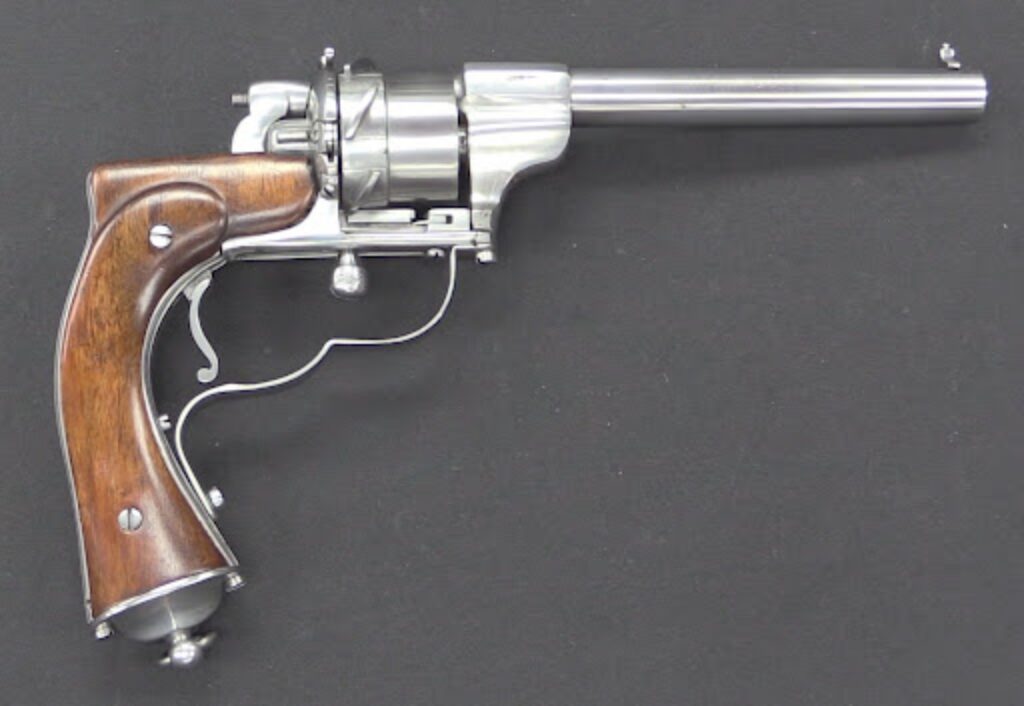
The central idea behind the De Dartein revolvers was to abandon the traditional method of rotating the cylinder.
Virtually every revolver of the period used a ratchet mechanism that automatically indexed the cylinder when the hammer was cocked.
The De Dartein brothers chose a different approach.
A sliding lever was installed beneath the frame. By pushing and pulling it with the index finger, the shooter manually rotated the cylinder.
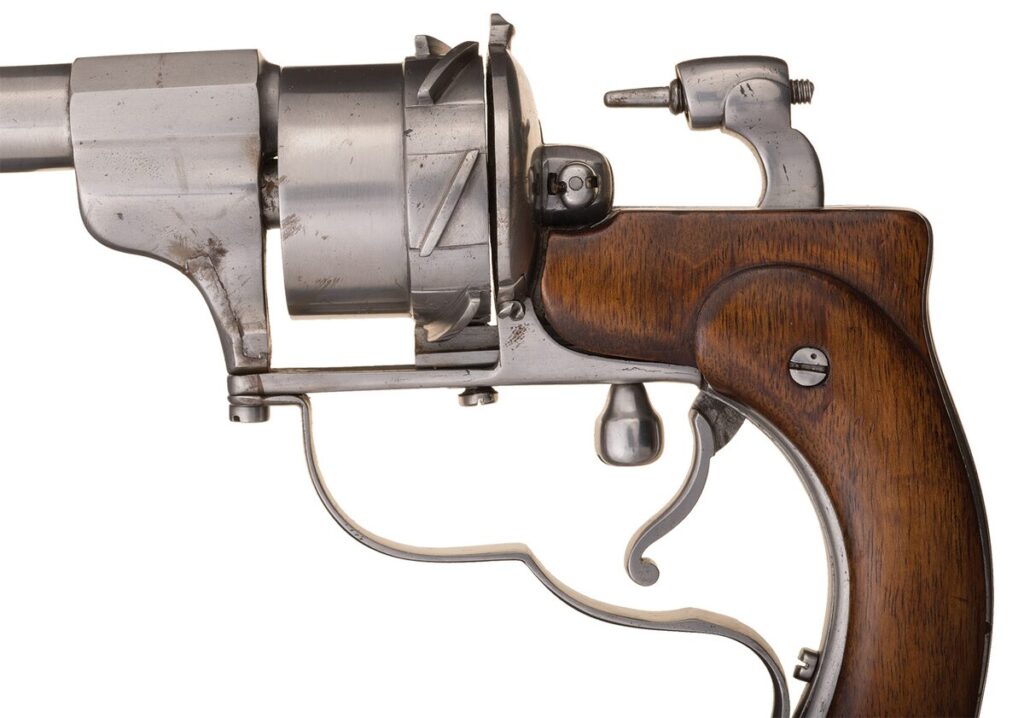
To make this possible, the cylinder featured specially shaped fins and guide surfaces that interacted with the sliding mechanism.
In theory, the concept was innovative.
In practice, it was awkward.
The shooter had to adopt an unusual grip, and the effort required to rotate the cylinder was noticeably greater than on conventional revolvers.
Nevertheless, the brothers remained committed to the concept.
The Hammer That Disappeared
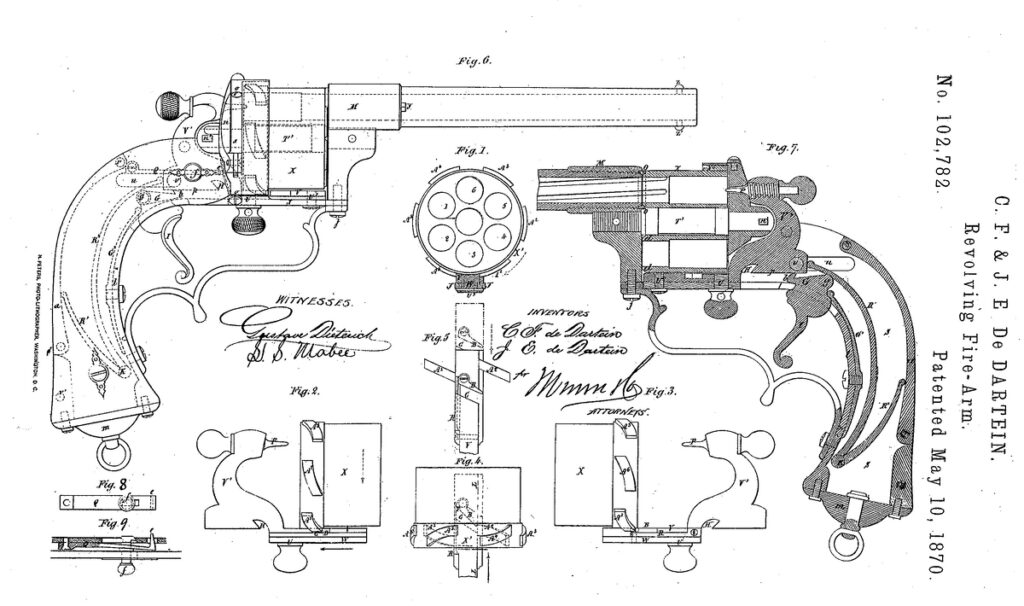
The firing mechanism was equally unconventional.
On early models, the hammer moved linearly inside the frame rather than pivoting on an arc like most revolvers.
The shooter could cock it manually or use the same cylinder-rotation lever, which also interacted with the firing mechanism.
Over time, the concept evolved.
By the early 1870s, the external hammer disappeared entirely, replaced by an internal striker hidden within the frame.
For its era, this was remarkably forward-looking.
Place one of these revolvers next to a modern hammerless handgun and the resemblance becomes immediately apparent.
In the nineteenth century, however, such a design was highly unusual.
The 1872 Patent: A Revolver Ahead of Its Time
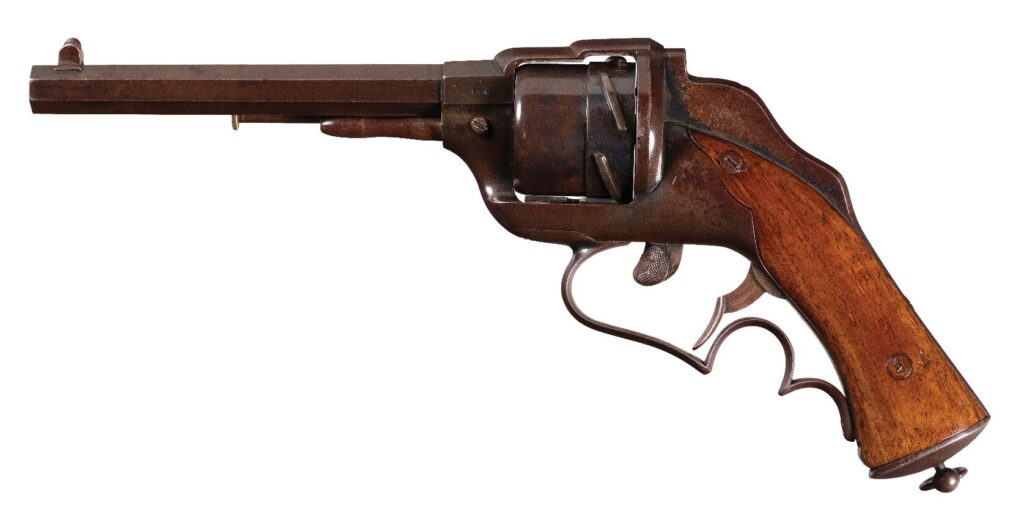
The most interesting version appeared in the 1872 patent.
By then, the design had matured into a complete system.
It featured a spur-type trigger without a conventional guard, an internal striker, a safety mechanism, and even a folding rear sight intended for long-range shooting.
For the early 1870s, this was a surprisingly advanced collection of features.
Yet the complexity remained.
Every attempt to solve one problem seemed to create several new ones.
It was the classic fate of many experimental firearms of the era.
The French Obsession With Gas Sealing
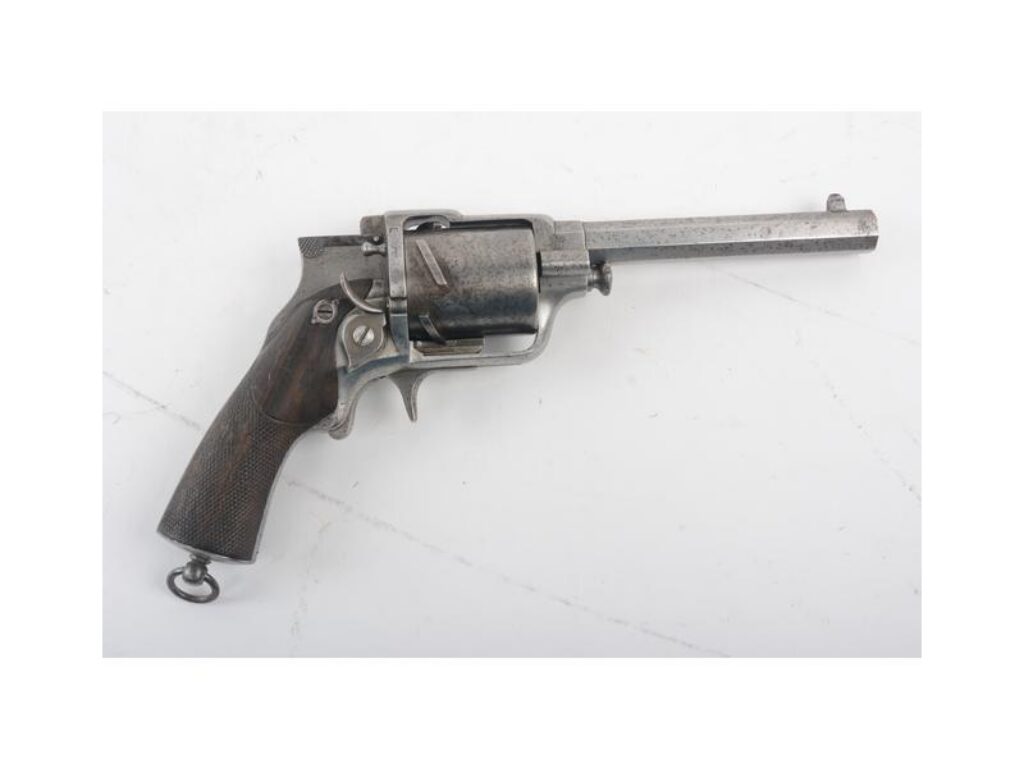
The brothers’ most ambitious idea concerned one of the fundamental weaknesses of all revolvers—the gap between the cylinder and the barrel.
When a revolver is fired, part of the propellant gases inevitably escapes through this gap.
Today this is generally accepted as a minor drawback, but many nineteenth-century inventors viewed it as a serious flaw.
The De Dartein solution was uniquely French in its complexity.
They developed a special cartridge featuring a two-stage projectile and a movable sleeve.
When fired, the bullet first pushed the sleeve forward, sealing the gap between the cylinder and the barrel. Only then did the projectile continue down the bore.
On paper, it was brilliant.
In reality, it was a disaster.
Self-Sealing or Self-Jamming?
The problem was simple.
After firing, the sleeve had no intention of returning to its original position.
When the shooter attempted to rotate the cylinder, the sleeve frequently interfered with the mechanism, creating additional friction and resistance.
Since the cylinder-rotation system was already mechanically complicated, the result was predictable.
Instead of improving performance, the revolver often jammed itself.
The weapon effectively became its own worst enemy.
Only a single surviving example of this design is known today, which speaks volumes about its practical success.
Why the Army Chose Another Path
When the time came for military trials, the fate of the De Dartein revolvers was effectively sealed.
The 1870s were already well underway.
Colt and Smith & Wesson were thriving in the United States.
Britain fielded Adams revolvers.
Meanwhile, France was conducting the competition that would ultimately produce the famous Chamelot-Delvigne Model 1873 revolver.
Compared to its rivals, the De Dartein design was simply too complicated, too unconventional, and too unreliable.
The French Army needed a practical sidearm for mass production.
The De Dartein revolvers were fascinating engineering experiments, but they were not practical military weapons.
A Failure Worth Remembering
After losing the military competition, the De Dartein brothers largely disappeared from the history of firearms development.
There is little evidence that either man continued designing weapons.
Yet their revolvers were far from meaningless.
They remain valuable examples of a period when engineers were still exploring what the revolver could become.
At the time, nobody knew what the ideal sidearm should look like. Designers experimented boldly with cylinders, hammers, cartridges, safeties, and sealing systems in ways that seem almost unimaginable today.
The De Dartein revolvers did not change firearms history.
But they remind us that technological progress is built not only on successful ideas. Sometimes the road to success passes through dozens of beautiful, ambitious, and ultimately unsuccessful experiments.
And if one were searching for a perfect example of nineteenth-century French engineering eccentricity, the De Dartein revolvers would certainly be among the leading candidates.