Tanks Had Barely Learned to Fight — And Weapons Were Already Being Built to Kill Them: The Story of the First Anti-Tank Gun

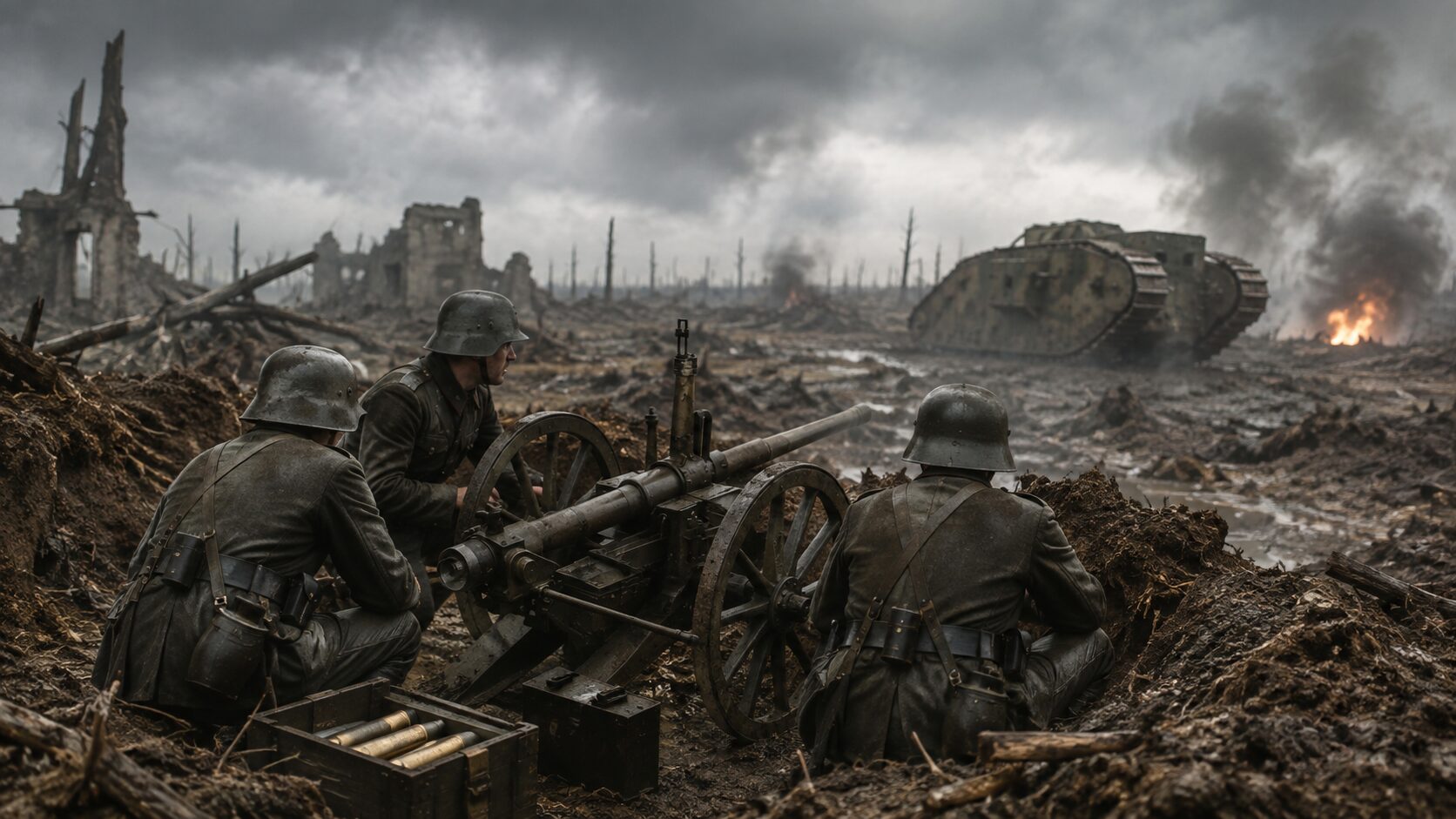
In September 1916, the British Army used tanks in battle on the Somme for the first time. The new weapon was slow, unreliable, and extremely crude, but the very idea of an armored vehicle capable of crossing barbed wire and surviving machine-gun fire was changing the rules of warfare. It took the Germans surprisingly little time to develop a response. First came special armor-piercing ammunition, then the 13.2 mm Mauser T-Gewehr anti-tank rifle, and finally, in 1918, the 3.7 cm Tankabwehrkanone, generally regarded as the world’s first mass-produced specialized anti-tank gun. The most interesting part is that there was no technological revolution involved: the Germans took an existing 37 mm barrel, mounted it on a fairly primitive carriage, and created a weapon that barely had time to see combat. Yet this small gun marked the beginning of the armor-versus-projectile race that would shape land warfare for the next hundred years.
At First, Nobody Really Knew How to Kill a Tank
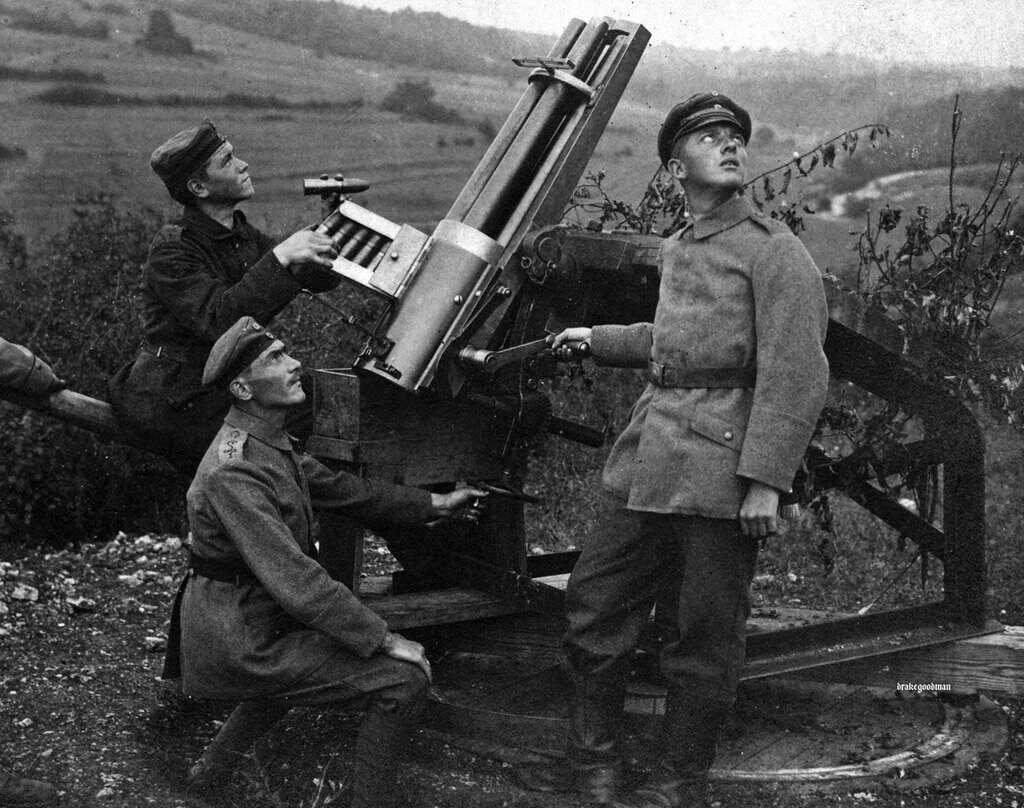
The appearance of tanks did not leave the German Army completely defenseless. The first battles quickly demonstrated that early armored vehicles were far from invulnerable. They broke down, became stuck, came under artillery fire, and could be destroyed by ordinary field guns firing over open sights. The real problem was different: infantry lacked a specialized and sufficiently mobile weapon that could be quickly moved to wherever tanks appeared.
On September 15, 1916, during the Battle of the Somme, the British Army used its new fighting vehicles on a significant scale for the first time. Of the 49 tanks prepared for the attack, many failed to reach their starting positions, and only 32 actually went into action. Yet even this highly imperfect debut made an impression. Tanks could cross trenches, crush barbed wire, and suppress machine-gun positions that might otherwise stop an infantry assault within minutes.
The Germans began searching for ways to counter the new threat. Bundles of hand grenades, direct-fire artillery, mortars, and special armor-piercing rifle ammunition were all employed. In 1918, one of the most famous responses appeared: the 13.2 mm Mauser Tankgewehr M1918, the world’s first mass-produced anti-tank rifle. It was an enormous single-shot weapon weighing more than 15 kilograms and firing the powerful 13.2×92 mm TuF cartridge.
But a rifle was still a rifle. Even a very large bullet quickly encountered the limits of what small arms could achieve.
The next logical step was a cannon.
There is, however, an important distinction to make. Artillery had successfully fired at tanks long before the appearance of the 3.7 cm TAK. Moreover, small infantry and trench guns already existed that were perfectly capable of engaging armored vehicles. The French Canon d’Infanterie de 37 modèle 1916 TRP, for example, had a suitable caliber, was relatively mobile, and could theoretically pose a serious threat to early tanks.
It would therefore be incorrect to describe the 3.7 cm TAK as the first gun capable of destroying a tank.
Its historical significance is more interesting than that.
It was one of the first artillery systems ordered for mass production and specifically designated as a Tankabwehrkanone — an anti-tank gun.
The tank had now been formally recognized as a distinct battlefield threat requiring an entire class of weapons designed specifically to defeat it.
The First Anti-Tank Gun Was Almost Built From Spare Parts
It would be easy to imagine that the birth of an entirely new class of artillery involved years of research and some revolutionary engineering breakthrough.
Nothing of the sort happened.
By the summer of 1918, Germany had little time for elegant engineering solutions.
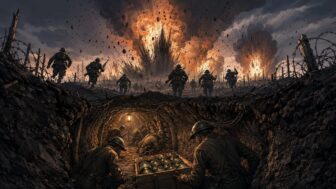
On July 18, a major French counteroffensive began near Soissons, with the Allies making extensive use of tanks. Hundreds of armored vehicles were committed during the opening stages, including the new light Renault FT. The German Army urgently needed a specialized anti-tank weapon — preferably immediately and in large numbers.
Industry therefore followed the most rational path: use components that already existed.
The origins of the German 37 mm weapon actually stretched back into the 19th century. The French company Hotchkiss had developed a family of small-caliber rapid-fire naval guns whose technology spread to several countries. In Germany, related weapons were manufactured by Grusonwerk, later absorbed into the Krupp industrial empire, under the designation 3.7 cm Revolverkanone. They were used as fortress and naval weapons and later considered for other roles.
Now there was another job for them.
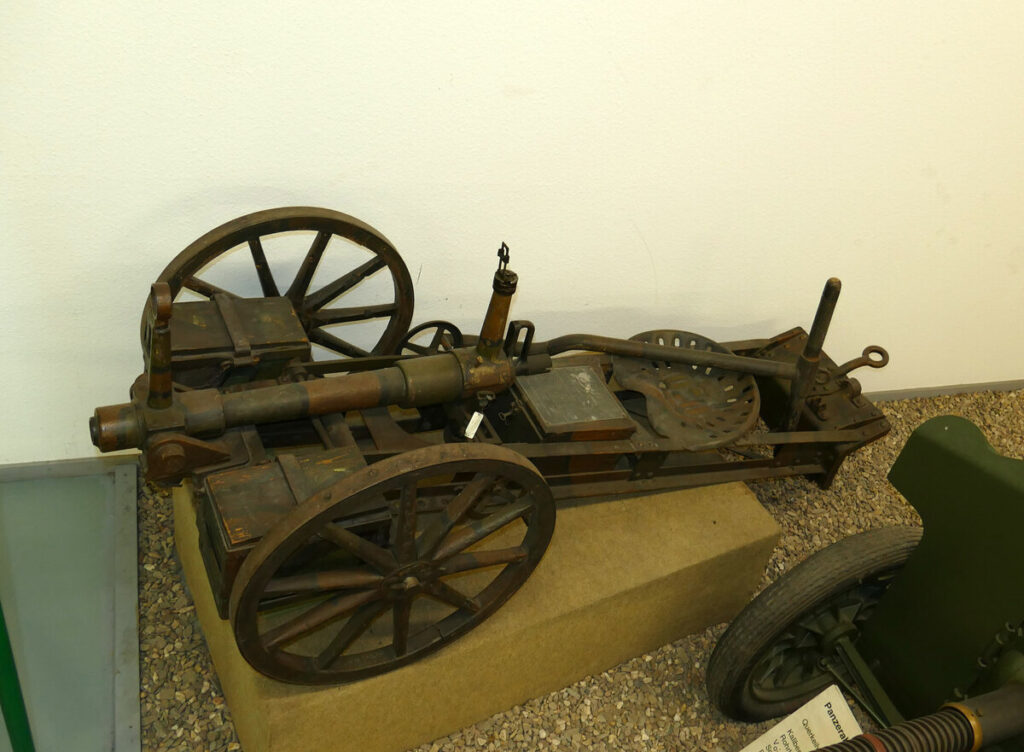
Several competitors became involved in the development of a specialized anti-tank gun, including Krupp, Rheinmetall, and a design proposed by Oberleutnant Fischer. Fischer offered a particularly interesting solution: a 37 mm barrel mounted on a relatively light machine-gun-style carriage, equipped with a recoil mechanism and removable wheels.
But Germany did not need the most elegant weapon.
It needed one that could be manufactured quickly.
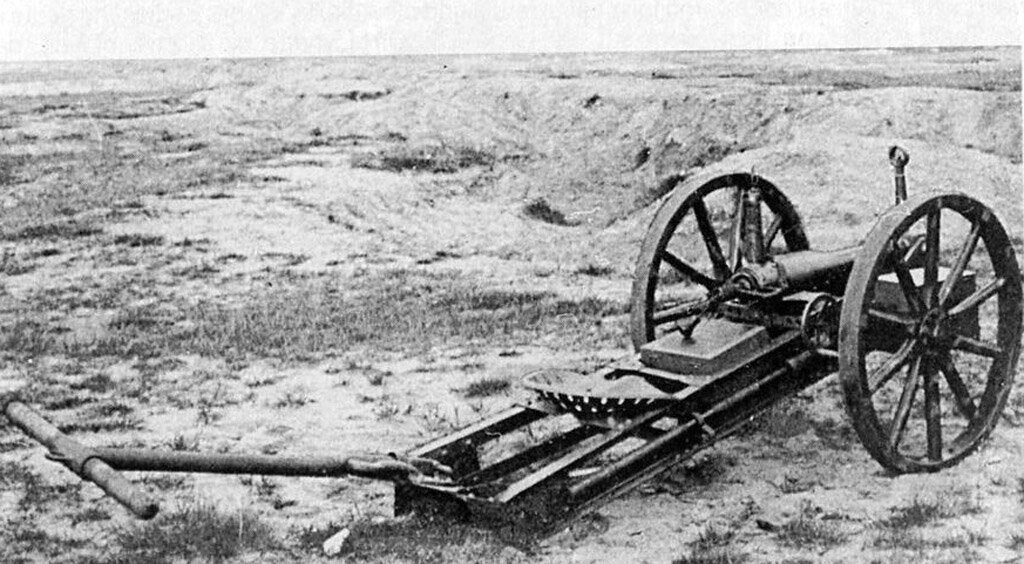
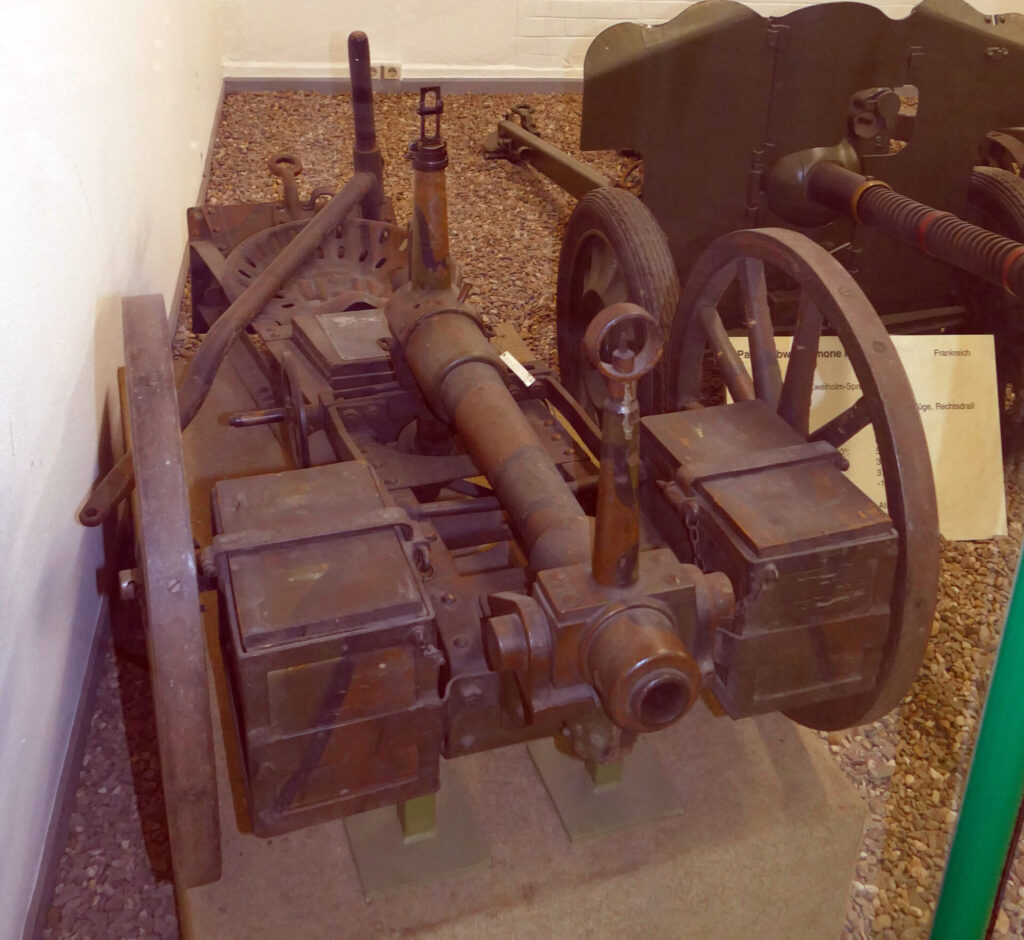
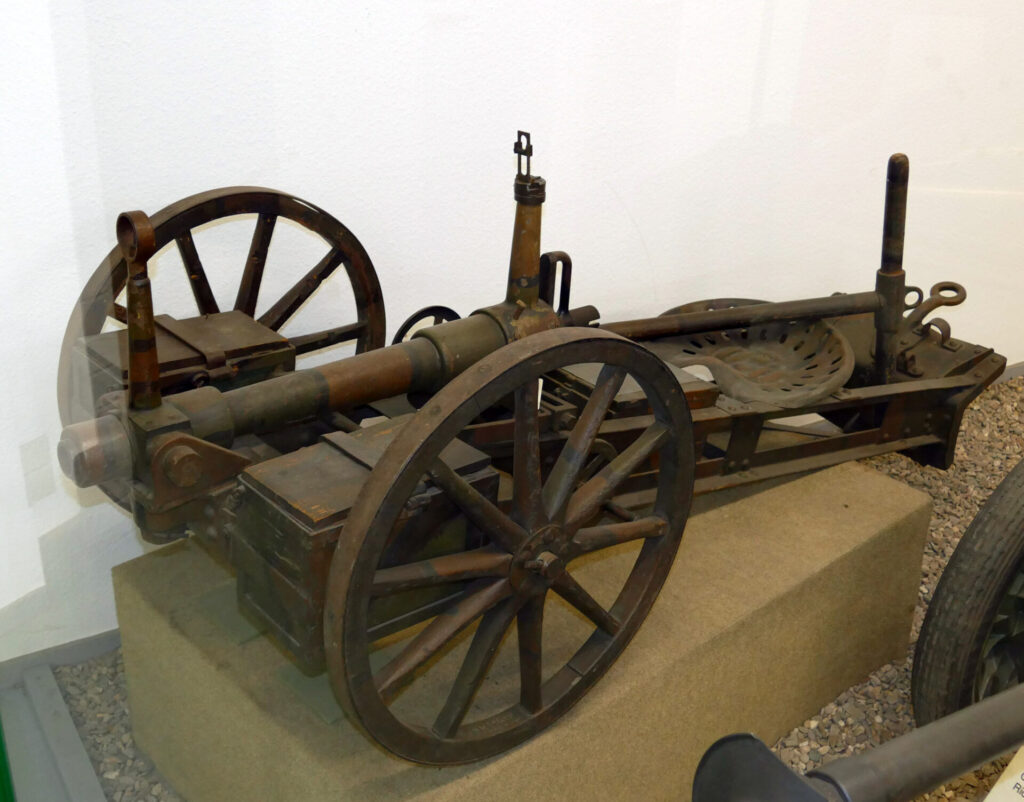
The production 3.7 cm Tankabwehrkanone in starrer Räderlafette was therefore an extremely pragmatic design. Rheinmetall used an existing 37 mm barrel, while the carriage incorporated already familiar engineering solutions, including components associated with the 7.58 cm Minenwerfer.
The result was a small wheeled cannon that, to modern eyes, looked more like an infantry or trench gun.
And in many respects, that was exactly what it was.
175 Kilograms Against a Tank
Placed next to the anti-tank guns of World War II, the first representative of the class looks almost like a toy.
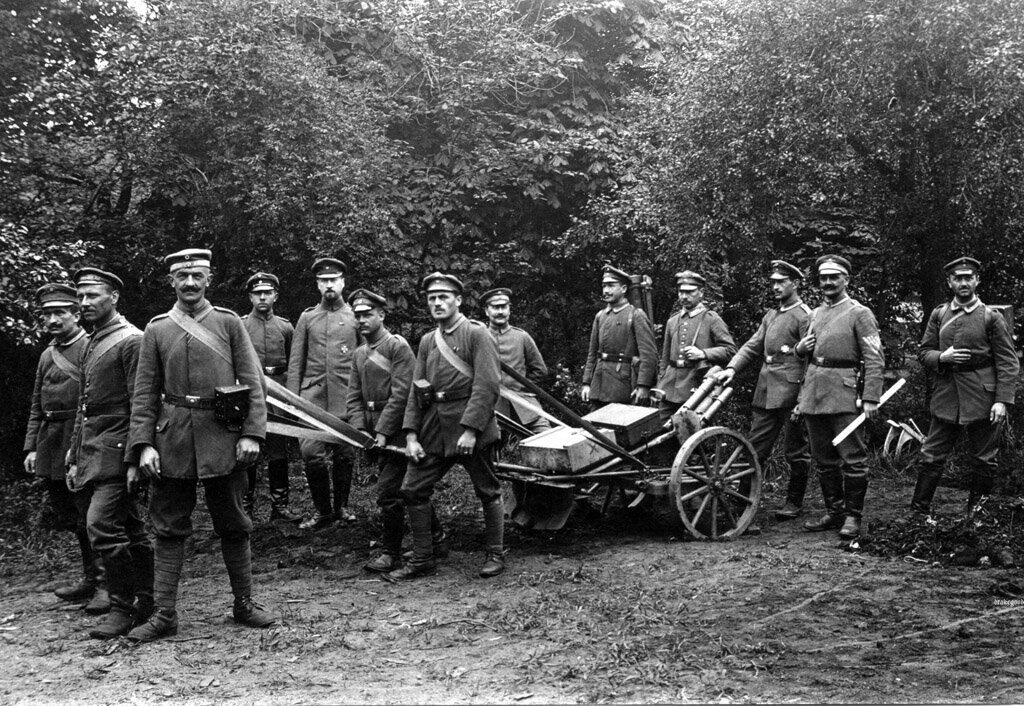
The 3.7 cm TAK weighed approximately 175 kilograms, allowing its crew to move it manually. The standard crew consisted of seven men, although fewer were sufficient to roll the weapon over short distances. This was extremely important: specialized anti-tank artillery had to react quickly to the appearance of enemy armor and shift positions without necessarily requiring a heavy towing vehicle.
The design itself was remarkably simple.
There was no conventional recoil mechanism. The carriage and its substantial trail absorbed the recoil energy. Nor was there a proper armored shield. The gunner effectively operated the weapon with almost no protection.
For 1918, this was an unpleasant compromise. Tanks rarely operated completely alone: infantry followed them, while the battlefield was swept by machine-gun and artillery fire. An anti-tank gun crew had to allow a slowly moving armored vehicle to approach within a relatively short distance, open fire, and somehow avoid being eliminated in return.
But this was where the TAK’s greatest advantage became apparent — its size.
The small gun could be concealed in a trench, among ruined fortifications, or behind terrain features and then rolled manually to another position. Low silhouette and the ability to move a gun using only its crew would later become fundamental requirements for almost every light anti-tank gun.
Another interesting feature was a pair of ammunition boxes mounted directly on the carriage. Together they provided immediate access to 24 rounds of 37 mm fixed ammunition, simplifying the crew’s work during the crucial opening minutes of an engagement.
But this raises the most important question.
What could such a tiny gun actually do to a tank?
In 1918, Twenty Millimeters Was Enough
Today, a 37 mm anti-tank gun sounds almost insignificant. Even during World War II, weapons of this caliber quickly began losing effectiveness against newer medium and heavy tanks.
But this was a weapon of 1918.
And tanks were very different then.
British heavy tanks of the Mark series generally carried armor approximately 6–12 mm thick. The French Renault FT was significantly better protected, with its thickest sections reaching around 22 mm. Germany’s A7V had even heavier protection, with frontal armor reaching approximately 30 mm, although it was produced in tiny numbers and was obviously not a target for German anti-tank artillery.
Reliable penetration figures for the 3.7 cm TAK vary. A figure of roughly 20 mm at around 100 meters is frequently cited and appears plausible when compared with related 37 mm weapons of the period.
That may not sound impressive.
Against most tanks of 1918, however, it was enough.
And an anti-tank crew did not necessarily have to penetrate the thickest frontal plate. Side armor, running gear, and various weaker areas provided far more opportunities.
This helps explain why 37 mm soon became one of the dominant anti-tank calibers.
The projectile was already heavy enough to deal effectively with thin armor, while the gun itself could remain very light. It could be moved by its crew, did not require a powerful tractor, presented a small target, and was relatively simple to manufacture.
Two decades later, the same logic would produce an entire generation of 37–45 mm anti-tank guns:
the German 3.7 cm Pak 35/36,
the American 37 mm Gun M3,
the Soviet 37 mm and 45 mm anti-tank guns,
as well as numerous Czechoslovak, Swedish, and other systems of the same general class.
There was, of course, no direct technical lineage from the TAK to all these weapons. But the basic concept had already emerged: a small, low-profile, mobile, rapid-firing gun whose primary target was the tank.
Germany Ordered More Than a Thousand Guns — And Almost Missed the War
At this point, the story takes an almost ironic turn.
The German Army understood perfectly well how urgently it needed the new weapon. An order was placed for approximately 1,020 3.7 cm TAK guns.
For an entirely new specialized category of weapon, that was a substantial number.
The problem was timing.
The first 12 guns were not completed until September 1918 and were initially used for crew training. Production began to accelerate, but the war itself was rapidly approaching its end.
On November 11, the Armistice of Compiègne was signed.
The TAK never had the opportunity to fight on a large scale.
According to various sources, roughly 600 guns were eventually manufactured before production ended. Some were subsequently affected by the restrictions imposed under the Treaty of Versailles. Claims can sometimes be found that all surviving guns were destroyed, but this clearly requires qualification: several examples survive today, including one preserved in the Wehrtechnische Studiensammlung in Koblenz.
The result is a remarkable historical irony.
The first mass-produced specialized anti-tank gun appeared during World War I — and barely participated in World War I.
But that does not make it historically insignificant.
Quite the opposite.
The Most Interesting Part Came Afterward
In 1916, the tank appeared as an answer to one of the central problems of positional warfare.
Machine guns, barbed wire, trenches, and artillery had made conventional infantry assaults horrifically expensive. The armored tracked vehicle was supposed to break through this system and restore mobility to the battlefield.
Almost immediately, specialized weapons began appearing to stop it.
The result was a technological pendulum that would swing ever farther.
A tank appears with bullet-resistant armor — the anti-tank rifle emerges.
Armor becomes thicker — the anti-tank gun appears.
The gun becomes more powerful — tank designers increase armor protection.
Armor becomes thicker again — gun caliber and muzzle velocity must increase.
In 1918, 37 mm was enough to deal with most tanks.
At the beginning of World War II, 37–45 mm anti-tank guns were still regarded as serious weapons.
Then came 50 mm and 57 mm guns.
Then 75–76 mm weapons.
By the end of the war, Germany had the 88 mm Pak 43 and even the monstrous 128 mm Pak 44, while the weight of specialized anti-tank artillery had increased from hundreds of kilograms to several tons.
In only a quarter of a century, anti-tank artillery had evolved from a gun that four men could roll across a field into weapons requiring powerful artillery tractors simply to move them.
And the reason for this growth was always the same.
The tank was evolving too.
The Small Gun That Started a Very Big Race
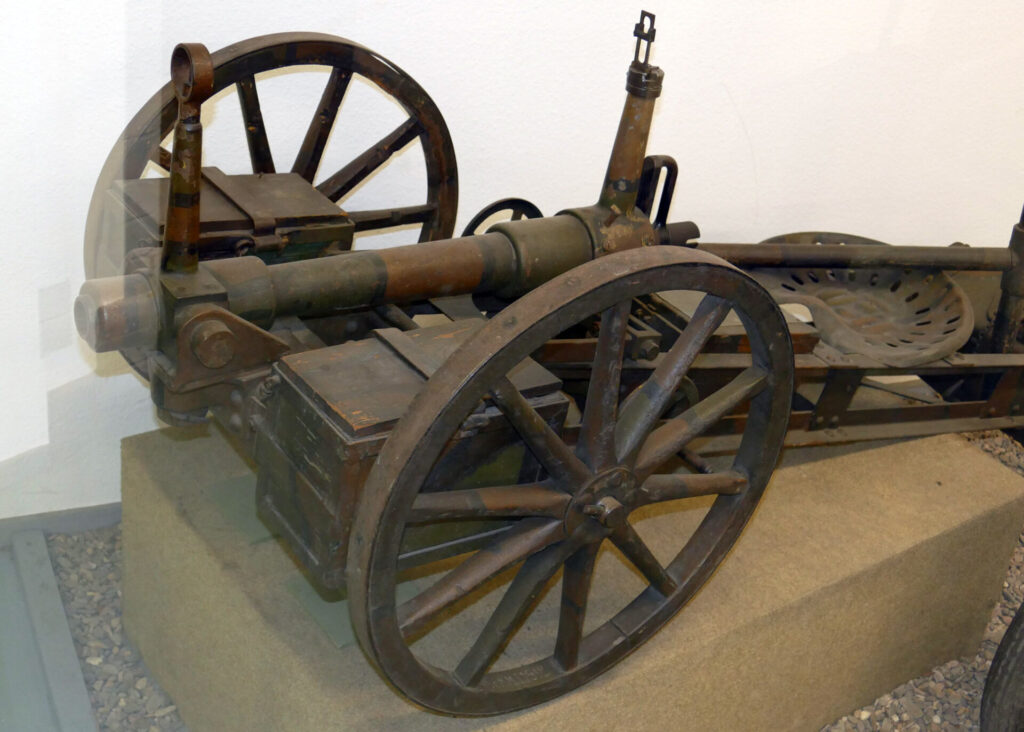
The 3.7 cm TAK can hardly be called an engineering masterpiece. It contained virtually no revolutionary solutions. In fact, if we ignore its official designation, it was essentially a rather primitive 37 mm infantry gun on a rigid carriage, without a proper recoil mechanism and with almost no protection for its crew.
It did not change the outcome of World War I.
It did not destroy hundreds of tanks.
It did not become a battlefield legend.
And it was developed in such haste that German industry simply did not have enough time to equip the army with it in meaningful numbers before the Armistice.
But the historical significance of the 3.7 cm TAK lies somewhere else entirely.
In just two years, the tank had gone from a strange British experiment crawling onto the battlefield at the Somme to a threat serious enough to justify the creation of its own specialized class of artillery.
The very name of the German gun stated its purpose with absolute clarity:
Tankabwehrkanone — a gun for fighting tanks.
After that, there was no going back.
Tanks gained thicker armor — anti-tank artillery gained greater penetration. Artillery became more powerful — tanks received better protection. Later came shaped-charge ammunition, rocket-propelled anti-tank weapons, guided missiles, composite and reactive armor, and active protection systems.
The technology changed beyond recognition.
The principle did not.
The tank appeared on the battlefield in 1916. Just two years later, mass production had begun of a weapon whose primary purpose was to stop it.
And in that sense, the little German 3.7 cm TAK, weighing only about 175 kilograms, was far more important than its modest combat record might suggest.
It almost missed the war for which it had been created.
But it arrived just in time to begin the next one — the endless war between armor and projectile.