
Forty Years of Waiting: Brazil Finally Gets Its Own Anti-Tank Missile System

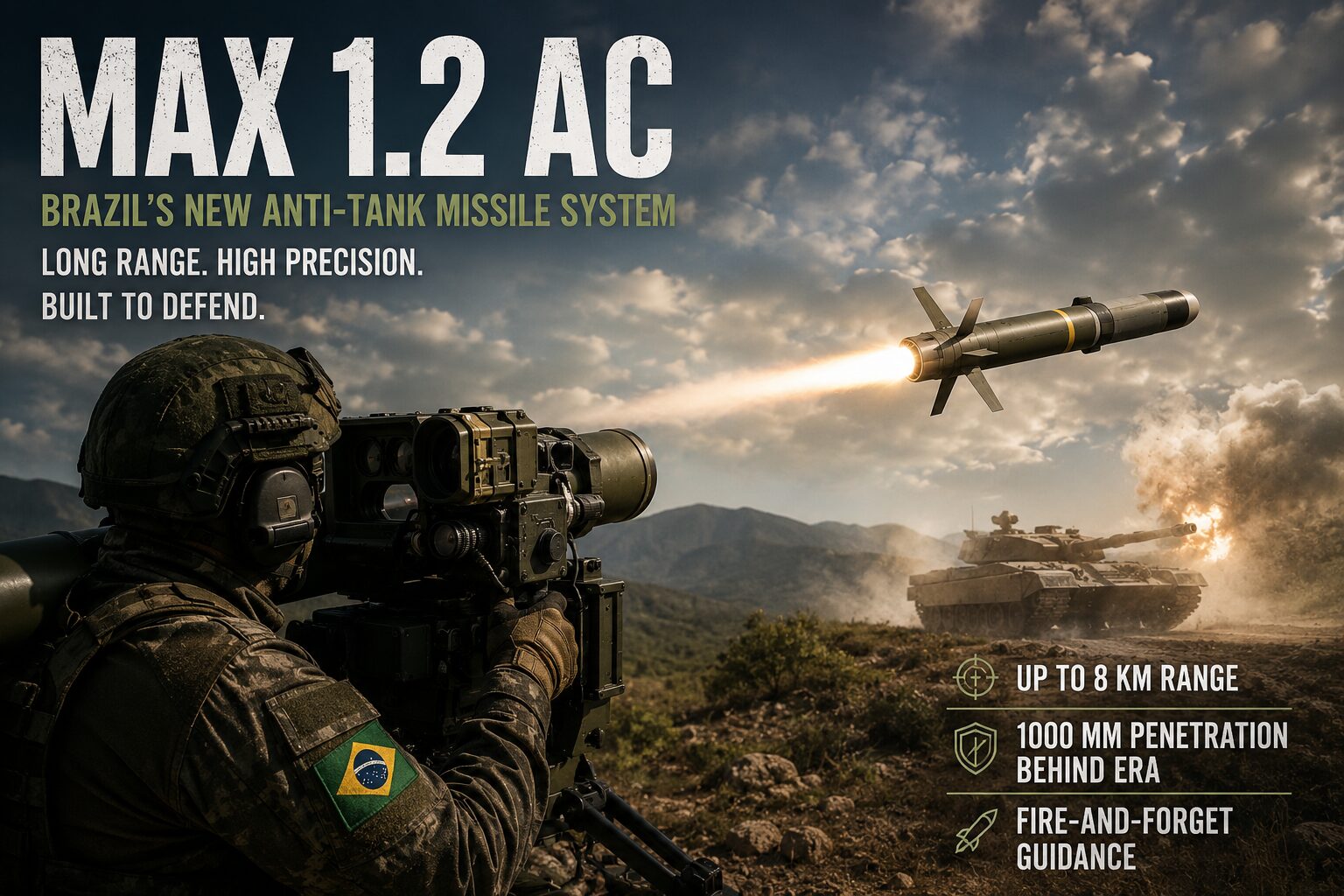
The global anti-tank guided missile market has long been dominated by a select group of players. The United States offers the Javelin, Israel fields the Spike family, France promotes the Akeron, Russia exports the Kornet, and China continues expanding its own range of anti-tank weapons. Against this backdrop, the arrival of a new competitor is noteworthy in itself.
Even more surprising is that the newcomer is Brazil—a country more commonly associated with Embraer aircraft, the EE-9 Cascavel armored car, or the Astros rocket artillery system than with advanced anti-tank missiles.
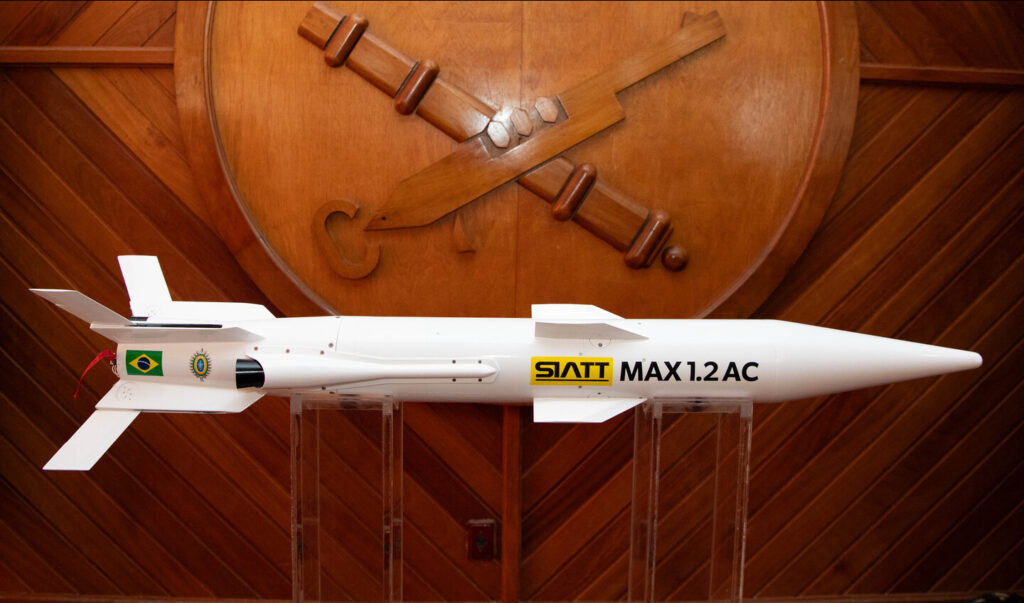
Yet that is exactly what is happening today. After decades of development, technical setbacks, and multiple changes of ownership, the Brazilian MAX 1.2 AC anti-tank missile system has finally entered serial production. If the project succeeds, Latin America will, for the first time, possess a modern indigenous anti-tank guided missile developed and produced within the region.
A Missile Nearly Half a Century in the Making
The story of the MAX 1.2 AC began during the Cold War.
In the early 1980s, Brazil was aggressively expanding its domestic defense industry. The country sought to reduce dependence on foreign suppliers and establish a complete portfolio of domestically produced military equipment.
One of those initiatives was a new anti-tank missile project developed jointly by the Italian company Oto Melara and the Brazilian defense manufacturer Engesa.
The original designation was MAF—Missile Anticarro della Fanteria.
However, the economic turbulence of the late 1980s dramatically altered the project’s future. The collapse of Brazil’s defense sector and the bankruptcy of the legendary Engesa nearly ended the program before it had a chance to mature.
For most weapons projects, such a setback would have been fatal.
Not for the future MAX missile.
The Project That Refused to Die
In the early 1990s, responsibility for the program passed to Mectron.
Development continued under the supervision of the Brazilian Army, which remained interested in acquiring a domestically produced precision anti-tank weapon.
Over the following decades, the missile underwent numerous revisions and modernization efforts.
Several times it appeared to be on the verge of entering production, only for new technical challenges to emerge. One of the most significant issues involved the missile’s guidance system, particularly the reliability of its laser reception equipment.
Engineers were ultimately forced to redesign much of the missile’s electronic architecture.
Only after SIATT assumed control of the project did the situation begin to improve significantly.
The company introduced major upgrades, modernized the guidance package, and finally brought the missile to a production-ready standard.
In 2024, the program officially received approval for full-scale manufacturing.
For Brazil’s defense industry, it was a milestone decades in the making.
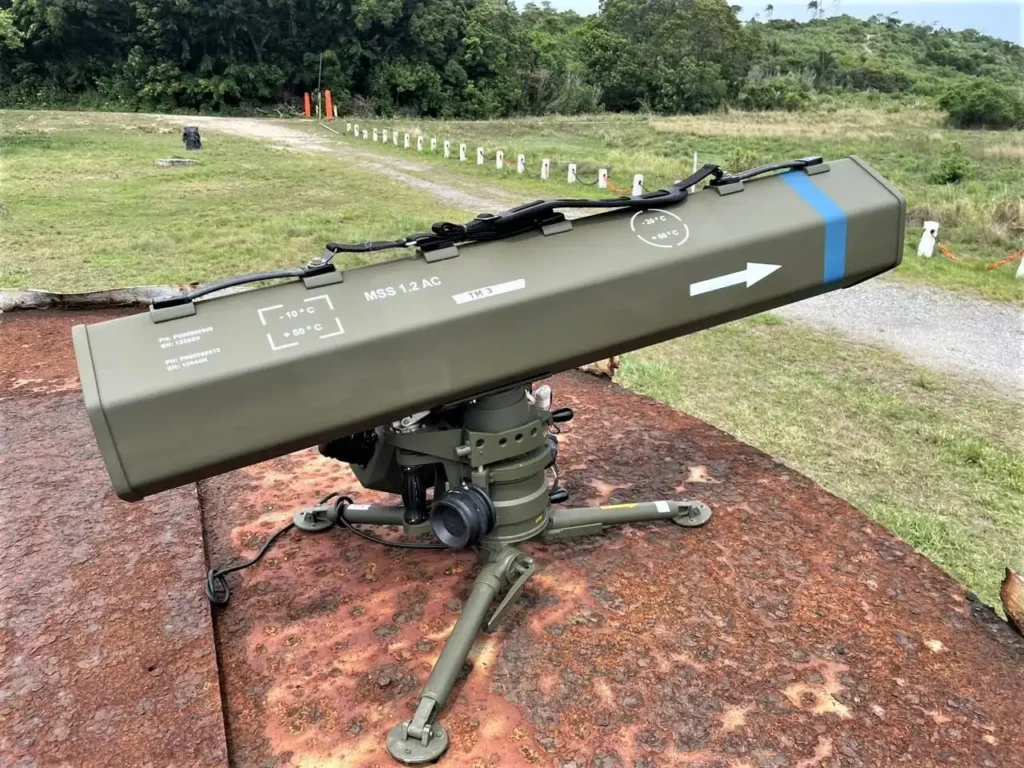
What Is the MAX 1.2 AC?
From a technical perspective, Brazilian engineers sought to create more than just another anti-tank missile.
The system is built around a tandem-charge warhead designed to defeat modern armored vehicles protected by explosive reactive armor.
According to published specifications, the missile can engage targets at distances of up to 8 kilometers.
That places it among the longer-range anti-tank systems currently available.
Particular attention was devoted to the guidance package.
Developers emphasize advanced target-tracking capabilities and a high degree of engagement automation, helping increase accuracy and reduce operator workload.
The system was also designed from the outset to be highly adaptable.
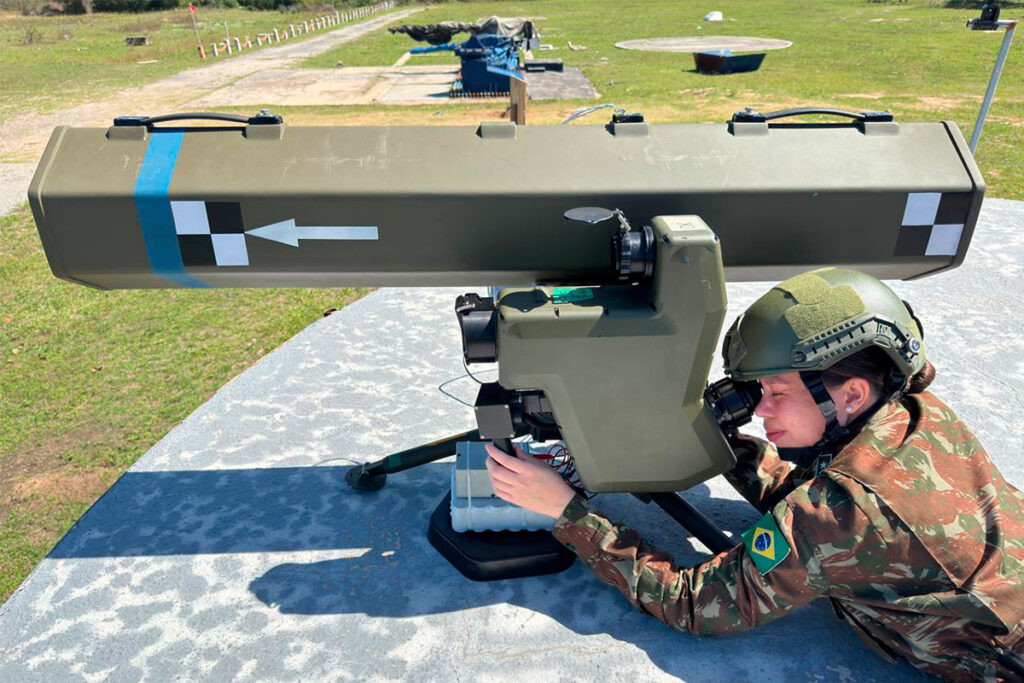
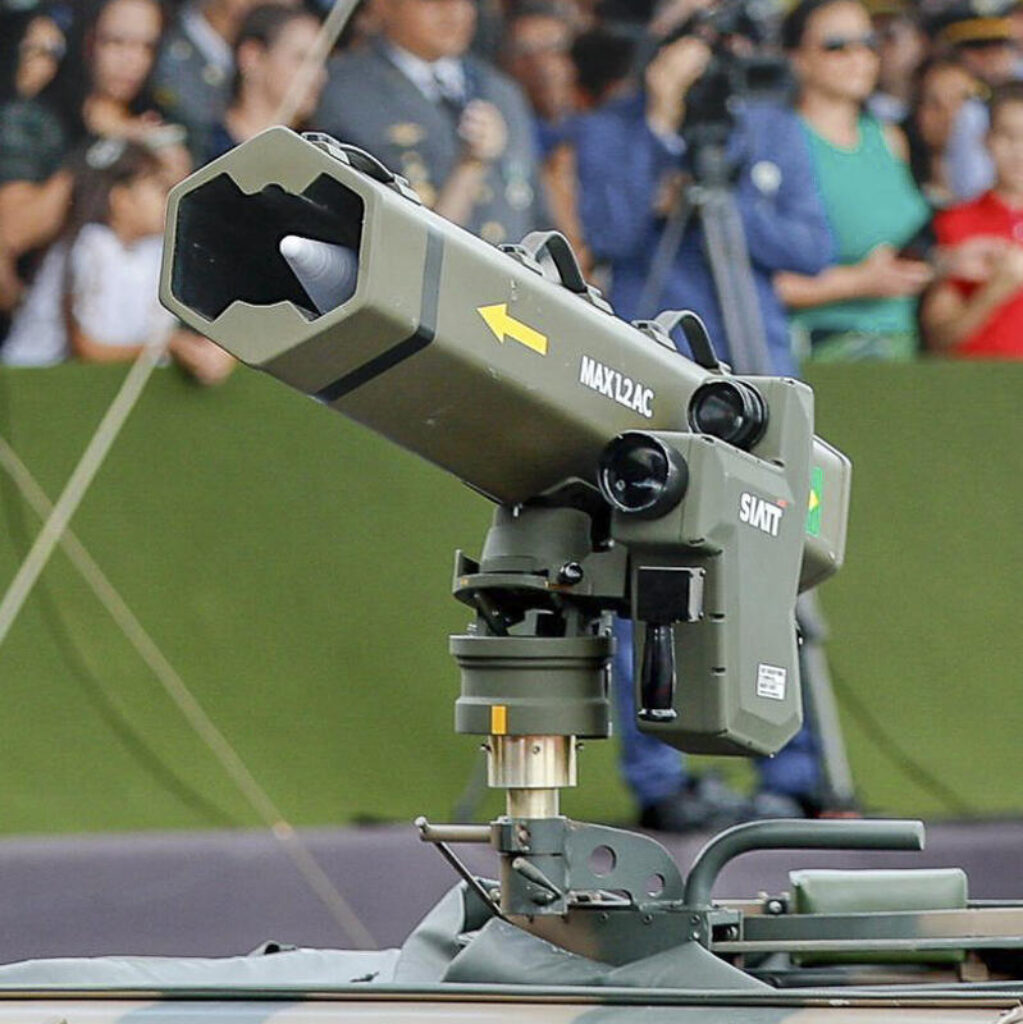
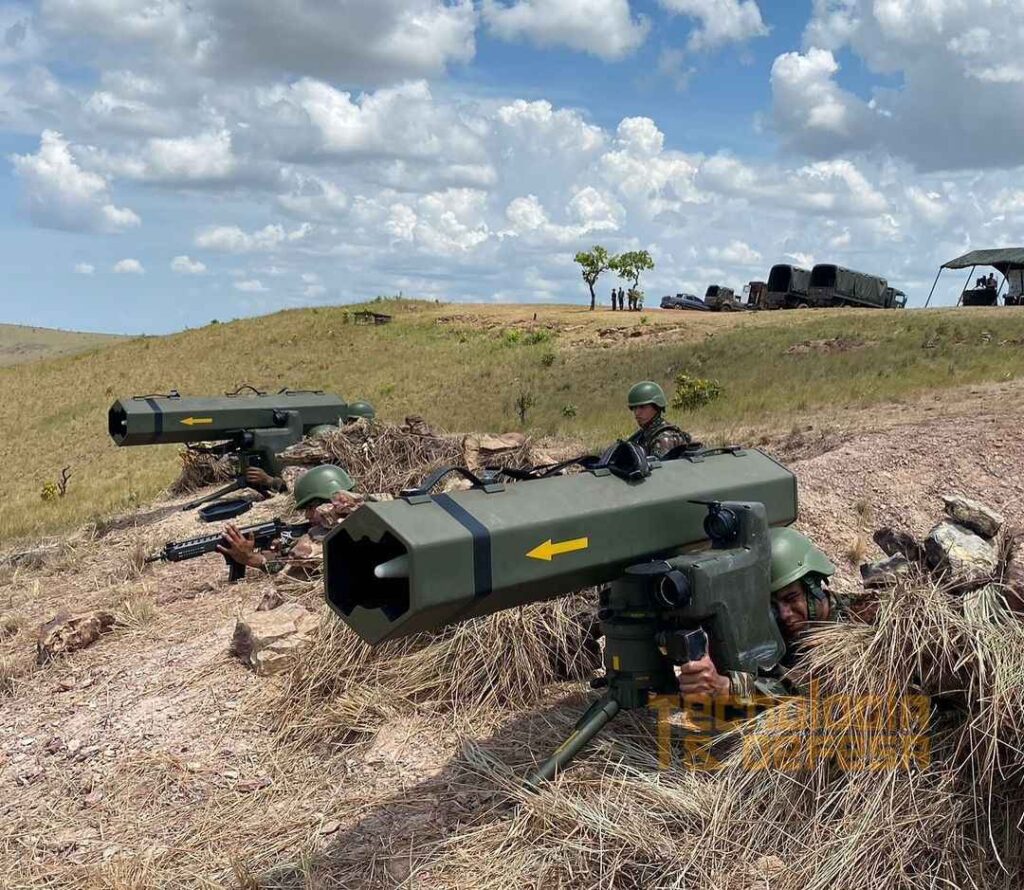
The missile can be deployed from tripod launchers, mounted on armored vehicles, or integrated into fixed defensive positions.
In effect, MAX 1.2 AC is intended to be a modular anti-tank weapon suitable for a wide variety of operational environments.
Competing in the Shadow of Giants
Comparisons with established systems are inevitable.
Virtually every modern anti-tank missile is measured against weapons such as the American Javelin, the Israeli Spike, or the Russian Kornet.
And this is where the Brazilian system becomes particularly interesting.
In terms of range, MAX 1.2 AC compares favorably with many competitors. Its claimed 8-kilometer reach places it firmly within the category of heavy anti-tank missile systems.
Its penetration performance is also competitive by modern standards.
However, the missile’s greatest advantage may not be its technical specifications.
Its strongest selling point could ultimately be cost.
History has shown that many countries cannot afford to equip their armed forces exclusively with expensive Western missile systems. This is especially true when large numbers of launchers and missiles are required.
That reality may provide Brazil with an opportunity to carve out its own niche in the global market.
Latin America Awaits Its Own Producer
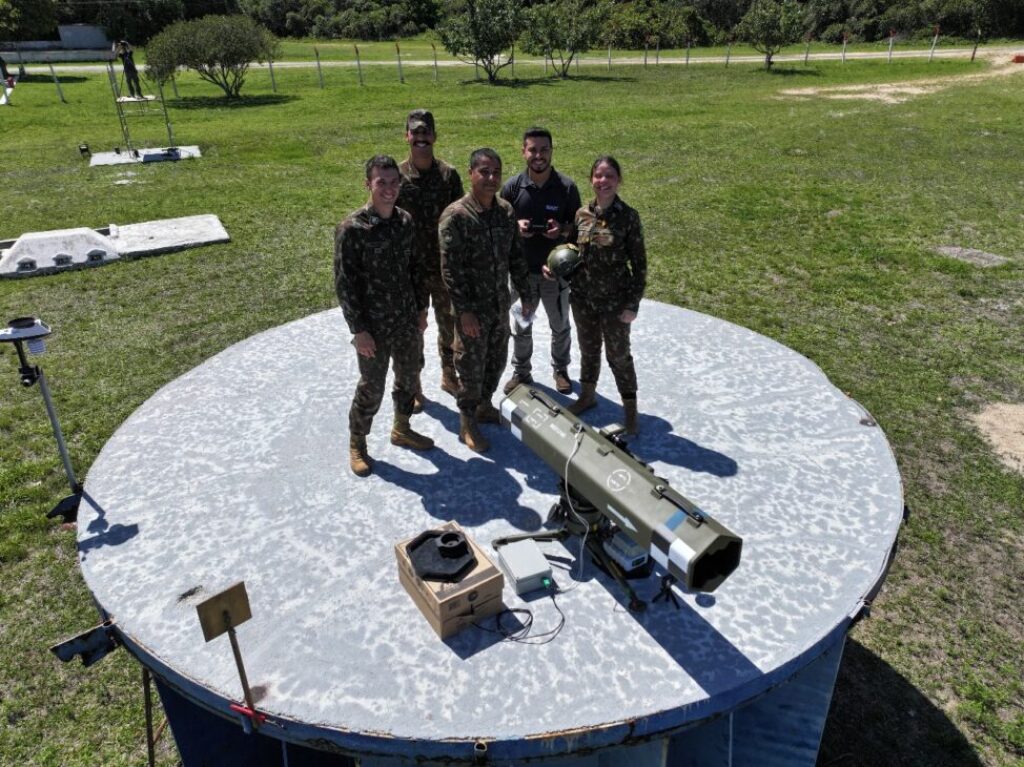
Today, most South American nations rely on imported anti-tank weapons.
Some purchase American systems, others use Russian or European designs.
The emergence of a regional manufacturer could significantly alter that dynamic.
If the MAX 1.2 AC can offer competitive performance at a lower price than its Western counterparts, it may become an attractive option for numerous countries throughout Latin America.
Potential export opportunities also exist in Africa, the Middle East, and Southeast Asia.
Many nations in those regions seek advanced military technology while avoiding excessive dependence on suppliers from the United States, Europe, Russia, or China.
In this context, Brazil could position itself as an alternative source of sophisticated defense equipment.
More Than Just a Missile
Perhaps the most important aspect of the MAX 1.2 AC story is not the missile itself.
Rather, it is what the program represents.
For decades, Brazil was viewed primarily as a buyer of advanced military technology.
Today, the country increasingly seeks to become a producer and exporter of sophisticated weapons systems.
The success of Embraer demonstrated that Brazilian industry could compete internationally in aerospace.
The MAX 1.2 AC may become a similar milestone in the missile sector.
If the system gains traction on the global market, it will signal that Brazil has joined the ranks of nations capable of designing and producing modern guided weapons.
And in the highly competitive world of anti-tank missiles, that is an achievement in itself.
MAX 1.2 AC Technical Specifications
Country of Origin: Brazil
Developer: SIATT
Type: Anti-Tank Guided Missile System (ATGM)
Maximum Range: Up to 8 km
Warhead: Tandem HEAT
Armor Penetration: Up to 1,000 mm behind explosive reactive armor
Guidance System: Advanced laser-based and electronic target-tracking system
Launch Platforms:
- Portable tripod launcher
- Armored vehicles
- Fixed defensive positions
More than forty years after development first began, Brazil has finally fielded a modern indigenous anti-tank missile system. The missile itself has already proven that it can fly. The next challenge is whether it can secure a place in one of the world’s most competitive defense markets.






