
France and Spain Move Closer to Flight Testing the Eurocopter Tiger MkIII. What Makes Europe’s Most Advanced Attack Helicopter Stand Out?

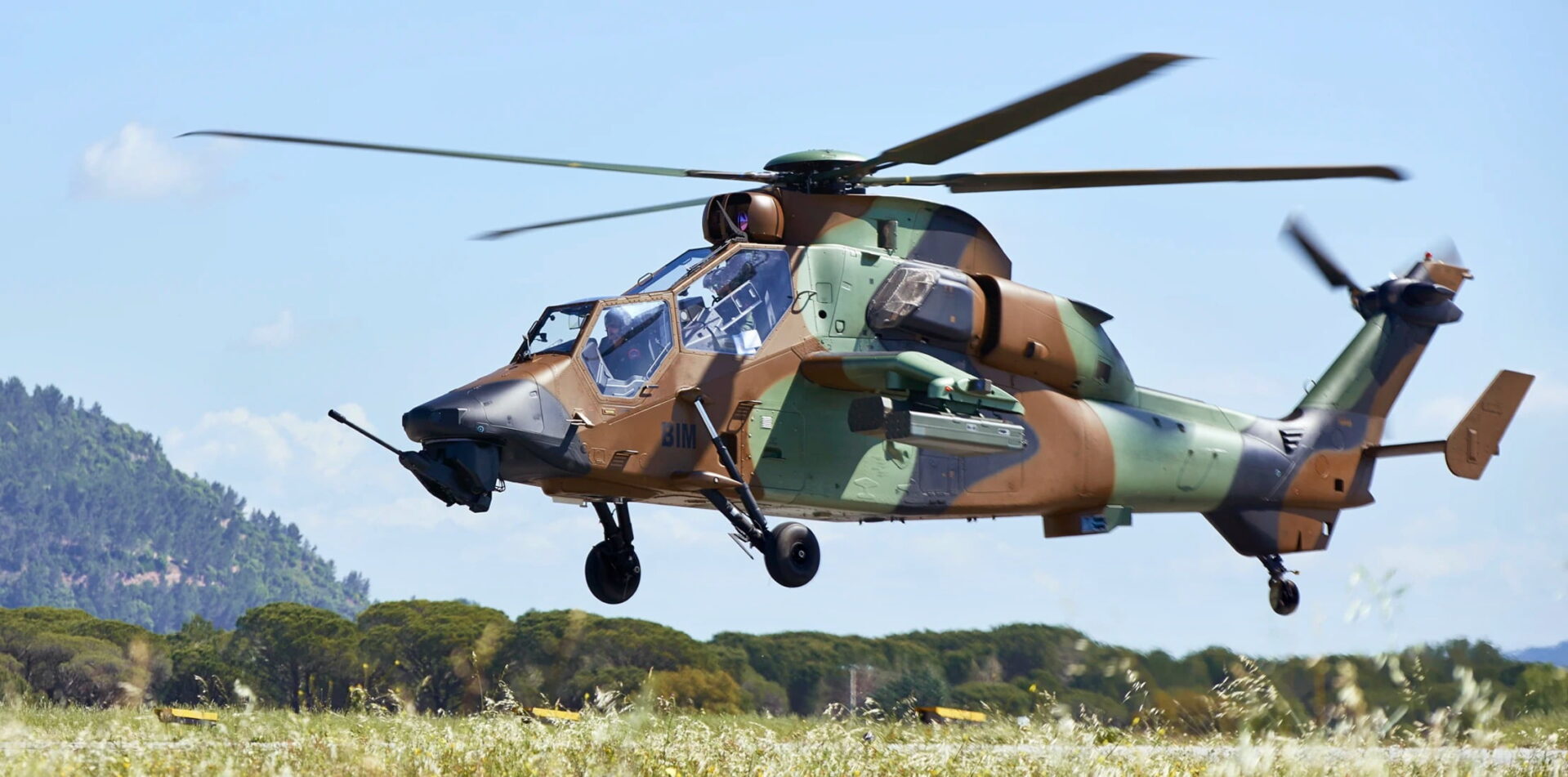
France and Spain have reached a crucial stage in the modernization of their attack helicopter fleets. Contrary to the original schedule, which called for the first flight in 2025, Airbus Helicopters has postponed this milestone until 2026. The maiden flight of the extensively upgraded Tiger MkIII is now expected to take place later this year.
The upcoming flight will demonstrate that Europe is capable of maintaining parity in the field of heavy attack helicopters through its own industrial and technological capabilities. Managed by Airbus Helicopters under the supervision of the Organisation for Joint Armament Cooperation (OCCAR), the program is not simply extending the life of the Tiger platform—it is transforming it into a combat system comparable to the latest American attack helicopters. In 2026, OCCAR has allocated €820 million to continue development of the Tiger MkIII program.
Technical Specifications and Major Upgrades
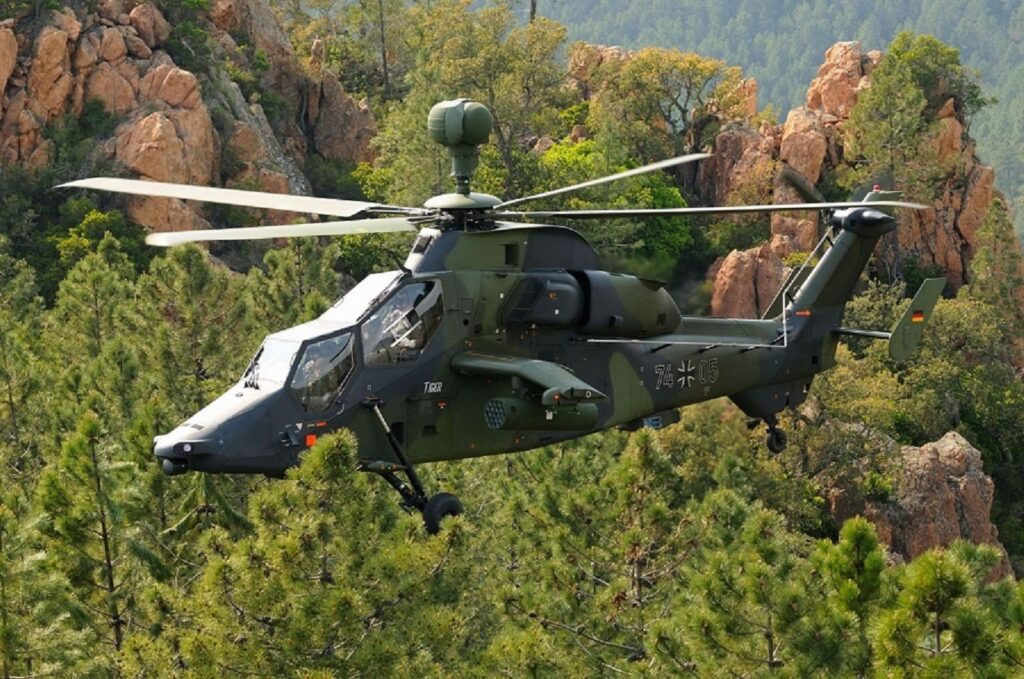
The Tiger MkIII retains the proven airframe of the existing helicopter while completely replacing its electronic architecture and mission systems. The principal upgrades include:
Avionics and Sensors: A new integrated battlefield management system developed by Thales, multifunction cockpit displays, the next-generation TopOwl DD helmet-mounted sight and display system, and the FlytX communications suite for real-time battlefield data exchange.
Electro-Optical System: A modernized Safran Euroflir 510 electro-optical targeting and navigation system mounted above the main rotor hub, providing all-weather target detection and engagement capabilities.
Armament: An expanded weapons package including MAST-F guided missiles and Mistral 3 air-to-air missiles for the French Army, while Spanish helicopters will receive 70 mm guided rockets. The aircraft will also retain the GIAT 30M 30 mm automatic cannon and conventional unguided rocket pods.
Survivability: Improved armor protection, missile approach and laser warning systems, and an automatic countermeasure dispenser designed to defend against MANPADS and loitering munitions.
Counter-UAV Capability: Integration of advanced sensors and processing systems capable of detecting, tracking, and destroying small unmanned aerial vehicles using the helicopter’s standard onboard weapons.
Program Structure and Production Plans
The contract for the comprehensive modernization of the Tiger fleet was signed by OCCAR in March 2022. The total value of the program is estimated at approximately €3.5 billion.
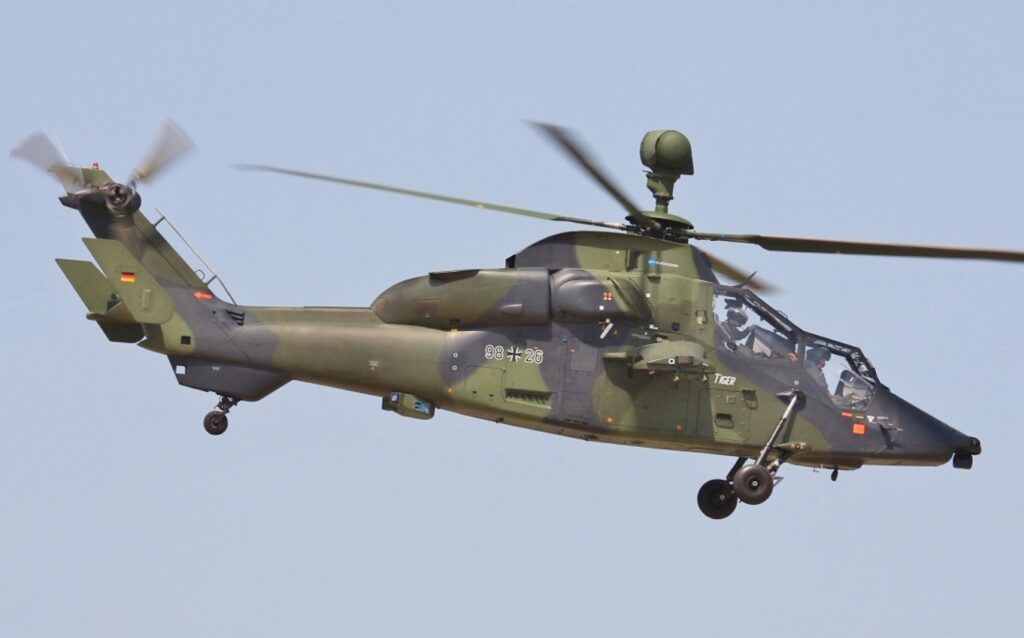
France plans to upgrade 42 Tiger HAD helicopters to the MkIII standard. Deliveries of the first production aircraft are expected to begin in late 2029, with the fleet remaining in operational service into the 2050s.
Spain intends to modernize 18 helicopters, with deliveries scheduled to begin in 2030.
Germany has not yet joined the Tiger MkIII program, opting instead for the gradual replacement of its Tiger fleet with Airbus H145M helicopters and the American AH-64 Apache. Nevertheless, Berlin continues to monitor the program closely, and the contract leaves open the possibility of German participation at a later stage.
Development and modernization work will be carried out at Airbus Helicopters facilities in Albacete, Spain; Donauwörth, Germany; and Marignane, France.
Project Timeline
Development of the Tiger MkIII officially began with the signing of the contract in 2022.
The period from 2023 through 2025 focused on the development and ground testing of the helicopter’s new systems, including the commissioning of the unique “Helicopter Zero” ground integration test platform.
The first flight of the upgraded helicopter is scheduled for 2026 and will represent the most significant milestone of the entire program.
Comprehensive qualification testing will continue throughout 2027 and 2028.
Deliveries to the French Army are expected to begin in 2029, while Spain will receive its first upgraded helicopters in 2030.
Full operational capability across the entire fleet is planned between 2030 and 2035.
Strategic Importance for Europe and International Competition
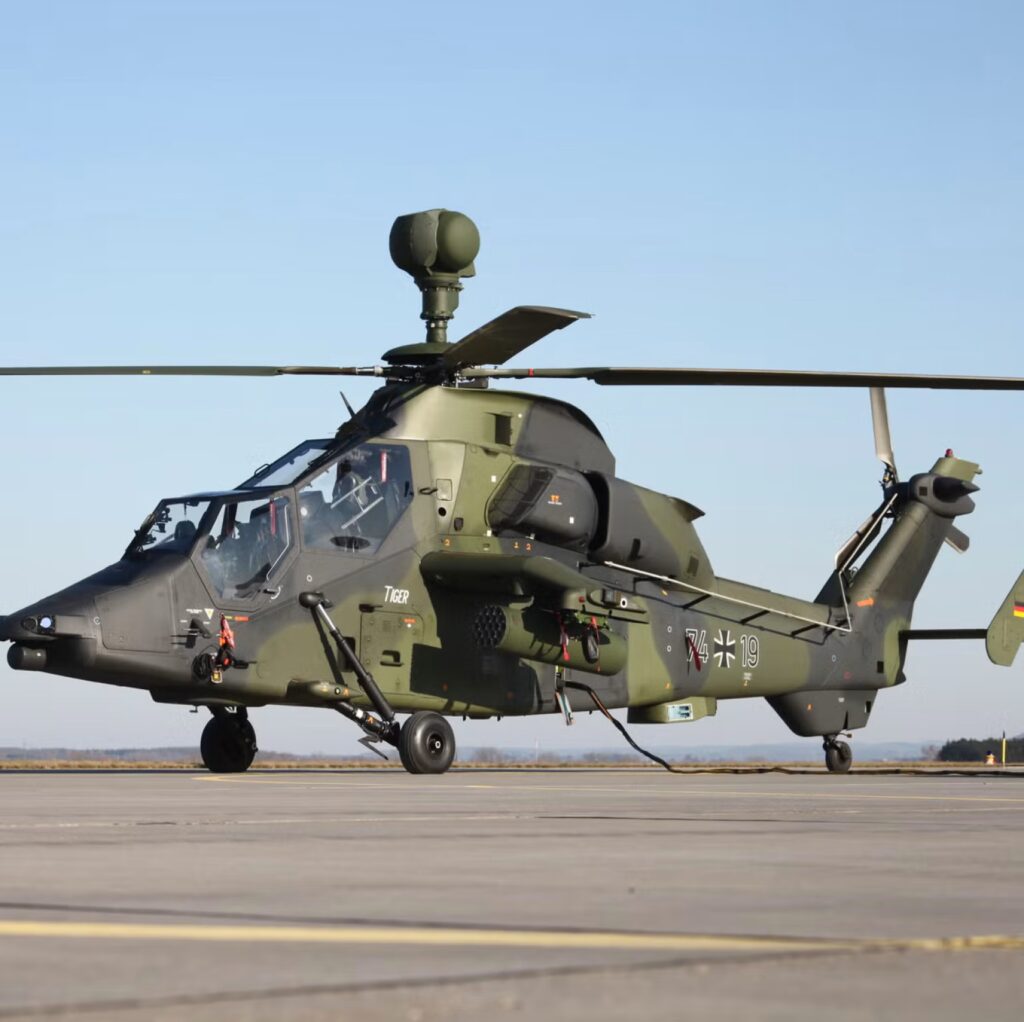
The Tiger MkIII is Europe’s direct response to the lessons learned from recent conflicts, where attack helicopters have faced increasingly severe threats from man-portable air defense systems and the widespread use of unmanned aerial systems.
The modernization program enables France and Spain to retain a capable heavy attack helicopter fleet without purchasing expensive American aircraft, an important element of Europe’s broader pursuit of strategic autonomy.
At a time when development of the future Next Generation Rotorcraft Capability (NGRC) remains in its early stages, the Tiger MkIII serves as a critical bridge, ensuring Europe retains a modern attack helicopter capability well into the middle of the century.
On the international market, the upgraded Tiger will compete directly with the benchmark American AH-64E Apache Guardian, which remains highly capable but is also expensive and subject to strict export controls.
Other competitors include Italy’s new AW249 Fenice, which is still entering operational service, and Türkiye’s T129 ATAK, which has been actively promoted on the global export market.
Conclusion
The new battlefield management system, advanced helmet-mounted targeting equipment, MAST-F and Mistral 3 missile integration, and significantly improved survivability against modern drone threats transform the Tiger MkIII from an aging attack helicopter into a true digital battlefield predator.
If the helicopter successfully completes its maiden flight in 2026, France and Spain will gain a modern attack platform capable of competing with the world’s leading combat helicopters.
Furthermore, given the possibility of exporting the modernization package to other current Tiger operators, the MkIII program has every opportunity not only to strengthen Europe’s armed forces but also to become a commercially successful product on the global defense market.






