
The Unsung Hero of the Aircraft Carrier: Why the Retirement of the C-2 Greyhound Marks the End of an Era

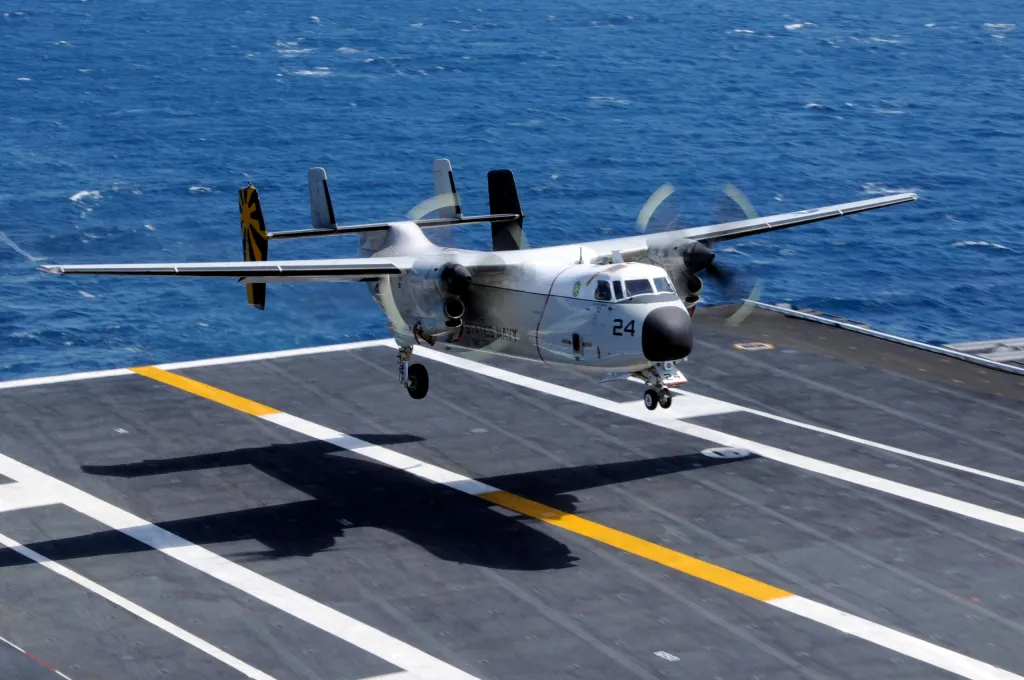
When people think of aircraft carriers, they usually picture iconic fighters like the F-14 Tomcat, the F/A-18 Super Hornet, or the latest F-35C Lightning II. These aircraft dominate photographs, headlines, and documentaries about naval aviation.
Yet there is another aircraft without which an aircraft carrier simply could not sustain combat operations.
It carries no missiles.
It never engages in dogfights.
It launches no precision strikes.
Instead, its mission is far more practical—delivering engines, spare parts, ammunition, medical supplies, mail, and personnel directly to a carrier operating thousands of kilometers from shore.
That aircraft is the C-2 Greyhound, a transport that served as the logistical lifeline of America’s carrier strike groups for more than half a century. In June 2026, it completed its final carrier landing and catapult launch aboard USS Nimitz, officially bringing to a close an era of Carrier Onboard Delivery (COD) operations that began in the 1960s.
The Aircraft That Keeps an Aircraft Carrier Alive
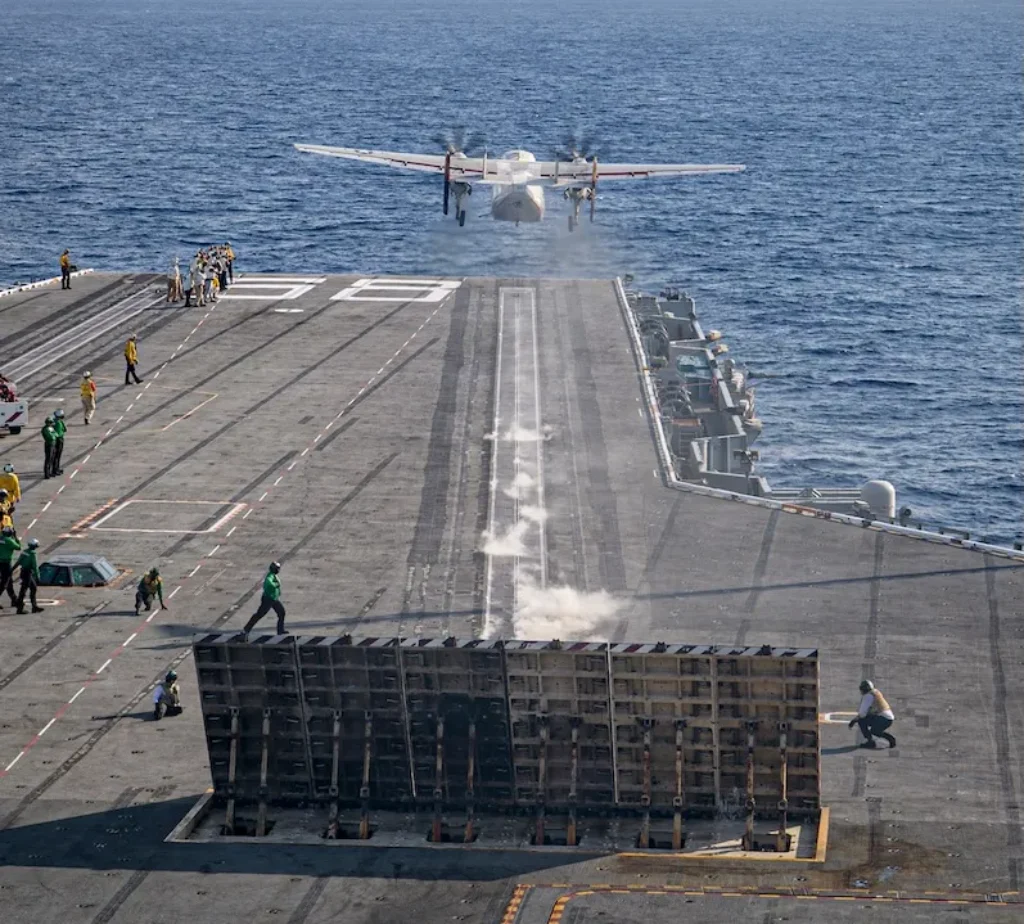
Even the world’s largest aircraft carrier cannot operate entirely on its own.
Every day it consumes enormous quantities of supplies.
Aircraft engines.
Precision-guided weapons.
Electronic components.
Spare parts.
Medical equipment.
Mail.
Replacement personnel.
Helicopters often lack the payload or range to transport such cargo efficiently, while supply ships require days to reach a carrier group.
That is why the U.S. Navy created an entirely new category of aircraft known as Carrier Onboard Delivery, or simply COD.
Their sole purpose was to bring everything a carrier needed directly to its flight deck.
Why the Greyhound Was Built
The story of the C-2 began in the mid-1960s.
Rather than designing an entirely new aircraft, Grumman engineers used the successful E-2 Hawkeye airborne early warning aircraft as the starting point.
The Greyhound inherited its wings, engines, folding wing mechanism, and many structural components.
The fuselage, however, was completely redesigned.
It became much wider.
A large rear cargo ramp was added.
The cargo compartment was designed to carry approximately 4.5 tons of freight or up to 28 passengers.
The result was something unique: the world’s only fixed-wing transport aircraft specifically designed to launch from an aircraft carrier using a catapult and recover using arresting wires.
The Most Important Cargo Nobody Ever Saw
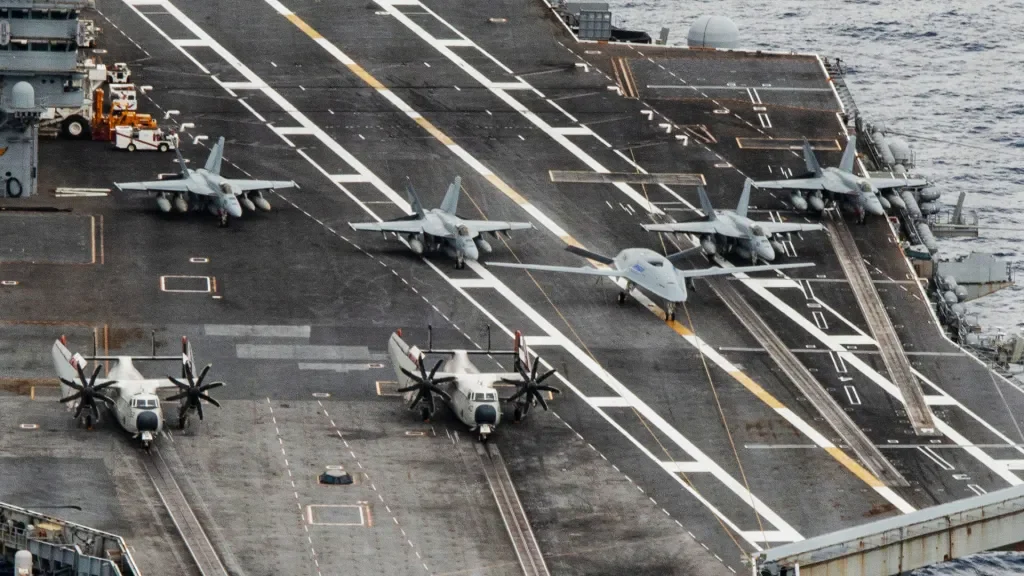
The work of the Greyhound rarely attracted public attention.
Yet it routinely transported equipment without which carrier aviation simply could not continue operating.
Perhaps the best-known example involved aircraft engines.
If an F/A-18 suffered an engine failure while deployed at sea, waiting for a supply ship could take days.
Instead, a replacement engine could be loaded aboard a Greyhound on shore, flown directly to the carrier, and installed within hours.
The aircraft also transported:
- High-priority spare parts
- Technical specialists and maintenance teams
- Aircrew and passengers
- Medical patients
- Classified cargo
- Ordinary mail
For many sailors, the Greyhound truly became the carrier strike group’s lifeline.
Why Every Landing Was a Challenge
Flying the C-2 was never routine.
Weighing nearly 26 tons, the aircraft had to catch one of only four arresting wires stretched across the carrier’s flight deck.
Within just two seconds after touchdown, its speed dropped from approximately 240 km/h to zero.
Launching was equally dramatic.
The carrier’s steam or electromagnetic catapult accelerated the fully loaded aircraft from a standstill to flying speed in only a few seconds.
On board could be dozens of passengers, expensive aircraft engines, or critically important cargo.
The Greyhound repeated this demanding operation thousands of times over more than fifty years of service.
Why Its Successor Is Not Another Airplane
One might expect such an aircraft to be replaced by a newer fixed-wing transport.
Instead, the U.S. Navy chose a very different solution.
The Greyhound’s successor is the CMV-22B Osprey, a tiltrotor aircraft capable of vertical takeoff and landing.
This approach offers several important advantages.
The Osprey can land not only on aircraft carriers but also aboard amphibious assault ships, at remote landing zones, and directly alongside deployed forces ashore.
It requires neither a catapult nor arresting gear.
It can deliver cargo precisely where it is needed.
Although the CMV-22B differs from the Greyhound in both payload and operating characteristics, its versatility ultimately proved more valuable than the traditional fixed-wing transport concept.
The Final Landing That Closed an Era
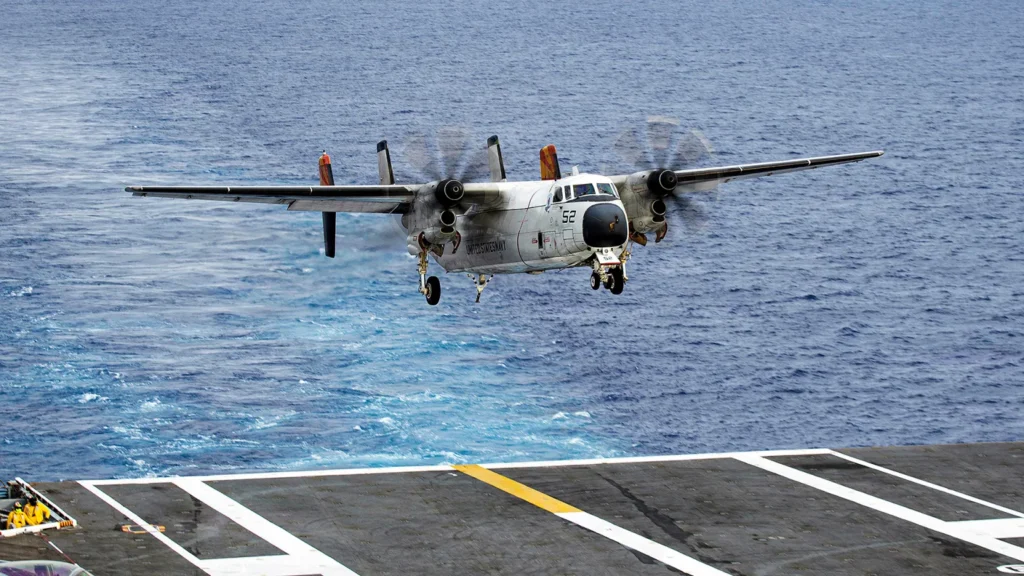
On June 25, 2026, two C-2A Greyhounds from Fleet Logistics Support Squadron VRC-40 completed the final carrier landings and catapult launches in the aircraft’s history aboard USS Nimitz.
After more than sixty years of Carrier Onboard Delivery service, the Greyhound officially concluded the mission for which it had become legendary.
The Most Important Aircraft That Almost Nobody Noticed
The history of the C-2 Greyhound illustrates an important truth about modern warfare.
The most famous aircraft are not always the most essential.
While fighters establish air superiority, someone must deliver replacement engines.
While carrier aircraft conduct combat operations, someone must bring missiles, electronics, medical supplies, and fresh crews to the ship.
For more than half a century, that responsibility belonged to the C-2 Greyhound.
It never became the star of naval aviation.
It never fought enemy aircraft.
Yet without it, the entire carrier air wing would have struggled to keep flying.
That is why the retirement of the Greyhound represents far more than the withdrawal of another military aircraft—it marks the end of one of the most unique and indispensable chapters in the history of American carrier aviation.






