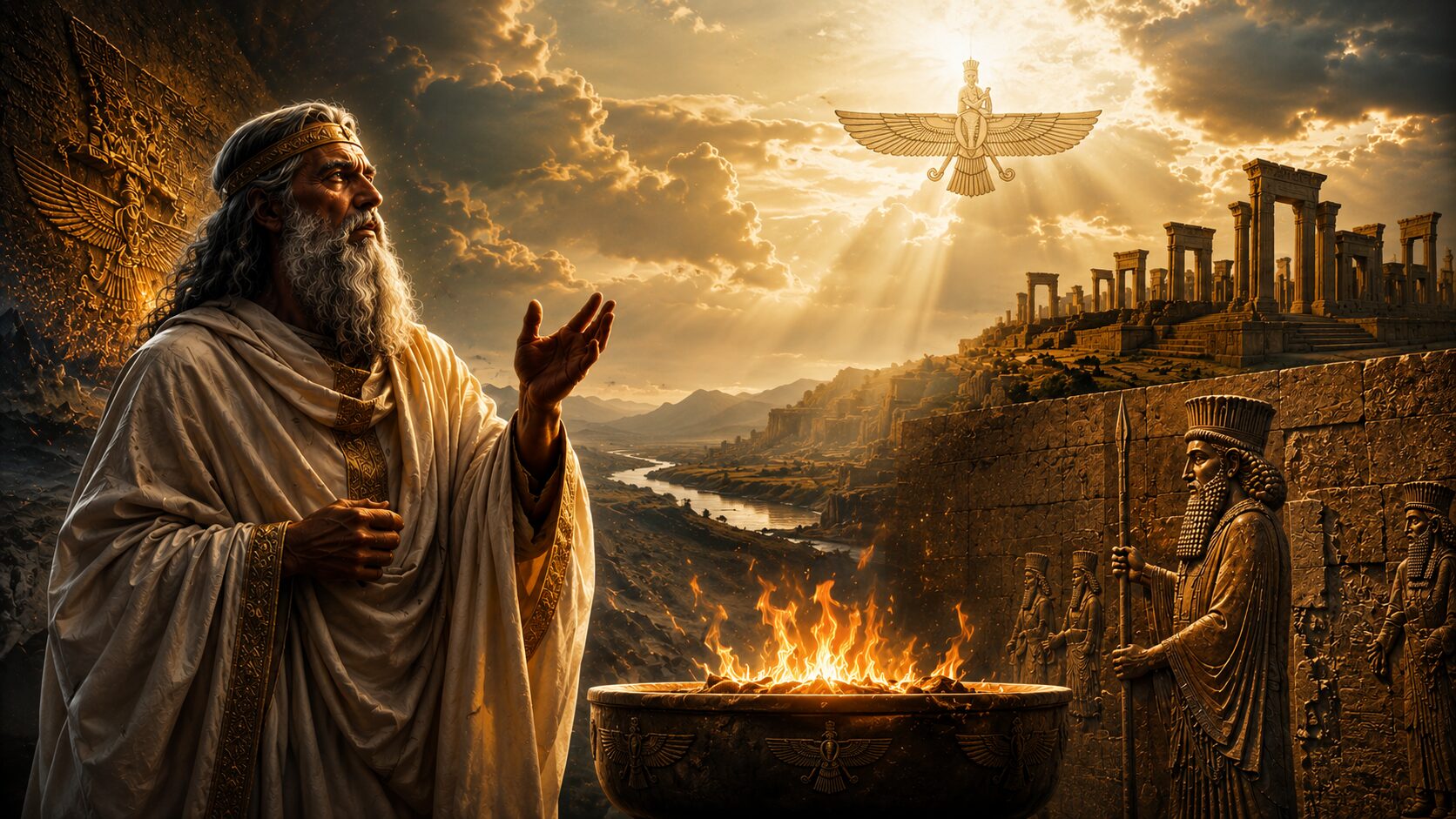
Today, few people remember Zoroastrianism. For most, it is either vaguely associated with “fire worshippers” or with ancient Persia. Yet there was a time when Zoroastrianism stood among the most influential religions on Earth. It was followed by kings who ruled territories stretching from Egypt to India. Its ideas influenced Judaism, Christianity, and Islam. Many concepts modern people now consider fundamental to world religions — heaven and hell, the Last Judgment, the cosmic struggle between good and evil, the coming of a savior, angels and demons — took recognizable shape within the Zoroastrian tradition long before they became central to later faiths.
But the most fascinating aspect of Zoroastrianism is not merely its influence. It was one of humanity’s first attempts to create a universal moral system for a vast empire — a religion in which every individual was expected to consciously choose between truth and falsehood, order and chaos, light and darkness. That is precisely why the faith of the prophet Zoroaster survived the collapse of kingdoms, Greek invasions, Arab conquest, and near extinction itself.
The Prophet Who Changed Persia
Even the basic historical facts surrounding Zoroaster remain uncertain. Historians still debate when he actually lived. Some place him in the 7th–6th centuries BCE, while others argue he may have existed much earlier, perhaps during the Late Bronze Age — nearly a thousand years before Alexander the Great.
The confusion exists because Zoroastrian tradition is so ancient that real historical events gradually dissolved into mythology.
According to tradition, Zoroaster was born somewhere in the eastern Iranian world — possibly in modern Iran, Afghanistan, or Central Asia. The world around him was harsh and unstable. Iranian tribes had not yet built great empires. Society consisted largely of nomadic warriors, priests, and herders deeply rooted in ancient Indo-European religious traditions filled with sacrifices, rituals, and numerous gods.
It was precisely against this old religious system that Zoroaster rebelled.
According to Zoroastrian texts, he experienced a revelation from the supreme god Ahura Mazda — the “Wise Lord.” Ahura Mazda revealed to him that the world was the battlefield of a cosmic struggle between truth and deceit.
For the ancient world, this was almost revolutionary.
Most Bronze Age religions revolved around natural cycles, sacrifices, and appeasing unpredictable gods. Zoroaster instead placed moral choice at the center of religion. What mattered was not merely ritual, but personal responsibility.
In many ways, Zoroastrianism became one of the first truly ethical religions in human history.
Truth Against Chaos
At the heart of Zoroastrianism stood the eternal conflict between truth and destruction.
Ahura Mazda represented order, light, justice, and truth. Opposing him was the destructive spirit Angra Mainyu, later often called Ahriman.
But this was not simply a primitive “good god versus evil god” story. For Zoroastrians, existence itself was shaped by the struggle between opposing principles:
— truth and lies;
— order and chaos;
— light and darkness;
— creation and destruction.
Human beings occupied a central role in this cosmic conflict. Every action, every word, and even every thought contributed to the balance between these forces.
This is where the famous Zoroastrian principle emerged:
“Good thoughts, good words, good deeds.”
For the ancient world, such an idea sounded astonishingly modern.
Zoroastrianism is remarkable because so many of its concepts later became familiar elements of global religion. It strongly developed ideas concerning:
— heaven and hell;
— the end of the world;
— final judgment;
— resurrection of the dead;
— a future savior;
— personal accountability for the soul.
Many historians believe that after the Jewish exile and contact with Persia, some of these concepts gradually influenced Judaism and later Christianity.
The Religion of Empire
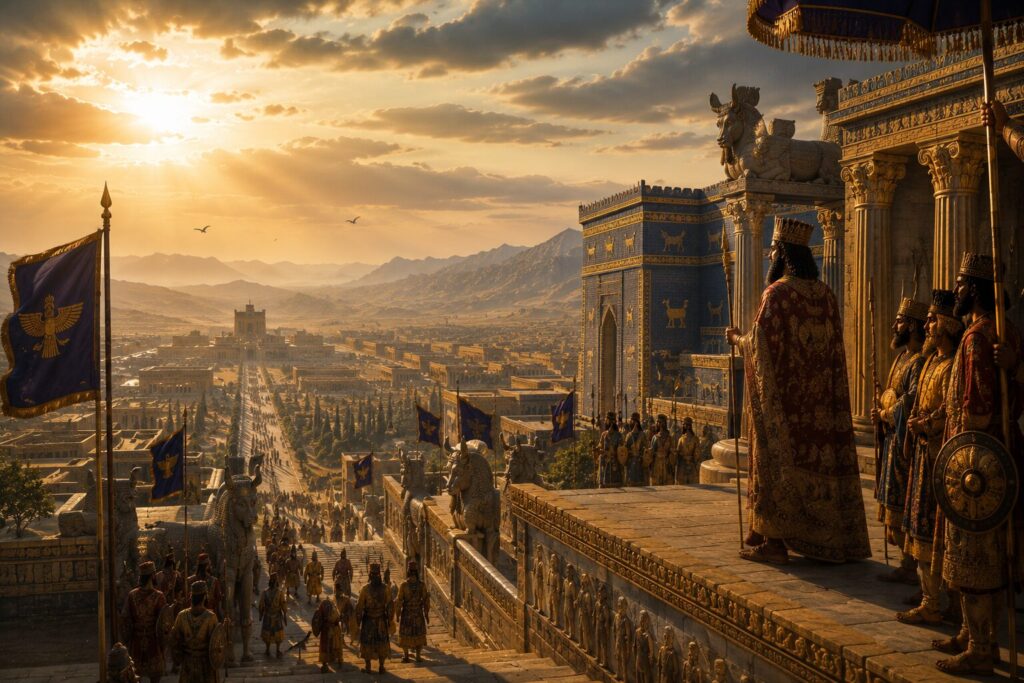
The true rise of Zoroastrianism began alongside the rise of Persia itself.
When Cyrus the Great created the Achaemenid Empire, it quickly became one of the largest states in the ancient world. Persian power eventually stretched from Egypt to India. Governing such vast territories through military force alone was impossible. The empire needed an ideology capable of uniting many peoples under a common order.
Zoroastrianism fit that role remarkably well.
It aligned naturally with imperial authority. The king was seen as the defender of order, justice, and truth. His role was not simply political — he was responsible for maintaining cosmic harmony on Earth itself.
This explains why Persian royal inscriptions constantly speak of “lies” and “rebels.” Revolt against the king was not merely a political crime; it represented an attack on universal order.
This idea appears especially clearly in the inscriptions of Darius I. In the famous Behistun Inscription, Darius repeatedly describes his enemies as “liars” who threaten divine order.
Yet at the same time, the Persian Empire rarely attempted to forcibly convert conquered peoples. This was one reason for Achaemenid stability. Most subject nations were allowed to preserve their own religions and traditions so long as they accepted imperial authority.
For the ancient world, that level of tolerance was unusual.
Why Zoroastrianism Became So Influential
At first glance, it may seem strange that a religion relatively unknown today once held such immense influence.
But its success had clear reasons.
First, Zoroastrianism gave people a sense of meaning. The world no longer appeared to be a chaotic collection of unpredictable divine whims. History itself became a comprehensible struggle between good and evil in which every individual mattered.
Second, the religion was perfectly suited to large states. It emphasized order, discipline, justice, and responsibility — all highly useful principles for empires.
Third, Zoroastrianism proved unusually universal. Unlike many ancient cults tied to a single city or ethnic group, its ideas could spread across enormous territories.
And finally, Persian civilization itself played a decisive role. The Achaemenids — and later the Sasanians — were superpowers of their era. Religions associated with great empires almost always extend their influence far beyond their original borders.
The Fire That Was Misunderstood
The most famous symbol of Zoroastrianism is sacred fire.
Because of this, Europeans long described Zoroastrians as “fire worshippers.” In reality, that description is misleading. Zoroastrians did not worship fire itself as a deity. Fire symbolized purity, light, and the presence of truth.
In Zoroastrian temples, sacred flames were indeed maintained continuously — sometimes for decades or even centuries. But the purpose was not the worship of fire as an object. The flame represented the connection between earthly existence and divine order.
Zoroastrianism placed enormous emphasis on purity — both spiritual and physical. As a result, the religion developed complex rules concerning water, earth, fire, and even the treatment of the dead.
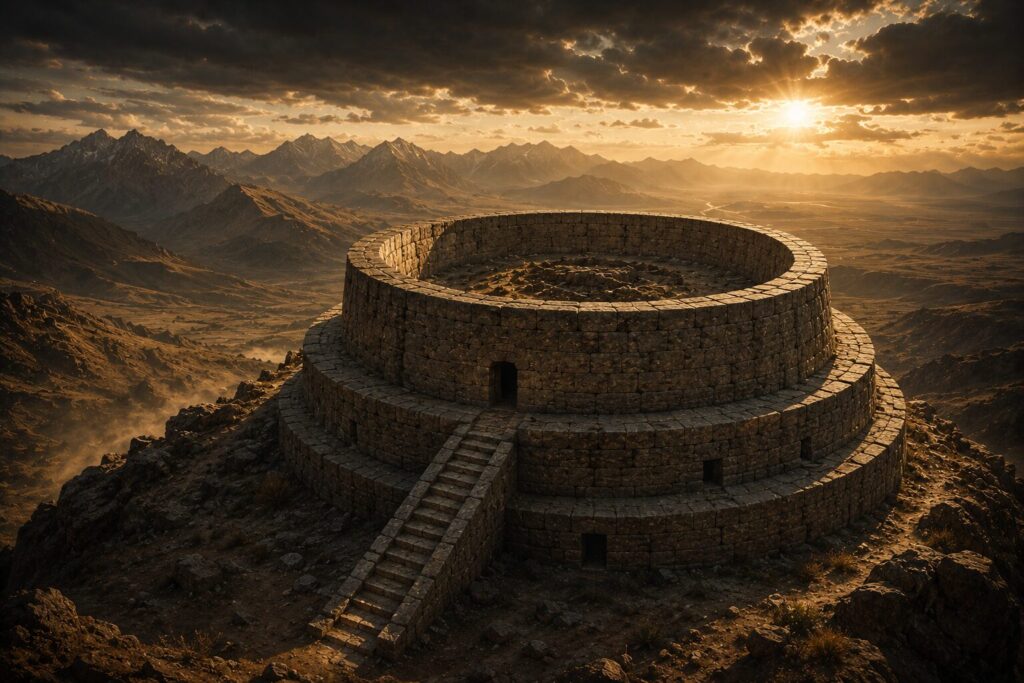
The famous “Towers of Silence,” where bodies were exposed to birds rather than buried or burned, reflected this logic as well. Earth and fire were considered too sacred to be polluted by corpses.
To modern observers, such practices may appear unsettling. But within the worldview of ancient Iran, they possessed deep spiritual meaning.
Why Zoroastrianism Declined
Despite its enormous influence, Zoroastrianism gradually lost ground.
The first major blow came with the conquests of Alexander the Great. Many Persian religious centers were destroyed, sacred texts disappeared, and Hellenistic culture began replacing older traditions.
Later, the religion experienced a revival under the Sasanian Empire, which transformed Zoroastrianism into something close to a state ideology. Yet this success also brought rigidity. Priestly authority expanded, pressure on religious minorities increased, and the faith became deeply intertwined with the machinery of the state.
When Arab armies brought Islam into Persia during the 7th century, the fate of the old religion was nearly sealed.
Islam offered a simpler and more universal system — and, most importantly, it represented the faith of a rising world power. Over time, most of Iran gradually converted to Islam, although the process took centuries.
Some Zoroastrians fled to India. Their descendants, known as the Parsis, preserved the ancient religion into the modern era.
The Legacy of a Religion That Changed the World
Today, Zoroastrianism remains one of the smallest religions on Earth. Yet its influence on human civilization was immense.
In many ways, it helped shape concepts that later became central to the world’s major religions. The idea of linear history, the end of time, a final battle between good and evil, and personal moral accountability all found powerful expression within the religious traditions of ancient Iran.
But perhaps the most remarkable thing about Zoroastrianism is this:
It emerged in a world where people largely viewed themselves as helpless before gods and nature. Then suddenly, one religion declared that the fate of the world depended on the moral choices of human beings themselves.
For the Bronze Age, that was an astonishingly radical idea.
And perhaps that is why the fire of Zoroaster never fully went out, even thousands of years after the fall of the Persian Empire.