Volkswagen Wants to Put an Idling Factory to Work on Defense Orders. But Why Could Qatar Block It?

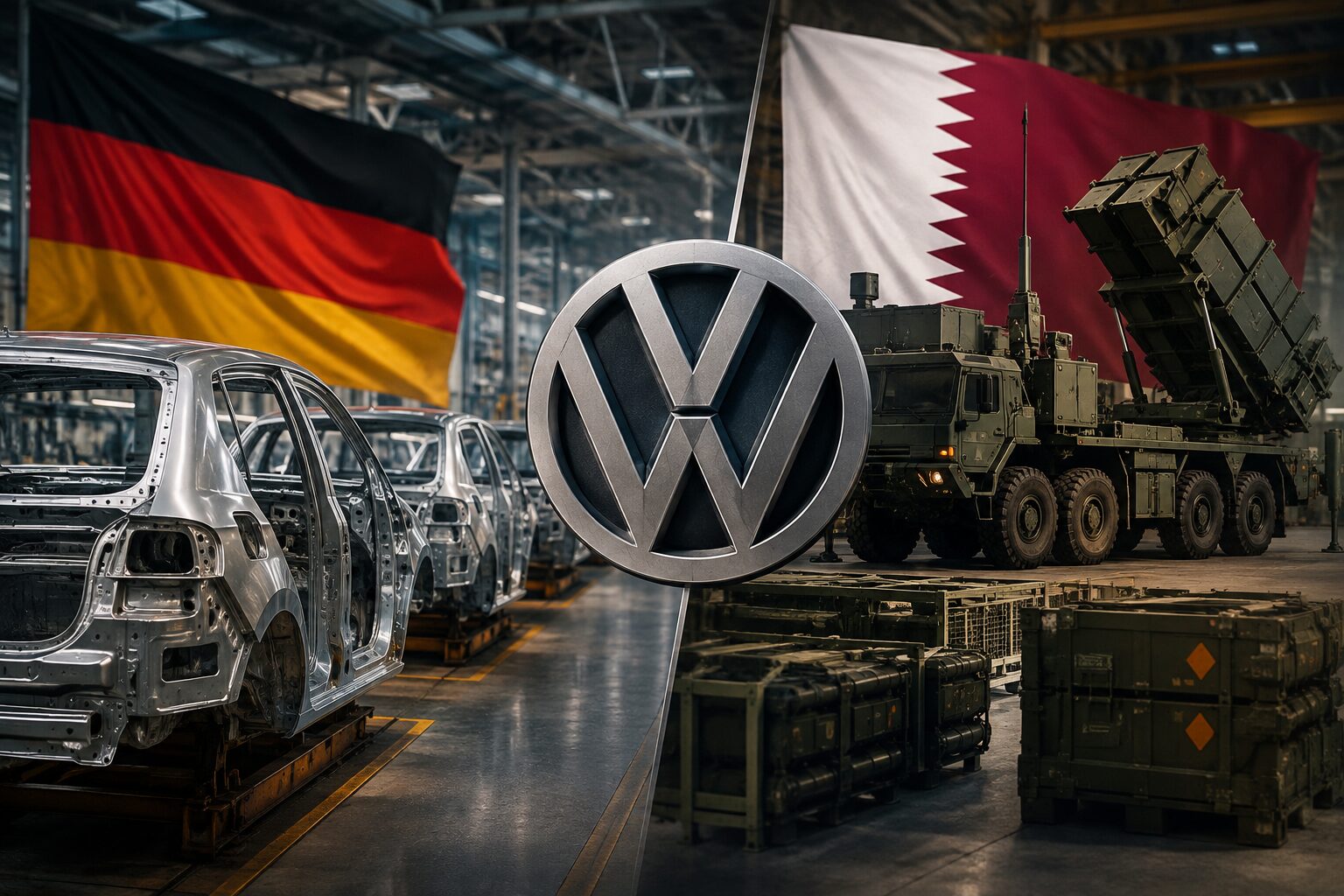
The story has an almost perfect setup for an economic paradox. Germany is sharply increasing defense spending and trying to expand its military-industrial base. One of the country’s largest automotive groups has a factory that may soon lose its main production program. An Israeli defense company is prepared to offer work connected with an air-defense system. On paper, everyone’s interests appear to align: idle capacity receives new orders, jobs are preserved, and Germany gains additional defense-production capacity.
But there is an unexpected obstacle.
Qatar opposes the deal.
This is not diplomatic pressure on Berlin, nor an attempt to block a procurement program through international institutions. Qatar can influence the process from inside Volkswagen itself because the Qatar Investment Authority is one of the German automaker’s major shareholders and controls around 17% of its voting rights. According to current reporting, Qatari opposition has become one of the principal obstacles to cooperation between Volkswagen and Israel’s Rafael Advanced Defense Systems.
The situation surrounding Volkswagen’s Osnabrück plant has therefore produced a solution that would have sounded almost absurd only a few years ago: to use part of the automotive factory for defense production, that part of the facility may first have to be effectively separated from Volkswagen.
And this story is no longer merely about one German plant. It points to a much larger problem. Europe is trying to rapidly expand its defense industry while simultaneously possessing an enormous civilian manufacturing base. Yet turning an automotive factory into part of the defense economy is considerably more complicated than simply replacing cars on an assembly line with armored vehicles or missile launchers.
A Factory That May Soon Have Nothing to Build
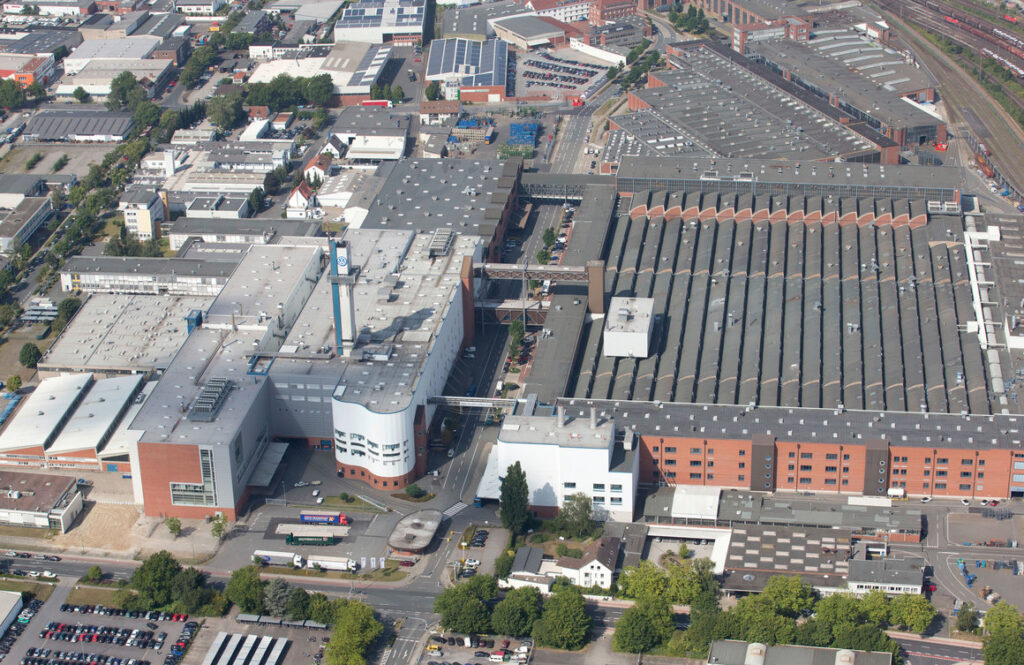
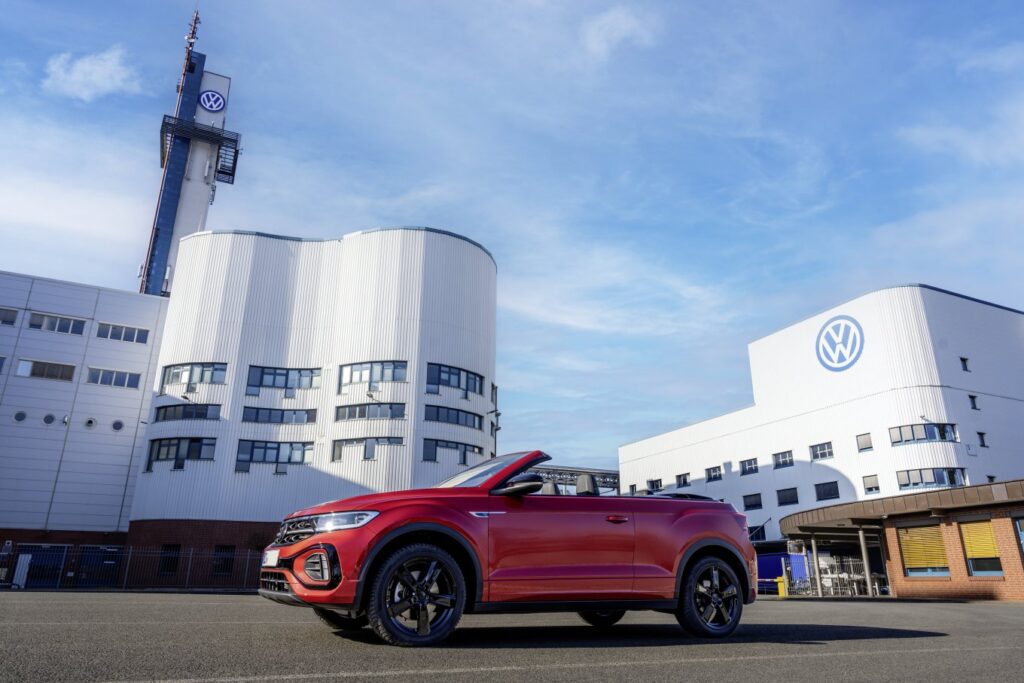
Osnabrück is far from Volkswagen’s largest plant. It is a relatively specialized facility that has historically worked with complex and lower-volume vehicle programs. One of its key products today is the Volkswagen T-Roc Cabriolet, but production of the convertible crossover is expected to end in the summer of 2027. After that, the plant’s future becomes uncertain. According to Defense Express, Volkswagen has already spent around two years examining ways to use available production capacity for products highly unusual for an automotive group.
The reason is not difficult to understand. Europe’s automotive industry is undergoing a painful restructuring. Chinese manufacturers are rapidly expanding their presence in the electric-vehicle market, while European companies are simultaneously being forced to invest enormous sums in electrification, software and new platforms. Some traditional production capacity is therefore becoming surplus. For a plant such as Osnabrück, finding a new production program is less about Volkswagen suddenly deciding to become an arms manufacturer than about a much more practical question: what happens to the factory and its workforce when the current model disappears?
At precisely the same moment, Europe’s defense industry faces almost the opposite problem.
The automotive industry needs orders.
The defense industry needs capacity.
On paper, the two should fit together remarkably well.
But Volkswagen Was Not Going to Build Missiles
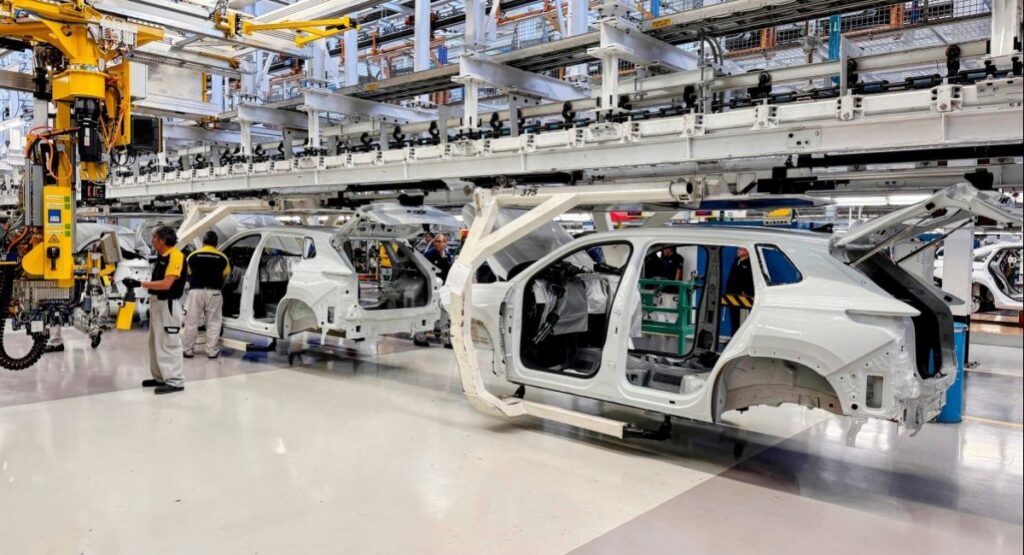
This distinction changes the story considerably. Saying that “Volkswagen will manufacture Iron Dome” sounds dramatic, but it creates the wrong impression. Nobody is proposing that missile interceptors should begin rolling down an automotive assembly line.
The proposed cooperation with Rafael Advanced Defense Systems is considerably more mundane — and precisely for that reason, more interesting.
The idea reportedly involves using the automotive plant’s capabilities to manufacture vehicles, launcher components, generators and other ground equipment associated with an air-defense system. Defense Express links the potential work to an Iron Dome configuration that Germany could potentially acquire within the broader European Sky Shield framework.
In other words, Volkswagen would be doing exactly what an automotive manufacturer is extremely good at: fabricating metal structures, performing serial assembly, working with vehicle chassis and electrical systems, maintaining strict quality control and coordinating complicated supplier networks.
That distinction is crucial.
A modern defense industry does not consist solely of companies manufacturing explosives, gun barrels and rocket motors. An air-defense battery also requires trucks, power-generation equipment, containers, cabins, launchers, communications equipment and enormous quantities of mechanical components.
Much of this is technologically far closer to an automotive factory than it might initially appear.
Volkswagen Has Already Demonstrated That It Can Do This
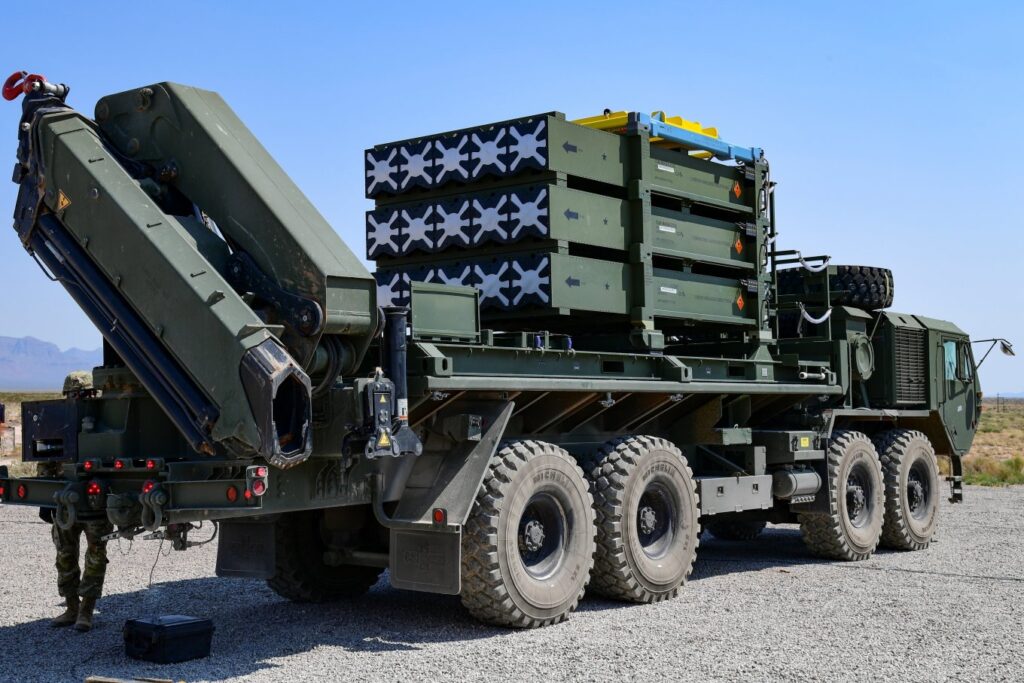
The group has long tried to distance itself from the idea of directly manufacturing weapons. But the boundary between civilian and defense engineering is becoming increasingly blurred. Automotive manufacturers possess almost all of the basic industrial capabilities required to produce a significant portion of military ground equipment: welding, machining, transmission manufacturing, electronics integration, robotic production lines and extremely sophisticated supplier logistics.
Moving from a civilian vehicle to a military truck is therefore far easier than moving directly from a civilian vehicle to a missile.
That is essentially the model being discussed for Osnabrück.
This would not represent a return of Volkswagen as a traditional weapons manufacturer. It would instead mean integrating part of the civilian industrial base into the supply chain supporting defense systems.
Yet even that has been enough to create a political conflict.
Because Volkswagen Does Not Belong Only to Germans
Volkswagen itself has an unusual corporate structure. Its name and headquarters are German, and the company remains one of the great symbols of German industry, but its ownership and voting structure are considerably more complicated.
The largest voting bloc belongs to Porsche Automobil Holding SE, associated with the Porsche and Piëch families. The German state of Lower Saxony retains its own special position. Another major shareholder is Qatar Holding, part of the state-owned Qatar Investment Authority.
According to figures cited by Defense Express, the Qatari side owns more than 10% of Volkswagen’s capital and controls approximately 17% of voting rights.
This is where an ordinary corporate dispute becomes geopolitics.
Qatar does not want a company in which it is a major shareholder to enter into a defense-production partnership with an Israeli arms manufacturer. Reporting cited by Defense Express says Qatar continues to block cooperation between Volkswagen and Rafael.
The result is an extraordinary situation.
Qatar does not have to prevent Germany from manufacturing military equipment.
It only has to say:
“Not at a company in which we are one of the major shareholders.”
So Volkswagen May Have to Give Up Part of Its Own Factory
That is where the most unusual proposed solution comes from.
One option under consideration is to separate part of the Osnabrück facility from Volkswagen and transfer it to the ownership or control of Lower Saxony. A new structure could then potentially cooperate with Rafael without Volkswagen AG itself becoming directly involved in a joint defense venture.
The authorities in Lower Saxony have confirmed only that they are examining how the state might participate in a future industrial solution for the Osnabrück site. Volkswagen and Rafael have not publicly disclosed the details of any potential arrangement. As of late August, the issue therefore remains unresolved, with Defense Express pointing to Volkswagen’s September 4, 2026 supervisory-board meeting as a possible moment for a decision.
The corporate paradox is remarkable.
For a Volkswagen factory to participate in defense production, the solution may first require making sure that the relevant part of the factory is no longer Volkswagen.
But behind that legal maneuver lies a much larger industrial process.
Europe Has Suddenly Remembered What Automotive Factories Can Do
Much of twentieth-century industrial warfare depended precisely on the ability to convert civilian manufacturing capacity to military production. Ford built B-24 bombers, General Motors manufactured tanks and aircraft engines, German automotive companies produced military vehicles and weapons components, while Soviet tractor and automobile plants became part of an enormous wartime production system.
The reason is simple: an automotive factory is not merely a place where cars are assembled.
It represents thousands of skilled workers, presses, welding equipment, machine tools, tooling facilities, quality-control systems, engineering departments and a network of hundreds of suppliers.
Creating all of that from scratch for a new defense plant is extraordinarily expensive and time-consuming.
Repurposing an existing industrial facility can be considerably easier.
That is why the current difficulties facing Europe’s automotive industry may unexpectedly become an advantage for its defense sector.
One Industry Is Freeing Capacity Just as Another Desperately Needs It
Two economic trends have collided.
On one side is Europe’s automotive industry, facing Chinese competition, the transition to electric vehicles and pressure to reduce or repurpose older manufacturing capacity.
On the other is Europe’s defense industry, attempting to sharply expand output after decades of comparatively modest procurement.
Factories such as Osnabrück sit directly between the two.
They do not have to manufacture missiles.
They can build launchers.
They do not have to manufacture tanks.
They can produce vehicle structures, chassis components, generators, transporters and auxiliary equipment.
The most specialized elements — radars, guidance systems, warheads and missile engines — can continue to be manufactured by dedicated defense companies.
The result is effectively a model in which civilian industry takes responsibility for the least defense-specific portion of military production, freeing specialized defense factories to concentrate on components that cannot easily be produced elsewhere.
That could ultimately matter far more than one Volkswagen contract.
Because Europe’s Defense-Industrial Problem Is Not Just About Money
Governments can allocate billions of euros to weapons procurement, but money alone does not create a factory.
You need equipment. Workers. Engineers. Suppliers. Land. Energy. Logistics. Permits. And, above all, time.
If a country already possesses an automotive plant with established infrastructure and a skilled workforce, much of that chain already exists.
For Germany, therefore, Osnabrück is not merely a question of preserving jobs. If the model works, it could demonstrate one way of addressing a major bottleneck in expanding Europe’s defense industry: instead of constructing every new production facility from scratch, use manufacturing capacity being released by civilian industry.
Defense Express notes that, if the Osnabrück solution succeeds, Volkswagen could theoretically apply the experience to other available production lines. For now, however, that remains a possibility rather than an announced group-wide program.
The industrial logic is nevertheless compelling.
And This Is Where Qatar Becomes Truly Interesting
Because the story exposes a problem that received relatively little attention during the age of globalization.
For decades, European industry attracted foreign capital, built international supply chains and transformed its largest manufacturers into global corporations. For automobile production, this was an enormous advantage.
Now some of those same factories could become part of a broader defense-industrial expansion.
And suddenly the other side of global ownership becomes visible.
The company may be based in Germany.
Its workers may be German.
The factory may stand in Lower Saxony.
The customer may ultimately be the Bundeswehr.
But whether the company can cooperate with a particular defense manufacturer can still be influenced by a major shareholder from the Persian Gulf.
That is why the Volkswagen story is considerably more interesting than another report about a possible military contract.
It represents a collision between two eras of European industry.
The first was built around globalization, international capital, optimized supply chains and the elimination of excess capacity.
The second is increasingly concerned with industrial sovereignty, reserve production capacity and the ability to rapidly expand defense output.
Volkswagen Is Not About to Become Rheinmetall
And it probably never will.
Nobody is currently proposing that missile interceptors should be assembled next to the T-Roc production line. The discussion concerns products much more familiar to an automotive factory: vehicles, generators, metal structures and launcher components. Moreover, cooperation between Volkswagen and Rafael has not yet been finalized, while separating part of the Osnabrück plant remains only one possible solution.
But that is exactly why Osnabrück could become such an important test case.
If a civilian automotive factory can be partially integrated into a defense supply chain without completely rebuilding the facility, the same model could potentially be applied far beyond Volkswagen.
The automotive industry possesses something Europe’s rapidly expanding defense sector urgently needs: ready-made mass-production factories.
The central question is therefore no longer whether Volkswagen will start manufacturing weapons.
It is how many other European automotive plants may discover in the coming years that their next major customer does not manufacture cars at all.
For now, however, the fate of this first high-profile experiment may be decided in an unusually paradoxical way. Germany wants to use its own automotive factory to expand defense production, Israel can provide the technology, Lower Saxony wants to preserve industrial jobs — yet one of the decisive voices may belong to a major Volkswagen shareholder from Qatar.