
The U.S. Navy’s Biggest Failure Gets a Second Chance: USS Zumwalt Returns with Hypersonic Missiles

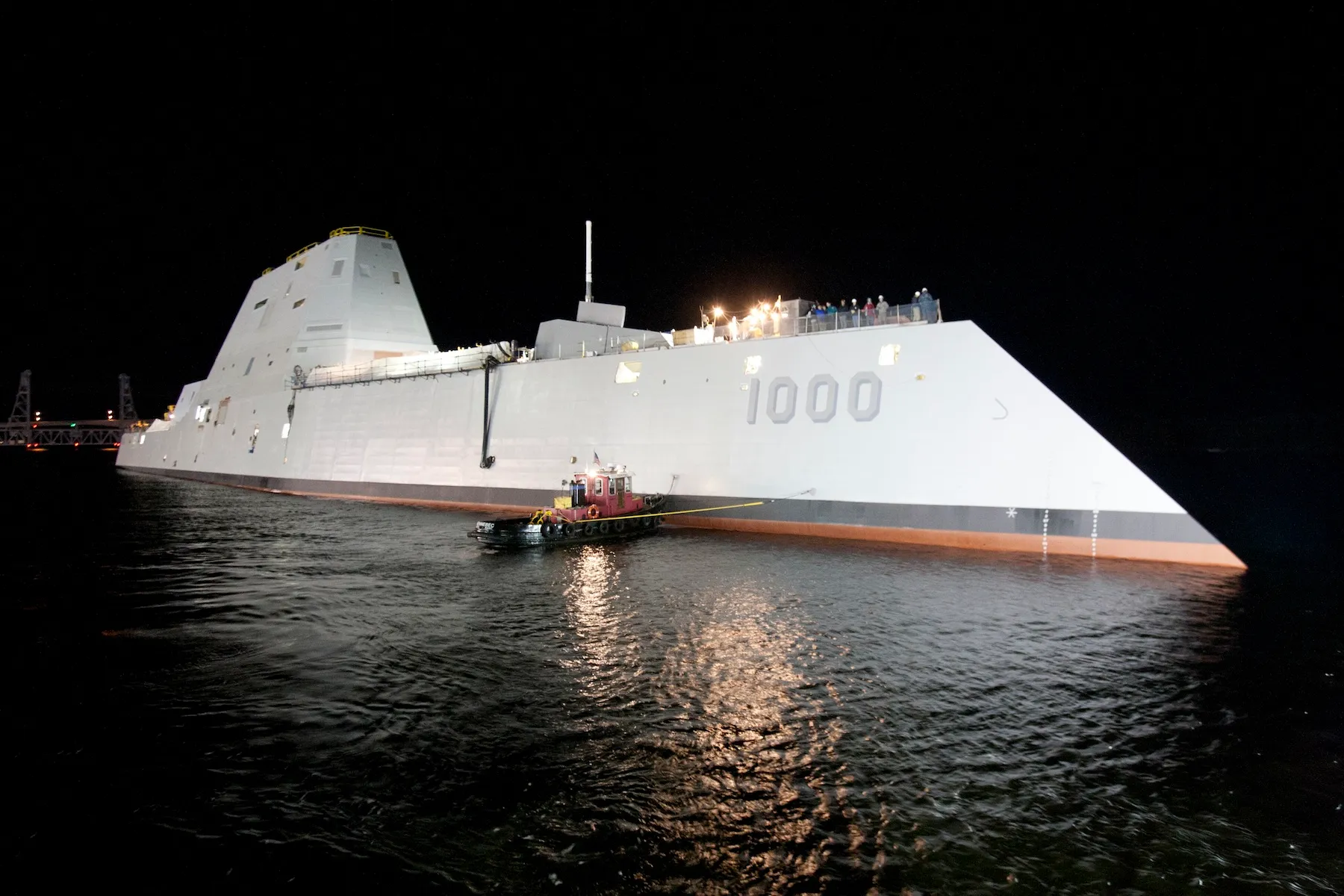
When the U.S. Navy unveiled the Zumwalt-class destroyer program in the early 2000s, it was hailed as the future of naval warfare. Its stealth-shaped hull, integrated electric propulsion system, extensive automation, revolutionary artillery, and cutting-edge technologies promised to redefine what a surface combatant could be. By the time development costs were included, however, each ship carried a price tag exceeding $7 billion.
Instead of becoming the backbone of the next-generation fleet, the program evolved into one of the most expensive disappointments in modern naval history. The Navy originally planned to build 32 destroyers, but only three were completed. Worse still, the ships’ signature weapon—the 155 mm Advanced Gun System (AGS)—became effectively useless after procurement of its specialized ammunition was canceled.
Now, however, USS Zumwalt (DDG-1000) is preparing for an unexpected comeback. Following years of modifications, the destroyer is set to return to service in an entirely new role—as the first U.S. surface warship equipped with long-range hypersonic missiles.
How the “Warship of the Future” Became a Problem
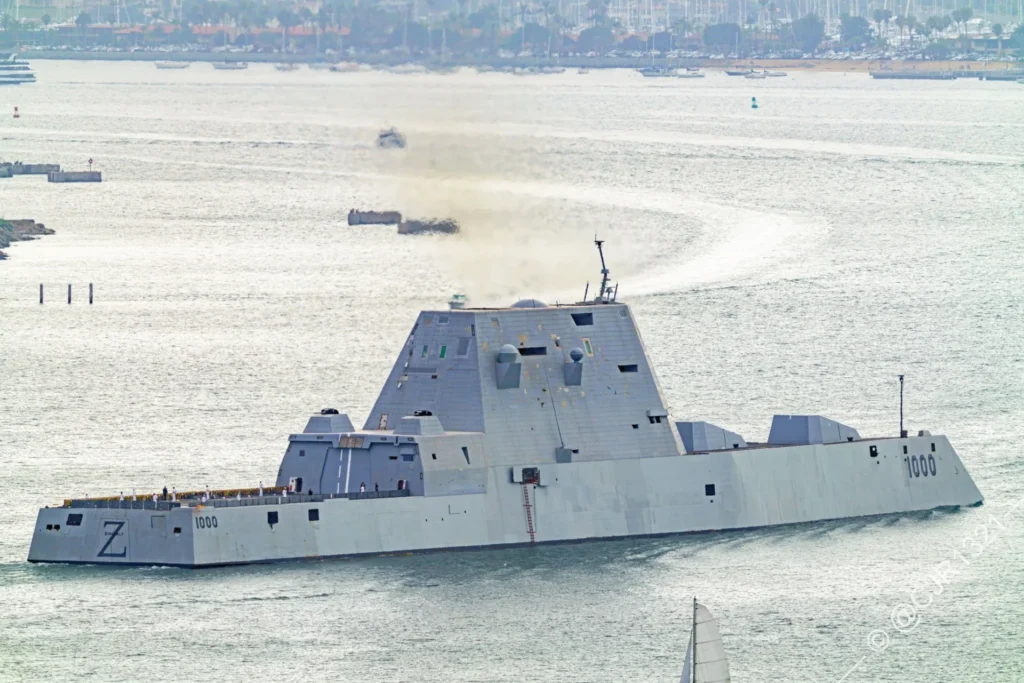
The Zumwalt program has become a textbook example of how technological ambition can collide with economic reality.
Originally, the destroyers were designed to provide long-range naval gunfire support for Marine Corps amphibious operations. Their centerpiece consisted of two Advanced Gun Systems (AGS) capable of striking targets nearly 180 kilometers away.
The concept looked impressive on paper—but there was one major flaw.
AGS could fire only a single type of ammunition: the Long Range Land Attack Projectile (LRLAP). As production numbers fell, the cost of each guided shell skyrocketed to nearly $800,000. Eventually, the U.S. Navy canceled procurement altogether, and no alternative ammunition was ever developed.
The result was almost surreal. One of the world’s most advanced—and expensive—warships was left carrying two massive naval guns that could no longer be used.
Trading Artillery for Hypersonic Strike Capability
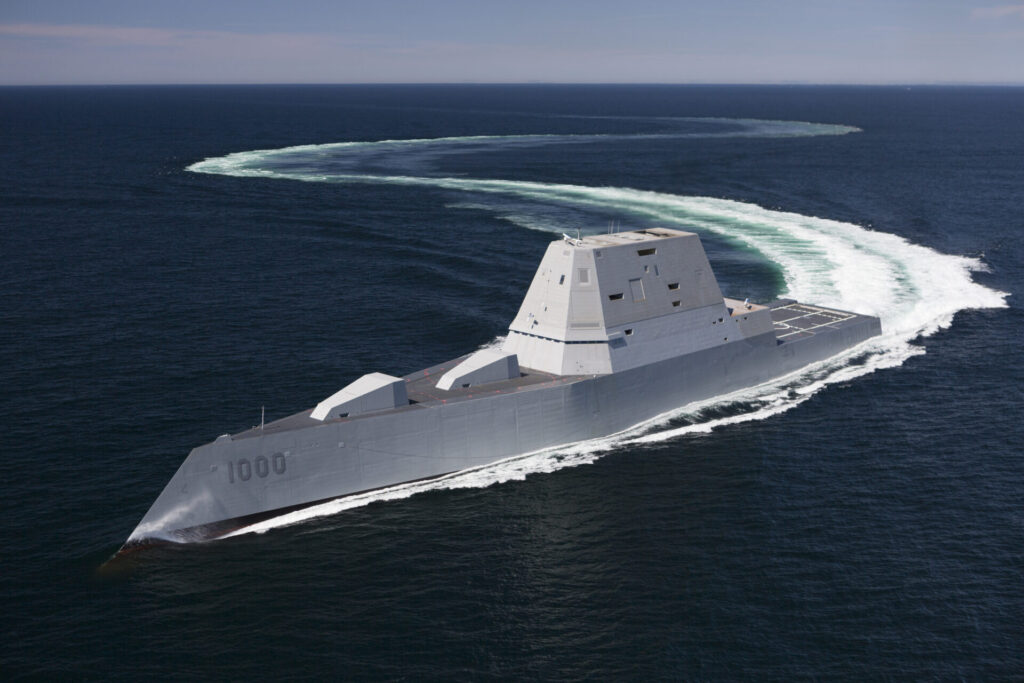
Rather than retiring the ships, the Navy chose to completely redefine their mission.
During modernization, both AGS turrets were removed and replaced with Advanced Payload Modules (APMs) designed to house the Conventional Prompt Strike (CPS) hypersonic weapon system.
Each launcher carries three hypersonic missiles, giving Zumwalt a total load of 12 CPS weapons.
Unlike conventional cruise missiles such as the Tomahawk, CPS employs a large rocket booster that accelerates the Common Hypersonic Glide Body (C-HGB) to extreme speeds. After separation, the glide vehicle continues toward its target at speeds exceeding Mach 5, maneuvering throughout much of its flight path and making interception significantly more difficult than with traditional ballistic missiles.
Why the Upgrade Took So Long
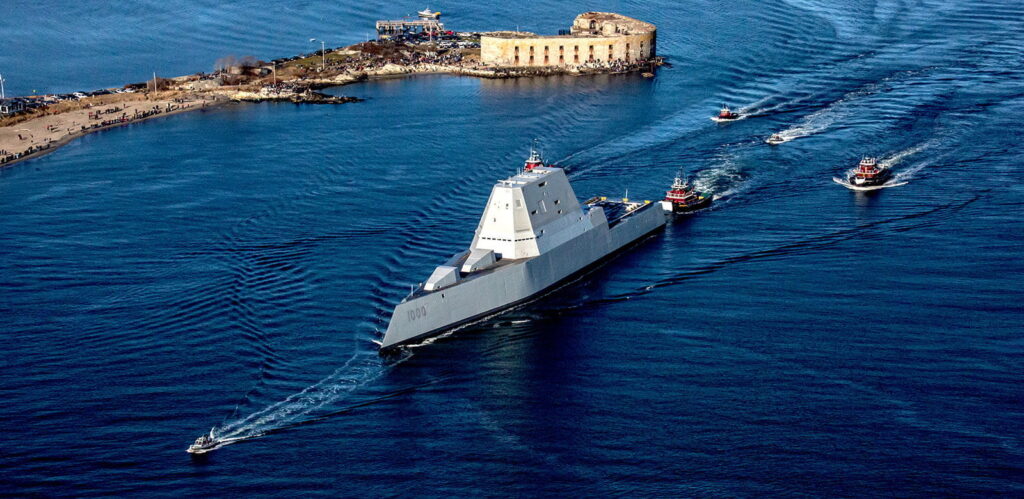
The modernization program proved far more challenging than initially expected.
Integrating an entirely new hypersonic missile system required extensive modifications to the ship’s unique Integrated Power System, structural redesigns, and additional engineering work. In 2026, a fire aboard USS Zumwalt during the refit caused further delays and required additional inspections and repairs.
As a result, the overall program slipped by roughly two years before approaching completion.
Why Was Zumwalt Chosen?
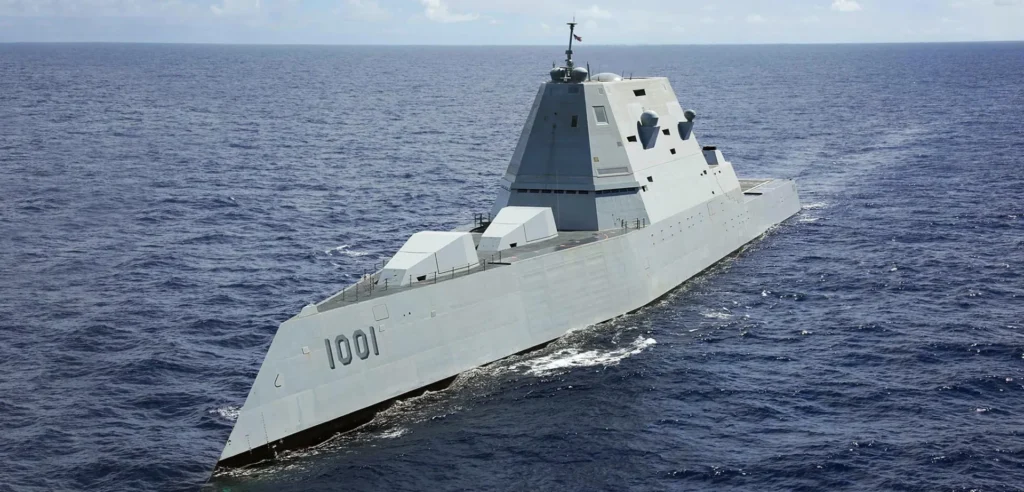
A logical question follows: why install America’s newest strategic weapon on a ship widely viewed as a failed program?
Ironically, the answer lies in Zumwalt’s unconventional design.
The CPS missiles are substantially larger than the weapons that fit inside the Navy’s standard Mk 41 Vertical Launch System, making them incompatible with most Arleigh Burke-class destroyers.
Because Zumwalt’s oversized gun mounts were removed, the ship offered enough internal volume to accommodate the large Advanced Payload Modules with relatively few compromises.
In other words, what was once considered an engineering mistake unexpectedly became the ideal platform for America’s first sea-based hypersonic strike capability.
What Changes After the Refit?
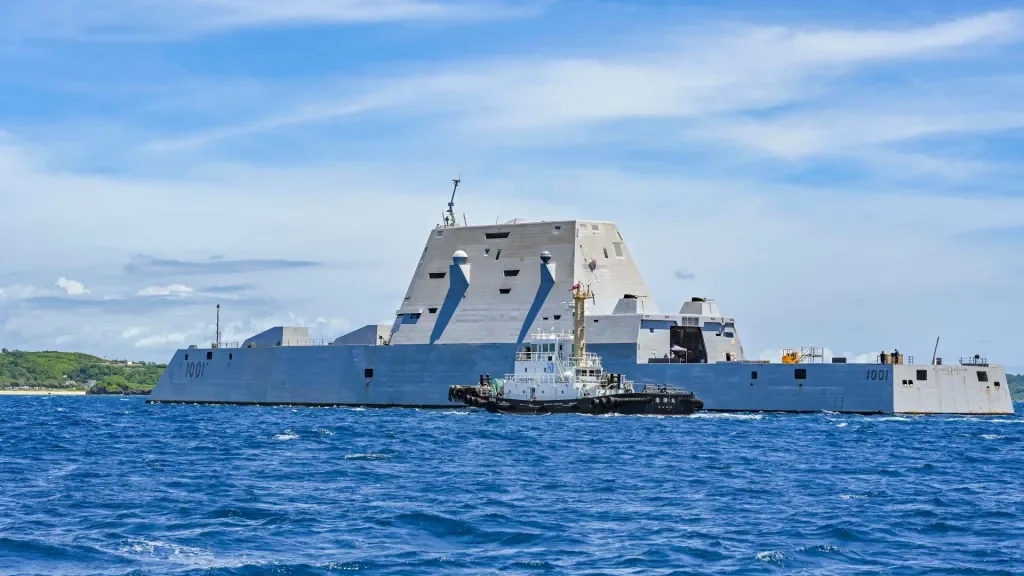
Once operational, USS Zumwalt will become the first U.S. Navy surface combatant capable of launching long-range hypersonic weapons.
That fundamentally changes its battlefield role.
Instead of providing naval gunfire support for amphibious assaults, the destroyer will serve as a precision strike platform capable of engaging heavily defended strategic targets, including command centers, air-defense networks, and other high-value military infrastructure from great distances.
The ship also retains its conventional combat capability.
Its 80-cell Mk 57 Vertical Launch System remains available for Tomahawk cruise missiles, SM-6 interceptors, ESSM air-defense missiles, and anti-submarine weapons, allowing Zumwalt to conduct multi-mission operations while adding a completely new strategic strike capability.
USS Zumwalt After Modernization
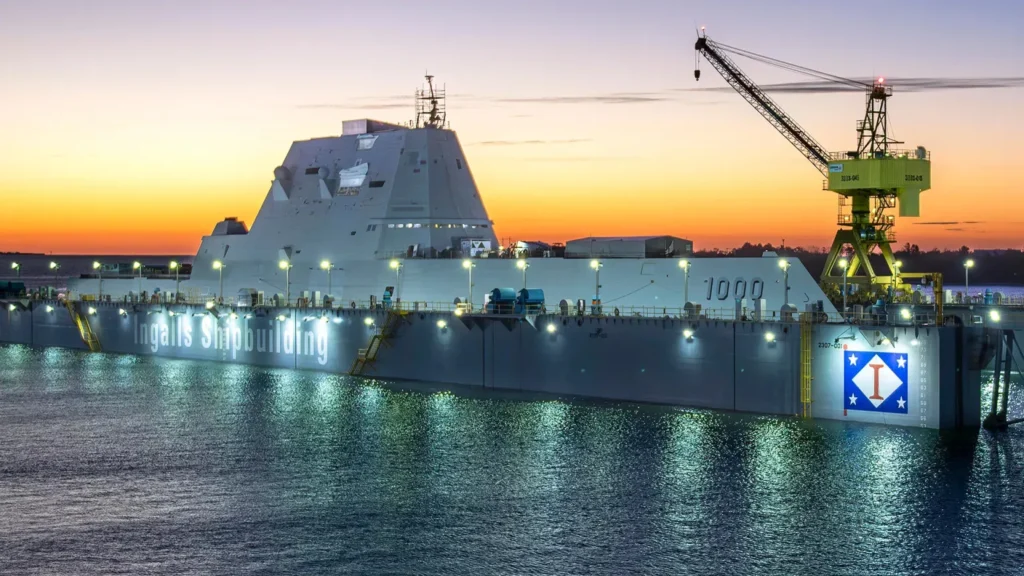
Class: Zumwalt-class destroyer (DDG-1000)
Length: 183 meters
Full displacement: Approximately 16,000 tons
Propulsion: Integrated Power System producing about 78 MW
Maximum speed: More than 30 knots
Crew: Approximately 140 personnel
Primary armament:
- 12 Conventional Prompt Strike (CPS) hypersonic missiles
- 80-cell Mk 57 Vertical Launch System
- Two Mk 46 30 mm automatic cannons
Aviation facilities:
- Up to two MH-60R Seahawk helicopters or MQ-8 Fire Scout unmanned helicopters
Conclusion
The story of USS Zumwalt is one of the most remarkable examples of a failed defense program receiving an unexpected second life.
The destroyer will likely remain one of the costliest naval projects ever undertaken. Spiraling costs, the cancellation of its primary weapon system, and the reduction of the production run from 32 ships to just three permanently cemented its reputation as a symbol of overambitious military procurement.
Yet those same unconventional design decisions now give Zumwalt a unique advantage. No other U.S. surface combatant can currently accommodate the Navy’s new hypersonic weapon system as effectively. If the Conventional Prompt Strike program proves successful, USS Zumwalt may ultimately transform from the U.S. Navy’s most famous procurement failure into the world’s first operational surface warship built around hypersonic strike capability.






