
Shipyard for the Age of Autonomous Vessels: Why Saronic Is Building a $3 Billion Drone Shipyard in Texas

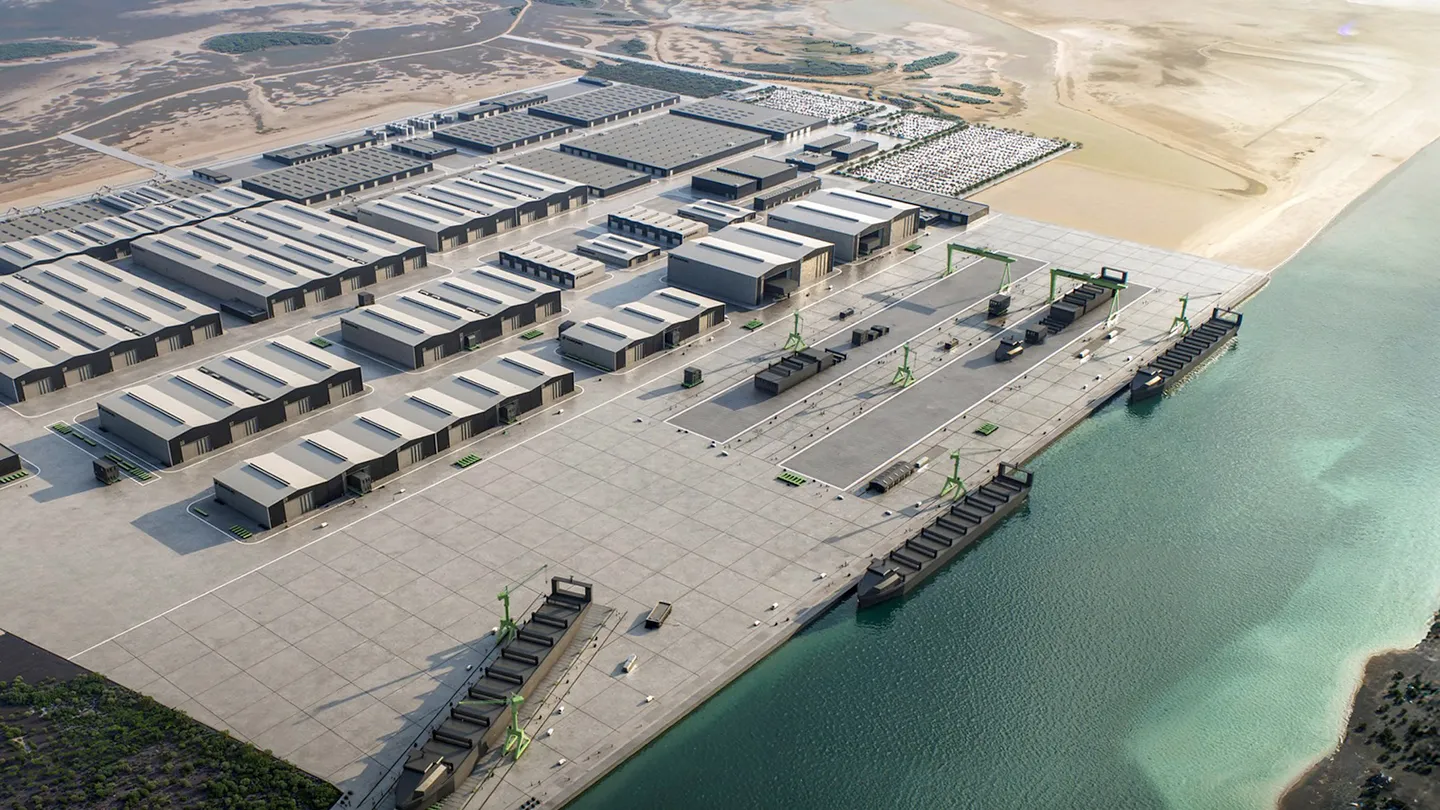
Just a few years ago, Saronic Technologies was known primarily as an ambitious American startup developing unmanned surface vessels (USVs). Today, however, the company is pursuing a far more ambitious goal: building a $3 billion next-generation shipyard that could become one of the largest and most technologically advanced maritime manufacturing facilities in the United States.
Called Port Alpha, the project is designed to be much more than another commercial shipyard. According to Saronic, it will serve as a highly automated production hub capable of manufacturing both autonomous and conventionally operated vessels at scale. The first phase of the facility will accommodate ships up to 850 feet (259 meters) in length, while future expansion plans envision the construction of vessels exceeding 1,200 feet (366 meters).
Why America Is Investing in New Shipyards Again
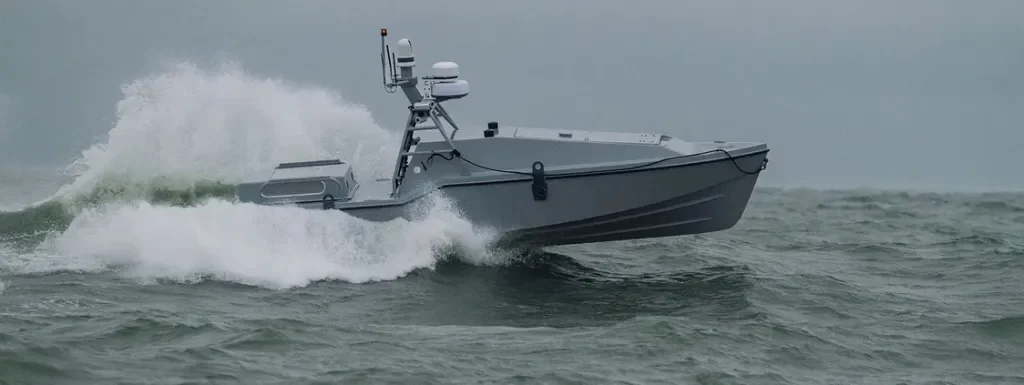
The Corsair uncrewed surface vessel (USV)
The announcement of Port Alpha reflects a much broader trend within the United States.
Over the past several years, concerns have grown over America’s declining shipbuilding capacity compared with major Asian shipbuilding nations. At the same time, the U.S. Navy continues to experience delays and rising costs across multiple shipbuilding programs.
Naval warfare itself is also changing.
Instead of relying exclusively on a relatively small number of expensive warships, modern naval planners increasingly envision fleets supported by large numbers of autonomous surface vessels capable of conducting reconnaissance, logistics, surveillance, electronic warfare, and even strike missions without onboard crews.
Saronic is positioning itself to become one of the companies supplying this emerging generation of naval platforms.
A Fully Digital Shipyard
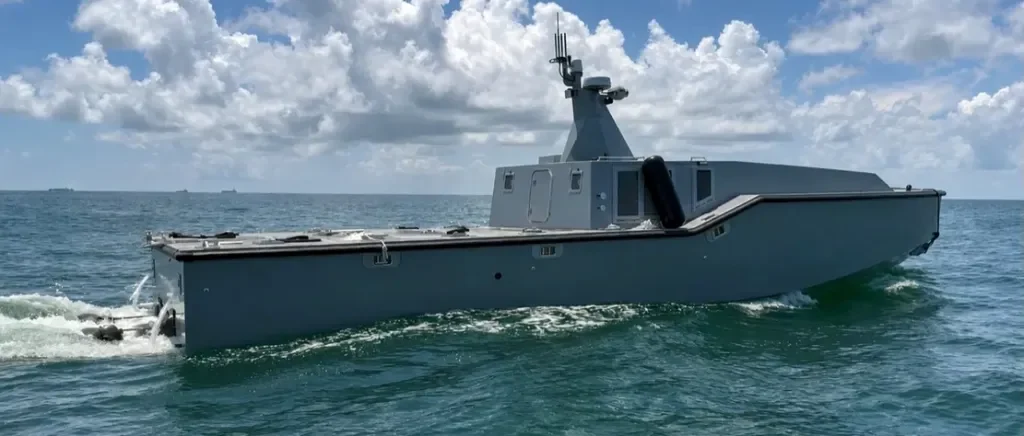
The Mirage uncrewed surface vessel (USV)
According to the company, Port Alpha is being designed as a highly automated manufacturing ecosystem.
The facility will combine digital ship design, robotic production lines, automated logistics, and advanced manufacturing techniques to dramatically reduce construction times compared with traditional shipyards.
Scalability is another key objective.
Where conventional shipyards often focus on building a relatively small number of large vessels simultaneously, Port Alpha is intended to support serial production of autonomous surface vessels across multiple size classes.
This manufacturing philosophy mirrors trends already seen in aerospace and automotive industries, where automation has become essential for increasing production while lowering costs.
From Small USVs to Ocean-Going Ships
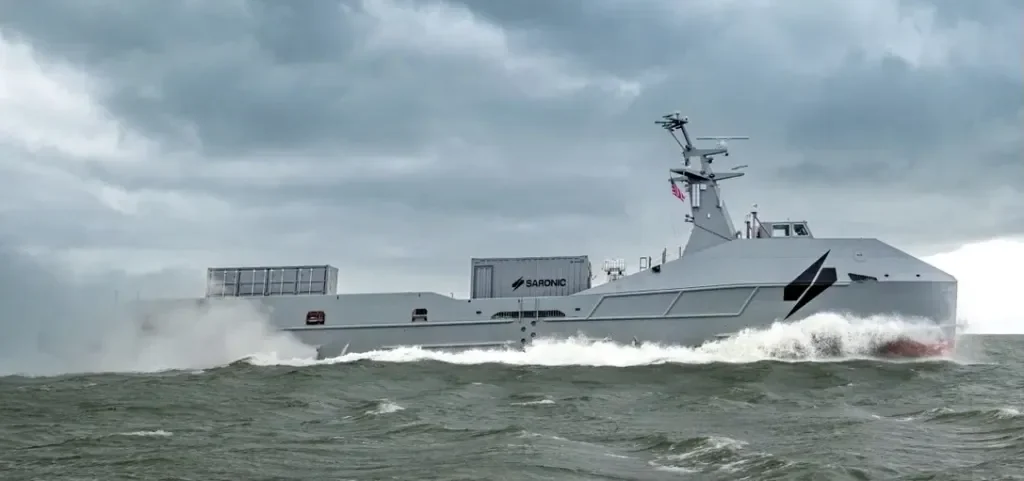
The Marauder uncrewed surface vessel (USV)
Although Saronic initially gained attention for developing relatively small unmanned boats, the company’s long-term ambitions extend much further.
The first construction phase will support vessels measuring up to 850 feet in length—large enough to accommodate modern destroyers, amphibious ships, or medium-sized commercial vessels.
Future expansion would allow construction of ships exceeding 1,200 feet, placing them in the same size category as some of the world’s largest container ships and commercial tankers.
This suggests that Port Alpha is not intended solely for small drone boats. It could eventually manufacture large autonomous logistics ships, cargo platforms, naval support vessels, and other advanced maritime systems that have yet to enter widespread service.
Why Brownsville Was Chosen
The new shipyard will be built at the Port of Brownsville, Texas.
The location offers several strategic advantages, including deep-water access, extensive room for future expansion, established transportation infrastructure, and strong support from state and local authorities.
The initial development will occupy approximately 835 acres, while long-term plans could expand the facility to nearly 4,400 acres, making it one of North America’s largest shipbuilding complexes.
Construction is expected to begin in 2026, with production targeted to start around 2028. Over the following decade, the project could create as many as 10,000 jobs, making it one of the largest industrial investments in the region.
Why This Matters for the U.S. Navy
The Pentagon is actively pursuing the concept of a hybrid fleet, where traditional crewed warships operate alongside large numbers of autonomous surface vessels.
These platforms promise significantly lower acquisition and operating costs than destroyers or frigates while performing missions such as intelligence gathering, patrol, escort, logistics, and precision strike operations.
However, fielding autonomous fleets on a meaningful scale requires an equally modern industrial base.
That is why Port Alpha should be viewed not simply as a private investment, but as part of a broader effort to modernize American shipbuilding and prepare the industrial infrastructure needed for the next generation of naval warfare.
Port Alpha at a Glance
Developer: Saronic Technologies
Project value: More than $3 billion
Location: Port of Brownsville, Texas
Initial site area: Approximately 835 acres
Potential expansion: Up to 4,400 acres
Maximum vessel length (Phase One): 850 feet (259 m)
Future vessel length capability: Over 1,200 feet (366 m)
Construction begins: 2026
Production expected: Around 2028
Estimated jobs created: Up to 10,000
Conclusion
Port Alpha highlights how rapidly modern shipbuilding is evolving. Where shipyards were once judged primarily by the number of aircraft carriers or destroyers they produced, the focus is increasingly shifting toward high-volume production of autonomous maritime platforms.
Saronic’s $3 billion investment demonstrates that unmanned ships are moving beyond experimental technology and becoming a major segment of the global naval industry. If completed as planned, Port Alpha could become one of the world’s most important production centers for the autonomous fleets that are expected to reshape naval operations in the decades ahead.






