
How One Ship Rendered the World’s Fleets Obsolete: The Revolution of HMS Dreadnought

Just one day earlier, the world’s leading naval powers were pouring enormous sums of money into building new battleships. Great Britain, Germany, France, Russia, the United States, Japan, and Italy competed fiercely to construct increasingly powerful warships. Each new vessel was a little faster, a little better armored, and carried heavier guns than its predecessor. Naval development appeared to follow a predictable evolutionary path, with each generation representing a gradual improvement over the last.
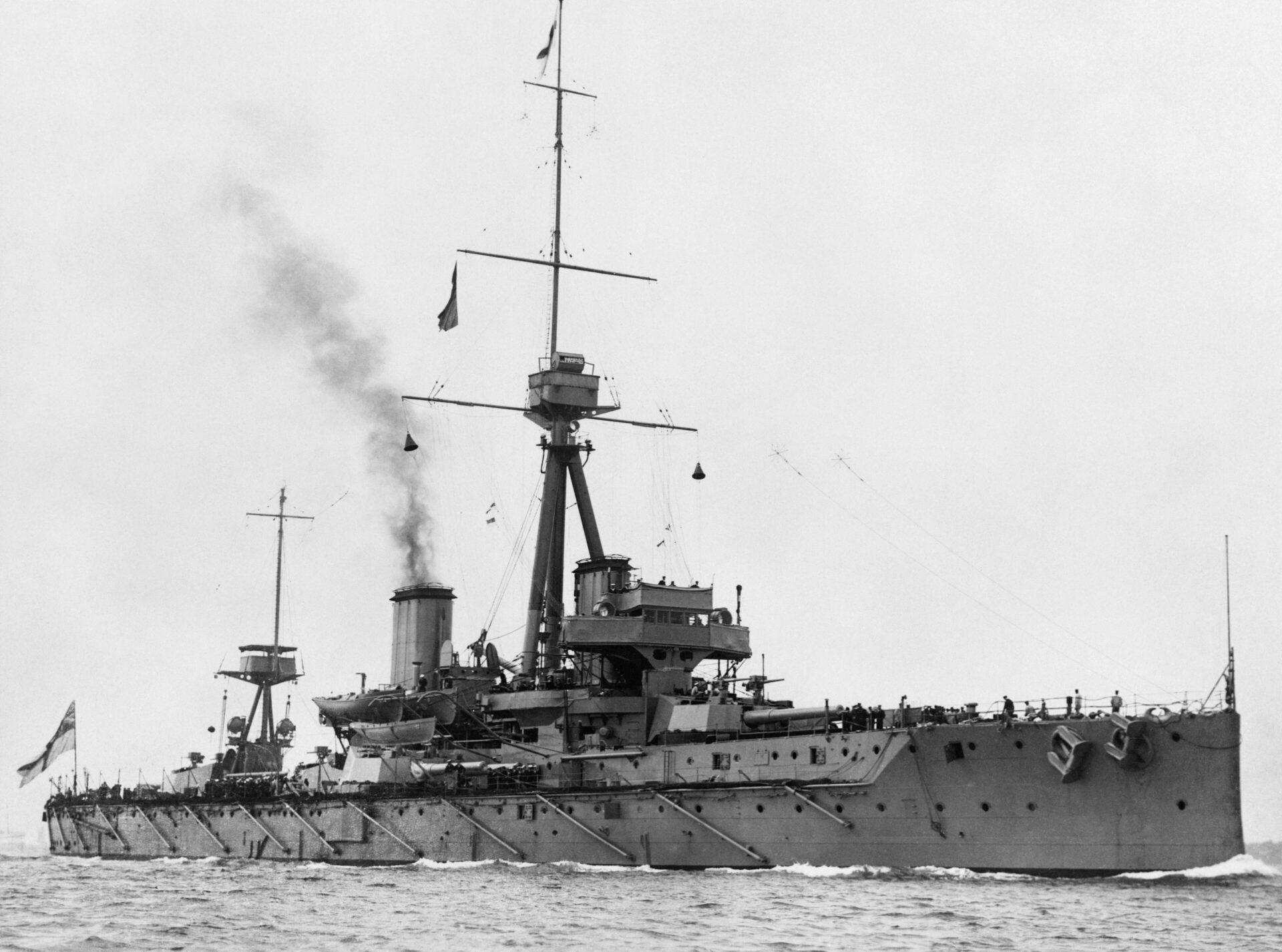
Then, on February 10, 1906, an event occurred that remains one of the most disruptive moments in military-industrial history. On that day, the Royal Navy commissioned HMS Dreadnought. A single battleship instantly rendered almost every capital ship in the world technologically obsolete. Hundreds of pre-existing battleships—representing investments worth billions of dollars in today’s money—suddenly belonged to a previous era.
History has witnessed only a handful of technological revolutions of this magnitude. Occasionally, one engineering breakthrough changes the rules so dramatically that yesterday’s leaders become outdated almost overnight. That is precisely what happened with the arrival of HMS Dreadnought.
The World Before Dreadnought
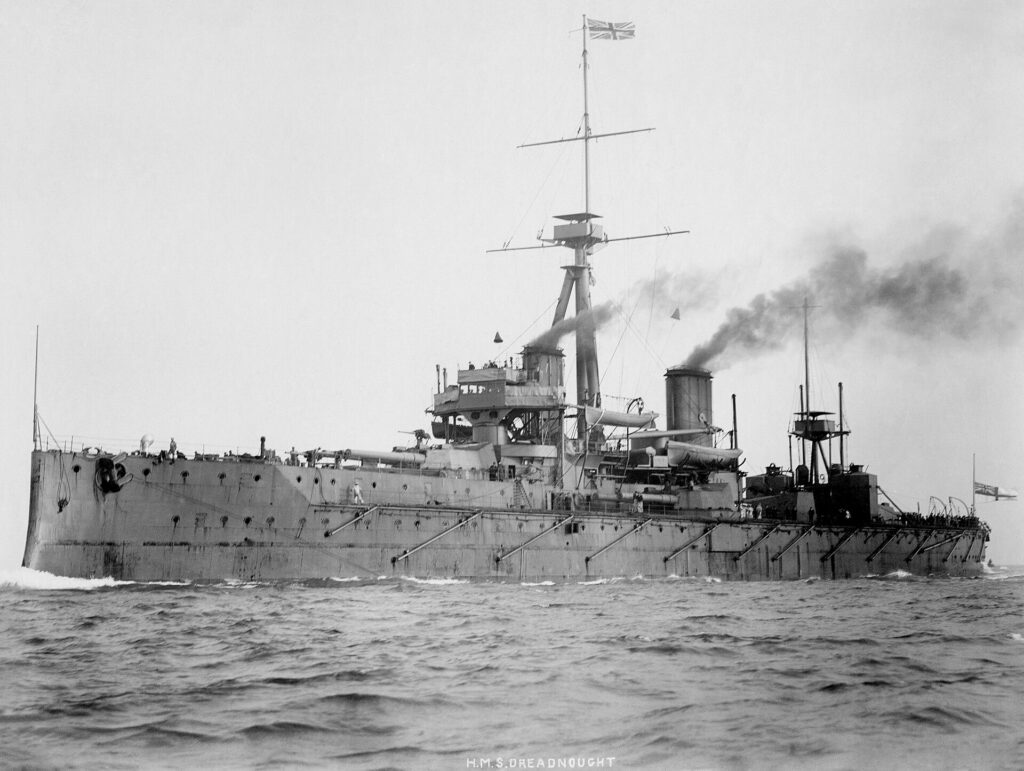
HMS Dreadnought (British Battleship), 1906
To understand the scale of this revolution, it is important to examine what battleships looked like at the dawn of the twentieth century.
During the second half of the nineteenth century, naval artillery advanced at an astonishing pace. Wooden sailing ships gave way to steel-hulled battleships powered by steam engines, protected by heavy armor, and equipped with revolving gun turrets. Yet naval architects faced a fundamental challenge. Large-caliber guns delivered tremendous destructive power but fired slowly, while smaller quick-firing guns could unleash a constant barrage of shells.
The solution seemed obvious, and for nearly two decades it was considered the ideal battleship design.
A typical pre-dreadnought carried four 12-inch (305 mm) guns mounted in two twin turrets, one forward and one aft. These were supported by twelve to sixteen 6-inch (152 mm) guns, numerous smaller-caliber weapons, and multiple torpedo tubes. Naval doctrine assumed that the heavy guns would penetrate enemy armor while the medium-caliber artillery would devastate unarmored sections of the ship, gun crews, and superstructures.
This concept worked well as long as naval engagements took place at ranges of roughly three to four miles.
Why the Old Battleships Suddenly Became Obsolete
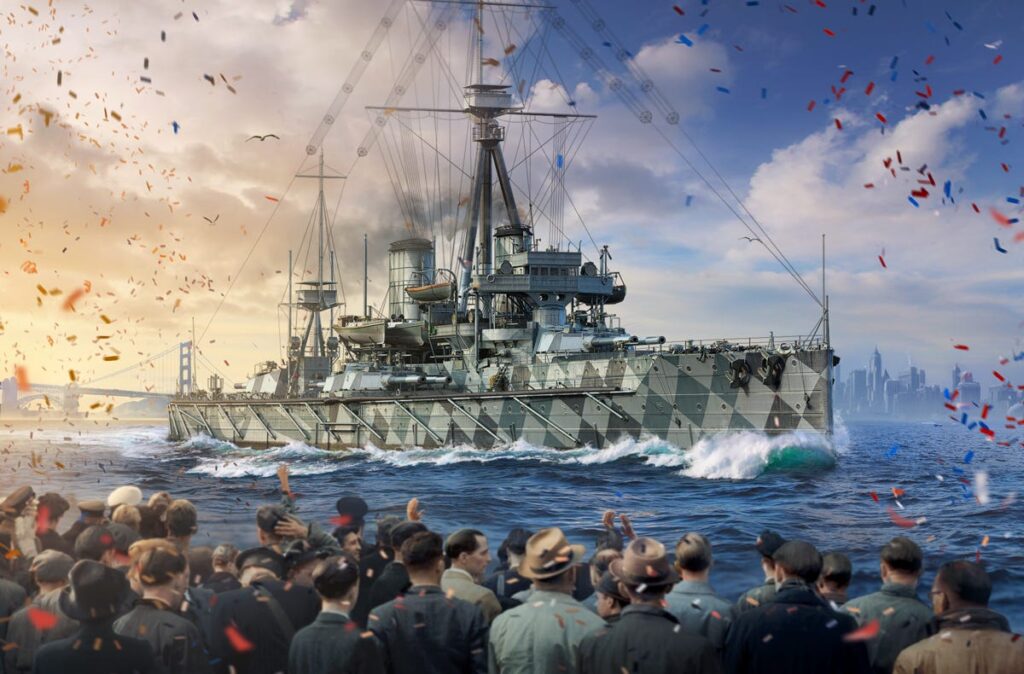
At the beginning of the twentieth century, several technological breakthroughs occurred almost simultaneously.
Improved optical rangefinders, centralized fire-control systems, better sights, and more reliable communications allowed ships to engage accurately at distances of ten to fifteen kilometers—twice the range that had previously been practical.
This revealed a serious flaw in the mixed-caliber battleship concept.
When 12-inch and 6-inch shells landed simultaneously around an enemy vessel, spotting officers often could not distinguish which splashes belonged to which guns. Without accurate shot correction, long-range fire became far less effective.
At the same time, medium-caliber guns struggled to penetrate the latest generations of hardened armor. They consumed ammunition rapidly while inflicting little meaningful damage against modern battleships.
The conclusion was unavoidable: ten heavy guns were far more valuable than a mixture of four heavy guns and numerous medium-caliber weapons.
The Admiral Who Changed Naval Warfare
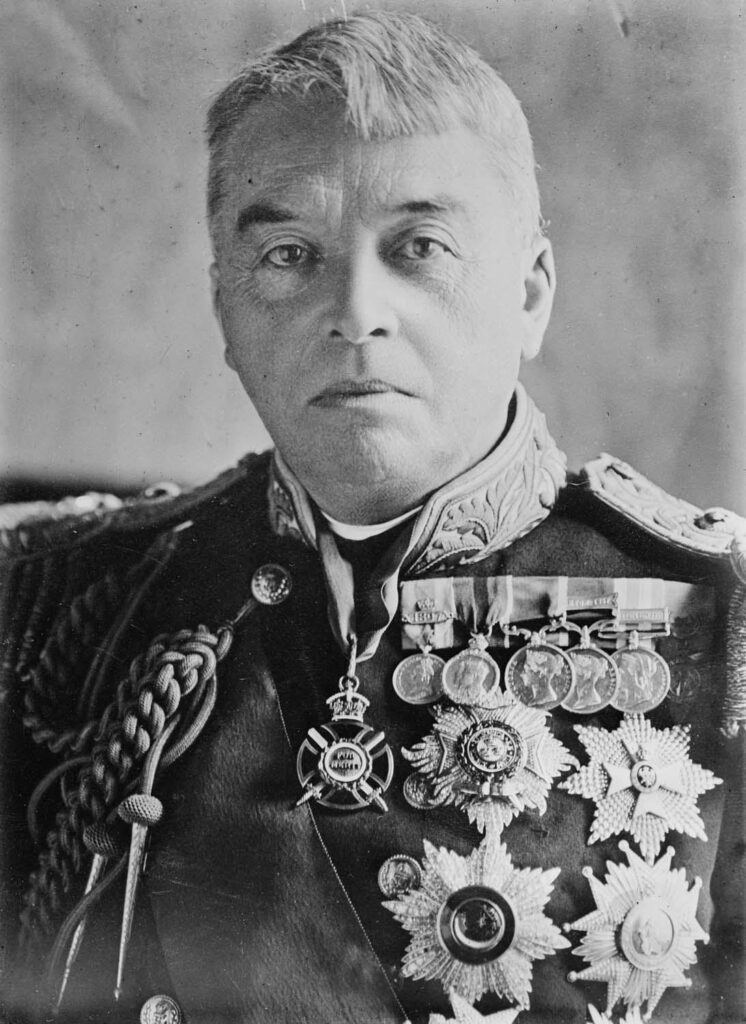
The strongest advocate of this revolutionary concept was Admiral Sir John Fisher, the Royal Navy’s First Sea Lord.
Fisher possessed an uncommon ability to recognize that technological superiority mattered far more than simply possessing larger numbers of ships.
His philosophy was remarkably simple:
If heavy guns outperform medium guns, then the entire battleship should be armed with heavy guns alone.
Today, that idea seems perfectly logical. In 1905, however, many senior naval officers considered it dangerously radical.
Critics argued that removing the medium battery would leave battleships vulnerable to torpedo boats and reduce their tactical flexibility.
Fisher remained convinced that the future belonged to the all-big-gun battleship.
A Ship From the Future
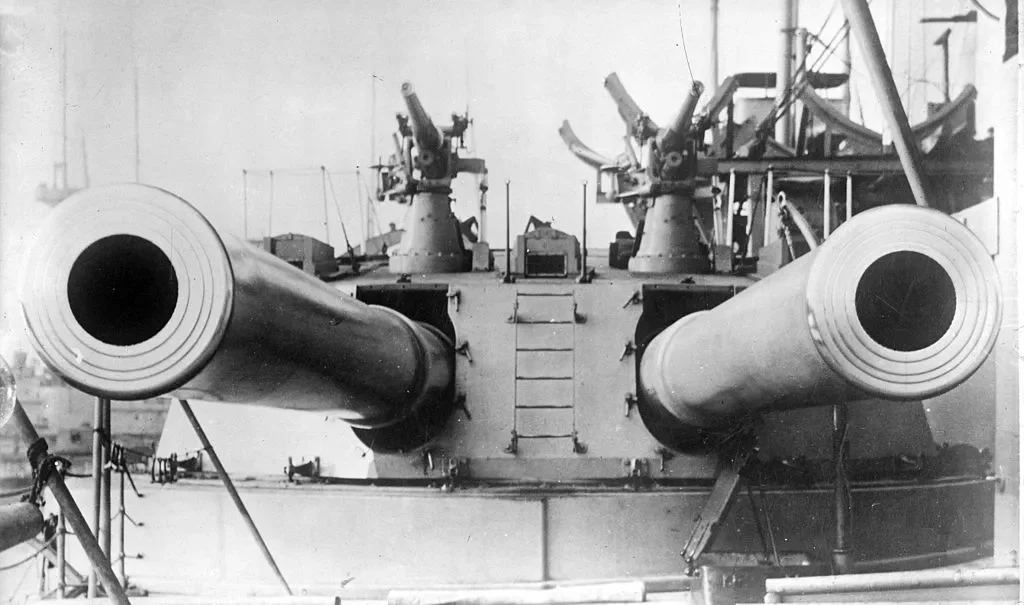
When HMS Dreadnought entered service, it became immediately apparent that this was not merely another battleship.
It represented an entirely new generation of warship.
Technical Specifications
| Displacement | Approx. 18,000 tons |
| Main Armament | 10 × 12-inch (305 mm) guns |
| Maximum Speed | 21 knots |
| Propulsion | Parsons steam turbines |
| Belt Armor | Up to 279 mm |
The defining innovation was the “all-big-gun” armament layout, consisting exclusively of heavy-caliber artillery.
Yet the revolution extended far beyond the guns themselves.
Dreadnought also became the world’s first battleship powered by steam turbines instead of traditional reciprocating steam engines.
The new propulsion system allowed the ship to reach more than 21 knots, while most existing battleships struggled to exceed 17 or 18 knots.
In practical terms, this meant Dreadnought could dictate the terms of battle. It possessed the speed either to pursue slower opponents or disengage whenever necessary.
The Day Hundreds of Battleships Became Obsolete
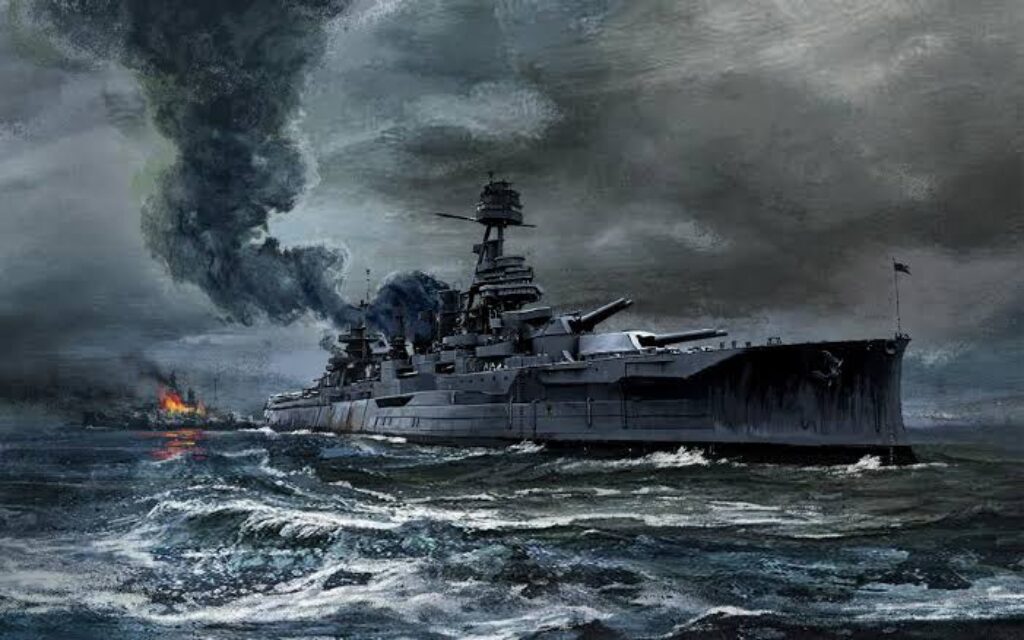
The most remarkable consequence emerged immediately after HMS Dreadnought entered service.
Every existing battleship suddenly required a new classification.
They became known as pre-dreadnoughts.
Naval history had effectively split into two distinct eras.
Only months earlier, these ships represented the pinnacle of naval engineering.
Now they belonged to yesterday’s technology.
Ironically, Britain itself suffered the greatest immediate loss in theoretical naval value. As the owner of the world’s largest battleship fleet, it had effectively rendered much of its own battle line obsolete.
Yet Fisher understood the strategic advantage.
If every nation had to start over from scratch, the country with the world’s strongest shipbuilding industry would almost certainly emerge ahead once again.
The World Starts Over
The reaction from other naval powers was immediate.
Germany dramatically expanded its naval construction program.
The United States accelerated the development of its own dreadnought battleships.
Japan redesigned its entire naval modernization strategy.
Following the Russo-Japanese War, Russia also embarked on building a new generation of battleships, culminating in the Sevastopol-class.
France, Italy, and Austria-Hungary quickly followed.
In many ways, 1906 marked the beginning of an entirely new global naval arms race.
Every major power understood the strategic reality: if one nation possessed ten dreadnoughts while another relied on older pre-dreadnoughts, the outcome of any fleet engagement would likely be decided before the first shot was fired.
Even Dreadnought Could Not Escape Progress
Ironically, HMS Dreadnought itself soon began to show its age.
Within only a few years, even larger and more powerful “super-dreadnoughts” appeared.
Gun calibers increased from 12 inches to 13.5 inches, then 15 inches, 16 inches, and eventually 18.1 inches aboard Japan’s Yamato.
Displacement grew dramatically.
Armor schemes became more sophisticated.
Fire-control systems improved continuously.
The ship that had transformed global naval warfare became merely the first step in a rapidly accelerating technological evolution.
The Legacy of HMS Dreadnought
Although HMS Dreadnought never became the most famous battleship in history, its influence is impossible to overstate.
Virtually every major battleship built during the twentieth century—from Britain’s King George V class and Germany’s Bismarck to Japan’s Yamato and America’s Iowa class—owed its fundamental design philosophy to the innovations first demonstrated aboard Dreadnought.
The all-big-gun concept, centralized fire control, and high-speed propulsion became the defining characteristics of modern battleships.
In many respects, 1906 marked the birth of the battleship as we recognize it today.
Conclusion
The story of HMS Dreadnought demonstrates how a single engineering breakthrough can overturn decades of technological development. Britain did not simply launch another battleship—it fundamentally redefined naval warfare. Before Dreadnought, the world’s navies competed by refining existing designs. After its arrival, every major naval power was forced to begin again.
Technological revolutions of this magnitude are exceptionally rare. They can be compared to the introduction of jet aircraft, nuclear-powered submarines, or modern combat drones. Each innovation forces militaries to rewrite doctrine, retire equipment that was once considered cutting-edge, and embark on an entirely new arms race.
That is why HMS Dreadnought remains far more than a famous British battleship. It stands as one of the most influential warships ever built, and its name has become synonymous with one of the greatest technological revolutions in the history of naval warfare.






