
Could Europe’s Answer to Patriot Be Built in Ukraine? Why Producing the Aster 30 Interceptor Would Be a Major Step for Air Defense

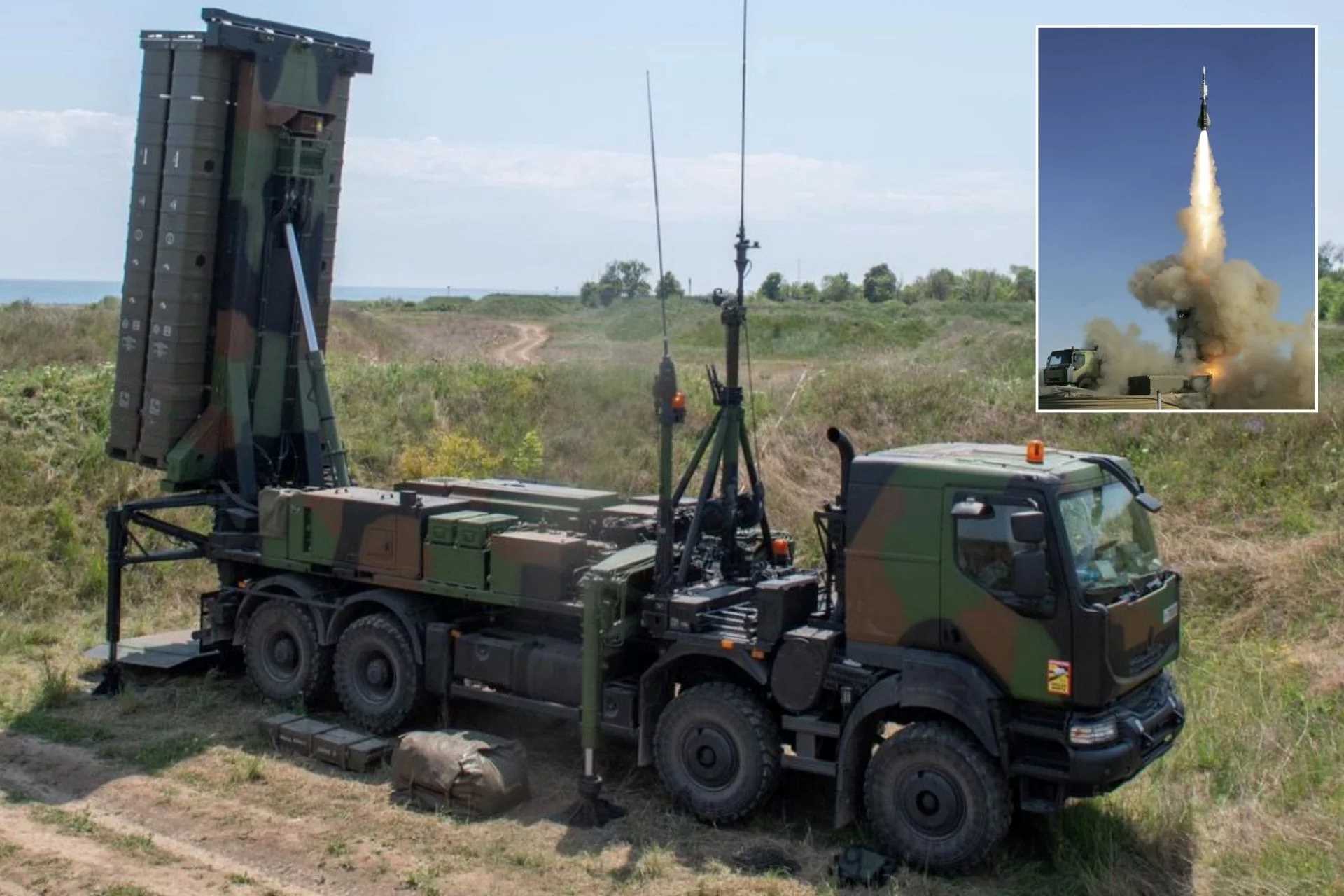
One of the more significant announcements made during the recent NATO summit received surprisingly little attention compared to discussions surrounding additional Patriot systems.
French President Emmanuel Macron stated that Ukraine could receive a license to manufacture Aster 30 surface-to-air missiles—the primary interceptor used by the Franco-Italian SAMP/T air and missile defense system. If the project moves forward, Ukraine would become part of the production chain for one of Europe’s most advanced air-defense weapons.
The importance of this proposal goes far beyond manufacturing a single missile.
It would potentially integrate Ukraine into the European defense industry’s production network while providing access to technologies that have taken decades to develop.
Europe’s Alternative to Patriot
When discussing NATO’s missile defense capabilities, the American Patriot PAC-3 usually dominates the conversation.
However, Europe has spent more than two decades developing its own long-range air-defense system.
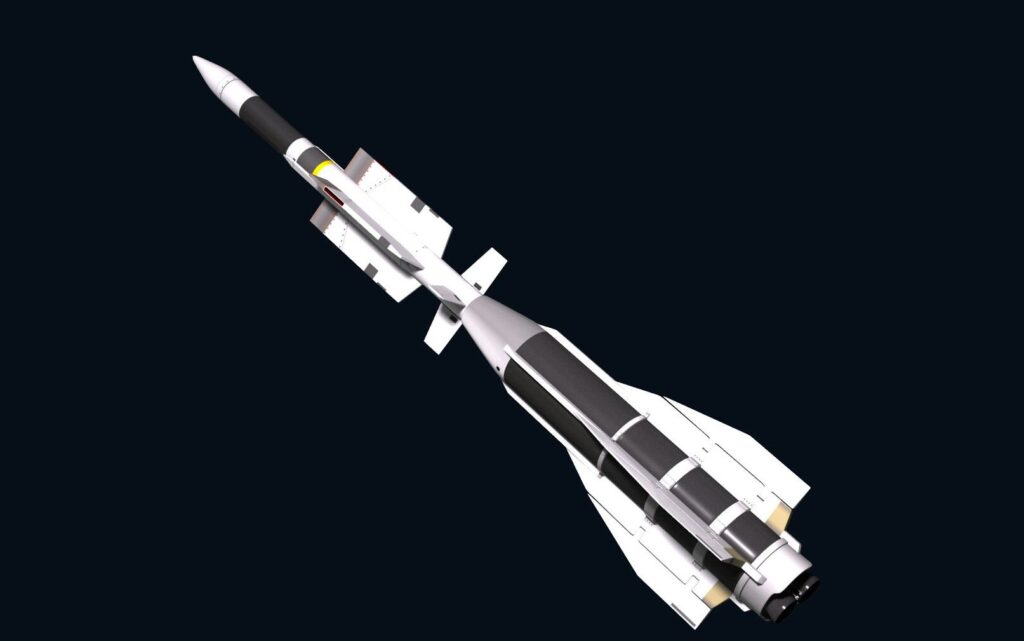
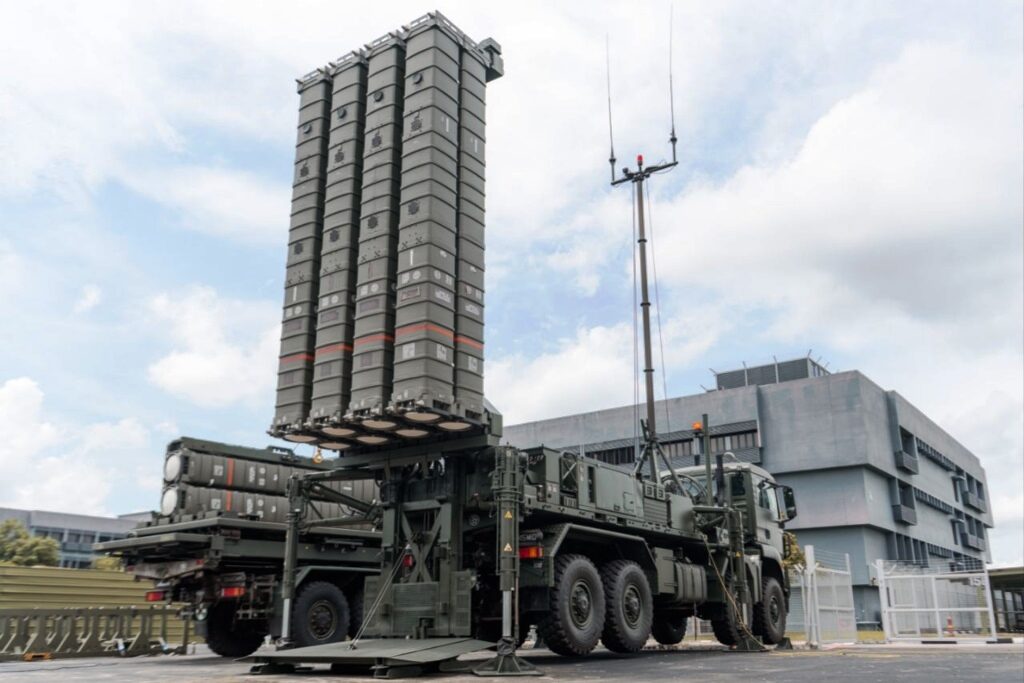
The SAMP/T (Sol-Air Moyenne Portée/Terrestre) system was created by the Eurosam consortium, bringing together MBDA France, MBDA Italy, and Thales.
Its primary weapon is the Aster 30 interceptor.
Unlike many earlier surface-to-air missiles that were optimized mainly for engaging aircraft, the Aster 30 was designed from the beginning as a true multi-role interceptor.
The missile can engage combat aircraft, helicopters, cruise missiles, anti-radiation missiles, unmanned aerial vehicles, and—through the newer Block 1 and Block 1NT variants—even tactical ballistic missiles.
That versatility has made SAMP/T one of Europe’s most valuable air-defense systems in recent years.
How the Aster 30 Works
From an engineering standpoint, the Aster 30 differs significantly from many conventional surface-to-air missiles.
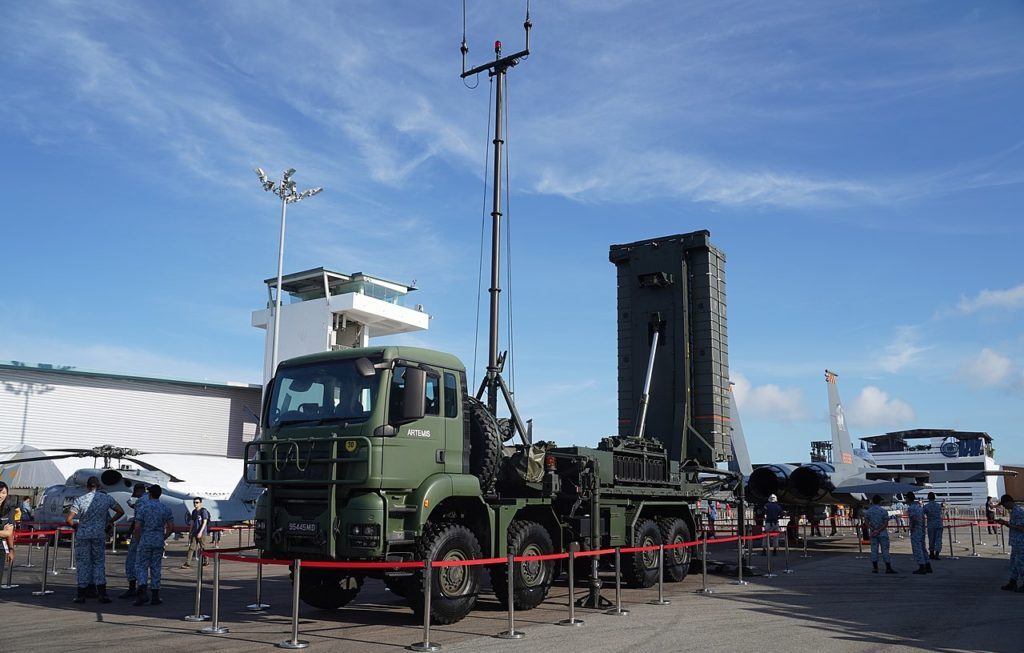
It uses a two-stage design.
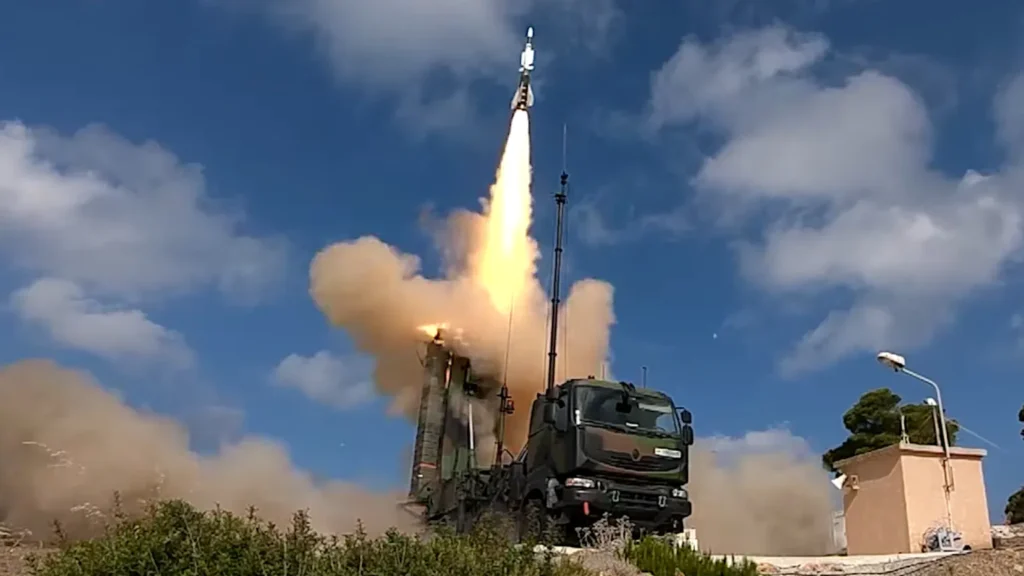
The first stage consists of a powerful solid-fuel booster that rapidly accelerates the missile to supersonic speed immediately after launch.
Once the booster separates, the compact second stage—often referred to as the “dart”—continues the interception.
This second stage contains the guidance system, flight controls, and warhead.
The missile’s defining feature is its unique PIF-PAF control system.
Unlike conventional missiles that rely primarily on aerodynamic control surfaces, the Aster combines traditional fins with a series of lateral thrust vector control thrusters positioned near the center of the missile.
These tiny gas-dynamic thrusters can instantly push the interceptor sideways during the final seconds of flight.
The result is extraordinary maneuverability.
Instead of gradually turning toward its target, the missile can make extremely rapid course corrections while sustaining lateral accelerations beyond the capabilities of conventional aerodynamic designs.
This capability is particularly important when intercepting highly maneuverable aircraft, cruise missiles, or ballistic missile warheads traveling at extremely high speeds.
Technical Specifications of the Aster 30
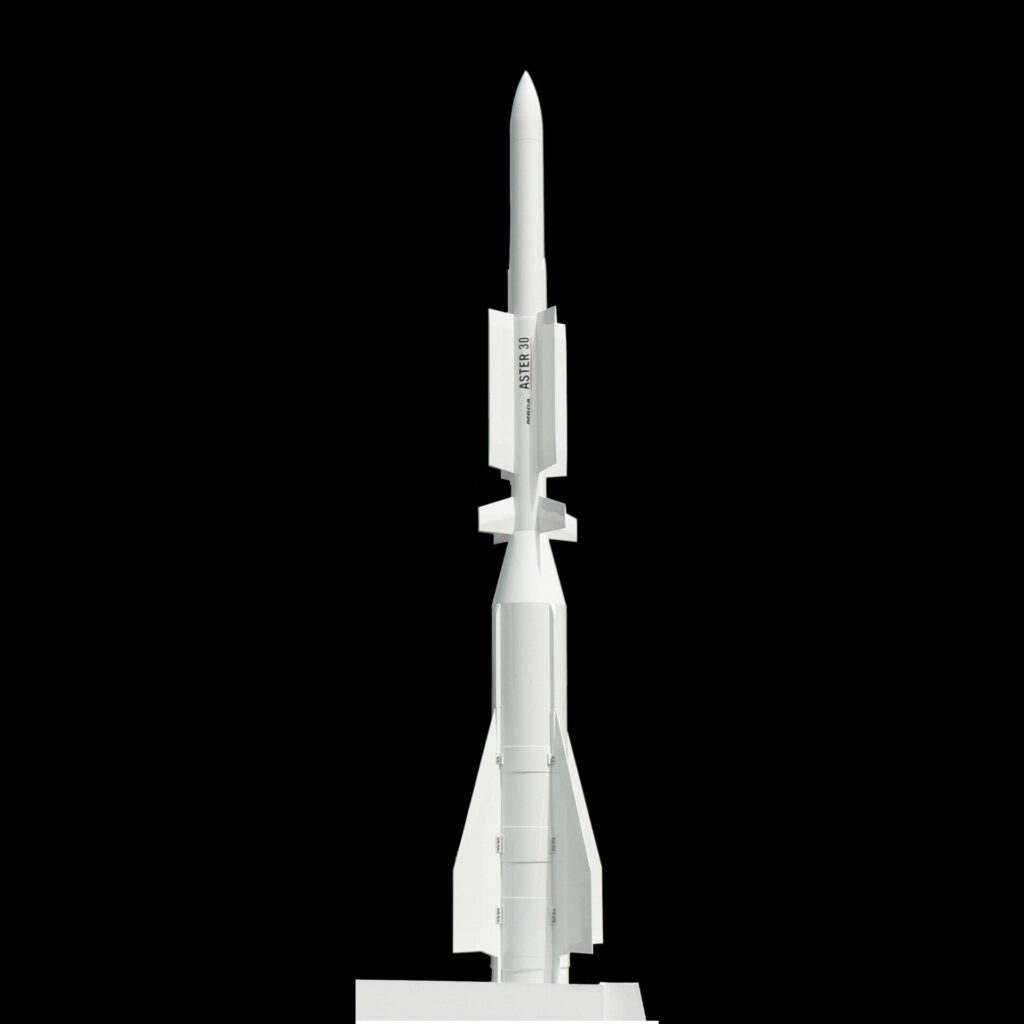
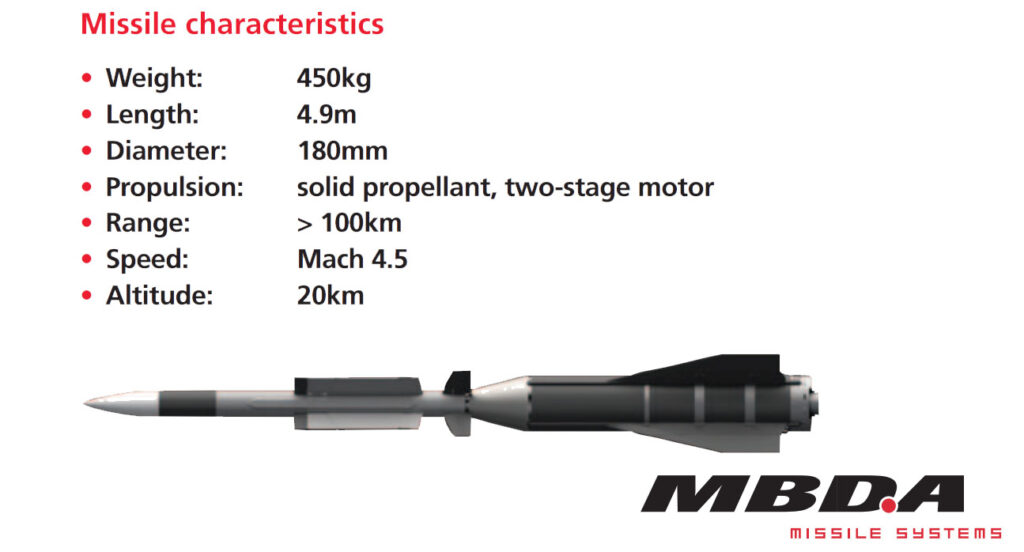
Although some performance characteristics remain classified, the missile’s publicly available specifications illustrate why it has become one of Europe’s premier interceptors.
Type: Medium- and long-range surface-to-air interceptor
Developer: Eurosam / MBDA
Length: Approximately 4.9 meters
Launch Weight: Approximately 450 kilograms
Propulsion: Two-stage solid-fuel rocket
Maximum Speed: Up to Mach 4.5
Maximum Engagement Range (Aerodynamic Targets): Up to 120 kilometers
Maximum Intercept Altitude: More than 20 kilometers
Guidance System:
- Inertial navigation
- Mid-course data-link updates
- Active radar seeker during terminal guidance
Unique Feature: PIF-PAF gas-dynamic maneuvering system
Together, these technologies allow the missile to maintain exceptional agility throughout the terminal phase of an interception, where conventional aerodynamic control surfaces become significantly less effective.
Building the Missile Is Far More Difficult Than It Appears
Receiving a production license is only the beginning.
Modern interceptor missiles are among the most technologically sophisticated weapons manufactured anywhere in the defense industry.
Each Aster 30 integrates a precision solid-fuel rocket motor, an active radar seeker, an inertial navigation system, advanced flight-control computers, gas-dynamic steering mechanisms, digital software, and highly specialized electronic components.
Manufacturing every one of these systems requires dedicated production facilities, specialized equipment, and highly skilled personnel.
Even today, France and Italy do not manufacture every component at a single factory.
Production is distributed across multiple industrial partners throughout Europe.
For that reason, any Ukrainian production program would almost certainly begin with partial assembly or component manufacturing before gradually expanding local industrial participation.
Why Europe Wants More Production Capacity
The proposal is also driven by simple industrial realities.
Since 2022, demand for advanced air-defense systems has increased dramatically.
European manufacturers have struggled to produce enough interceptor missiles to satisfy both domestic military requirements and export commitments.
MBDA has already announced major investments aimed at significantly increasing production of the Aster missile family.
Even so, current manufacturing capacity may still prove insufficient as European nations continue strengthening their integrated air-defense networks.
Expanding production beyond existing facilities therefore makes strategic sense—not only for Ukraine but for Europe’s defense industry as a whole.
Additional manufacturing sites would improve resilience, shorten delivery times, and reduce supply-chain bottlenecks during future crises.
A Long-Term Investment Rather Than a Quick Solution
Even if political approval is granted soon, Ukrainian-built Aster 30 missiles are unlikely to appear overnight.
Establishing production of such a sophisticated weapon would require years of preparation.
Factories must be certified.
Production equipment installed.
Engineers and technicians trained.
Supply chains established.
Quality-control procedures implemented.
And perhaps most importantly, Ukrainian industry would need to integrate into MBDA’s highly specialized manufacturing network.
This is a long-term industrial project rather than an immediate solution to current missile shortages.
What It Could Mean for Ukraine’s Future Air Defense
If successfully implemented, the project would provide Ukraine with much more than the ability to manufacture interceptor missiles.
It would represent access to decades of European expertise in designing and producing advanced air- and missile-defense systems.
That experience could gradually reduce dependence on imported interceptors while helping establish a domestic industrial base capable of supporting future missile programs.
In modern warfare, where cruise missiles, ballistic missiles, and increasingly sophisticated unmanned aerial systems have become routine threats, the ability to manufacture advanced interceptors may ultimately prove just as strategically important as operating the launch systems themselves.
In that sense, a license to build the Aster 30 is not simply about producing another missile.
It is about creating an industrial foundation that could shape Ukraine’s air-defense capabilities—and potentially Europe’s broader missile production capacity—for decades to come.






