
The Heart of the Icebreaker Rossiya: Why the RITM-400 Nuclear Reactor Was Developed

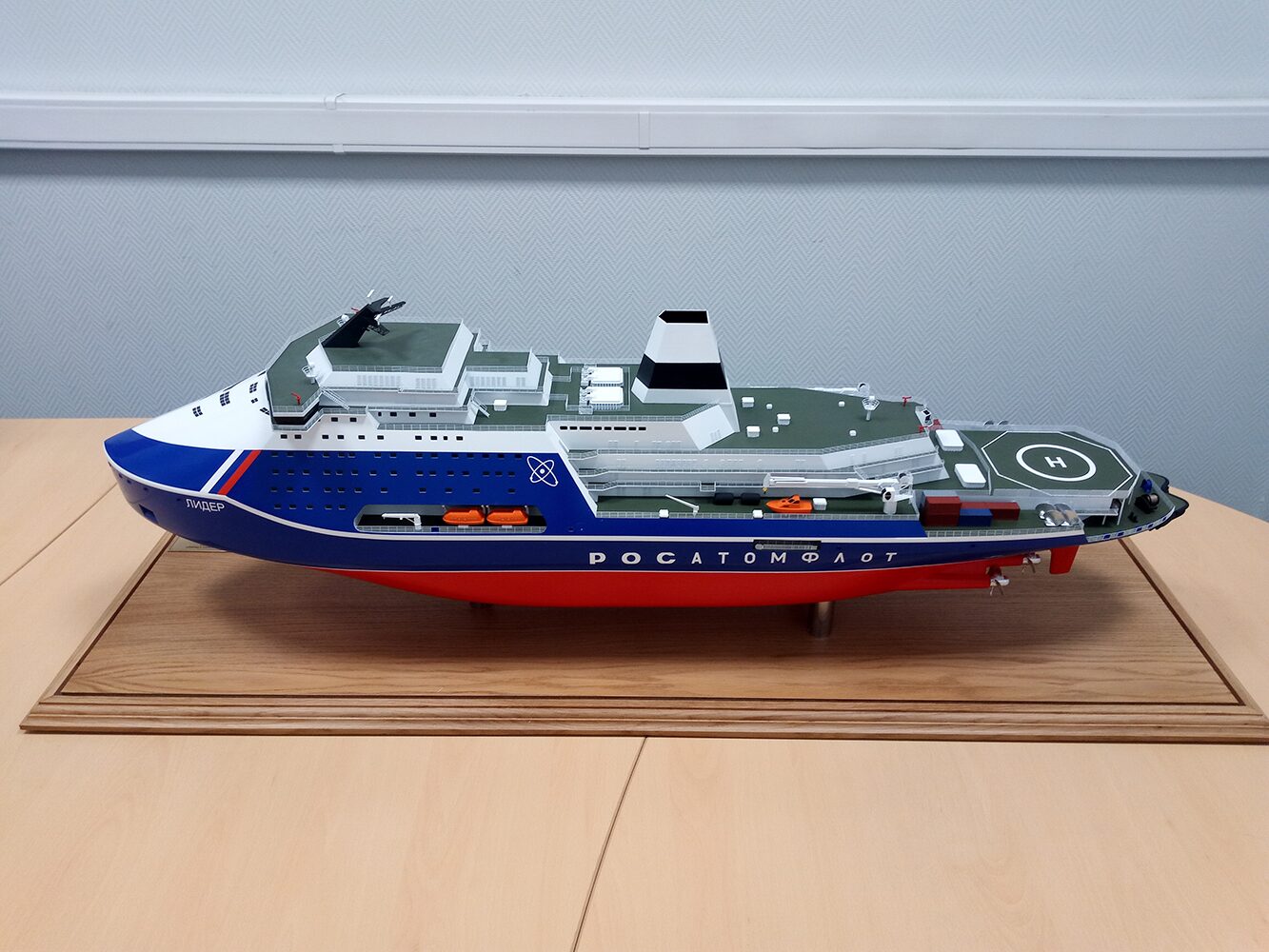
When people talk about nuclear-powered icebreakers, attention is usually focused on the ships themselves. Yet their most important technology is hidden deep inside the hull. It is the reactor that determines whether an icebreaker can operate in the Arctic for months at a time, crushing multi-meter-thick ice without refueling or returning to port. The latest step in the evolution of Russia’s nuclear icebreaker fleet is the RITM-400 reactor, developed specifically for the next-generation Rossiya icebreaker of Project 10510 “Lider.”
In the spring of 2025, ZiO-Podolsk, part of Rosatom’s Mechanical Engineering Division, completed the first reactor of this type. According to Rosatom, the RITM-400 will become the most powerful civilian marine nuclear reactor ever built in Russia. A second reactor is expected to be completed in the coming months before both units are delivered to the Zvezda Shipbuilding Complex, where the future flagship icebreaker is currently under construction.
The Next Generation Beyond the RITM-200

The new reactor did not appear overnight.
Its design is based on the highly successful RITM-200 series currently installed aboard the Project 22220 nuclear icebreakers, including Arktika, Sibir, Ural, Yakutia, Chukotka, and other vessels of the class.
However, the ambitious Lider project demanded far greater performance.
While the Project 22220 icebreakers are capable of operating efficiently across most sections of the Northern Sea Route, the new flagship is intended to break through the thickest multi-year Arctic ice under the harshest conditions. Achieving this required a substantial increase in reactor output.
The result is the RITM-400—a significantly upgraded version of its predecessor featuring much higher thermal power and improved overall performance.
Nearly One-Third of a Gigawatt of Thermal Power
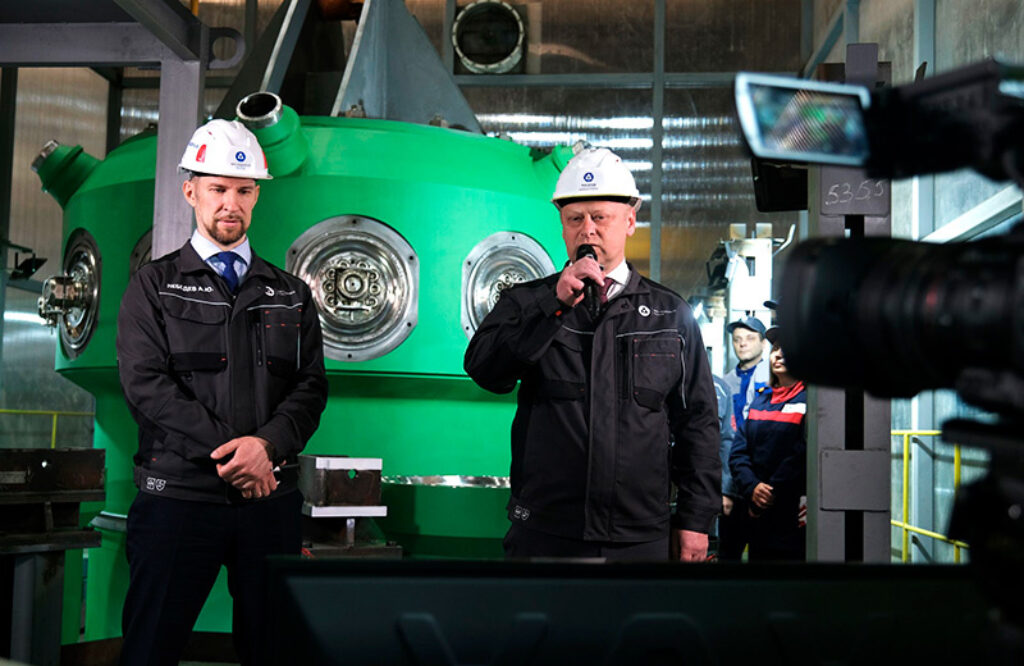
The defining characteristic of the RITM-400 is its power output.
Each reactor generates 315 megawatts of thermal power, roughly one-third more than the RITM-200. The Rossiya will be equipped with two such reactors, delivering approximately 120 megawatts of propulsion power to the ship’s propellers.
For a civilian vessel, these figures are extraordinary.
This immense power will enable the icebreaker to continuously break through ice up to 4.3 meters thick while creating a navigable channel approximately 50 meters wide—far exceeding the capabilities of existing Russian nuclear icebreakers.
In effect, Rossiya is being designed not simply as another icebreaker, but as a year-round escort vessel capable of guiding the world’s largest commercial ships through the Arctic.
Why Nuclear Icebreakers Remain Unmatched
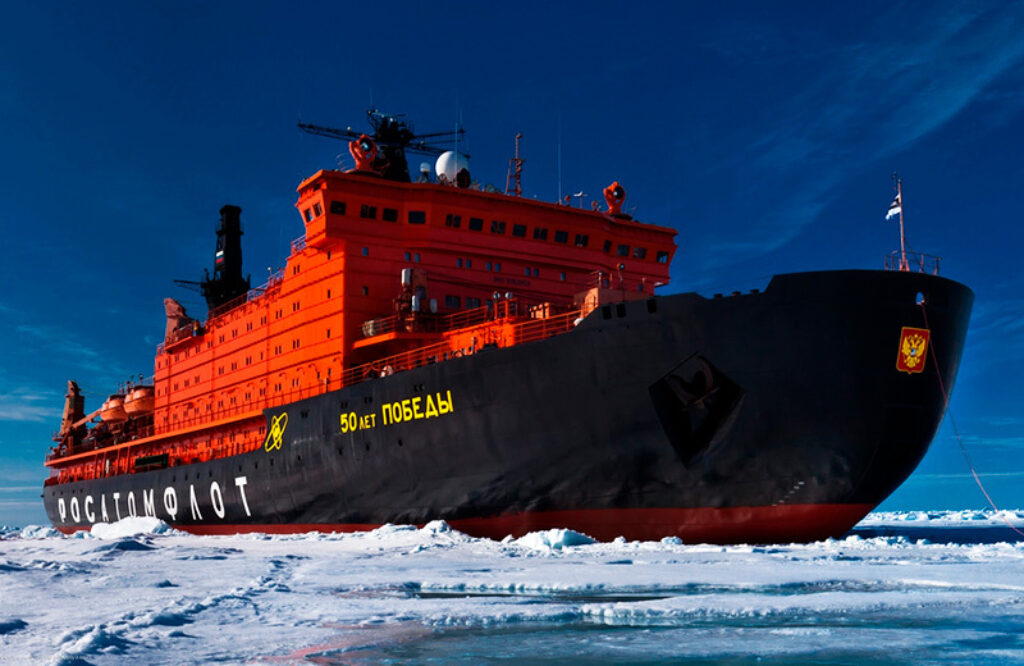
At first glance, modern diesel engines may appear capable of performing similar tasks. In the Arctic, however, reality is quite different.
Every diesel-powered icebreaker is limited by its fuel supply. The harsher the ice conditions become, the more fuel it consumes and the more frequently it must return to port for refueling.
A nuclear-powered icebreaker faces virtually none of these limitations.
Its nuclear fuel remains in the reactor for several years, allowing the vessel to operate continuously for extended periods far from logistical support. This capability is especially valuable in the central Arctic, where distances are measured in thousands of kilometers and infrastructure remains extremely limited.
Equally important, a nuclear propulsion system can maintain maximum power output for prolonged periods, whereas diesel-powered vessels must always balance performance against fuel consumption and operational constraints in extreme cold.
For these reasons, Russia remains the only nation operating a fully developed fleet of civilian nuclear-powered icebreakers.
An Icebreaker Unlike Any Before It
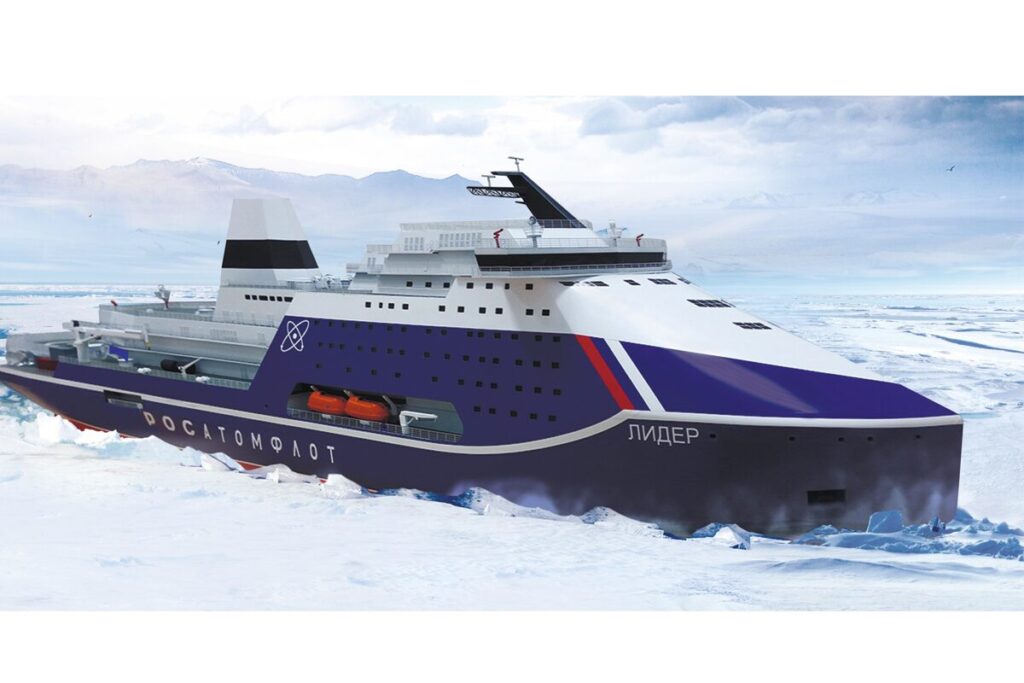
Project 10510 Lider represents the next stage in the evolution of Russia’s Arctic fleet.
While the Project 22220 icebreakers can escort ships through most sections of the Northern Sea Route, Rossiya is intended to provide year-round navigation for the largest tankers, LNG carriers, and container ships regardless of season.
This capability is becoming increasingly important as cargo traffic along the Northern Sea Route continues to grow, transforming the Arctic into one of the world’s most significant transportation corridors between Europe and Asia.
For many shipping routes, traveling through the Arctic can reduce both sailing distance and transit time compared to the traditional route via the Suez Canal. These potential savings become truly practical only if reliable year-round icebreaker support is available.
Providing that capability is precisely the mission of Rossiya.
Why the RITM-400 Matters Beyond Icebreakers
The development of the RITM-400 represents more than simply building a more powerful reactor for a single ship.
Every new generation of marine nuclear reactors serves as a technological foundation for future projects. Advances in compact reactor design, automation, operational reliability, and nuclear safety often influence later civilian—and sometimes specialized—nuclear energy systems.
The successful operation of the RITM-200 has already demonstrated the advantages of compact integrated reactor technology. The RITM-400 represents the next logical step in that evolution, preserving the strengths of its predecessor while delivering substantially greater power.
Technical Specifications: RITM-400
Type: Integrated pressurized water reactor (PWR)
Designer: OKBM Afrikantov
Manufacturer: ZiO-Podolsk (Rosatom Mechanical Engineering Division)
Thermal output: 315 MW
Number of reactors aboard Rossiya: 2
Total propulsion power: Approximately 120 MW
Icebreaker project: Project 10510 “Lider”
Planned entry into service: Around 2030
Conclusion
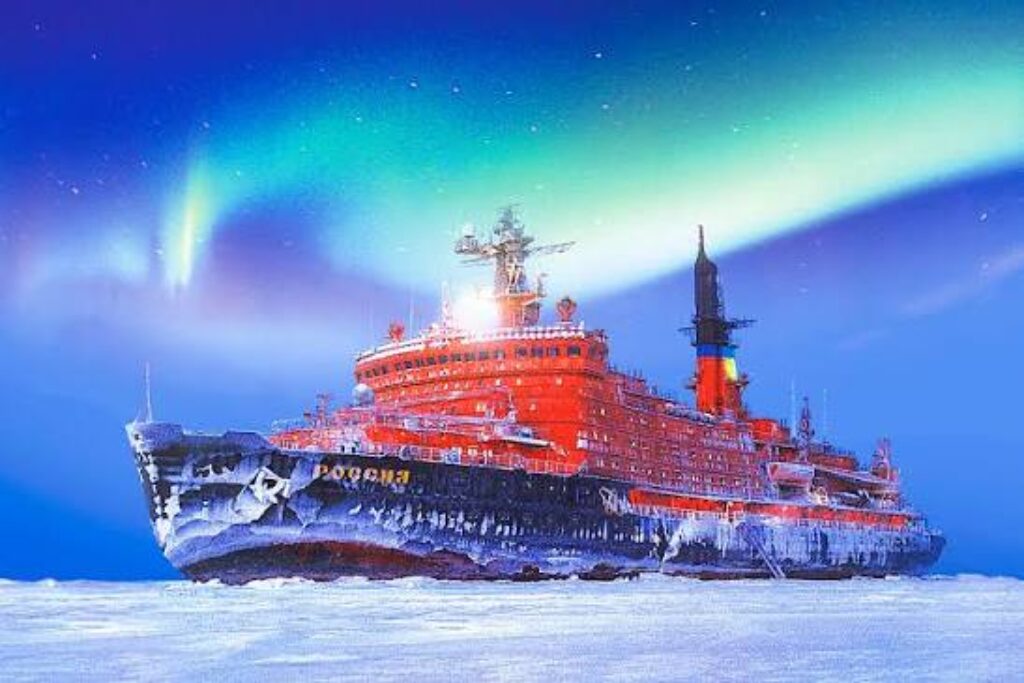
The RITM-400 is far more than another marine reactor. It was developed as the powerplant for what is expected to become the world’s most powerful nuclear-powered icebreaker, providing capabilities unmatched by any civilian vessel currently in operation.
If the Lider project is completed as planned, the combination of two RITM-400 reactors and an entirely new hull design will allow Rossiya to escort the world’s largest commercial vessels through the most challenging regions of the Arctic almost year-round. In doing so, the reactor will become not only a remarkable engineering achievement but also one of the key technologies supporting the continued development of the Northern Sea Route.






