
The Floating Food Factory: How China Is Building Giant Ships That Could Help Feed the World

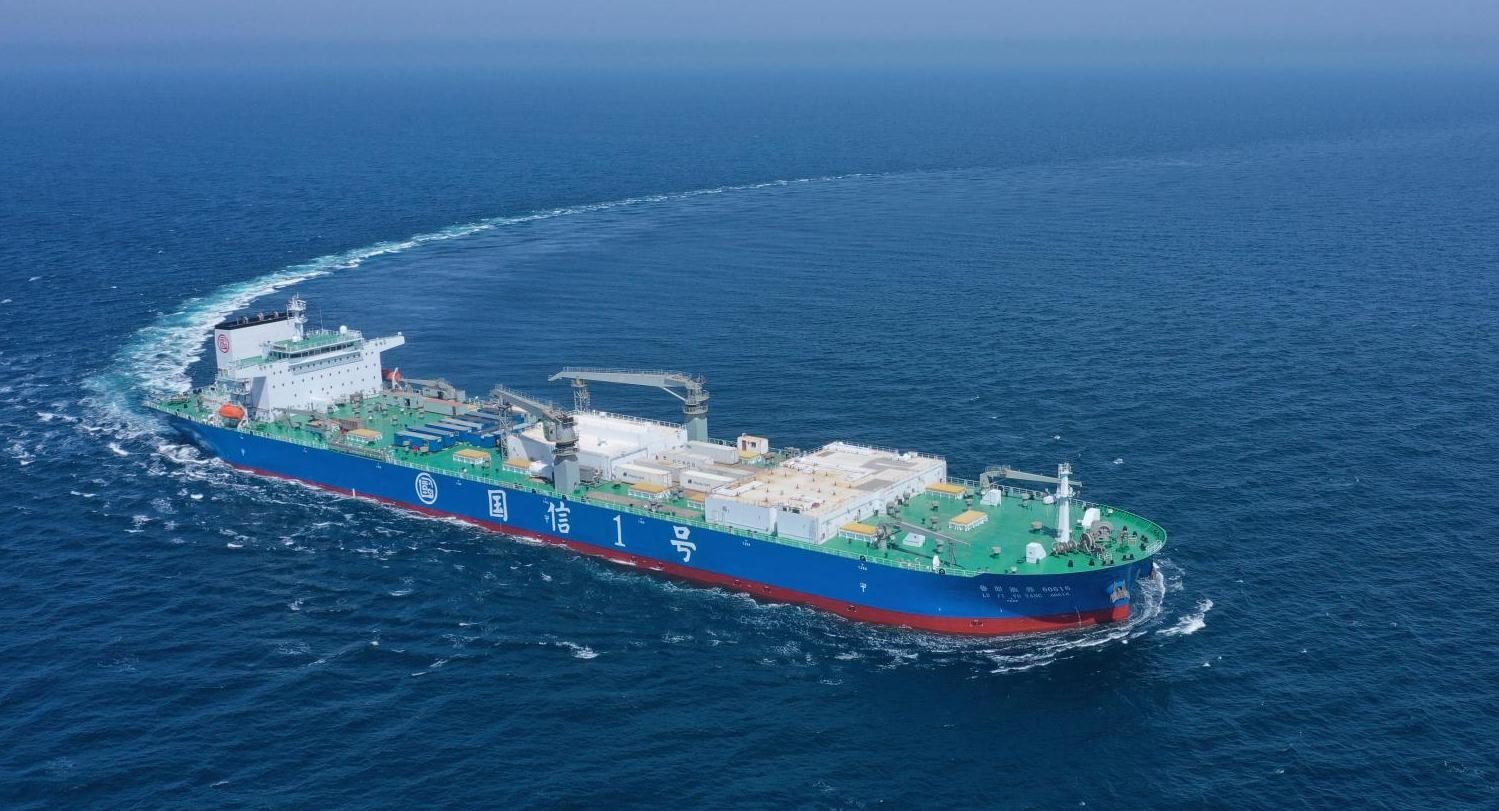
Imagine a ship the size of an oil tanker. But instead of crude oil, its enormous holds are filled with seawater, millions of juvenile fish, automated feeding systems, artificial intelligence, and dozens of giant tanks where fish are raised year-round.
Not long ago, such an idea sounded like science fiction. Today, China has not only built such a vessel but has already launched an entire series of floating fish farms that could fundamentally change industrial aquaculture.
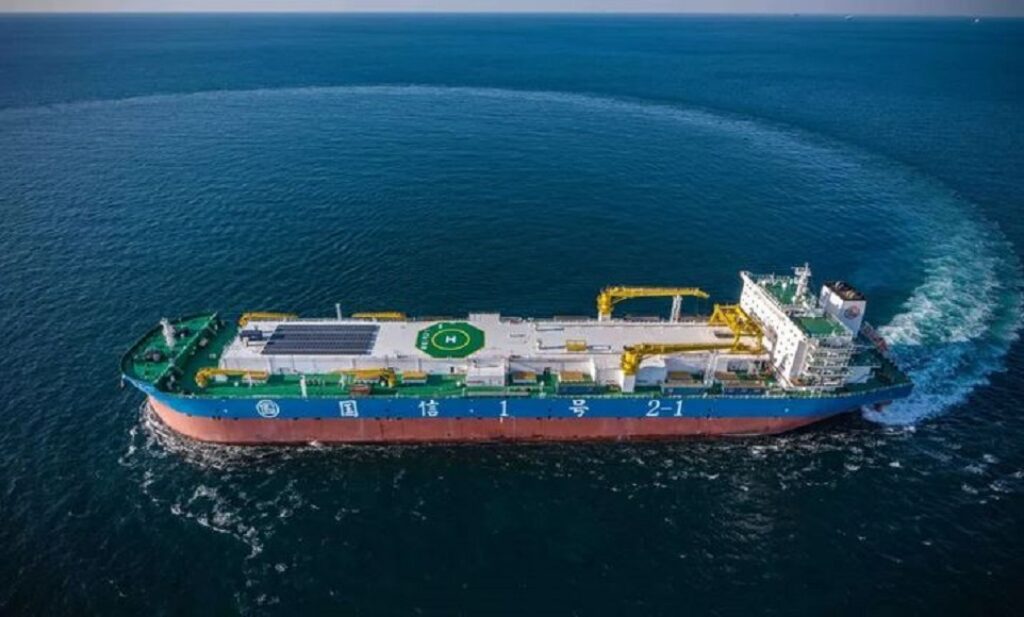
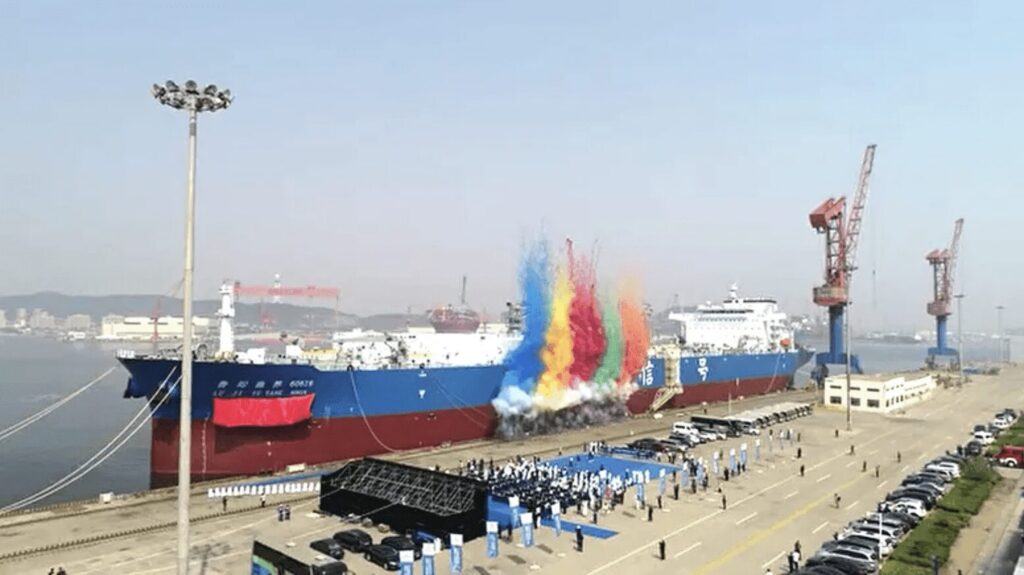
In April 2025, the Guoxin 1 2-1 officially entered service in Qingdao as the world’s largest intelligent deep-sea aquaculture vessel. It represents the second generation of the Guoxin 1 program, whose original ship became the world’s first dedicated large-scale aquaculture vessel when it entered service in 2022. If the concept proves commercially successful, China intends to make these ships the foundation of an entirely new branch of the global food industry.
From Coastal Fish Farms to Floating Factories
Today, roughly half of all fish consumed worldwide is produced through aquaculture rather than wild fishing. However, traditional fish farming has significant limitations.
Coastal farms occupy valuable shoreline, depend heavily on local water quality, and remain vulnerable to harmful algal blooms, disease outbreaks, storms, and pollution. Meanwhile, the world’s population continues to grow, increasing demand for seafood while suitable coastal farming locations become increasingly scarce.
China’s engineers decided to rethink the concept entirely.
Instead of waiting for ideal environmental conditions, they built a fish farm capable of traveling to wherever those conditions exist.
That is why the developers describe Guoxin not simply as a ship, but as a “mobile marine ranch.”
A Ship That Travels in Search of Perfect Water
The defining feature of the Guoxin series is mobility.
Unlike conventional fish farms, these vessels constantly move along China’s coastline, following optimal water temperatures, ocean currents, and water quality conditions.
If a traditional fish farm is comparable to a fixed agricultural field, Guoxin is more like a nomadic ranch that continually relocates in search of the best grazing land.
This mobility allows the vessel to avoid typhoons, polluted waters, harmful algal blooms, and seasonal temperature fluctuations. For the fish, it means living in nearly ideal conditions throughout the year.
During its operational service, the original Guoxin 1 traveled approximately 14,000 nautical miles, demonstrating that the concept of a “migrating fish farm” is not merely theoretical but commercially viable.
A Floating Seafood Factory
In terms of size, the Guoxin 1 2-1 resembles a major commercial tanker.
The vessel measures 245 meters (804 feet) in length and 45 meters (148 feet) in beam, with a displacement of approximately 150,000 tons.
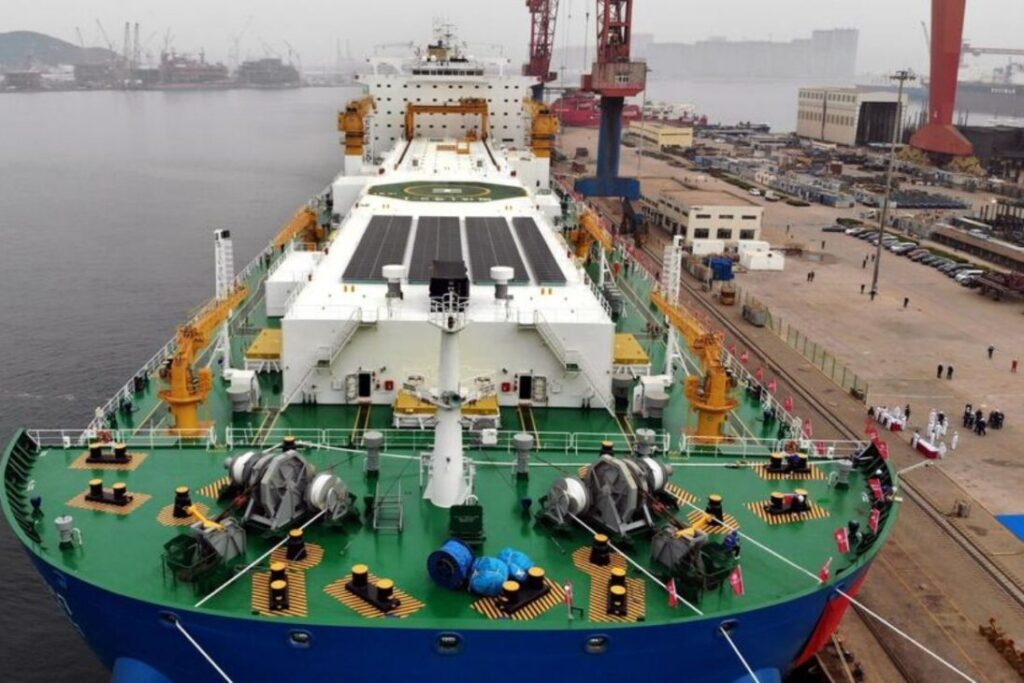
Inside are 15 standardized aquaculture modules, four circular tanks that generate continuous water circulation to encourage fish activity, and 22 experimental tanks where researchers test new feed formulas, breeding techniques, and farming technologies.
Altogether, the ship contains nearly 100,000 cubic meters of seawater, enabling an annual production capacity of approximately 3,600 tons of market-ready fish.
Its primary species include large yellow croaker, Atlantic salmon, and rainbow trout, although the vessel’s modular design allows it to be adapted for other high-value species as well.
Artificial Intelligence Instead of Traditional Fish Farming
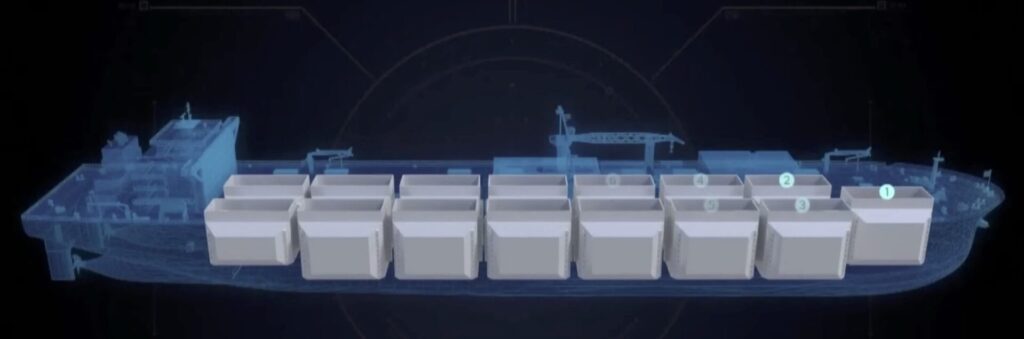
The ship’s true innovation lies not in its size but in its technology.
More than 200 cameras and approximately 2,000 sensors continuously monitor water temperature, oxygen concentration, current flow, water quality, fish health, and feed consumption.
Every piece of data is transmitted simultaneously to both the onboard control center and shore-based monitoring facilities, allowing operators to supervise production in real time.
Increasingly, however, human intervention is becoming unnecessary.
More than 90 percent of farming operations have been mechanized, while the vessel’s intelligent management system is already capable of making up to 30 percent of aquaculture decisions autonomously.
Compared with the original Guoxin 1, automation has increased significantly while labor requirements have been reduced by roughly 20 percent.
Remarkably, the entire ship can be operated by a crew of only about 35 people, with just 16 of them directly involved in aquaculture operations.
The feeding system is particularly impressive.
Each farming module consumes up to one and a half tons of feed every day, yet the entire process—from storage to distribution—is fully automated. According to the developers, only two people are needed to manage feeding operations for the entire vessel.
The Second Generation Is Much More Advanced
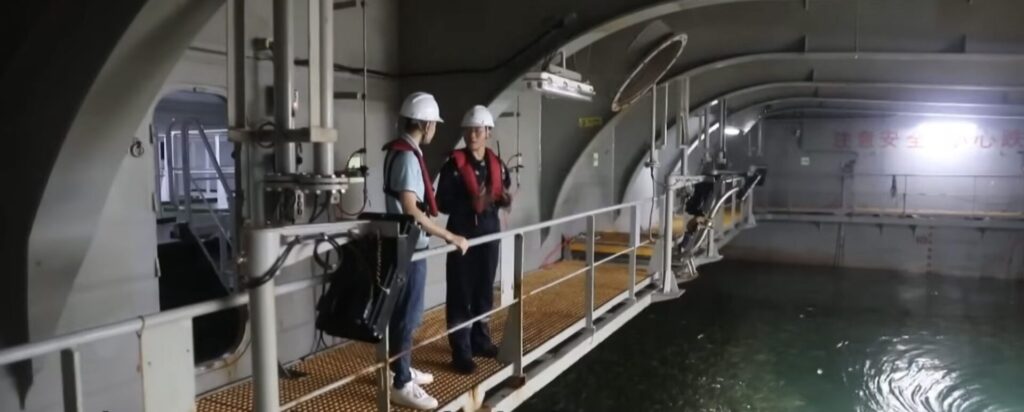
Although Guoxin 1 2-1 closely resembles its predecessor externally, internally it is almost an entirely new ship.
Engineers introduced more than 160 design improvements, including larger culture tanks, redesigned internal layouts, upgraded automation systems, improved juvenile fish transportation equipment, and even solar panels to reduce energy consumption.
These improvements have increased production efficiency while reducing fish losses during cultivation.
No Longer a Single Ship, but an Entire Fleet
Perhaps the most remarkable aspect of the project is that Guoxin 1 2-1 is only one part of a much larger vision.
The original Guoxin 1, launched in 2022, successfully demonstrated the viability of large-scale mobile aquaculture.
It was followed by Guoxin 1 2-1, and later by Guoxin 1 2-2, which is optimized primarily for farming cold-water species such as Atlantic salmon and rainbow trout.
Once all three vessels reach full operational capacity, their combined annual production is expected to exceed 10,000 tons of fish.
According to Chinese developers, however, this represents only the beginning.
Long-term plans envision building dozens of similar vessels capable of operating in different maritime regions, creating what could become the world’s first large-scale fleet of mobile offshore fish farms.
A New Revolution in Global Aquaculture?
The Guoxin project is remarkable for reasons that go well beyond the size of the ships themselves.
China is effectively proposing an entirely new model of industrial aquaculture.
Instead of constructing farms along the coastline, production moves into the open ocean.
Instead of relying on local environmental conditions, farms travel toward the most favorable waters.
Instead of employing hundreds of workers, production is increasingly managed by automation and artificial intelligence.
Such an approach offers several significant advantages.
It reduces pressure on fragile coastal ecosystems, allows higher production densities, improves product freshness through onboard processing, and largely eliminates dependence on seasonal environmental changes.
Of course, it is still too early to call this a complete revolution.
These ships are extraordinarily expensive to build, require sophisticated maintenance, and demand constant technical supervision. Their long-term economic performance remains to be fully demonstrated.
Nevertheless, one thing is already becoming clear.
If the twentieth century was defined by offshore oil platforms and the twenty-first by giant container ships, the coming decades may well become the era of floating agricultural industries, where the ocean serves not only as a transportation route but also as one of humanity’s largest production platforms.
And today, China is making one of the world’s biggest bets on that future.






