
Choe Hyon: The North Korean Destroyer That Forced Everyone to Recount Missiles in the Pacific

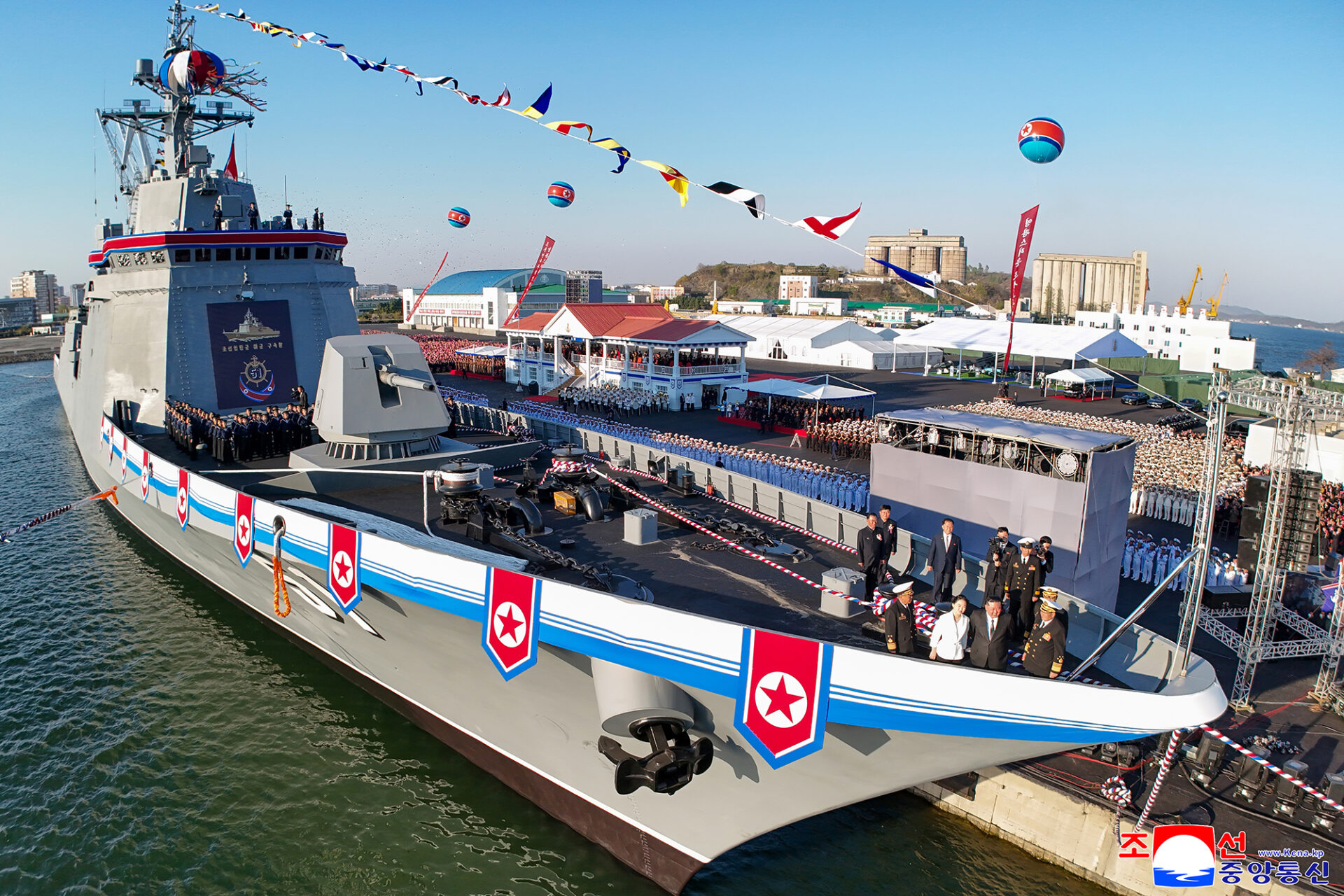
For decades, North Korea’s navy has been viewed as a primarily coastal force—large on paper but limited in capability. Missile boats, small patrol craft, diesel-electric submarines, aging artillery ships, and a dense coastal defense network defined the Korean People’s Navy. It was undoubtedly dangerous around the Korean Peninsula, but few considered it a force capable of projecting meaningful naval power beyond its shores.
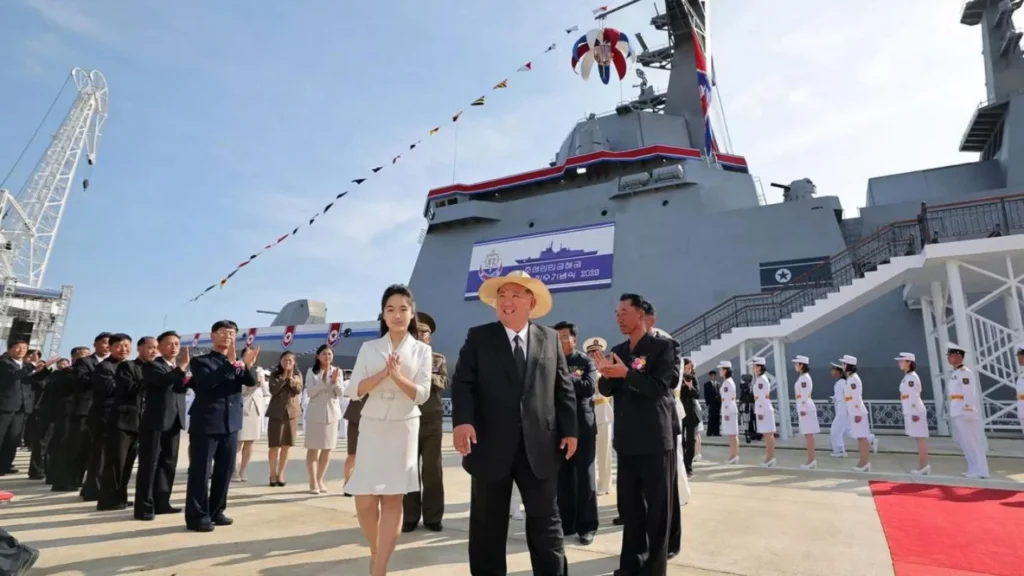
That perception changed when North Korea officially commissioned Choe Hyon, the largest warship ever built by the country.
This is not another missile boat or an aging frigate with a grandiose name. Instead, Choe Hyon is a destroyer of roughly 5,000 tons displacement, measuring about 145 meters (476 feet) in length, featuring a modern stealth-inspired superstructure, phased-array radar panels, a naval gun, close-in defensive weapons, anti-ship missiles, and—most importantly—an announced battery of 88 vertical launch system (VLS) cells.
That last figure immediately caught the attention of naval analysts worldwide.
Eighty-eight launch cells place the ship in a category normally associated with modern missile destroyers operated by much larger naval powers. Yet it is equally important not to swing to the opposite extreme. Choe Hyon does not suddenly transform North Korea into a blue-water naval superpower, nor should it automatically be compared on equal footing with American Arleigh Burke-class destroyers, Chinese Type 052D destroyers, or Japan’s advanced Aegis-equipped fleet.
What the ship does represent is something arguably more significant: a qualitative leap for North Korean naval construction. For the first time, Pyongyang appears to have fielded a vessel designed not merely for coastal defense but as a heavily armed missile platform capable of operating far beyond the traditional image of the Korean People’s Navy.
Eighty-Eight Launch Cells: An Impressive Number That Requires Context
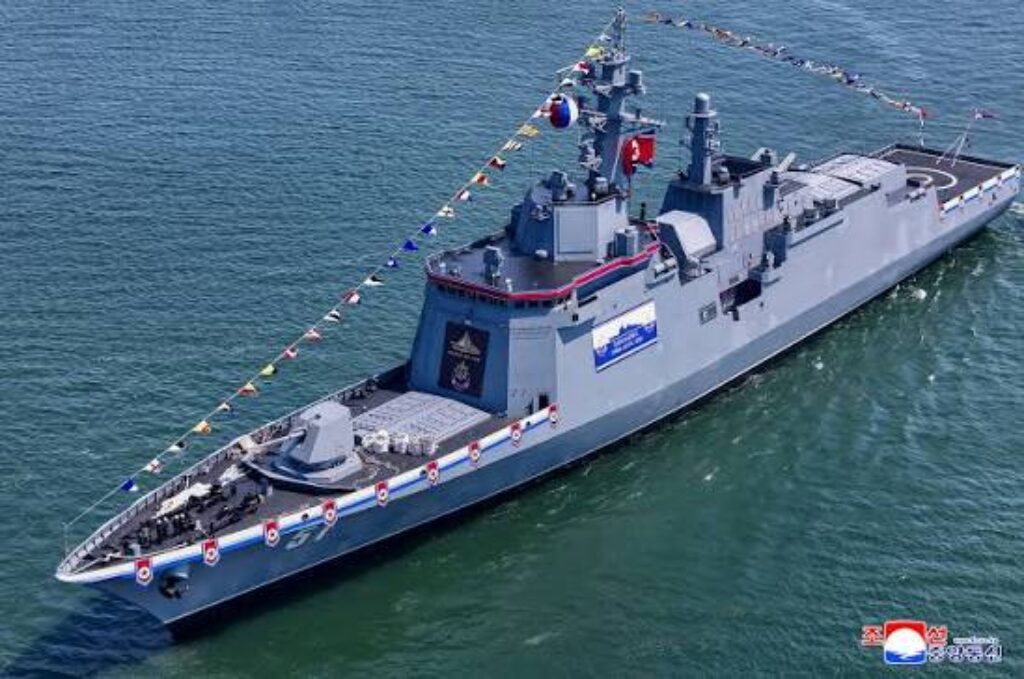
The centerpiece of Choe Hyon is undoubtedly its vertical launch system.
Open-source analysis suggests the destroyer carries 88 launch cells, divided into several differently sized groups located in both the forward and aft sections of the ship. Photographs indicate that these are not a single universal launcher but multiple VLS modules of different dimensions.
That distinction matters.
Modern navies rarely design every launch cell to accommodate identical weapons. Larger cells may carry long-range land-attack cruise missiles, anti-ship missiles, anti-submarine rockets, or even ballistic missiles. Smaller launchers are typically optimized for surface-to-air missiles or point-defense weapons.
Consequently, “88 launch cells” should not be interpreted as “88 identical missiles.” Instead, the figure reflects the overall missile capacity of the ship.
North Korean engineers appear to have pursued a philosophy similar to that adopted by the world’s leading navies: creating a vessel capable of performing multiple missions simultaneously. In theory, Choe Hyon could defend itself against aircraft, threaten enemy surface combatants, strike targets on land, and potentially deploy strategic weapons from the same platform.
One particularly intriguing aspect is North Korea’s repeated suggestion that the destroyer may eventually deploy nuclear-capable missiles.
State media has openly linked the vessel to the country’s growing nuclear deterrent, describing it as part of a broader effort to bring strategic weapons to sea.
However, there is an important distinction between political messaging and actual operational capability.
Building a sea-based nuclear deterrent requires far more than installing launch cells on a warship. It demands secure communications, sophisticated targeting systems, reliable command-and-control procedures, highly trained crews, protected naval bases, and years of operational experience. Those are areas where North Korea still faces major questions.
A Ship With Missiles Is Not Automatically a Modern Destroyer
Perhaps the biggest mistake analysts can make is focusing solely on the number of launch cells.
A modern destroyer is not defined by its missile inventory alone. It is, above all, a highly integrated combat system.
Its radar must be capable of detecting and tracking dozens of targets simultaneously. Its combat management system has to coordinate sensors, weapons, communications, and electronic warfare into a single decision-making network. It must operate alongside aircraft, satellites, submarines, and other ships while maintaining situational awareness in an environment saturated with electronic interference.
This is where the largest uncertainties surrounding Choe Hyon begin.
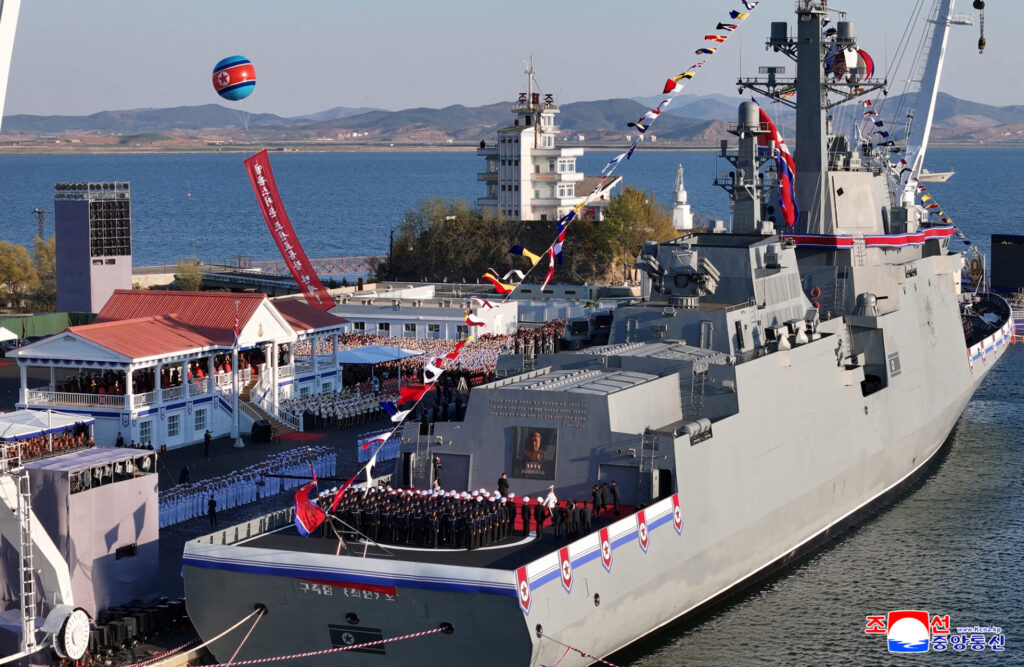
Visually, the ship certainly resembles a contemporary destroyer. Its angular superstructure, enclosed mast, phased-array radar panels, VLS batteries, naval gun, and close-in defense systems all suggest that North Korean designers deliberately followed modern naval architecture.
Yet appearances alone reveal little about the quality of the electronics hidden beneath the hull.
This does not mean the ship should be dismissed as propaganda or a hollow mock-up. Such an assumption would be equally dangerous.
North Korea has repeatedly demonstrated an ability to field military systems that were initially dismissed as unrealistic or exaggerated. Its ballistic missile program offers several examples of capabilities that many observers once believed impossible before they eventually appeared in operational service.
Still, there remains a considerable gap between “a dangerous missile platform” and “a world-class air-defense destroyer.”
That gap depends not on steel or launch cells, but on software, sensors, crew training, logistics, and years of operational refinement.
The Comparison With Russia’s Pacific Fleet Is More Complicated Than Headlines Suggest
One of the more eye-catching headlines following Choe Hyon’s commissioning came from Defense Express, which argued that North Korea’s new destroyer effectively surpassed Russia’s Pacific Fleet because the fleet currently operates “zero destroyers.”
The statement certainly grabs attention—but, technically speaking, it requires context.
Russia’s Pacific Fleet does not currently operate any newly built destroyers comparable to modern Western or Chinese designs. That much is true.
However, the fleet still possesses several large surface combatants inherited from the Soviet era, including the guided missile cruiser Varyag and the extensively modernized Marshal Shaposhnikov. In Russian classification, many of these ships are designated as large anti-submarine ships or, after modernization, frigates rather than destroyers.
Therefore, saying that the Pacific Fleet has “zero destroyers” should not be interpreted as meaning that Russia lacks major surface combatants in the Pacific.
Instead, two different observations should be separated.
The first is accurate: North Korea has introduced a newly built missile destroyer carrying an unusually dense concentration of launch cells.
The second—that this single ship automatically makes North Korea’s fleet more powerful than Russia’s Pacific Fleet—is a much broader claim that oversimplifies the realities of naval warfare.
A fleet is far more than a single hull.
It includes submarines, naval aviation, logistics, maintenance facilities, reconnaissance assets, command structures, experienced crews, repair infrastructure, and decades of accumulated operational knowledge.
Measured by those standards, North Korea remains far behind Russia, Japan, China, South Korea, or the United States.
Yet Defense Express does touch on an important point.
The appearance of Choe Hyon is significant precisely because it demonstrates that a country long associated with missile boats and aging submarines is now producing large missile destroyers that inevitably invite comparisons with the fleets of major naval powers.
That, in itself, represents a noteworthy shift.
What Weapons Does Choe Hyon Actually Carry?
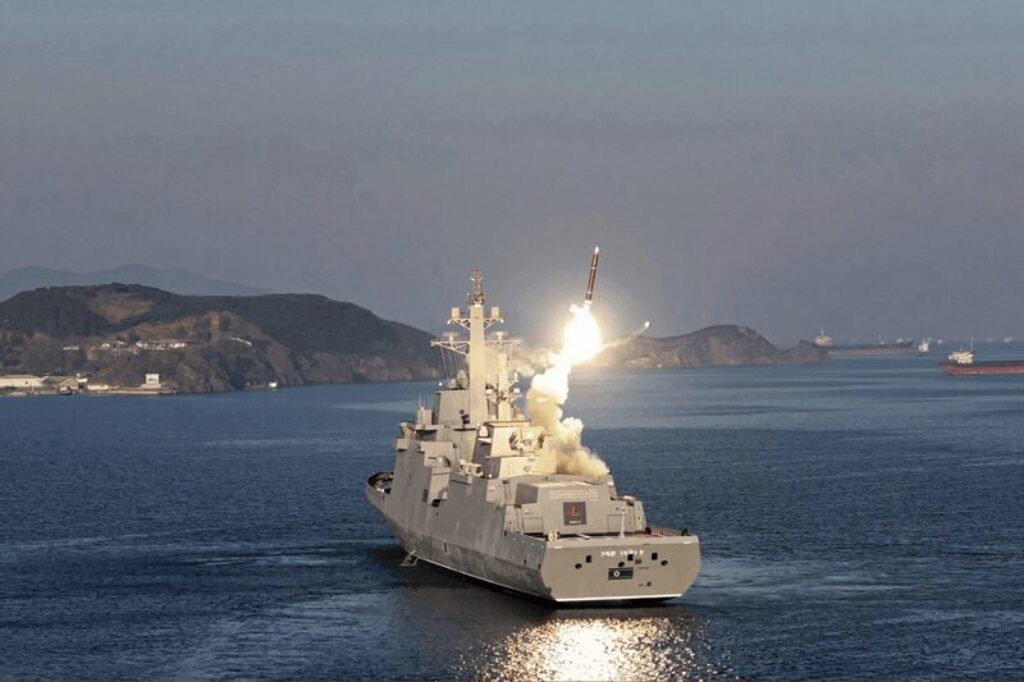
Judging by official imagery and open-source analysis, Choe Hyon is equipped with a fairly comprehensive suite of weapons. The destroyer features a large-caliber naval gun mounted forward, close-in weapon systems (CIWS) for last-ditch air defense, anti-ship missile launchers, torpedo tubes, and several groups of vertical launch cells of different sizes.
From a design perspective, the ship follows a layout familiar to anyone who studies modern surface combatants. Missiles are housed inside the hull rather than on exposed launch rails, while the superstructure accommodates radar arrays and other electronic equipment. The aft section appears to include a helicopter deck or a space suitable for unmanned aerial systems.
At first glance, it resembles a modern multi-role destroyer.
Yet the weapon configuration raises as many questions as it answers.
North Korea has long relied on a unique engineering philosophy: adapting, reverse-engineering, and combining technologies from multiple foreign sources with domestic developments. Over the years, Pyongyang has demonstrated an ability to merge concepts originating from Soviet, Russian, Chinese, Iranian, and indigenous designs into entirely new systems.
There is every reason to believe the same approach was taken with Choe Hyon.
That does not necessarily make the ship inferior. For a country operating under decades of international sanctions, technological hybridization has become almost a necessity.
The real question is not where individual components came from, but how effectively they function together.
A warship can carry dozens of missiles and still perform poorly if its sensors cannot detect threats early enough, if its combat management system cannot prioritize targets, or if its crews lack sufficient training to exploit the ship’s full potential.
Parades and demonstration launches are one thing.
Actual naval combat is something entirely different.
Success at sea depends on reaction time, electronic resilience, target acquisition, ammunition management, logistics, and the ability to survive enemy counterattacks—factors that cannot be judged simply by counting launch cells.
The Russian Connection: A Plausible Theory, But Not a Proven Fact
Another major topic surrounding Choe Hyon is the possibility of Russian involvement.
Following the rapid expansion of military cooperation between Moscow and Pyongyang over the past several years, speculation has naturally emerged that North Korea may have received technical assistance in the development of its new destroyer.
South Korean officials and several Western analysts have openly suggested that Russia could have contributed expertise, engineering advice, or certain technologies.
The theory is certainly plausible.
North Korea managed to build an unusually large and outwardly modern surface combatant within a relatively short period of time. Combined with the growing political and military partnership between the two countries, that inevitably raises questions.
However, it is important to distinguish between suspicion and evidence.
At present, there is no publicly available proof that Russia designed or built Choe Hyon for North Korea.
A more cautious assessment would be that Pyongyang may have benefited from external technical advice, access to foreign design concepts, commercially available technologies, or selective cooperation in specific areas of naval engineering.
That is very different from claiming that the destroyer is simply a Russian project under a North Korean flag.
It is also worth remembering that North Korea has spent decades developing its own missile industry. While many early systems were inspired by Soviet technology, the country’s engineers have repeatedly demonstrated an ability to evolve those designs independently.
The destroyer program appears to reflect that same pattern: a mixture of indigenous development, foreign influence, and aggressive political prioritization.
Rapid Construction Comes With Risks
One detail often overlooked in discussions about Choe Hyon is that this is not the only ship of its class.
North Korea is already constructing additional vessels, reflecting Kim Jong Un’s determination to rapidly expand the country’s surface fleet.
Yet speed has its price.
Earlier this year, the second destroyer of the class, Kang Kon, suffered a highly publicized accident during its launch ceremony. Images released afterward showed the vessel partially capsized after a failed side launch.
For any navy, such an incident would represent a serious embarrassment.
For North Korea, it revealed something equally important: the country is attempting to accelerate large-scale naval construction despite having limited historical experience with ships of this size.
That inevitably increases technical risks.
Design flaws, production delays, construction accidents, and system integration challenges are all common in ambitious naval programs—even among the world’s leading shipbuilding nations.
The Kang Kon accident serves as a reminder that Choe Hyon is not the endpoint of a mature industrial process.
Rather, it represents the beginning of one.
Why Choe Hyon Should Not Be Dismissed
Skepticism toward North Korean military announcements is understandable.
The country has a long history of political messaging designed to amplify its achievements, and independent verification is often difficult.
Questions remain regarding the destroyer’s radar performance, electronic warfare capabilities, air-defense systems, combat management software, propulsion reliability, and the operational readiness of its missile inventory.
Yet dismissing the ship as little more than propaganda would be a mistake.
Even if Choe Hyon ultimately proves less capable than the world’s most advanced destroyers, it still creates a new military problem for potential adversaries.
It must now be monitored.
Its movements must be tracked.
Its missile load must be considered in operational planning.
Resources must be allocated to detect, shadow, and, if necessary, neutralize it.
That alone changes the strategic picture.
The destroyer is particularly relevant in a regional conflict around the Korean Peninsula.
Operating under the protection of North Korean coastal air defenses, land-based anti-ship missile batteries, submarines, and dense minefields, Choe Hyon would not be fighting alone.
Within such an environment, even an imperfect missile destroyer becomes a considerably more dangerous opponent than its technical specifications might suggest.
North Korea Is Building a Fleet of Deterrence, Not Prestige
Perhaps the most interesting aspect of Choe Hyon is not the ship itself, but what it says about North Korea’s strategic thinking.
This is not a vessel designed for goodwill visits or global naval diplomacy.
It is a warship built to reinforce deterrence.
Pyongyang appears determined to diversify the platforms from which it can launch missiles.
Until recently, North Korea’s strategic arsenal was associated primarily with mobile ground launchers and submarines.
Now, large surface combatants are becoming part of that equation.
In this context, Choe Hyon does not need to rival an American destroyer in order to be strategically valuable.
Its purpose is different.
It expands the number of launch platforms available to North Korea, complicates enemy planning, and increases uncertainty during any future crisis.
That is precisely what deterrence is designed to achieve.
Final Thoughts
The story of Choe Hyon challenges two common misconceptions at once.
On one hand, it is not a miracle weapon that suddenly transforms North Korea into a first-rate naval power.
On the other, neither is it an empty showpiece built solely for propaganda.
It is a large missile destroyer constructed by a country that, until very recently, was rarely associated with modern surface combatants of this class.
Many questions remain regarding its electronics, combat systems, sensor integration, crew training, and overall operational effectiveness.
Those questions are legitimate.
But they should not obscure a more important reality.
North Korea has successfully built and commissioned a warship unlike anything previously seen in its fleet—and it has already signaled that more ships of this type will follow.
For naval planners across East Asia, that is the real headline.
Choe Hyon matters not because it immediately changes the balance of power, but because it signals that North Korea’s navy is beginning to emerge from the shadow of its coastal origins.
The transformation is still in its early stages, and the road ahead will almost certainly be uneven.
But for the first time, the Korean People’s Navy is presenting itself not simply as a coastal defense force, but as a navy seeking to add modern missile destroyers to its order of battle.
And that is a development that deserves serious attention.






