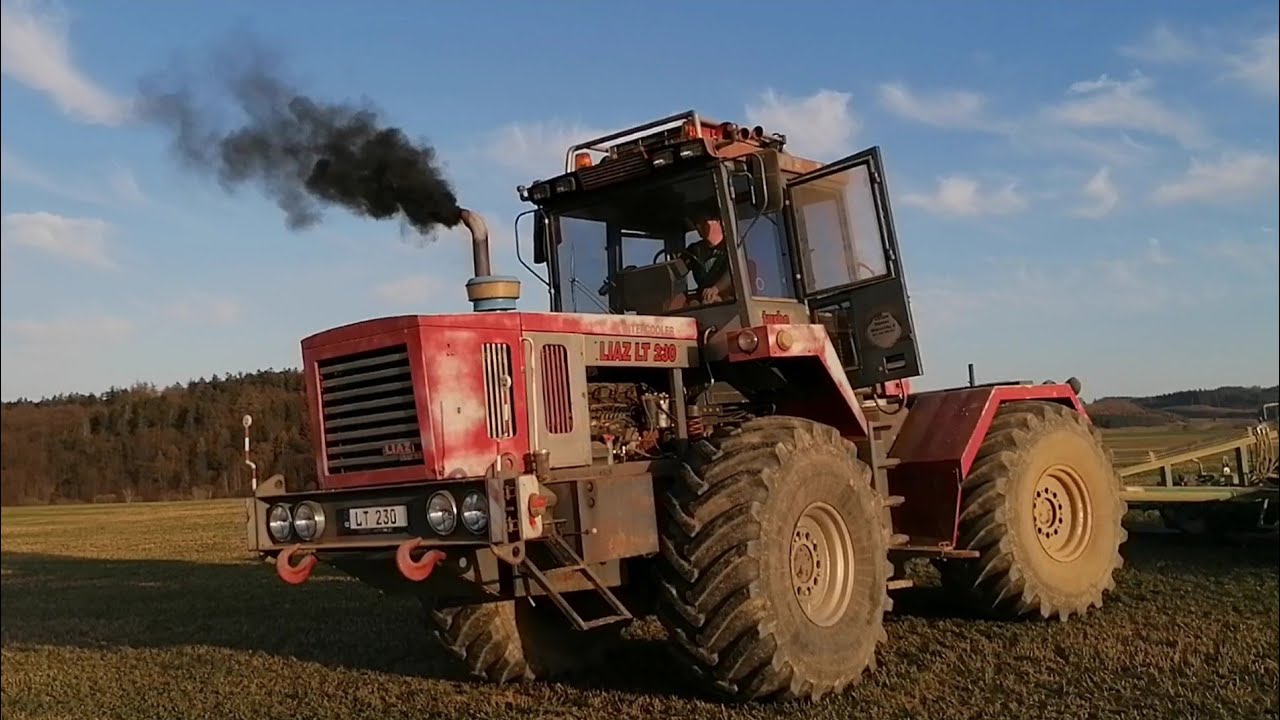
When people think of heavy articulated tractors from the socialist era, one machine immediately comes to mind—the legendary Soviet K-700 Kirovets. The massive yellow tractor became an icon of Soviet agriculture, symbolizing vast collective farms, large-scale mechanization, and the endless fields of the USSR. Few people realize, however, that Czechoslovakia had its own heavyweight competitor: the LIAZ LT 230. At first glance, it looked remarkably similar to the Soviet giant, yet it featured a more powerful engine, air conditioning, improved operator comfort, and several engineering solutions that Soviet tractor drivers could only dream about.
Today, the LT 230 has largely faded into obscurity, despite once being one of the most advanced tractors produced anywhere in the Eastern Bloc.
Not the LIAZ You Might Be Thinking Of
The name LIAZ often causes confusion, especially among people from the former Soviet Union. For most, “LiAZ” is synonymous with the famous city buses built in Likino-Dulyovo.
The Czechoslovak LIAZ, however, had absolutely nothing to do with those buses.
The abbreviation stood for Liberecké automobilové závody (Liberec Automobile Works), a company established in 1951 as a division of Škoda. It quickly became one of Czechoslovakia’s largest truck manufacturers.
Building on its experience with heavy-duty trucks, the company eventually developed a family of powerful articulated tractors intended not only for agriculture but also for heavy transport and construction work.
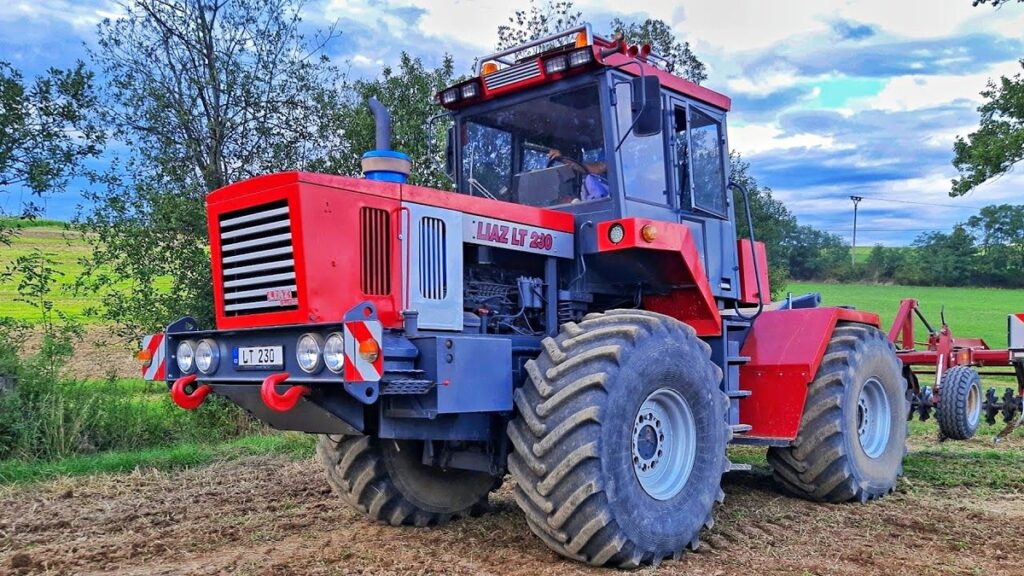
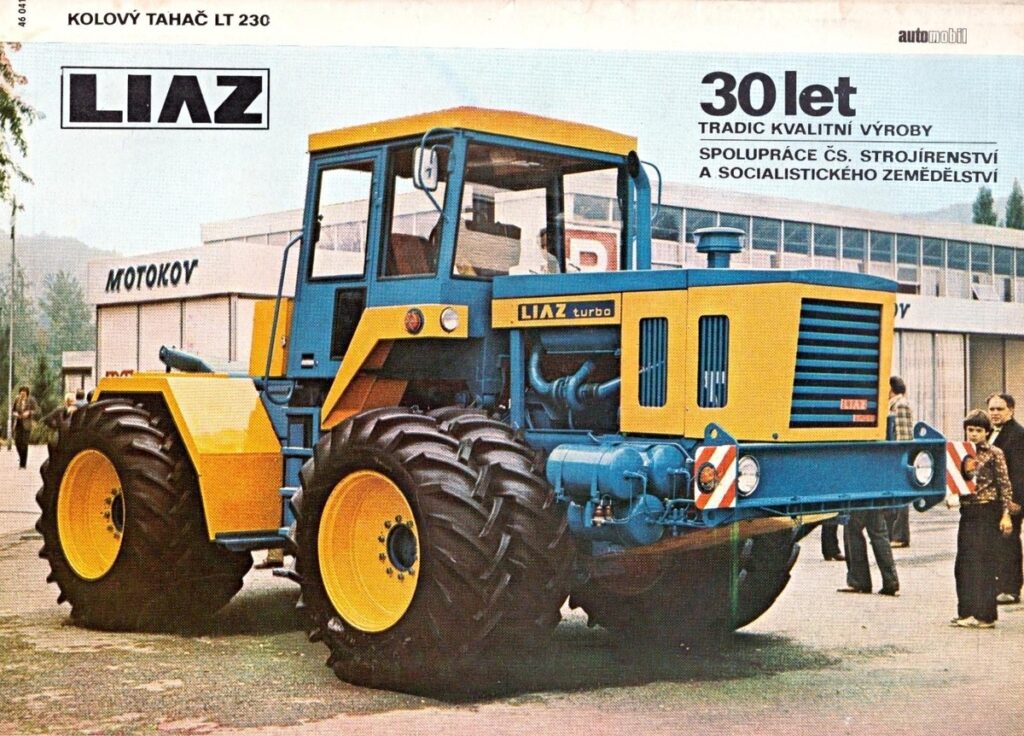
The flagship of that lineup became the LIAZ LT 230.
Why Did Czechoslovakia Need Its Own Heavy Tractor?
At first glance, building such a large agricultural tractor might seem unnecessary.
Unlike the Soviet Union, Czechoslovakia did not possess enormous agricultural regions requiring machines capable of working thousands of hectares.
But the engineers had a broader vision.
During the 1970s, the country invested heavily in expanding agricultural cooperatives, constructing large livestock complexes, building rural infrastructure, and modernizing transportation networks. These projects required a versatile heavy-duty machine capable of performing much more than plowing fields.
The LT 230 was expected to haul heavy trailers, transport construction materials, move agricultural equipment, carry fuel tankers and fertilizer trailers, and perform conventional farming tasks whenever necessary.
In reality, it was less of a pure agricultural tractor and more of a universal heavy-duty workhorse.
Similar to the K-700—But Different
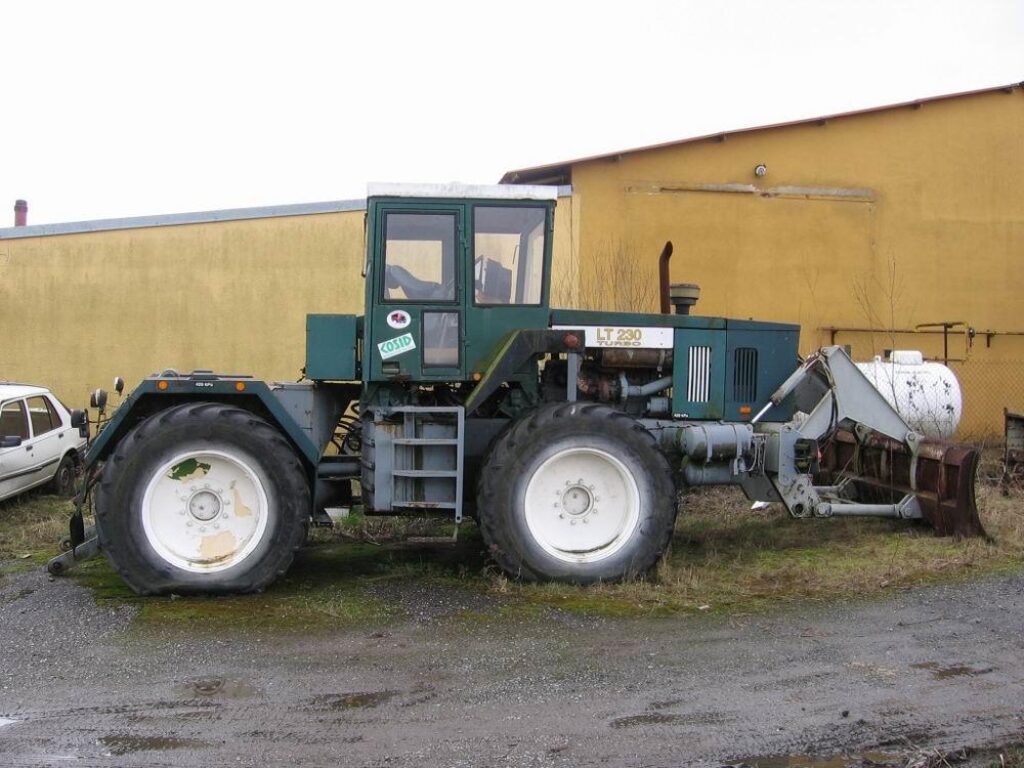
At first glance, the resemblance to the Soviet K-700 is unmistakable.
Both tractors featured an articulated chassis that allowed all wheels to maintain contact with uneven terrain. This design gave the machines outstanding off-road capability while enabling them to handle rough fields and difficult conditions with ease.
The overall layout was also familiar: a front-mounted engine, the cab positioned above the front section, and steering achieved by articulating the two halves of the frame.
Yet the LT 230 was far from being a simple copy.
Czechoslovak engineers adapted the concept to suit their own operating conditions and introduced numerous refinements.
The tractor was almost one meter shorter than the K-700 and significantly lighter, reducing ground pressure considerably.
Its oversized low-pressure tires, resembling those found on American John Deere tractors, distributed weight more effectively across soft soil.
This was especially important in European agriculture, where minimizing soil compaction was considered a priority.
The Turbo Diesel Soviet Operators Envied
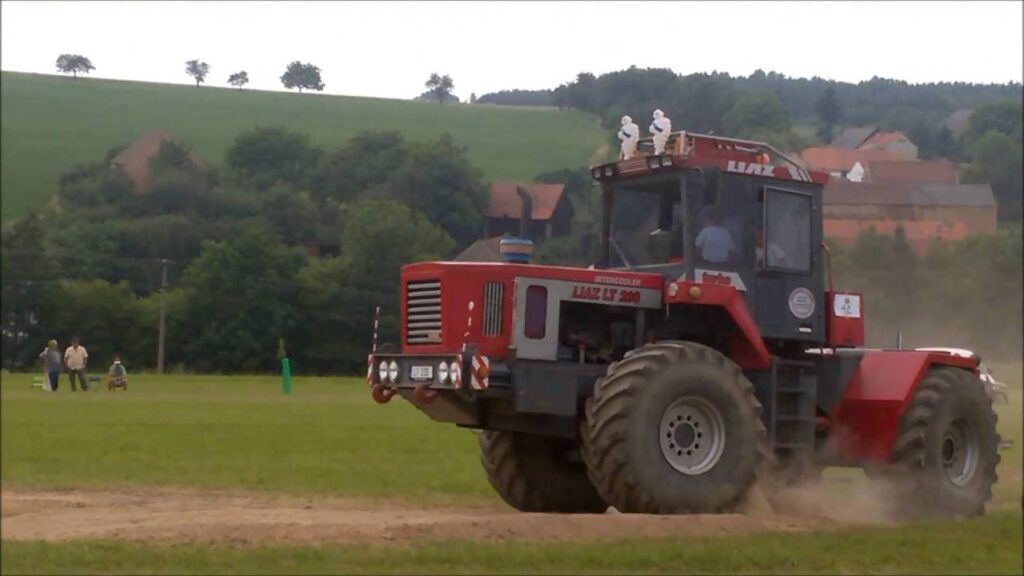
The true highlight of the LT 230 was its engine.
Power came from a domestically developed turbocharged diesel producing 230 horsepower, making it one of the finest engines built in Eastern Europe during its era.
Reliable, durable, and surprisingly fuel-efficient, the engine even produced more power than the standard Soviet K-700 powerplant.
Later, LIAZ introduced the LT 180, fitted with a naturally aspirated 180-horsepower diesel. This version reflected economic realities rather than technical limitations, as diesel fuel was considerably more expensive in Czechoslovakia than in the Soviet Union, leading many farms to favor lower-powered but more economical machines.
The rest of the drivetrain matched the engine’s reputation.
Its transmission, hydraulic systems, and overall build quality were exceptional, reinforcing Czechoslovakia’s reputation for producing some of the finest mechanical equipment in the socialist world.
Air Conditioning in a Tractor? Yes, Really
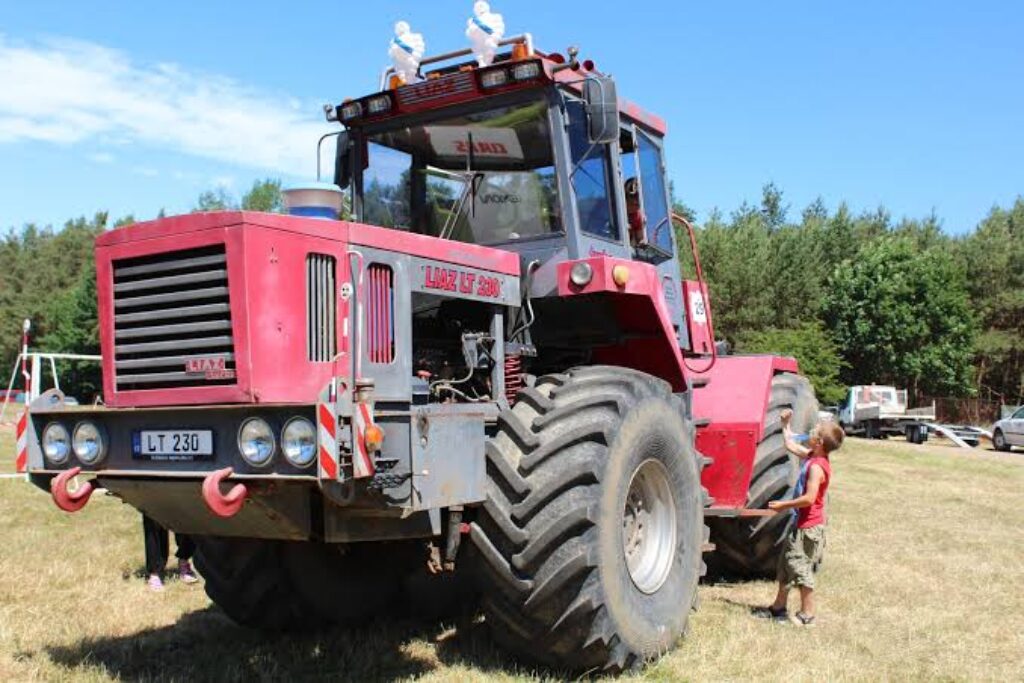
Ironically, the feature that impressed Soviet operators the most was not the engine.
It was the air conditioning.
Today that may seem ordinary, but in the late 1970s and early 1980s, an air-conditioned tractor cab was considered an extraordinary luxury.
Even more impressive was the system’s design.
The compressor was built as a removable module that could be disconnected for maintenance without putting the tractor out of service for extended periods. During winter, operators were instructed to remove the entire unit and store it indoors until the next working season.
The cab also featured an advanced ventilation system with air filtration that protected the operator from dust during field operations.
Compared to most tractors of the era, the LT 230 offered a remarkably comfortable working environment.
It Even Worked in the Soviet Union
Although production numbers remained relatively small, several LT 230 tractors eventually found their way into the Soviet Union.
They were used for evaluation on state farms near Moscow, performing many of the same duties as the K-700.
According to operators, the Czechoslovak machine handled plowing, seeding, and heavy transport just as effectively as its Soviet counterpart. Many also praised its superior comfort and higher manufacturing quality.
Despite these positive impressions, the LT 230 never became widespread in the USSR.
The Soviet Union already possessed a massive domestic tractor industry centered around the Kirov Plant, leaving little need for large-scale imports of heavy tractors.
One of the Finest Tractors of Socialist Europe
Today, the LIAZ LT 230 is known mainly among collectors and enthusiasts of historic agricultural machinery.
Yet it stands as an excellent example of just how advanced Czechoslovak engineering had become during the second half of the twentieth century. Rather than simply copying the Soviet K-700, its designers refined the same concept, placing greater emphasis on versatility, lower soil impact, build quality, and operator comfort.
If the K-700 became the symbol of Soviet agriculture, the LIAZ LT 230 can rightly be considered its European cousin—more compact, more comfortable, and in many respects a more sophisticated piece of engineering.
Even decades later, this rare machine continues to fascinate collectors and historians alike, remaining one of the most overlooked masterpieces of Czechoslovak industrial design.