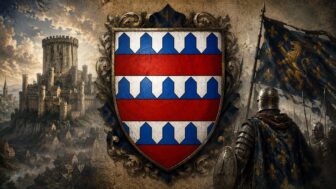
On May 18, 1291, the banners of the Kingdom of Jerusalem, the Knights Templar, the Knights Hospitaller, and the great cities of Europe still flew above the mighty walls of Acre. Merchants continued trading in its bustling streets, Venetian and Genoese ships rocked gently in the harbor, and many of the city’s inhabitants still hoped that its formidable fortifications would once again withstand the siege, just as they had so many times before.
But beyond those walls stood an army unlike any the Crusaders had ever faced.
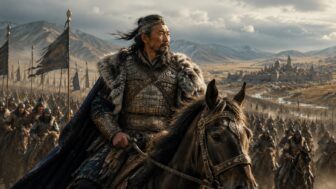
On the horizon stretched the endless camp of Sultan al-Ashraf Khalil of the Mamluk Sultanate. Contemporary chroniclers spoke of hundreds of siege engines, tens of thousands of soldiers, and an uninterrupted stream of reinforcements. Modern historians are more cautious in their estimates, but they agree on one point: never before had the Crusader states faced such a massive and well-organized siege.
Within ten weeks, Acre would cease to exist.
And with it would end nearly two centuries of Crusader rule in the Holy Land.
The Last Capital of the Kingdom of Jerusalem
After the catastrophic Battle of Hattin in 1187, the Crusaders lost Jerusalem.
The Kingdom of Jerusalem, however, did not disappear.
Thanks to the Third Crusade, much of the Mediterranean coastline was recovered, and Acre became the kingdom’s new political and economic center.
It was one of the most remarkable cities of the medieval world.
French, Italian, German, Arabic, Armenian, and Greek could all be heard in its crowded streets.
Entire quarters belonged to Venice, Genoa, and Pisa.
The great fortresses of the Knights Templar and the Knights Hospitaller dominated the skyline.
Merchants traded spices, silk, weapons, precious metals, and luxury goods arriving from every corner of the Mediterranean.
In many ways, Acre became the true capital of the Crusader world.
As long as Acre stood, there remained hope that Jerusalem might one day be reclaimed.
The Mamluks Decided to End the War
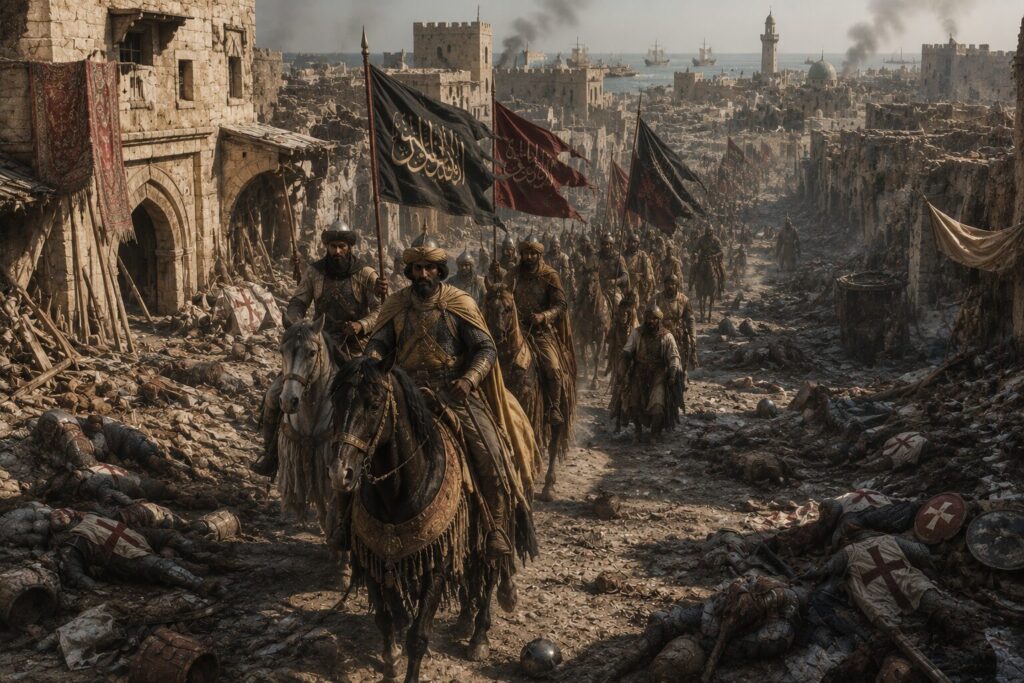
During the second half of the thirteenth century, a new military power emerged in the Middle East.
The Mamluk Sultanate.
Its armies had already destroyed the remnants of the Ayyubid dynasty, defeated the Mongols at the Battle of Ain Jalut, and systematically captured one Crusader fortress after another.
By the late thirteenth century, only a handful of coastal cities remained under Latin Christian control.
The most important of them was Acre.
Sultan al-Ashraf Khalil fully understood that capturing the city would mean ending nearly two centuries of Crusader presence in the Holy Land.
The siege was therefore prepared with extraordinary care.
A Fortress That Seemed Impossible to Capture
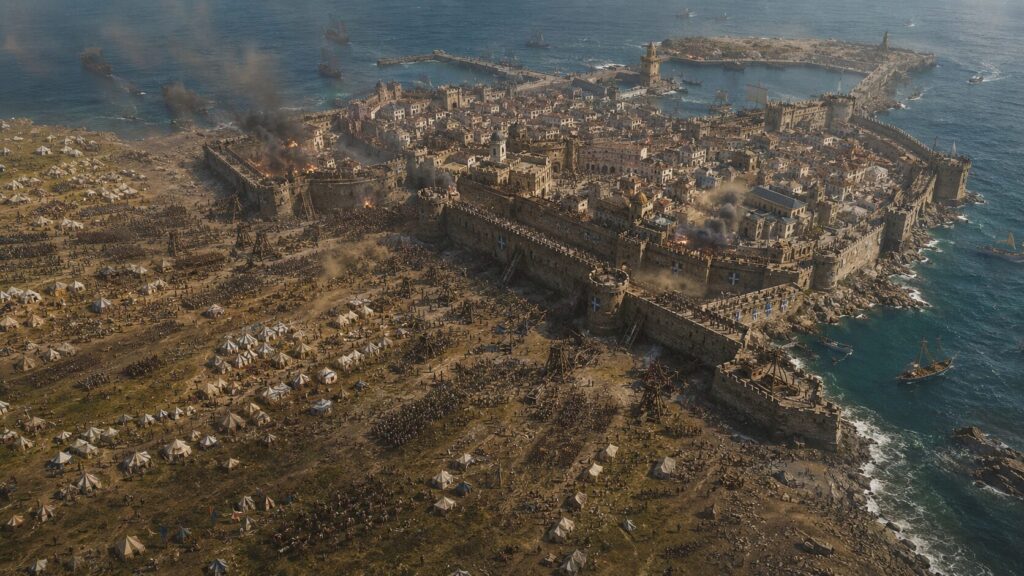
On paper, Acre appeared almost impregnable.
Two massive rings of defensive walls.
Powerful towers.
Deep defensive ditches.
Direct access to the sea.
Continuous supply lines maintained by fleets arriving from Europe.
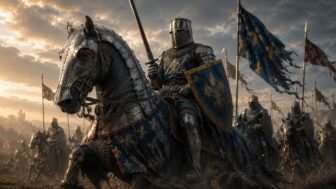
Defending the city were some of the finest warriors in Christendom.
The Knights Templar.
The Knights Hospitaller.
The Teutonic Knights.
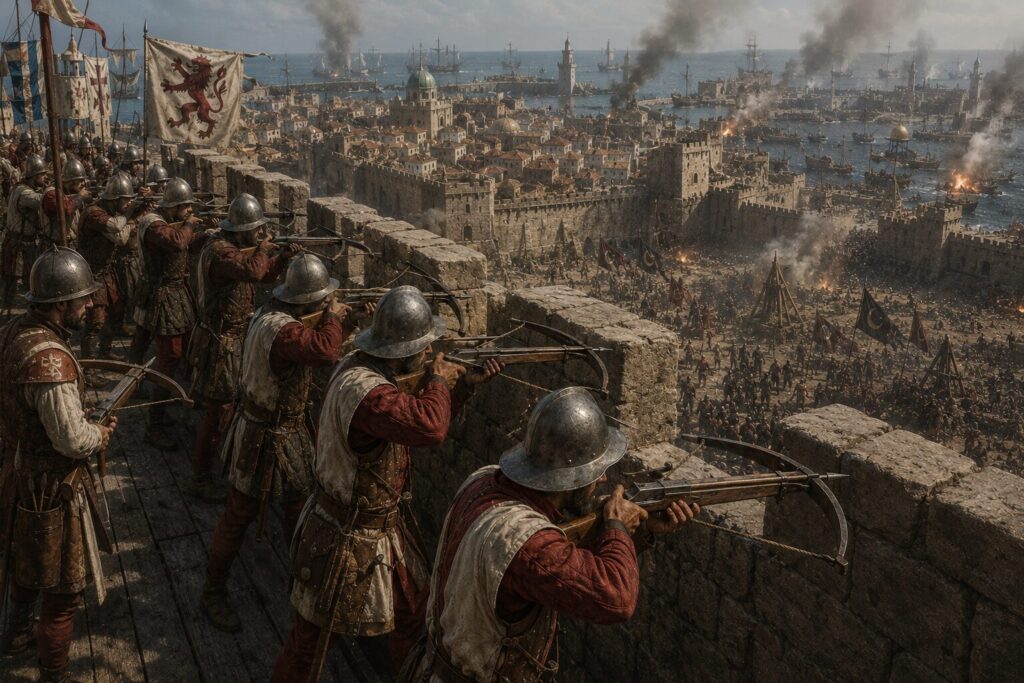
Professional crossbowmen.
Italian sailors and mercenaries.
Every man on those walls understood one brutal truth.
There was nowhere left to retreat.
Behind them lay only the sea.
…But the Mamluks Had Learned How to Break Fortresses
The greatest advantage of the Mamluk army was not simply its size but its organization.
Military engineers constructed enormous trebuchets capable of hurling massive stones against the walls day and night.
Sappers dug tunnels beneath towers while engineers relentlessly weakened the city’s defenses.
Archers and crossbowmen saturated the battlements with arrows, making it nearly impossible for defenders to expose themselves.
Every day another section of the walls crumbled.
Every day more defenders died.
And every day it became increasingly obvious that no relief force was coming.
Europe was consumed by its own political conflicts.
No new Crusade materialized.
Acre stood alone.
The Last Stand of the Knights Templar
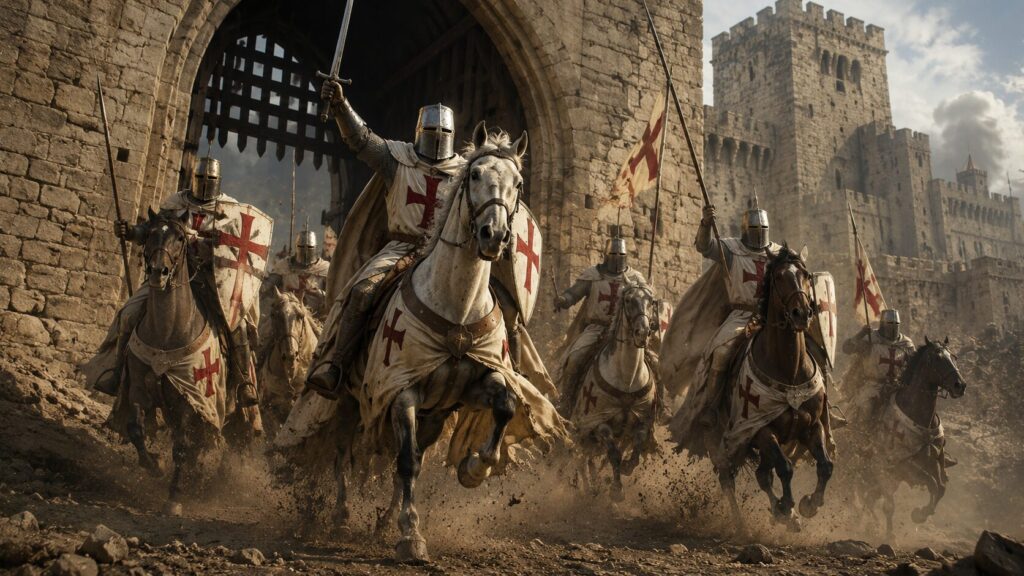
On May 18, the Mamluks finally broke through the defenses.
The city descended into chaos.
Street by street, house by house, the defenders fought desperately.
Most civilians rushed toward the harbor.
Ships departed overloaded with refugees.
Many drowned trying to swim to the departing vessels.
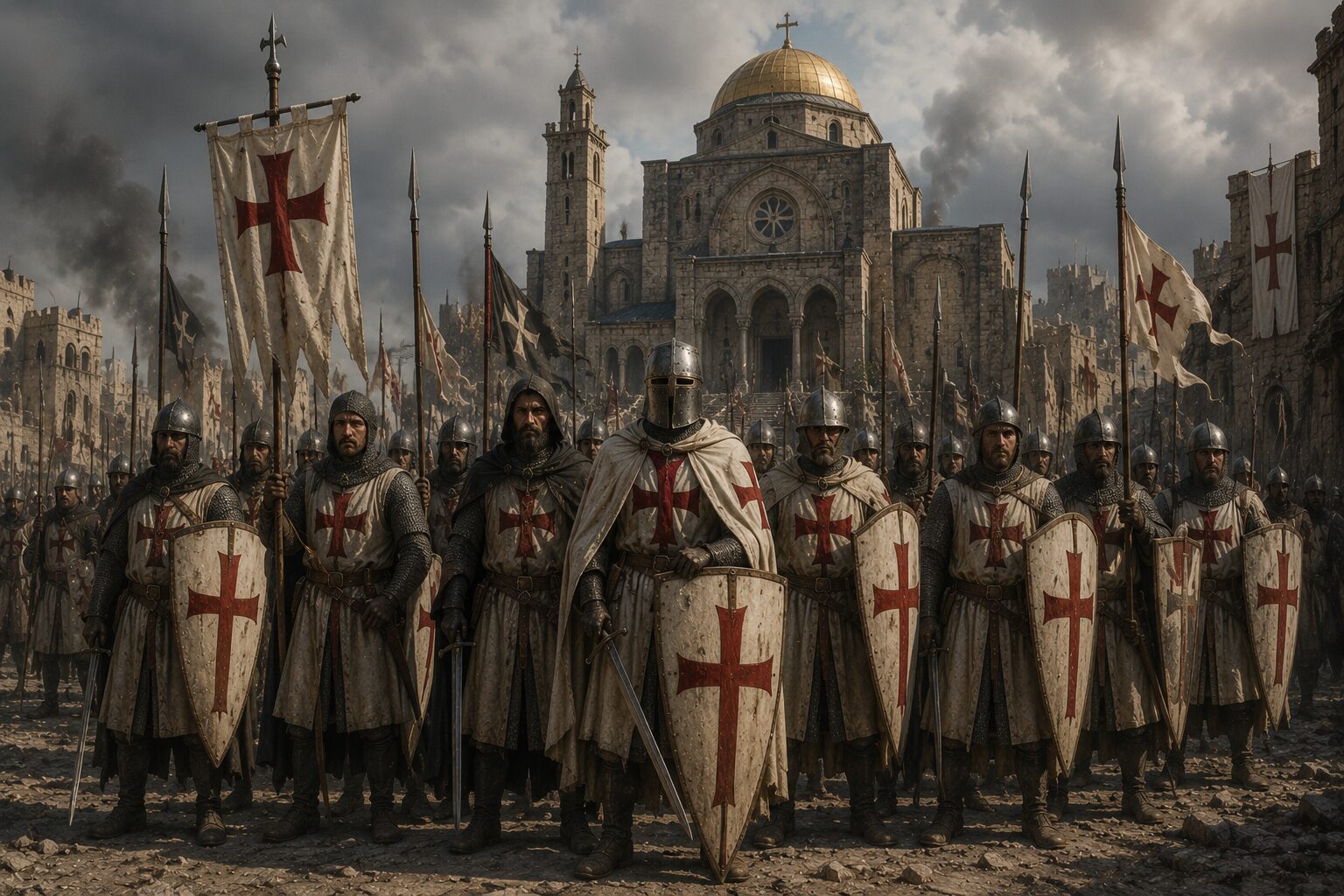
The fiercest resistance came from the Knights Templar.
The surviving brothers withdrew into their enormous fortress overlooking the harbor.
There, the final chapter of the military orders in the Holy Land unfolded.
When it became clear that the fortress could no longer be held, many Templars refused to surrender.
During the final assault, one of the great towers collapsed.
The falling masonry buried both the defenders and hundreds of attacking Mamluks beneath its ruins.
It was a tragic symbol.
The last stronghold of the Crusaders quite literally buried its final defenders.
The End of a Two-Hundred-Year Dream
After Acre fell, organized resistance quickly collapsed.
Within weeks, Tyre surrendered.
Then Sidon.
Beirut.
Atlit.
The remaining Crusader strongholds were abandoned with little or no resistance.
By the end of the summer of 1291, the Crusader states had vanished from the map.
The Holy Land had once again come entirely under Muslim rule.
Future Crusades would still be proclaimed.
Popes would continue calling upon Europe to liberate Jerusalem.
But those would be very different wars.
The last genuine opportunity had been lost beneath the walls of Acre.
Why the Crusaders Lost
There was no single reason for the disaster.
European monarchs had gradually lost interest in the Holy Land.
The Crusader states themselves were weakened by internal rivalries.
The Italian maritime republics fought one another even inside Acre.
The military orders often disagreed over strategy.
Royal authority had largely collapsed.
Meanwhile, the Mamluk Sultanate had become a highly centralized military state with enormous resources and experienced leadership.
It fought not through isolated expeditions but through a long-term strategy of systematically eliminating one fortress after another.
The fall of Acre was not a sudden catastrophe.
It was the inevitable conclusion of a process that had begun with the defeat at Hattin more than a century earlier.
The Last Day of an Era
History rarely ends with a single event.
Yet sometimes it does.
The fall of Acre was one of those moments.
For nearly two centuries, Western European knights had built castles across the Holy Land, founded cities, established trade routes, and dreamed of permanently reclaiming Jerusalem.
On May 18, 1291, that dream died.
As the last ships sailed away from Acre’s burning harbor, they carried with them more than refugees.
They carried away an entire age.
The Crusader states disappeared.
But their legacy endured.
Even today, the ruins of Acre are more than ancient stones.
They stand as the place where the history of the Crusader kingdoms came to an end—and where one of the greatest chapters of medieval Europe finally closed.