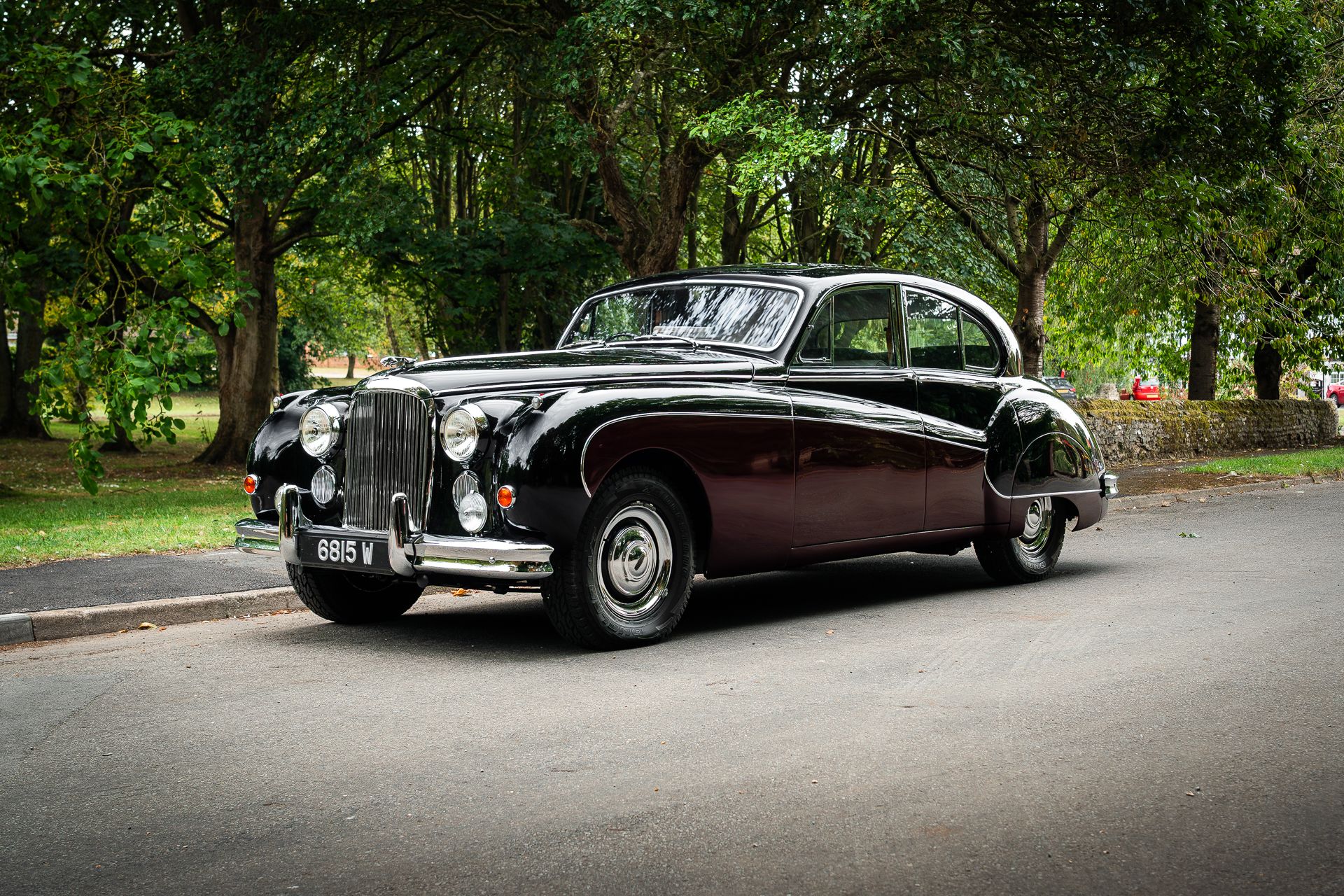
Today, it is difficult to imagine a full-size luxury sedan capable of carrying government officials, industrialists, and diplomats during the day, then effortlessly leaving most sports cars behind on the highway. Yet that was precisely what the Jaguar Mk IX represented. It was born in an era when luxury was measured not by the number of digital displays, but by the depth of polished walnut veneer, the quality of Connolly leather, and the silky smoothness of a straight-six engine.
By 1960, the Mk IX stood at the top of Jaguar’s lineup. It was the final and most refined evolution of the company’s large executive sedans, a family that had begun with the Mk VII in the early 1950s. More than just another luxury car, it marked the end of an era in British automotive engineering—a time when manufacturers were less concerned with electronic technology and more focused on building elegant, beautifully crafted automobiles.
From Postwar Britain to International Success

Following World War II, Britain’s automotive industry faced enormous economic challenges. The country desperately needed export revenue, forcing manufacturers to target overseas buyers, particularly in the United States.
Jaguar founder William Lyons understood that wealthy American customers wanted more than luxury—they wanted performance.
That philosophy led to the introduction of the Jaguar Mk VII in 1950, a large executive sedan that successfully combined spacious accommodations with remarkable speed. It was followed by the Mk VIII, and in 1958 Jaguar unveiled the Mk IX, the ultimate evolution of the series.
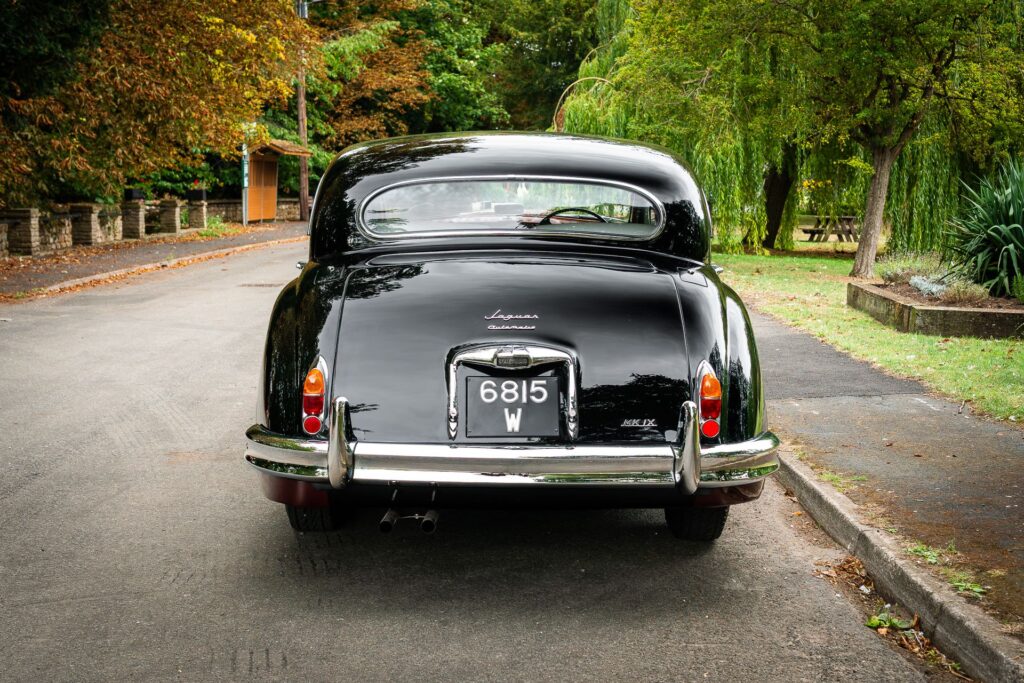
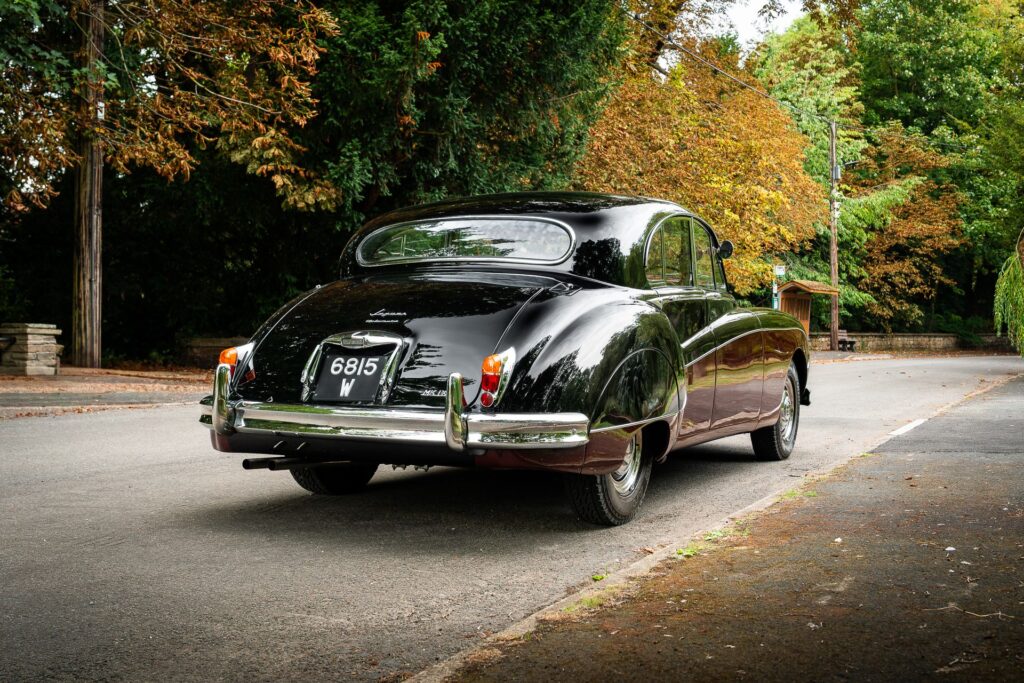
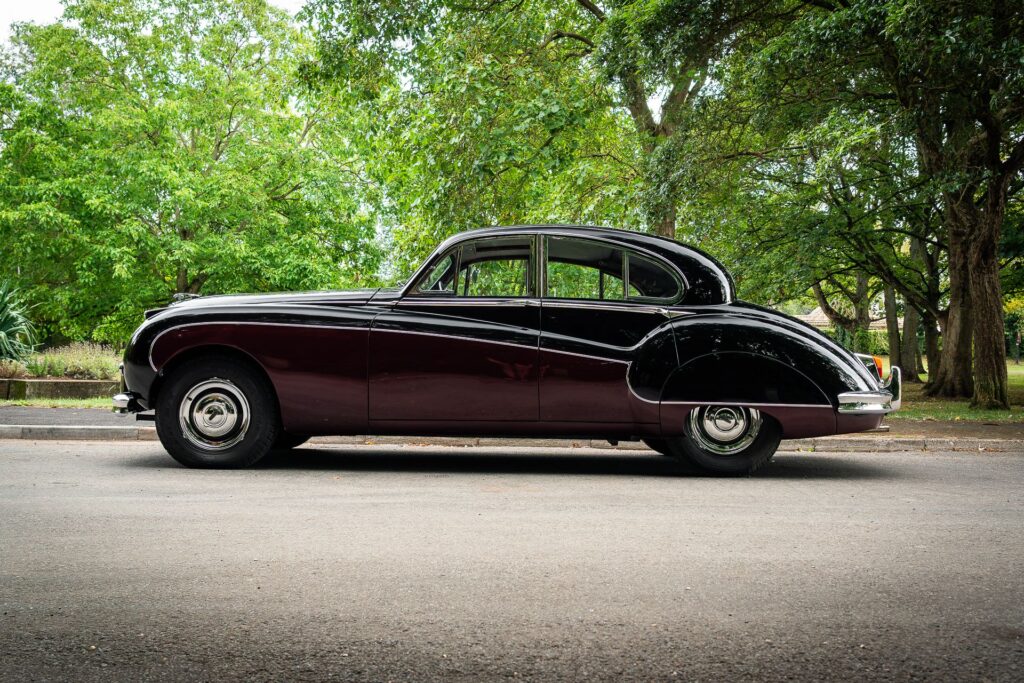
Visually, the car retained the classic proportions of its predecessors. The long hood, sweeping front fenders, imposing chrome grille, and flowing roofline made it resemble a grand British limousine from the prewar era rather than a modern automobile of the late 1950s.
Beneath its conservative styling, however, was surprisingly advanced engineering.
A Sports Car Heart Beneath a Luxury Body
The greatest pride of the Mk IX was its legendary XK engine.
This 3.8-liter inline-six had already established itself as one of the finest engines of its generation, powering Jaguar sports cars and contributing to the company’s victories at the 24 Hours of Le Mans.
For the Mk IX, the engine produced an impressive 220 horsepower. Even today, that figure commands respect. In 1960, it was extraordinary for a full-size luxury sedan.
The car could exceed 184 km/h (114 mph), while accelerating from 0 to 100 km/h in approximately 11 seconds—performance few European executive cars of the period could match.
Equally impressive was the engine’s flexibility. The big sedan accelerated effortlessly from almost any speed, requiring surprisingly few gear changes thanks to the abundant torque of its straight-six.
One of the First Luxury Sedans with Four-Wheel Disc Brakes
If the engine made the Mk IX fast, its braking system made it genuinely modern.
Jaguar was among the first manufacturers to adopt four-wheel disc brakes on production automobiles, working closely with Dunlop to perfect the technology.
By the late 1950s, having disc brakes on all four wheels was an exceptionally advanced feature, especially for a luxury sedan.
Power steering was also standard equipment, making the nearly two-ton automobile surprisingly easy to maneuver despite its size.
The rear suspension remained a traditional live axle supported by leaf springs—a design that appears old-fashioned today—but Jaguar engineers managed to achieve an impressive balance between comfort and stability. On long highways, the Mk IX seemed to glide effortlessly over the pavement.
The Cabin of an English Gentleman’s Club
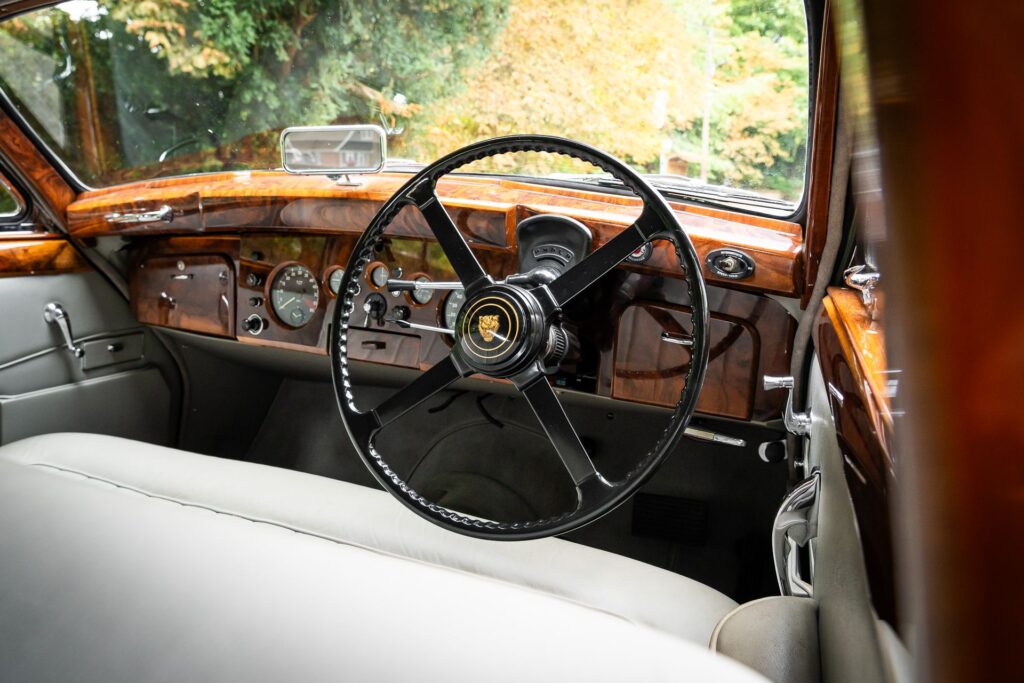
Opening the door of a Mk IX feels less like entering a car and more like stepping into a traditional British gentleman’s club.
The dashboard is almost entirely covered in polished walnut veneer. A large thin-rim steering wheel sits ahead of beautifully crafted Smiths gauges, while the seats are upholstered in genuine Connolly leather—the same material used by Rolls-Royce, Bentley, and Aston Martin for decades.
The rear bench resembles an elegant leather sofa more than a conventional automobile seat.
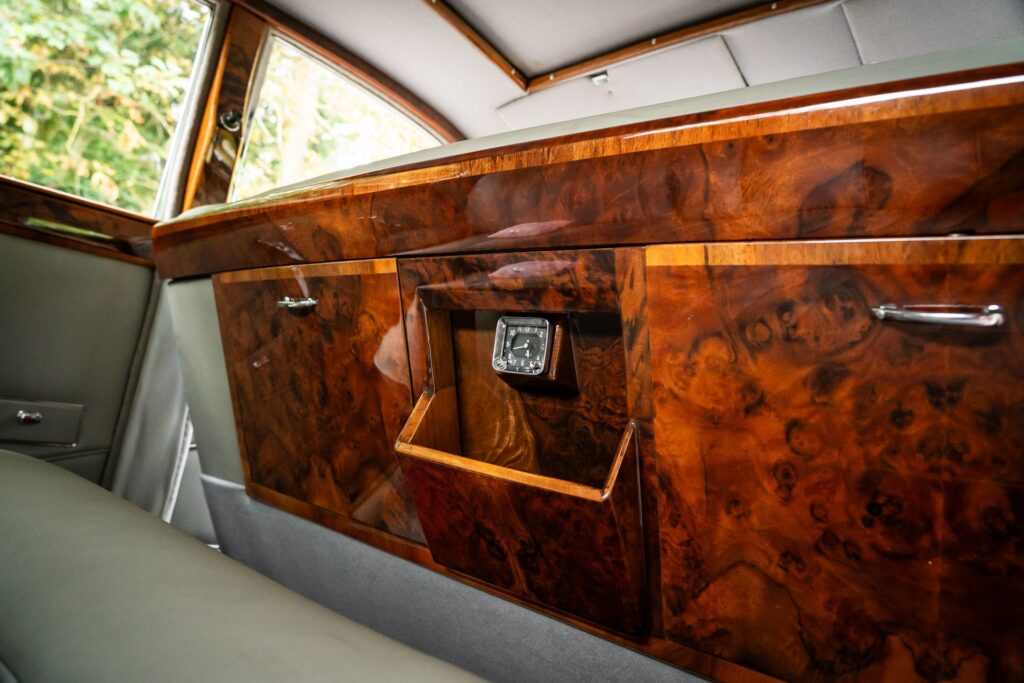
For the early 1960s, the equipment list was exceptionally generous. Electric windows, an efficient heating system, quality ventilation, folding picnic tables, and extensive chrome trim reflected the car’s status as one of Britain’s premier luxury automobiles.
Much of the interior was assembled by hand. Every wood panel was individually fitted, and every leather section carefully finished by skilled craftsmen rather than automated production lines.
Jaguar Mk IX Specifications
| Manufacturer | Jaguar Cars |
| Production Years | 1958–1961 |
| Body Style | Four-door luxury sedan |
| Engine | XK inline-six |
| Displacement | 3.8 liters |
| Power Output | 220 hp |
| Torque | Approximately 325 Nm |
| Transmission | 4-speed manual or Borg-Warner automatic |
| Drive Layout | Rear-wheel drive |
| Top Speed | Approximately 184 km/h (114 mph) |
| 0–100 km/h | Around 11 seconds |
| Brakes | Four-wheel disc brakes |
| Curb Weight | Approximately 1,850 kg |
The Last of the Traditional Jaguars
Despite its impressive capabilities, the Mk IX became the final representative of Jaguar’s traditional large sedan philosophy.
The automotive world was changing rapidly in the early 1960s. Buyers increasingly demanded lighter, more modern cars with advanced chassis technology. In 1961, the Mk IX was replaced by the revolutionary Jaguar Mark X, featuring an entirely new monocoque structure and independent rear suspension.
With that transition, the era of Jaguar’s classic body-on-frame luxury sedans effectively came to an end.
Ironically, that is exactly what makes the Mk IX so desirable today.
It represents two different eras at once. Visually, it embodies the elegance of Britain’s grand prewar luxury automobiles, with sweeping fenders and magnificent chrome detailing. Mechanically, however, it already belonged to a new generation—one defined by high-performance engines, advanced braking systems, and genuine high-speed capability.
That unique combination is why the Jaguar Mk IX remains one of the finest examples of British automotive engineering. It successfully blended the refinement of a luxury limousine with the performance of a sports car, preserving the spirit of old England while hinting at the exciting future that would make Jaguar one of the world’s most celebrated automotive brands.