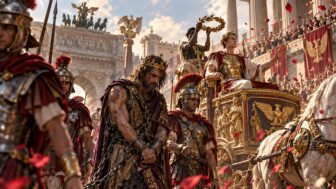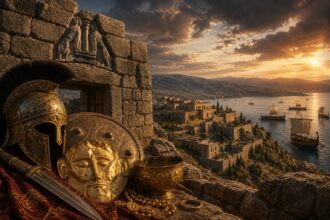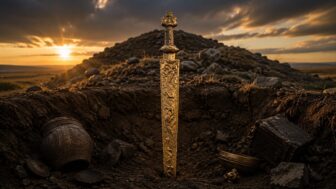
The release of the first trailer for Christopher Nolan’s upcoming adaptation of The Odyssey has once again brought renewed attention to one of the most famous periods in ancient history. The stories of Odysseus, Achilles, Hector, and the fall of Troy have inspired poets, artists, and filmmakers for nearly three thousand years. Yet every time Hollywood returns to Homer’s world, the same problem appears.
We tend to imagine the Trojan War through the lens of Classical Greece.
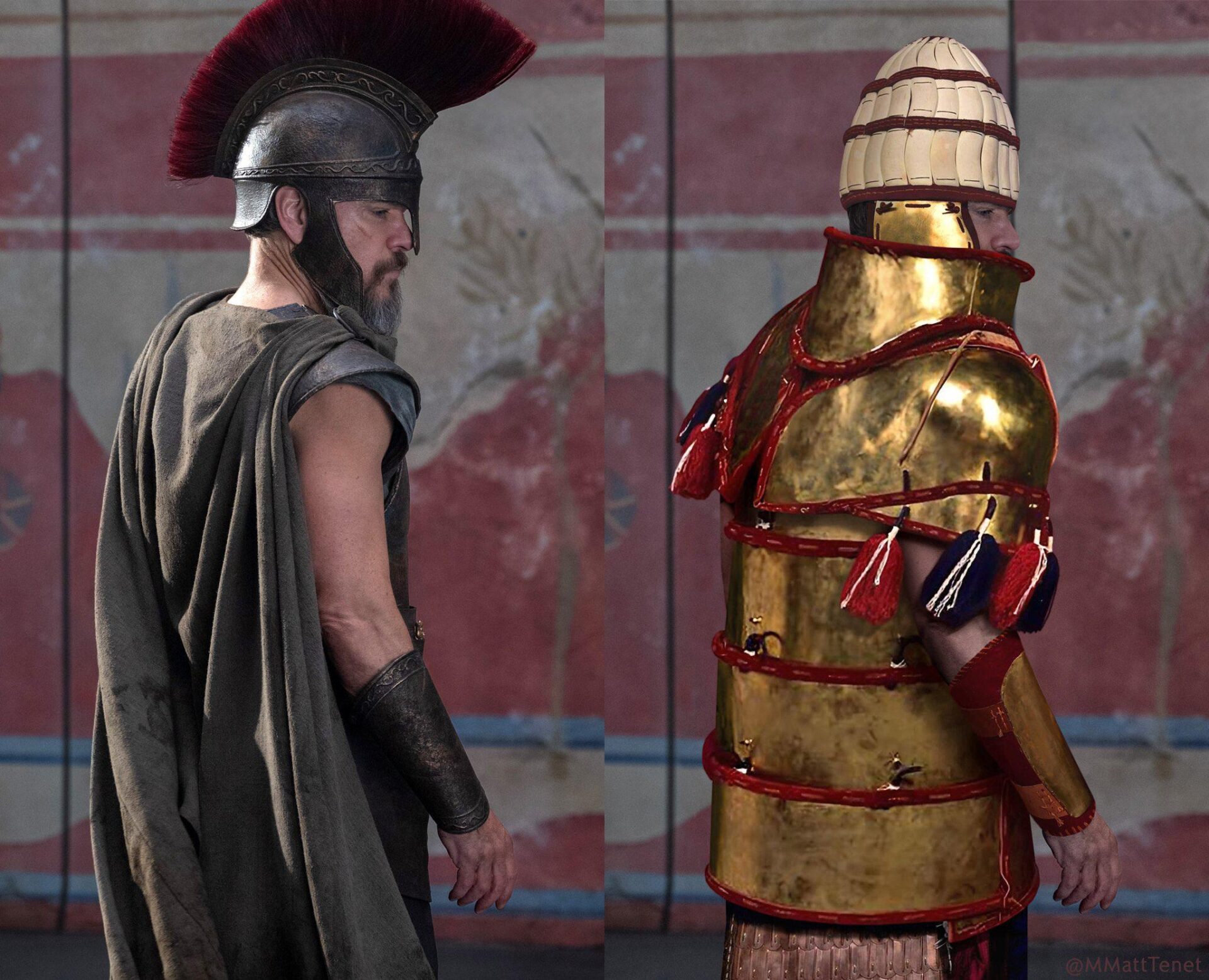
We picture Spartans carrying round shields, warriors in Corinthian helmets, and bronze-clad heroes marching across sunlit battlefields. Sometimes, as in Wolfgang Petersen’s Troy, the heroes fight almost bare-chested, relying more on their physiques than on armor.
The reality was very different.
If the events described by Homer were indeed based on a real conflict that took place in the late 13th or early 12th century BC, then Achilles, Hector, and Odysseus lived in a world far older than Classical Greece. It was the age of Mycenaean palaces, Bronze Age kings, war chariots, gigantic shields, and armor that often looked closer to medieval plate than to anything associated with ancient Greece.
And the more archaeologists uncover about this period, the more fascinating the truth becomes.
A World Before Greece
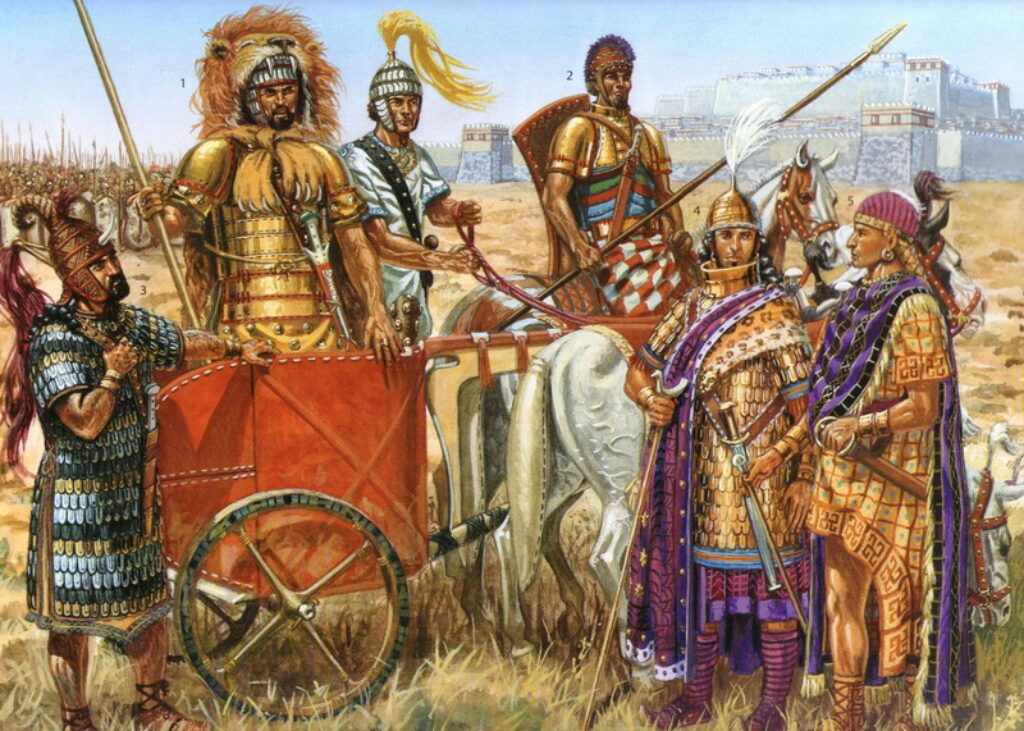
When most people hear the word “Greek,” they think of Athens, Sparta, marble temples, and hoplites.
Yet nearly seven centuries separate the Trojan War from the age of Leonidas.
That is roughly the same span of time that separates the Crusades from the modern world.
The heroes of Homer belonged not to Classical Greece but to the Mycenaean civilization.
This was a world of fortified palace complexes protected by cyclopean walls. It was ruled by warrior-kings who controlled trade networks stretching across the Eastern Mediterranean. Their courts maintained contacts with Egypt, the Hittite Empire, Cyprus, and the cities of the Levant.
The rulers of Mycenae were not philosophers or citizens of city-states.
They were military aristocrats.
And their armor reflected that reality.
The Dendra Armor: The Tank of the Bronze Age
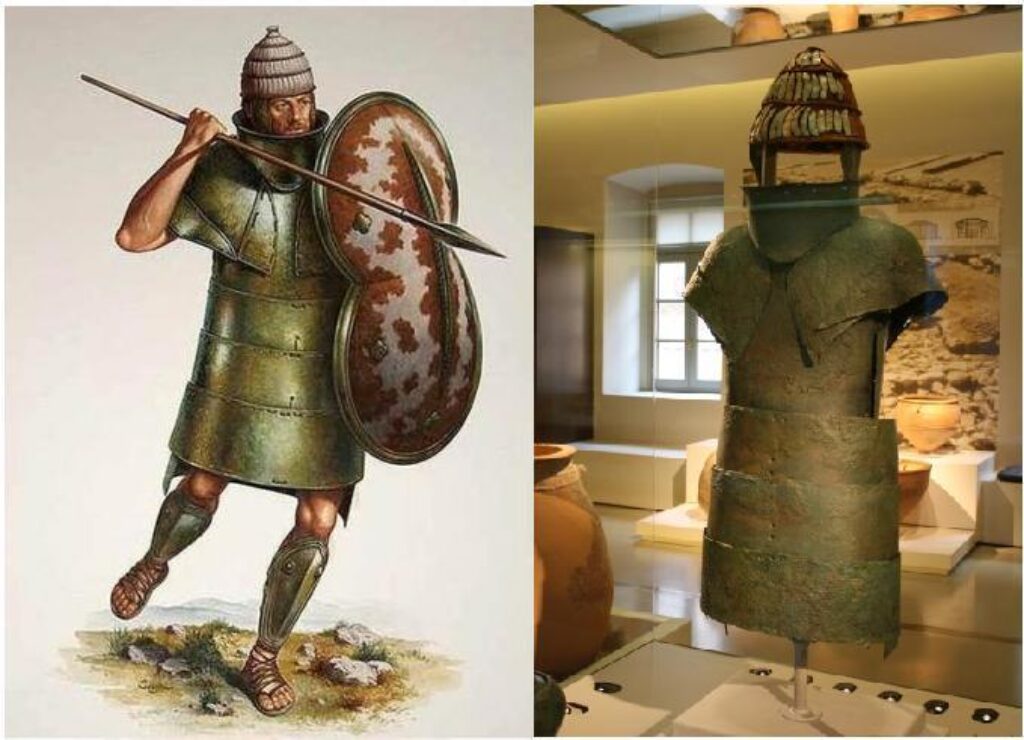
In 1960, archaeologists made a discovery that completely transformed our understanding of the Trojan War era.
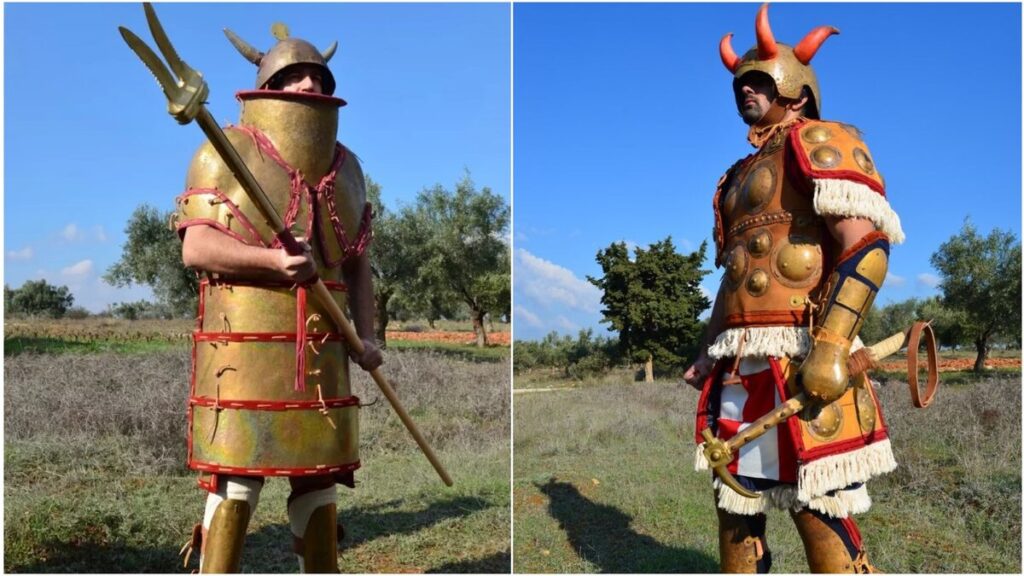
Near the village of Dendra in Greece, they uncovered an almost complete suit of armor dating to the 15th century BC.
When scholars first reconstructed it, many believed it must have been ceremonial.
Surely no one could fight wearing something so massive.
The armor consisted of numerous bronze plates covering most of the body. A large gorget protected the neck and shoulders, while additional pieces guarded the arms and legs. The result looked less like the equipment of an ancient Greek warrior and more like something worn by a medieval knight.
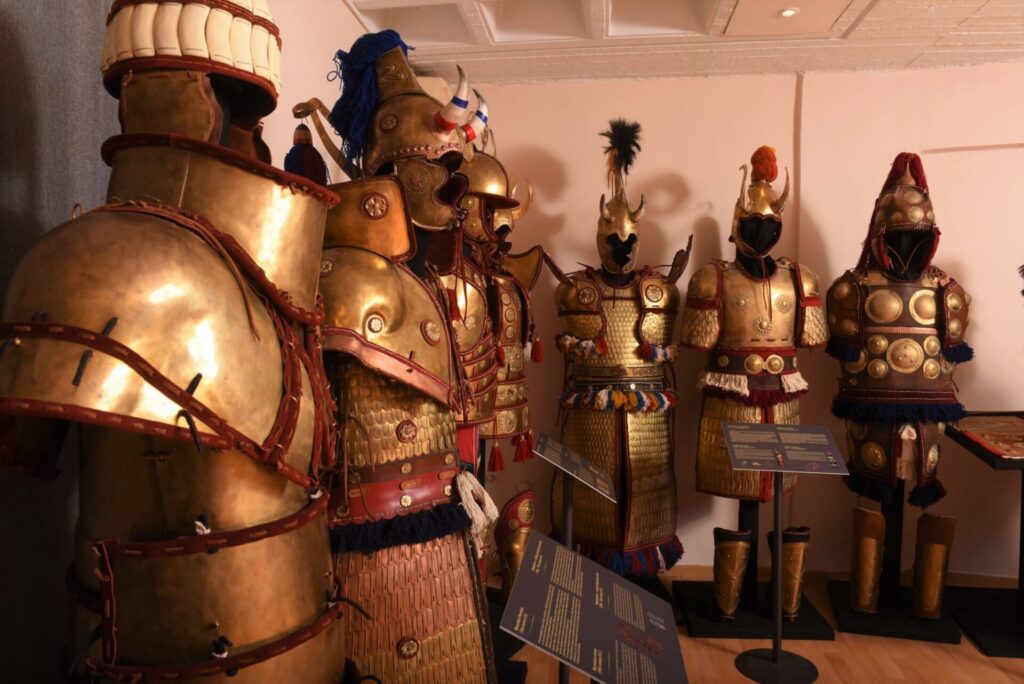
Some researchers even claimed that movement would have been nearly impossible.
Later experiments proved otherwise.
Modern reenactors have walked, run, climbed onto chariots, and fought in accurate reproductions of the armor.
The Dendra Panoply turned out to be exactly what it appeared to be: a practical battlefield armor for an elite Bronze Age warrior.
If Achilles had existed, his equipment would likely have resembled the Dendra armor far more than the Hollywood image familiar to modern audiences.
The Boar’s Tusk Helmet Was Not a Myth
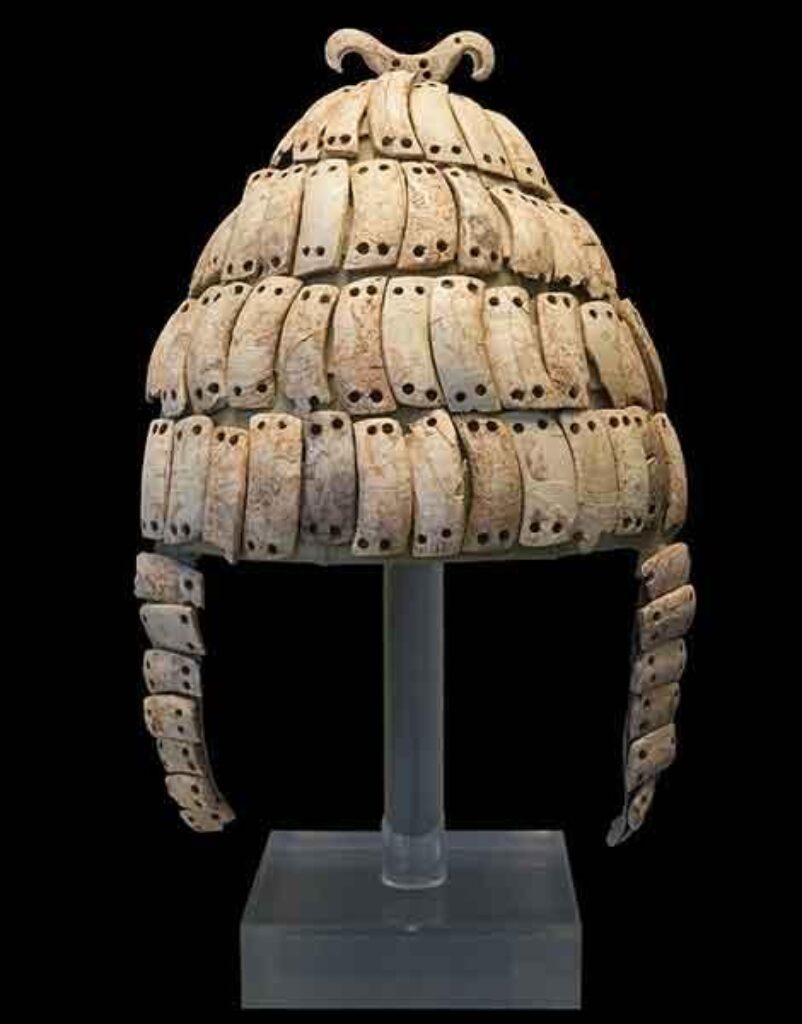
One of the most unusual pieces of equipment mentioned by Homer is the famous boar’s tusk helmet.
In The Odyssey, Homer describes helmets made from the tusks of wild boars.
For centuries, many historians assumed this was simply poetic embellishment.
Then archaeologists began finding them.
The construction was surprisingly simple.
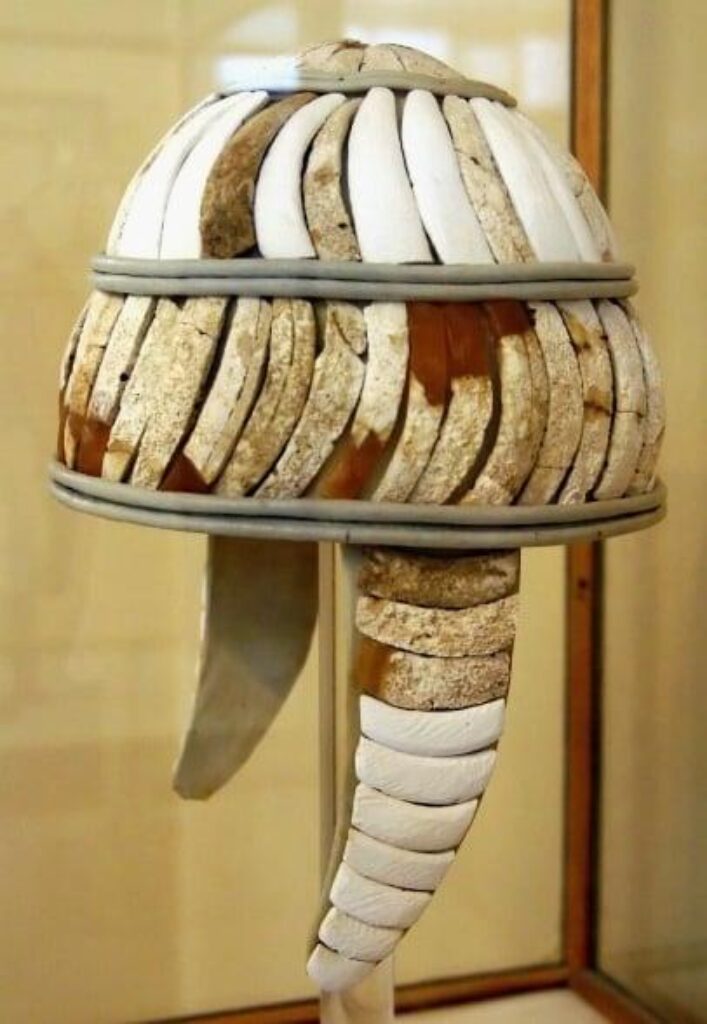
A leather or felt cap formed the base, while polished boar tusks were attached in carefully arranged rows across the surface.
Creating such a helmet required dozens of tusks.
As a result, these helmets were both protective equipment and status symbols.
An ordinary farmer could never afford one.
Owning a boar’s tusk helmet signaled membership in the military elite of the Bronze Age.
It is precisely details like these that highlight how different the real Trojan War was from its modern cinematic portrayals.
Giant Shields Instead of Hoplite Aspides
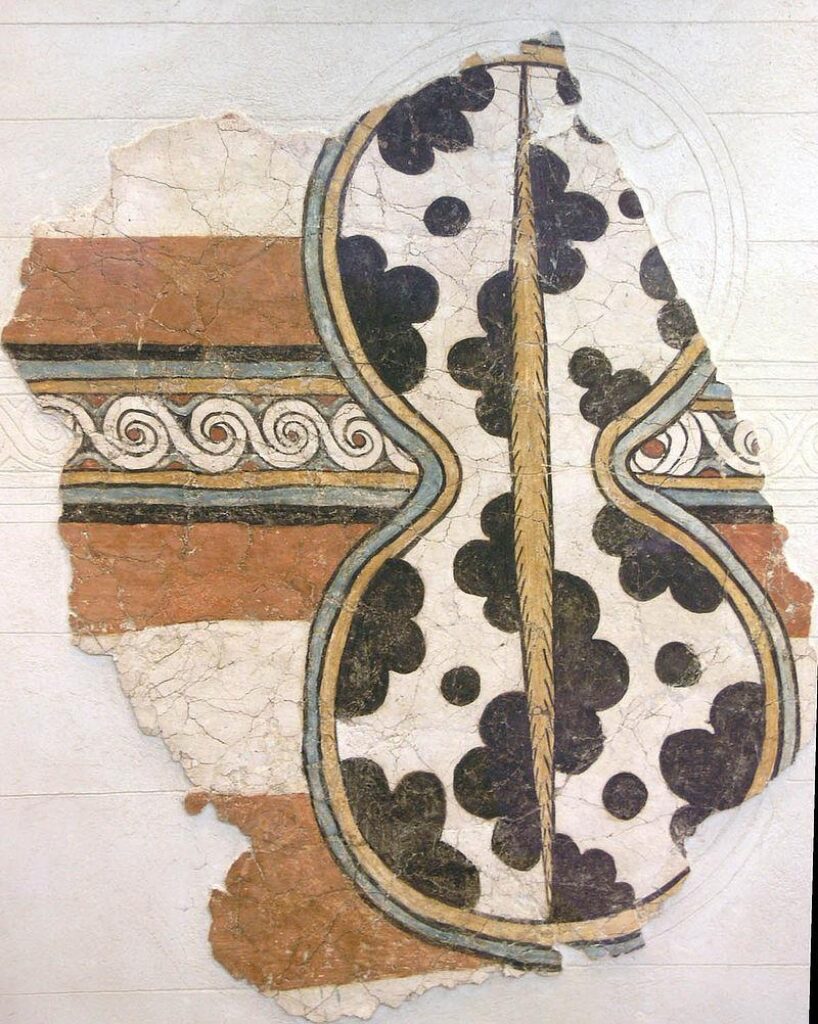
Another persistent misconception concerns shields.
Films almost always depict Trojan War warriors carrying relatively small round shields similar to those used by Classical Greek hoplites.
Archaeology tells a different story.
Mycenaean artwork frequently shows enormous shields.
Some were rectangular and almost as tall as the warriors themselves.
Others had the famous figure-eight shape that has become one of the defining symbols of the era.
These massive shields could cover most of the body.
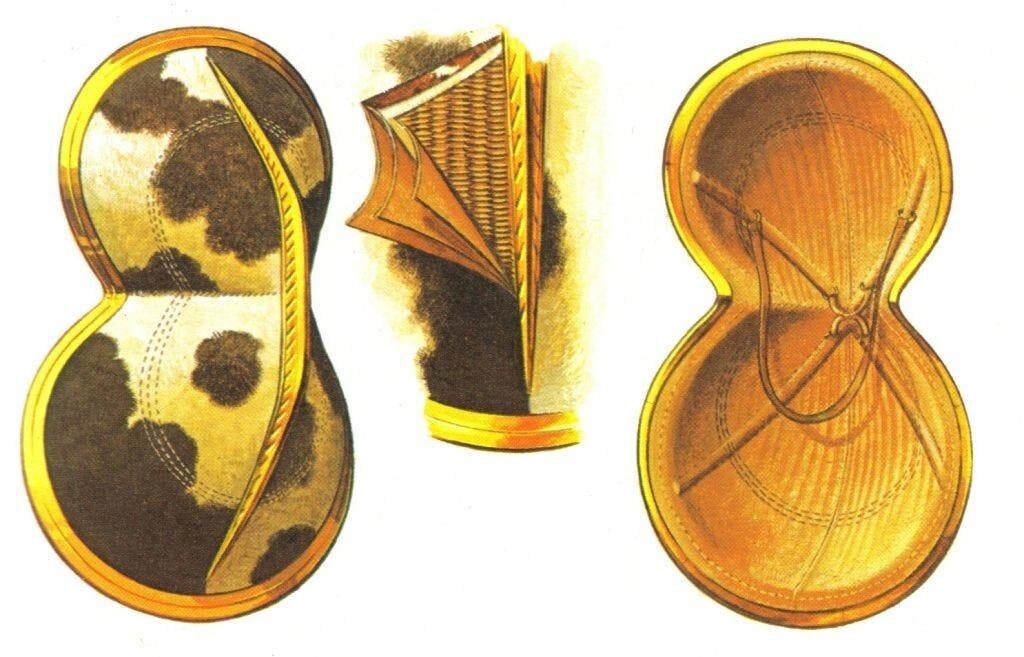
Such protection made perfect sense in an age dominated by spears, javelins, and arrows.
Centuries later these shield types disappeared.
But during the era traditionally associated with Troy, they were entirely normal.
A modern observer transported to a battlefield of the 13th century BC might struggle to recognize these warriors as the ancestors of Classical Greece.
A World of Bronze, Not Iron
The term “Bronze Age” is often treated as a convenient label.
In reality, bronze shaped almost every aspect of warfare.
It was used to make swords.
It was used to make helmets.
It was used for spearheads, armor components, and chariot fittings.
Iron was known.
But it remained rare and expensive.
In many cases, high-quality bronze weapons actually outperformed early iron ones.
That means Achilles would almost certainly have carried bronze weapons rather than iron ones.
Even the legendary armor forged by Hephaestus, if stripped of its mythical elements, would likely have represented the pinnacle of Bronze Age craftsmanship.
Who Were the Real Heroes of Troy?
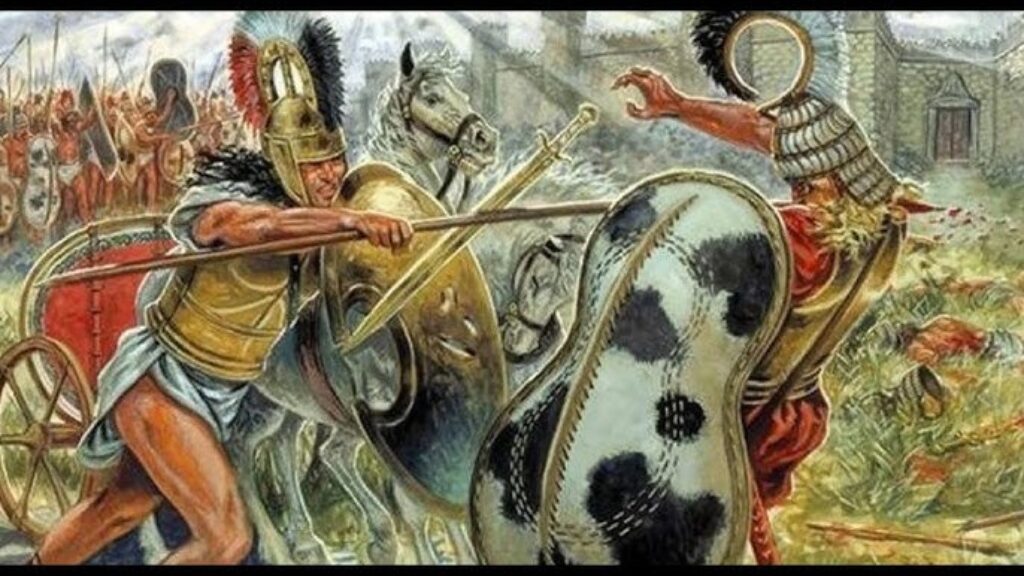
One of the biggest mistakes made by popular culture is portraying the heroes of the Trojan War as ordinary soldiers.
They were nothing of the sort.
They belonged to the highest level of Bronze Age society.
They controlled vast estates.
They owned chariots.
They commanded retinues of warriors.
In terms of status, they were closer to medieval knights or feudal princes than to the citizen-soldiers of Classical Greece.
Achilles, Odysseus, Menelaus, and Hector were not merely fighters.
They were rulers.
Their equipment was designed not only to protect them but also to display their wealth, prestige, and power.
This helps explain why archaeologists continue to uncover such elaborate and expensive military equipment from the period.
The Catastrophe That Destroyed Achilles’ World
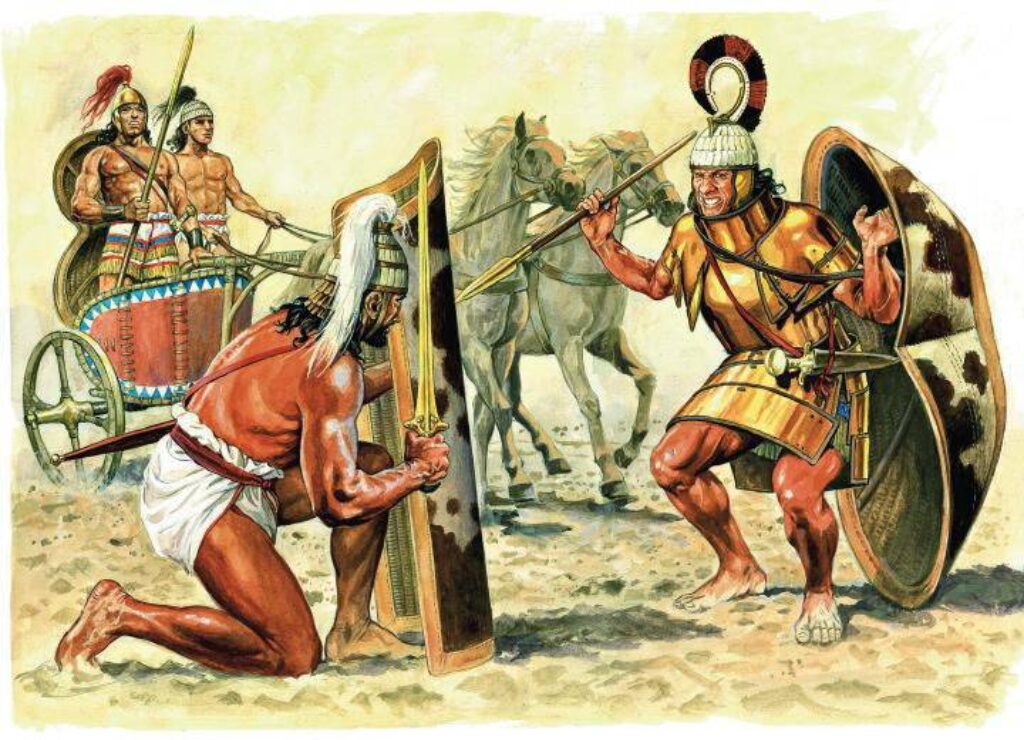
Perhaps the most remarkable aspect of the Trojan War era is how quickly it vanished.
Around 1200 BC, the Eastern Mediterranean experienced one of the greatest collapses in human history.
The Hittite Empire disappeared.
Many Mycenaean palaces were destroyed.
Trade routes collapsed.
Entire cities were abandoned.
Historians still debate the causes.
Some point to the invasions of the so-called Sea Peoples.
Others emphasize climate change, internal unrest, economic disruption, or warfare.
Whatever the reason, the result was the same.
The civilization that produced the Dendra armor, boar’s tusk helmets, and the legendary heroes of Homer ceased to exist.
When Classical Greece emerged centuries later, it was an entirely different world.
Different armies.
Different weapons.
Different ideas about war.
Between Myth and Archaeology
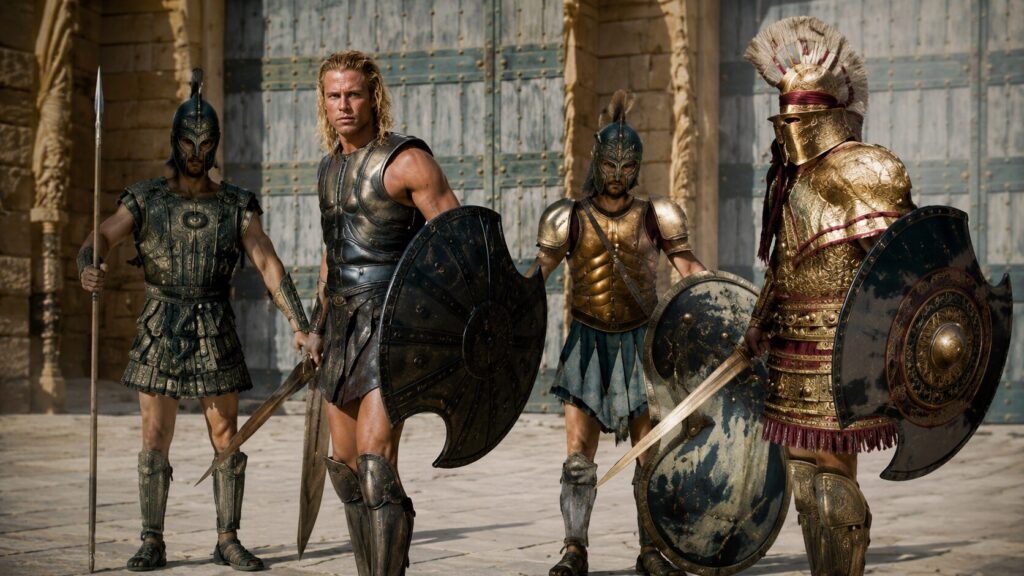
Perhaps that is why the Trojan War remains so compelling.
It exists at the boundary between history and legend.
We may never know whether Achilles existed in the form Homer described.
We may never know whether Odysseus truly wandered the seas for ten years.
We may never know whether the Trojan Horse was a real machine, a metaphor, or a literary invention.
But archaeology offers something equally fascinating.
It allows us to glimpse the real world that may have inspired these stories.
A world of bronze palaces, giant shields, boar’s tusk helmets, and armor that sometimes looks more like medieval plate than anything associated with ancient Greece.
And with every new discovery, one thing becomes increasingly clear:
the real Trojan War was far more extraordinary than any film adaptation could ever be.