The Pith Helmet: The Icon of the British Empire That Outlived the Colonial Wars

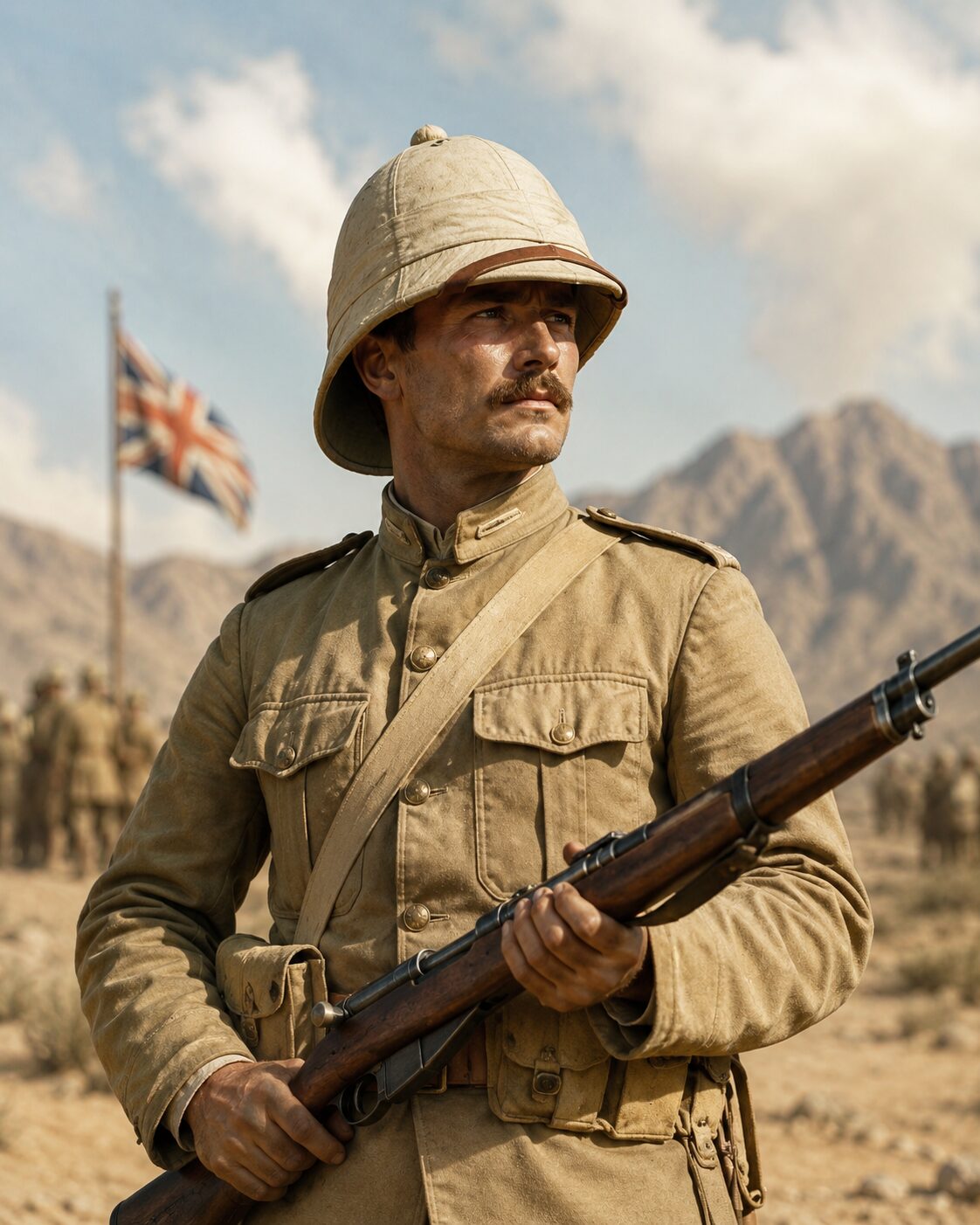
Some pieces of military equipment become symbols of an entire era. A cuirass immediately brings Napoleon’s cavalry to mind. A French Adrian helmet evokes the trenches of the First World War. And when the subject turns to the colonial campaigns of the nineteenth century, one image stands above all others: the light-colored pith helmet worn by British soldiers. This distinctive headgear became one of the most recognizable symbols of the British Empire at the height of its global power.
Ironically, it was never designed for combat. Its primary purpose was to protect its wearer from an enemy that British officers often considered more dangerous than local armies. That enemy was the sun.
A War Against the Climate
As European powers expanded across Africa and Asia, they quickly encountered a problem that could not be solved with rifles, artillery, or military discipline. Soldiers who performed perfectly well in Europe often struggled to survive in tropical climates.
Heatstroke, sunburn, dehydration, and disease sometimes claimed more lives than combat itself. The problem was particularly severe in India, the crown jewel of the British Empire. It was there that British military doctors and quartermasters began searching for a practical form of head protection that could shield troops from the relentless tropical sun.
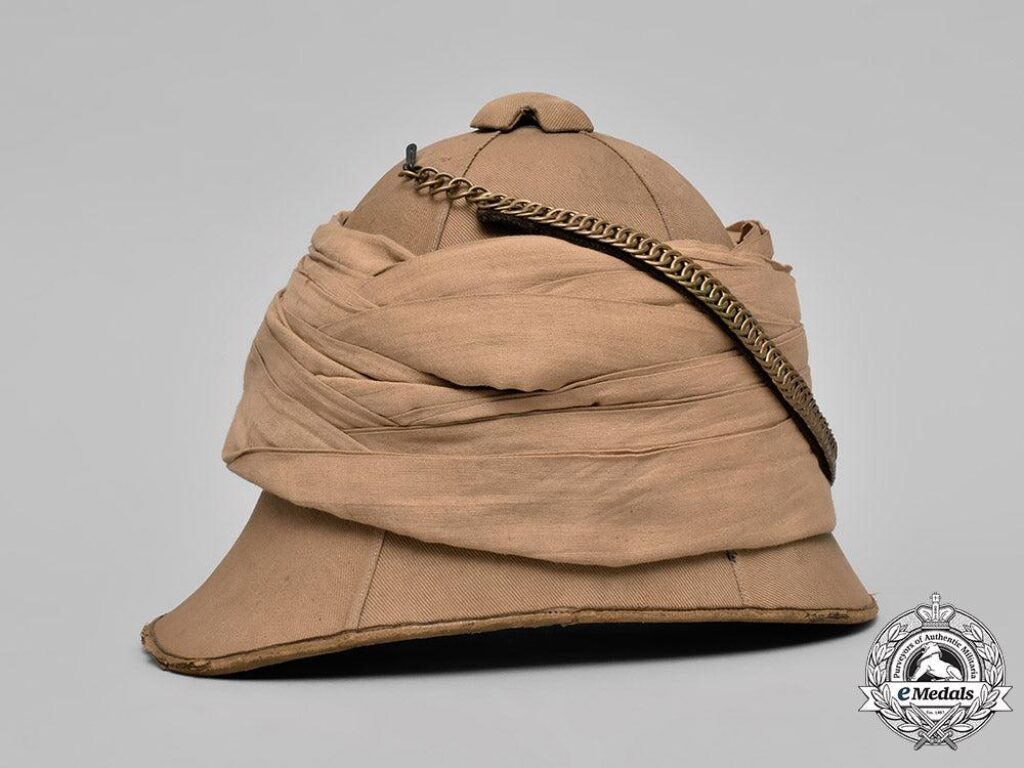
The solution proved surprisingly simple. Manufacturers used cork or the lightweight pith found in certain tropical plants to create a rigid shell. The material was light, durable, and provided excellent insulation from heat. The frame was then covered with cloth.
Thus emerged the famous pith helmet, also known as the sun helmet.
Early versions appeared during the first half of the nineteenth century, but the design reached maturity in the 1870s and 1880s as Britain’s colonial possessions expanded rapidly across the globe.
Not Armor, but Climate Protection
Today, many people view the pith helmet as an early form of combat helmet. In reality, it had almost nothing in common with modern military head protection.
It offered no protection against bullets. It could not stop shrapnel. Even a saber strike would likely penetrate it. Its true purpose was to create an insulating air gap between the wearer’s head and the scorching sun.
Inside the helmet was a suspension system that prevented the shell from resting directly on the scalp. Air circulated through ventilation holes, while the light-colored outer fabric reflected part of the sun’s radiation.
For a soldier spending long days under the African or Indian sun, this was not simply a matter of comfort. It was often a matter of survival.
For that reason, many British soldiers valued the pith helmet far more than modern observers might expect from photographs alone.
From India to the Sudan
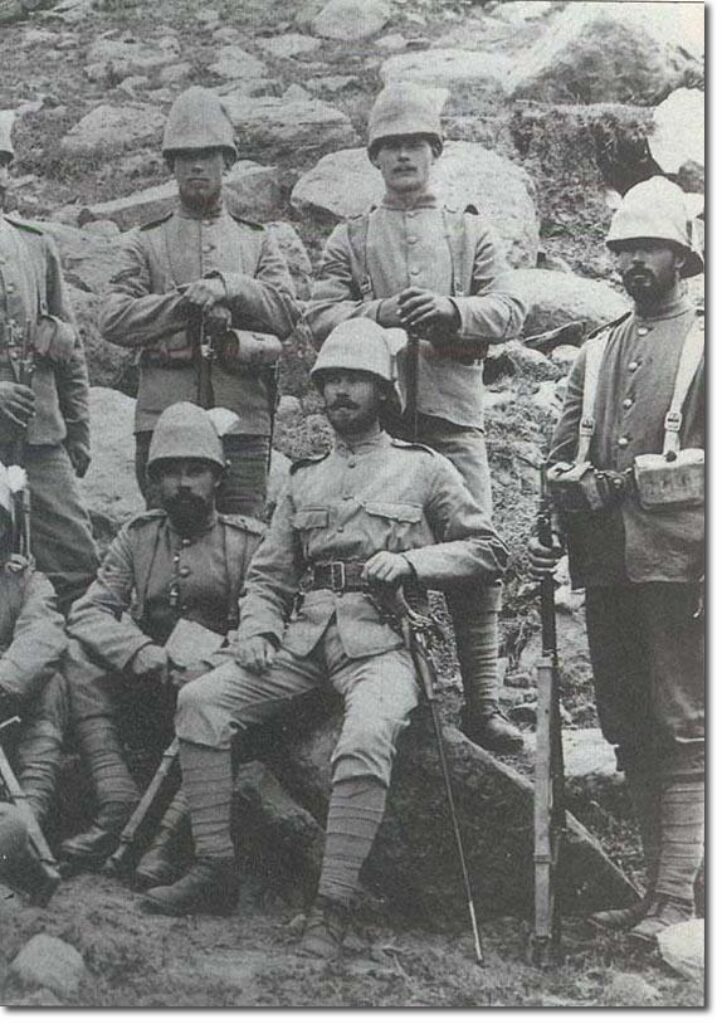
The pith helmet achieved widespread recognition during the second half of the nineteenth century.
It accompanied British troops in nearly every colonial campaign of the era. Soldiers wore it during the Indian Rebellion, the Anglo-Zulu War, expeditions in Egypt and the Sudan, and countless garrison postings throughout Africa and Asia.
This period produced the classic image of the British colonial soldier: khaki uniform, Martini-Henry or Lee-Metford rifle, and the distinctive sun helmet with its characteristic shape.
Interestingly, many early models were painted white. However, military authorities soon realized that bright headgear made an excellent target in the field. As a result, khaki-colored covers became standard.
In many ways, colonial warfare helped shape the concept of camouflage in military uniforms long before the First World War.
Lessons of the Boer War
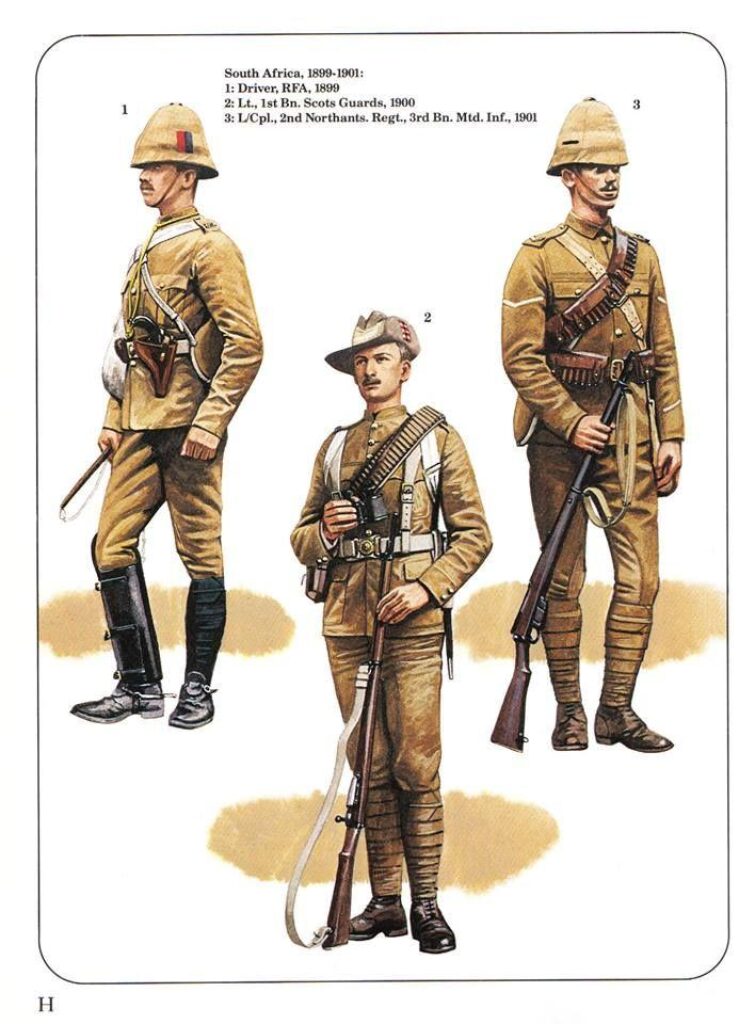
At the turn of the century, the pith helmet faced a new challenge.
During the Second Boer War, the British Army found itself fighting an opponent of European origin who was highly skilled in marksmanship and intimately familiar with the terrain.
The Boers did not march in dense formations or launch dramatic frontal assaults. Instead, they fought in small, mobile groups, used cover effectively, and delivered accurate long-range fire.
Under these conditions, many traditional elements of colonial military equipment began to appear outdated. The pith helmet still protected soldiers from the sun, but for long marches and field operations, many troops increasingly favored wide-brimmed slouch hats.
Nevertheless, the helmet was not abandoned. South Africa’s climate remained a formidable enemy.
Photographs from the Boer War often show both classic pith helmets and more practical field hats being used side by side.
The Last Great Era
The outbreak of First World War did not immediately bring an end to the pith helmet.
While soldiers on the Western Front adopted steel helmets, British forces operating in Egypt, Palestine, Mesopotamia, and various African colonies continued to rely on their trusted sun helmets.
In desert and tropical environments, they remained nearly irreplaceable.
During the interwar years, manufacturers introduced numerous improvements, including better ventilation systems, revised shell shapes, and more comfortable suspensions. Similar helmets were used not only by Britain but also by France, Belgium, Germany, the Netherlands, and several other colonial powers.
By this point, the pith helmet had evolved from a practical piece of military equipment into one of the defining symbols of European colonialism.
A Symbol of a Bygone Age
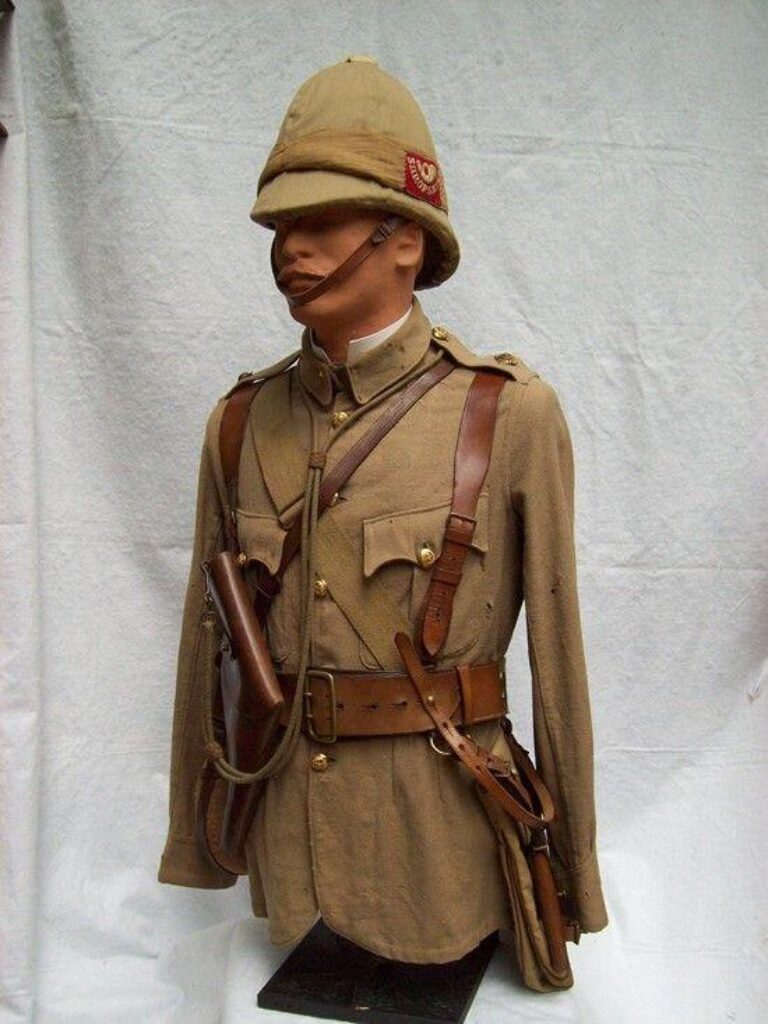
After the Second World War, colonial empires began to collapse. With them, the era of the sun helmet slowly faded away.
New materials made more practical headgear possible, while aviation and motorization transformed military service in hot climates.
Yet the pith helmet never disappeared completely. Variants of it can still be seen in ceremonial units throughout the Commonwealth and in certain police forces of former British colonies.
Its greatest legacy, however, lies elsewhere. The pith helmet became one of the defining visual symbols of the nineteenth century—an era when relatively small European armies attempted to govern vast territories across the globe. A simple construction of cork and cloth proved so effective that it remained in service for nearly a century, becoming as closely associated with the British Empire as the red coat, the battleship, or the Union Jack.