In the history of small arms, there are many weapons that emerged not because of massive government programs or multi-million-dollar military budgets, but despite overwhelming odds. The Rhodesian R-76 submachine gun belongs firmly in that category. It appeared in the late 1970s in a country under international sanctions, fighting a brutal counterinsurgency war, and effectively cut off from the global arms market.
Today, the R-76 is known primarily among collectors and historians specializing in African conflicts. Yet its story perfectly illustrates how a small, isolated nation attempted to provide for its own security when foreign suppliers could no longer be relied upon.
A Nation Under Sanctions
In 1965, the government of Southern Rhodesia, led by Ian Smith, declared independence from Britain. Politically, the new state remained under the control of the white minority, while the majority of the population was African.
London refused to recognize the new government. International sanctions soon followed, and Rhodesia found itself increasingly isolated from the rest of the world. Despite these obstacles, the country managed to maintain a functioning economy and a capable military. However, acquiring modern weapons became more difficult with every passing year.
The situation worsened dramatically in 1975 when neighboring Mozambique gained independence and fell under the control of the socialist FRELIMO movement. Mozambican territory quickly became a major base for Rhodesian insurgents. The conflict entered its most intense phase, becoming known as the Second Chimurenga, or the Rhodesian Bush War.
For white farmers living on remote properties, personal security became a pressing concern. The demand for compact, affordable defensive firearms grew rapidly.
A Homegrown Designer
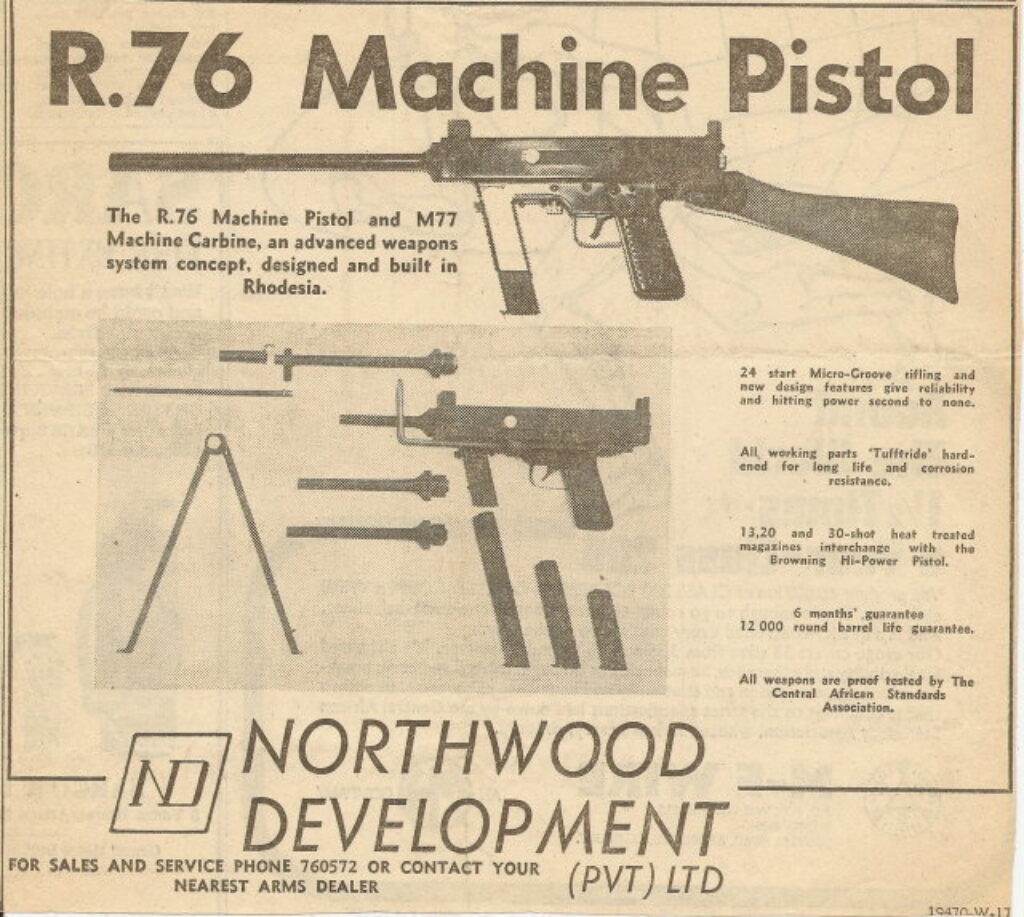
The man behind the new weapon was Roger Mansfield, a local designer with no ties to major international arms manufacturers. His goal was straightforward: create a simple, inexpensive submachine gun that could be produced using the limited industrial resources available inside Rhodesia.
The result was the R-76.
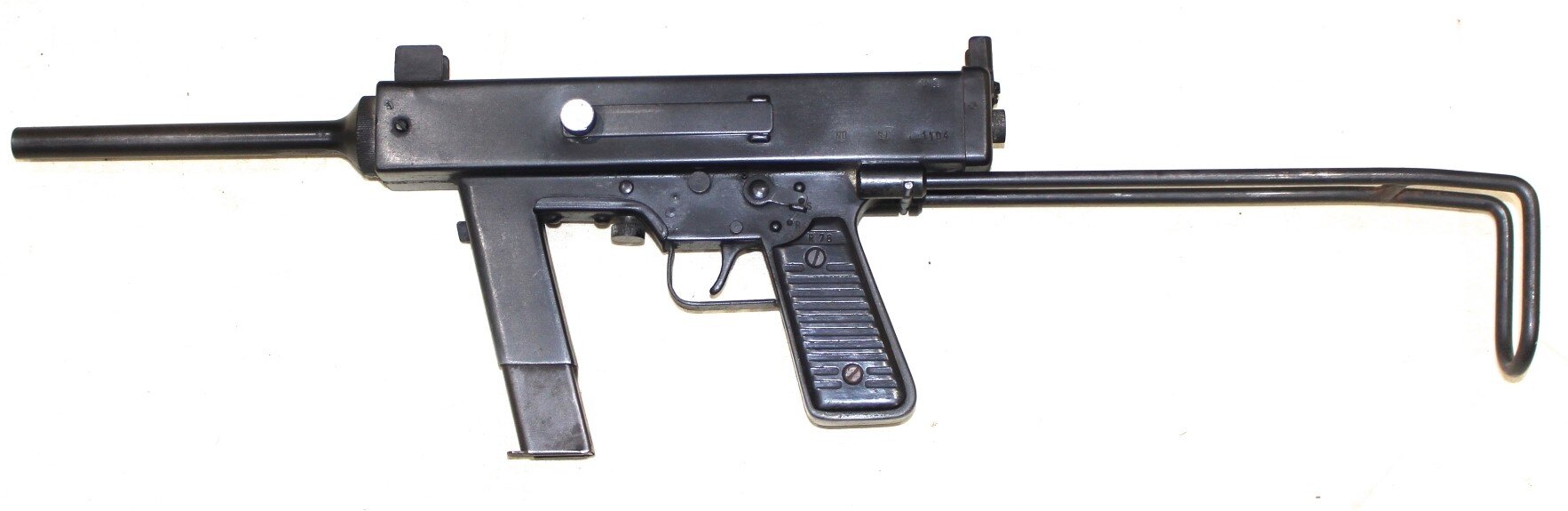
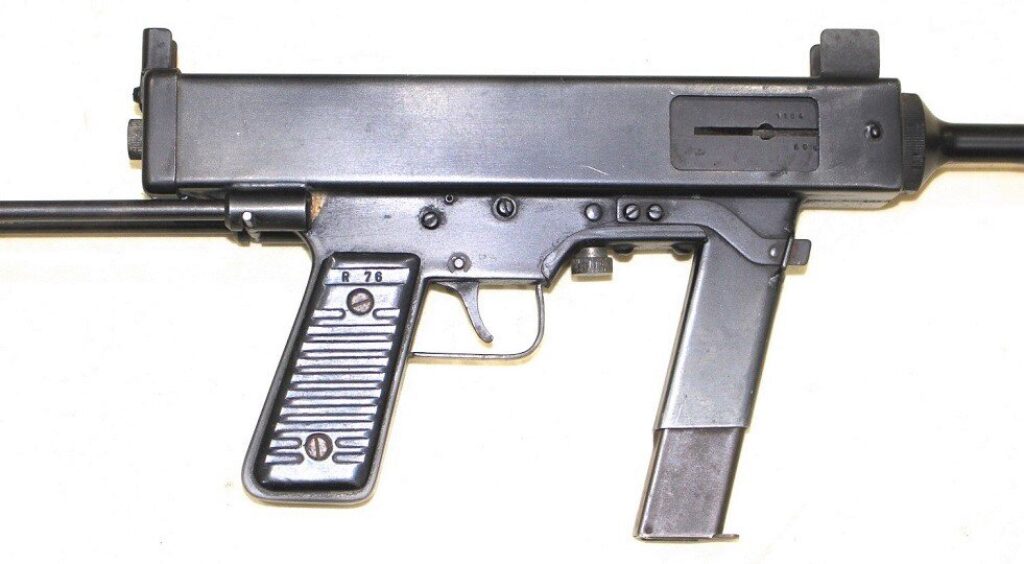
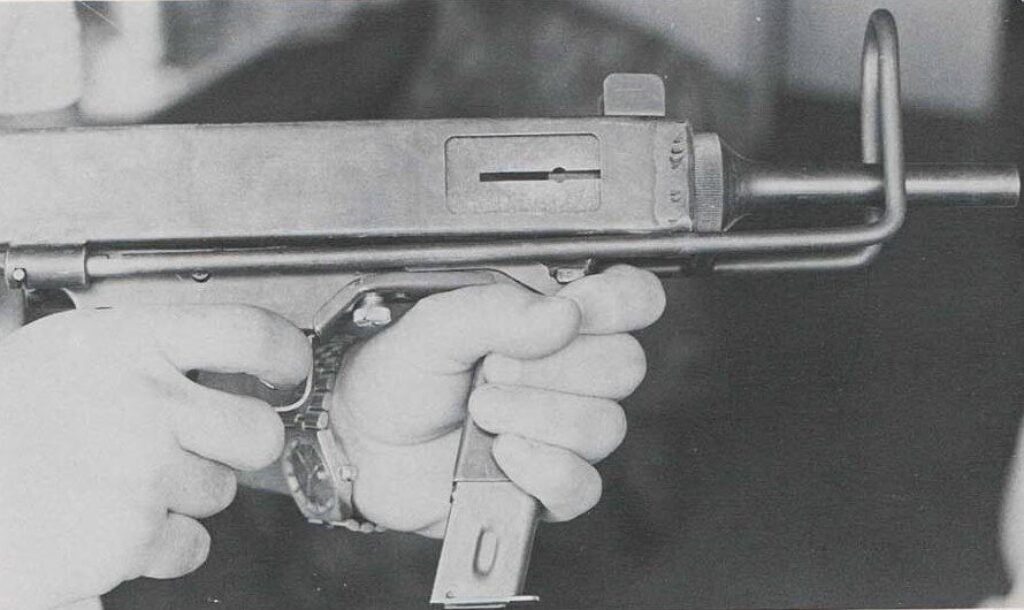
Even by late-1970s standards, the weapon looked unusual. Instead of smooth, rounded contours, it featured an angular rectangular receiver made largely from stamped components. This approach reduced manufacturing costs and minimized the need for complex machining operations.
Soon afterward, Mansfield developed a companion weapon known as the R-77. Essentially, it was the same firearm equipped with a longer barrel and a wooden stock, turning it into a compact automatic carbine.
Production was undertaken by Nordwood Development.
Designed for Simplicity
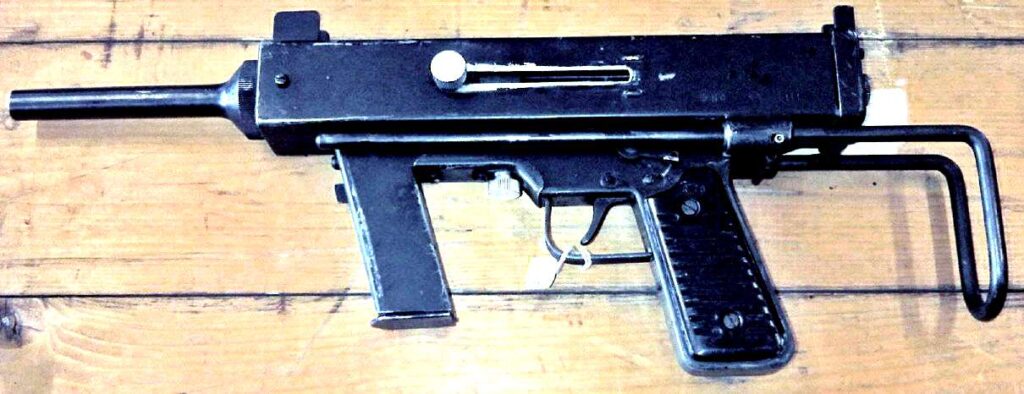
From a technical standpoint, the R-76 was a conventional blowback-operated submachine gun.
Its action relied on a simple open-bolt blowback system, a solution chosen for reliability, ease of manufacture, and improved cooling during sustained fire.
One of the weapon’s most distinctive features was its rectangular bolt, which traveled on two guide rails and used twin recoil springs. This was an uncommon arrangement and became one of the defining characteristics of the Rhodesian design.
The charging handle was positioned on the left side. After cocking, it automatically returned forward and remained stationary during firing. Spent cartridge cases were ejected to the right.
Although the firearm was marketed as capable of both semi-automatic and fully automatic fire, most examples produced for the civilian market appear to have been semi-automatic only. Historians still debate why this choice was made, especially given Rhodesia’s relatively permissive firearms laws for the white population.
A Modular Concept
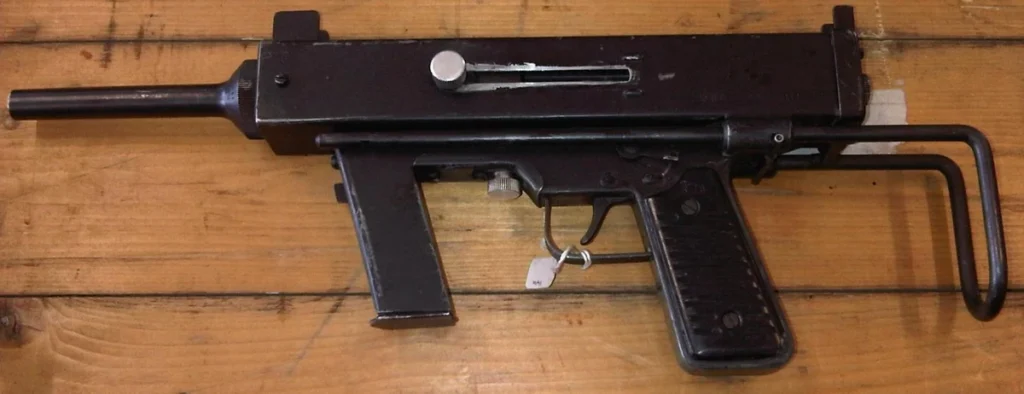
One of the most interesting aspects of the R-76 was its modular configuration.
Buyers could choose between four barrel lengths: 152 mm (6 inches), 203 mm (8 inches), 229 mm (9 inches), and 254 mm (10 inches). The barrels could be replaced relatively quickly without specialized tools.
The longer barrel versions could also be fitted with flash hiders, folding bipods, and even mounts for a spike bayonet.
The stock was another unusual feature. Although often described as folding, it was actually removable. To reduce the weapon’s overall length during transport, the wire stock could be detached from the rear mounting points and inserted into dedicated sockets at the front of the firearm.
The R-76 accepted magazines holding 13, 20, or 30 rounds. The 13-round magazine was borrowed from the famous Browning Hi-Power pistol, while the larger-capacity magazines were developed specifically for the Rhodesian weapon.
Like many submachine guns of its era, it was chambered for the widely available 9×19 mm Parabellum cartridge.
Why the Military Chose Something Else
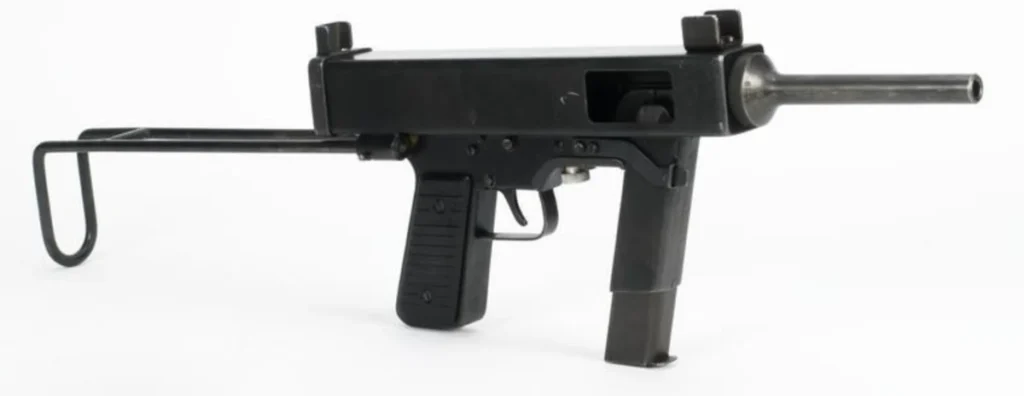
On paper, the R-76 appeared to be a respectable design. Weighing less than three kilograms and featuring a cyclic rate of approximately 480 rounds per minute, it offered flexibility and practicality.
In actual military service, however, Rhodesian troops generally preferred proven alternatives. Its main competitor was the Israeli Uzi, which had already earned a reputation as one of the most reliable submachine guns in the world.
As a result, the R-76 never became a standard military weapon. Although small numbers were reportedly purchased by security forces, the majority of production was aimed at civilian customers.
Only around 2,000 examples were manufactured, a relatively modest figure even by Rhodesian standards.
The End of Rhodesia, the End of the R-76
The fate of the firearm became inseparable from the fate of the nation that created it.
In 1980, following majority-rule elections, Rhodesia ceased to exist and became Zimbabwe. Robert Mugabe, leader of the insurgent movement, assumed power. The Rhodesian military and security forces were dissolved and replaced by new institutions.
With the disappearance of Rhodesia, the market for the R-76 disappeared as well. Production ended, and the project never progressed beyond its initial stage.
Today, the Rhodesian R-76 remains an intriguing relic of a turbulent era. It never achieved the legendary status of the Uzi, MP5, or MAC-10, yet it stands as a fascinating example of how engineers in a small, isolated country attempted to solve wartime challenges through domestic innovation. In that sense, the R-76 was more than just another submachine gun—it was one of the last symbols of Rhodesia itself, a nation that has long since vanished from the map.