The Vehicle Designed Around an Aircraft: The Story of the M1161 Growler Light Strike Vehicle

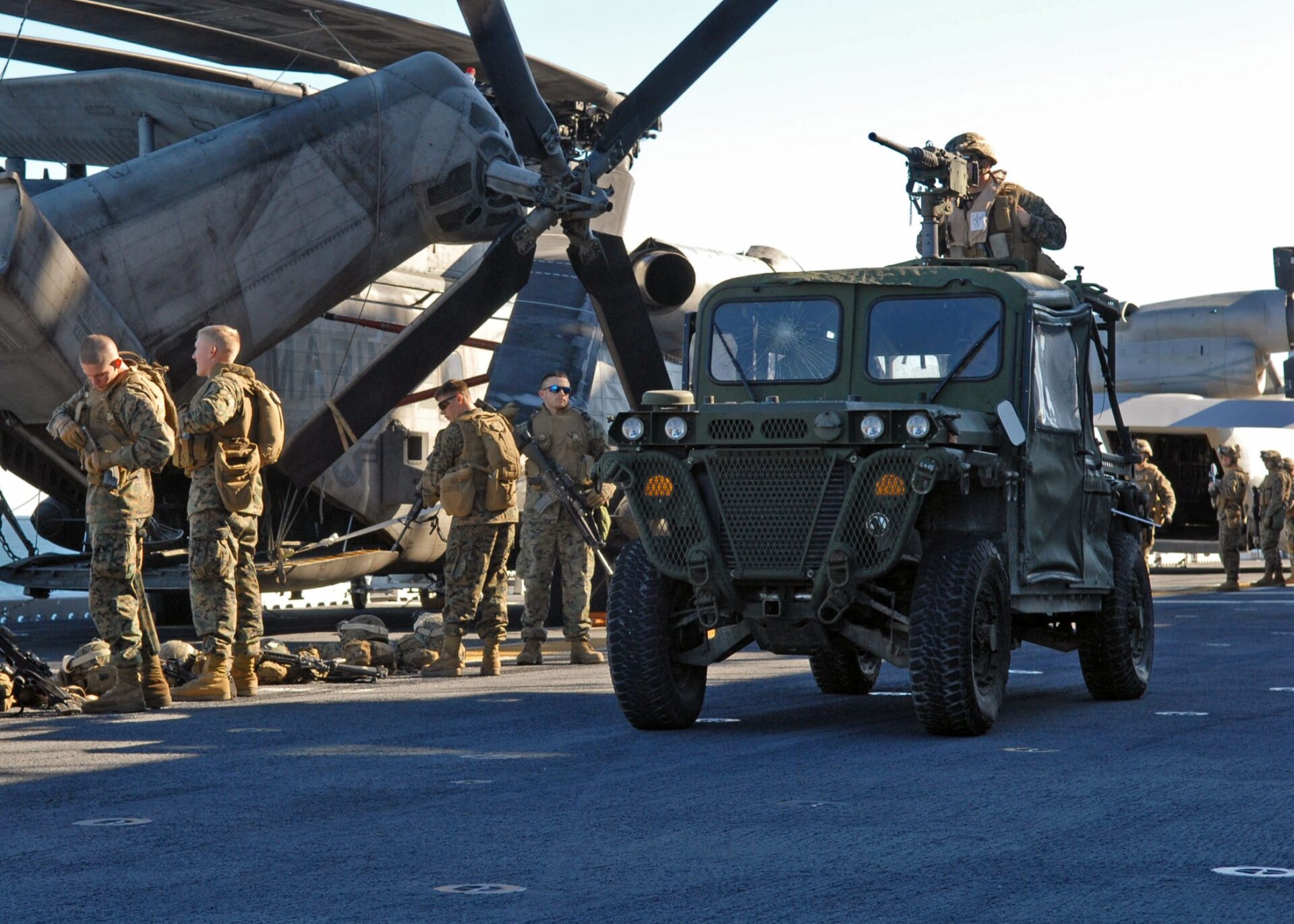
Most military vehicles are developed according to a fairly straightforward formula. The military defines its requirements, engineers design a platform, and only afterward do planners determine how to transport it. The M1161 Growler was created in exactly the opposite way.
This unusual little off-roader exists because the United States Marine Corps adopted the V-22 Osprey. It quickly became apparent that the revolutionary tiltrotor aircraft could move troops much faster than traditional helicopters, but there was a problem: very few vehicles could fit inside its cargo compartment. The Humvee and most other military utility vehicles were simply too large.
As a result, engineers were given a highly unusual assignment: design a combat vehicle not around battlefield requirements, but around the dimensions of an aircraft’s cargo bay.
The result was the M1161 Growler, one of the most unusual military vehicles of the 21st century.
Life After the Humvee
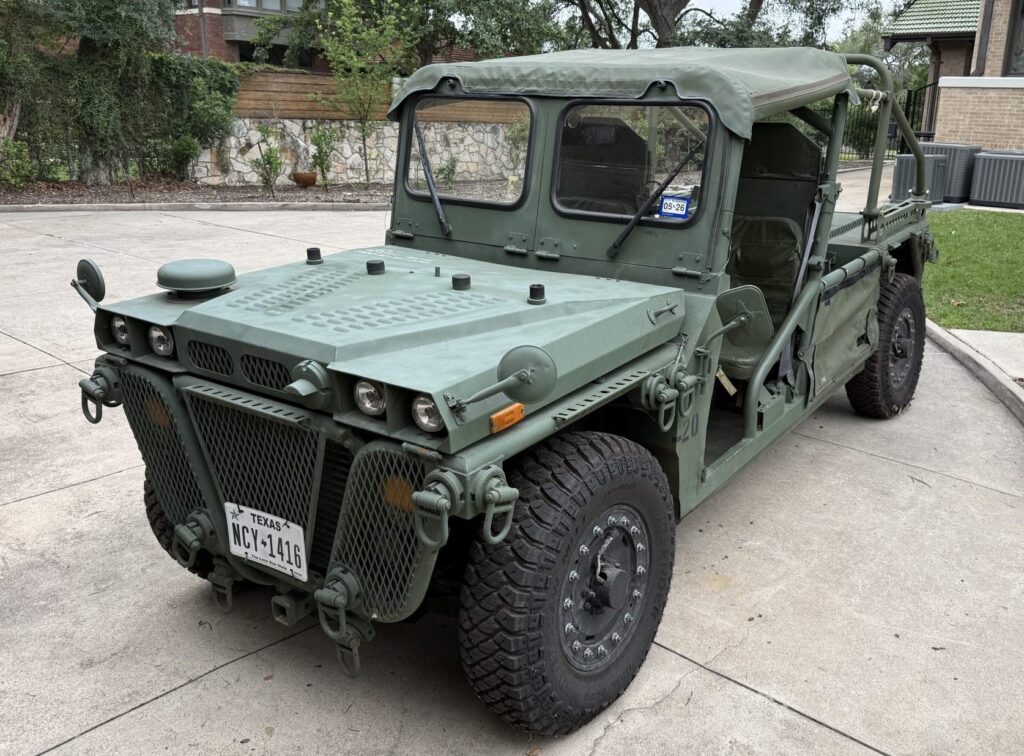
By the late 1990s, the U.S. military was beginning to realize that the era of the classic military jeep was coming to an end. The aging M151 series had long since become obsolete, while the Humvee was steadily growing in size and weight. A vehicle that had once been considered compact and highly mobile in the 1980s was becoming increasingly burdened with armor, equipment, and additional systems.
For the Marine Corps, this posed a serious challenge.
Marine expeditionary doctrine depended on the ability to rapidly deploy small units over long distances. The V-22 Osprey was developed specifically for this purpose, combining the vertical takeoff capabilities of a helicopter with the speed of a turboprop aircraft. However, its cargo compartment imposed strict limitations on what equipment could accompany the troops.
In 1999, the Marine Corps launched the Internally Transportable Vehicle program. The requirement was simple in theory but difficult in practice: create a vehicle capable of driving directly into an MV-22 without disassembly.
The challenge turned out to be far more complicated than it initially appeared.
Engineering Measured in Inches
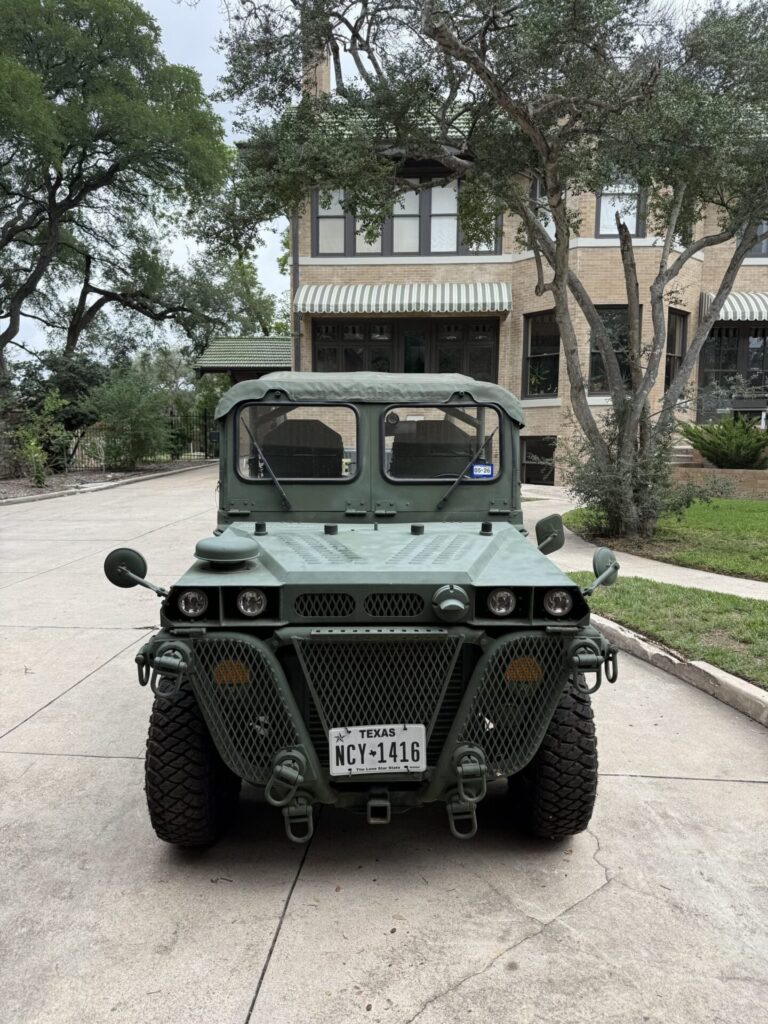
Virtually every aspect of the Growler’s design was dictated by a single constraint—the dimensions of the Osprey’s cargo bay.
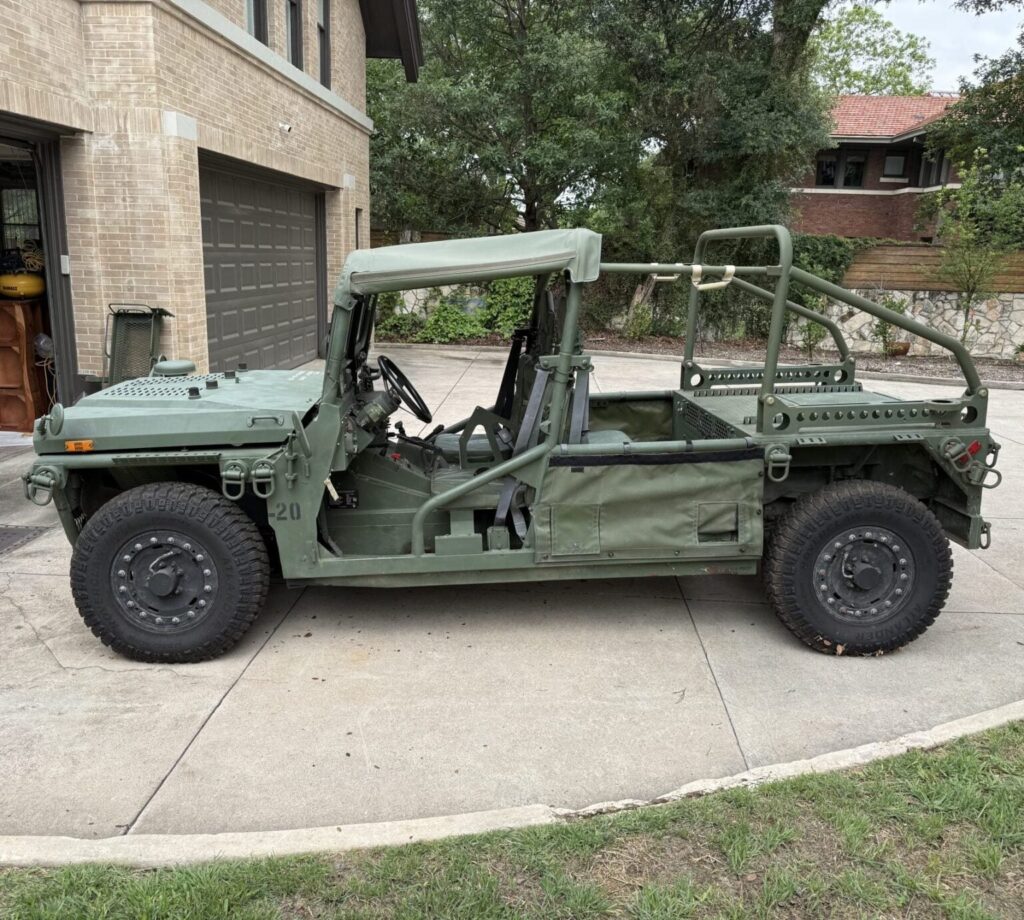
To meet those requirements, engineers at American Growler compressed the vehicle’s dimensions to the absolute minimum. The M1161 was only about 1.5 meters (5 feet) wide. For comparison, a standard Humvee is nearly a meter wider.
Even that was not enough.
To fit inside the Osprey, the vehicle received an adjustable air suspension system that allowed it to lower itself during loading operations. The roll cage could be folded down, and several external components were designed for rapid removal.
In effect, the vehicle could alter its own shape to fit inside an aircraft.
For military equipment, this was a remarkably unconventional solution.
Not a Jeep, but a Raid Vehicle
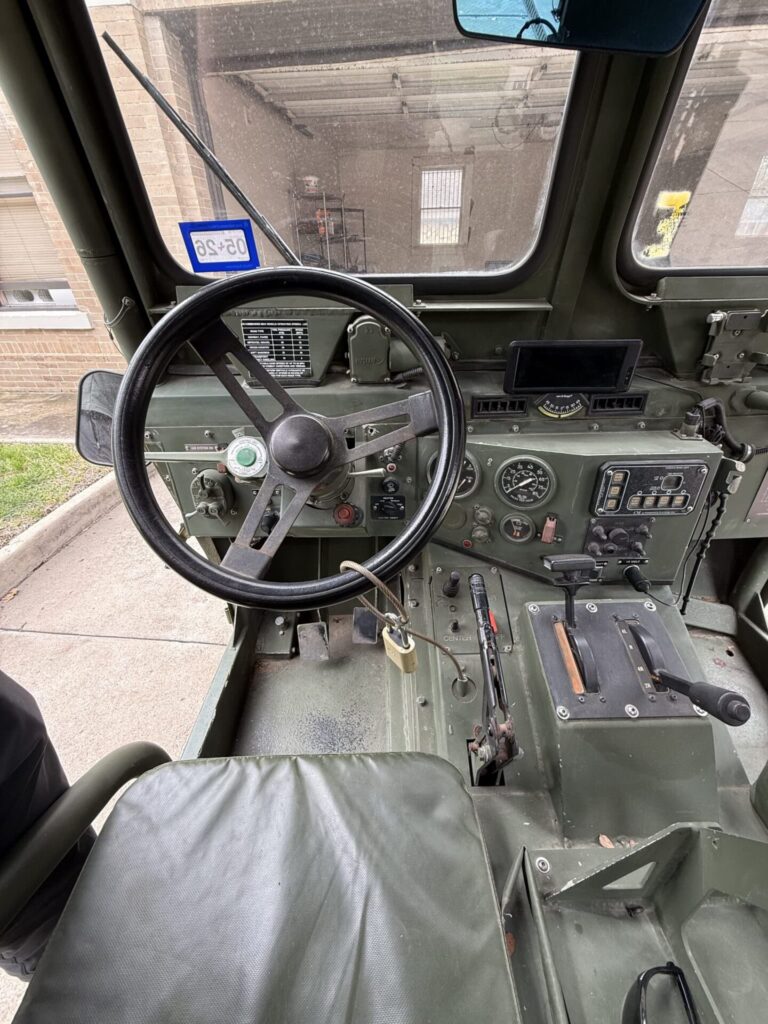
At first glance, the Growler looks like a cross between a Jeep Wrangler, a dune buggy, and something straight out of a post-apocalyptic movie.
Conceptually, however, it was much closer to the lightweight strike vehicles used by special operations forces.
Armor protection was virtually nonexistent. This was an intentional design decision. The vehicle’s creators sacrificed protection in favor of mobility, speed, and rapid deployment. Rather than absorbing enemy fire, the Growler was expected to avoid it through maneuverability and constant movement.
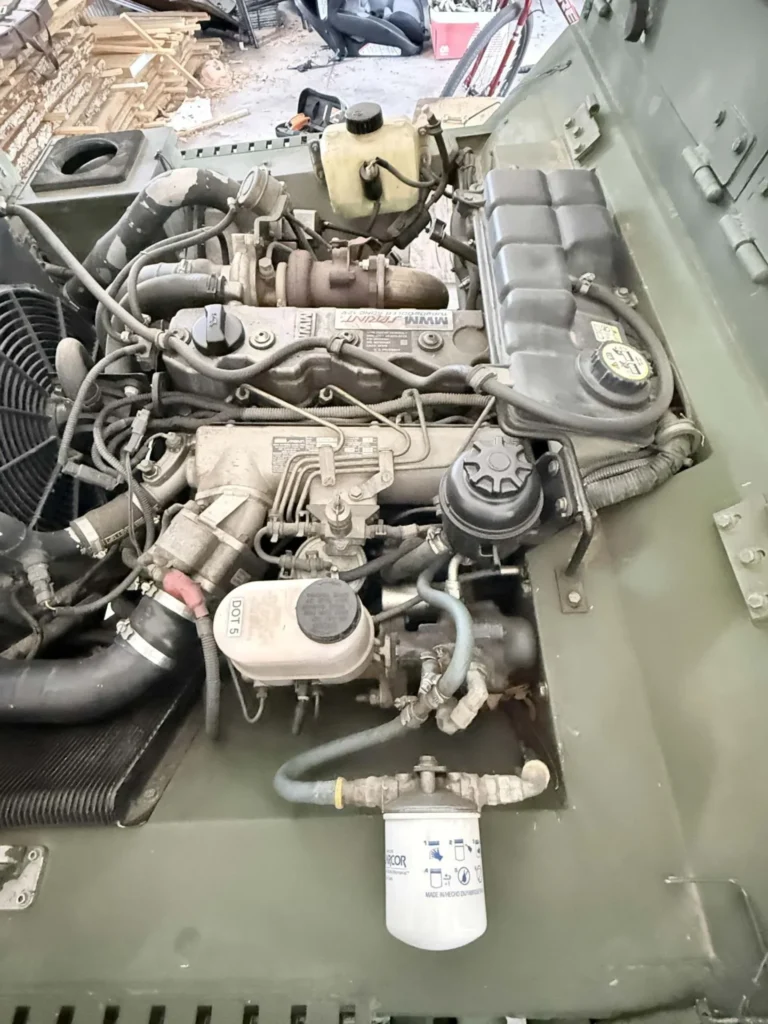
Power came from a 2.8-liter turbocharged diesel engine producing approximately 132 horsepower. On paper, that figure may not seem impressive, but the Growler was a relatively lightweight vehicle. What mattered more was torque, reliability, and operational range.
One of its most interesting features was its four-wheel steering system.
Yes, the rear wheels turned as well.
This gave the vehicle an exceptionally tight turning radius, allowing it to maneuver in confined spaces such as ship decks, aircraft hangars, and loading ramps. For a vehicle specifically designed for air transport, this capability was invaluable.
Built for a New Kind of War
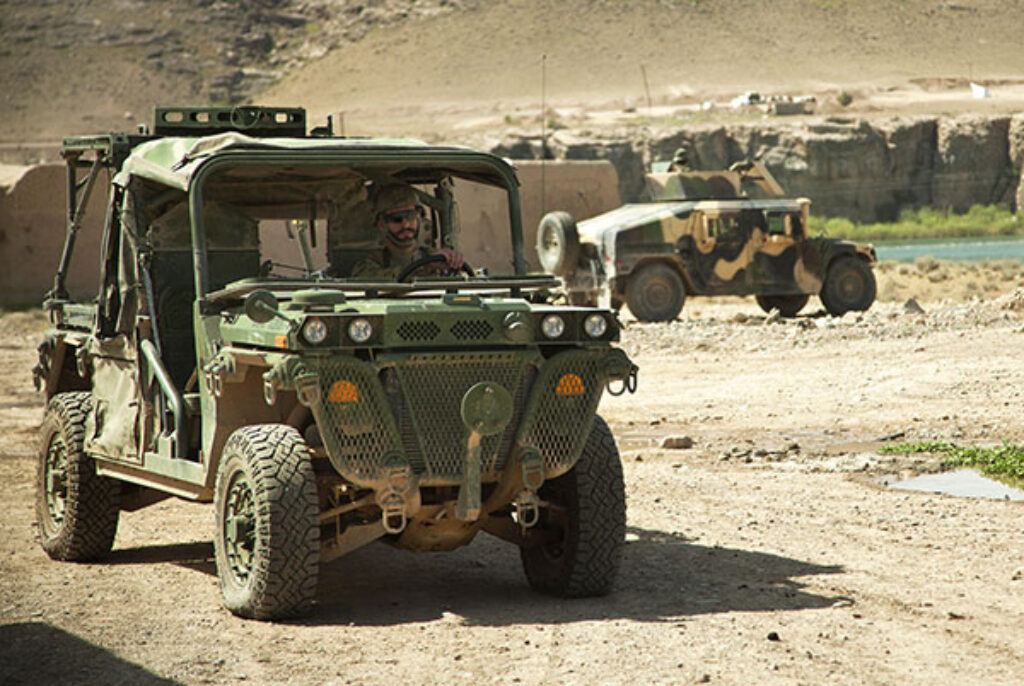
The Growler perfectly reflected American military thinking in the early 2000s.
Following the end of the Cold War, U.S. military doctrine increasingly emphasized rapid expeditionary operations. Small units would deploy quickly, travel long distances, and operate independently in remote areas.
The M1161 was designed to support exactly this kind of mission. It could carry personnel, ammunition, water, fuel, communications equipment, and weapons while remaining light enough to be transported inside a tiltrotor aircraft.
Armament varied depending on mission requirements. The vehicle could be equipped with an M240 machine gun, a .50-caliber M2 Browning heavy machine gun, or an Mk19 automatic grenade launcher. In this configuration, the compact vehicle became a highly mobile fire-support platform.
For Marine expeditionary forces, it represented a blend of transport vehicle, weapons carrier, and logistics platform all in one package.
Why the Program Remained Controversial
Like the V-22 Osprey itself, the Growler was surrounded by controversy.
The primary issue was cost. What began as a relatively simple light vehicle became increasingly expensive as development progressed. By the time production began, the price of a single Growler had approached $200,000—a significant figure for such a compact vehicle.
The nature of warfare was also changing.
Combat experience in Iraq and Afghanistan demonstrated that lightly protected vehicles were highly vulnerable to mines, improvised explosive devices, and ambushes. As a result, military planners increasingly favored heavily armored platforms over lightweight expeditionary vehicles.
In this environment, the Growler remained a niche solution.
Yet it is precisely this niche role that makes the vehicle so fascinating today.
M1161 Growler Specifications
| Designation | M1161 Growler ITV-LSV |
| Type | Light Strike Vehicle |
| Manufacturer | General Dynamics / American Growler |
| Entered Service | 2009 |
| Crew | Up to 4 personnel |
| Engine | 2.8-liter turbocharged diesel |
| Power Output | 132 hp |
| Torque | 312 Nm |
| Transmission | 4-speed automatic |
| Drive System | Four-wheel drive |
| Suspension | Adjustable air suspension |
| Special Feature | Four-wheel steering |
| Payload Capacity | Up to 900 kg |
| Maximum Speed | Approximately 135 km/h (84 mph) |
| Operational Range | Over 600 km |
| Primary Mission | Internal transport inside the MV-22 Osprey |
The Last True Military Buggy
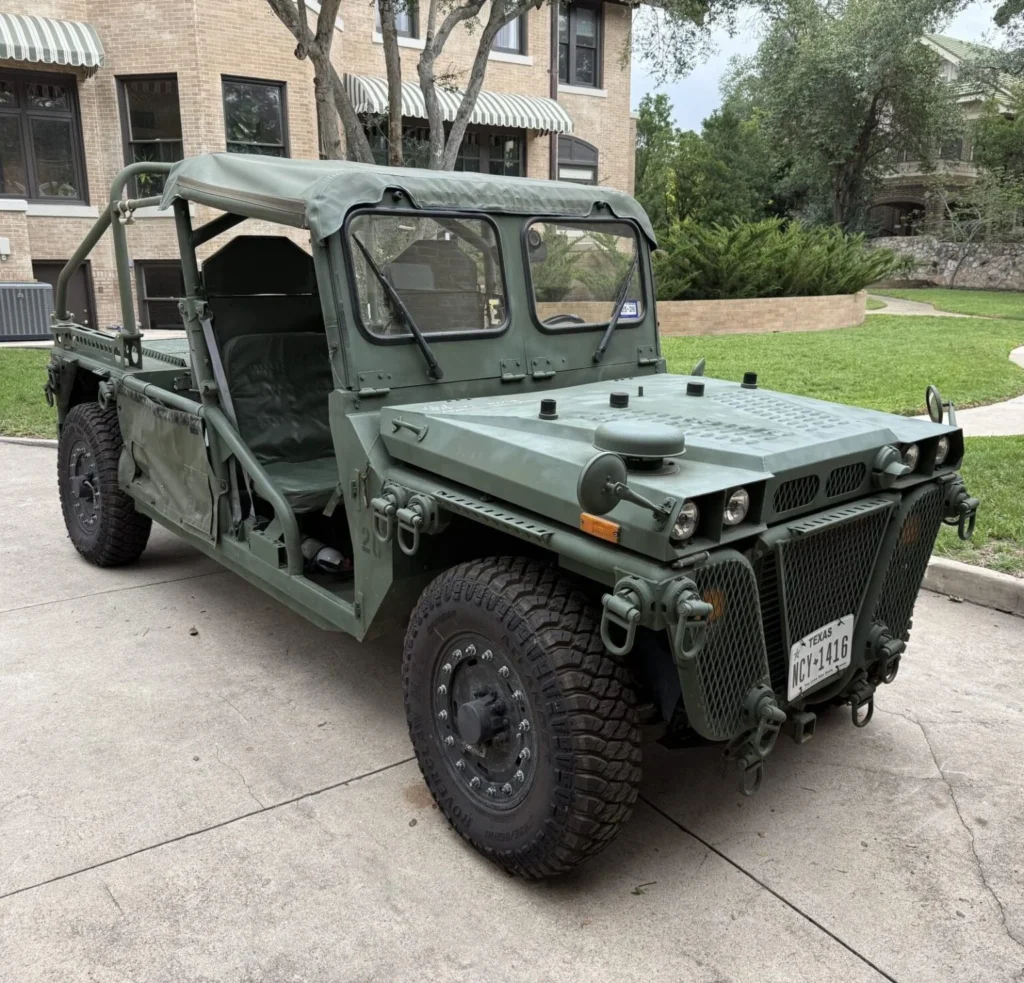
Today, the M1161 Growler feels like a product of a very specific moment in military history.
It was created during an era when American defense planners believed that highly mobile expeditionary forces would dominate future battlefields. It emerged before drones became ubiquitous, before satellite surveillance covered every corner of the globe, and before precision-guided weapons transformed modern warfare.
In many ways, the Growler was the final descendant of the classic military jeep—reimagined for the aviation-centric battlefield of the 21st century.
That is what makes it so interesting.
The M1161 Growler was not simply a military off-road vehicle. It was a machine designed around an aircraft. Not an aircraft adapted to carry a vehicle, but a vehicle engineered from the beginning to fit inside an aircraft.
And throughout military history, there have been very few machines designed under such unusual constraints.