
The New Javelin Is Lighter, Smarter, and Sees Farther: The U.S. Army Is Giving Its Most Famous Anti-Tank Weapon a New Lease on Life

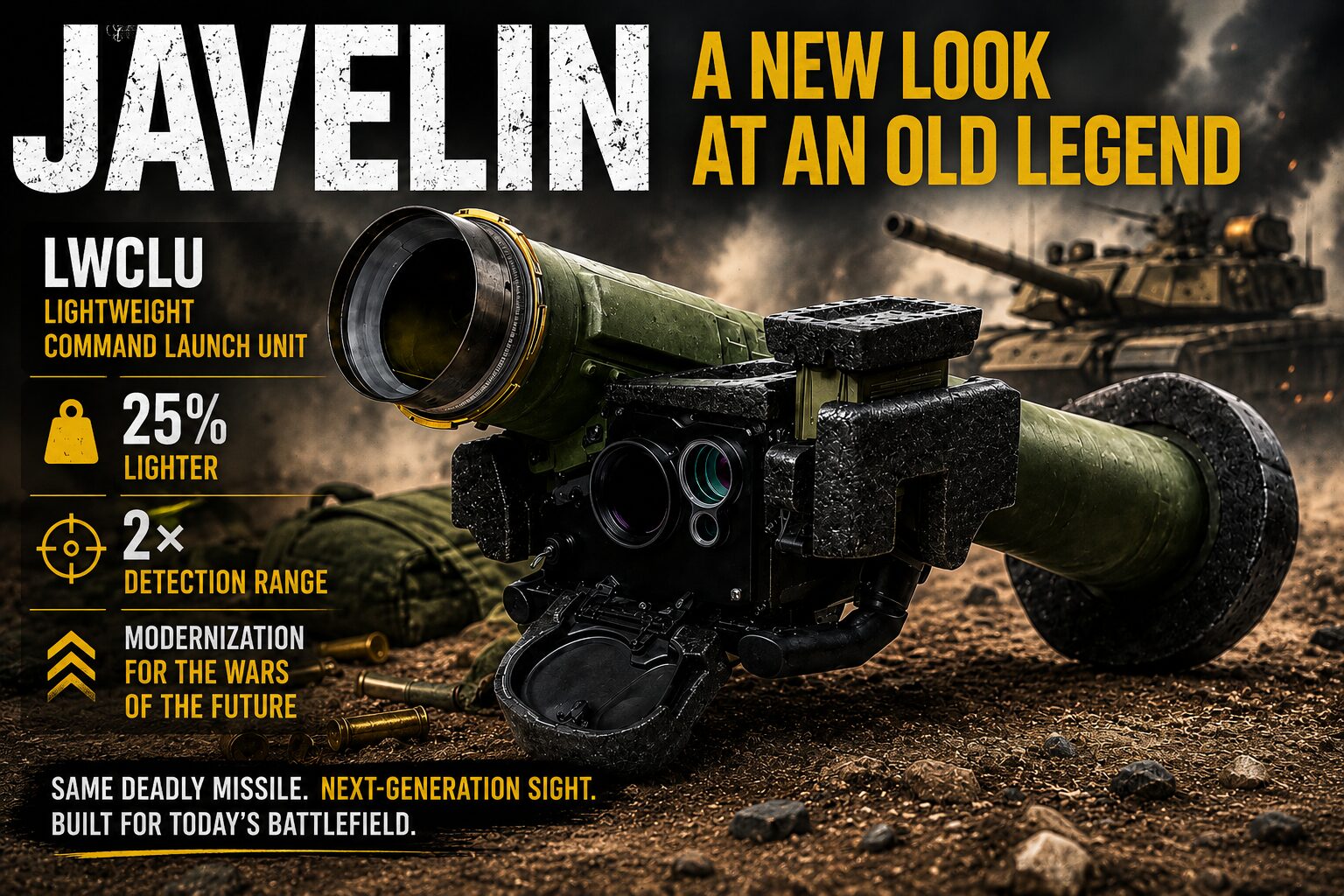
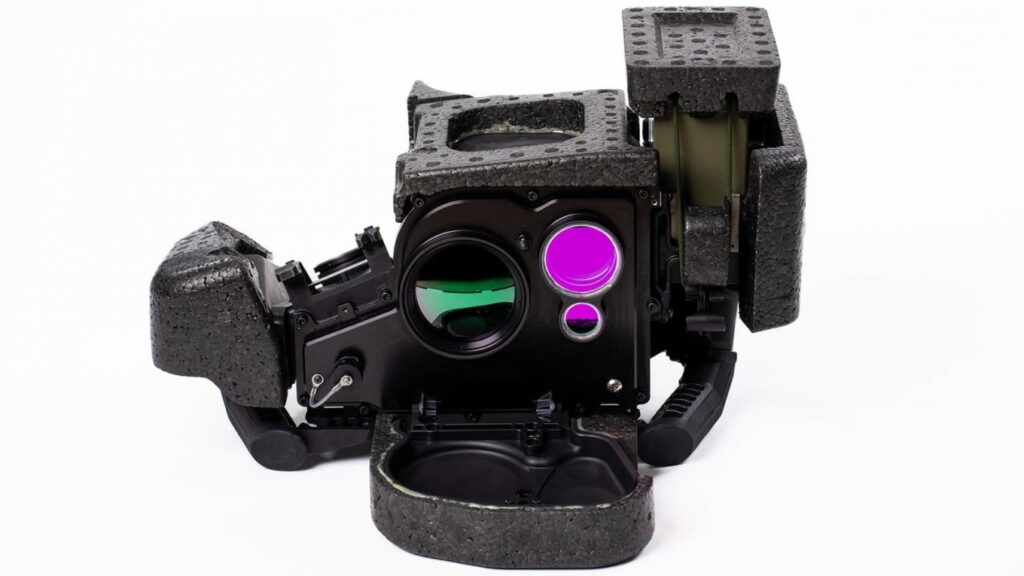
At first glance, the news appears relatively modest. The U.S. Army has received the first Lightweight Command Launch Units (LWCLU) for the FGM-148 Javelin anti-tank missile system. According to Raytheon and Lockheed Martin, the new launcher is 25% lighter, 30% smaller, and offers roughly double the target detection range of the original unit.
Compared to hypersonic missiles, autonomous drones, and discussions about robotic warfare, such an upgrade might not seem particularly revolutionary.
But the story is far more interesting than it first appears.
Because LWCLU demonstrates one very important reality: despite the drone revolution, the United States has no intention of retiring the Javelin. Quite the opposite. The Pentagon is effectively preparing the system to remain in frontline service well into the middle of the 21st century.
And to understand why that matters, we first need to look at what made the Javelin one of the most influential anti-tank weapons ever built.
Javelin Was Born as a Cold War Solution
The story begins in the 1980s.
At the time, the U.S. Army was searching for a replacement for the aging M47 Dragon anti-tank missile system. The Dragon was increasingly viewed as inadequate in terms of range, reliability, and its ability to defeat modern Soviet armor.
The biggest problem with many anti-tank guided missiles of the era was that the operator had to guide the missile all the way to the target.
That meant remaining exposed.
For a future war in Europe against large Soviet armored formations, this was a serious disadvantage.
The Army wanted a new generation of anti-tank weapon that would offer:
— true fire-and-forget capability;
— automatic target tracking;
— high kill probability;
— and the ability to attack tanks from above.
The result was the FGM-148 Javelin.
And when it entered service, it was nothing short of revolutionary.
Why Javelin Became So Dangerous
The true strength of Javelin was not simply the missile itself.
The entire architecture of the system was what made it special.
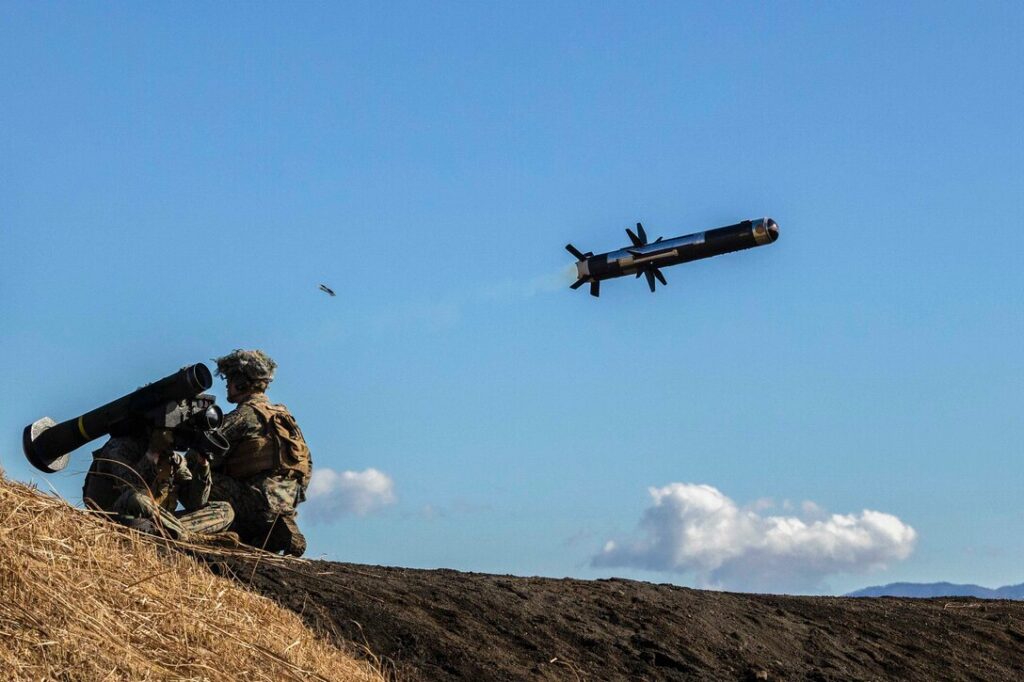
The operator would identify and lock onto a target using the Command Launch Unit (CLU). Once launched, the missile tracked the target autonomously.
The crew could immediately relocate.
For the late Cold War period, this represented a major leap forward.
What made the system particularly deadly was its top-attack flight profile.
Most tanks carry their thickest armor on the front of the hull and turret.
The roof, however, is usually far less protected.
After launch, the Javelin climbs and then dives onto the target from above, striking one of the most vulnerable areas of the vehicle.
In essence, the Americans designed a weapon to destroy Soviet tanks in Europe and ended up creating one of the most famous anti-tank missile systems in modern military history.
The World Changed, but Javelin Remained
Perhaps the most interesting aspect of the system is that it survived the end of the Cold War remarkably well.
Javelin was originally designed for large-scale armored warfare in Europe.
Instead, it found itself fighting in entirely different conflicts.
The system saw service:
— in Iraq;
— in Afghanistan;
— against fortified positions;
— against buildings;
— and even against individual strongpoints.
Over time, Javelin evolved beyond a purely anti-tank weapon and became a highly precise infantry support system.
Then came 2022.
Suddenly, Javelin became one of the most recognizable weapons on the planet.
Its reputation extended far beyond military circles and entered popular culture.
Yet the renewed spotlight also revealed new challenges.
The Original CLU Was Starting to Show Its Age
Interestingly, the missile itself was not the primary target for modernization.
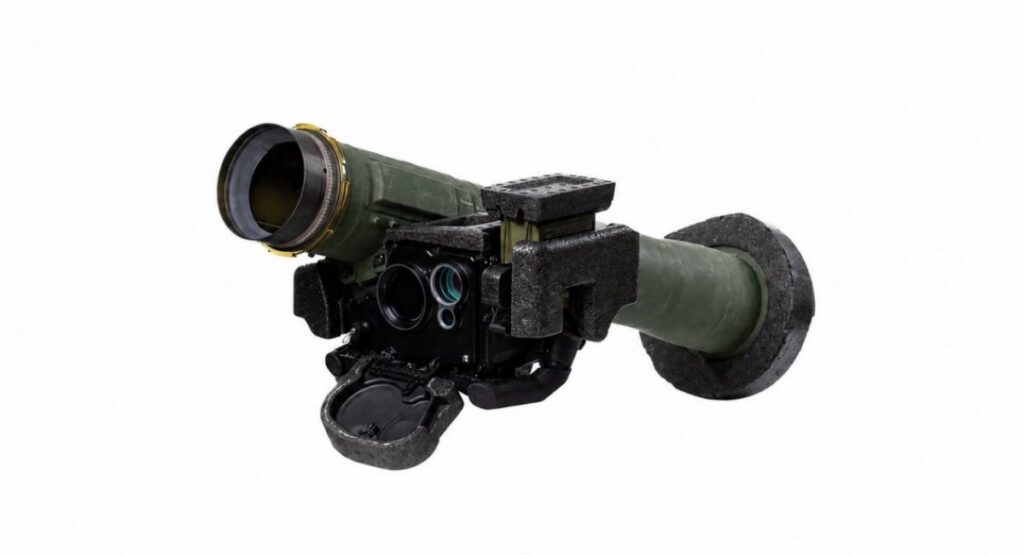
Instead, attention turned toward the Command Launch Unit.
When the original CLU was developed, thermal imaging technology was cutting-edge.
But nearly three decades have passed.
During that time, military optics underwent a revolution.
New sensor technologies brought:
— improved thermal imagers;
— better infrared cameras;
— advanced digital image processing;
— more compact electronics;
— and significantly improved displays.
Compared to modern systems, the original CLU had begun to feel bulky and heavy.
And since soldiers often carry the launcher separately from the missile itself, every kilogram matters.
This is where LWCLU enters the story.
LWCLU Is Essentially a New Brain for Javelin
At first glance, the improvements seem straightforward.
Twenty-five percent less weight.
Thirty percent smaller dimensions.
But the modernization runs much deeper.
The LWCLU introduces:
— a new thermal imaging system;
— upgraded electronics;
— higher-resolution displays;
— an improved operator interface;
— and dramatically enhanced target detection capabilities.
The last point may be the most important.
According to the manufacturers, target detection and recognition ranges have roughly doubled.
That is a major improvement.
Because in modern warfare, victory often belongs not to the side that shoots first.
But to the side that sees first.
The Launcher Is Becoming a Reconnaissance Tool
This is where the story becomes especially interesting.
Even the original Javelin CLU was frequently used as a portable thermal surveillance device.
Many units employed it not only for missile launches but also for battlefield observation.
That made perfect sense.
The thermal optics allowed troops to detect targets at ranges far beyond conventional binoculars or day optics.
With LWCLU, that capability becomes even more important.
The launcher is gradually evolving from a missile sight into a dedicated reconnaissance asset for infantry squads and platoons.
In many situations, that may prove just as valuable as the missile itself.
Why the U.S. Is Investing So Heavily in Javelin
Another fascinating aspect of the story is what it says about the defense industry.
After 2022, American manufacturers faced a difficult reality.
Producing precision-guided weapons at scale proved far more challenging than many had expected.
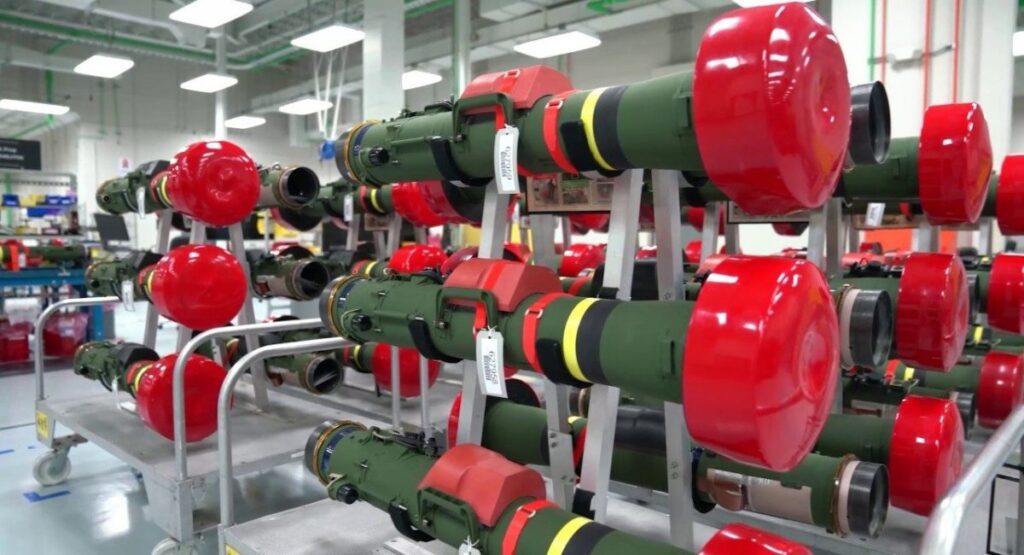
Large deliveries of Javelins to allied nations highlighted the need to expand production capacity significantly.
Raytheon responded by investing millions of dollars into LWCLU production and modernization efforts.
That investment sends a clear message.
The United States does not view Javelin as a system approaching retirement.
Instead, it remains one of the cornerstone anti-armor capabilities available to American infantry forces.
Not a New Missile, but a New Philosophy
Perhaps the most important lesson of LWCLU is that it improves not the missile’s lethality, but its vision.
For decades, anti-tank missile development focused primarily on:
— longer range;
— greater armor penetration;
— higher missile speed;
— and more advanced warheads.
LWCLU reflects a different trend.
Modern warfare is increasingly becoming a contest of sensors.
Who spots the target first.
Who processes information faster.
Who shares targeting data sooner.
That is why the new Javelin is receiving not a fundamentally new missile, but a fundamentally new set of eyes.
And that may ultimately prove to be the most important upgrade the system has received in the last thirty years.






