

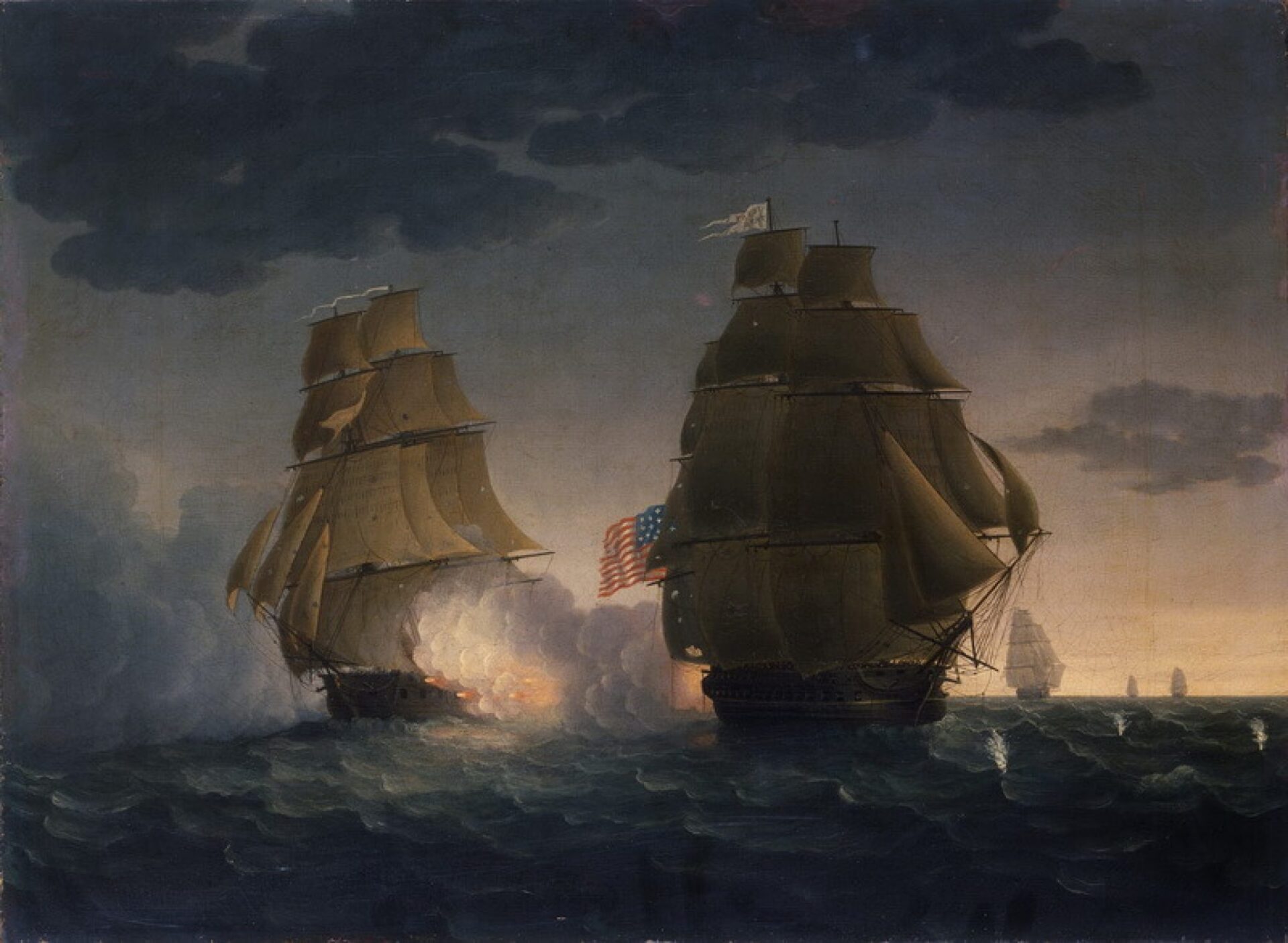
When Frigates Became Too Powerful
At the end of the 18th century, naval warfare was still dominated by ships of the line — massive floating fortresses carrying dozens of guns and forming the backbone of every major fleet.
Frigates occupied a different niche.
They were supposed to be lighter, faster, and more flexible ships used for reconnaissance, escort duty, commerce raiding, and independent operations. In theory, a frigate was never meant to fight a ship of the line head-on.
But the young United States Navy approached the problem differently.
Lacking the resources to compete directly with Britain or France in numbers, American naval planners sought another solution: create frigates so powerful that they could overpower any enemy frigate while still retaining the speed to avoid ships of the line.
The result was something entirely unusual.
Joshua Humphreys and the Birth of the “Super-Frigate”
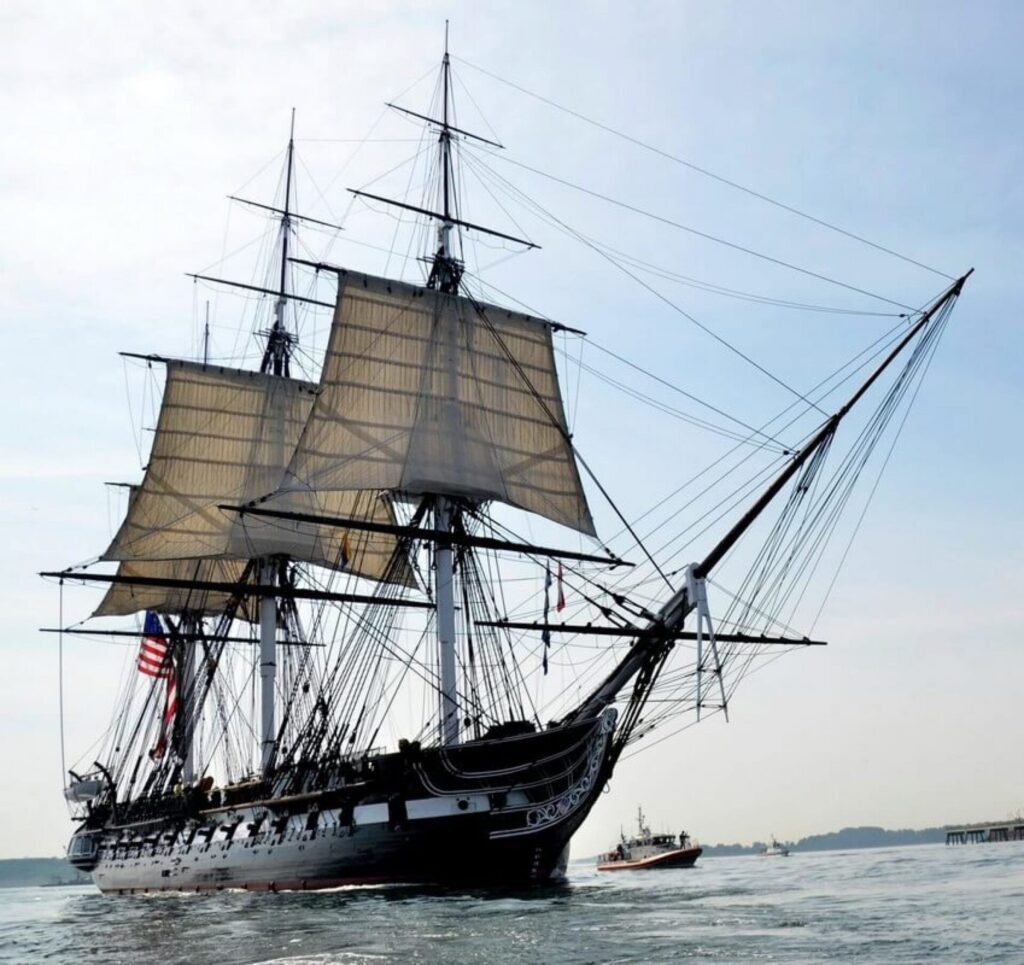
The architect of this concept was American naval designer Joshua Humphreys.
His idea was radical for the time. Instead of building ordinary frigates, Humphreys proposed exceptionally large and heavily armed ships with elongated hulls designed for high speed and long-range operations.
These vessels would become known retrospectively as “super-frigates.”
The most famous among them were:
- USS Constitution
- USS United States
- USS President
Officially, they were classified as 44-gun frigates. In reality, they often carried more guns and displaced far more tonnage than most contemporary frigates.
They occupied a strange middle ground between traditional frigates and small ships of the line.
Built to Outfight and Outrun
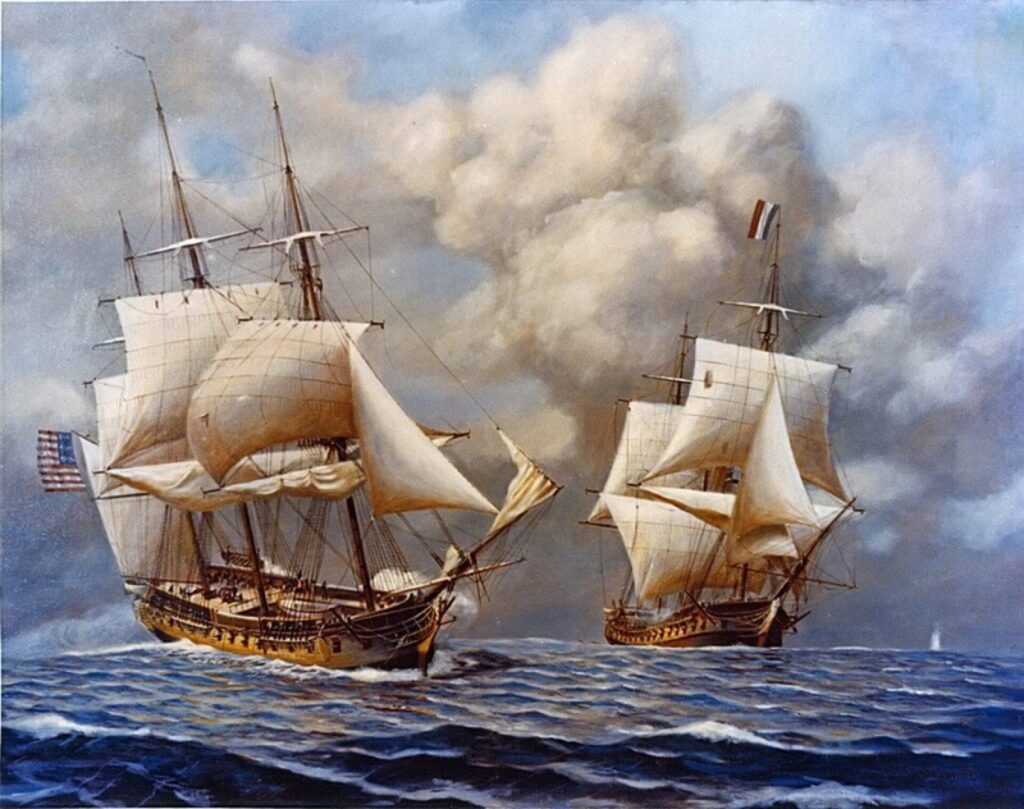
The logic behind the American super-frigate was brutally pragmatic.
If the ship encountered an ordinary frigate, it would possess superior firepower and heavier construction. If it encountered a ship of the line, it could rely on speed to escape.
This balance was achieved through several key features:
- unusually heavy armament;
- thick live-oak hull construction;
- large hull dimensions;
- powerful sail plans optimized for speed.
The live oak used in construction became particularly important. American frigates gained a reputation for exceptional durability, with cannonballs sometimes appearing to “bounce” off their hulls. It was this characteristic that earned USS Constitution the famous nickname “Old Ironsides.” (history.navy.mil)
The War of 1812 and the Shock for Britain
The true test came during the War of 1812.
Before the conflict, the Royal Navy regarded the American fleet as a secondary force. Britain possessed the world’s largest navy, vast combat experience from the Napoleonic Wars, and overwhelming numerical superiority.
But early frigate duels produced an unpleasant surprise.
American super-frigates repeatedly defeated British frigates in one-on-one combat. USS Constitution defeated HMS Guerriere and later HMS Java. USS United States captured HMS Macedonian. (britannica.com)
These victories had enormous psychological impact.
The British still dominated the oceans overall, but the myth of automatic Royal Navy superiority suffered visible cracks.
Not Quite Ships of the Line — Not Quite Frigates
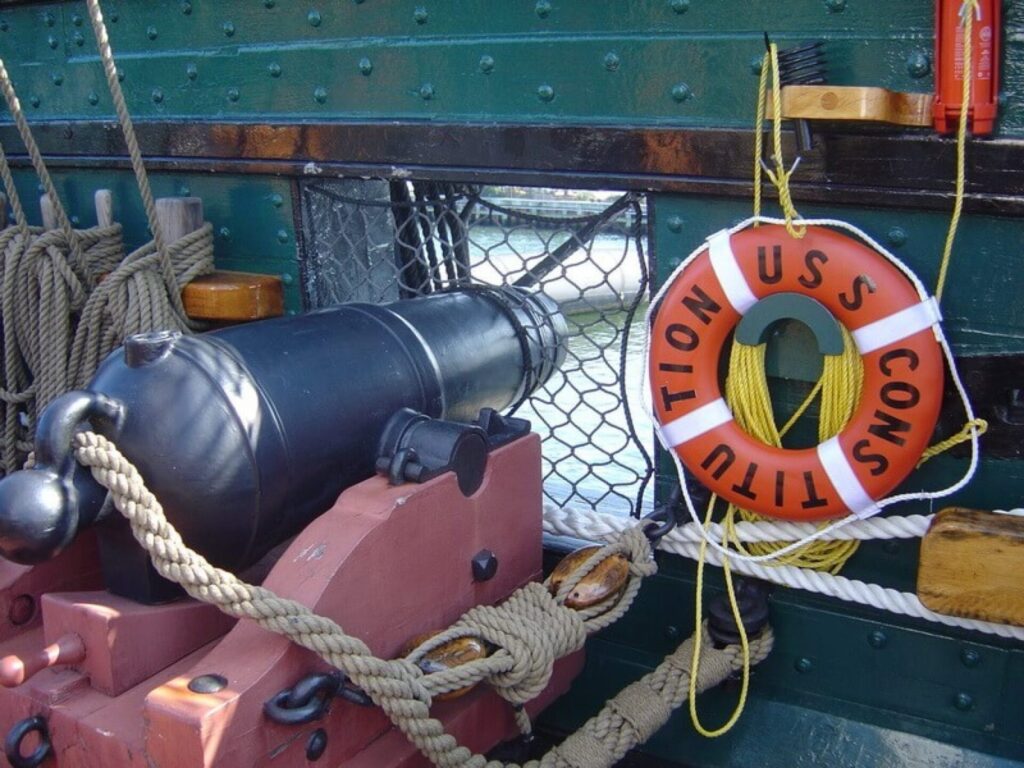
What made the American super-frigates so interesting was their ambiguous nature.
They were technically frigates, but in many ways operated closer to miniature capital ships. Their firepower exceeded that of most frigates in Europe, and their survivability was unusually high.
At the same time, they were still too weak to stand in the line of battle against true ships of the line.
This created a very specific tactical identity: independent heavy cruisers of the Age of Sail.
In many ways, they resembled later concepts such as battlecruisers or heavy cruisers — ships designed around the principle of outgunning weaker opponents while outrunning stronger ones.
The European Counterparts
The success of American heavy frigates did not go unnoticed.
Other naval powers also experimented with large frigates and heavy cruising ships. France had already explored similar concepts during the late 18th century, and Britain later responded with oversized frigates of its own.
But the American ships remained distinctive because they were designed around this philosophy from the very beginning, rather than evolving into it gradually.
They were purpose-built commerce raiders and duelists.
And they were remarkably effective at that role.
A Concept Ahead of Its Time
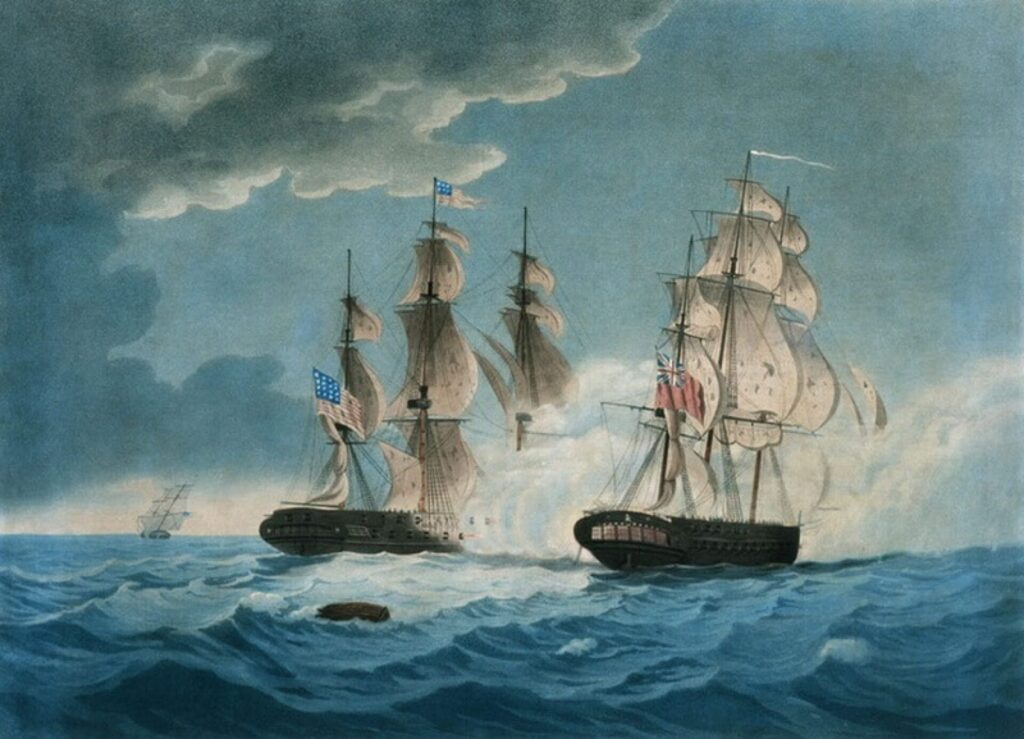
The American super-frigates reveal something important about naval history.
Even in the Age of Sail, naval architects were already grappling with a dilemma that would continue into the 20th century:
Should a warship rely on armor and brute force… or on speed and selective superiority?
The super-frigates represented an early answer to that question.
They sacrificed the ability to fight in the main battle line in exchange for operational flexibility, strategic reach, and dominance over ships of their own class.
That logic would later reappear in armored cruisers, battlecruisers, and heavy cruisers.
The Ships That Redefined the Frigate
Today, USS Constitution survives as the oldest commissioned warship still afloat, a reminder of an era when naval engineering was evolving at extraordinary speed. (history.navy.mil)
But beyond its symbolism, the ship represents something larger.
The American super-frigates were not merely successful warships.
They were an attempt to rethink the balance between speed, firepower, and survivability — an attempt so effective that it briefly forced even the Royal Navy to reconsider what a frigate could be.






