The People Who Lived Awaiting the End of the World: Why the Vikings Didn’t Fear Death

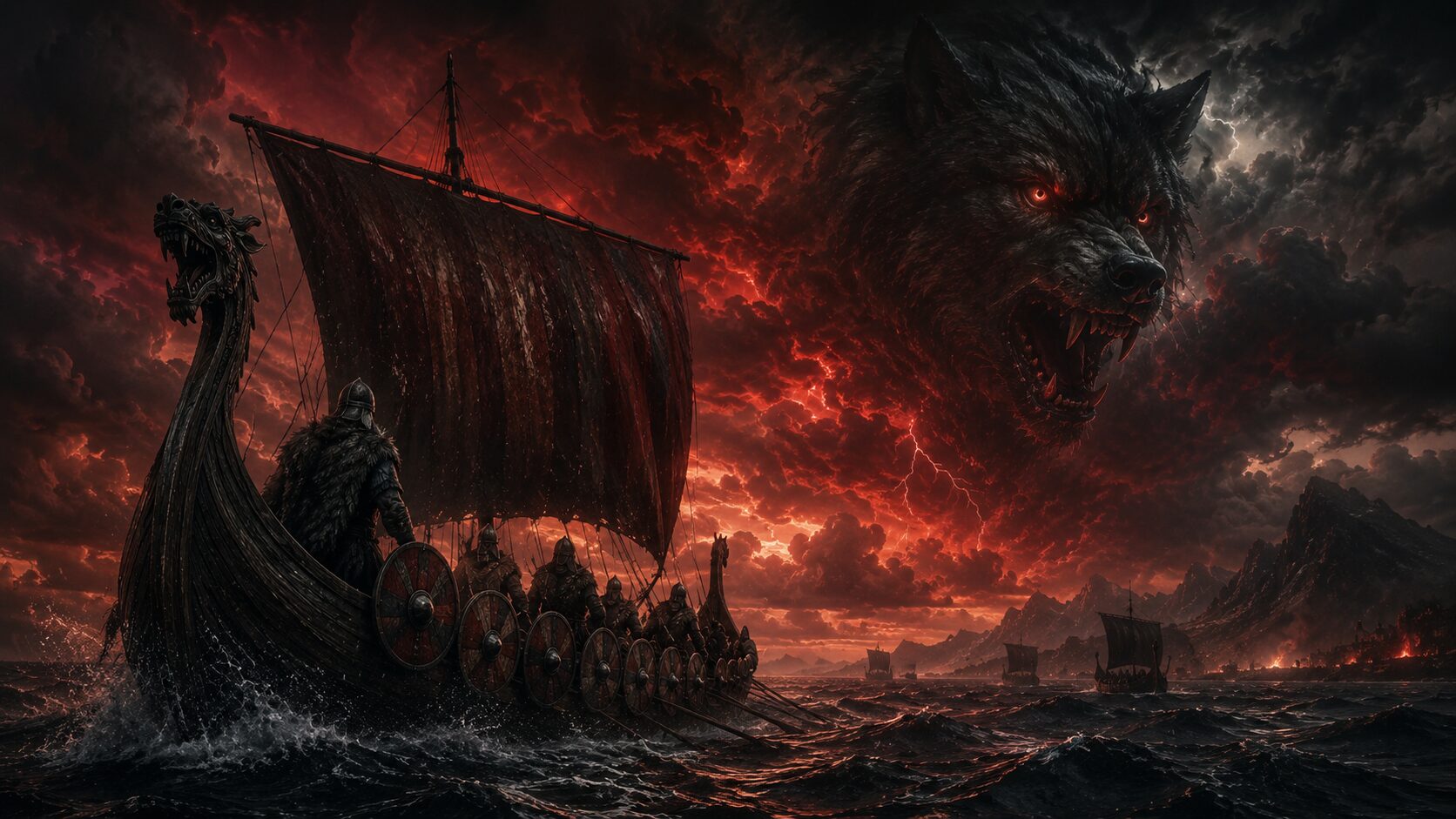
A World Where Even the Gods Were Doomed
When modern people talk about the end of the world, they almost always mean a catastrophe that can still be prevented. A global war. An asteroid strike. Nuclear exchange. Ecological collapse. In modern culture, the very word “apocalypse” implies fear of the future and a desperate attempt to survive. But for the Scandinavians of the Viking Age, the destruction of the world was something entirely different. They did not merely believe that the end would come — they were convinced it had already been predetermined.
And this may be one of the most important things to understand about who the Vikings really were.
We are used to seeing them either as romanticized heroes from television series or as savage sea raiders emerging from the northern fjords to plunder the monasteries of Europe. Yet behind all these images lies something far more important: the Vikings possessed a deeply unusual understanding of life, death, and fate. Their world was harsh, cold, and unstable. Harvests could fail. Winters could stretch endlessly. Entire family lines could disappear within a single generation. The sea could kill faster than any sword. In such conditions, the Scandinavians developed a worldview in which death was not a tragic accident. It was a natural part of existence itself.
This is precisely why Norse mythology differs so dramatically from most medieval European religious systems. There is no promise of ultimate victory for good. No salvation of the world. Even the gods themselves are mortal. More than that — they already know they are doomed.
Ragnarök, the “fate of the gods,” was not merely a distant legend for the Scandinavians. It formed the foundation of their entire understanding of reality. The great winter, Fimbulwinter, would come. The world would descend into chaos. Fenrir the wolf would devour Odin. Thor would slay the world serpent Jörmungandr, only to die moments later from its poison. The sun would darken. The seas would rise. The world would burn.
And the most remarkable part was this: the gods knew all of it in advance.
Why Glory Mattered More Than Survival
To a modern person, this almost sounds absurd. If defeat is inevitable, why fight at all? Yet here lies one of the defining features of the Viking mindset. For a Norse warrior, a person’s worth was determined not by the chances of victory, but by the manner in which they faced unavoidable fate.
This is something that films and video games often fail to capture. Vikings were not fearless madmen incapable of understanding danger. They knew perfectly well that death could come at any moment. A voyage across the North Sea was itself an extraordinarily deadly undertaking. Storms, freezing temperatures, navigational mistakes, disease — even without battle, the chances of never returning home were enormous. Yet the willingness to move toward danger despite all this was precisely what made a person worthy of remembrance.
In Scandinavian society, memory itself carried an almost sacred meaning. A person died twice: once physically, and a second time when the last memory of them vanished. This explains the Vikings’ obsession with glory, heroic deeds, and reputation. The runestones scattered across Scandinavia were not simply grave markers. They were attempts to permanently anchor memory into the landscape itself. “Here lived this man. He died in the East. He was brave.” For a Viking, this was a form of immortality.
This is why reputation mattered so intensely in Norse society. An insult could not go unanswered. Weakness could destroy the standing of an entire family. Blood feuds became not merely a right, but an obligation. Scandinavian society rested less on written laws than on the fear of losing honor.
The Brutal Reality of the North
Because of this, Viking society was far harsher than the romantic image of “noble northern warriors” often portrayed today. Slavery was a completely ordinary part of life. Captives were sold by the thousands, from Ireland to the markets of the Islamic world. Child mortality was devastatingly high. During famines, the elderly were sometimes abandoned to die. Archaeology reveals evidence of human sacrifice, while Arab travelers who encountered Scandinavian traders along the Volga described funeral rituals that appear nightmarish to the modern mind.
The most famous account comes from the Arab diplomat Ahmad ibn Fadlan, who witnessed the funeral of a wealthy Rus chieftain in the tenth century. Alongside the dead leader, a slave girl was burned alive after days of ritual preparation, intoxication, and ceremony. To the Scandinavians, this was not meaningless cruelty. It was a transition into another world where the dead would still require servants, weapons, and possessions.
Here archaeology confirms mythology in striking ways. The great ship burials discovered in Norway and Sweden demonstrate how deeply symbolic the ship truly was. For a Viking, the longship was not merely transportation. It was an extension of status, identity, and destiny itself. Sometimes the ship literally became the vessel carrying a person into the afterlife.
A People Who Lived Inside Their Mythology
In his book, Neil Price makes an especially important observation: the Scandinavians did not simply “believe” in mythology — they lived inside it. For them, the boundary between the supernatural and the real was far thinner than it is for modern people. Magic, prophecy, omens, and prophetic dreams were woven directly into everyday life. Before battle, warriors might seek guidance from seeresses. A bad omen could be enough to cancel an expedition. Even political authority often carried a sacred dimension.
This also helps explain the famous berserkers — warriors who, according to the sagas, entered terrifying battle trances. For a long time they were dismissed as purely mythical figures, but modern historians increasingly suspect that real warrior cults may have existed behind the legends, involving rituals, psychological conditioning, or psychoactive substances.
Yet the greatest legacy of the Viking world was not its weapons or ships. It was its attitude toward existence itself. The Scandinavians lived within a culture that demanded people stare directly into inevitable chaos and continue acting anyway.
Why Europe Feared the Vikings
This may ultimately explain why Europe feared the Vikings so deeply.
Facing an enemy who wants to survive is one thing. Facing an enemy who has already accepted the possibility of death — and who considers a worthy death the highest outcome — is something entirely different.
Perhaps this was the true secret of the Viking Age. Not the axes. Not the longships. Not the horned helmets they never actually wore.
But the people themselves — people who lived with the certainty that the end of the world was coming, and who sailed into the sea regardless.