Z-STS Akhmat: Why Russia Built a Heavy Armored Vehicle Around the Principle of “The Simpler, the Better”

A modern armored vehicle can easily become an extremely complex machine. Independent suspension, automatic transmission, sophisticated electronics, remotely controlled weapon stations, a purpose-built chassis, and advanced mine protection can all improve performance — but they also increase cost and make mass production more difficult.
Russia’s Typhoon family was largely developed according to this philosophy: a protected military vehicle should be designed from the outset as an integrated specialized system.
In 2022, however, Remdizel took almost the opposite approach.
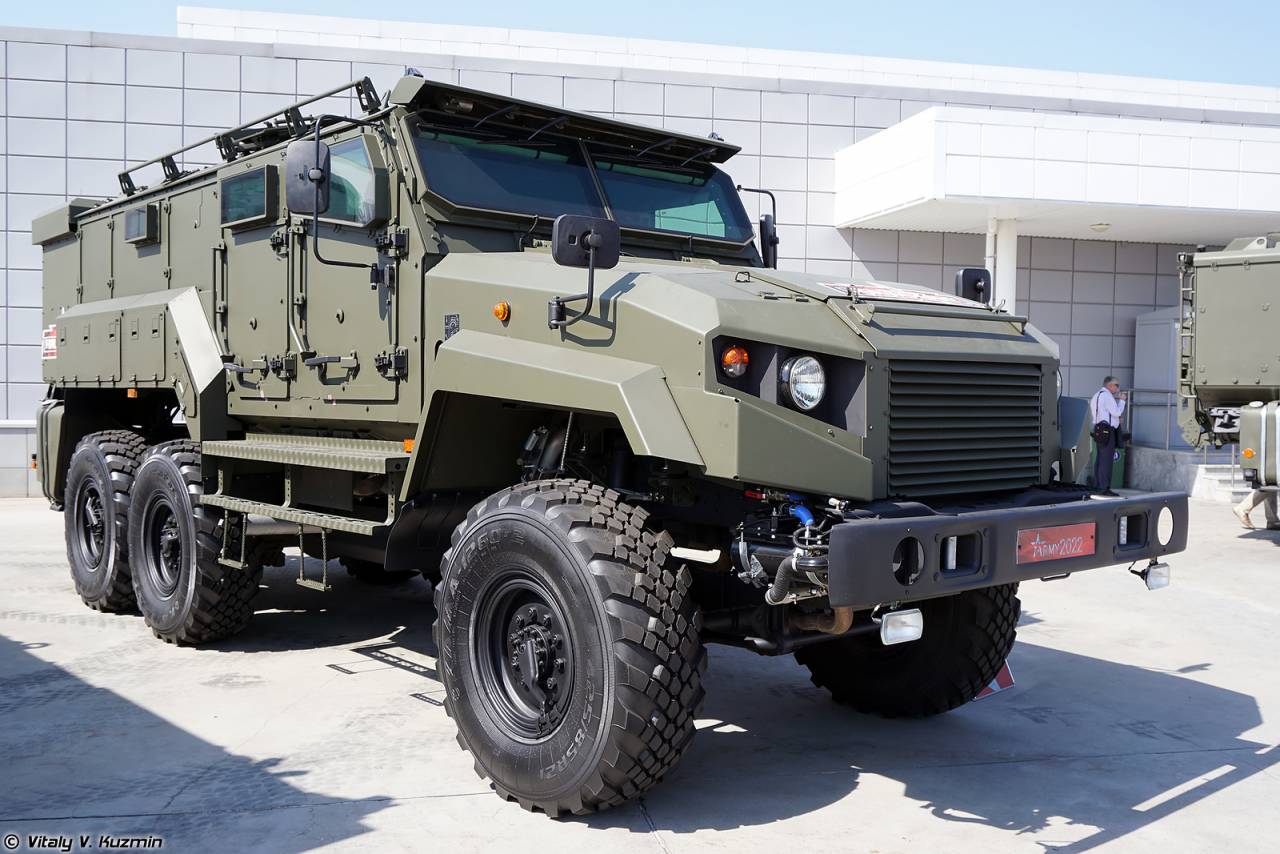
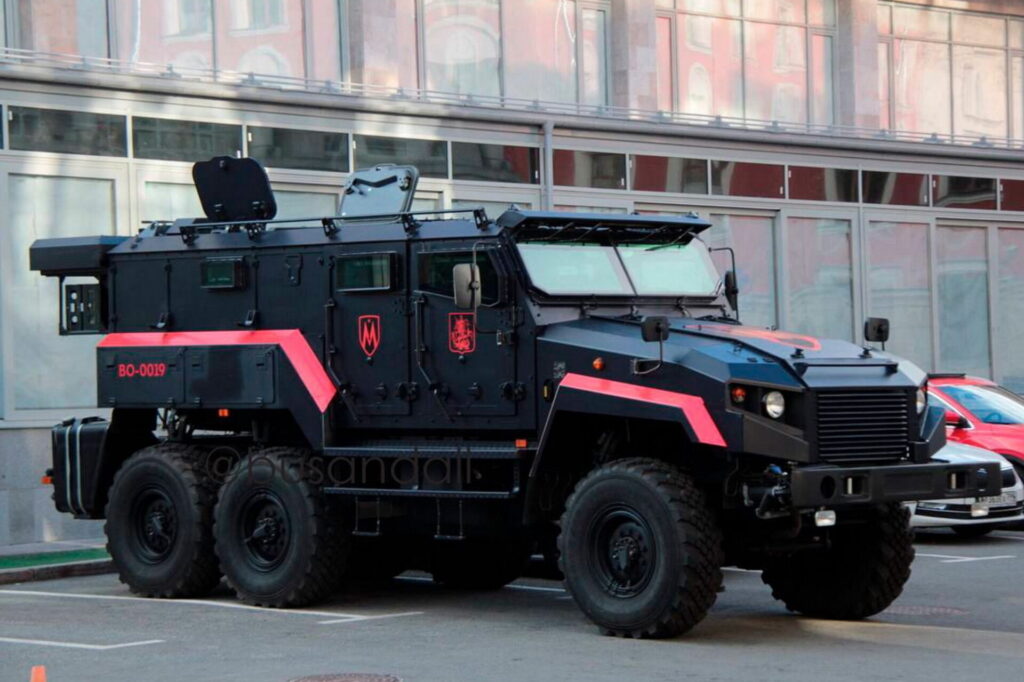
The new Z-STS, widely known as the Akhmat, was developed in just 25 days. Instead of designing an entirely new chassis, engineers used an existing mass-produced automotive platform, fitted it with a protected armored body, simplified the design wherever possible, and produced a heavy armored vehicle weighing roughly 15–17 tons and capable of carrying up to ten personnel.
The speed of its development says more about the philosophy behind Akhmat than almost any other specification.
The objective was not to create the most sophisticated armored vehicle possible.
The objective was to create a protected vehicle that could be manufactured quickly and in large numbers.
Remdizel representatives explicitly linked the use of a production chassis to the need to accelerate manufacturing, and production rates were subsequently increased.
Where Did Akhmat Come From?
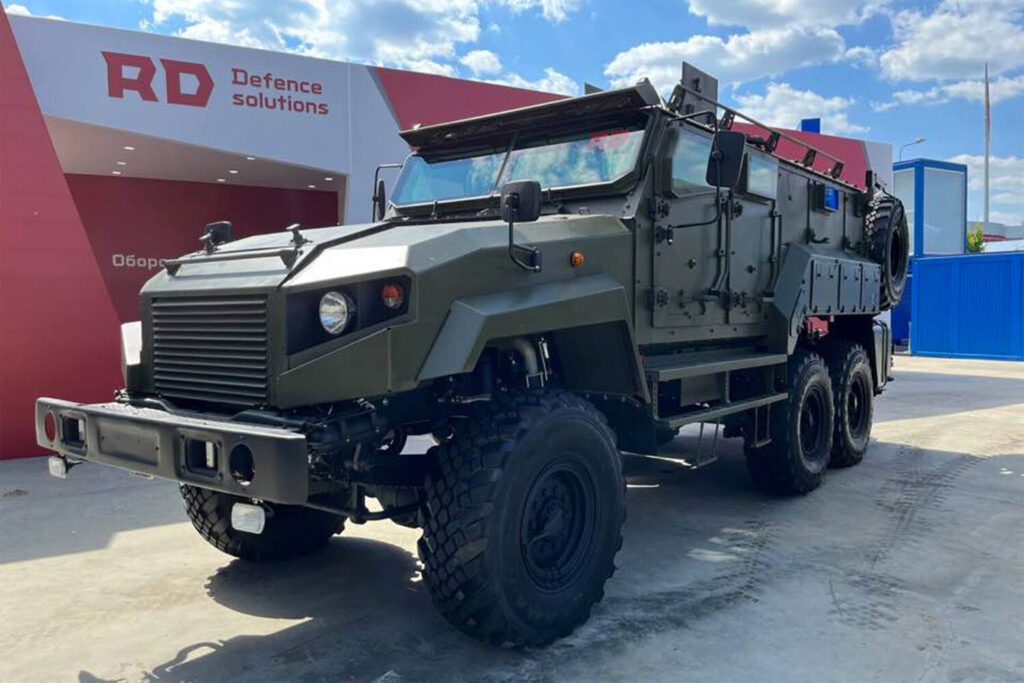
The vehicle’s official designation is Z-STS, meaning “Protected Special Transport Vehicle.”
It was developed by the Remdizel plant in Naberezhnye Chelny under chief designer Igor Zarakhovich. The project emerged in the spring of 2022 following a request for a relatively simple protected vehicle capable of transporting personnel and cargo. This is also where the widely used Akhmat name originated.
The reported development time is remarkable — just 25 days.
But there was no engineering miracle involved.
It would be virtually impossible to design an entirely new heavy armored vehicle from scratch, conduct a complete testing program for all its components, and prepare it for production in only 25 days.
Instead, the engineers took a different approach.
They used as much existing technology as possible.
The Z-STS is based on a production three-axle all-wheel-drive platform from the KamAZ-5350 family. Some elements of the armored body also drew on technologies already mastered by Remdizel.
In effect, the designers abandoned the idea of reinventing the vehicle itself.
And that is precisely what allowed the project to move so quickly.
Under the Armor, It Is Essentially a Military Truck
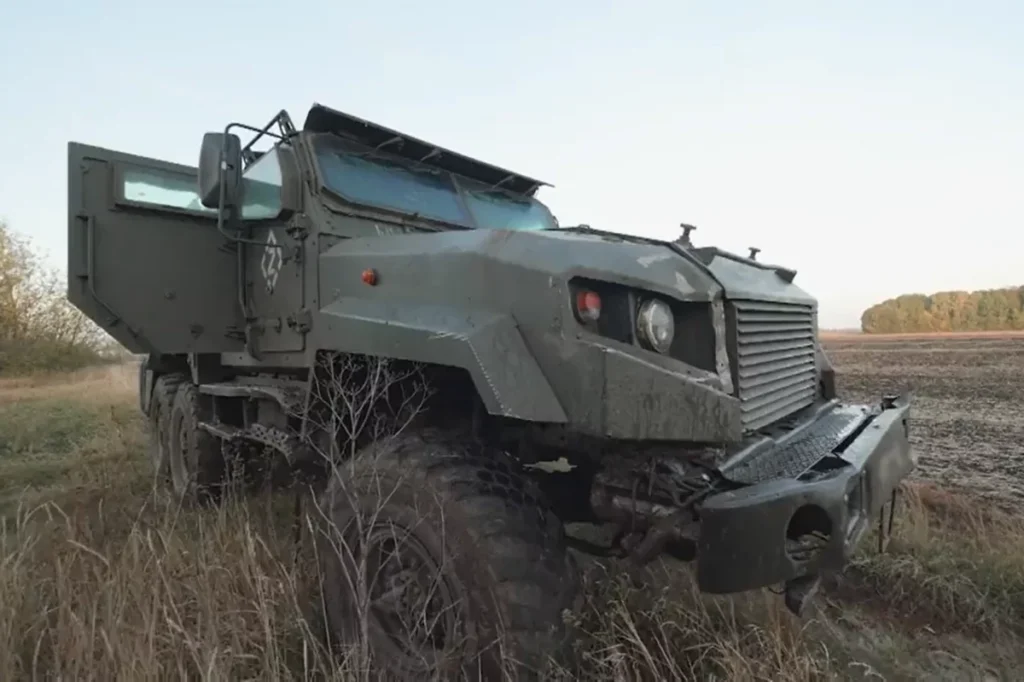
Akhmat has a 6×6 wheel configuration.
This is one of the most important aspects of the design.
Instead of a highly specialized integral armored chassis, the vehicle uses a more conventional frame-based architecture. The engine is positioned at the front, with the protected crew compartment behind it.
This arrangement offers several advantages.
First, the production chassis is already manufactured in large quantities.
Second, many of its mechanical components are already familiar to maintenance personnel.
Third, the armored vehicle manufacturer does not need to build the entire running gear from scratch.
Remdizel itself stated that using a production frame made it possible to significantly accelerate assembly. In 2022, the company’s chief designer claimed that a Z-STS could be assembled approximately ten times faster than a Typhoon-family vehicle.
That figure is far more important to understanding Akhmat than its maximum speed or armor thickness.
Because it explains why the vehicle exists in the first place.
Akhmat by the Numbers
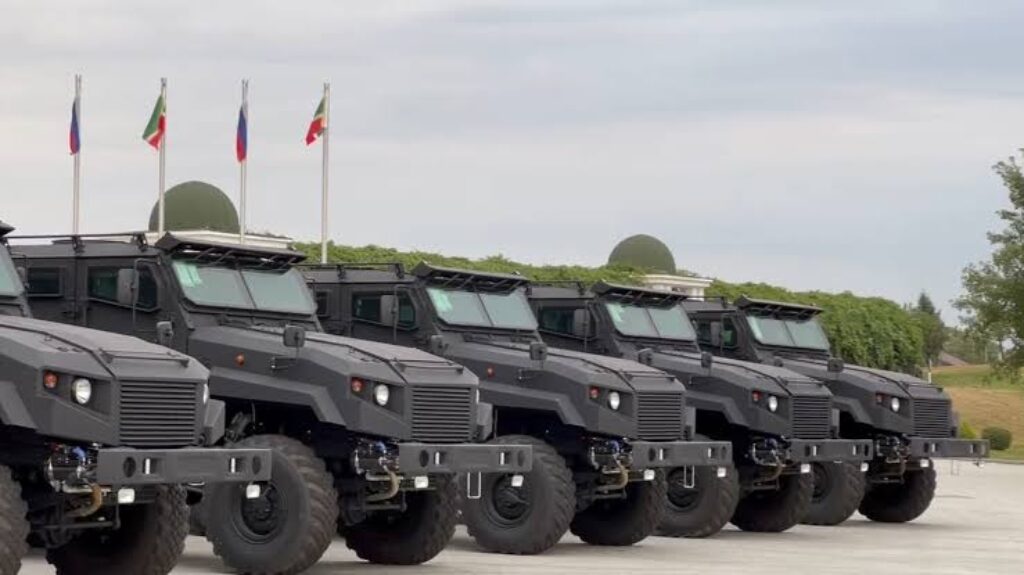
Specifications for the Z-STS vary somewhat between open sources, but the overall characteristics of the vehicle are reasonably well established.
| Wheel configuration | 6×6 |
| Curb weight | approx. 14.6 t |
| Gross weight | up to 17.5 t |
| Payload | approx. 2.87 t |
| Crew and passengers | up to 10 |
| Length | approx. 8.2 m |
| Width | approx. 2.95 m |
| Height | approx. 3.68 m with turret |
| Ground clearance | approx. 380 mm |
| Engine | KamAZ-740.30 V8 diesel |
| Power | approx. 260 hp |
| Maximum speed | approx. 90 km/h |
| Drive | all-wheel drive |
Open sources list the base vehicle as using a KamAZ-740.30 diesel engine producing approximately 260 hp. At a gross weight of around 17.5 tons, this corresponds to roughly 15 hp per ton.
By modern standards, that is hardly exceptional.
And here we can clearly see how Akhmat’s philosophy differs from that of more sophisticated purpose-built MRAPs.
The vehicle was not designed to deliver outstanding acceleration.
The priority was to use mass-produced components while retaining acceptable mobility.
Why Is the Engine at the Front?
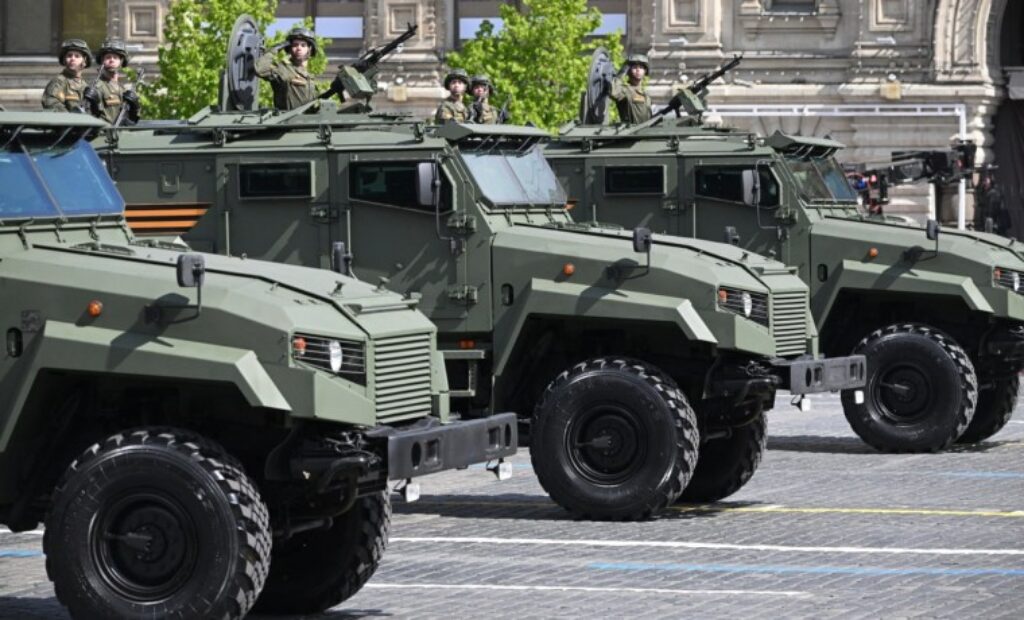
Akhmat is easy to distinguish from some other Russian armored vehicles because of its pronounced hooded layout.
This is not merely a stylistic choice.
The engine and front section provide additional distance between the crew compartment and a potential explosion ahead of the vehicle. The protected crew compartment itself is positioned farther to the rear.
Inside are the driver, commander, and passengers. The vehicle can accommodate approximately ten people.
Side doors and a large rear exit are provided for entry and dismounting.
This arrangement reflects the Z-STS’s primary mission.
It is first and foremost a protected transport vehicle, and only secondarily a weapons carrier.
That distinction is important.
Akhmat Is Not an APC
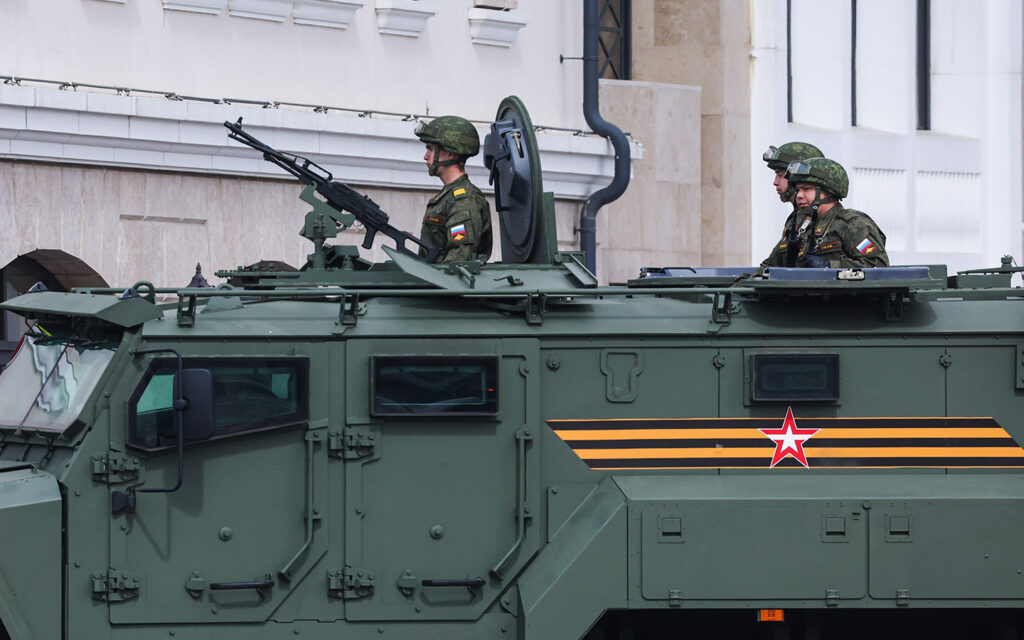
The appearance of a large three-axle armored vehicle naturally invites comparisons with an armored personnel carrier.
Structurally, however, these are different categories of vehicle.
A conventional APC is designed from the beginning as an armored fighting vehicle. Its transmission, suspension, hull, and internal layout are all developed around military requirements.
The Z-STS evolved from an automotive platform.
That brings both advantages and limitations.
It can potentially be cheaper and easier to manufacture.
Maintenance is simpler.
Existing automotive support infrastructure can be used.
At the same time, its truck-based origins impose limitations on armor weight, payload, mobility, and future modernization potential.
It would therefore be misleading to describe Akhmat as a replacement for a conventional APC.
It is a different vehicle intended for different tasks.
What Do We Know About Its Protection?
This is where precise specifications become difficult to establish.
The manufacturer has not publicly disclosed detailed armor and mine-protection characteristics for the Z-STS.
Ballistic and fragmentation protection have been claimed, and during the vehicle’s initial presentation representatives compared its protection concept with that of the Typhoon family. However, specific figures should be treated cautiously because a detailed public protection specification for the production vehicle is not readily available.
For that reason, it is better not to assign unsupported STANAG levels, TNT-equivalent mine resistance figures, or exact firing distances to the vehicle.
What can be assessed more confidently is the basic design philosophy.
Personnel are placed inside a single protected compartment, separated from the external environment by armor and ballistic glass, while the underlying automotive architecture is retained.
In this sense, Akhmat represents something of a compromise between an MRAP and a conventional military truck.
Machine Gun, Grenade Launcher, or Remote Weapon Station
The Z-STS is equipped with a roof-mounted weapon position.
Different configurations have demonstrated the possibility of mounting a 12.7 mm heavy machine gun, an automatic grenade launcher, or a remotely controlled weapon station. The Arbalet-DM station armed with a 12.7 mm Kord machine gun has also been associated with the platform.
That does not turn Akhmat into a wheeled infantry fighting vehicle.
Its armament is primarily intended for self-defense and fire support.
The vehicle’s main payload remains personnel and cargo.
Its internal layout can also be adapted relatively quickly for different missions. Open descriptions have mentioned the possibility of converting the vehicle for medical evacuation in less than two hours.
That type of versatility fits the philosophy of a relatively simple production platform.
One basic vehicle can serve as a protected personnel transport, unit vehicle, ambulance, or carrier for specialized equipment.
Why Not Simply Build Another Typhoon?
This is where the story becomes particularly interesting.
Remdizel already had access to the considerably more sophisticated Typhoon family of protected vehicles.
So why develop another heavy armored vehicle?
The answer can be found on the factory floor.
Typhoon is a specialized vehicle. Manufacturing such equipment requires numerous purpose-built components and specialized production processes.
Akhmat was deliberately designed differently.
Take a production chassis.
Install a protected armored body.
Use as many proven components as possible.
Reduce the number of complicated specialized systems.
The result may be inferior to a more advanced armored vehicle in some individual characteristics, but it gains an entirely different advantage once mass production becomes the priority:
how many vehicles can the factory manufacture per month?
This brings us back to the claim that Akhmat could be assembled approximately ten times faster than a Typhoon.
If several simpler armored vehicles can be produced in the time required to manufacture one more sophisticated machine, military economics begins to look very different.
Simplicity Is Also a Performance Characteristic
Military vehicle catalogs normally compare armor, engine power, maximum speed, payload, and armament.
They rarely include another four specifications:
production time;
maintenance cost;
availability of spare parts;
ability to repair the vehicle using existing personnel and infrastructure.
For a mass-produced military vehicle, however, these factors can be just as important.
Akhmat represents precisely this engineering philosophy.
It does not attempt to be the best armored vehicle in every individual category.
Instead, its designers sought to obtain sufficient protection and mobility while making production as straightforward as possible.
Seen from this perspective, the 25-day development period stops looking like a publicity stunt.
The vehicle could be created so quickly precisely because a large part of it did not have to be created at all.
And the Design Continues to Evolve
The original configuration has not been the end of the project.
In February 2025, Remdizel management announced preparations for production of a new Akhmat version based on the Mustang-family chassis and fitted with a more powerful engine. The company intended to manufacture both versions in parallel.
This is a logical direction for further development.
One obvious compromise of the original Z-STS is the combination of considerable vehicle weight with a 260-hp engine.
Increasing engine output can improve the power-to-weight ratio of the heavy armored vehicle without abandoning the basic concept of using a mass-produced automotive platform.
In other words, development does not necessarily involve turning Akhmat into another highly specialized and complicated MRAP.
Instead, the original concept can be gradually improved while retaining its fundamental production advantages.
Not the Most Sophisticated — But It Can Be Built Quickly
This is what makes the Z-STS Akhmat considerably more interesting than its specification sheet might suggest.
Technically, there is little revolutionary about it.
A three-axle truck chassis.
A 260-hp diesel engine.
An armored body.
Ten seats.
A gross weight of around 17.5 tons.
A machine gun on the roof.
Compared with the most advanced modern MRAPs, all of this looks rather conservative.
But Akhmat was never intended to be a technology demonstrator.
It was designed around an entirely different requirement — mass production.
And in that respect, the vehicle provides an interesting example of how military engineering changes when the primary limitation is no longer the ability to create the most sophisticated possible platform, but the ability of industry to manufacture protected vehicles in sufficient numbers.
One approach is to build an extremely sophisticated armored vehicle with a unique chassis, expensive suspension, and numerous specialized systems.
Another is to take a proven automotive platform, install an armored body, and create a vehicle that can be assembled far more quickly.
The first option will almost certainly be technically superior.
But there is one characteristic that rarely appears in a specifications table:
How many of those vehicles will actually be available when they are needed?
And that may be the single most important idea behind the entire Z-STS Akhmat project.