The Italian Three-Wheeled Machine Gun: Why Moto Guzzi Built One of World War II’s Strangest Fighting Vehicles

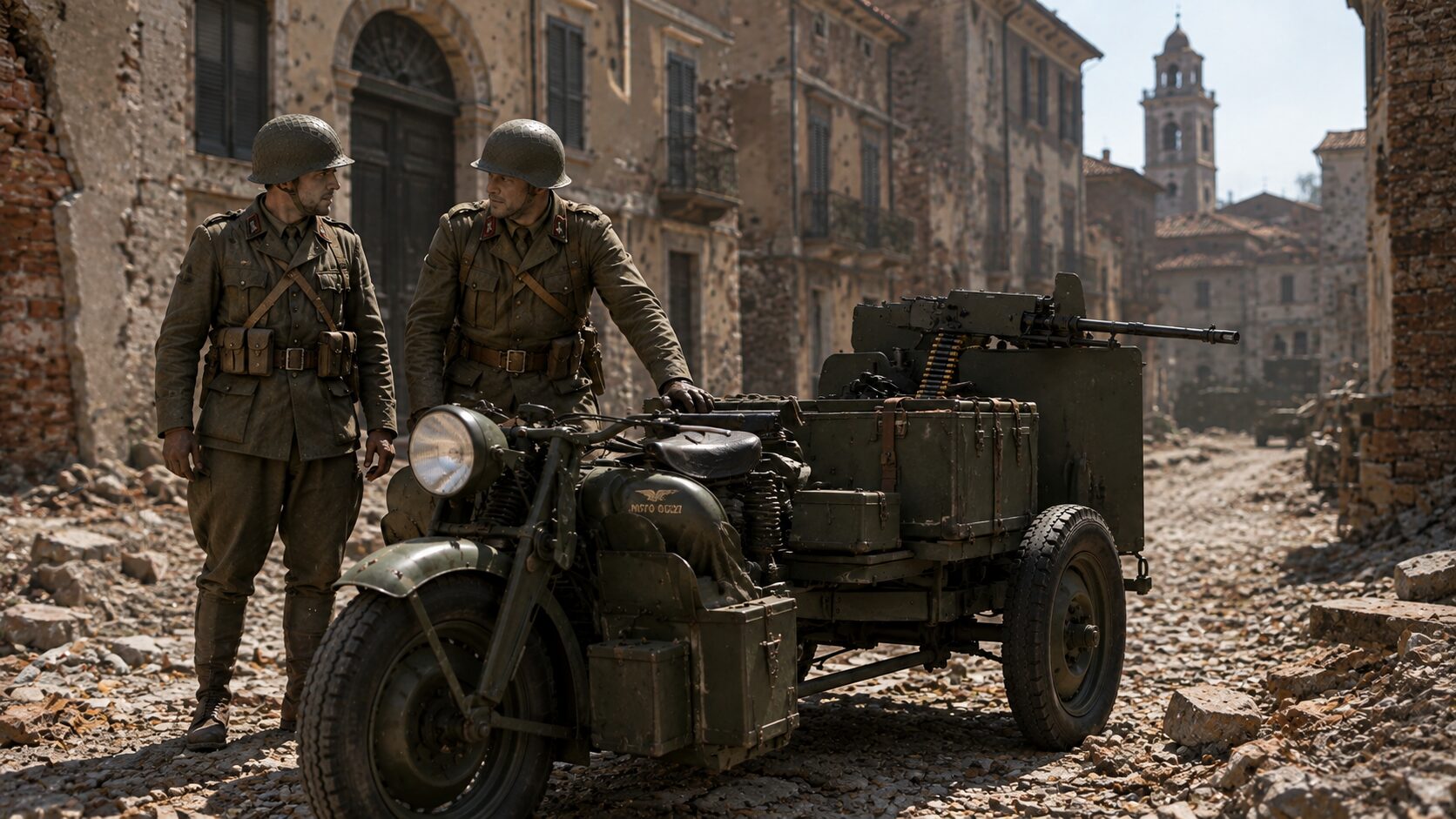
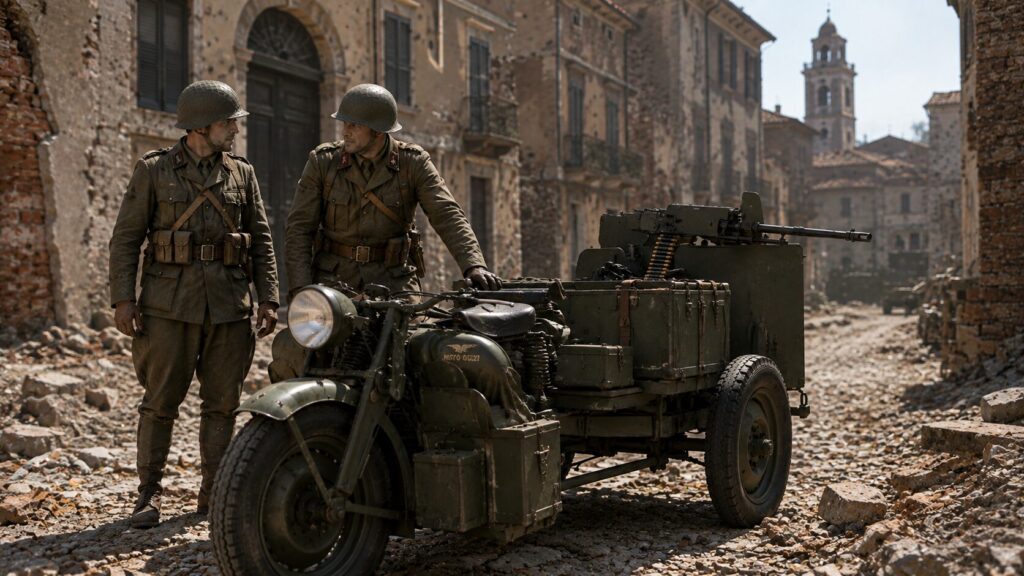
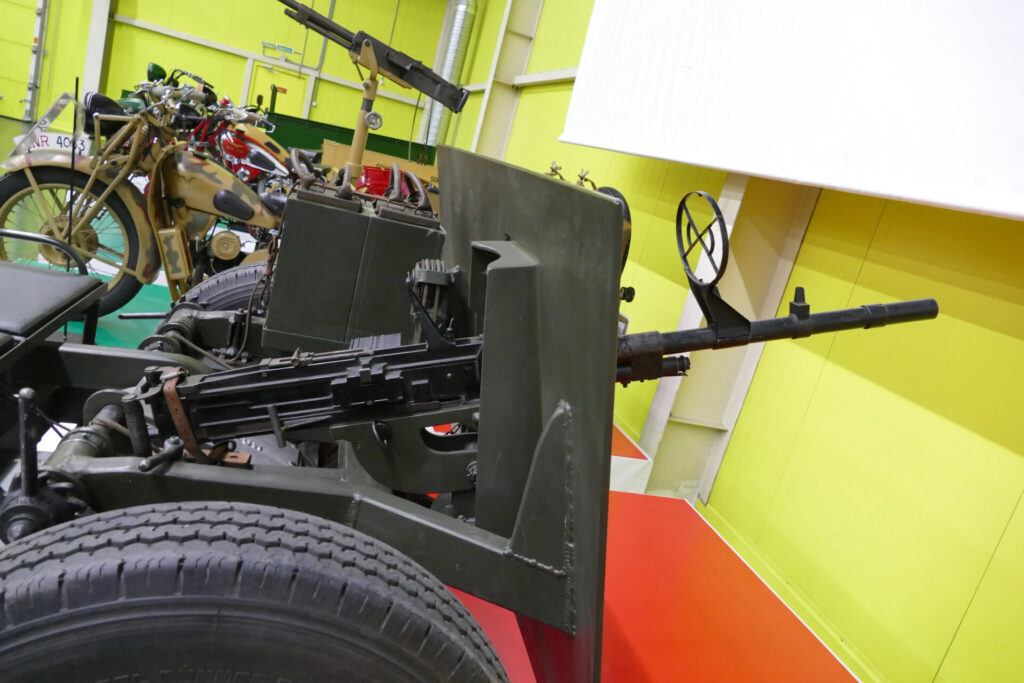
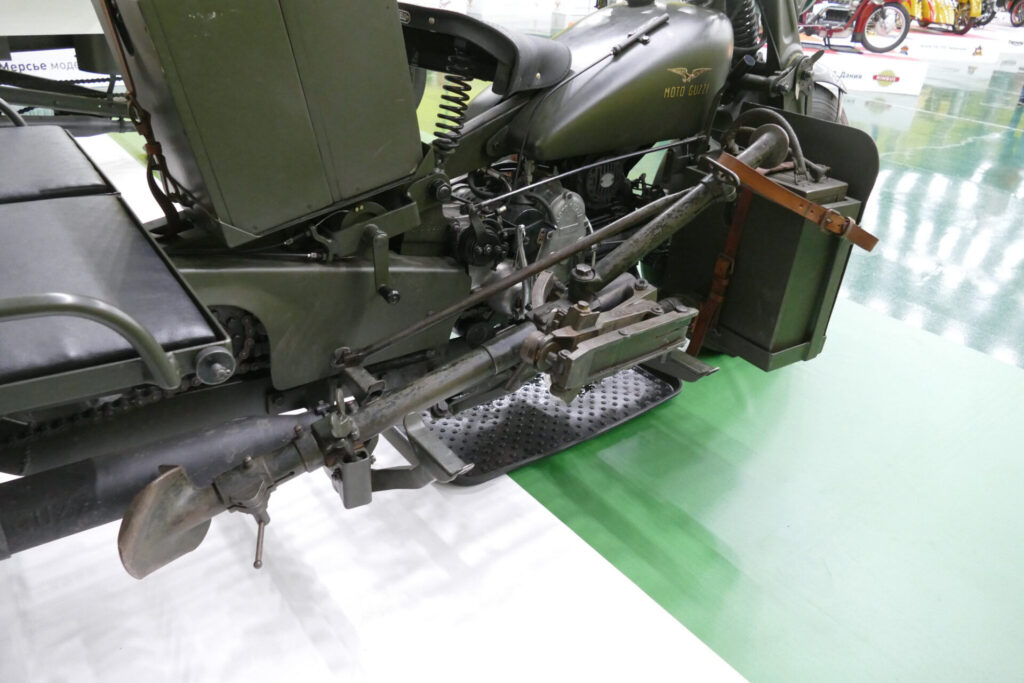
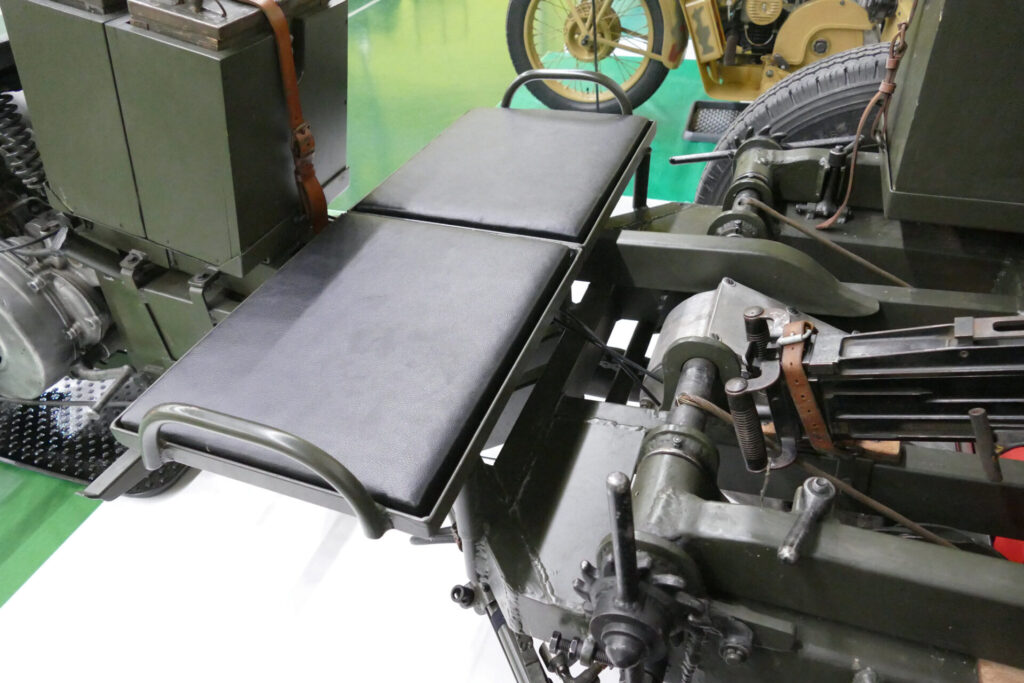
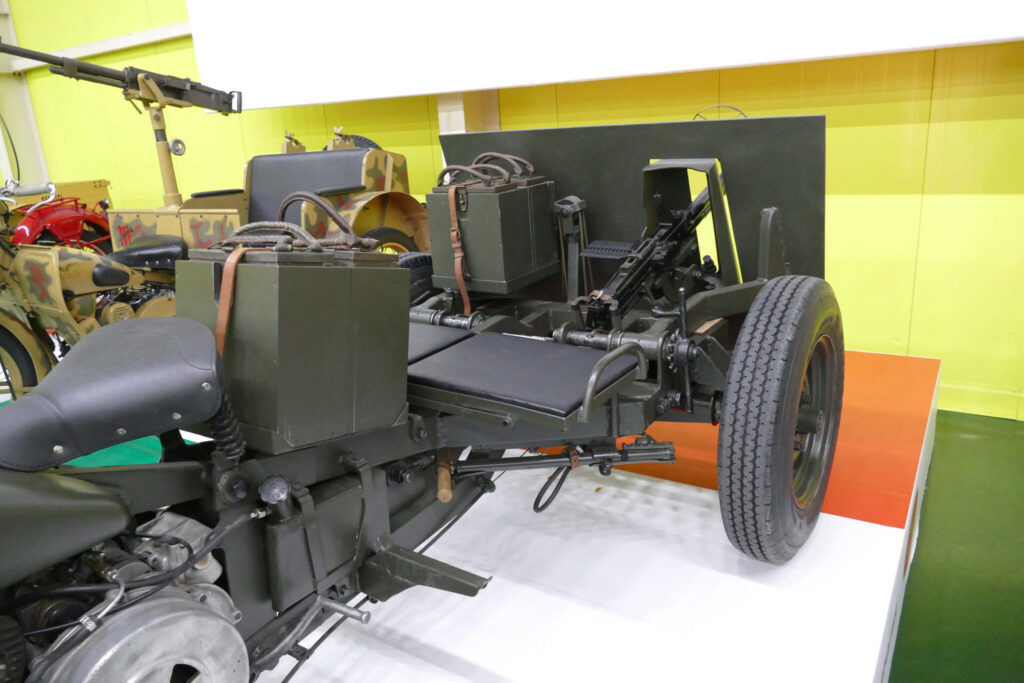
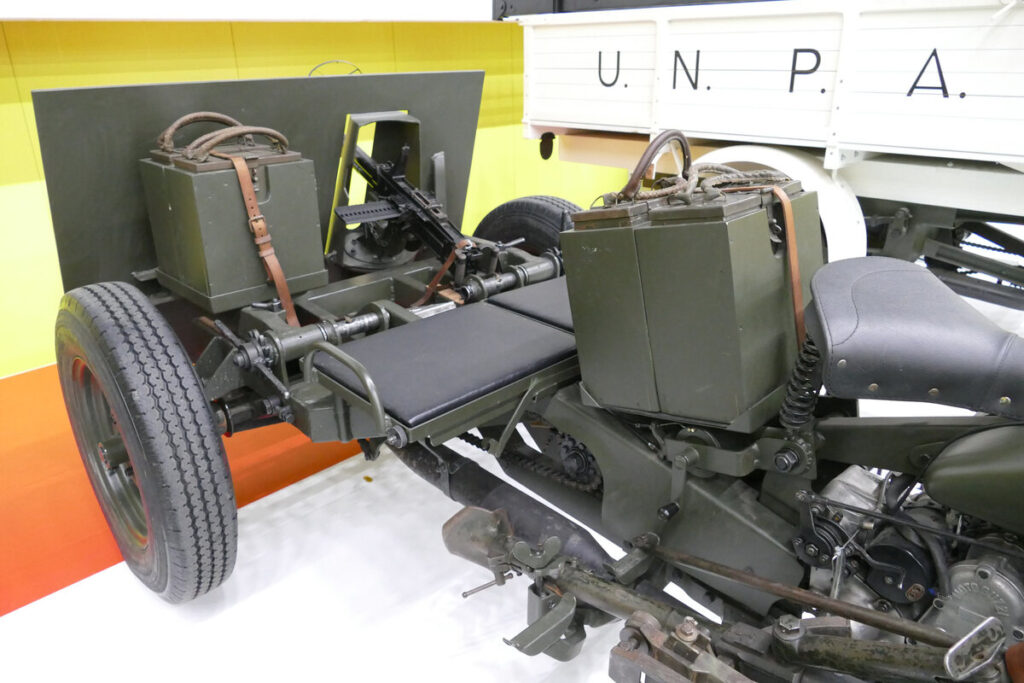
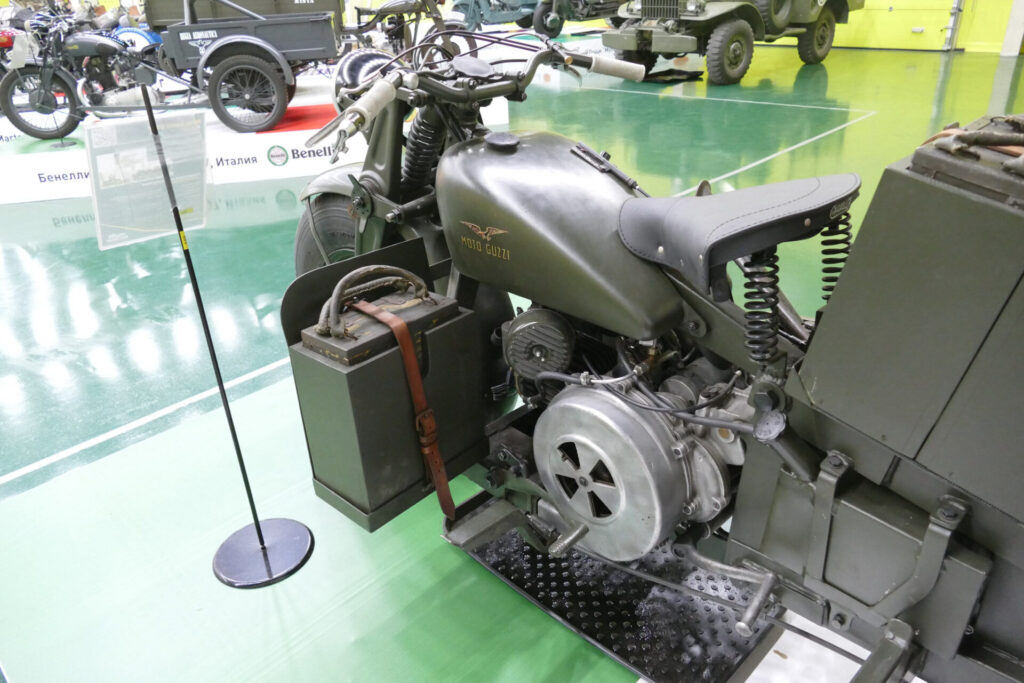
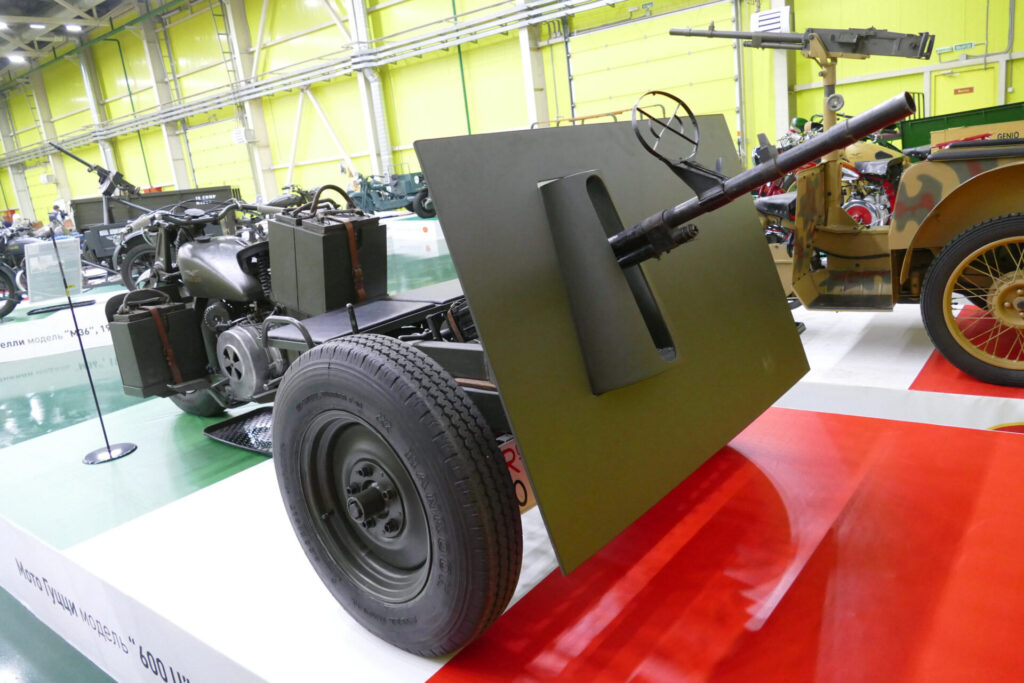
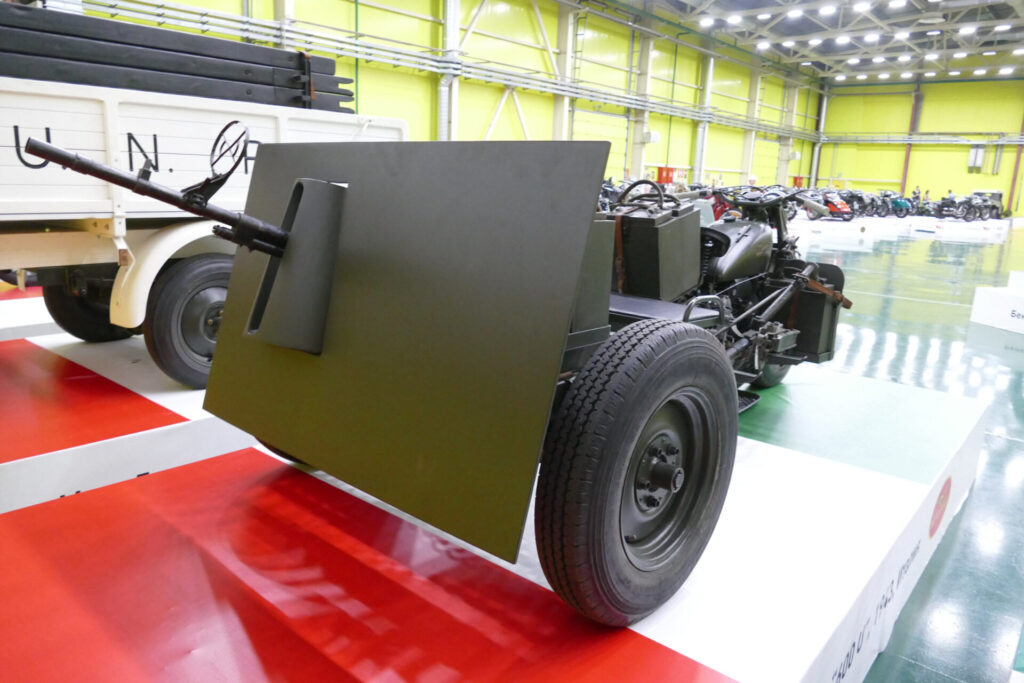
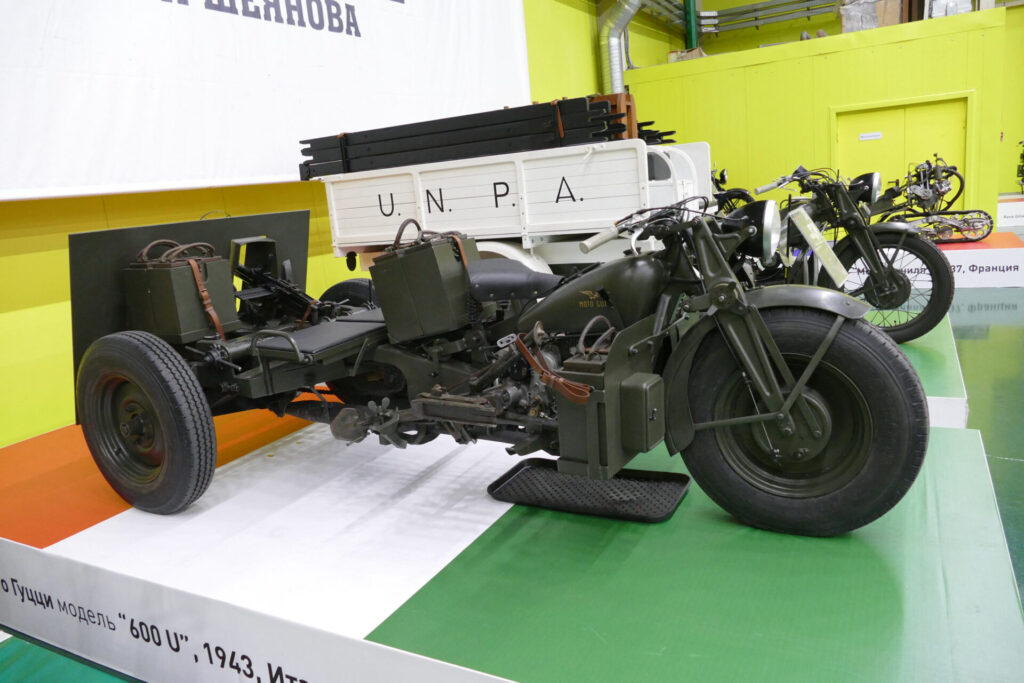
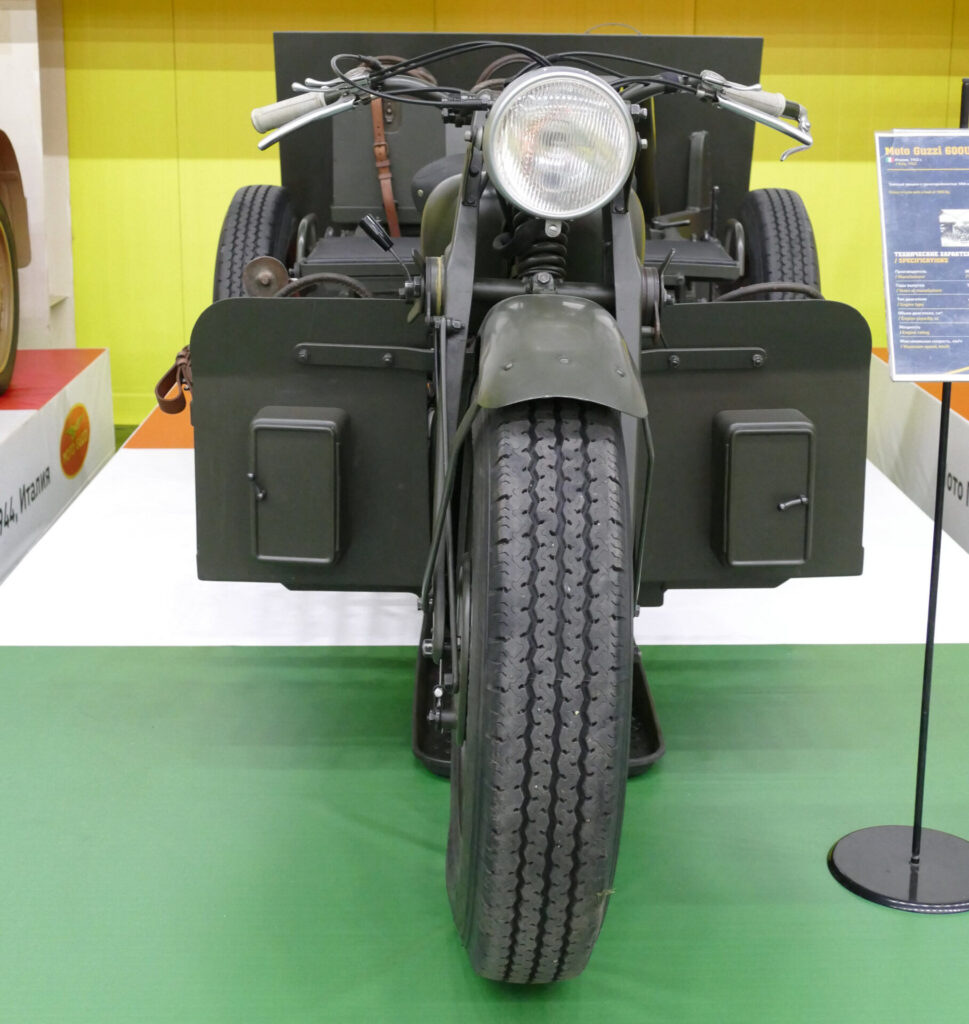
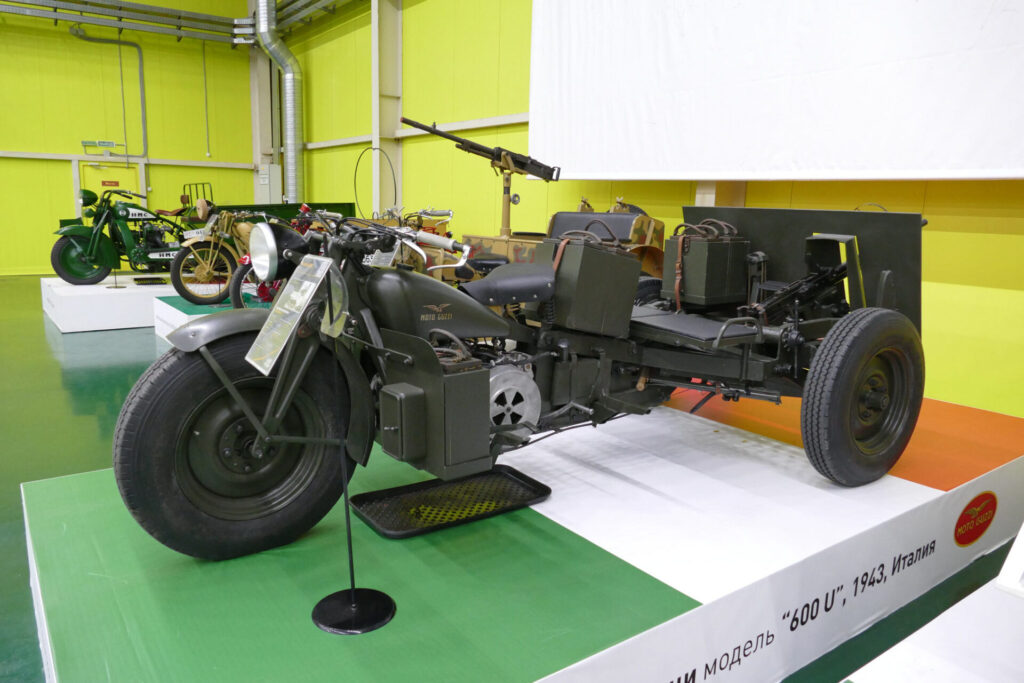
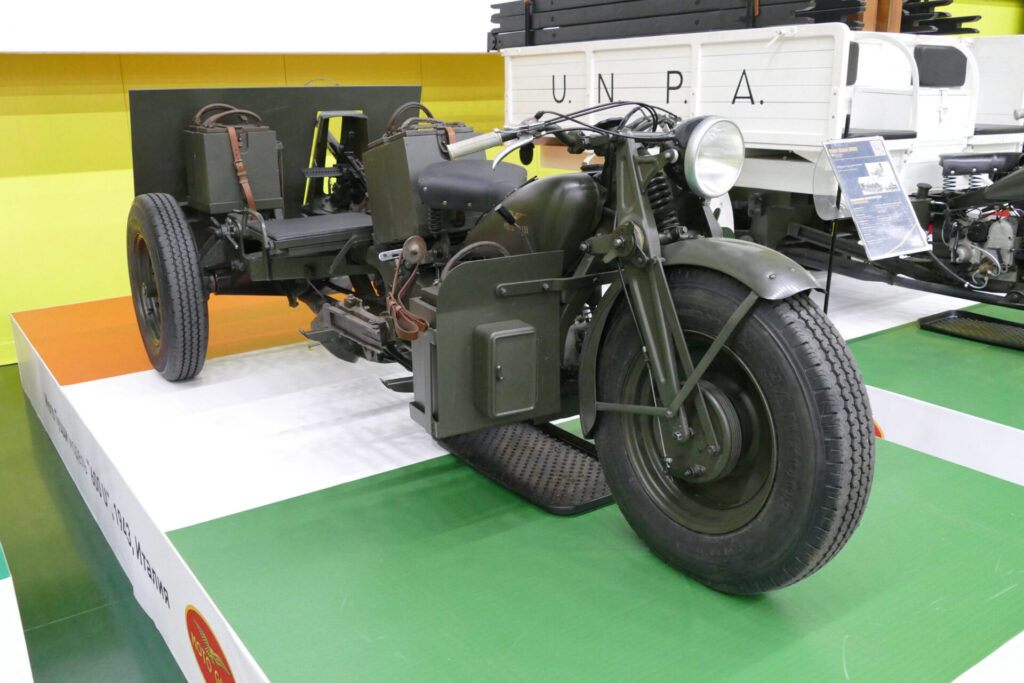
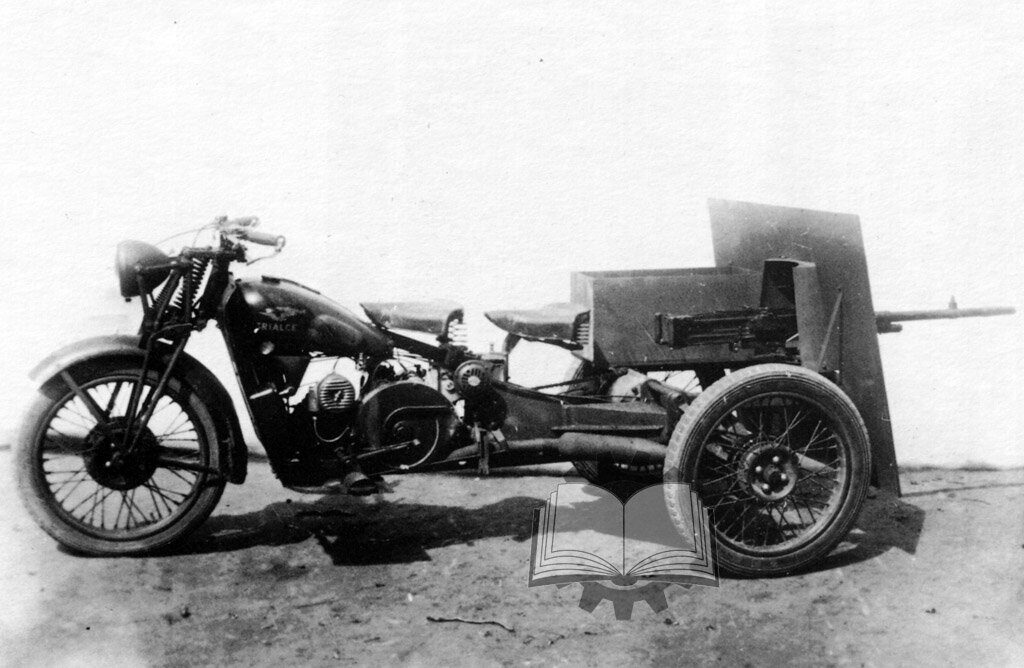
Italy produced plenty of unusual military equipment during World War II, but even by Italian standards, one particular machine looks as though it emerged from an especially ambitious engineering experiment. Imagine a heavy three-wheeled motorcycle weighing almost as much as a small car, with an armored shield, a two-man crew position, and a Breda Mod. 37 heavy machine gun mounted behind the rear axle. The entire vehicle stood barely more than a meter high. Ammunition was carried wherever space could be found, while the machine gun’s standard tripod was attached to the side so the weapon could be removed and used by infantry if necessary.
This was not a modern reconstruction or the fantasy of a restorer. Such a machine really existed.
Its basis was the Moto Guzzi Motocarro Tipo U, one of the heaviest representatives of Italy’s peculiar family of three-wheeled cargo motorcycles. In the early 1940s, engineers attempted to transform it into what could best be described as a “roving machine gun”: a compact mobile firing position capable of rapidly changing locations while carrying its own crew and a substantial supply of ammunition.
The project never reached large-scale production, and very little information about it has survived. Yet the story behind its creation explains why the Italian military was so fond of three-wheeled vehicles — and just how far Moto Guzzi engineers were prepared to push the concept.
When Three Wheels Made More Sense Than Four
Today, a three-wheeled cargo motorcycle seems like an exotic curiosity. In Italy during the first half of the 20th century, however, it was an entirely practical form of transportation.
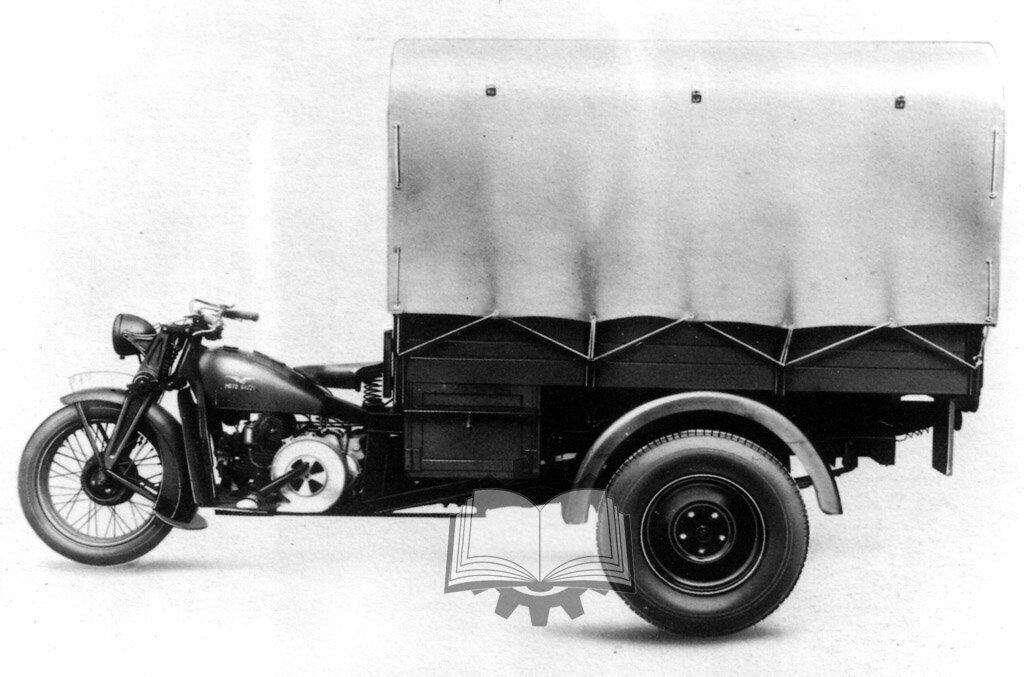
Moto Guzzi began producing its Motocarro vehicles as early as 1928. The reason was straightforward: a proper automobile or truck was expensive, while a motorcycle chassis equipped with a cargo-carrying rear axle could provide a relatively inexpensive vehicle capable of transporting several hundred kilograms.
The first model was the Tipo 107, with a payload of around 350 kg. Its construction was simple, reasonably durable, and inexpensive, and the Italian military quickly became interested.
The next stage included models of the GT family and the military-specific Mototriciclo 32. The latter was already produced in significant numbers. Nobody expected high speed from such machines. Durability, low operating costs, and the ability to carry cargo in situations where a full-size truck would be excessive were considered far more important.
Gradually, Italian Motocarros became heavier and more capable. The Tipo S, introduced in 1934, could carry approximately 800 kg, while the later ER increased payload capacity to around one ton.
The boundary between motorcycle and truck was becoming increasingly difficult to define.
Turning the “Moose” Into a Machine-Gun Carrier
One of the most successful military models was the Moto Guzzi Trialce, a three-wheeled derivative of the Alce military motorcycle — “Alce” meaning “moose” in Italian.
The Trialce could carry approximately 800 kg while still achieving respectable road performance for a vehicle of its type. Around 1,740 examples were supplied to the Italian armed forces, with several specialized military versions eventually appearing.
It was the Trialce that became the first known platform for experiments with an unusual mobile machine-gun mount.
The concept went considerably further than simply transporting a machine gun.
Motorcycles and motorcycle combinations carrying machine guns were used by numerous armies. Normally, the weapon was either fired from the vehicle or transported with its crew and then removed before combat.
The Italians attempted something different: a self-contained, extremely low-profile mobile firing position.
A Breda Mod. 37 heavy machine gun with an armored shield was installed at the rear. Two crewmen and ammunition were carried immediately around the weapon. The vehicle could reach a position, turn its rear toward the enemy, and begin firing almost immediately.
In effect, the result was a hybrid of a motorcycle, a machine-gun cart, and an ultra-light self-propelled weapons platform.
But the Trialce was only the beginning.
Tipo U: When a Motorcycle Started Becoming a Truck
In 1942, Moto Guzzi developed the Tipo U family. The letter U stood for Unificato, or “unified.” The intention was to create a more advanced family of military vehicles better suited to demanding operational conditions.
The Motocarro Tipo U developed the ideas of the earlier ER, but its construction was significantly strengthened.
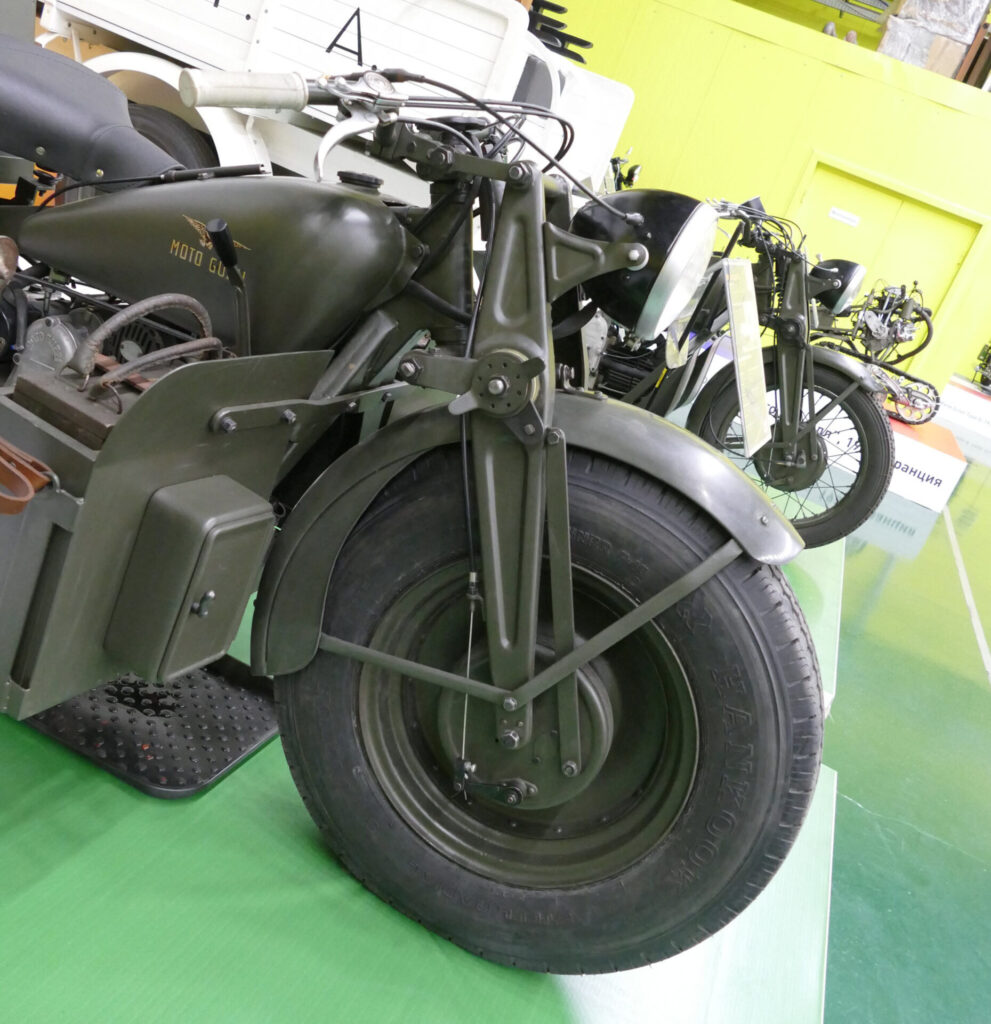
One of its most recognizable external features was the use of pressed-steel wheels instead of traditional motorcycle-style wire-spoked wheels. The frame and front fork were reinforced, while the power unit was also modified. Moto Guzzi’s single-cylinder engine of approximately 500 cc received forced-air cooling — a logical solution for a heavily loaded vehicle expected to operate for long periods at low speeds.
The transmission incorporated a reduction gearbox, giving the driver six forward speeds and two reverse speeds.
But its most impressive specification was its payload.
The Tipo U could carry approximately 1,000 kg.
For a vehicle whose ancestry could still be traced directly to a motorcycle, a one-ton payload seemed almost absurd. Yet this capability made the Tipo U an extremely attractive platform for military experimentation.
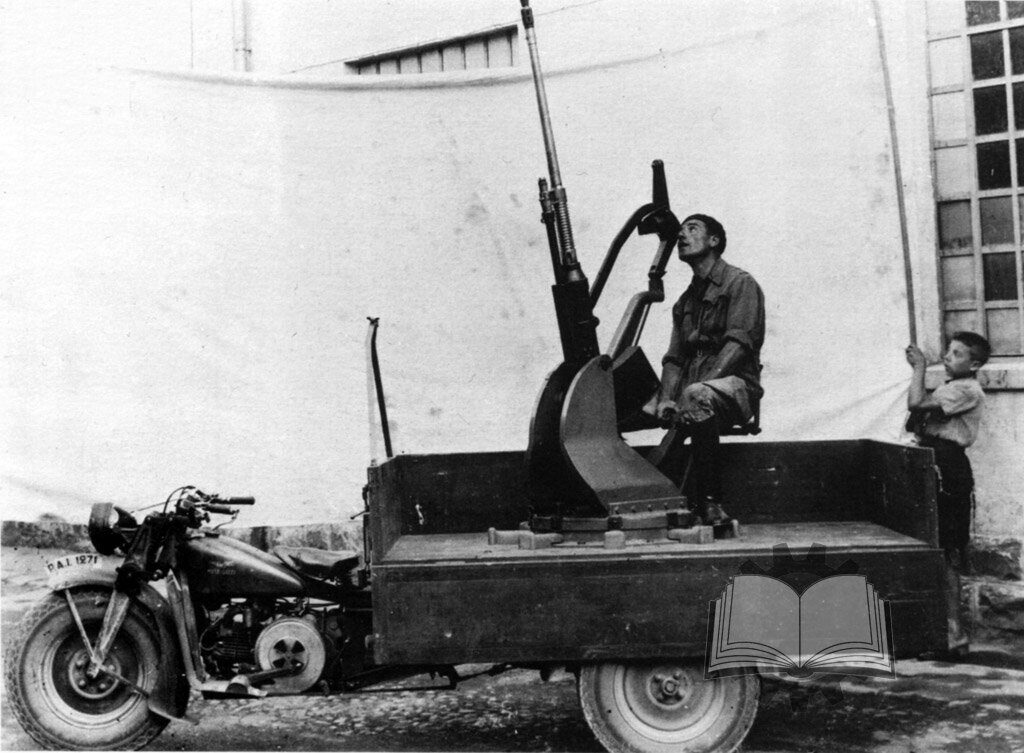
At one point, the Italians even attempted to mount a 20 mm Breda automatic anti-aircraft cannon on the chassis.
Against that background, installing a heavy machine gun suddenly seems almost conservative.
The Breda 37 Turned the Tricycle Into a Firing Position
The weapon selected was the Breda Mod. 37, the standard heavy machine gun of the Italian Army.
It was a serious piece of equipment. Chambered for the powerful 8×59 mm RB Breda cartridge, the gun itself weighed around 19 kg without its tripod and had a cyclic rate of fire of approximately 450 rounds per minute. In its standard infantry configuration, the heavy tripod made the complete system considerably more cumbersome.
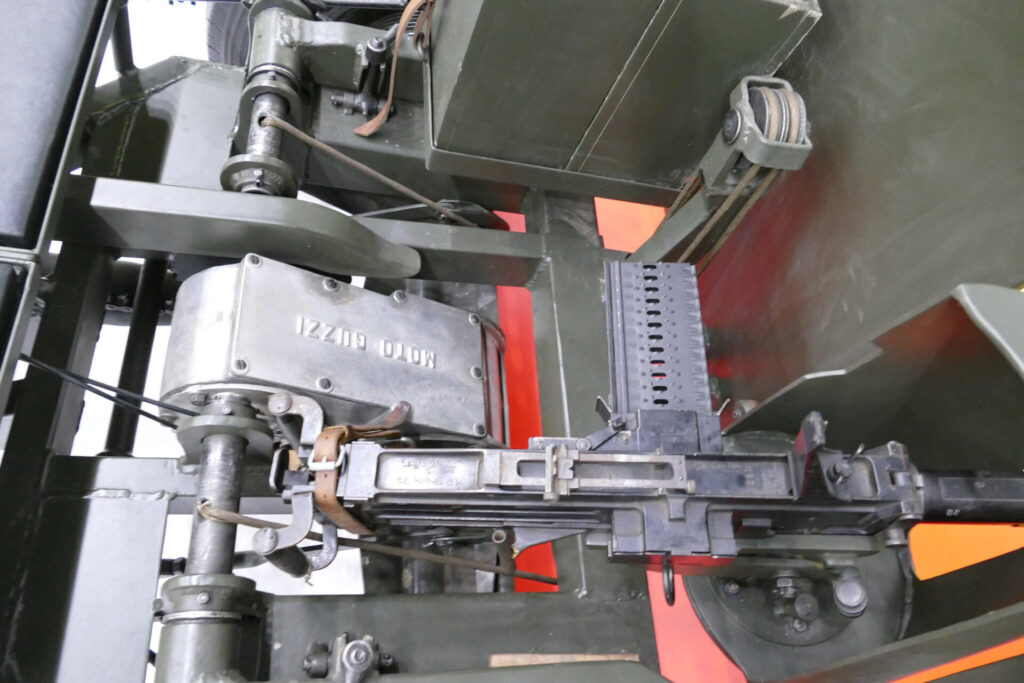
The Breda 37 also had one particularly distinctive feature: ammunition was supplied using rigid 20-round feed strips. After passing through the mechanism, the spent cartridge cases were returned to the strip.
For infantry, this arrangement created obvious inconveniences. On a vehicle, however, carrying large numbers of rigid ammunition strips was much easier.
This is why the Tipo U machine-gun carrier was covered with ammunition storage points. Boxes and brackets were fitted around the weapon mount and elsewhere on the vehicle. The machine gun itself was protected by a substantial armored shield.
The mounting also allowed considerable elevation.
In theory, this meant the Breda could engage aircraft.
In theory.
Actually hitting a fast-moving aircraft with a Breda 37 from a platform like this would have required a remarkable combination of skill and luck. Its real value remained fire against ground targets.
Its Most Important Weapon Was Its Height
Perhaps the most interesting characteristic of the Italian machine was not its firepower at all.
It was its height.
The entire vehicle stood only slightly more than 1.1 meters tall. For a mobile firing position, that was remarkably low. It could be concealed behind terrain features, walls, vegetation, or road embankments far more easily than a conventional automobile.
At the same time, the heavy rear section and relatively wide track provided a much more stable firing platform than an ordinary motorcycle with a sidecar.
The crew sat directly beside the weapon. There was also no need to transport the machine gun’s infantry tripod separately: the standard Breda 37 tripod was carried on the right-hand side of the vehicle. If necessary, the weapon could be removed and the crew transformed into a conventional infantry machine-gun team.
This reveals the real logic behind the entire design.
The Tipo U was not intended to charge across a battlefield while firing on the move like something from an adventure film. Firing accurately while moving would have made little sense with such a weapon.
Its advantage was the ability to reach a firing position quickly, open fire, and then relocate just as rapidly.
It was essentially a motorized version of the old machine-gun tachanka.
Moto Guzzi Motocarro Tipo U Specifications
| Manufacturer | Moto Guzzi |
| Country | Italy |
| Base Model Introduced | 1942 |
| Type | Heavy three-wheeled Motocarro |
| Engine | Single-cylinder, four-stroke |
| Displacement | Approx. 500 cc |
| Cooling | Forced-air cooling |
| Transmission | With reduction gearbox |
| Gears | 6 forward / 2 reverse |
| Rear Axle Drive | Chain |
| Base Vehicle Payload | Approx. 1,000 kg |
| Machine-Gun Version Height | Approx. 1.1 m |
| Machine-Gun Version Crew | 2 |
| Armament | Breda Mod. 37 |
| Caliber | 8×59 mm RB Breda |
| Ammunition Feed | Rigid 20-round strips |
| Machine-Gun Version Status | Experimental |
The exact specifications of the machine-gun prototype are considerably less well documented than those of the basic Tipo U, so these figures should primarily be regarded as characteristics of the platform from which the experimental vehicle was developed.
Why a Clever Idea Never Became a Production Vehicle
On paper, the concept offered several genuine advantages. The Tipo U was compact, relatively inexpensive, capable of carrying its crew and a substantial ammunition supply, had an extremely low silhouette, and could quickly relocate between firing positions.
But by the time the design had evolved into something approaching a finished system, Italy’s military situation was deteriorating rapidly.
In September 1943, following the Italian armistice with the Allies, German forces occupied much of northern Italy. The Moto Guzzi factory at Mandello del Lario also found itself in German-controlled territory.
For the unusual machine-gun carrier, this effectively ended any realistic prospect of production for its original customer.
The war was also exposing the fundamental limitations of the concept. A three-wheeled vehicle remained vulnerable to virtually any serious weapon. The shield offered some protection around the gun position, but turning the Motocarro into a fully armored fighting vehicle was impossible without sacrificing its greatest advantages: low weight, simplicity, and compact dimensions.
Meanwhile, conventional light vehicles and armored carriers were increasingly capable of performing the mobile weapons-carrier role more effectively.
The Italians had produced a good answer to a question that was rapidly becoming irrelevant.
The Machine-Gun Carrier Disappeared, but Its Chassis Lived On
This is where the story takes an unexpected turn.
The experimental fighting vehicle disappeared into obscurity, but the engineering ideas behind the Tipo U survived the war.
After the conflict, Moto Guzzi developed the famous Ercole, a heavy three-wheeled cargo motorcycle that clearly continued the same engineering philosophy.
Its payload eventually reached around one and a half tons.
One and a half tons — for a vehicle descended from a motorcycle.
The Ercole concept proved so successful that versions of the family remained in production for decades. Where the military had seen an overly specialized combat platform, civilian customers saw an inexpensive and compact substitute for a small truck.
That is why the unusual Moto Guzzi machine-gun carrier is interesting not simply as an unsuccessful weapon, but as the extreme development of an entire school of engineering.
The Italians began with a simple desire to build something cheaper than a truck. Gradually, they increased payload capacity, strengthened the frame, introduced a proper rear axle, reduction gearing, and forced cooling. Then, at some point, they looked at what they had created and decided to put a heavy machine gun on it.
And remarkably, from an engineering perspective, the idea was not entirely unreasonable.
Italy’s 20th-Century Tachanka
Today, the surviving Moto Guzzi machine-gun carrier looks almost comical. Three wheels, motorcycle handlebars, an enormous armored shield, a Breda 37, and two men sitting almost directly above the rear axle.
But once its strange appearance is stripped away, the logic becomes clear.
The Italian Army wanted an inexpensive mobile firing position. Moto Guzzi already had a platform capable of carrying roughly a ton. Adding a machine gun, an armored shield, crew positions, and ammunition was therefore a perfectly understandable next step.
The result was essentially a tachanka for the industrial age — extremely low, motorized, and capable of carrying everything required to keep its weapon in action.
It arrived too late and never had an opportunity to influence the war. The Motocarro itself, however, proved far more durable than the military experiments built around it.
And that is the great irony of the Moto Guzzi Tipo U story: the most successful part of Italy’s “roving machine gun” was not the machine gun at all.
It was the three-wheeled truck carrying it.