War in 60 Minutes: How Britain’s Asgard System Is Transforming Modern Battlefield Command

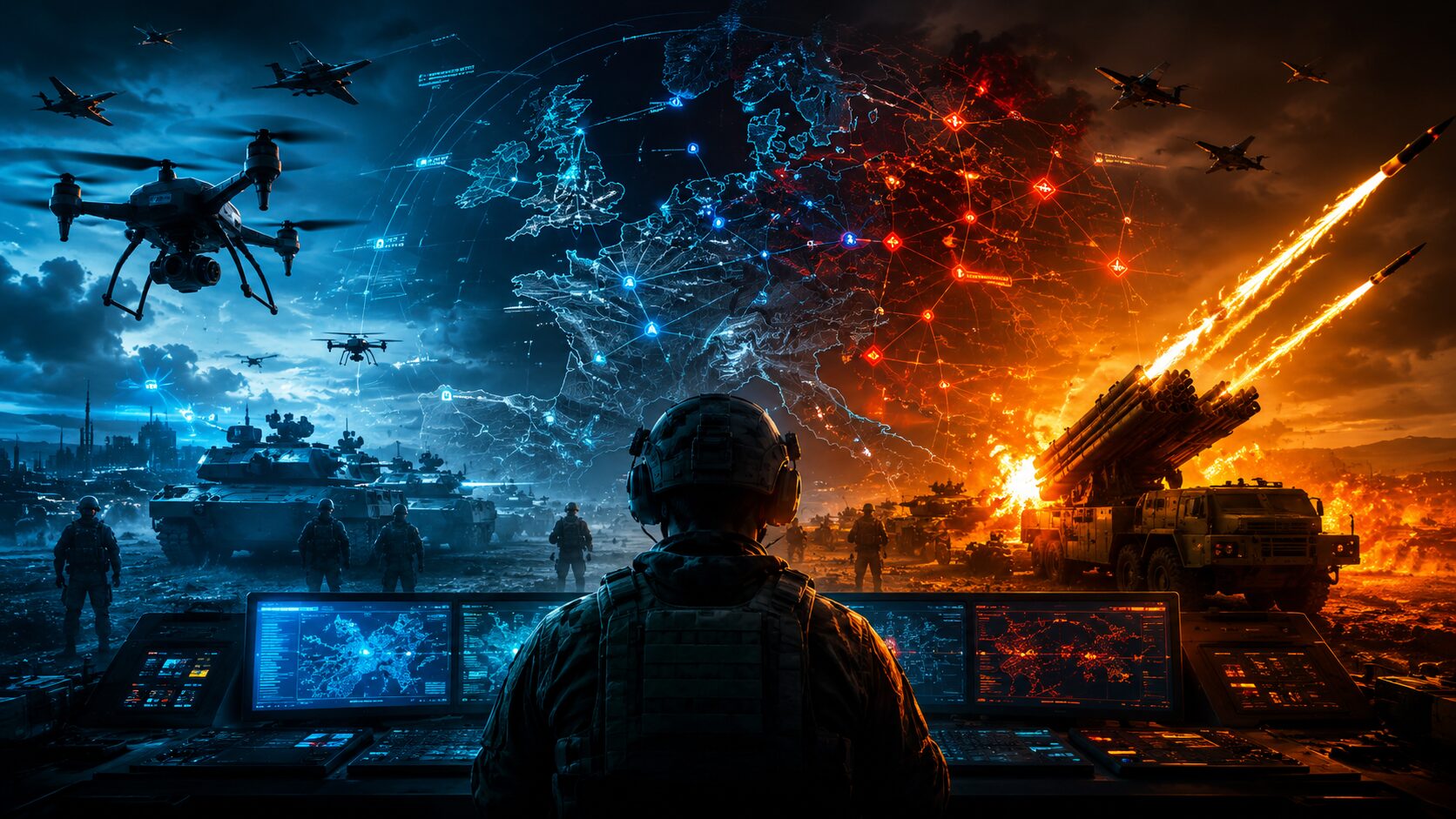
For most of the twentieth century, planning a major military operation was a slow and complex process. Intelligence services gathered information, headquarters analyzed the situation, staff officers prepared operational plans, commanders approved decisions, and only then were orders transmitted to frontline units. Even with modern communications, the entire planning cycle often required several days.
Today, that reality is beginning to change dramatically.
Chief of the General Staff of the British Army General Roly Walker has announced that the new Asgard battlefield management system has reduced operational planning time at the corps level from 72 hours to just one hour. If these results continue to be confirmed in operational service, Asgard could represent one of the most significant revolutions in military command and control in decades.
Why Military Decisions Have Always Taken So Long
At first glance, it might seem that modern armed forces should already operate entirely in real time.
In reality, the challenge is far more complicated.
During a large-scale operation, commanders must simultaneously process information from satellites, drones, radar systems, electronic intelligence units, aircraft, artillery, and ground forces.
Each source delivers information in a different format.
Some reports contradict one another.
Others become outdated within minutes.
As a result, much of the planning cycle is spent not making decisions, but organizing and validating enormous volumes of information.
That is precisely the problem Asgard is designed to solve.
What Is Asgard?
The British Army first unveiled Asgard in the summer of 2025.
At its core, Asgard is a unified digital battlefield management platform.
It connects reconnaissance assets, command headquarters, communications systems, artillery, aircraft, and unmanned platforms into a single information network.
Incoming data from all available sources is automatically fused into one continuously updated operational picture.
Instead of reviewing dozens of disconnected intelligence reports, commanders receive a nearly complete digital battlefield map that refreshes almost in real time.
In effect, Asgard functions as a fully digital headquarters.
Artificial Intelligence Instead of Staff Officers?
Although the British Army has not disclosed every technical detail, it is known that Asgard relies heavily on automated data-processing algorithms.
Their purpose is not to replace commanders but to eliminate much of the routine analytical work traditionally performed by headquarters staff.
The system automatically correlates information from multiple sources, identifies priority threats, proposes possible courses of action, and helps allocate available strike assets more rapidly.
The final decision still belongs to the commander.
The difference is that commanders no longer need to manually analyze thousands of incoming reports before acting.
From Drone to Rocket Launcher
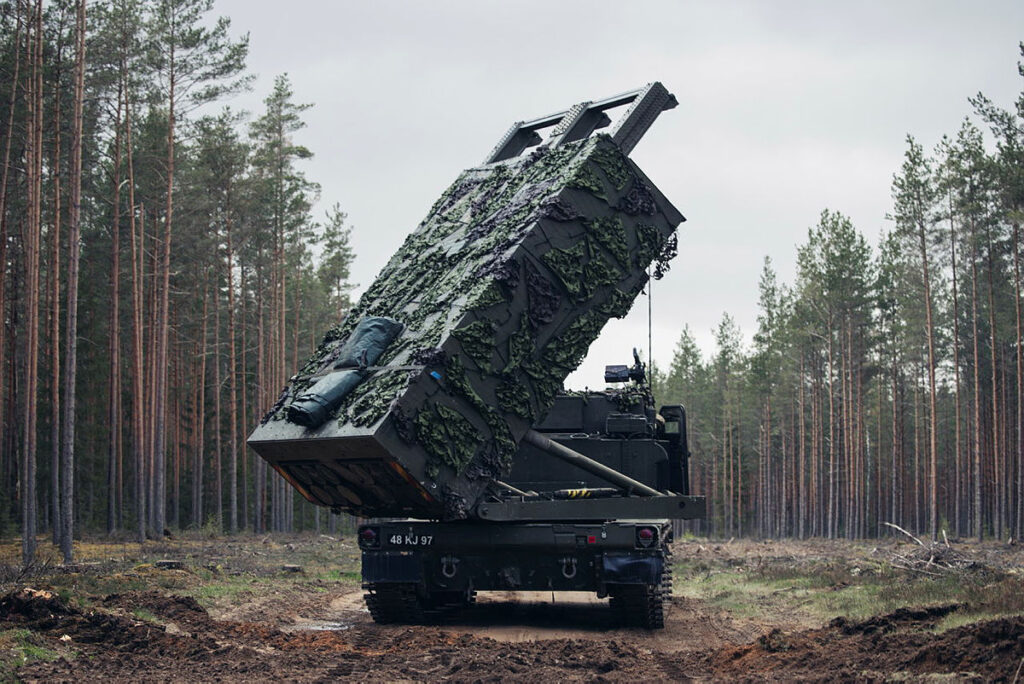
One of Asgard’s most impressive capabilities is its ability to connect very different combat systems within a single operational network.
During early exercises in Estonia, the platform was integrated with the Dart 250 jet-powered strike drone as well as the M270 MLRS multiple launch rocket system.
In practical terms, this means that a target detected by a reconnaissance drone can appear almost instantly on the fire-control display of an artillery unit.
No telephone calls.
No manually transmitted coordinates.
No lengthy coordination between multiple headquarters.
This level of automation is increasingly regarded as one of the defining characteristics of future armed forces.
Why One Hour Matters More Than a New Tank
Reducing planning time may sound less impressive than introducing a new fighter aircraft or missile.
In reality, it may be far more important.
Modern combat evolves so rapidly that intelligence can lose much of its value within minutes.
If planning an operation requires three days, an opponent has ample time to reposition forces, relocate command posts, and establish new defensive lines.
A one-hour planning cycle gives commanders the ability to react while the battlefield situation is still largely unchanged.
In many cases, decision speed is becoming more decisive than the sheer number of tanks or artillery pieces available.
The Birth of the Digital Army
The Asgard program illustrates just how rapidly the philosophy of warfare is evolving.
Only a few years ago, digital command-and-control systems were viewed mainly as supporting tools for military headquarters.
Today, they are becoming the central nervous system of the entire force.
Drones detect the target.
Satellites verify the coordinates.
Artificial intelligence fuses the information.
The commander approves the strike.
Weapons receive their mission almost immediately.
This is increasingly what modern warfare looks like.
The Future of War Is a Competition of Speed
If the British Army’s reported results continue to hold true during operational deployment, Asgard may become one of the first truly successful next-generation digital command-and-control systems.
In that case, the most powerful weapon on tomorrow’s battlefield may no longer be a missile, a tank, or a fighter aircraft.
It may simply be time.
Because in modern warfare, victory increasingly belongs not to the side with the largest arsenal, but to the side capable of detecting a target, making a decision, and striking before its opponent can react.
Only a few years ago, that process required three full days.
Today, the British Army believes it can accomplish the same task in just one hour—and that difference may prove to be one of the defining military revolutions of the twenty-first century.
source https://en.defence-ua.com/industries/uks_asgard_ai_battle_management_system_cuts_corps_planning_cycle_from_72_hours_to_60_minutes_promises_10x_more_daily_target_strikes-18963.html