
The Drone Army: Why the U.S. Army Is Creating a New Unit for a Future War in the Pacific

For most of its history, the U.S. Army relied on heavy armor, artillery, and overwhelming firepower to achieve battlefield superiority. However, recent conflicts have forced American military planners to rethink many long-held assumptions about modern warfare.
The war in Ukraine demonstrated that even relatively inexpensive drones can dramatically alter the battlefield. At the same time, China’s growing military capabilities are pushing the Pentagon to develop new ways of fighting across the vast expanses of the Pacific Ocean.
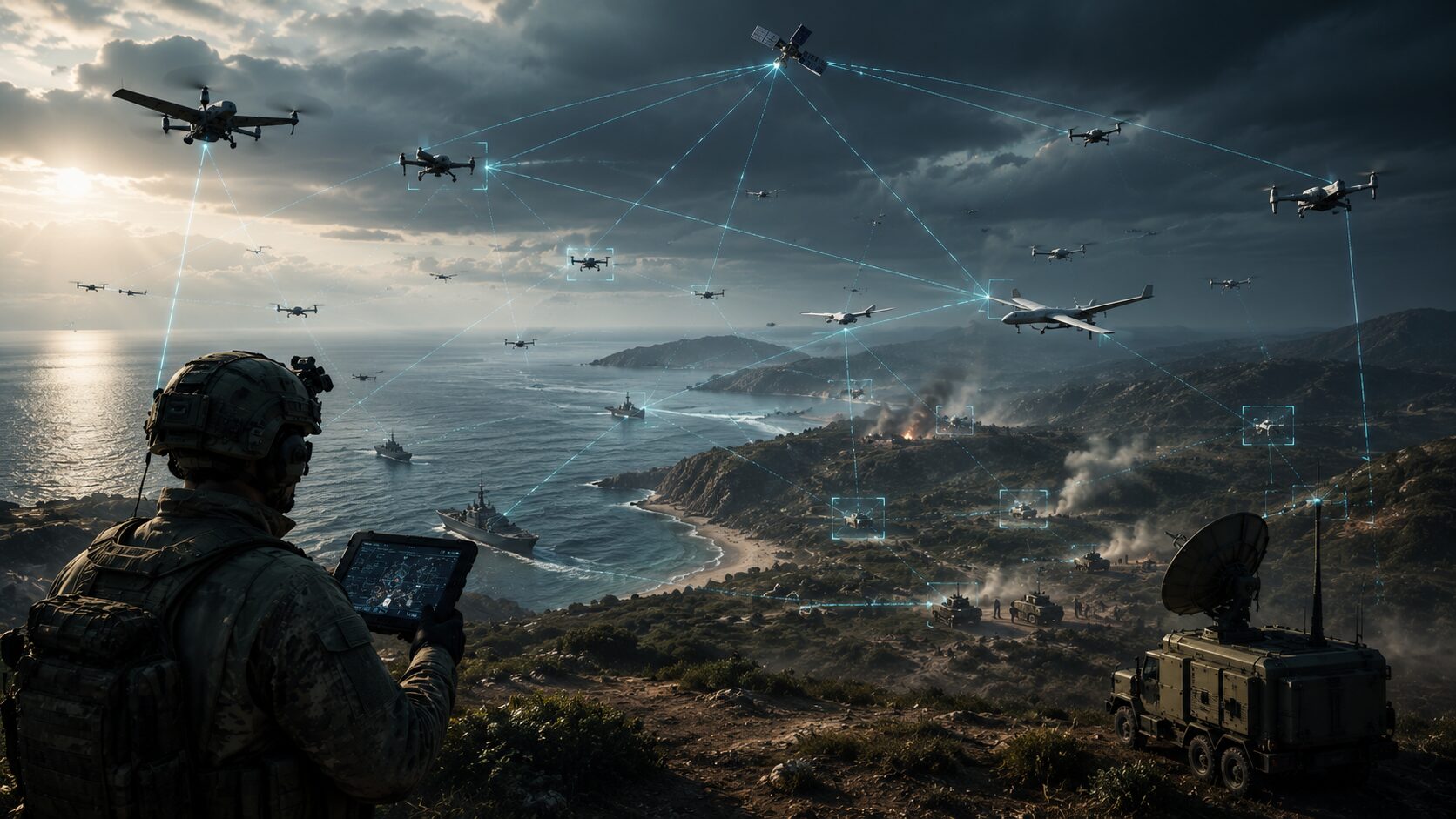
This is why the U.S. Army has begun building a new formation within its Pacific forces: the 7th Infantry Division Multi-Domain Command-Pacific. Its mission is ambitious but straightforward—to use drones in such large numbers that enemy defenses become saturated and unable to respond effectively.
In many ways, this initiative represents an attempt to create a new model for twenty-first-century ground warfare.
From Tanks to Drone Swarms
For decades, armored formations, artillery batteries, and army aviation formed the backbone of American land power.
Technology is changing that equation.
Many tasks once performed by reconnaissance helicopters or expensive surveillance aircraft can now be carried out by relatively inexpensive drones. More importantly, modern FPV drones have demonstrated the ability to destroy vehicles worth millions of dollars.
For U.S. military planners, this was a wake-up call.
Increasingly, the Pentagon is no longer treating drones as merely supporting assets. Instead, it is exploring ways to build entire combat concepts around them. This philosophy lies at the heart of the new Pacific-focused organization now taking shape within the U.S. Army.
Understanding Multi-Domain Command
The term “Multi-Domain Command” may sound complicated, but the idea behind it is surprisingly simple.
The U.S. military has spent years developing the concept of Multi-Domain Operations. This approach seeks to integrate ground forces, air power, naval assets, space systems, electronic warfare, and cyber capabilities into a single operational network.
Traditionally, armies, navies, and air forces often operated as largely separate organizations. The new vision is different. Future forces must be capable of exploiting every domain of warfare simultaneously.
This concept has already led to the creation of Multi-Domain Task Forces and other experimental formations designed specifically for modern high-intensity conflict.
The new Pacific command is intended to become one of the key building blocks of that strategy.
Why the Pacific?
Many current U.S. military decisions are heavily influenced by concerns regarding China.
A potential conflict over Taiwan is widely viewed as one of the most challenging scenarios the Pentagon could face. Vast distances, countless islands, and the need to operate far from major bases create a completely different environment from Europe or the Middle East.
In such a theater, drones become especially valuable.
They can conduct reconnaissance over enormous stretches of ocean, track naval movements, relay communications, guide precision strikes, and carry out attacks themselves.
And military planners are not talking about deploying a handful of drones.
The focus is increasingly on mass employment—sending dozens or even hundreds of unmanned systems into battle simultaneously.
Overwhelming the Enemy
One word appears repeatedly in discussions surrounding the new command: overwhelm.
The concept is straightforward.
Even the most advanced air-defense system has limits. Missile stocks are finite. Radar channels can only track so many targets at once. Human operators can process only a certain amount of information.
If dozens or hundreds of drones arrive simultaneously, those defenses begin to lose effectiveness.
Some drones may conduct reconnaissance.
Others may serve as decoys.
Some may jam communications or distract air-defense operators.
Others may deliver the actual strike.
This concept of saturation is increasingly viewed as one of the defining features of future warfare between technologically advanced powers.
Lessons from Ukraine
It is impossible to discuss the U.S. Army’s current transformation without mentioning Ukraine.
The conflict has become the largest laboratory of drone warfare in modern history.
Over just a few years, the world has witnessed the widespread use of FPV drones, loitering munitions, reconnaissance UAVs, and naval drones. Long-standing assumptions about combat operations have been challenged or discarded altogether.
American military analysts have been studying these developments closely.
Their interest extends beyond the drones themselves. They are also examining how unmanned systems are integrated into military structures, how production can be scaled rapidly, and how drone units coordinate with electronic warfare assets.
In many respects, the new Pacific formation is a direct response to those lessons.
It’s About More Than Drones
It would be a mistake to think that the new command is simply a giant drone unit.
In reality, the concept is much broader.
Alongside unmanned aircraft, the organization will incorporate electronic warfare systems, communications networks, intelligence assets, satellite-based surveillance, and advanced data-processing capabilities.
The ultimate goal is to create a highly connected force capable of identifying targets and engaging them as quickly as possible.
The U.S. military often refers to this as shortening the “sensor-to-shooter” cycle.
The faster a force can detect, process, and strike a target, the greater its battlefield advantage.
The Beginning of a Larger Transformation
The creation of this new command is only one part of a much broader reform effort.
In recent years, the U.S. Army has been experimenting with new organizational structures, electronic warfare formations, reconnaissance drone units, and multi-domain task forces.
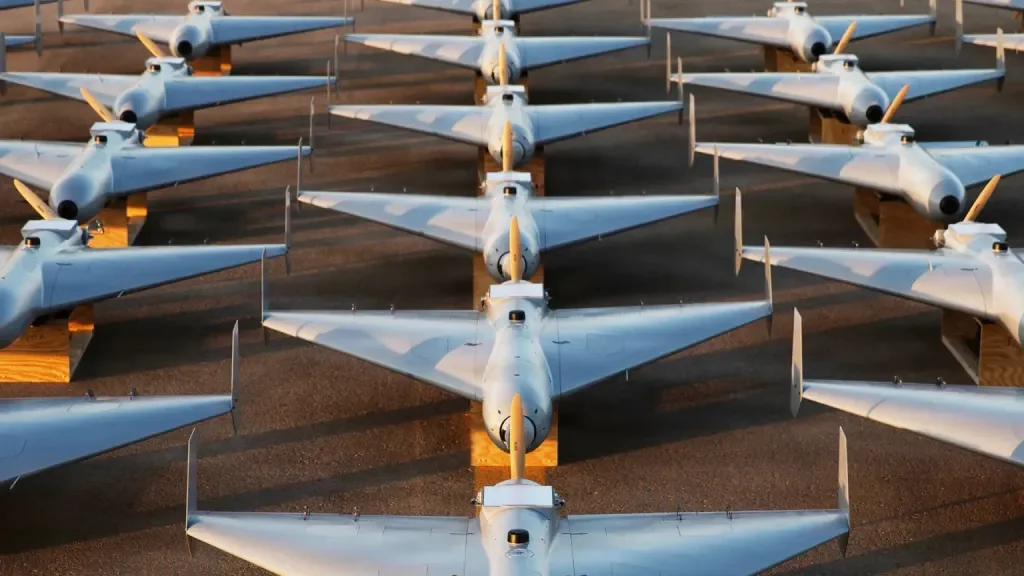
At the same time, the Pentagon is pushing to dramatically increase the number of drones available to frontline forces. Some plans envision equipping individual divisions with thousands of unmanned systems over the coming years.
If those plans succeed, the U.S. Army of the next decade may look very different from the one that exists today.
A New Vision of Military Power
The story of this new command is significant because it highlights how rapidly warfare is evolving.
Only a decade ago, the symbols of American military power were Abrams tanks, Apache attack helicopters, and Bradley fighting vehicles.
Today, increasing attention is being directed toward small drones, electronic warfare systems, and the ability to overwhelm an adversary through sheer numbers of inexpensive unmanned platforms.
The army of the future may not be defined by a handful of extraordinarily expensive weapons systems.
Instead, it may consist of thousands of interconnected drones operating together as a single combat network.
Key Takeaway
The U.S. Army’s new Multi-Domain Command-Pacific is more than just another military unit. It represents a shift in how American planners envision future warfare—one where drones, networks, electronic warfare, and rapid information sharing become as important as tanks and artillery.
Whether this concept ultimately proves successful remains to be seen. But one thing is already clear: the lessons of Ukraine and the strategic realities of the Pacific are reshaping the world’s most powerful army.






