The Dogs of War of the Renaissance: How the Landsknechts Changed Europe — and Why Even Kings Feared Them

When modern people hear the word “mercenary,” they usually imagine either a soldier of fortune from the 20th century or a grim contractor from a modern private military company. Yet the idea of a professional warrior who fights not for king, faith, or homeland, but for money, appeared long before the modern era. And perhaps no group turned warfare into a profession more vividly — or more terrifyingly — than the Landsknechts, the famous German mercenaries of the Renaissance.
They were both the symbol of a new age and one of its greatest nightmares.
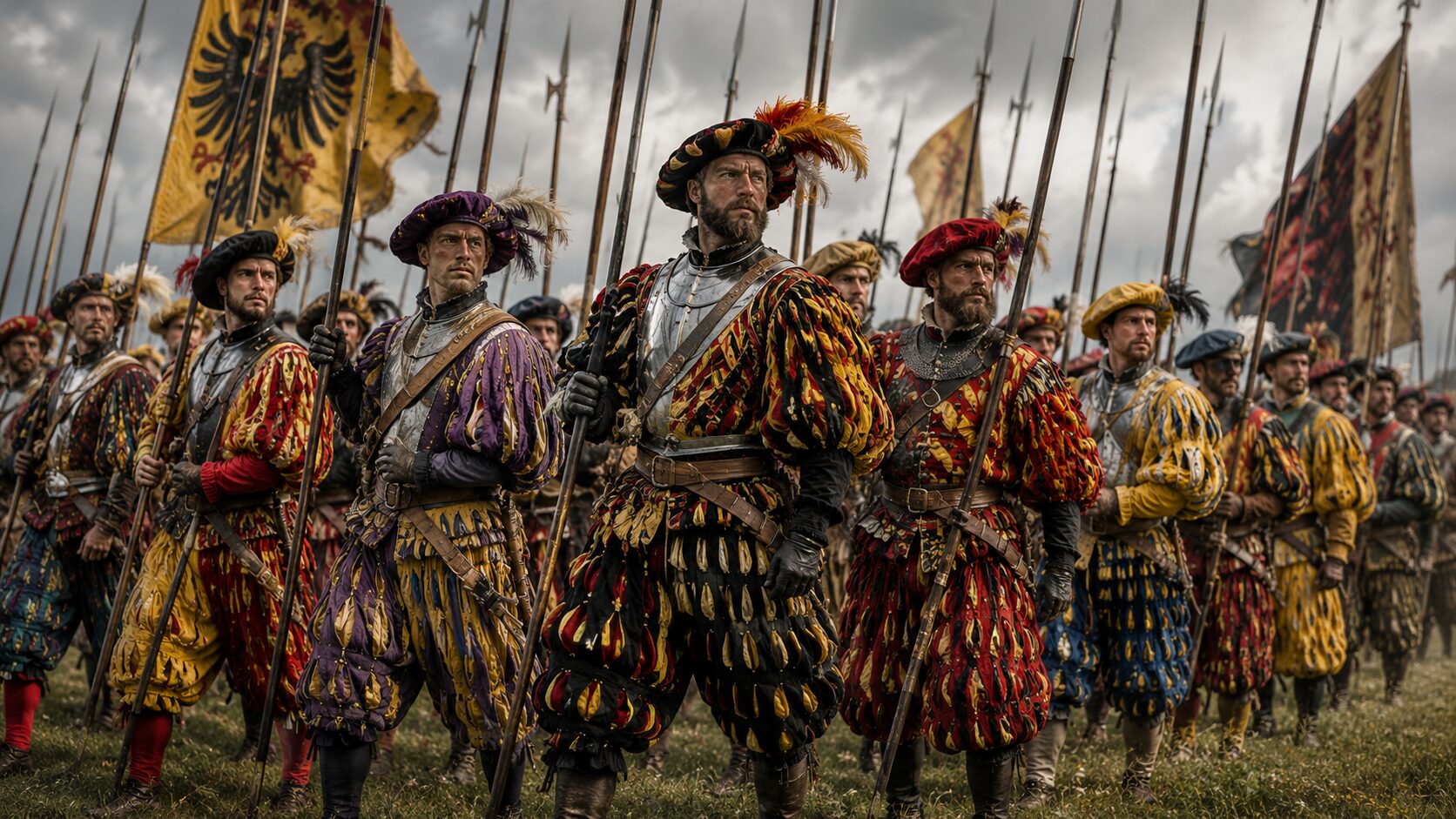
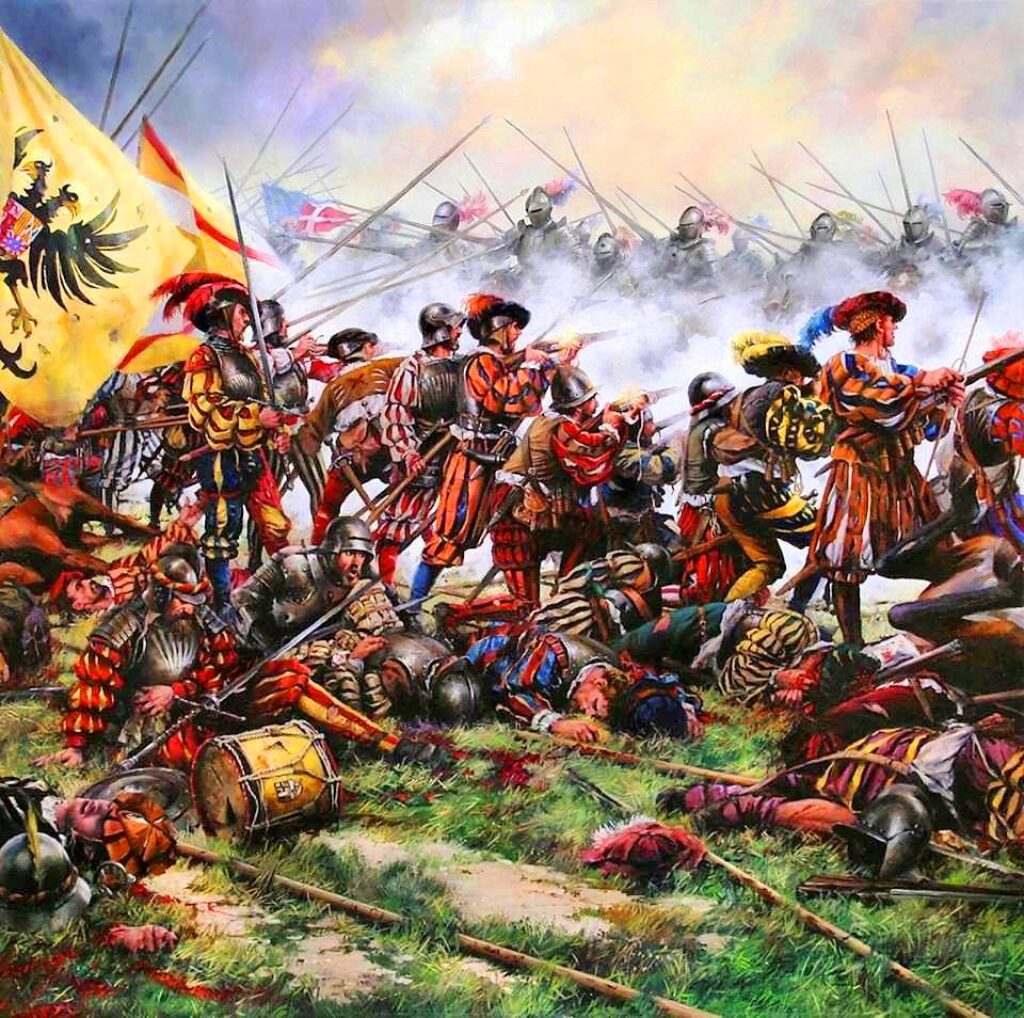
The Landsknechts wore outrageously colorful clothing, looking more like traveling actors than soldiers. They marched to war under the sound of drums and fifes, carrying gigantic two-handed swords and forests of pikes. They could shatter knightly cavalry, storm cities, carve through enemy formations, and die by the thousands for wages that were often never even paid.
But the most interesting thing about them lies elsewhere.
The Landsknechts became one of the clearest signs of the end of the Middle Ages. Through them, Europe finally began transitioning from the feudal world of knights into the age of professional armies, gunpowder weapons, and centralized states.
Which means the history of the Landsknechts is not merely the story of mercenaries.
It is the story of the birth of modern warfare itself.
The World Where Knights Stopped Dominating the Battlefield
By the 15th century, Europe was changing rapidly.
The medieval knight — for centuries considered nearly invincible — was slowly losing his dominance. Armor became heavier and more expensive, while wars grew larger and more complex. Kings and emperors could no longer rely on a few thousand feudal nobles. They needed armies capable of campaigning for months, conducting sieges, and fighting in disciplined formations.
But the real revolution came from infantry.
The Swiss demonstrated this most dramatically.
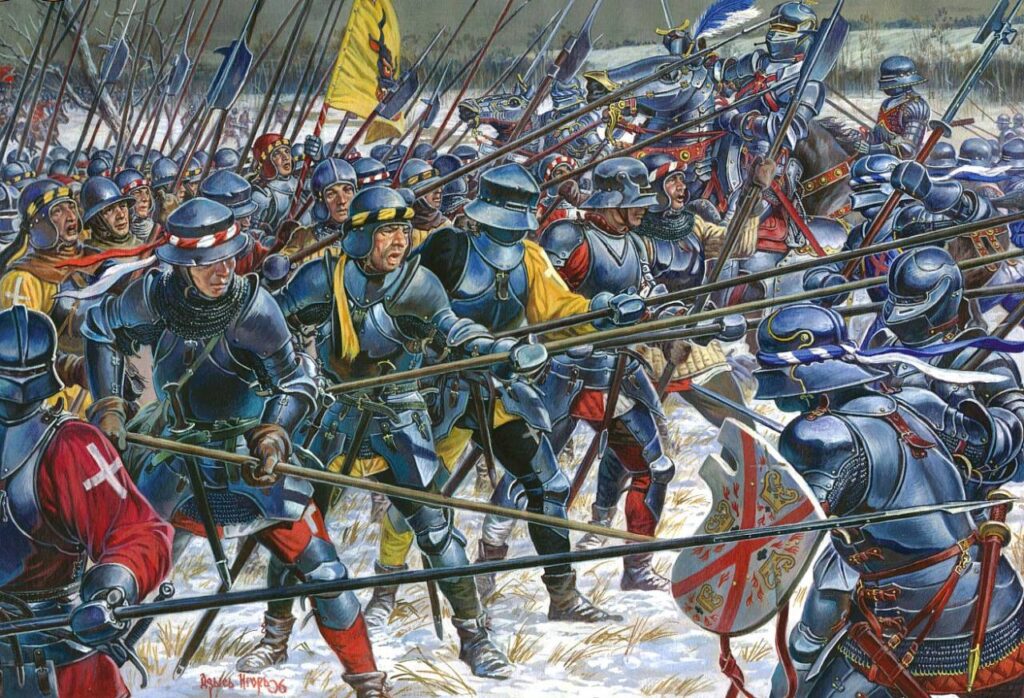
The mountain cantons of Switzerland had developed an extraordinarily effective infantry system during the 14th and 15th centuries. Swiss pikemen learned to form dense squares of long pikes, creating an almost impenetrable wall.
For knightly cavalry, this was a shock.
Horses could not break through forests of six-meter pikes. Disciplined infantry formations suddenly began destroying the heavily armored aristocratic cavalry that had dominated European warfare for centuries.
After Swiss victories at Morgarten, Sempach, and especially during the Burgundian Wars, Europe realized something astonishing:
the age of knightly supremacy was ending.
And so the German emperor decided to create his own answer to the Swiss.
The Birth of the Landsknechts
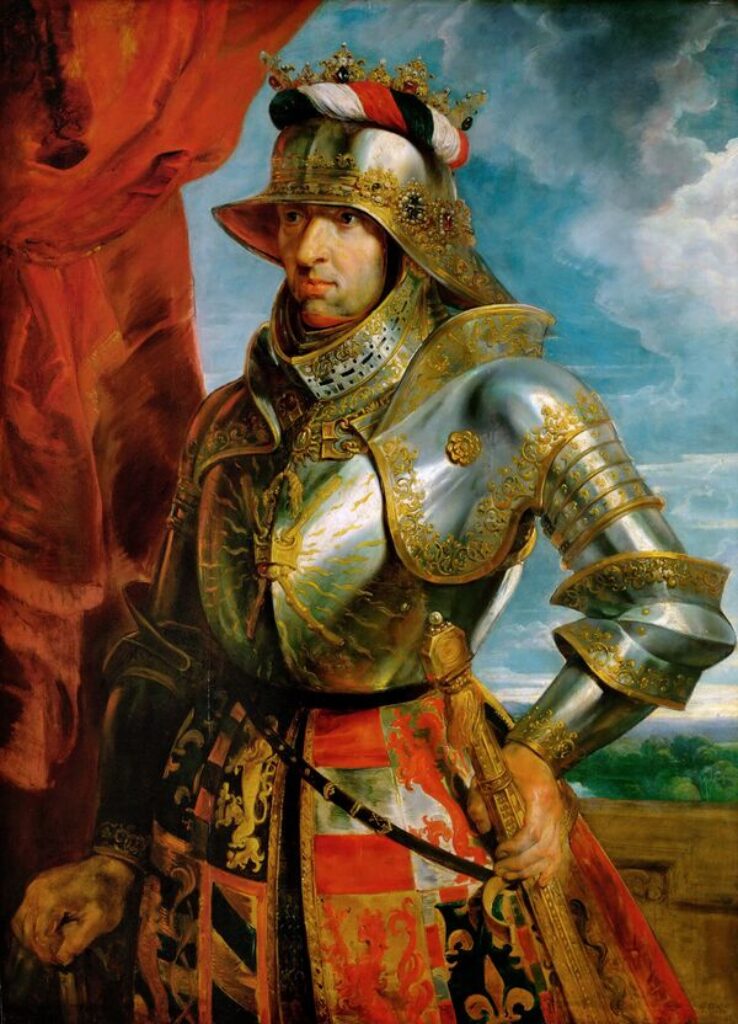
The creator of the Landsknechts is usually considered to be Maximilian I, one of the most talented rulers of the Renaissance.
Maximilian clearly understood how effective Swiss mercenaries had become. The problem was that the Swiss willingly served almost anyone — including the enemies of the Holy Roman Empire. The emperor needed a professional infantry force of his own.
Thus, in the late 15th century, the Landsknechts were born.
The word Landsknecht roughly translates as “servant of the land” or “soldier of the country.” But very quickly the term became synonymous with professional German mercenaries in general.
The foundation of their tactics was the pike.
A typical Landsknecht formation consisted of a gigantic rectangular block of pikemen capable of moving almost like a living machine. The front ranks lowered their long pikes forward, creating a deadly wall. Inside the formation stood halberdiers, arquebusiers, and soldiers armed with massive two-handed swords.
On the battlefield, it looked like the collision of moving fortresses.
Sometimes two pike formations literally smashed into each other. Within seconds, pikes shattered, formations collapsed, and brutal close-range slaughter began.
This was where the famous doppelsöldner — “double-pay men” — became especially valuable.
The Men Who Charged Into the Pikes
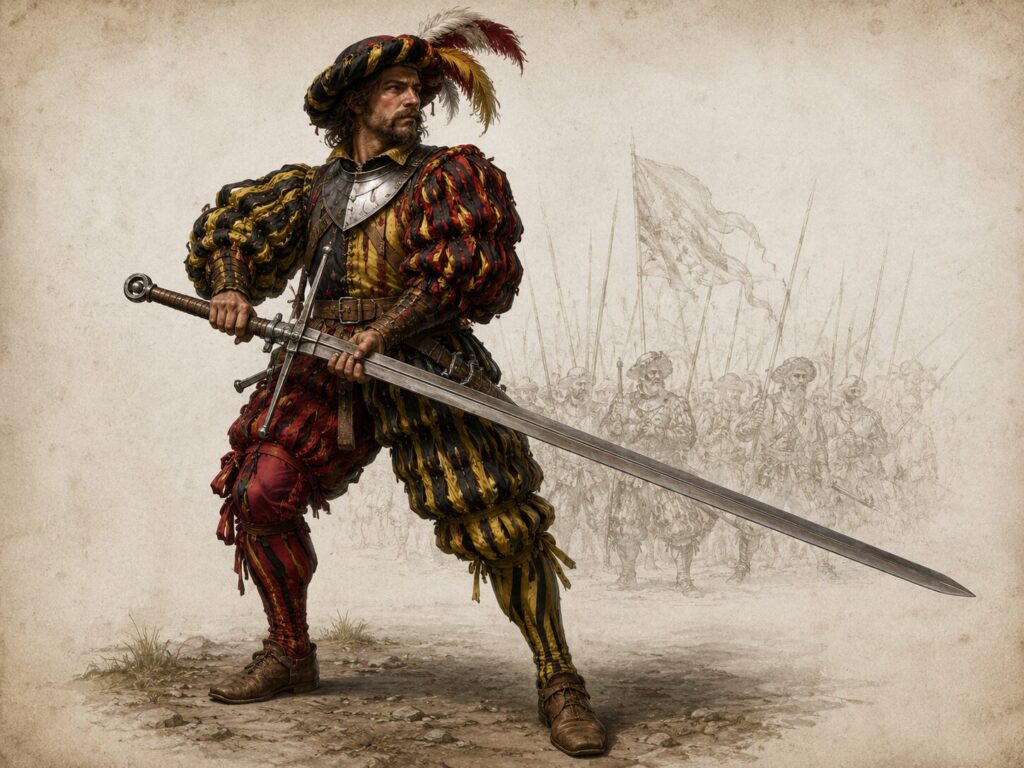
Doppelsöldner received double wages.
And for good reason.
These were the most experienced — and often the most reckless — soldiers in the army. Many carried gigantic two-handed swords known as Zweihänders, weapons so large they could exceed the height of a man.
Their role was almost suicidal:
they were expected to charge directly into enemy formations and break opposing pikes apart, creating openings for the rest of the unit.
It sounds insane.
Because it often was.
Landsknecht warfare bore little resemblance to romantic visions of medieval battle. It was filthy, chaotic, and unimaginably violent. Men died in enormous numbers within minutes. Formations were so dense that wounded soldiers often could not even fall to the ground.
And yet this disciplined infantry system represented the future of European warfare.
Why the Landsknechts Dressed Like Madmen
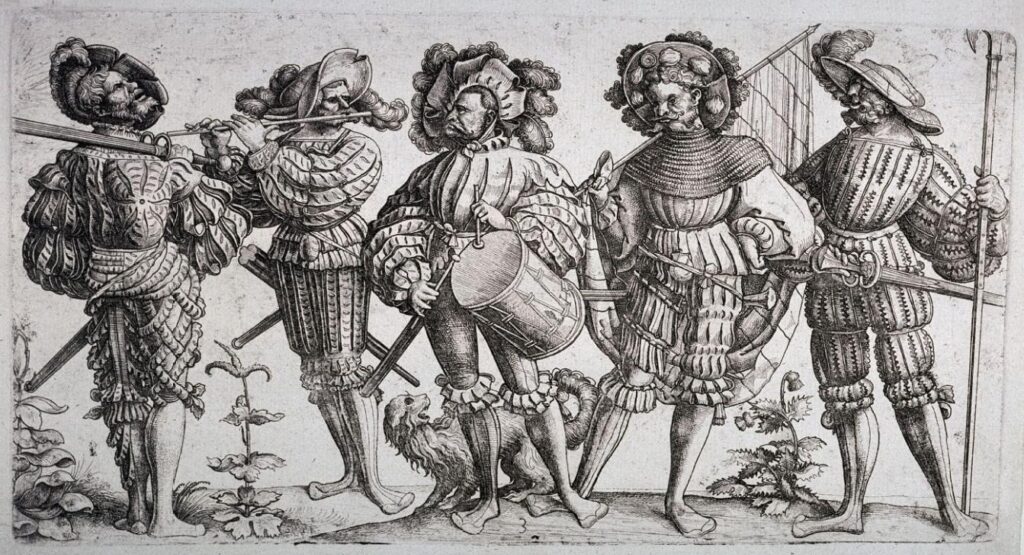
The most recognizable feature of the Landsknechts was their appearance.
They wore fantastically colorful clothing:
slashed sleeves,
huge feathers,
bright fabrics,
oversized trousers,
contrasting colors,
velvet,
gold,
and ribbons.
Against the darker tones of the Middle Ages, they looked almost unreal.
But this was not merely fashion.
The Landsknechts consciously cultivated the image of men living outside the normal rules of society. Many rulers officially exempted them from laws restricting luxurious clothing. What ordinary townspeople were forbidden to wear was openly permitted to professional mercenaries.
It became a symbol of status.
Their bright clothing also served a psychological purpose. Renaissance battlefields were chaotic, loud, and filled with smoke. Colorful uniforms helped soldiers distinguish allies while simultaneously creating an intimidating spectacle.
In many ways, the Landsknechts became the first true “superstars of war” in early modern Europe.
Swiss Mercenaries vs. German Landsknechts
At first glance, Swiss mercenaries and Landsknechts appeared very similar.
Both relied heavily on pike formations.
Both were professional infantry.
Both were regarded as among the finest mercenaries in Europe.
But the differences between them were profound.
The Swiss originated as citizen militias from independent mountain cantons. Their military culture was built upon collective discipline, local identity, and extremely strict organization. Even after becoming mercenaries, they retained a strong sense of communal solidarity.
The Landsknechts were entirely different.
They were professional soldiers of fortune. Germans, Flemings, Czechs, Austrians, Italians, and many other peoples of the Holy Roman Empire served among them. What united them was not local identity or citizenship, but contracts and wages.
Swiss troops were considered more disciplined.
Landsknechts were considered more flexible.
German mercenaries integrated firearms into their formations much faster. Arquebusiers and musketeers played an increasingly important role among the Landsknechts, while Swiss formations relied longer on the offensive power of pure pike columns.
The Landsknechts were also far more “Renaissance” in spirit. Their culture blended military brutality with gambling, drinking, flamboyant fashion, personal ambition, and theatrical displays of courage.
If the Swiss looked like grim mountain warriors,
the Landsknechts looked like rock stars of the 16th century.
When the Landsknechts Became a Threat to Europe Itself
The problem with mercenaries is simple:
they fight only as long as they are paid.
And Renaissance wars were incredibly expensive.
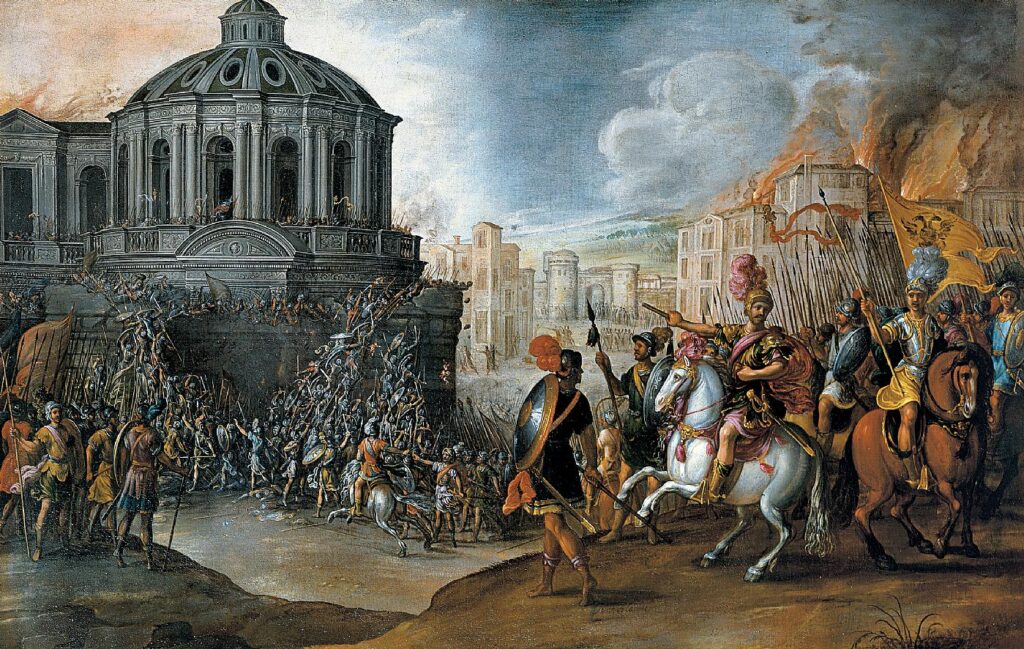
Whenever wages were delayed, armies began looting everything around them. The Landsknechts quickly gained a reputation for brutality even by the standards of their violent age.
Their darkest fame came during the Italian Wars.
The climax was the infamous Sack of Rome in 1527.
The imperial army of Charles V — heavily composed of German Landsknechts — stormed Rome after payment failures and growing unrest among the troops. What followed became one of the most horrifying events of the Renaissance.
The city was looted for months.
Priests were murdered.
Palaces destroyed.
Citizens tortured for money.
Even contemporaries accustomed to the cruelty of war were horrified by the scale of violence.
Europe suddenly saw the terrifying downside of professional mercenary warfare.
Why the Landsknechts Disappeared
Ironically, the Landsknechts were ultimately destroyed by the same military revolution they had once helped create.
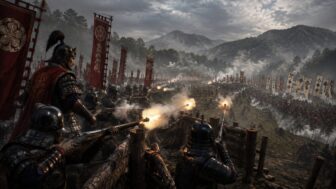
Firearms improved rapidly. Muskets became more powerful, artillery more effective, and dense pike formations increasingly vulnerable.
By the 17th century, European states began building permanent standing armies under direct royal control. Kings no longer wanted to depend on unpredictable mercenary companies.
Gradually, the age of the Landsknechts came to an end.
But their legacy was enormous.
They helped destroy the military dominance of feudal knighthood.
They symbolized the rise of professional infantry.
They demonstrated that discipline and organization mattered more than aristocratic individual heroism.
In many ways, Europe entered the age of modern warfare alongside the Landsknechts.
And perhaps that is why these brightly dressed mercenaries wielding gigantic swords still appear so fascinating today.
They stood on the border between two worlds:
the world of the Middle Ages,
and the world that would soon become modern Europe itself.