

A Fighter Born From Speed Rather Than Power
On the eve of the Second World War, France faced a serious problem.
The French Air Force desperately needed modern fighters, but industrial capacity remained limited. Building large numbers of powerful all-metal aircraft required time, resources, and engines that France simply did not possess in sufficient quantities.
So French engineers began searching for another solution.
What if a fighter could rely not on brute engine power, but on extreme lightness and aerodynamic efficiency?
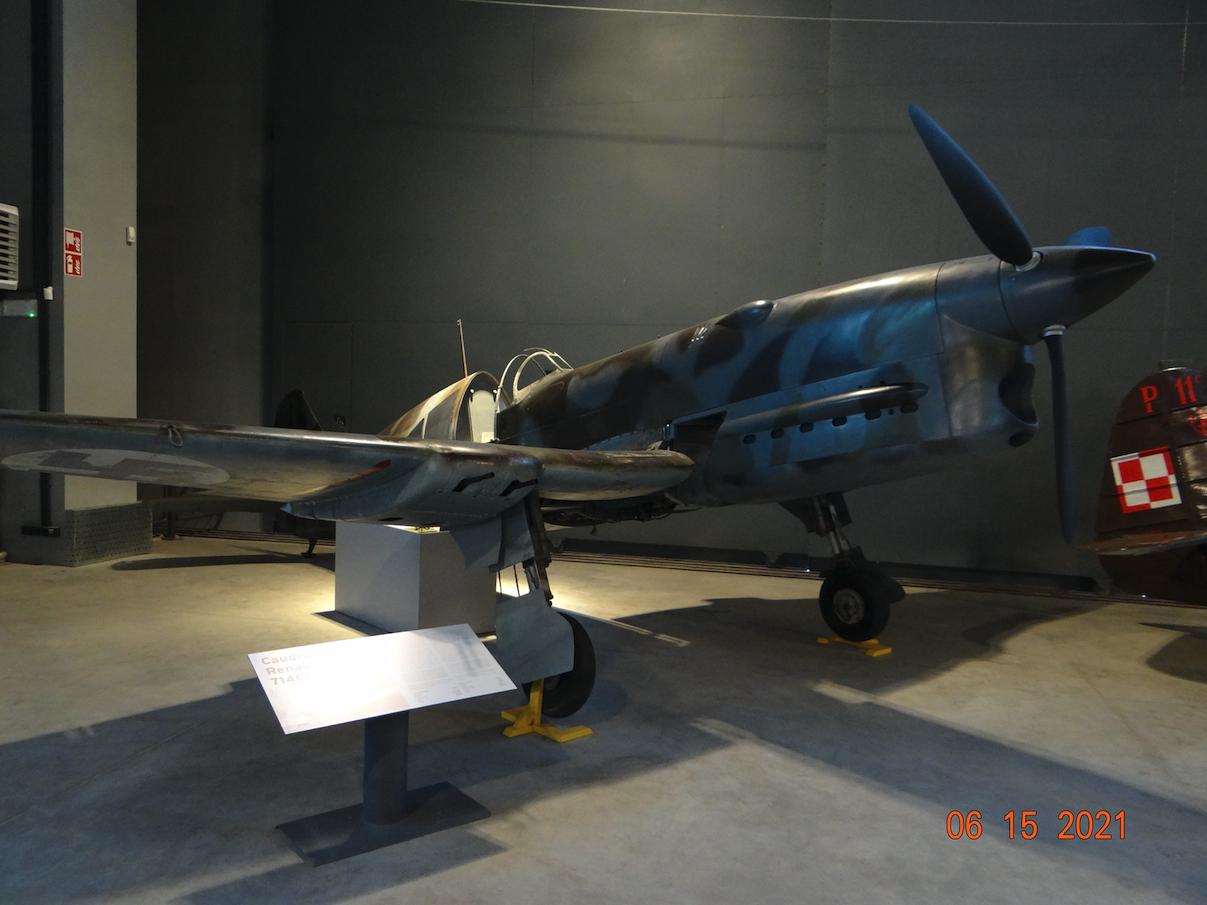
This idea gave birth to one of the strangest French fighters of the era — the Caudron CR.714 Cyclone.
From Racing Aircraft to Warplane
The CR.714 did not emerge from traditional military aviation.
Its roots lay in racing aircraft.
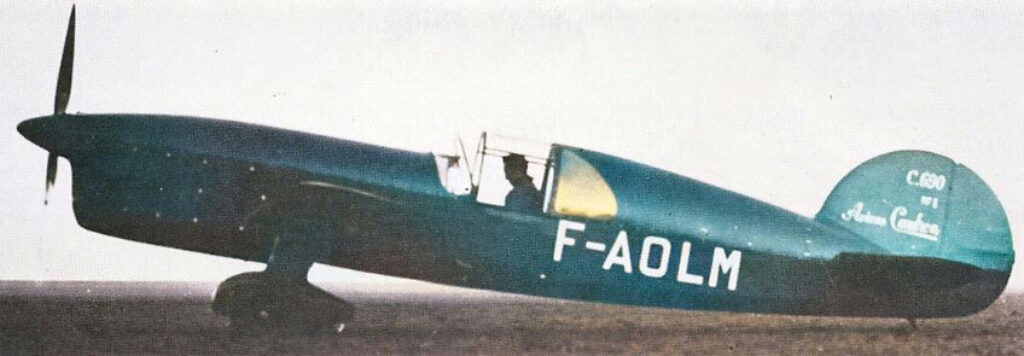
Designer Marcel Riffard had previously worked on a series of extremely streamlined Caudron racing planes that achieved major success during the 1930s. Those aircraft emphasized low drag, lightweight construction, and high speed despite relatively modest engines.
The French Air Force became interested in adapting this philosophy into a lightweight interceptor.
The result was the Caudron C.710 series, which eventually evolved into the CR.714 Cyclone.
A Fighter Made Mostly of Wood
One of the most unusual features of the CR.714 was its construction.
Unlike many contemporary fighters moving toward heavier all-metal airframes, the Caudron was built largely from wood. This reduced production costs and simplified manufacturing, but also created serious limitations.
The aircraft was exceptionally slim and elegant. Its long nose and streamlined fuselage gave it an almost racing-aircraft appearance rather than that of a frontline fighter.
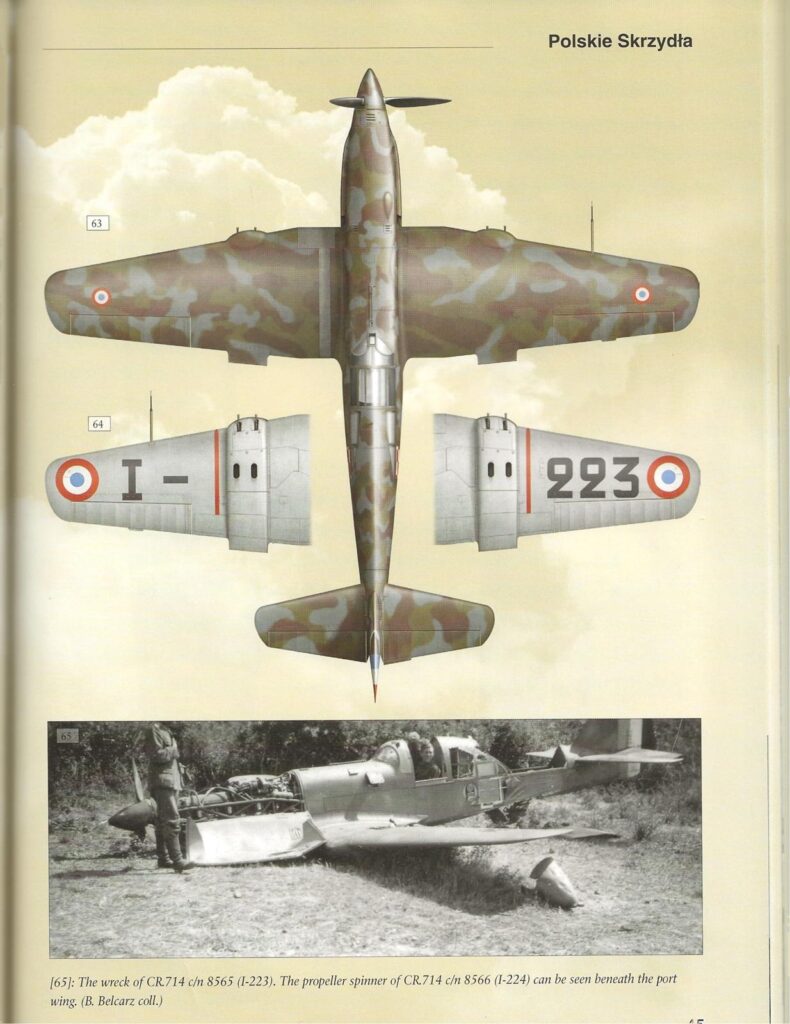
Armament consisted of four 7.5 mm MAC machine guns mounted in pods beneath the wings because the wing itself was too thin to house them internally.
On paper, the aircraft looked promising:
- maximum speed around 485–490 km/h;
- lightweight airframe;
- excellent aerodynamic efficiency;
- relatively cheap production.
But reality proved harsher.
The Problem Was the Engine
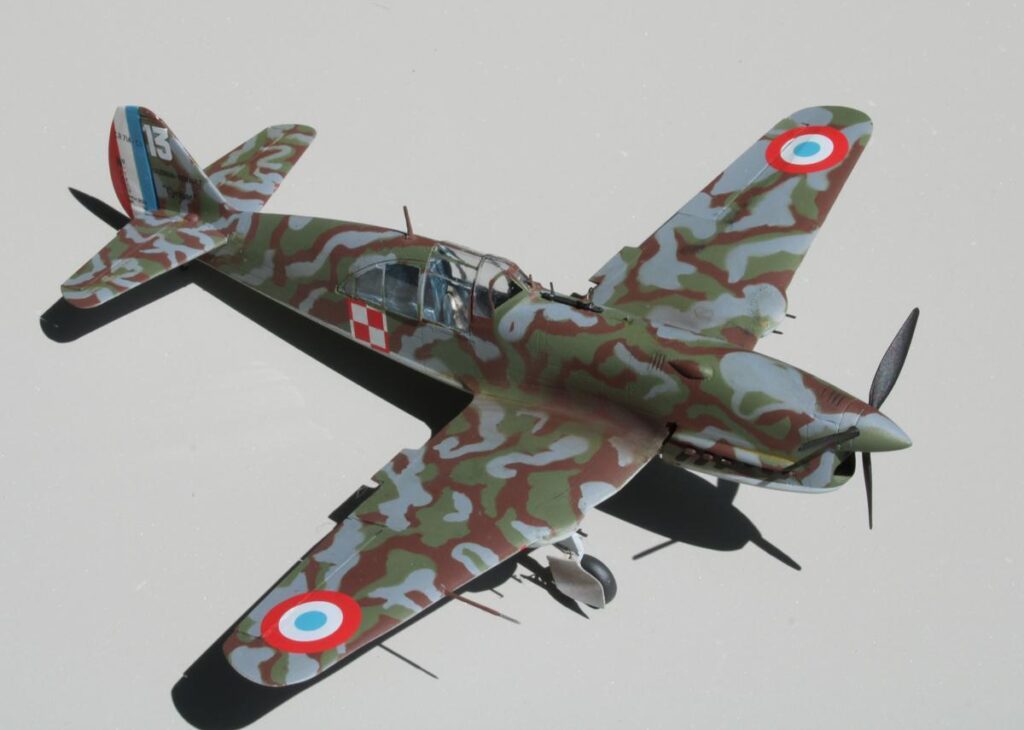
The central weakness of the CR.714 was simple.
It lacked power.
The Renault 12R engine produced roughly 450 horsepower — far too little for a modern wartime fighter by 1940 standards.
The aircraft’s lightweight construction partially compensated for this, but not enough. As additional armor and military equipment were added, performance deteriorated rapidly. Climb rate became poor, acceleration weak, and combat maneuverability increasingly inadequate against modern German fighters such as the Messerschmitt Bf 109E.
The CR.714 essentially entered service already obsolete.
A Fighter the French Did Not Want
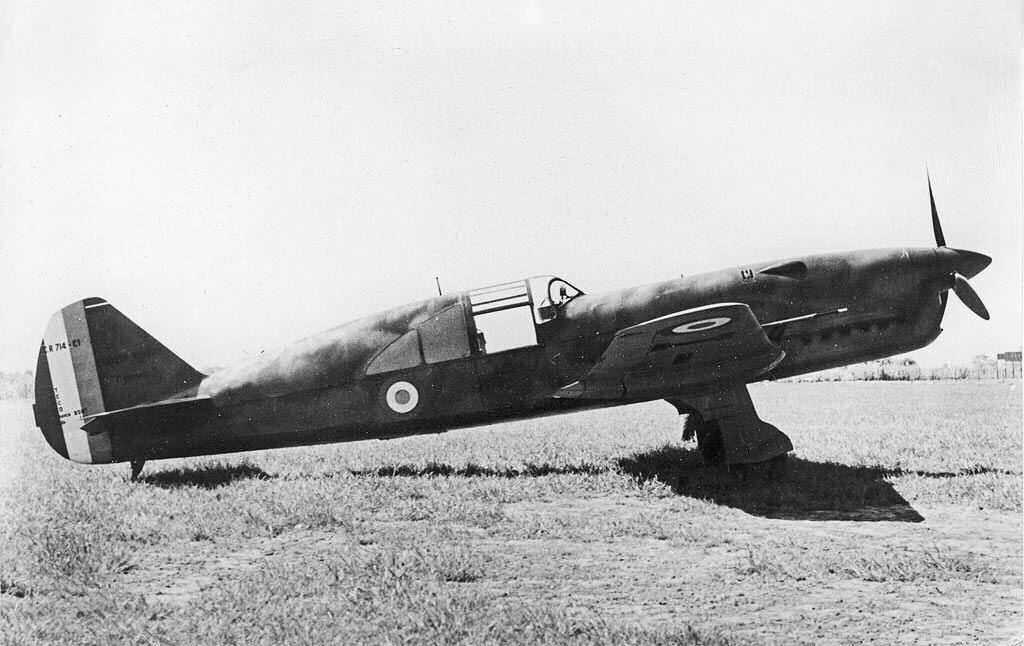
After testing the production aircraft, the French Air Force quickly became disappointed.
The aircraft was considered underpowered and unsuitable for modern aerial combat. In February 1940, the type was officially withdrawn from frontline service by French authorities.
But history intervened.
France was collapsing under German attack, and there were simply not enough fighters available.
As a result, the CR.714 still found its way into combat.
The Polish Pilots Who Refused to Stop Flying It
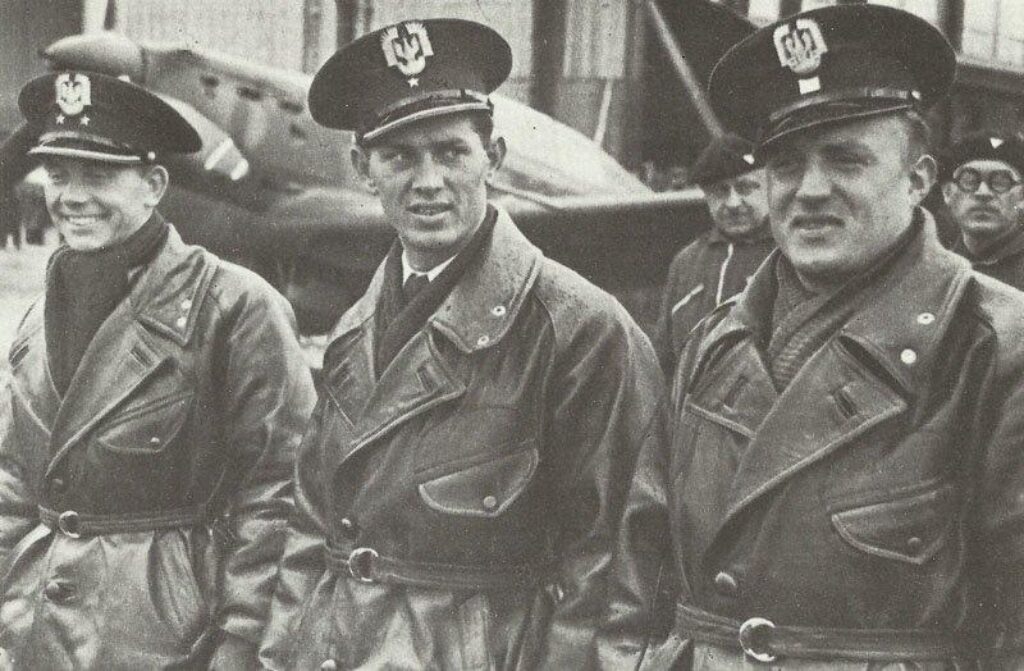
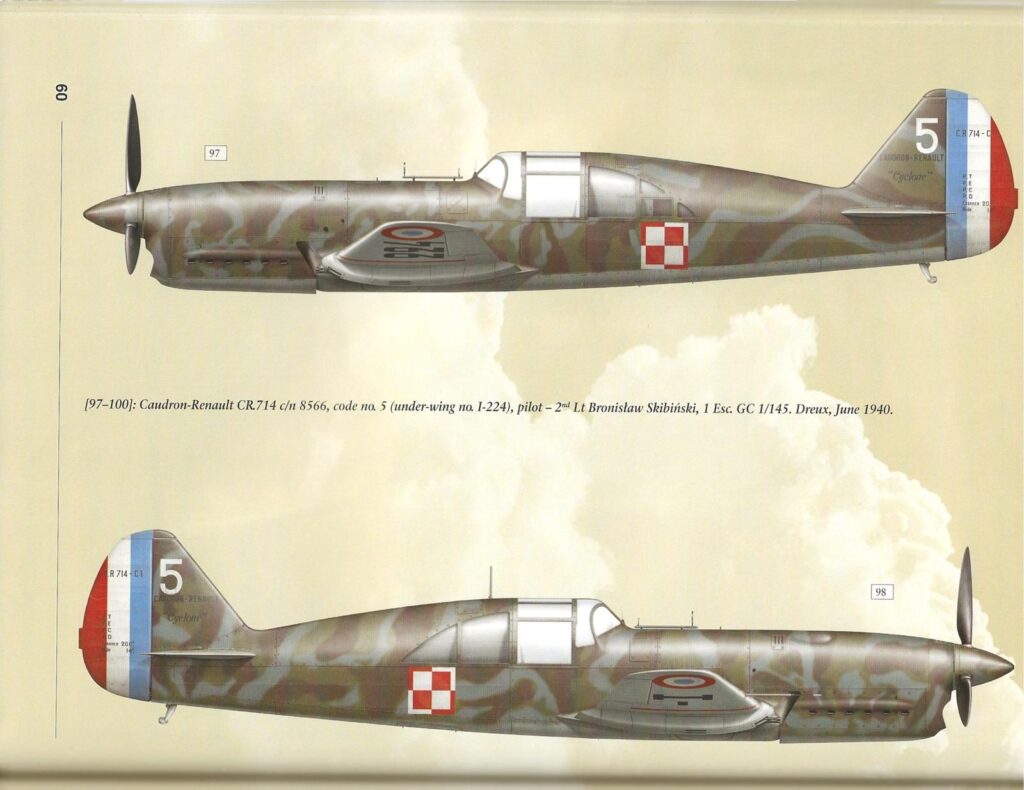
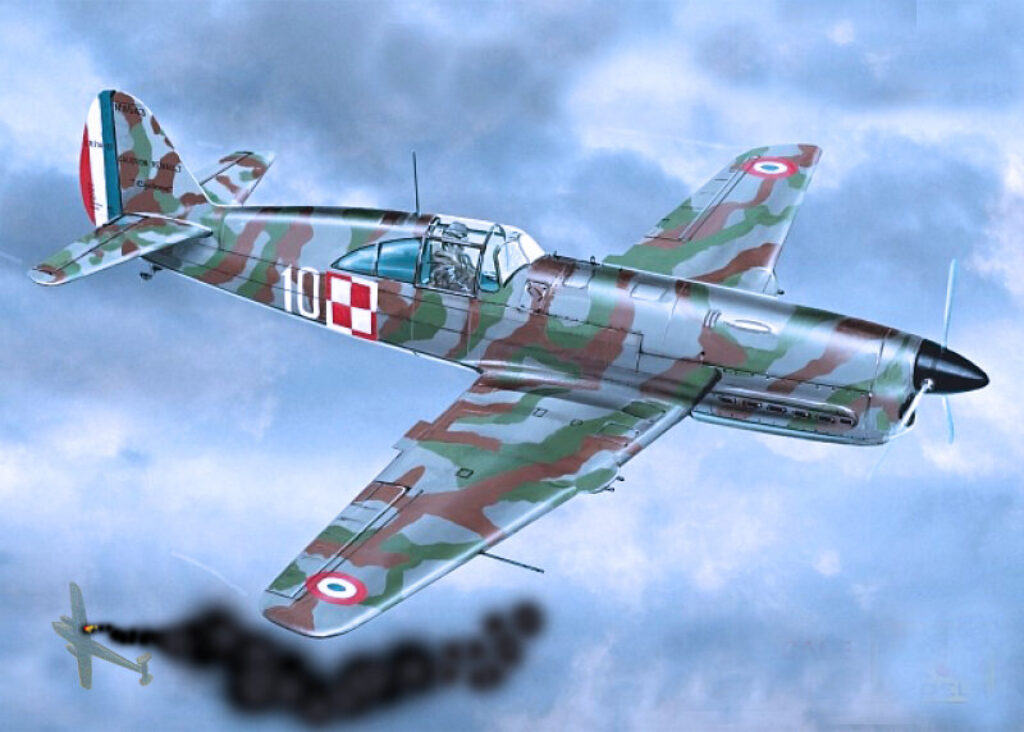
The aircraft became most closely associated not with French pilots, but with Polish aviators flying in exile after the fall of Poland in 1939.
The all-Polish Groupe de Chasse I/145 “Warsaw” received the CR.714 during the Battle of France.
The situation bordered on desperation.
Even French authorities acknowledged that the aircraft was inadequate. Orders were issued to withdraw it from combat. But the Polish pilots ignored the order because they had nothing else to fly.
And despite the aircraft’s limitations, they fought.
Between 8 and 11 June 1940, Polish CR.714 pilots scored multiple confirmed victories against German aircraft, including Messerschmitt Bf 109s and Bf 110s, while suffering heavy losses themselves.
This transformed the CR.714 into something paradoxical:
not a successful fighter,
but a symbol of determination.
The Finnish Episode
France also attempted to send CR.714 fighters to Finland during the Winter War against the Soviet Union.
But only six aircraft were ultimately delivered before the situation in France collapsed. Finnish pilots quickly judged the aircraft unreliable and poorly suited for local conditions. The type never achieved significant combat use there.
The lightweight “Cyclone” simply could not survive the brutal realities of wartime operations.
A Beautiful Failure
The Caudron CR.714 occupies a strange place in aviation history.
Technically, it was not a successful fighter. Its engine was too weak, its performance insufficient, and its combat potential limited almost from the beginning.
And yet, the aircraft remains memorable precisely because of its uniqueness.
It represented one of the last serious attempts to build a lightweight “racing fighter” — an aircraft relying on elegance and aerodynamic purity rather than raw power. In many ways, it belonged more to the optimistic aviation culture of the 1930s than to the brutal industrial warfare of the 1940s.
The war demanded horsepower, armor, and firepower.
The CR.714 offered speed and grace.
And by 1940, that was no longer enough.
The Fighter That Arrived Too Late
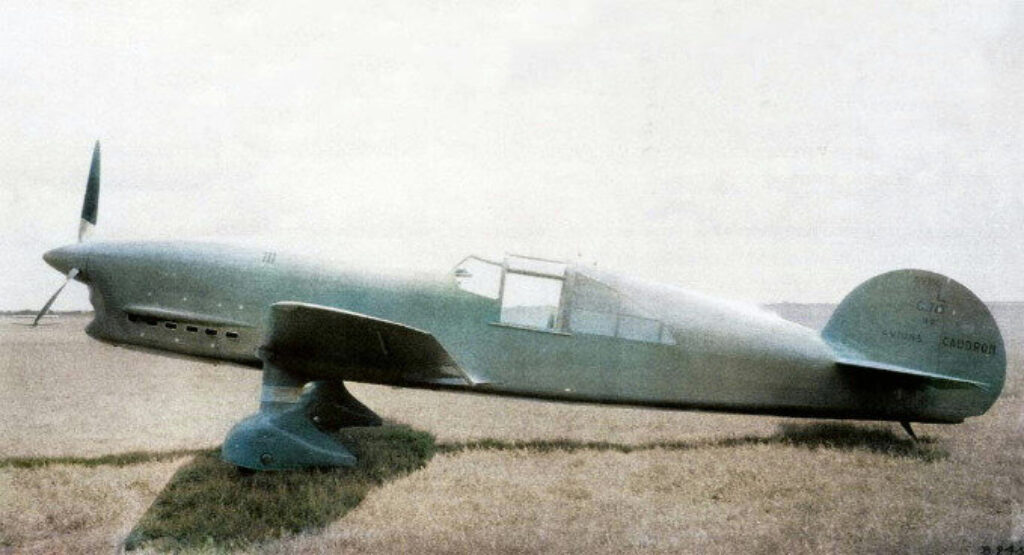
In another era, the CR.714 might have been remembered differently.
A lightweight high-speed interceptor built before the explosion of engine power and armored warfare might have seemed innovative. But aviation technology evolved too quickly. By the time the aircraft entered combat, the standards of air warfare had already changed.
The “Cyclone” became obsolete almost immediately.
Yet through the actions of the Polish pilots who flew it against impossible odds, the aircraft gained something more important than technical success:
a place in memory.
source https://alternathistory.ru/istrebitel-caudron-cr-714-legkij-franczuzskij-cziklon/






