

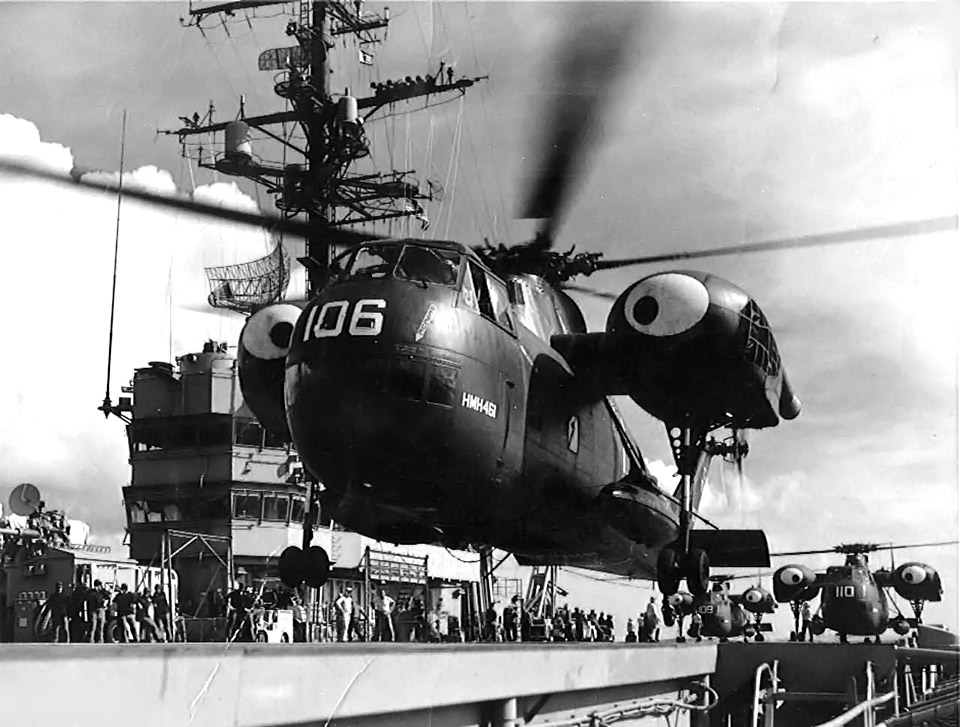
Aviation history is full of aircraft that looked revolutionary when they first appeared, only to become technological dead ends within a few short years. Such was the fate of the Sikorsky CH-37 Mojave. When it first took to the skies in the early 1950s, it was the largest and most capable heavy-lift helicopter in the Western world. Yet within a decade, it was already being overshadowed by a new generation of machines, and today it is often remembered as one of the least successful heavy transport helicopters of its era.
Calling the CH-37 a complete failure, however, would be unfair. In reality, it was a victim of timing. The helicopter emerged at the exact moment when the age of piston-powered rotorcraft was coming to an end and the turbine revolution was just beginning.
A Helicopter for a New Kind of War
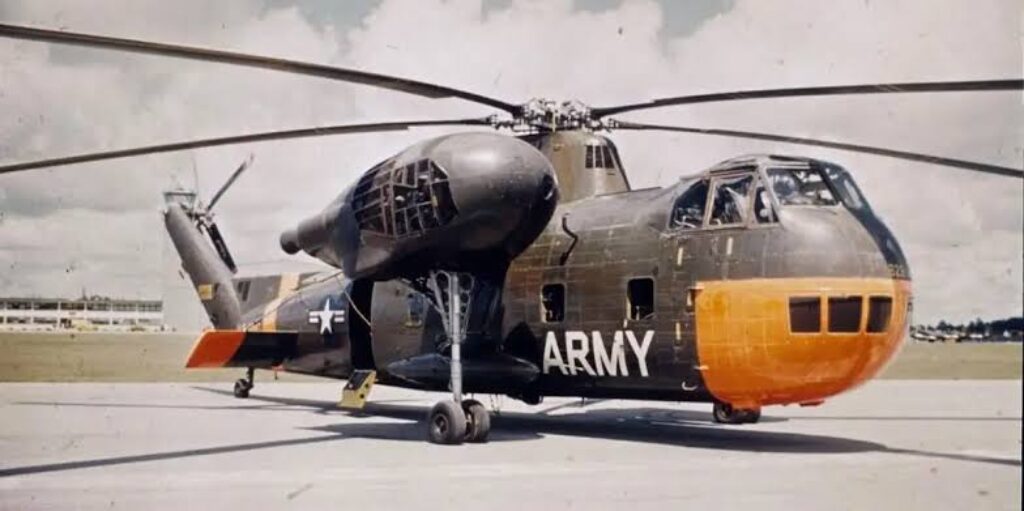
After World War II, the U.S. military became increasingly interested in the potential of helicopters. Light rotorcraft had already proven their value in reconnaissance, casualty evacuation, and cargo transport. The U.S. Marine Corps, however, wanted something far more ambitious.
Military planners envisioned a true airborne truck capable of transporting troops and vehicles into areas where there were no roads, airfields, or infrastructure of any kind. In 1951, Sikorsky received a contract to develop a new heavy transport helicopter that could fulfill those requirements.
The specifications were demanding. The aircraft needed to carry more than two dozen fully equipped Marines, several vehicles, or dozens of stretchers for medical evacuation missions.
The result was the Sikorsky S-56, later designated CH-37 Mojave.
The prototype made its maiden flight on December 18, 1953, and the helicopter entered service only a few years later.
The Largest Helicopter in the Western World
By the standards of the early 1950s, the Mojave was a giant.
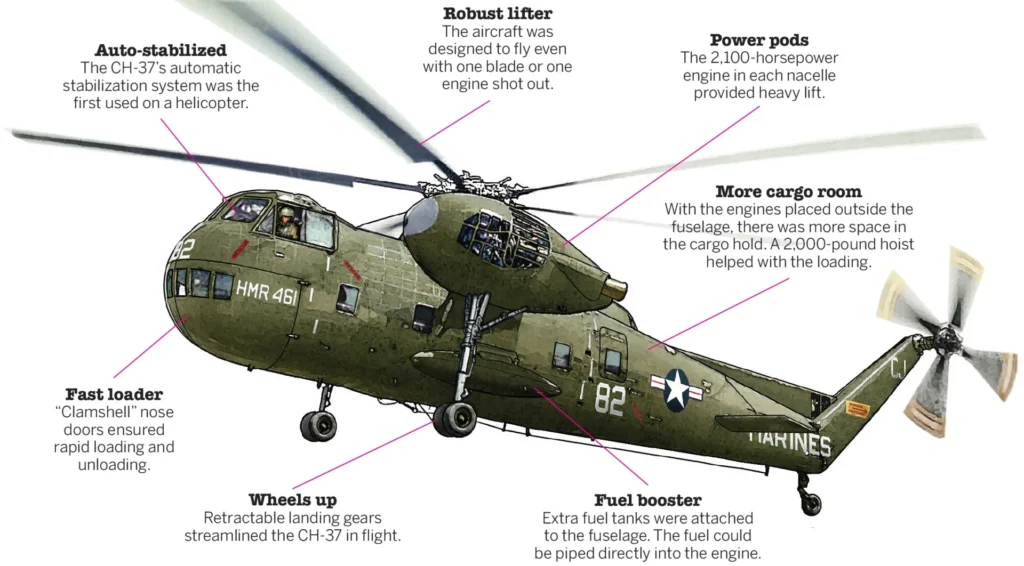
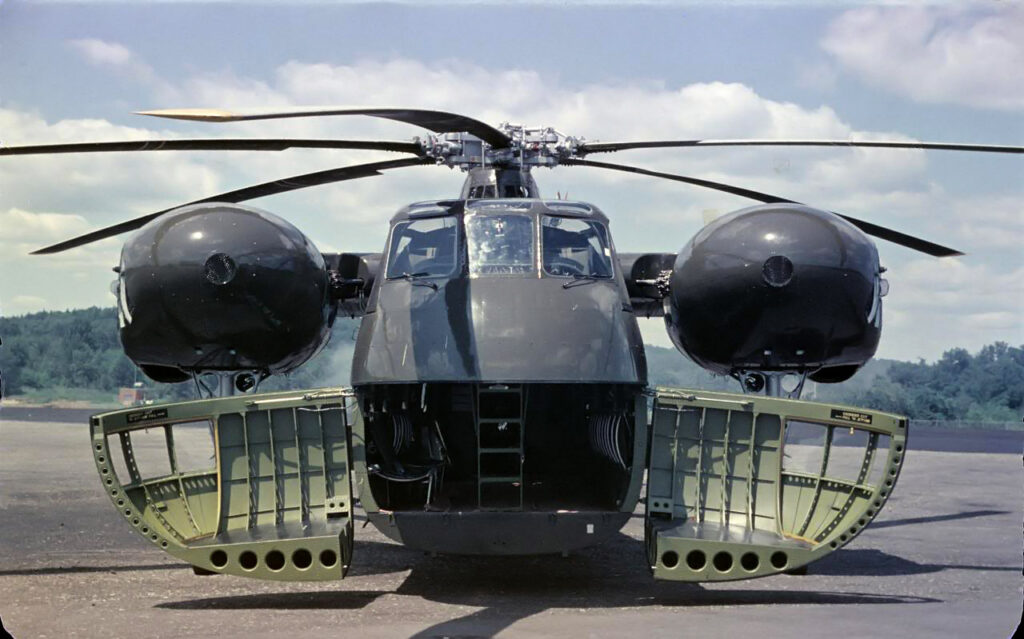
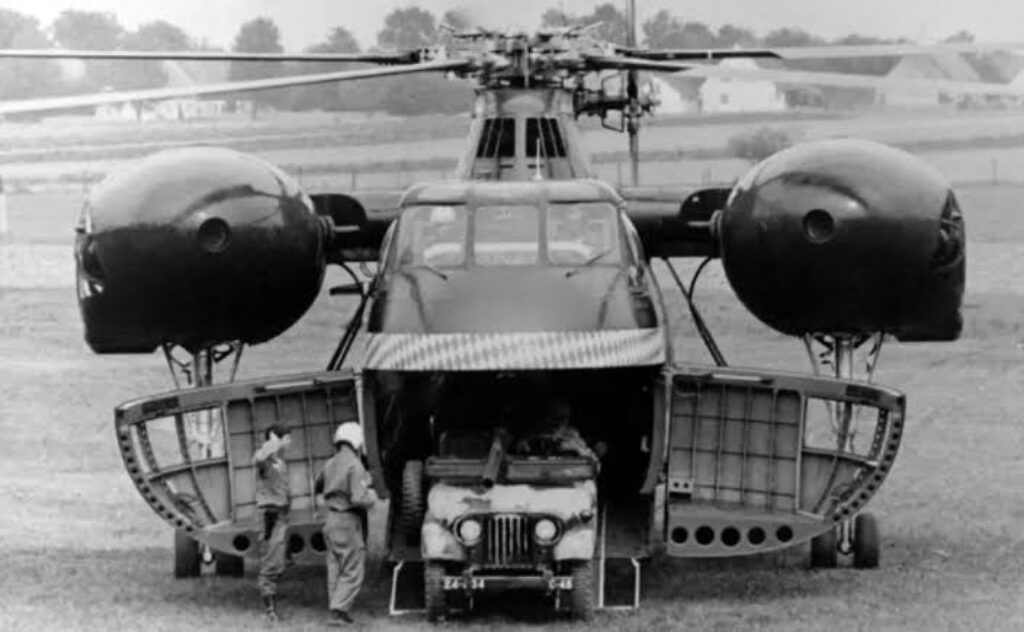
It featured a five-blade main rotor more than 22 meters in diameter and a massive fuselage designed around a spacious cargo compartment. One of its most innovative features was a front-loading cargo ramp. The nose opened through large clamshell doors, allowing vehicles to drive directly into the aircraft.
Today such a solution is common on military transport aircraft, but at the time it was remarkably innovative.
The designers also moved the engines outside the cargo compartment. Two powerful Pratt & Whitney R-2800 Double Wasp piston engines were mounted in large external nacelles on either side of the fuselage, maximizing internal cargo space.
On paper, it looked like an ideal solution.
In practice, problems soon emerged.
The Last Giant of the Piston Era
The Mojave’s greatest weakness was its powerplant.
Each Pratt & Whitney engine produced approximately 2,100 horsepower. For a conventional aircraft of the era, that was substantial power. For an enormous heavy-lift helicopter, however, it was already becoming inadequate.
The CH-37 had an empty weight of nearly 9.5 tons and a maximum takeoff weight exceeding 14 tons. Once fuel and cargo were loaded, the available power margin quickly disappeared.
The problem became particularly noticeable in hot climates and high-altitude environments. Pilots often reported that a fully loaded Mojave operated at the very edge of its performance envelope.
The situation was further complicated by the long transmission shafts required to transfer power from the side-mounted engines to the main gearbox. This arrangement frequently produced vibration issues and accelerated wear on critical components.
It did not take long for crews to give the aircraft the nickname “Shake, Rattle and Roll.”
For military equipment, that was hardly a compliment.
A Helicopter That Arrived Too Late
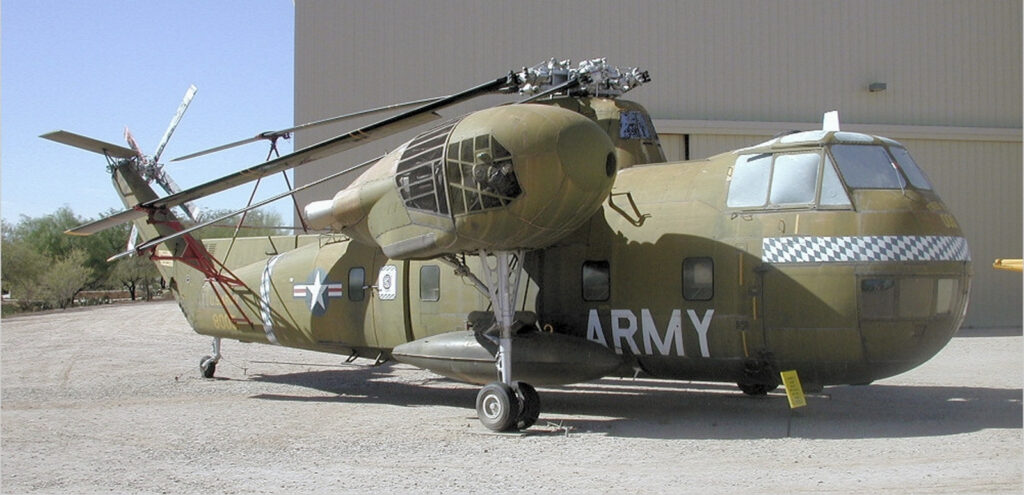
Ironically, many of the Mojave’s shortcomings were not the result of poor engineering but unfortunate timing.
While Sikorsky was refining its massive transport helicopter, a revolution was underway in aviation. Turboshaft engines were rapidly replacing piston powerplants.
Turbines were lighter, more compact, more powerful, and significantly more reliable.
The difference was so dramatic that by the end of the 1950s it had become clear that the future of heavy helicopters belonged to turbine-powered aircraft.
Machines such as the Boeing CH-47 Chinook and Sikorsky CH-53 Sea Stallion soon outperformed the Mojave in virtually every category. They carried larger payloads, flew farther, climbed faster, and required less maintenance.
Compared to these newcomers, the CH-37 quickly began to look like a relic from a fading era.
Combat Service and Vietnam
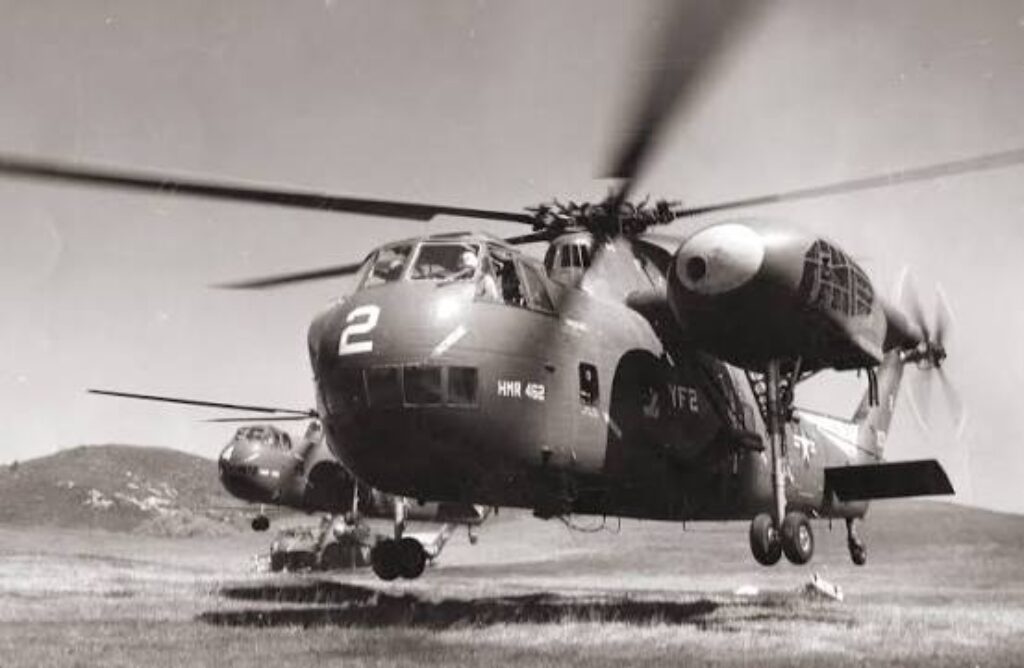
Despite its shortcomings, the Mojave still managed to serve with distinction.
The helicopter operated with both the U.S. Army and the Marine Corps, performing transport missions around the world. Its most notable operational deployment came during the Vietnam War.
There, CH-37s were used extensively to recover damaged aircraft and helicopters from difficult terrain. In many cases, they saved military equipment worth millions of dollars that otherwise would have been abandoned or destroyed.
For these recovery missions, the Mojave’s impressive lifting capability proved extremely valuable.
Yet even in Vietnam, it became increasingly obvious that newer helicopters could perform the same tasks more efficiently and reliably.
A Record Holder and Space-Age Helper
Despite its mixed reputation, the Mojave achieved several remarkable milestones.
During the mid-1950s, it set multiple world records for speed, payload, and altitude in its class. For a time, it represented the cutting edge of helicopter technology.
The aircraft also played a little-known role in America’s early space-age intelligence efforts. Some CH-37s were used to recover film capsules from CORONA reconnaissance satellites. These capsules returned photographic intelligence from orbit and were a critical component of Cold War espionage.
As a result, the Mojave served not only as a transport helicopter but also as an indirect participant in one of the most important intelligence programs of the twentieth century.
Failure or Necessary Step Forward?
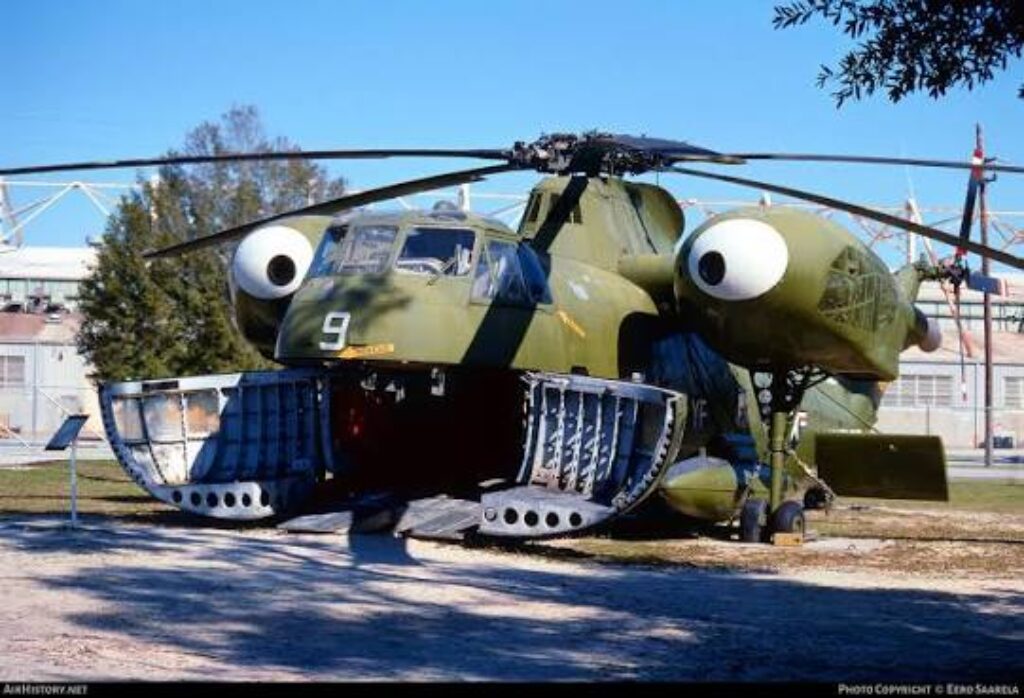
Today, the CH-37 Mojave frequently appears on lists of unsuccessful military helicopters. Such a judgment, however, oversimplifies its historical significance.
Yes, the aircraft was difficult to maintain. Yes, its performance often fell short of expectations. And yes, it became obsolete surprisingly quickly.
But it was also one of the first truly heavy-lift helicopters developed in the Western world. It demonstrated the challenges associated with building aircraft of this size and provided valuable lessons about power, weight, reliability, and logistics.
Without the experience gained from the Mojave program, iconic helicopters such as the CH-53 Sea Stallion and CH-47 Chinook might never have evolved into the machines we know today.
In that sense, the Mojave fulfilled an important mission. It was not the final answer, but rather a bridge between two eras—the age of giant piston-powered helicopters and the age of turbine-powered heavy lifters.
Technical Specifications: CH-37 Mojave
Crew: 3
Troop Capacity: Up to 26 troops
Length: 26.8 m (88 ft)
Main Rotor Diameter: 22.9 m (75 ft)
Powerplant: 2 × Pratt & Whitney R-2800 Double Wasp radial engines
Power Output: 2,100 hp each
Maximum Takeoff Weight: 14,061 kg (31,000 lb)
Maximum Speed: Approximately 210 km/h (130 mph)
Range: Up to 370 km (230 mi)
Payload Capacity: Up to 4.5 tons
Total Built: 154 aircraft
By the time its service career ended, the Mojave was already considered obsolete. Yet history often remembers such machines not for their shortcomings, but for the lessons they taught. The CH-37 may not have become a legend itself, but it helped pave the way for the legendary heavy-lift helicopters that followed.






