Pinkerton: How an Ordinary Cooper Created America’s First Private Intelligence Service

In the mid-nineteenth century, a man could rob a bank in one American state, cross into a neighboring county, and almost disappear from the reach of the law. Local sheriffs had no shared criminal records, police departments rarely exchanged information, and no federal investigative service yet existed. The country was rapidly being covered by railroads, cities were growing faster than law enforcement institutions, and the new trade routes carried not only money and goods, but also swindlers, counterfeiters, and professional robbers.
It was in this America that a private agency appeared whose employees could spend months living under false identities, infiltrate criminal circles, conduct covert surveillance, and pursue suspects across several states. Its emblem was a wide-open eye, and its motto was the phrase “We Never Sleep.” Over time, the founder’s surname became a concept in its own right: private detectives, guards, and secret agents came to be called “Pinkertons” even by people who knew nothing about Allan Pinkerton himself.
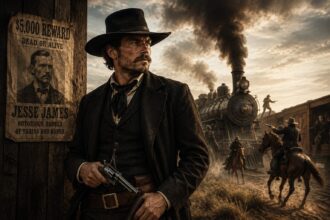
Popular culture often places him in the world of revolvers, train robberies, and the Wild West. Yet the real Pinkerton was interesting not as a skilled gunfighter or the hero of endless chases. His principal weapon was information. He was among the first in the United States to transform detective work from the craft of a few talented individuals into an organized system with its own archives, agents, training methods, and network of offices.
And yet the man who laid the foundations of America’s most famous private detective organization had never intended to become an investigator. He arrived in the United States as a political emigrant and earned his living making wooden barrels.
A Country That Had Not Yet Learned How to Catch Criminals
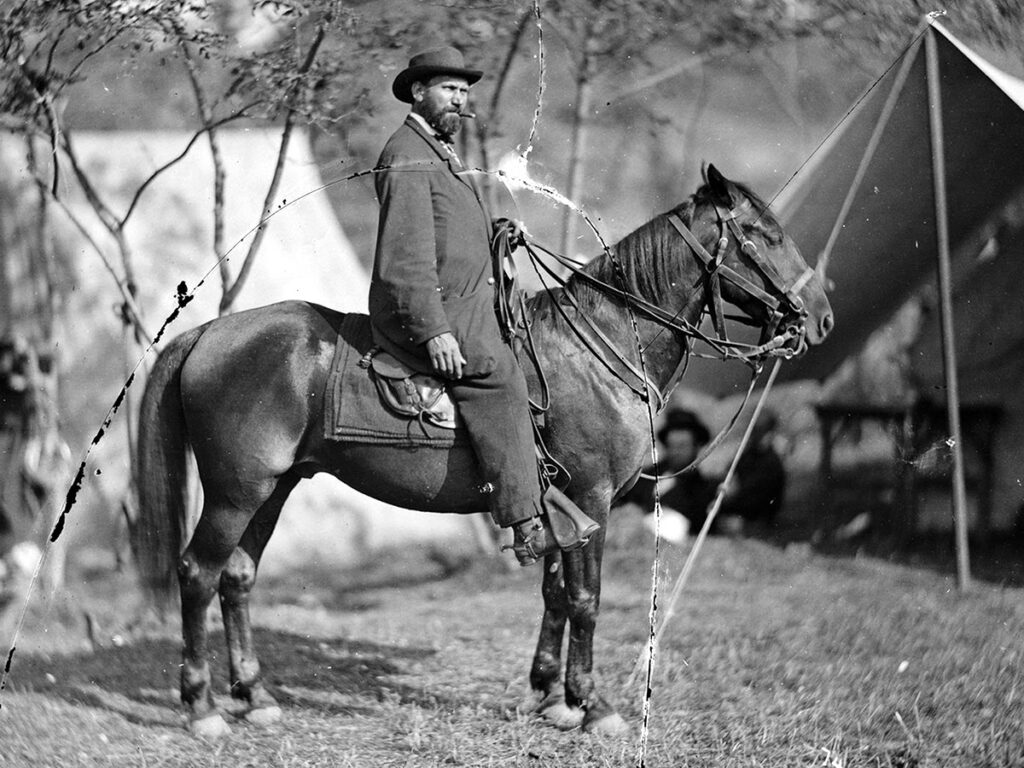
By the 1840s, the United States was already a vast and rapidly developing nation, but its law enforcement system remained overwhelmingly local. Municipal police forces were only beginning to emerge, many law enforcement duties still fell to sheriffs and their deputies, and the authority of each officer usually ended at the boundary of a particular county.
This system could still cope with domestic thefts, street fights, and crimes committed by well-known local residents. But the development of transportation changed the rules completely. Canals, steamboats, and especially railroads allowed people and goods to travel enormous distances with unprecedented speed. A criminal no longer needed to hide in the nearest forest. Within hours of a robbery, he could be in another city; within days, in another state.
Nor did the country possess a unified national currency system in the modern sense. Before the Civil War, numerous banks issued their own notes, and the quality and reliability of those notes varied considerably. Many different banknotes circulated at the same time, each with its own design. This created almost ideal conditions for counterfeiters. A person unfamiliar with a particular bank often could not immediately tell whether the note in his hand was genuine, forged, or issued by an institution that had already failed.
Crime was gradually becoming national, while the police remained local. It was this gap between the new economy and the old law enforcement system that created space for private detective agencies. Allan Pinkerton was not the first man to track criminals for money, but he was the one who transformed private investigation into a stable organization capable of operating across several regions.
His own story, however, began far from American banks and railroads.
The Scottish Cooper
Allan Pinkerton was born on August 25, 1819, in the Glasgow area. His family belonged neither to the wealthy bourgeoisie nor to influential government circles. After his father’s death, Allan had to begin working at an early age and learned the trade of a cooper, a craftsman who made wooden barrels, tubs, and other containers.
Today, cooperage may seem almost exotic, but in the first half of the nineteenth century it was an essential and highly valued profession. Wooden barrels were used to transport flour, meat, beer, whisky, herring, gunpowder, and countless industrial goods. A well-made barrel had to withstand long journeys, changes in humidity, and constant impacts. An error of only a few millimeters could ruin its entire contents.
The work demanded precision, patience, and attention to detail. All these qualities would later serve Pinkerton in a completely different field. He had no formal legal education, but he knew how to observe for long periods, remember details, and finish what he had started.
Pinkerton’s youth coincided with a period of rapid industrial growth in Britain. Alongside the factories came overcrowded working-class districts, social inequality, and growing frustration among people who had almost no political influence. It was in this environment that the Chartist movement emerged, demanding expanded voting rights, secret ballots, payment for members of Parliament, and other reforms.
Pinkerton became an active supporter of the Chartists. His political activity made him suspect in the eyes of the authorities, and in 1842 he left Scotland with his wife Joan. The move was not a romantic voyage in search of adventure, but an attempt to begin a new life in a country where a young craftsman hoped to find greater freedom and opportunity.
The couple first arrived in Chicago and later settled in the small community of Dundee, Illinois, on the Fox River. There Pinkerton opened his own cooperage and seemed to have established a stable life. He became involved in local politics, held strong abolitionist views, and, according to later accounts, assisted supporters of the so-called Underground Railroad, the secret network of routes that helped escaped slaves reach free states and Canada.
Nothing yet suggested that the owner of a small workshop would soon become one of the most famous detectives of his age.
Everything changed during a trip to find timber.
The Counterfeiters’ Island
Barrel making required suitable wooden materials, so Pinkerton regularly explored the forests and islands around Dundee. During one of these trips, he noticed signs of human activity in a place believed to be almost deserted. According to the most widespread version of the story, his suspicions were aroused by traces of a campfire or unusual movement on a small island in the Fox River.
Instead of walking away, Pinkerton began to watch.
The details of the story became embellished over time, and Pinkerton himself later turned many of his investigations into literary adventures. It is therefore impossible to reconstruct every moment with certainty. The core of the account, however, is regarded as credible: Pinkerton discovered a group connected with the manufacture or distribution of counterfeit money, observed their activities, and informed the local authorities.
What matters is that he did not try to arrest the criminals himself. He had neither a group of armed assistants nor any police authority. Rather than confront them openly, Pinkerton chose surveillance. He tried to establish who visited the island, how the suspects moved, and where their main base might be. Only after gathering enough information did he approach the sheriff.
Thus, in his first known case, the future detective instinctively applied the principle that would later become central to his system: information first, arrest second.
Pinkerton’s assistance helped the authorities expose the counterfeiters, and the observant cooper became well known throughout the county. In the mid-1840s, he was appointed a deputy sheriff in Kane County. He later worked in Cook County and carried out assignments connected with postal crimes. By the end of the decade, Pinkerton had permanently abandoned cooperage for detective work.
The incident on the island did not transform a craftsman into a brilliant investigator overnight. But it revealed that Pinkerton possessed a rare combination of qualities: curiosity, caution, the ability to observe patiently, and the skill to turn scattered suspicions into a coherent picture.
Those qualities were particularly valuable in rapidly expanding Chicago.
The City Where Old Methods No Longer Worked
In the first half of the nineteenth century, Chicago had been a small settlement on the edge of the developed frontier. The construction of canals and railroads, however, transformed it into one of the country’s most important transportation hubs. Its population grew at extraordinary speed. Merchants, craftsmen, and laborers poured into the city, but so did professional swindlers, pickpockets, document forgers, and people who saw the growing metropolis as an ideal place to disappear under a false name.
The ordinary police could not keep pace with this growth. Officers might know their own neighborhoods well, but criminal networks were no longer confined to a single street or city. Stolen goods could be moved quickly into a neighboring state, counterfeit money could be distributed through dozens of intermediaries, and the offender himself could board the next train.
Pinkerton understood that combating this kind of crime required a different organization. It was not enough to hire a few brave men with revolvers. What was needed was a network of people capable of observing, infiltrating, collecting information, and passing it to one another regardless of county boundaries.
In 1850, Pinkerton and Chicago attorney Edward Rucker established the North-Western Police Agency. The name Pinkerton National Detective Agency appeared later, as the company expanded. The familiar claim that the world-famous “Pinkerton National Detective Agency” sprang fully formed into existence in 1850 therefore simplifies the story. At first, it was a small regional office that still had to earn its famous name.
Its clients included banks, insurance companies, trading firms, and, above all, railroads. Private detectives were useful to big business precisely because they were not tied to one city. If a cashier disappeared with company funds, an agent could continue the pursuit beyond the county line. If criminals operated at several railway stations, information could be collected through one organization rather than through dozens of disconnected police departments.
The private agency thus began performing functions for which the state had not yet created suitable institutions.
The Eye That Never Slept
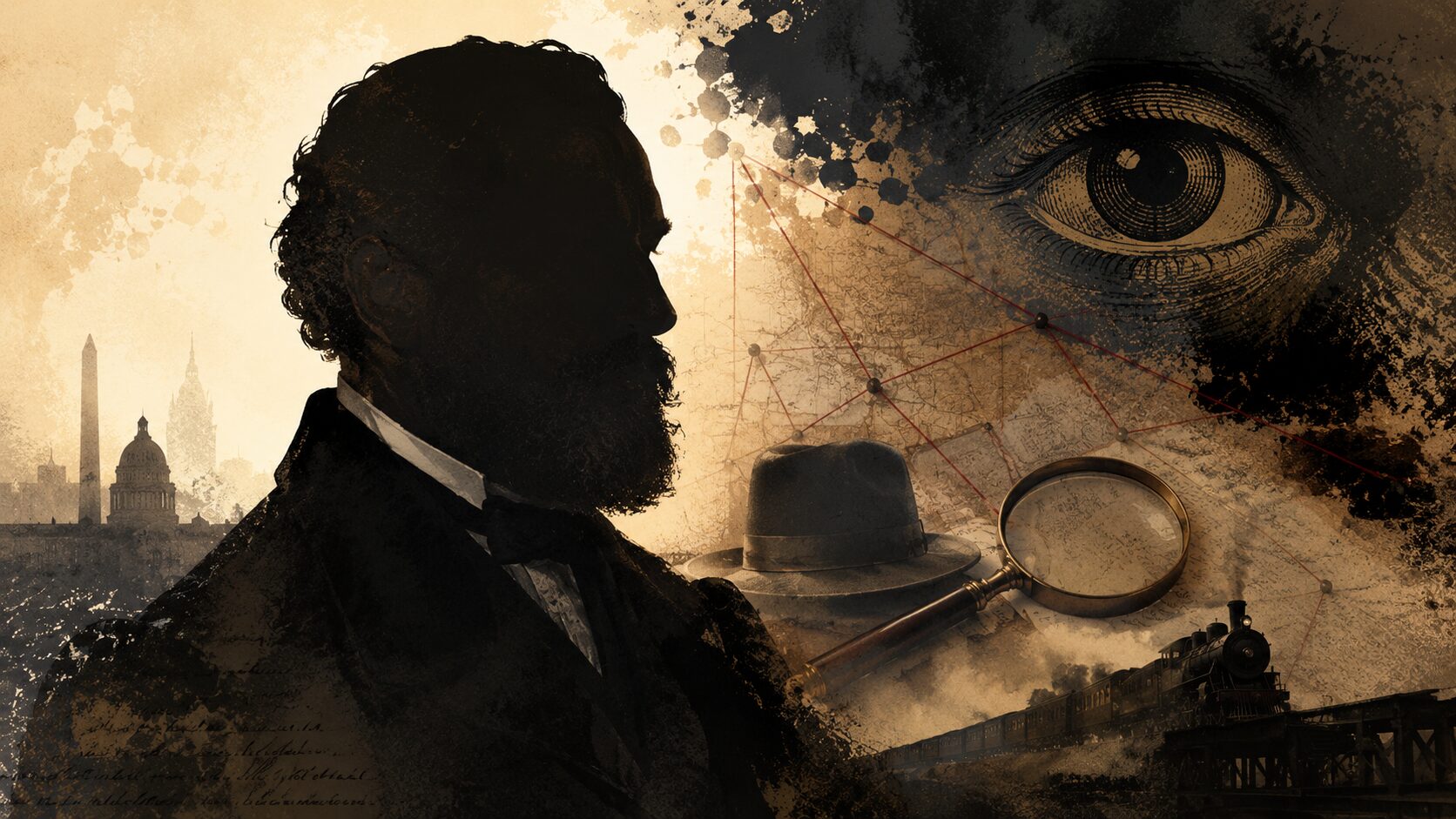
The agency’s emblem became a wide-open human eye accompanied by the phrase We Never Sleep. It embodied the entire logic of Pinkerton’s organization. A criminal might escape a particular officer, leave the city, or change his name, but the surveillance of him was not supposed to end.
The emblem is often linked to the origin of the English expression private eye, meaning a private detective. It is an appealing explanation, but it cannot be regarded as conclusively proven. The expression entered common usage later, and it is now difficult to establish whether Pinkerton’s logo directly gave birth to it. Even so, the open eye represented the essence of the agency so perfectly that it became one of the main symbols of American private investigation.
Pinkerton built his system around information. Employees collected descriptions of wanted men, recorded their names and aliases, noted their habits, associates, probable routes, and characteristic methods of committing crimes. These details were preserved and used in later cases. Gradually, an internal archive emerged that allowed the agency to compare crimes committed in different cities.
The agency later became famous for its “rogues’ gallery,” a collection of photographs and information about criminals. Yet it would be an exaggeration to credit Pinkerton with inventing police photography. Photographic portraits of suspects were used elsewhere as well. The agency’s real contribution was to make the systematic collection and practical use of such material part of everyday investigative work.
For Pinkerton, an archive was not a warehouse of old papers, but a weapon. A local police officer might be seeing a suspect for the first time, while a Pinkerton agent could already know his previous names, connections, and typical behavior.
Even more important, however, was undercover work.
The Detective No One Was Supposed to Notice
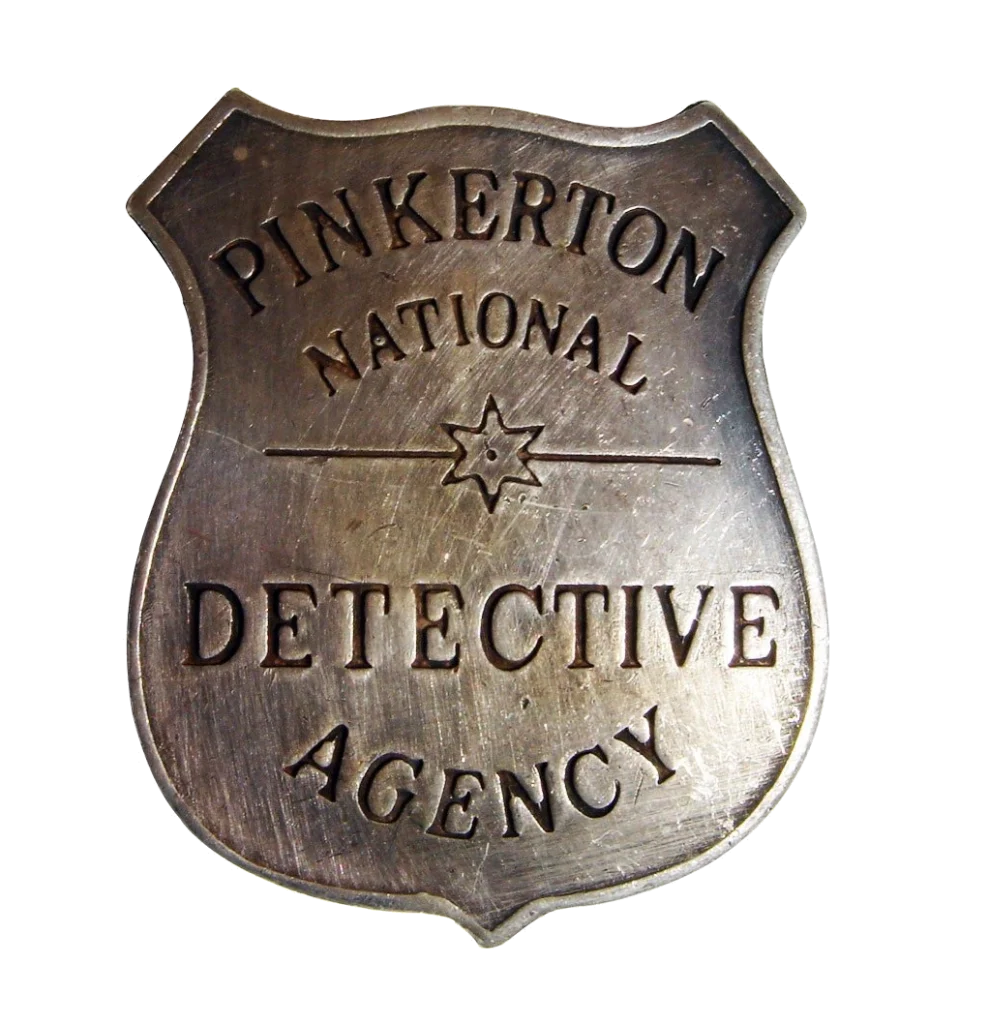
Nineteenth-century literature gradually created the image of the detective as an extraordinarily perceptive man who solved crimes from the smallest physical clues. Real Pinkerton agents more often succeeded in a different way: they patiently became part of a suspect’s world.
An agent might take a job alongside him, stay in the same hotel, pose as a merchant, railway worker, or casual traveler. Sometimes he had to live an ordinary life for weeks without asking a single direct question. The goal was not to force an immediate confession, but to persuade the target that the new acquaintance posed no threat.
Such work demanded endurance more than physical strength. One careless question, the wrong clothing, or ignorance of local customs could destroy an agent’s cover. Pinkerton expected his employees to possess strong memories, keen powers of observation, and the ability to record what they saw in detail. The best agent was not the most conspicuous or intimidating man, but the one whom no one remembered clearly afterward.
That was why Kate Warne joined the agency in 1856.
According to the best-known version of the story, the young widow came to the Chicago office after seeing a hiring advertisement. Pinkerton initially assumed she was seeking a secretarial position, but Warne declared that she intended to become a detective. She argued that a woman could enter places where the arrival of an unfamiliar man would immediately arouse suspicion: drawing rooms, private households, and the social circles of suspects’ wives.
Pinkerton accepted her argument and hired her. Warne is commonly described as the first professional female detective in the United States. More precisely, she became the first widely known female operative employed by a major American private agency. In either case, the decision was revolutionary for its time. Warne later headed the agency’s female detective bureau and played an important role in the most famous case of Pinkerton’s early career.
By the beginning of the 1860s, the agency already possessed the main elements of a future intelligence service: agents, secrecy, archives, information exchange, and employees specially trained to operate under false identities. It needed only one event to make this private system famous throughout the nation.
That event was Abraham Lincoln’s journey to Washington.
The Plot Historians Still Debate
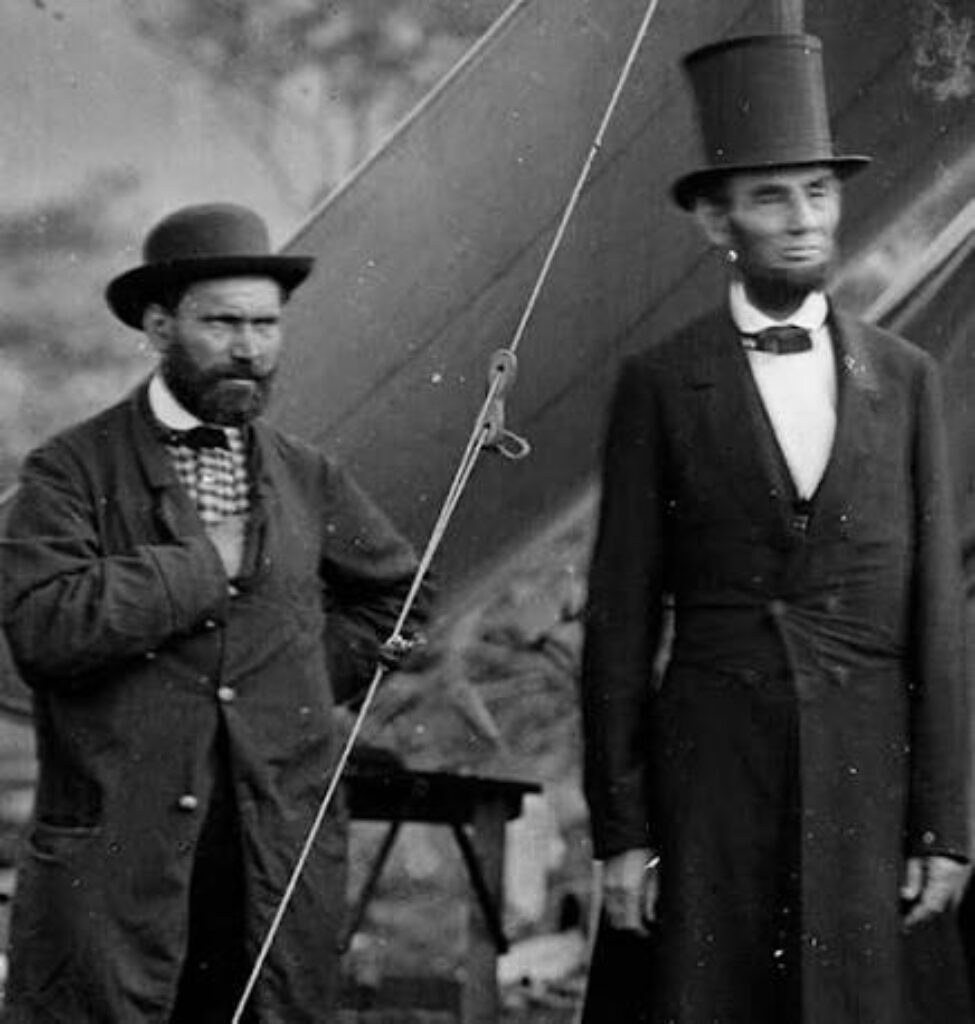
In November 1860, Abraham Lincoln won the presidential election. For the slaveholding states of the South, his victory appeared politically disastrous. Even before his inauguration, several states announced their secession from the Union, and the country began to split into two hostile camps.
In February 1861, the president-elect set out from Springfield for Washington. The journey became a series of public stops, speeches, and meetings with crowds of supporters. Newspapers widely published the route and timetable, making Lincoln an easy target.
Baltimore caused particular concern. It was the largest city in the slave state of Maryland, and Southern sympathies were strong there. The city’s railway system had a dangerous peculiarity: cars arriving at one station had to be hauled through the streets to another line. During this transfer, Lincoln would have found himself surrounded by crowds with almost no security in the modern sense.
Pinkerton had originally gone to Baltimore on behalf of a railroad company concerned about sabotage. His agents infiltrated secessionist circles and gathered information about possible attacks on tracks and bridges. During the investigation, Pinkerton concluded that he had discovered a more serious threat: a plot to assassinate Lincoln during the transfer between stations.
Kate Warne operated under the identity of a wealthy Southern sympathizer and succeeded in gaining the trust of Baltimore secessionists. Other agents visited taverns, meetings, and political clubs. The information they collected convinced Pinkerton that the threat was genuine.
The travel plan was urgently changed. Lincoln abandoned part of his public schedule, left Philadelphia in secret, and traveled through Baltimore at night. On the morning of February 23, 1861, he arrived safely in Washington. Pinkerton and Warne accompanied him during the night journey. Warne helped maintain the cover story that Lincoln was an ill relative who required peace and privacy.
The new president’s opponents immediately mocked his secret arrival. Newspapers published caricatures showing Lincoln in absurd disguises, although many details of this popular image were invented by journalists. A political leader who had promised to preserve the Union now had to explain why he had slipped into his own capital like a fugitive.
The debate over the Baltimore Plot continues to this day. Historians do not doubt that radical Southern sympathizers existed in the city or that violent plans were discussed. What is much harder to prove is the existence of a single, well-organized group with a clear assassination plan. Most of the details come from Pinkerton’s reports and the later memoirs of participants who had an interest in emphasizing the importance of their own role.
Perhaps Pinkerton genuinely prevented an assassination. Perhaps he turned several dangerous intentions and inflammatory conversations into the picture of a much larger conspiracy. But in February 1861, the cost of an error was simply too high. If even part of the threat was real, openly following the original itinerary would have meant taking an unjustifiable risk.
The decisive result was not the arrest of a specific group of conspirators, but the survival of the president-elect. Lincoln reached Washington and took office on March 4. For the agency, the operation became national publicity that no amount of money could have purchased. Pinkerton was transformed from a well-known private detective into the man many Americans believed had saved the president.
Within weeks, the Civil War began, and his methods were needed not by railroad companies, but by the army.
Major Allen Goes to War
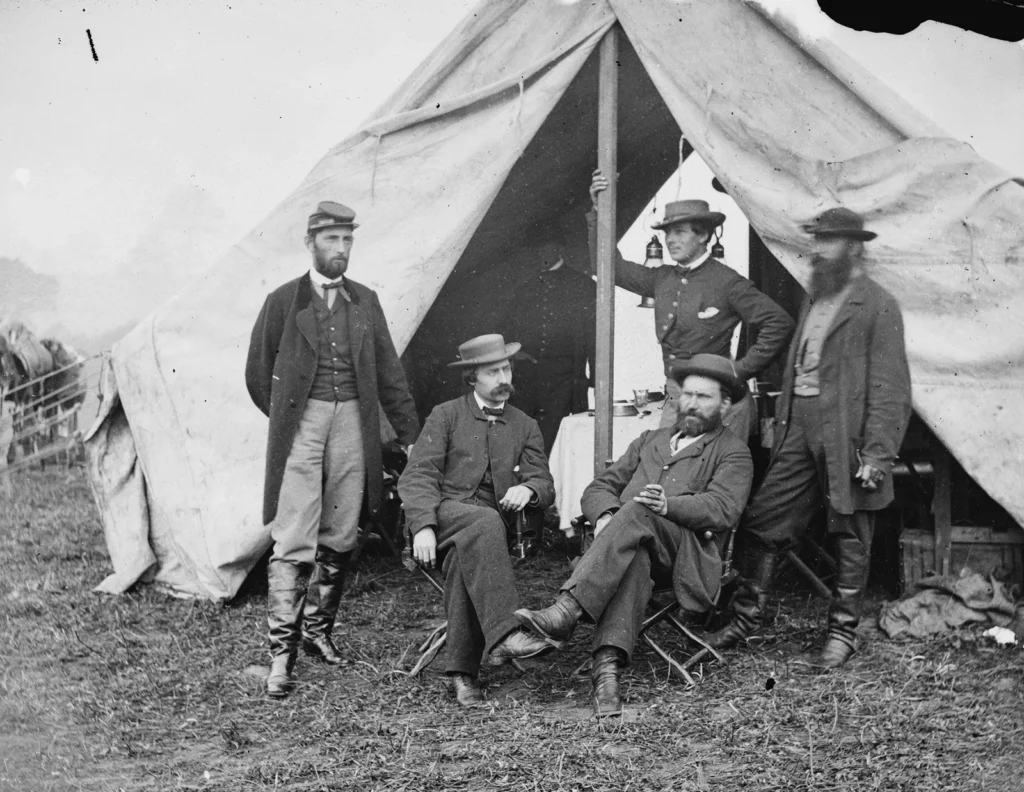
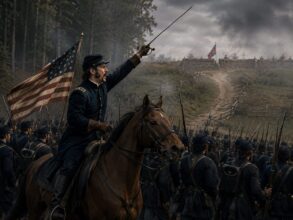
On April 12, 1861, Confederate artillery opened fire on Fort Sumter. The war began, and the federal government discovered that it was less prepared than it wished to admit. The United States possessed a regular army, but it had no unified professional intelligence service capable of constantly collecting and analyzing information about the enemy.
Commanders built their own networks of informants, used cavalry patrols, and questioned prisoners, deserters, local residents, and escaped slaves. Information arrived unsystematically, often contradicted itself, and depended heavily on the abilities of individual officers.
General George McClellan already knew Pinkerton from their earlier work in the railroad industry. After receiving command of major Union forces, he brought the private detective into the organization of military intelligence. Pinkerton operated under the pseudonym Major E. J. Allen, although formally he remained a civilian specialist rather than a commissioned army officer.
His employees entered Confederate territory disguised as merchants, vagrants, Southern sympathizers, and Confederate soldiers. They studied roads and river crossings, watched railway traffic, counted camps, questioned civilians, and gathered information about troop positions. Counterintelligence became another important field: identifying Southern agents and monitoring suspects in Washington.
One of the best-known cases involved surveillance of Washington socialite Rose O’Neal Greenhow, who directed a Confederate spy network in the capital. Pinkerton’s men watched her house, recorded her visitors, and gathered evidence that led to her being placed under house arrest. Even while under surveillance, Greenhow continued for some time to transmit information to the South, demonstrating both the possibilities and the limitations of early counterintelligence.
Pinkerton had no satellite imagery, signals intelligence, or aircraft at his disposal. Almost all information came from human sources. The smallest details could become significant: the amount of fodder being purchased, train movements, conversations in hotels, road conditions, the number of tents, or even the number of cooking fires.
In essence, Pinkerton transferred into the military sphere the same methods he had used against criminals. He created a network of sources, collected individual reports, compared them, and attempted to present the command with an overall picture.
But it was here that the limits of his system became clear.
A Detective Against an Army
Exposing a criminal group and estimating the strength of an enemy army are entirely different tasks. In an ordinary investigation, an agent had to identify several suspects, trace their connections, and gather evidence. In wartime, Pinkerton had to estimate tens of thousands of men moving across vast territories, while the enemy deliberately concealed its forces and spread false information.
Avoiding double counting was especially difficult. The same regiment might be observed in several places and mistaken for different units. Prisoners often exaggerated the size of their own army, local civilians had little understanding of military organization, and campfires or rumors offered only a very rough picture.
Pinkerton and his employees repeatedly overestimated Confederate troop strength. This became particularly evident during McClellan’s campaigns. The general was already cautious by nature and inclined to believe that the enemy outnumbered him. Pinkerton’s intelligence reports reinforced that belief, encouraging him to demand reinforcements and postpone offensive action.
Historians continue to debate the degree of Pinkerton’s personal responsibility. Some argue that his counting methods were fundamentally flawed and gave McClellan a distorted picture. Others note that the general himself encouraged cautious estimates, selected the most alarming figures from the reports, and continued to believe in overwhelming enemy superiority even when more moderate information became available.
Responsibility probably rested with both men. Pinkerton failed to analyze the collected information with sufficient skepticism, while McClellan readily accepted estimates that confirmed his own fears.
These failures did not erase the central achievement. For the first time, a major American army possessed a relatively permanent organization that did more than send scouts ahead of a battle. It collected intelligence from agents, maintained records, conducted counterintelligence, and attempted systematic analysis.
It was not yet a national intelligence service. Pinkerton worked primarily for McClellan, and the organization depended on their personal relationship. When Lincoln removed the general from command of the Army of the Potomac in November 1862, Pinkerton’s military service also came to an end. The private detective returned to his agency.
But he returned as a different man.
The System That Outlived Its Creator
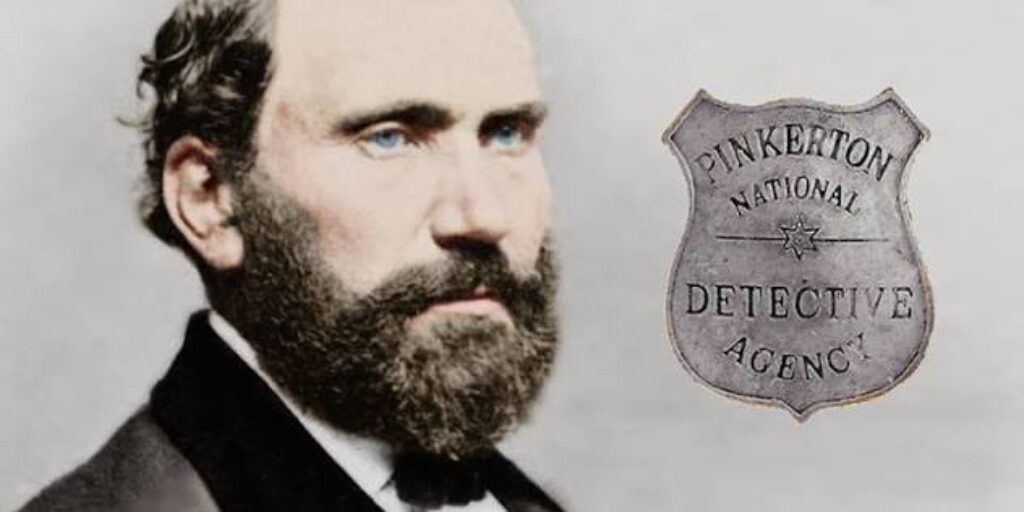
By 1862–1863, the Pinkerton agency had completed a transformation that would normally have taken a government institution decades. It had begun as a small Chicago office investigating theft and fraud, then gained experience protecting a president-elect, conducting operations across several states, running counterintelligence, and collecting military information.
Pinkerton did not invent surveillance. Secret agents had existed long before him, photographs of criminals were used by other police organizations, and military commanders had sent scouts behind enemy lines for centuries. His achievement lay elsewhere: he brought separate techniques together within a single organization.
In that organization, information did not disappear when a case ended, but entered an archive. An agent did not operate alone, but as part of a network. Surveillance could continue after a suspect crossed a county line. A woman could become a full operational officer if her social position gave her access to the right people. An investigation began not with an arrest or interrogation, but with the collection of information.
The system was far from perfect. It depended heavily on Pinkerton’s own character, sometimes treated rumor as evidence, and struggled with tasks requiring complex statistical judgment. The Baltimore Plot can never be completely separated from the legend the agency later created around it, while Pinkerton’s wartime reports showed how dangerous information could become without critical analysis.
Yet even the failures became part of the legacy. They demonstrated that intelligence was not merely the acquisition of secrets, but the correct assessment of their reliability. A hundred reports do not become knowledge if they all originate from the same rumor or merely confirm a conclusion already chosen in advance.
After the Civil War, the Pinkertons would go on to pursue train robbers, confront Jesse James, guard industrial facilities, and intervene in labor conflicts. The agency would acquire enormous power and later pay for it with a deeply controversial reputation. To some, its employees would remain symbols of professional investigation. To others, they would become armed servants of big business.
But that is another story.
By the beginning of the 1860s, Allan Pinkerton’s central work had already been accomplished. The Scottish cooper had created an organization capable of operating where the state still left a vacuum. It was neither a police force nor a true government intelligence service, yet it borrowed functions from both and demonstrated what the security institutions of the modern age would eventually look like.
Pinkerton himself lived for more than another twenty years. The system he created survived its founder, his sons, and the entire age of revolvers and steam locomotives. It changed names, owners, and areas of activity, but its central principle remained the same: in a world where a criminal can disappear quickly, victory belongs to the side that knows how to collect, preserve, and connect information.
Pinkerton did not teach America how to catch every criminal. He did something more important: he taught it how to turn investigation into a system.