The Emperor Chosen by God: Why the Byzantines Saw Their Ruler as Christ’s Representative on Earth

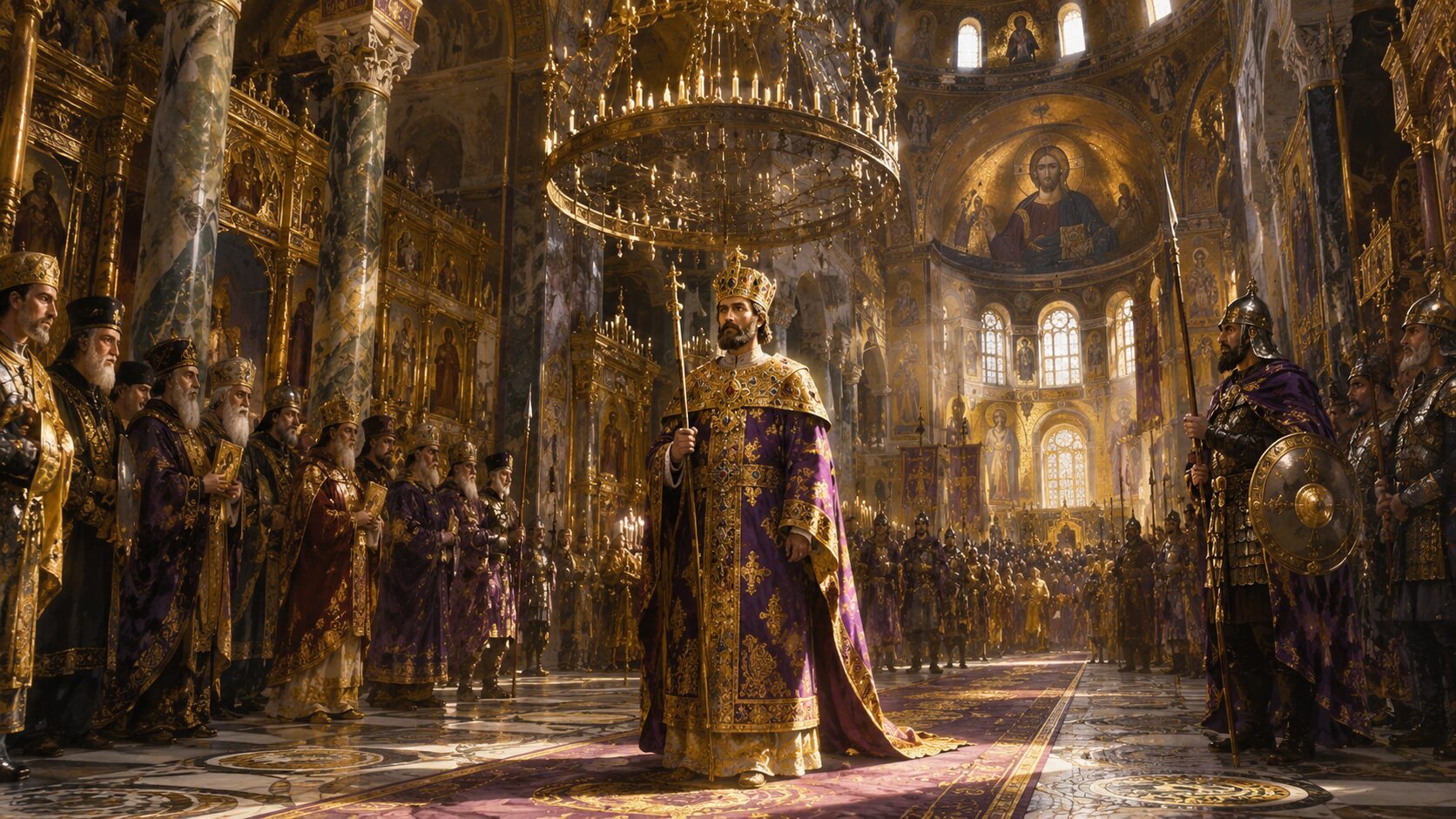
Imagine walking into the Hagia Sophia in Constantinople around the tenth century. Above you, golden mosaics shimmer in the candlelight. The air is filled with the scent of incense as the choir chants ancient hymns. Down the central aisle walks a man dressed in imperial purple, surrounded by guards, court officials, and clergy. Every eye in the cathedral is fixed upon him.
This is the emperor.
But to the Byzantines, he was far more than the ruler of an empire.
He was not a god, as the Roman Caesars had once been.
Nor was he the supreme priest like the Pope in Rome.
Yet millions genuinely believed that God governed the Christian Empire through him.
For more than a thousand years, Byzantium developed a unique political system in which religion and state were almost inseparable. Historians describe this as political theology—a worldview in which the emperor was not merely the head of government but also the guardian of the Orthodox faith.
It was this idea that made Byzantium one of the most extraordinary civilizations of the medieval world.
It All Began with Constantine the Great
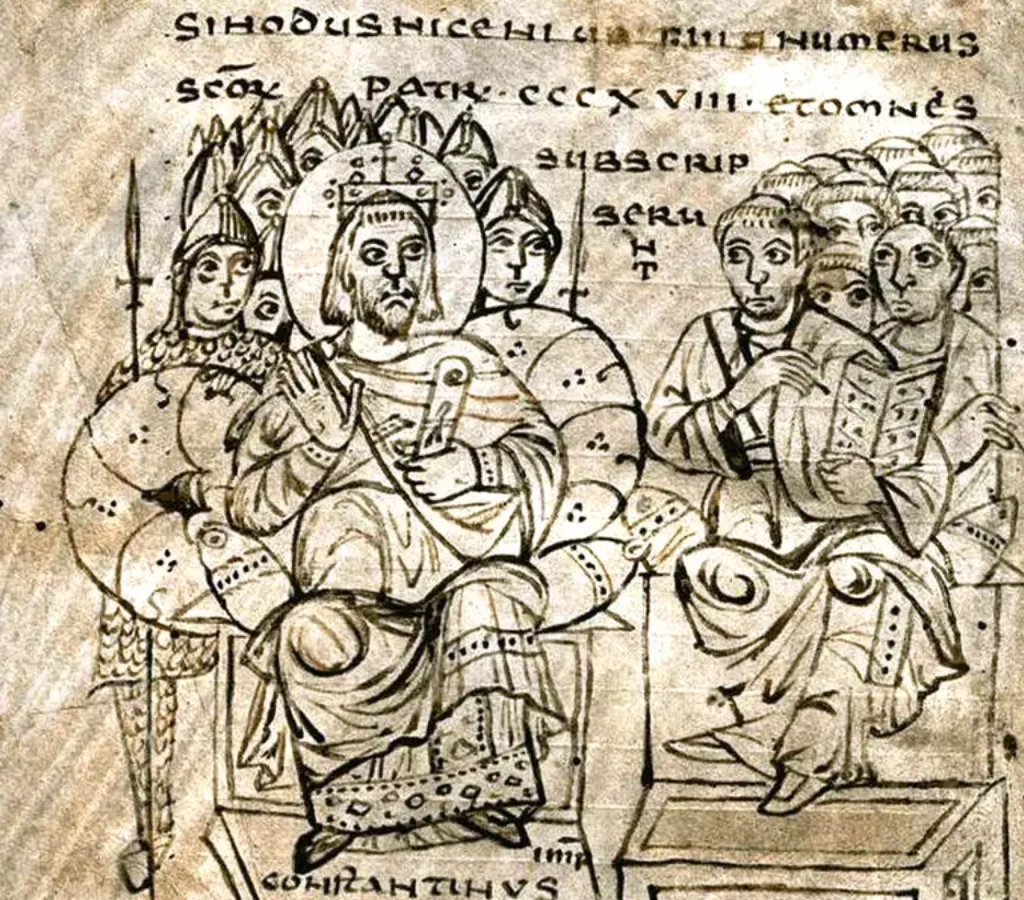
Before the fourth century, the Roman Empire was still a pagan state.
Its emperors were regarded as favorites of the gods, and some were even worshipped after death.
Everything changed under Constantine the Great.
After his victory at the Battle of the Milvian Bridge in AD 312 and his subsequent legalization of Christianity, Constantine did far more than end the persecution of Christians. He fundamentally reshaped the ideological foundation of the empire. From that moment onward, the state would exist not in opposition to the Church, but alongside it.
It was nothing less than a political revolution.
The emperor was no longer considered a divine being.
But neither was he simply an ordinary Christian.
His authority was believed to come directly from God.
He ruled “by the grace of God,” making him accountable to God for the fate of the entire empire.
With Constantine, an idea was born that would outlive him by nearly a millennium.
An Earthly Reflection of the Heavenly Kingdom
One of the first thinkers to fully articulate this vision was Eusebius of Caesarea.
According to his understanding, the organization of the empire should mirror the order of Heaven itself.
There is one God in Heaven.
Therefore, there should also be one legitimate emperor on Earth.
The empire became an earthly image of the Kingdom of Heaven.
The emperor became its earthly steward.
This did not mean the emperor possessed unlimited power.
Quite the opposite.
His authority remained sacred only so long as he defended the true faith.
If he fell into heresy or disrupted God’s order, the legitimacy of his rule could itself be questioned.
In this way, Byzantine political thought both elevated and restrained imperial authority.
Neither King Nor Patriarch
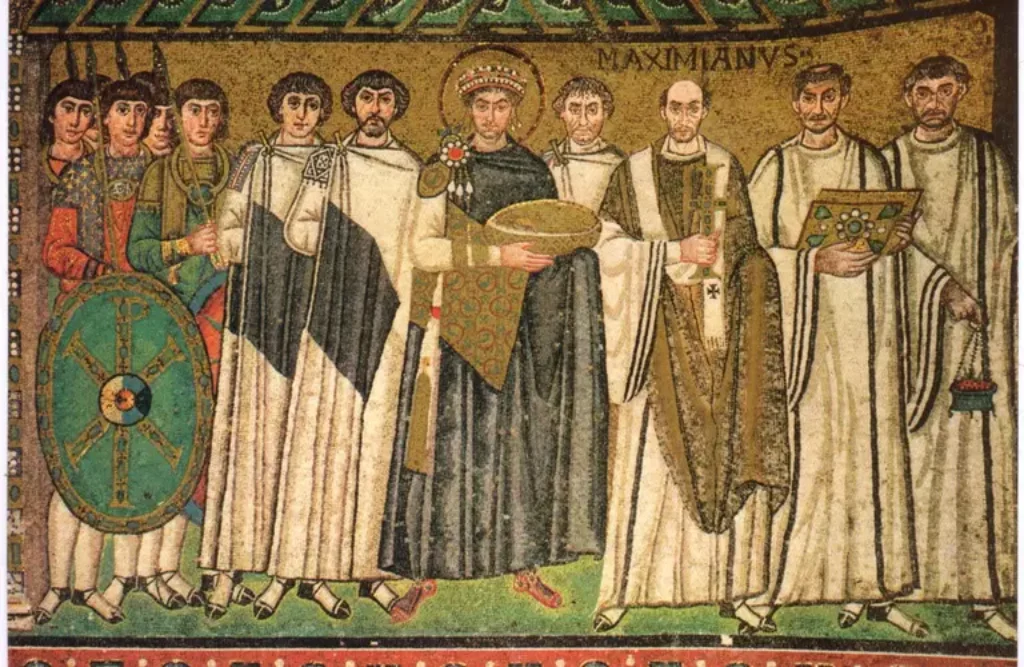
To modern readers, it may seem as though the Byzantine emperor effectively controlled the Church.
That is only partially true.
He did not celebrate the liturgy.
He did not ordain bishops.
He did not administer the sacraments.
Those responsibilities belonged entirely to the clergy.
However, the emperor convened Ecumenical Councils, confirmed their decisions, and ensured that Church decrees were enforced throughout the empire.
Without imperial support, many theological decisions would likely have remained unresolved debates among bishops.
This made the Byzantine system fundamentally different from both the papal monarchy of medieval Western Europe and the modern principle of separation between Church and state.
The emperor and the patriarch existed in a relationship of mutual dependence.
Neither could fully perform his role without the other.
Ceremony as the Language of Power
Anyone arriving at the imperial court in Constantinople was meant to understand one simple truth.
The man before them was not merely a monarch.
He was God’s chosen ruler.
Everything at court reflected this message.
The emperor wore imperial purple—a color forbidden to ordinary subjects.
Golden standards accompanied his public appearances.
The throne room featured mechanical lions that roared and gilded birds that appeared to sing through ingenious engineering.
Foreign ambassadors often described these ceremonies as almost supernatural.
Every detail served a single purpose.
To demonstrate that imperial authority had heavenly origins.
When Politics Became Theology
Because of this close relationship between faith and government, nearly every major religious controversy became a political crisis.
The Iconoclast Controversy of the eighth and ninth centuries is perhaps the best example.
At first glance, the debate concerned only the veneration of icons.
In reality, it asked a far more profound question.
Who possessed the authority to define true Christian doctrine?
The emperor?
Or the bishops?
The answer would determine not only the future of the Church but also the nature of imperial power itself.
Similar conflicts surrounded Arianism, Monophysitism, and numerous other theological disputes.
In Byzantium, there was no clear line separating religion from politics.
The two formed a single, integrated system.
The Emperor Answered to God
Despite the grandeur surrounding the imperial office, Byzantines never believed their ruler to be infallible.
Quite the opposite.
Chroniclers, monks, and theologians consistently reminded emperors that they were accountable before God.
They were expected to govern justly.
Protect the poor.
Defend Orthodox Christianity.
Uphold the law.
Whenever emperors failed in these duties, military defeats, natural disasters, famines, or epidemics were often interpreted as signs of divine displeasure.
Political theology therefore served not only to justify imperial authority but also to impose moral limits upon it.
A Legacy That Outlived the Empire
When Constantinople fell to the Ottoman Turks in 1453, the Byzantine Empire itself disappeared.
Its political ideas, however, survived.
The Orthodox kingdoms of Eastern Europe inherited the Byzantine understanding of monarchy as the protector of the Church.
The concept of ruling “by the grace of God” deeply influenced the political traditions of the Balkans, Kievan Rus’, and later Muscovy, where the famous doctrine of Moscow as the “Third Rome” eventually emerged.
Naturally, each state interpreted Byzantine traditions in its own way.
Yet the belief that political authority possessed not only legal but also spiritual significance proved remarkably enduring.
An Empire Where Faith Governed the State
Today, the phrase “political theology” sounds like an academic concept.
For the Byzantines, it was simply reality.
The emperor could not exist without the Church.
The Church could not exist without the empire.
Law, theology, diplomacy, military organization, and court ceremony formed a single political and spiritual system, with each element reinforcing the others.
Perhaps that is one of the reasons Byzantium survived for more than a thousand years.
Its strength rested not only upon the walls of Constantinople or the discipline of its armies.
It rested upon a powerful idea:
That the empire itself reflected the divine order of Heaven, and that the emperor was not the owner of the state, but God’s first servant entrusted with its care.
It remains one of the most influential political concepts of the Middle Ages—an idea that outlived Byzantium itself and left a lasting mark on the history of Eastern Europe and the Orthodox Christian world.