Is the RCH 155 Already in Ukraine? Germany’s “Ghost Howitzer” Unexpectedly Reappears at a Canadian Defense Show

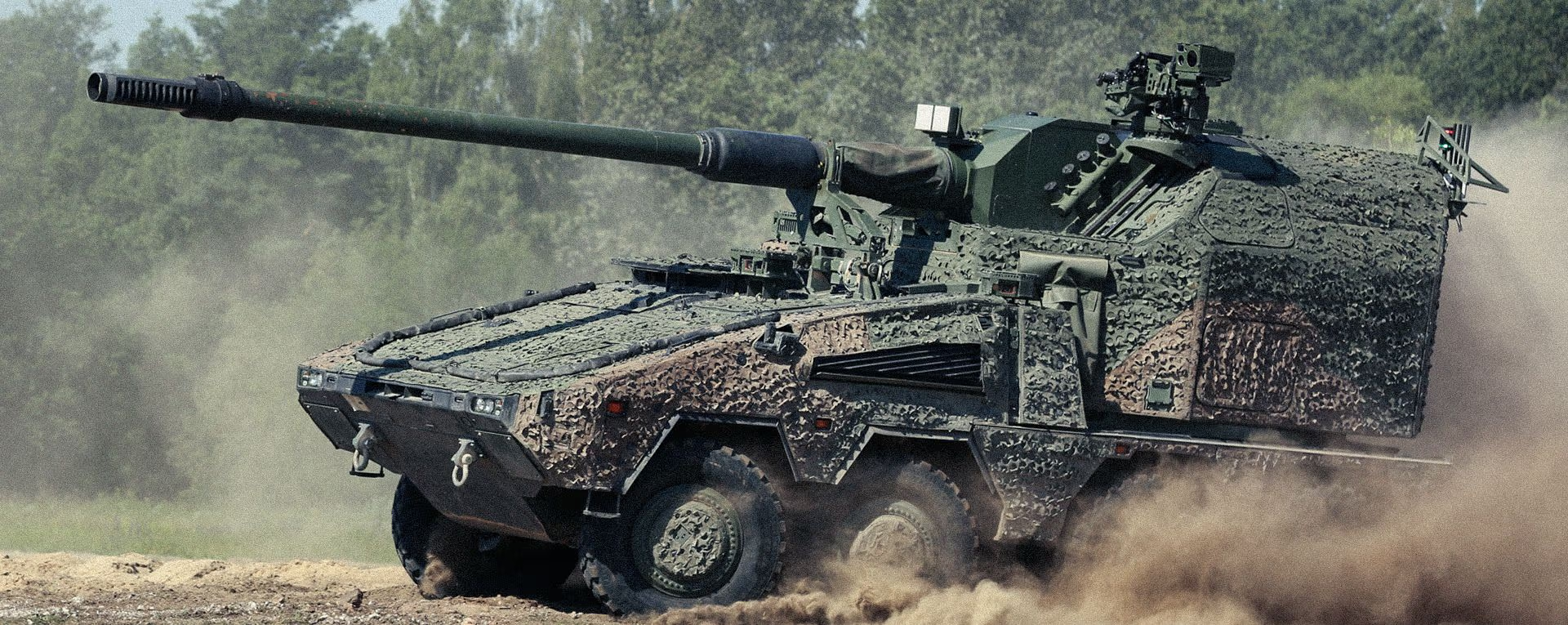
Sometimes the most interesting military stories emerge not from the battlefield or official announcements, but from a single phrase hidden inside a presentation slide. That appears to be exactly what happened with one of the most anticipated artillery systems of recent years—the German RCH 155 self-propelled howitzer.
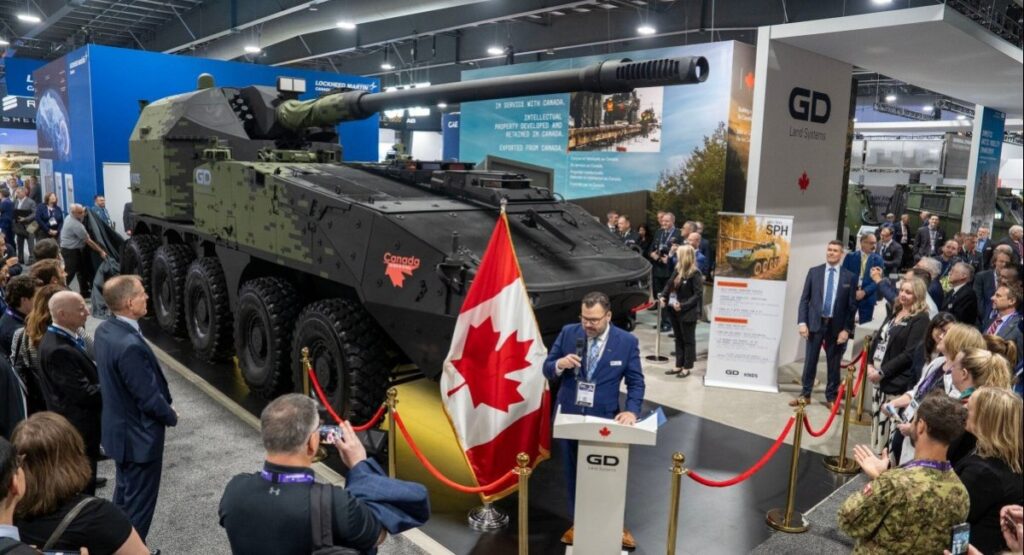
During CANSEC 2026 in Canada, General Dynamics Land Systems Canada unveiled its new GRIZZLY LAV SPH artillery system. At first glance, the presentation focused entirely on a Canadian project. However, defense analysts quickly noticed something else. The KNDS artillery module used on the vehicle—the same module employed by the RCH 155—was described as “combat-proven.”
That seemingly simple phrase immediately sparked speculation. The RCH 155 has not officially seen combat anywhere. So why was the system being marketed as battle-tested?
The answer may lie in Ukraine.
The Howitzer Ukraine Was Supposed to Receive First
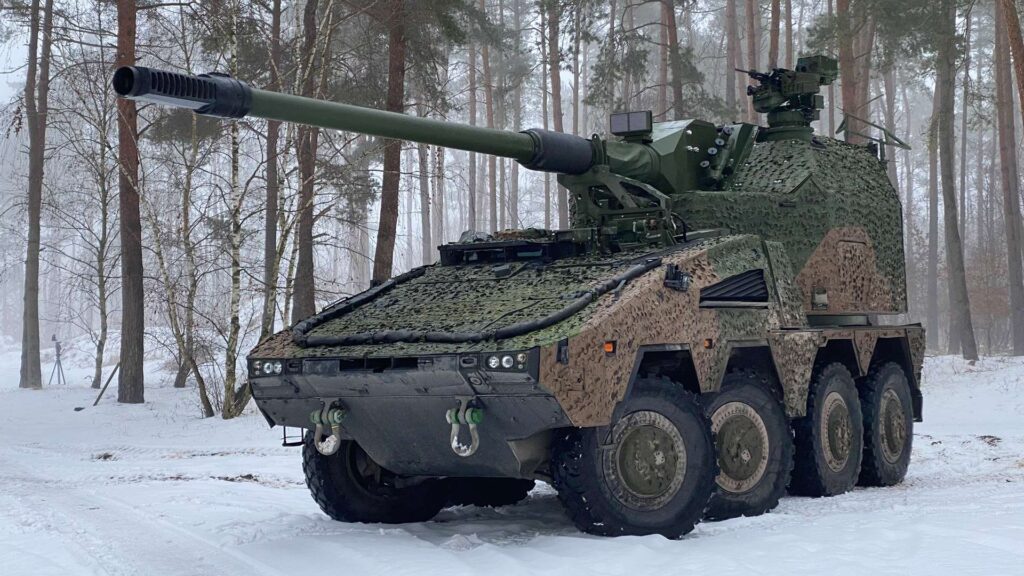
Ukraine’s connection to the RCH 155 dates back to 2022, when the first contract for the system was signed. Subsequent agreements expanded the order to a total of 54 vehicles, making Ukraine the launch customer for the new artillery system even before Germany itself received operational units.
In January 2025, Germany formally handed over the first production RCH 155 to Ukraine. In reality, however, the vehicle remained in Germany, where it was used to train Ukrainian crews. Later reports indicated that the first six systems would also remain at training facilities before being transferred to operational units.
As a result, the RCH 155 has existed in a strange information vacuum. Contracts have been signed, crews have been trained, and vehicles have been delivered on paper, yet almost no verified images of the system operating in Ukraine have surfaced.
Why One Phrase Raised So Many Questions
The controversy revolves around the description used during the Canadian presentation.
The artillery module was promoted as “combat-proven,” despite the fact that no country has officially reported using the RCH 155 in combat.
Germany is only beginning to field its own vehicles. Britain is still waiting for deliveries. Canada is merely evaluating similar concepts.
That leaves only one realistic possibility: Ukraine.
Of course, this is not proof. Marketing material is not an official military statement. Nevertheless, many analysts believe the wording may indicate that at least a small number of RCH 155 systems have already undergone operational testing under real combat conditions.
Additional interest comes from reports that more than 600 Ukrainian personnel have already completed training on the platform. For a system that supposedly has not entered active service, that is a substantial number.
What Makes the RCH 155 Different
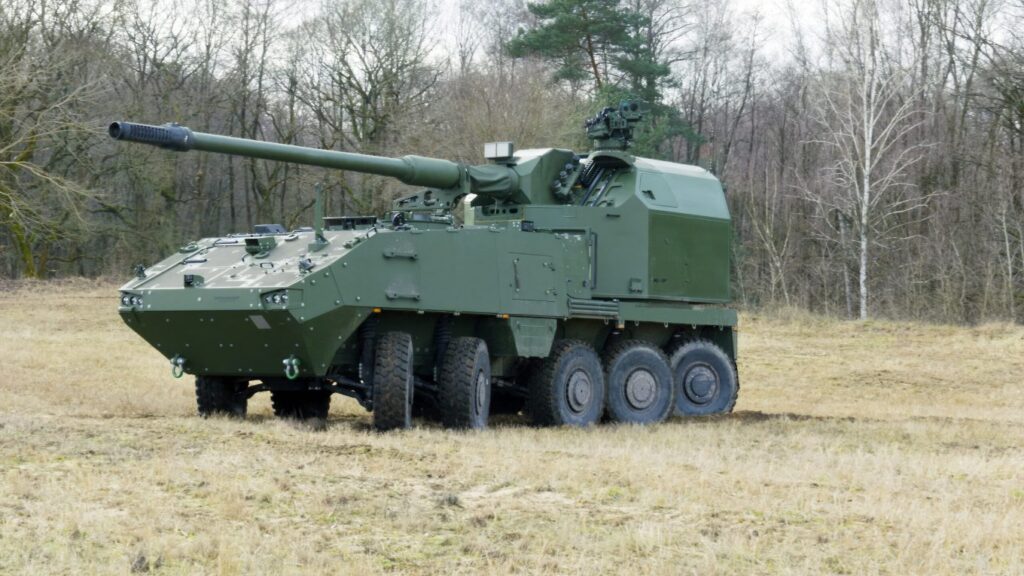
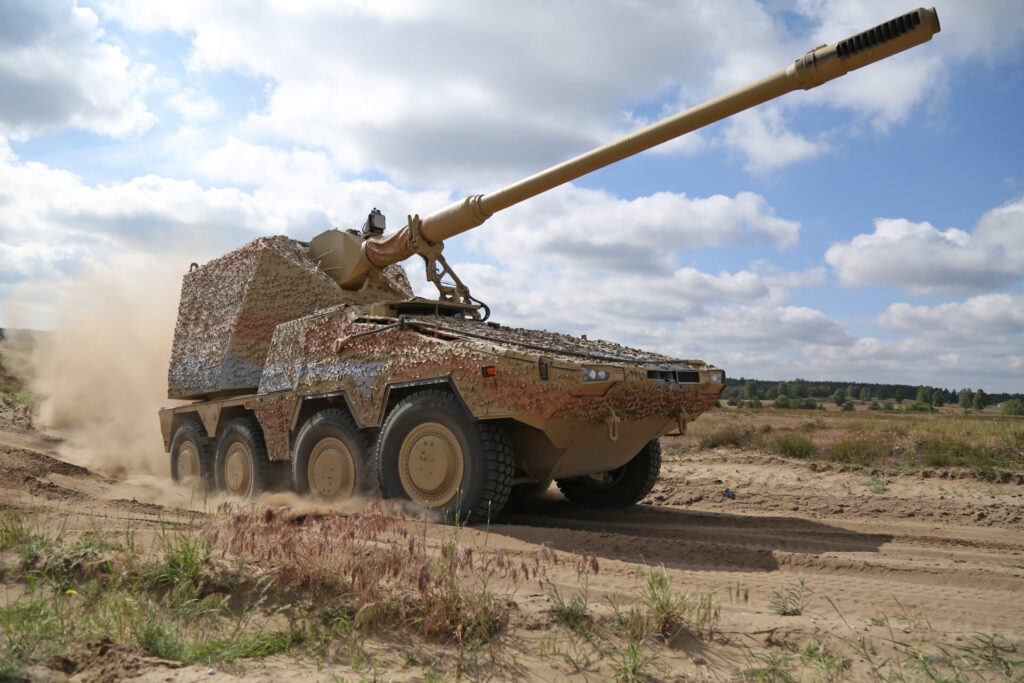
At first glance, the RCH 155 appears to be just another wheeled self-propelled howitzer. In reality, it is one of the most advanced artillery systems currently entering service.
The vehicle combines the Artillery Gun Module (AGM)—derived from the famous PzH 2000—with the Boxer 8×8 armored vehicle chassis.
The result is a system that offers the firepower of a heavy tracked howitzer while retaining the mobility and strategic flexibility of a wheeled platform.
But its most remarkable feature lies elsewhere.
The RCH 155 is the first serial-production self-propelled howitzer designed to fire accurately while moving.
In modern warfare, where artillery survivability depends heavily on mobility and rapid displacement, that capability could prove extremely valuable.
Artillery for the Twenty-First Century
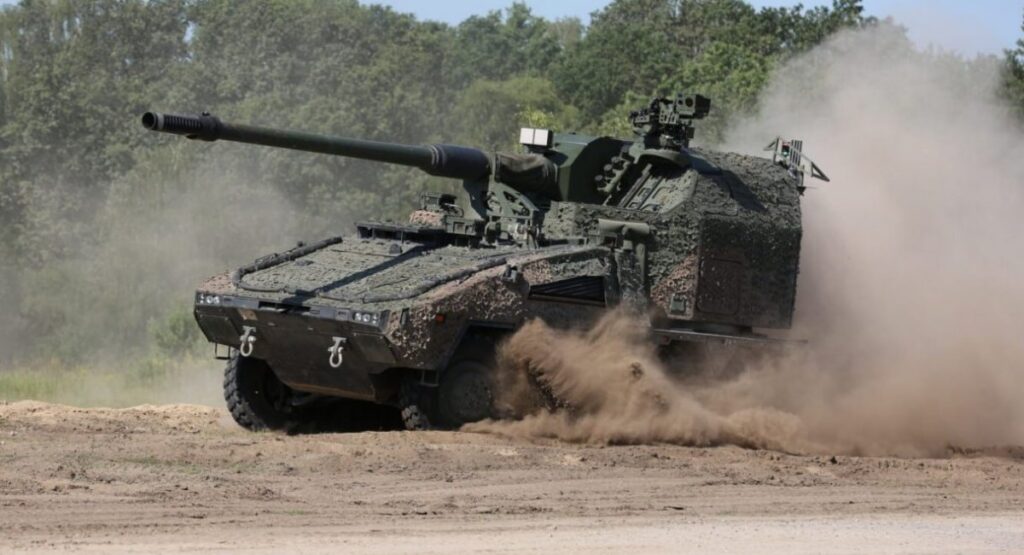
Automation is at the heart of the RCH 155 concept.
The turret is completely unmanned, and all loading operations are performed automatically. The crew remains inside the protected hull of the Boxer vehicle throughout the firing process.
Thanks to this design, the crew consists of only two personnel.
The system is also capable of Multiple Rounds Simultaneous Impact (MRSI) missions, allowing several shells fired along different trajectories to strike the target at nearly the same moment.
Combined with advanced fire-control systems, this enables the RCH 155 to reduce the time between receiving target coordinates and opening fire to a minimum.
For many analysts, it represents one of the most technologically advanced wheeled artillery systems currently available.
Germany, Britain—and Now Canada
Ukraine is far from the only customer interested in the RCH 155.
Germany has already ordered 84 systems for its own armed forces. The United Kingdom selected the platform as part of its Mobile Fires Platform program. Switzerland has evaluated a variant mounted on the Piranha IV 10×10 chassis, while Canada is now considering a similar concept.
In effect, the AGM artillery module is evolving into an entire family of next-generation artillery systems.
Already at the Front—or Not Yet?
As of today, there is no official confirmation that operational RCH 155 systems are fighting in Ukraine.
However, the growing body of circumstantial evidence is difficult to ignore. Extensive crew training, integration with Ukrainian battlefield-management systems, the expectation of imminent deliveries, and the unexpected “combat-proven” description have all fueled speculation that at least a handful of systems may already have been tested under battlefield conditions.
Whether that speculation proves correct remains to be seen.
What is clear is that the RCH 155 represents a major step forward in artillery design. It is not simply another self-propelled howitzer, but a vision of what future artillery may look like—highly automated, highly mobile, and capable of delivering firepower while remaining constantly on the move.
RCH 155 Specifications
Type: Wheeled self-propelled howitzer
Country of Origin: Germany
Manufacturer: KNDS Deutschland
Chassis: Boxer 8×8
Caliber: 155 mm
Barrel Length: L52
Crew: 2
Ammunition Capacity: 30 rounds
Maximum Range: Up to 54 km with extended-range ammunition
Rate of Fire: Up to 9 rounds per minute
Special Feature: First self-propelled howitzer capable of firing accurately while moving
Ukraine Order: 54 systems
Germany Order: 84 systems
United Kingdom Order: 72 planned systems